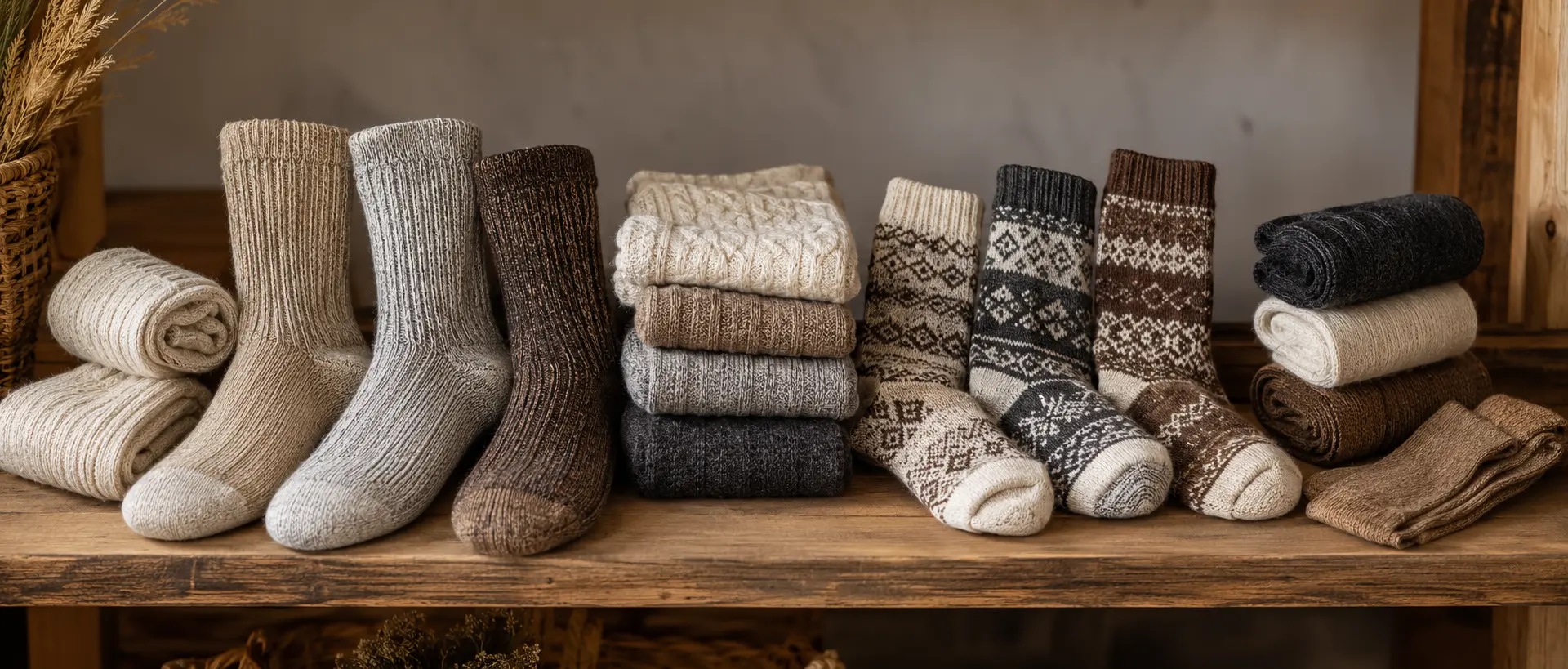
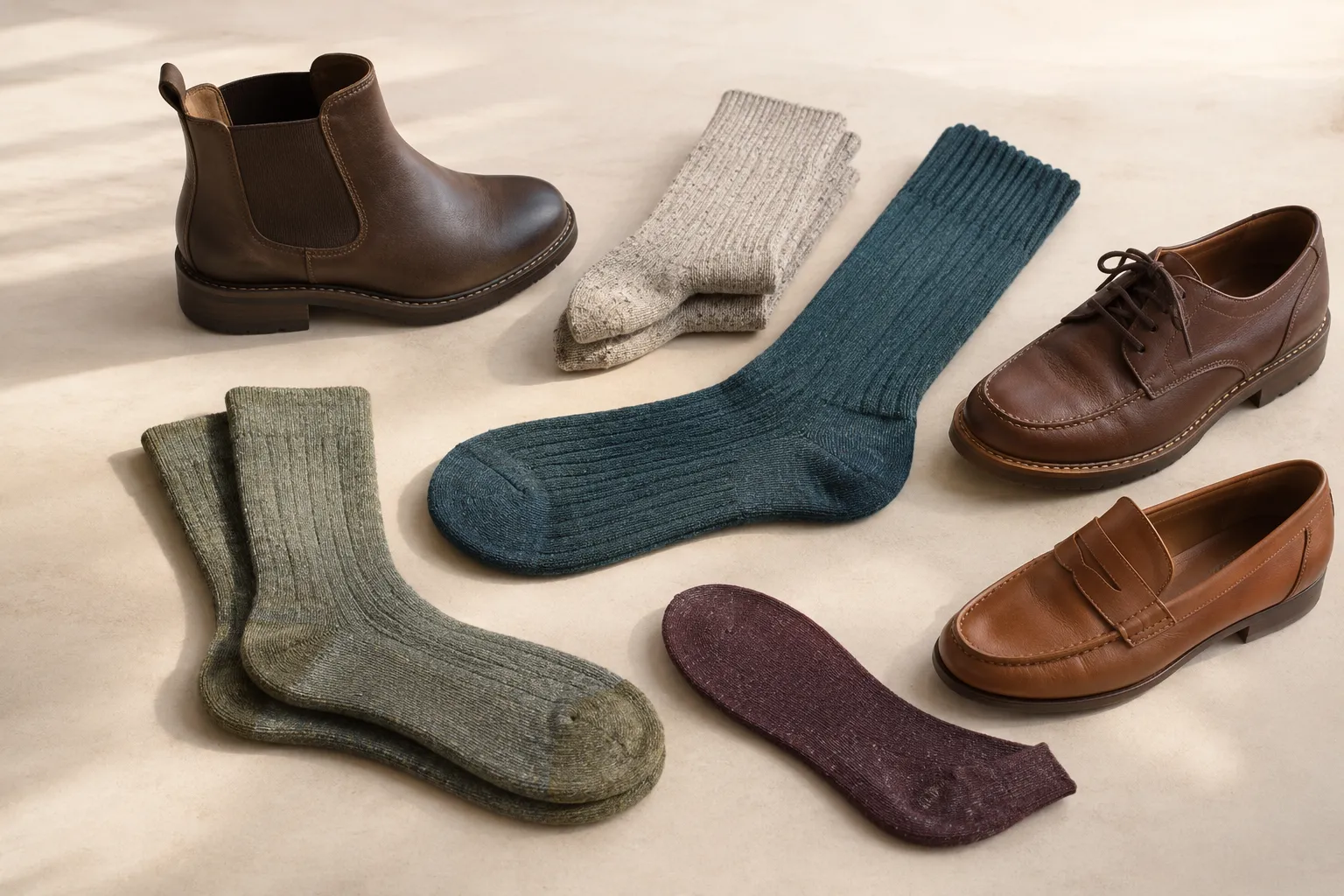
Alpaca socks range from fine everyday and dress pairs to cushioned hiking, boot, and winter styles. Compare the main types and find the construction that suits your shoes, activity, and preferred level of warmth.
Alpaca fiber can be knit into socks for everyday shoes, outdoor boots, cold weather, and more specialized uses.
What makes alpaca socks different?
Alpaca fiber is valued for warmth, a smooth feel, and the ability to trap insulating air without making every sock bulky. Most alpaca socks are blended with fibers such as nylon and elastic so the finished knit can recover its shape and withstand repeated friction at the heel and toe.
There is no single alpaca-sock construction. A fine pair for dress shoes and a tall, cushioned pair for winter boots may both contain alpaca, but they are designed for different conditions. Start with where you will wear the socks, then compare their weight, cushioning, height, fiber content, and care instructions.
Find the right style
Explore alpaca socks by type
Use the choices below to narrow the collection, or browse all eight guides.
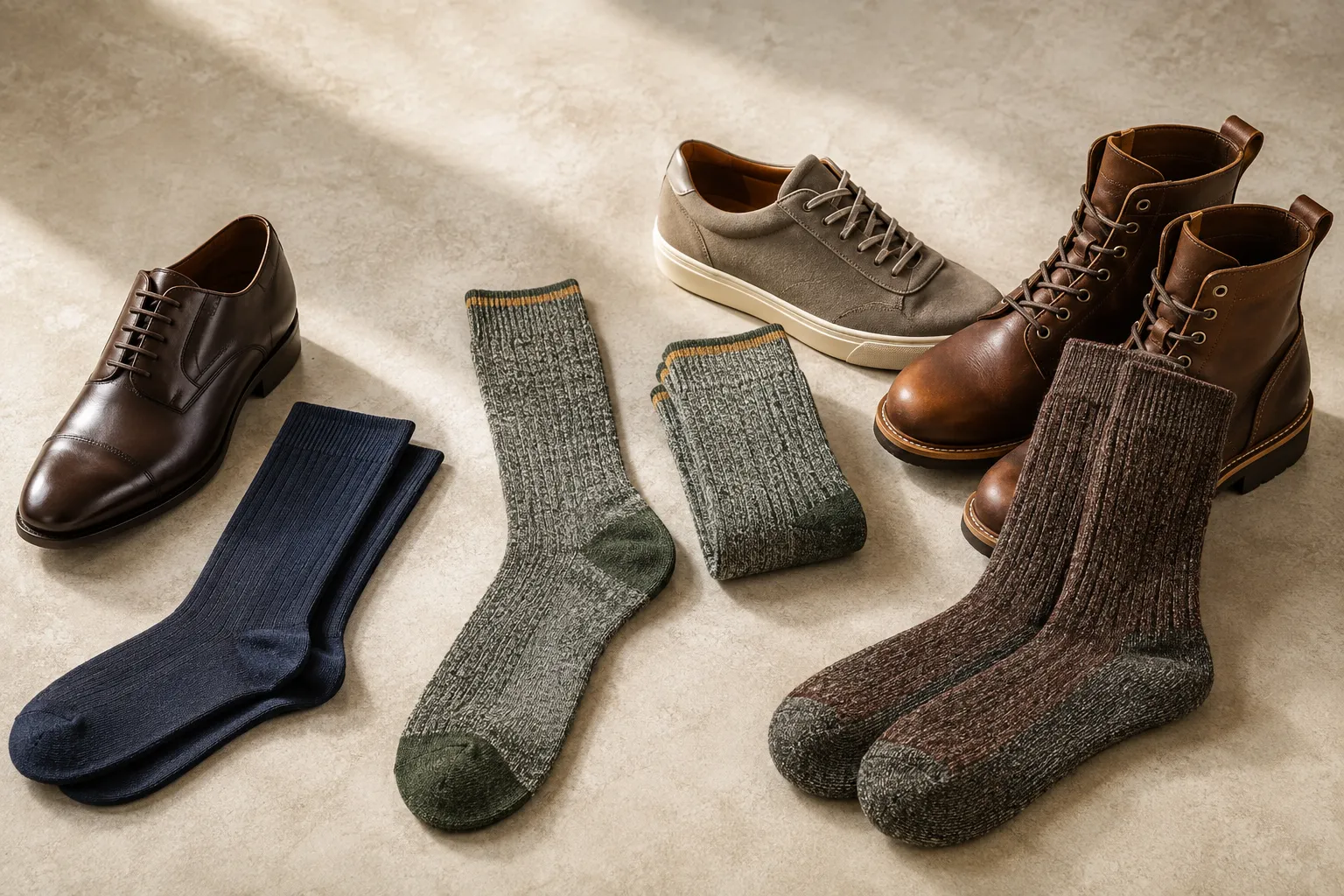
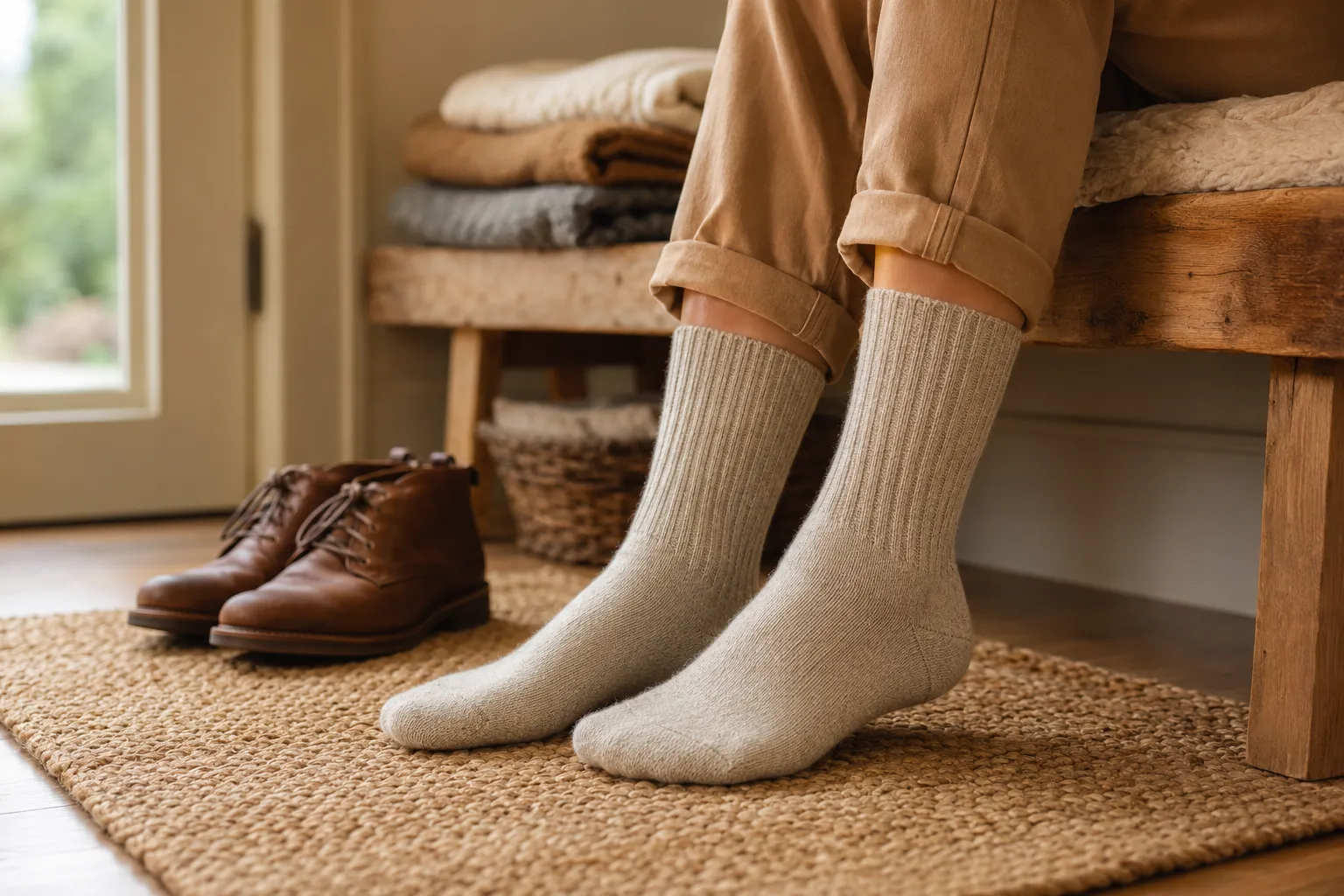
Everyday socks occupy the middle ground: usually crew height, light to medium weight, and comfortable with sneakers or casual shoes. They provide more insulation than a basic thin cotton sock without the bulk or cushioning of a winter boot style.
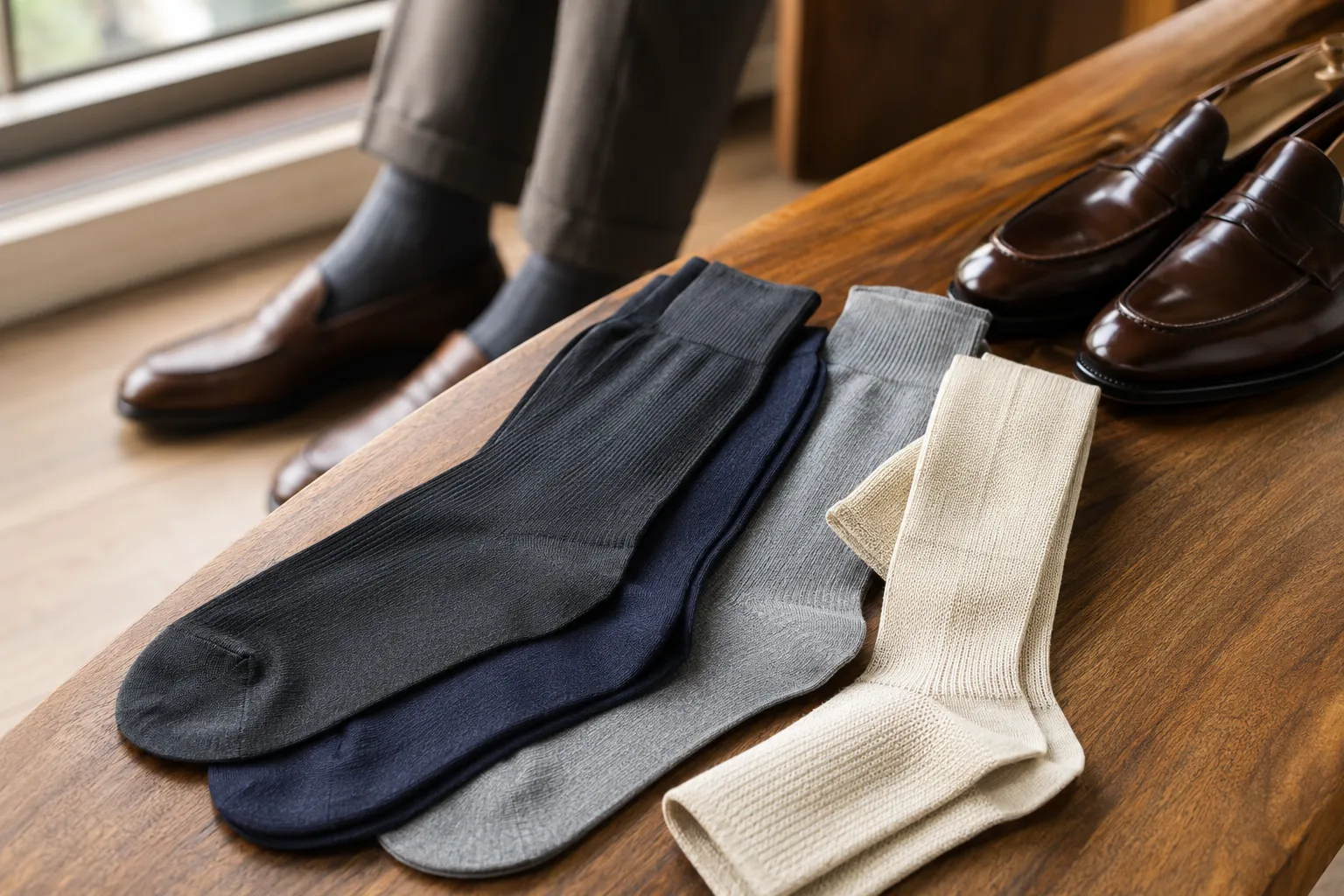
For shoes with less room, a fine-gauge pair is the safer choice. Dedicated alpaca dress socks use a thinner, smoother construction for loafers, dress shoes, and other close-fitting footwear.
A medium-weight everyday sock works with casual shoes without the bulk of a boot sock.
02 · Trails and long days
Hiking and boot socks
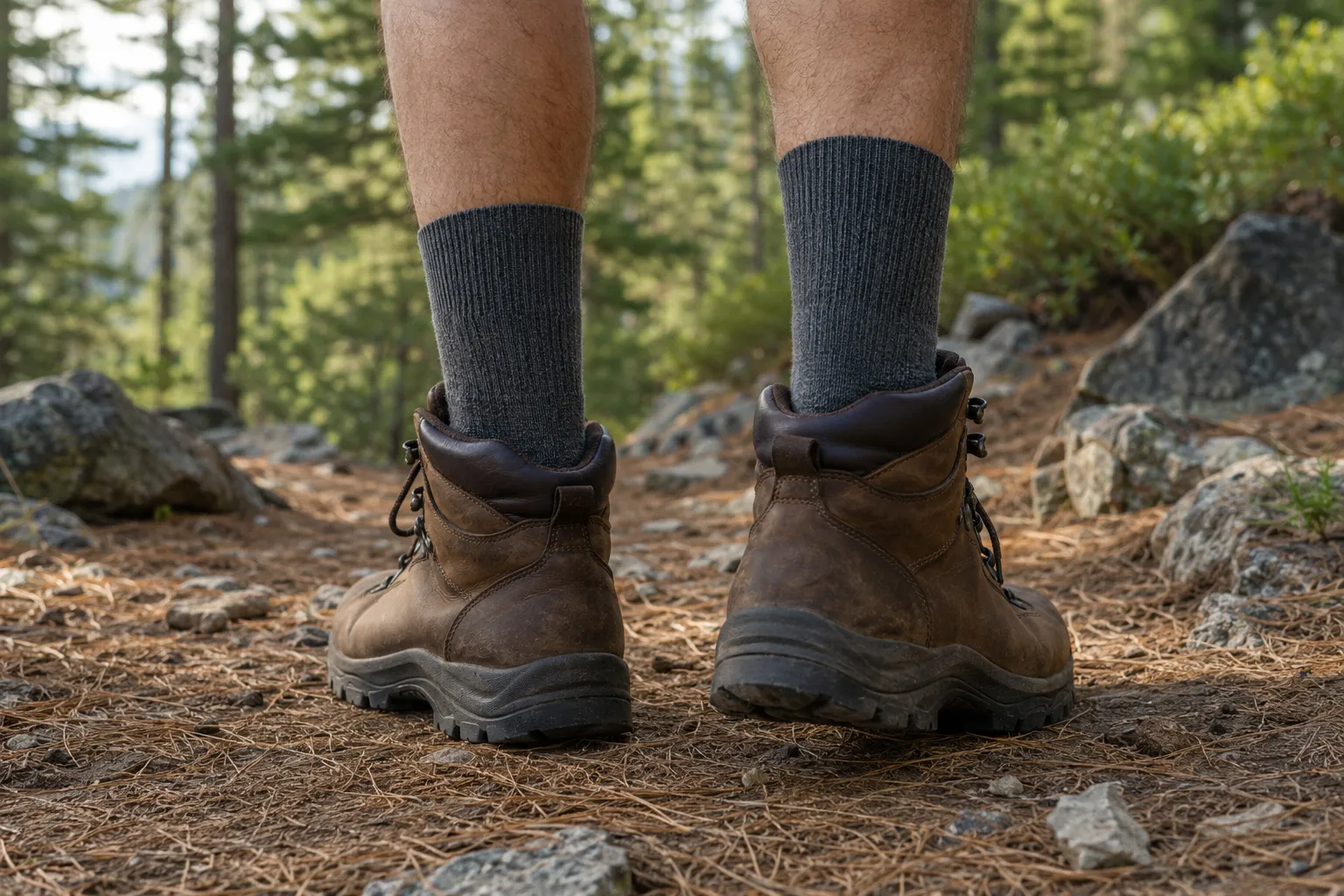
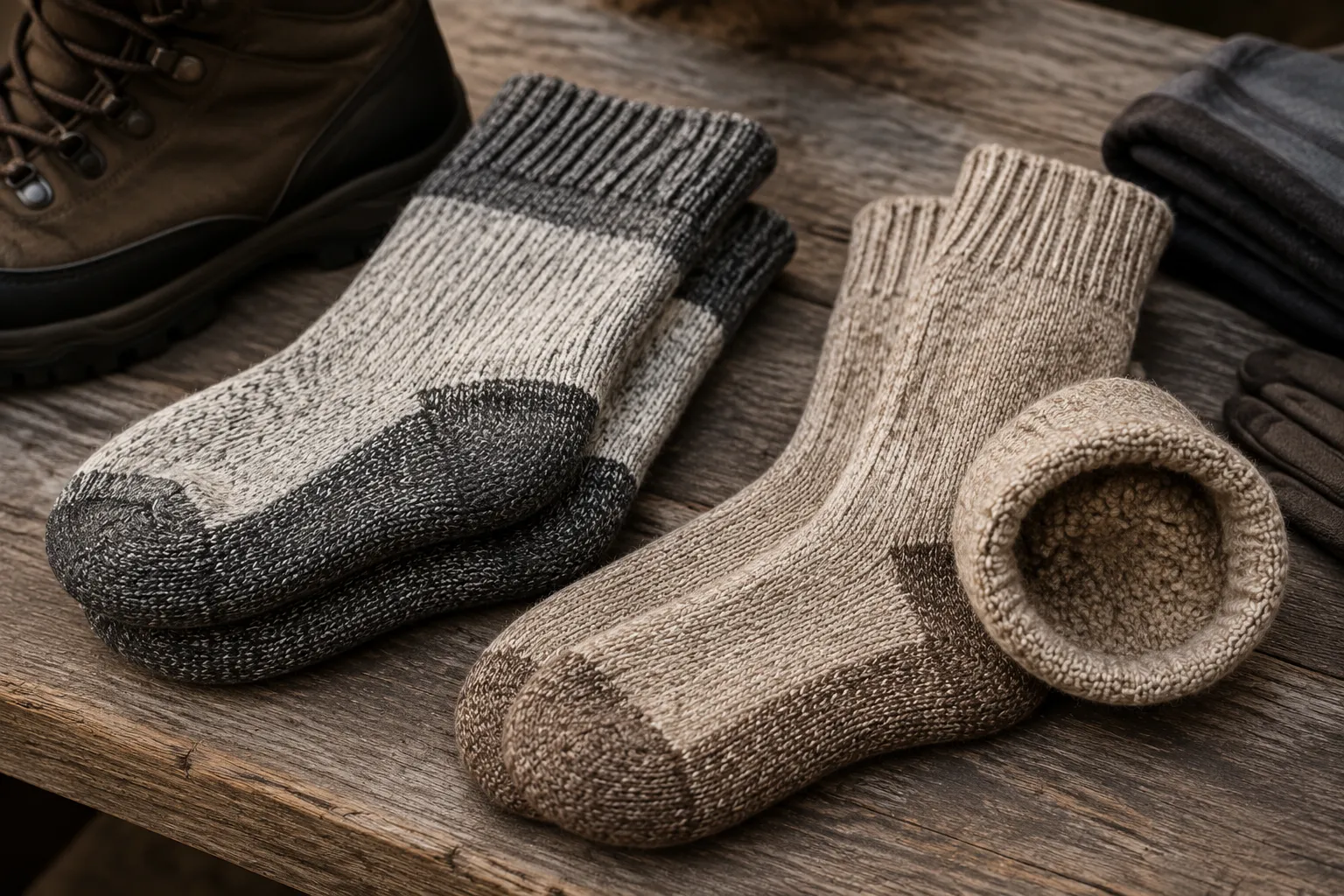
Outdoor socks balance warmth with movement inside structured footwear. Alpaca hiking socks generally emphasize a secure fit and targeted cushioning that helps prevent folds and rubbing during long walks.
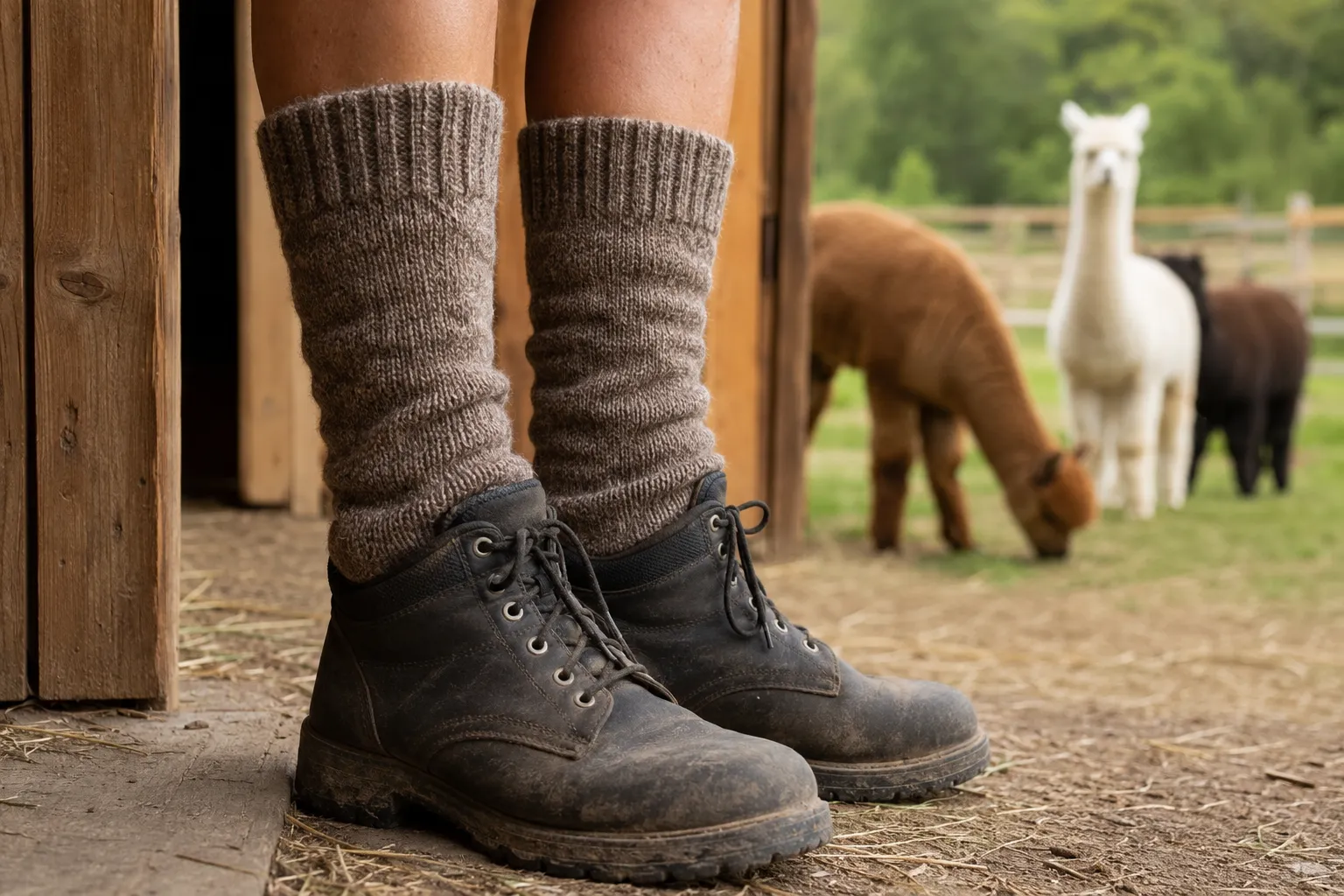
Alpaca boot socks are often taller and more substantial, with reinforcement and padding intended for work boots or extended periods outdoors. In either case, the sock should fill the footwear comfortably without making it tight.
Outdoor socks need enough height for the boot collar and enough cushioning for the activity.
03 · Cold conditions
Winter and thermal alpaca socks
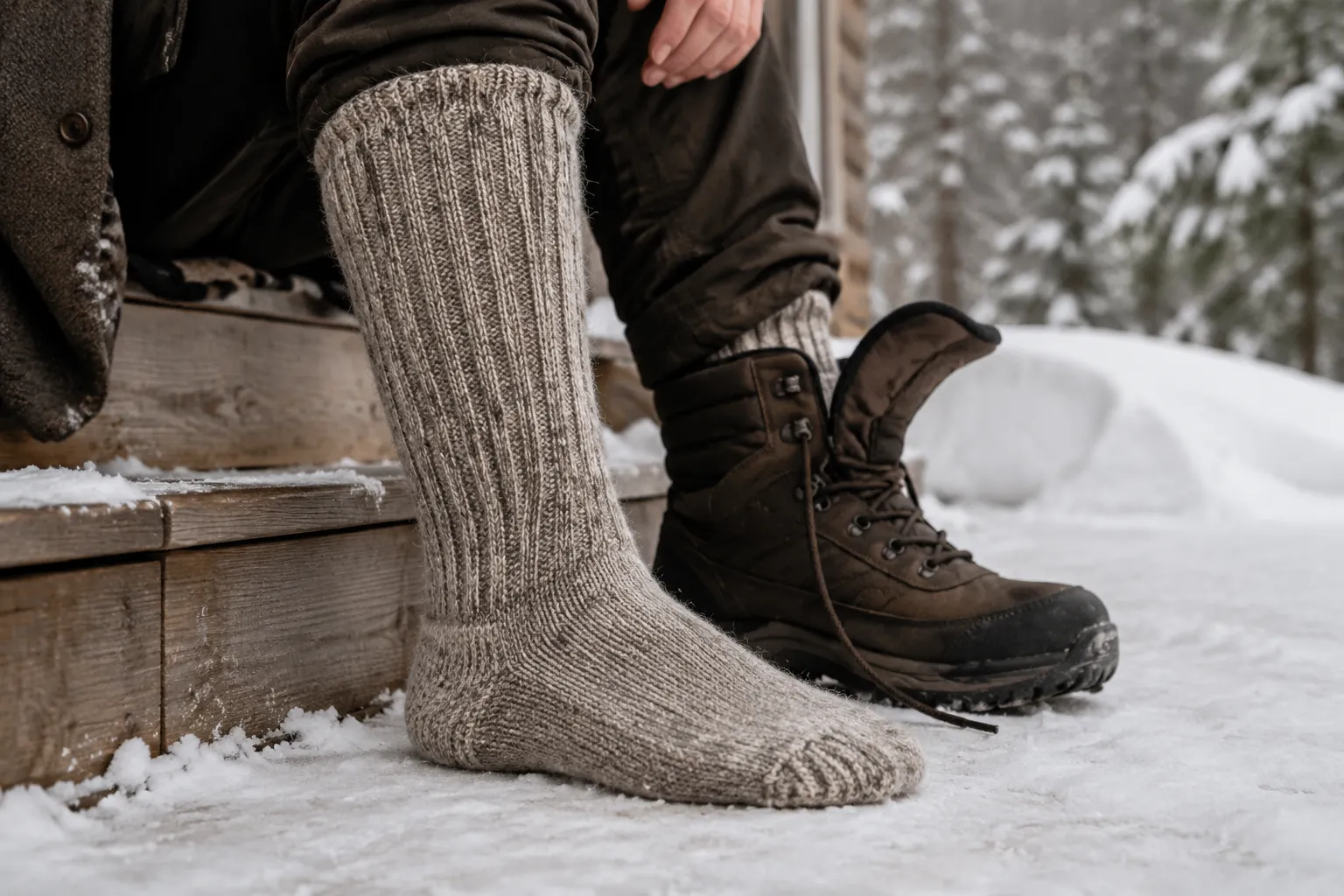
Alpaca winter socks are selected for cold-weather footwear and may range from moderately cushioned boot pairs to tall heavyweight styles. The right thickness depends partly on how much room the boot provides and whether you will be moving or standing still.
Alpaca thermal socks place greater emphasis on an insulating construction, often using dense cushioning or a loftier interior to retain warm air. “Winter” describes when a sock is worn; “thermal” more specifically describes how it is built to hold warmth.
Warm socks still need to leave enough room inside the boot for a comfortable fit.
04 · Purpose-built styles
Compression socks and specialized blends
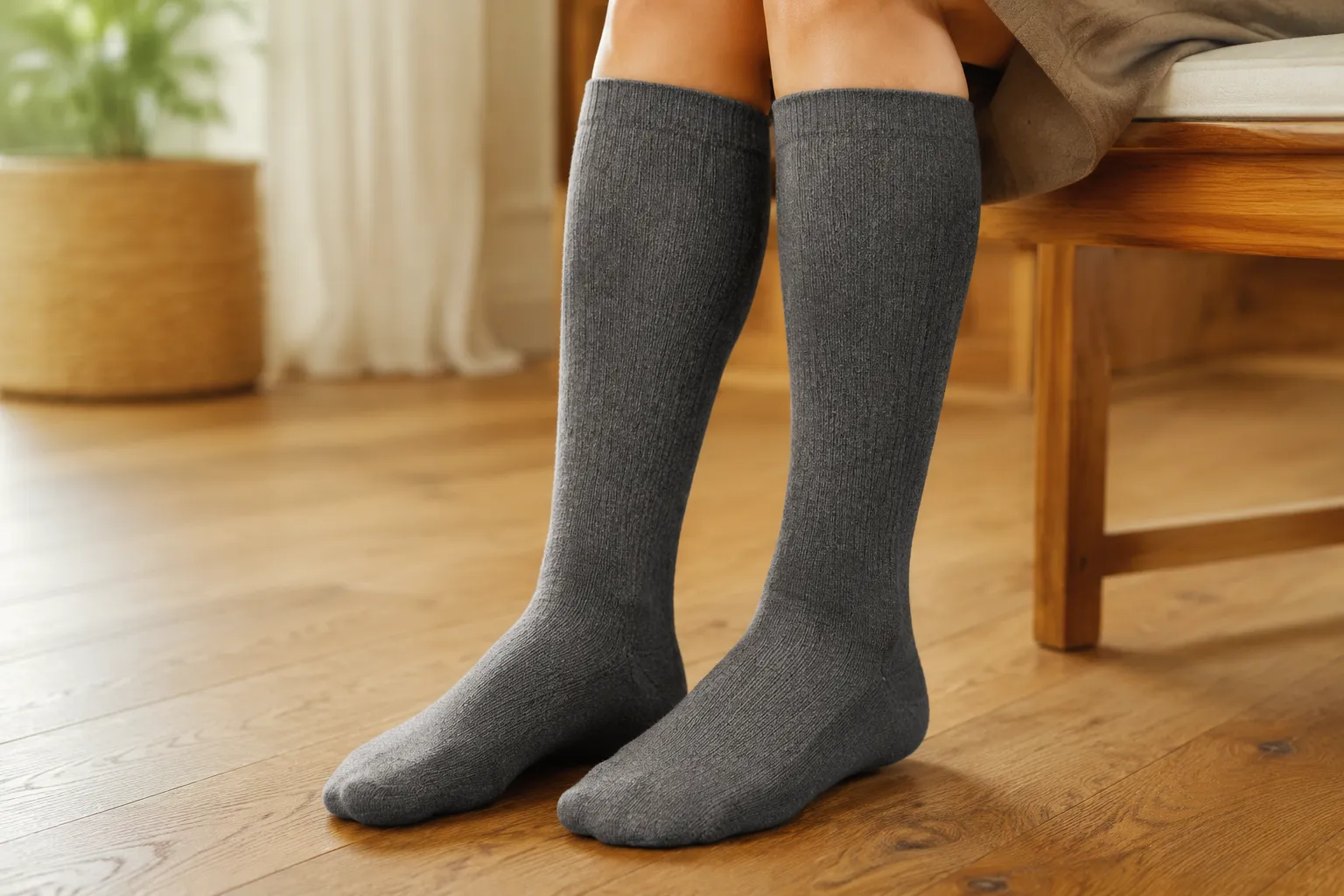
Alpaca compression socks combine alpaca with elastic and other supporting fibers in a fitted, usually knee-high construction. The alpaca content contributes warmth and feel, while the overall blend and knitting structure create the compression.
Compression level and sizing matter more than softness alone. These socks should be selected by the manufacturer's measurements rather than ordinary shoe size, particularly when they are being used for a specific health-related reason.
Compression socks depend on a precise lower-leg fit and a resilient fiber blend.
05 · Size and proportion
Men's and women's alpaca socks
The distinction between men's alpaca socks and women's alpaca socks is usually based on size ranges, foot proportions, available heights, and product styling—not a different kind of alpaca fiber.
Use the maker's size chart whenever possible. A sock that is too large can fold inside the shoe, while one that is stretched beyond its intended range may feel thin, place the heel incorrectly, or wear out sooner.
Good sizing keeps the heel in place and prevents extra material from gathering inside the shoe.
Choosing the right pair
Start with the shoes and activity you have in mind. Medium-weight crew socks suit most daily wear; cushioned blends work better for hiking and boots; fine-gauge socks belong in close-fitting shoes; and thermal constructions are intended for greater insulation. Check the fiber percentages, reinforcement, care instructions, and sizing rather than choosing by alpaca content alone.
Many alpaca farms sell yarn, socks, and other finished goods alongside the herd itself. You can also browse the wider alpaca clothing collection or find farms that may carry fiber products through the farm directory.