Alpaca sock guide
Alpaca boot socks
Alpaca boot socks are generally taller and more substantial than everyday pairs, but the thickest sock is not automatically the right one. A useful pair must add warmth and cushioning without crowding the toes, lifting the heel, or folding inside the boot.
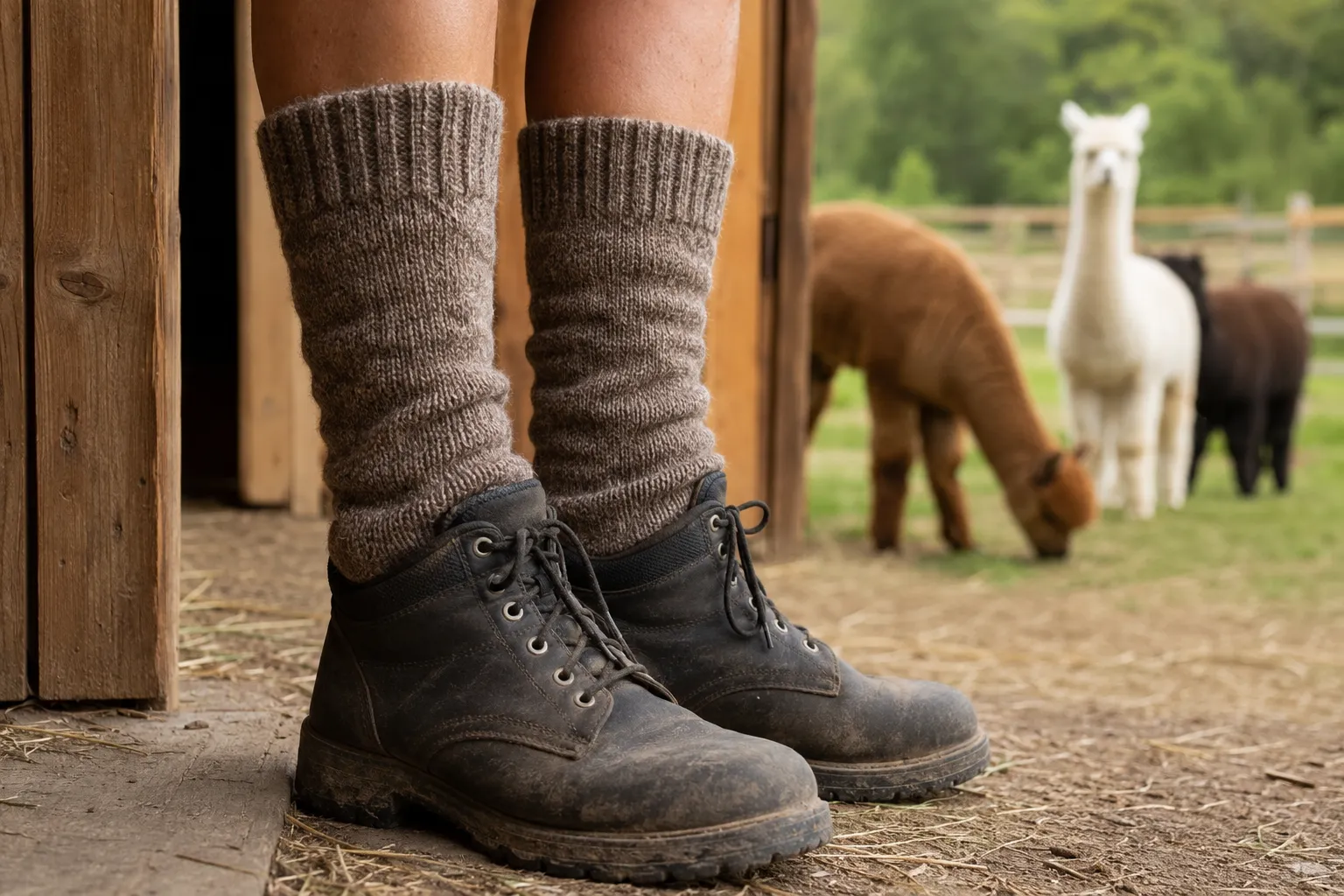
More than added thickness
What makes a sock suitable for boots?
A boot sock needs enough height to clear the collar, enough structure to stay in place, and enough durability for repeated contact with firm footwear. Cushioning can soften pressure beneath the heel and forefoot, but excess material can also make a properly sized boot feel too small.
The role of alpaca fiber is mainly insulation and feel. Nylon, elastic, wool, and other supporting fibers commonly provide abrasion resistance, shape recovery, and a secure fit. For boots, the complete construction matters more than the alpaca percentage by itself.
- Height
- Above the boot collar
- Fit
- Smooth at the heel and ankle
- Thickness
- Compatible with the boot volume
- Durability
- Reinforced where friction is greatest
Interactive comparison
Choose your boot
Open the footwear type closest to what you wear. Each boot changes the useful balance of sock weight, height, cushioning, and fit.
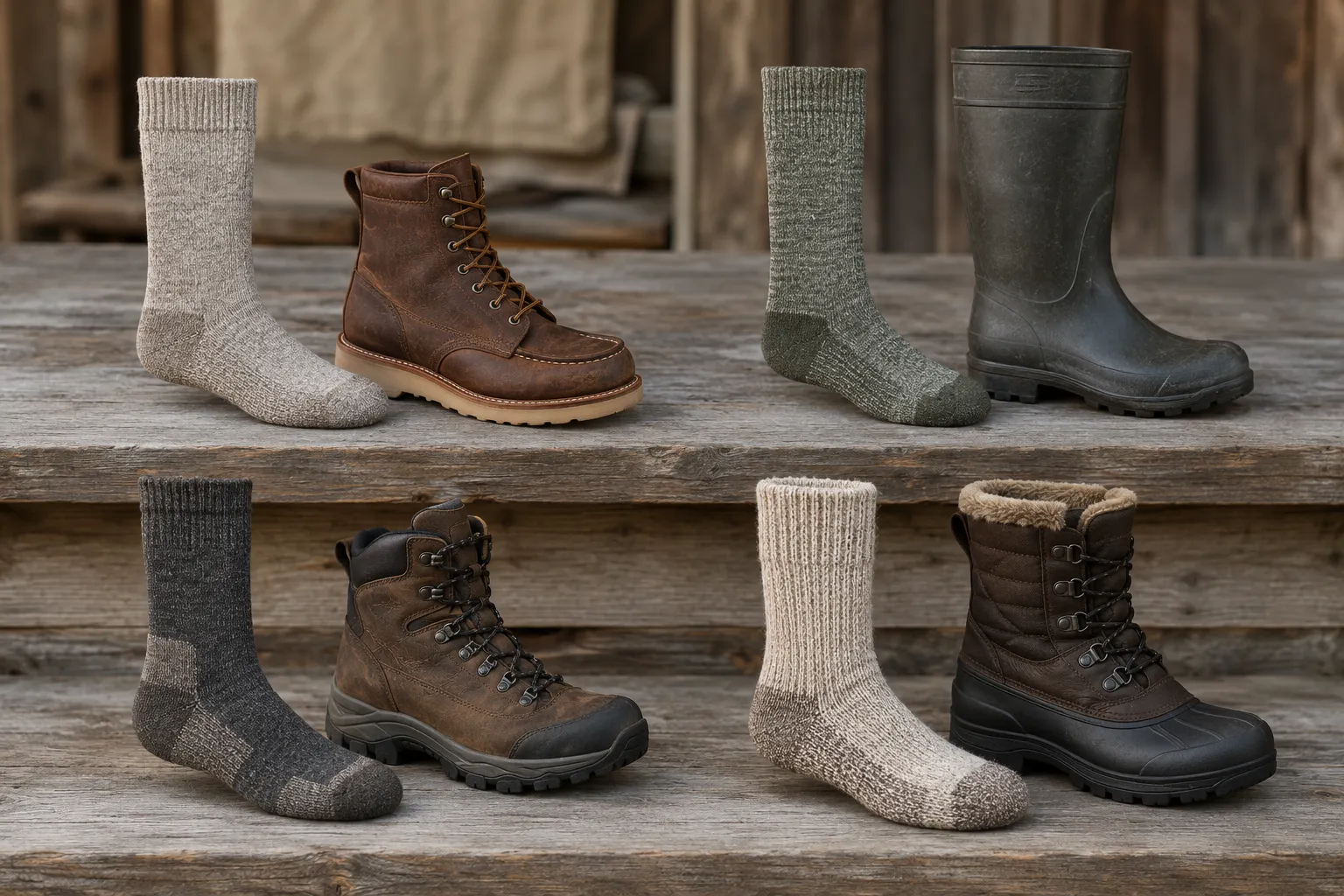
Work bootsDurability and all-day fit
Leather work boots often pair well with a medium-weight sock that cushions the sole without filling all available space. A reinforced heel and toe are useful where the foot repeatedly contacts the boot, while a ribbed leg helps prevent the sock from sliding during standing, lifting, or walking.
- Weight
- Usually medium
- Height
- Crew or boot height
- Cushioning
- Targeted or full sole
- Main concern
- Durability without crowding
Rubber and farm bootsSecure fit inside flexible footwear
Rubber boots may have more interior movement than firmly laced boots. A fitted sock with a secure cuff can help limit sliding and folds, while excessive thickness may increase heel movement if it prevents the foot from settling normally into the boot.
- Weight
- Light-medium to medium
- Height
- Above the boot shaft
- Cushioning
- Moderate underfoot
- Main concern
- Slipping and damp conditions
Hunting and outdoor bootsMovement, rough ground, and changing temperatures
Outdoor boots may be worn for a mix of walking and periods of little movement. A medium or moderately heavy blend can provide cushioning and insulation, but it still needs to remain fitted as activity and temperature change.
- Weight
- Medium to medium-heavy
- Height
- Boot height
- Cushioning
- Heel, forefoot, and sole
- Main concern
- Warmth without loose folds
Winter bootsInsulation and toe-room balance
An insulated boot may already provide substantial warmth. A heavyweight alpaca blend can be useful when the boot has room for it, but tightly compressed socks and restricted toe movement are poor tradeoffs for added thickness.
- Weight
- Medium-heavy to heavyweight
- Height
- Crew or tall boot height
- Cushioning
- Full sole when space permits
- Main concern
- Insulation without compression
Check the combination
Does the sock fit the boot?
Boot and sock fit must be judged together. A sock that feels comfortable by itself can change the position of the foot once it is inside structured footwear.
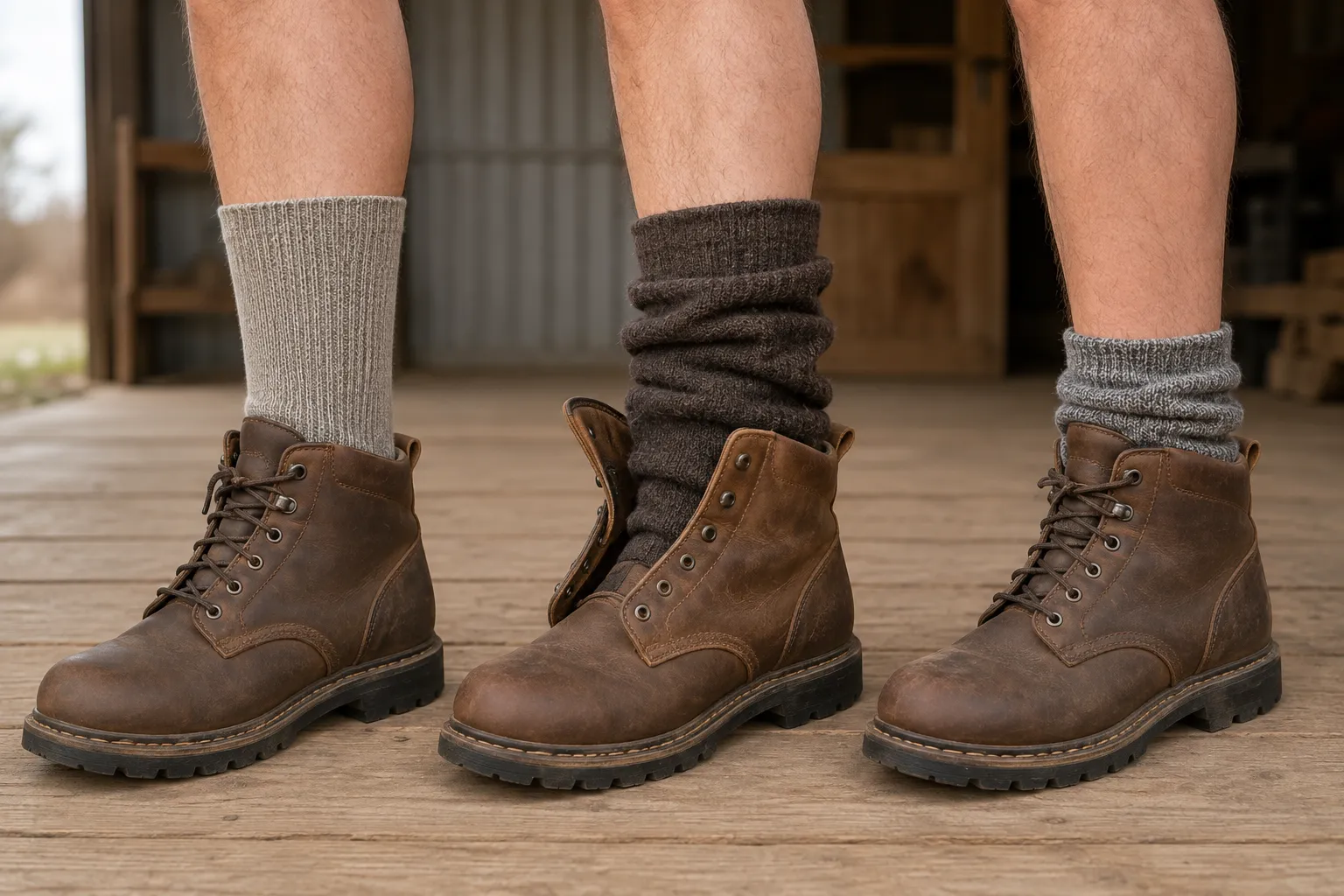
Correct fit
Smooth and secure
- The heel pocket aligns with the heel
- The ankle remains free of folds
- The toes have their normal amount of room
- The cuff stays above the boot collar
Too thick
The boot feels smaller
- The toes or instep feel compressed
- The boot must be laced differently
- The heel sits higher than usual
- The sock feels densely compressed
Too loose
Material shifts and gathers
- Folds develop around the ankle
- The heel reinforcement moves out of place
- The cuff slides toward the collar
- The foot moves within the sock
Firm toe boxes
Steel-toe and safety boots
Steel-toe and composite-toe boots have a firm protective area that does not expand to accommodate a thicker sock. Extra padding may feel useful at first, but it can reduce toe room or place the sock seam against a pressure point.
Try the boots with the same sock weight you expect to wear regularly. Check that the toes can move normally, the seam does not sit beneath the protective cap, and the heel remains properly seated. A moderately cushioned, durable pair is often more practical than the thickest available sock.
Built for repeated contact
Cushioning, reinforcement, and recovery
Boot socks experience repeated friction against the heel counter, toe box, insole, and shaft. The supporting fibers and knit structure determine whether the sock remains fitted and how quickly high-contact areas wear.
Ribbed cuff and leg
Help the sock remain upright instead of sliding toward the boot collar.
Shaped heel
Keeps reinforcement centered and reduces extra fabric around the ankle.
Cushioned sole
Adds material beneath repeated pressure areas without necessarily thickening the entire sock.
Reinforced heel and toe
Use stronger fibers or denser knitting where abrasion is usually greatest.
How the boots are used
Standing and walking create different priorities
A farm chore, warehouse shift, outdoor job, and long walk can involve the same boots but place pressure on the sock differently.
Mostly standing
Consistent underfoot cushioning may be more useful than heavy padding around the whole leg. The sock should remain comfortable without creating additional pressure beneath the instep or protective toe.
- Moderate sole cushioning
- A cuff that does not roll
- Stable fit through a long shift
Frequent walking
Heel placement, ankle fit, and resistance to shifting become more important as the foot repeatedly flexes. Targeted reinforcement can be useful where the boot and foot move against one another.
- Secure heel and arch
- No folds around the ankle
- Cushioning matched to the terrain
Above the collar
Sock height and cuff security
A boot sock should extend high enough to place fabric between the entire collar and the leg. A crew sock works with many ankle and mid-height boots, while taller shafts require a longer boot sock.
A tall sock is useful only if it stays upright. Look for a ribbed leg and a cuff that holds without rolling, binding, or leaving the sock bunched near the ankle. If the cuff repeatedly falls, a different size or construction is more useful than pulling it back into place throughout the day.
One pair or two?
Layering socks inside boots
Layering a thin liner beneath a boot sock can work when the boot has enough room and the two layers remain smooth. It is not a substitute for properly fitted footwear, and two thick socks can compress the foot more than they insulate it.
Between wears
Washing, drying, and rotating boot socks
Follow the product label because alpaca blends differ in their washing and drying requirements.
After wearing
Remove the socks from the boots and let both dry fully. Leaving damp socks inside footwear slows drying and keeps the knit compressed.
Before washing
Turn the socks inside out and remove dirt or grit. Use cool water and gentle handling unless the care label permits another method.
Before the next wear
Check the heel, toe, and sole for thinning. Rotating between pairs gives each sock time to dry and recover its shape.
Some alpaca farms sell finished socks alongside yarn and other fiber products, but blend percentages and care requirements can differ considerably from one maker to another.
Common questions
Alpaca boot sock FAQ
Are alpaca boot socks good for work boots?
They can be when the blend is durable, the sock stays fitted, and its thickness suits the boot. Reinforcement and shape recovery are especially important for repeated work use.
How thick should boot socks be?
They should be thick enough for the desired cushioning and warmth but not so thick that the boot compresses the toes or changes the heel position. The available room inside the boot determines what is practical.
Can alpaca socks be worn in steel-toe boots?
Yes, provided the sock leaves sufficient room beneath the protective toe and does not place a seam against a pressure point. Test the complete combination before wearing it for a full shift.
Are boot socks different from hiking socks?
The categories overlap, but hiking socks generally emphasize movement, targeted cushioning, and friction control. Boot socks may place greater emphasis on height, work durability, standing comfort, or cold-weather insulation.
Should boot socks reach above the boot?
Yes. The cuff should normally extend beyond the top of the boot so the collar does not rub directly against the leg and the sock remains accessible if it begins to shift.
Can two pairs of alpaca socks be worn together?
Only when the boot has room and both layers remain smooth. Two bulky pairs can restrict space, compress insulation, and create folds. A thin liner and one fitted boot sock are usually more workable than two heavy pairs.
How often should boot socks be washed?
Wash them when they are dirty, damp, or no longer feel fresh, following the care label. Letting each pair dry completely and rotating socks between wears can reduce the need to reuse a damp pair.
Choosing socks for your boots
Begin with the boot rather than the thickest available sock. Identify the space inside the footwear, the height of its collar, the amount of walking or standing involved, and the conditions in which it will be worn. Then choose a fitted blend that provides useful cushioning and warmth without altering the boot’s intended fit.
The same attention to fiber content, construction, fit, and care is useful when comparing other forms of alpaca clothing, although boots make sock thickness and heel placement especially important.