Alpaca sock guide
Alpaca hiking socks
Alpaca hiking socks combine insulating alpaca fiber with stronger, more elastic fibers that help the sock retain its shape inside a moving shoe or boot. The right construction depends on the distance, weather, footwear, and amount of cushioning you need.
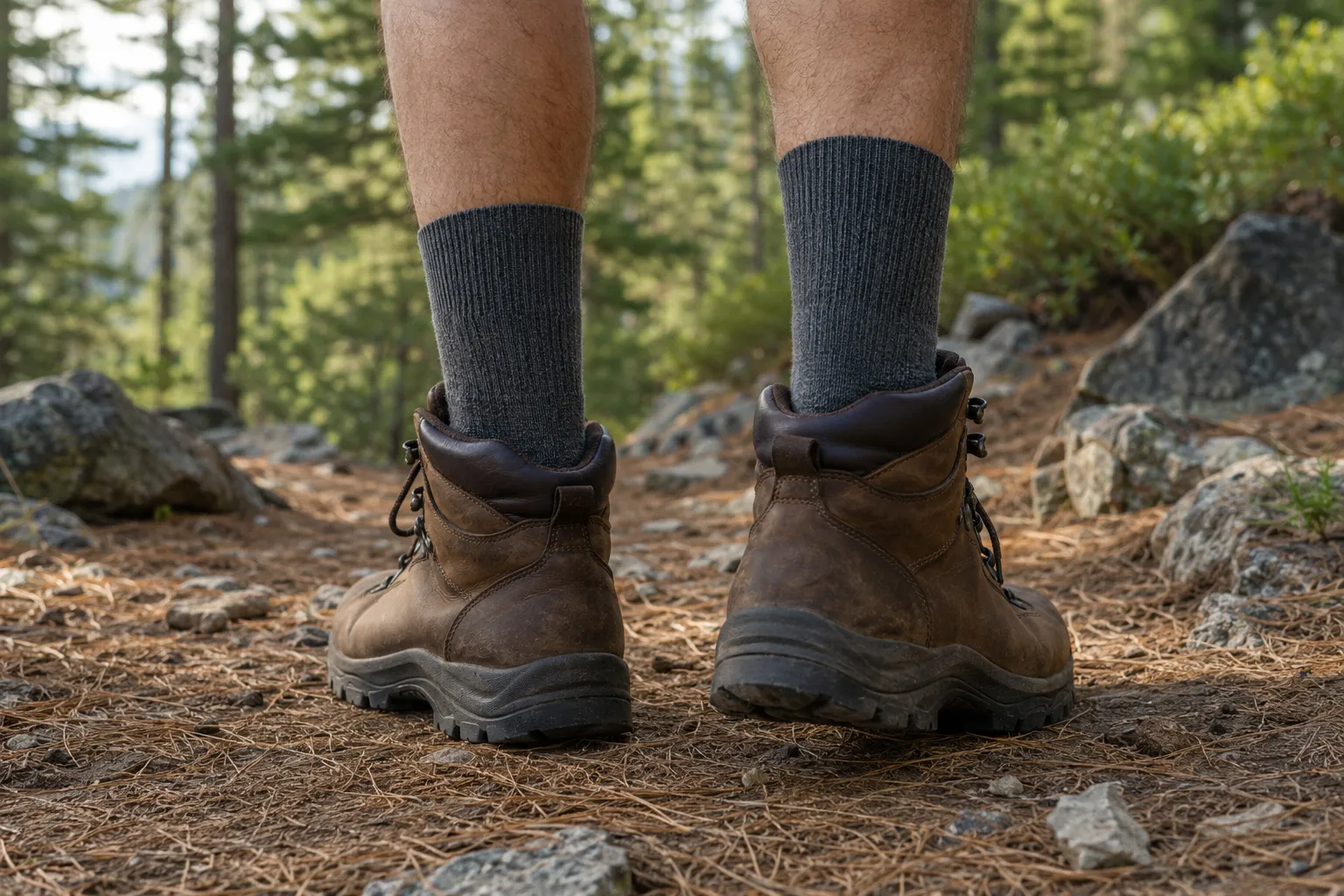
Start with construction
Do alpaca socks work well for hiking?
They can, provided the sock is designed for movement. Alpaca contributes insulation and a smooth fiber feel, but a hiking sock must also stay fitted, withstand repeated rubbing, and recover after being stretched over the foot. That is why hiking pairs normally combine alpaca with nylon, elastic, wool, or other performance fibers.
The amount of alpaca is only one part of the decision. Cushion placement, heel shape, cuff security, seams, and overall fit can matter more on the trail than a high alpaca percentage. A well-constructed blend is usually more useful for hiking than a loosely fitted sock made almost entirely from alpaca.
Conditions matter as well. A warm, cushioned pair may be comfortable in cool weather but excessive inside a close-fitting trail shoe on a hot day. The goal is not to find the thickest alpaca sock; it is to match the sock to the hike.
Interactive guide
Choose your hike
Select the outing that comes closest to your plans. These are practical starting points rather than fixed rules, since footwear fit and personal temperature preference still matter.
Short walk
Keep the sock light and uncomplicated
For a short, moderate walk, extra bulk may provide little benefit. A secure light- or medium-weight pair can add comfort without changing how the footwear fits.
- Weight
- Light to medium
- Cushioning
- Light or targeted underfoot
- Height
- Micro-crew or crew
- Footwear
- Trail shoes or low hiking shoes
Day hike
Prioritize stable fit and targeted cushioning
A longer outing creates more opportunities for rubbing and shifting. Look for a shaped heel, reinforcement, a cuff that stays above the footwear, and cushioning where your foot receives repeated pressure.
- Weight
- Medium
- Cushioning
- Heel, forefoot, and toe
- Height
- Crew above the collar
- Footwear
- Low shoes or mid-height boots
Cold-weather hike
Add insulation without crowding the boot
A heavier sock can be useful in low temperatures, but compressed insulation and restricted toe room work against comfort. Check the pair inside the actual winter footwear before relying on it outdoors.
- Weight
- Medium-heavy to heavyweight
- Cushioning
- Substantial or full sole
- Height
- Crew or boot height
- Footwear
- Roomy hiking or winter boots
Showing the short-walk recommendation.
Underfoot support
Where cushioning matters
Hiking socks may place additional knit material under the heel, ball of the foot, toes, or entire sole. Targeted cushioning protects common pressure areas without adding the same thickness around the top of the foot, where extra material could make the shoe feel tight.
Full cushioning can suit cold conditions or stiff, roomy boots. Light cushioning is often enough for shorter walks and flexible trail shoes. Whichever construction you choose, the padded areas need to sit in the correct places rather than shifting forward or gathering beneath the arch.
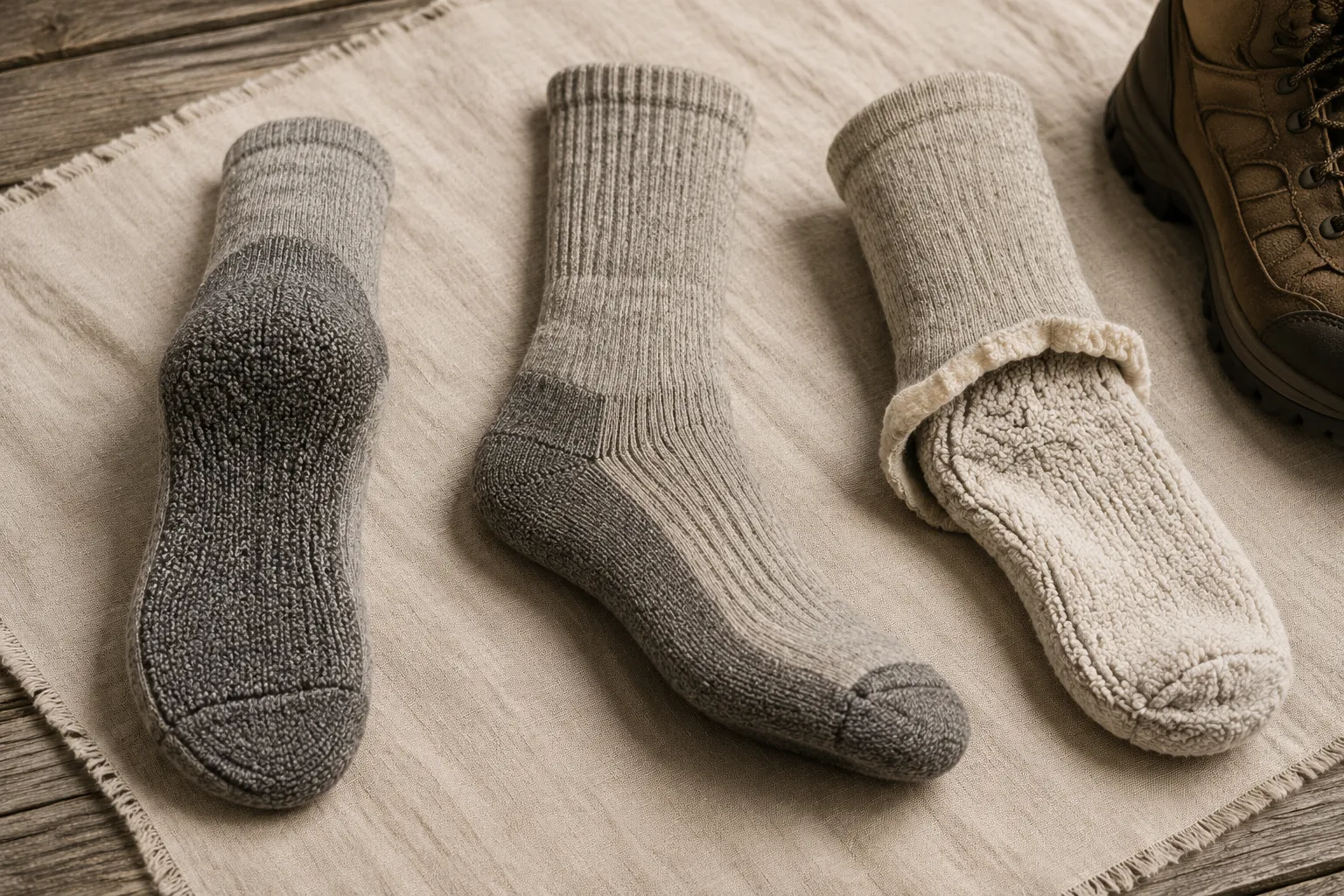
Comparing cushioning levels
More padding is useful only when the footwear has room for it.
| Cushioning | Often useful for | Main tradeoff |
|---|---|---|
| Light | Short walks and flexible trail shoes | Less padding on rough ground |
| Targeted | Day hikes and mixed terrain | Padding must align with the foot |
| Full | Cold weather and stiff, roomy boots | May crowd close-fitting footwear |
Shoe and boot pairing
Match the sock height to the footwear
The cuff should generally clear the footwear collar. A micro-crew sock may be sufficient for a low trail shoe, while a standard crew works with many hiking shoes and mid-height boots. Taller boots require a taller sock so the collar does not rub directly against the leg.
Going taller than necessary can add warmth, and going too short can allow the sock to slip below the collar. No-show socks leave little protection around the ankle and are usually a poor match for hiking boots.
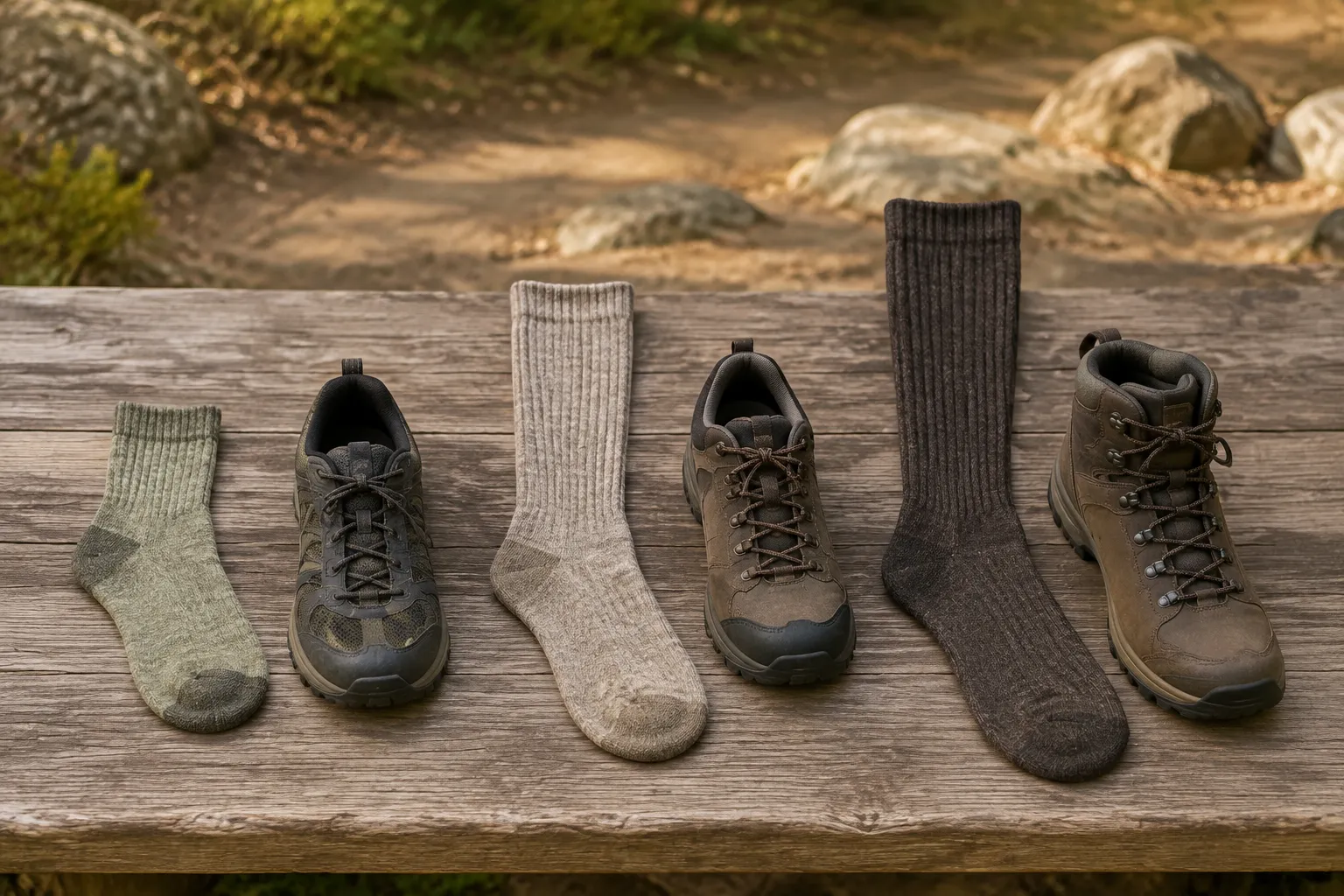
Read the entire label
Why hiking socks use fiber blends
A hiking sock asks several materials to perform different jobs. Alpaca contributes insulation and feel, while the supporting fibers help the knit resist abrasion, stretch over the foot, and return to its intended shape.
Alpaca
Provides insulation and the fiber character that distinguishes the sock. Its percentage alone does not determine trail performance.
Nylon or polyamide
Adds abrasion resistance, particularly where the heel and toe repeatedly contact the footwear.
Elastic fibers
Help the cuff, arch, and body of the sock remain fitted instead of loosening and folding during movement.
Wool or performance fibers
May contribute resilience, structure, drying characteristics, or temperature balance depending on the blend.
Inside the footwear
Fit, rubbing, and folds
No sock can guarantee that a hiker will avoid blisters. A secure fit can, however, reduce the folds and excess movement that contribute to friction. Try hiking socks with the actual trail shoes or boots rather than judging them separately.
The sock should sit smoothly against the foot without pulling the toes inward. Its heel pocket should align with your heel, and the cuff should remain in place without requiring frequent adjustment.
Signs the sock fits
- The heel pocket stays centered
- No folds develop beneath the arch or toes
- The cuff remains above the footwear collar
- The toes can move normally inside the shoe
Signs to try another size or weight
- Material gathers under the foot
- The sock slides down during walking
- The boot feels tighter than it does with other socks
- The heel reinforcement sits above or below the heel
After the trail
Washing and caring for hiking socks
The product label takes priority because blends and knit constructions differ.
- 01
Shake out grit
Remove dirt, seeds, and small debris that could remain against the knit during washing.
- 02
Turn them inside out
This exposes the cushioned interior, where perspiration and skin contact are concentrated.
- 03
Wash gently
Use cool water and the method specified by the manufacturer. Avoid harsh treatment that can distort the knit.
- 04
Dry completely
Air-dry when directed and avoid high dryer heat unless the care label specifically permits it.
For a longer outing, carrying a clean second pair lets you change if the first becomes wet, gritty, or uncomfortable.
Common questions
Alpaca hiking sock FAQ
Are alpaca socks too warm for summer hiking?
Some are. A light alpaca blend may work in moderate weather, while a heavily cushioned pair can feel excessive in heat. Consider the sock weight, footwear ventilation, hike intensity, and your own temperature preference.
What percentage of alpaca should hiking socks contain?
There is no single percentage of alpaca fiber that guarantees a good hiking sock. The complete blend and construction matter because reinforcement, stretch, recovery, and fit come from more than the alpaca content.
Should hiking socks be thick?
Not necessarily. Thickness should match the footwear and conditions. Light or targeted cushioning can suit trail shoes and ordinary day hikes, while heavier cushioning is more appropriate in roomy boots or colder weather.
Can alpaca hiking socks be worn with trail-running shoes?
Yes, if the sock is light enough for the shoe and its cuff clears the collar. A bulky pair can change the fit of a close trail-running shoe, so try the combination before a longer outing.
Are alpaca socks better than merino hiking socks?
Neither fiber automatically produces the better hiking sock. Fit, cushioning, reinforcement, blend composition, weather, and footwear all affect performance. Comparing complete products is more useful than comparing the main fiber names alone.
How many pairs should I bring on a day hike?
Many hikers wear one pair and carry a spare when wet conditions, stream crossings, heat, or a long route could make a change useful. The appropriate number depends on the length and conditions of the outing.
Can alpaca hiking socks go in the dryer?
Follow the care label for that particular pair. Some blends may permit low-temperature machine drying, while others should be air-dried. High heat can damage elastic fibers or change the fit.
Choosing a pair for the trail
For many day hikes, a medium-weight alpaca blend with targeted cushioning, reinforcement, and a cuff that clears the footwear collar is a practical starting point. Colder hikes may justify more insulation, while warm-weather walks generally call for a lighter construction.
The same questions about fiber content, construction, fit, and care also apply when choosing other forms of alpaca clothing, although footwear makes sock thickness and sizing especially important.