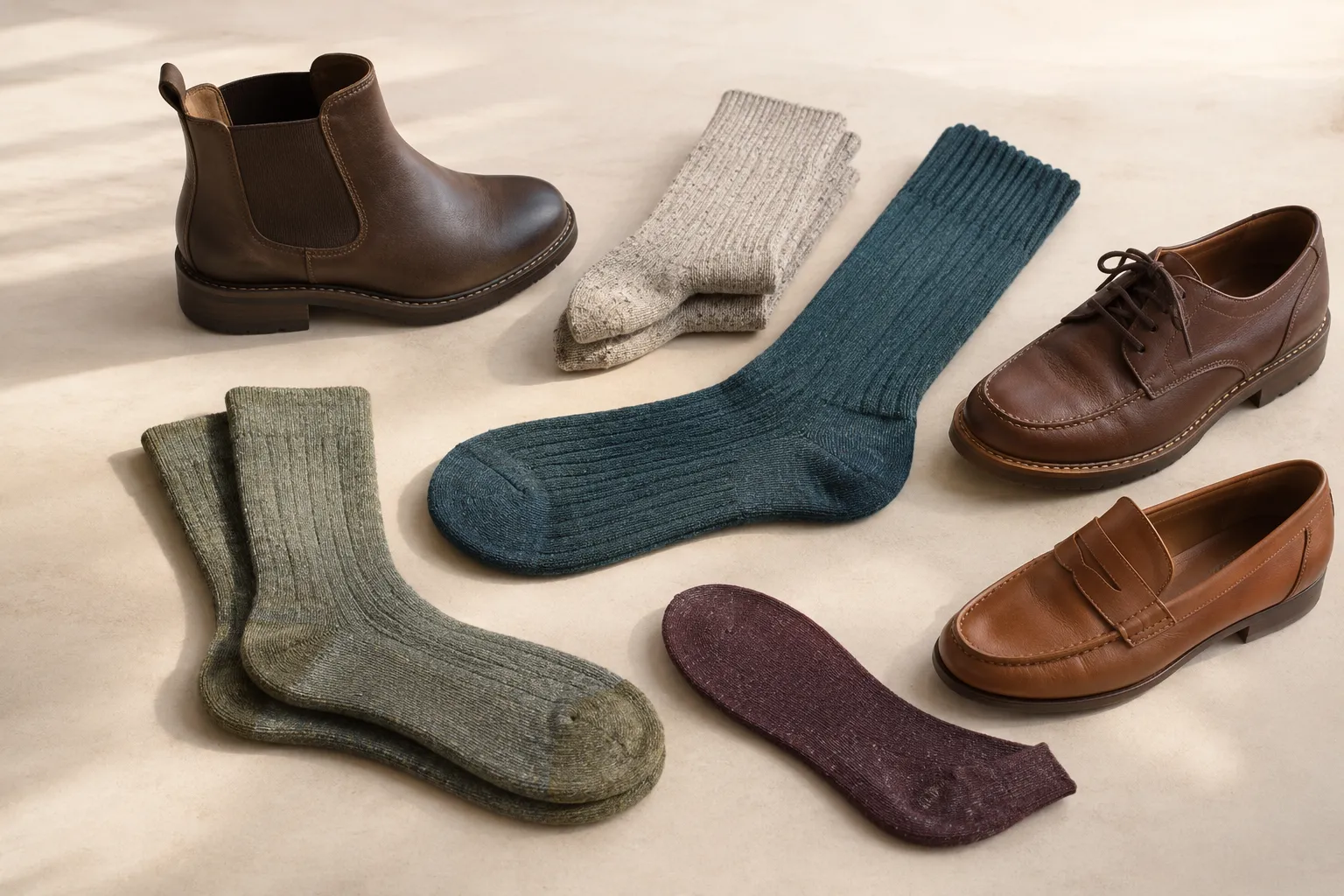
Alpaca sock guide
Women's alpaca socks
Women's sizing can be a useful starting point, but the label alone does not determine whether a sock will fit. Foot length, heel placement, calf circumference, height, knit weight, and footwear all matter.
Start beyond the category name
Women's socks are a sizing and product category
The properties of alpaca fibers do not change according to who wears them. What changes from one product line to another is the size range, way the sock is shaped, available heights, colors, cushioning, and intended footwear.
A women's medium from one maker may not match a women's medium from another. Some brands use shoe-size ranges, some use small-through-large labels, and others provide foot or calf measurements. Read the specific chart instead of relying on a familiar size name.
- Foot range
- The shoe or foot sizes covered by the sock
- Proportions
- How the heel, leg, and calf are shaped
- Height
- Ankle, crew, mid-calf, or knee-high construction
- Styling
- Colors and patterns selected for that product line
Sizing from toe to cuff
Check more than foot length
A sock can match the stated shoe size and still fit poorly around the heel or calf. Try the pair with the footwear you plan to use and notice whether its shape remains aligned after walking.
01Foot length
The toe should reach the end of the foot without pulling the toes inward. Excess material should not fold under the toes or gather beneath the arch.
02Heel placement
The shaped heel should remain centered around the heel. If it sits beneath the sole or climbs toward the ankle, try another size or proportion.
03Calf circumference
The leg should stretch smoothly without becoming overly sheer. The cuff should stay up without rolling or leaving a deep, sharply defined mark.
04Shoe volume
A thicker sock occupies more room around the toes and instep. Check the sock and shoe together rather than judging either item separately.
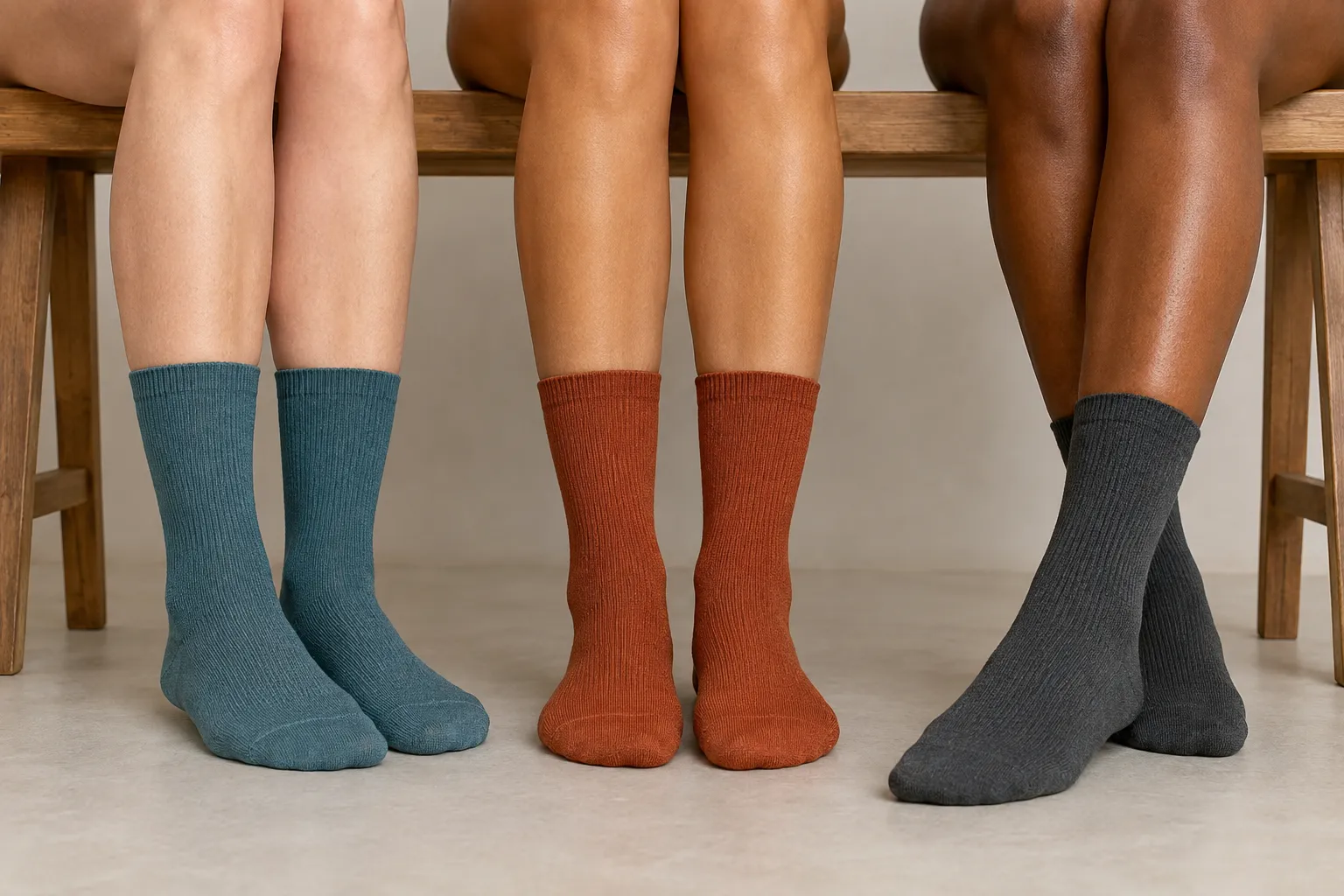
Coverage and footwear
Choose a height that clears the shoe or boot
Sock height affects coverage, warmth, and whether the footwear collar contacts the skin. Product names are not completely standardized, so compare the actual leg length when measurements are available.
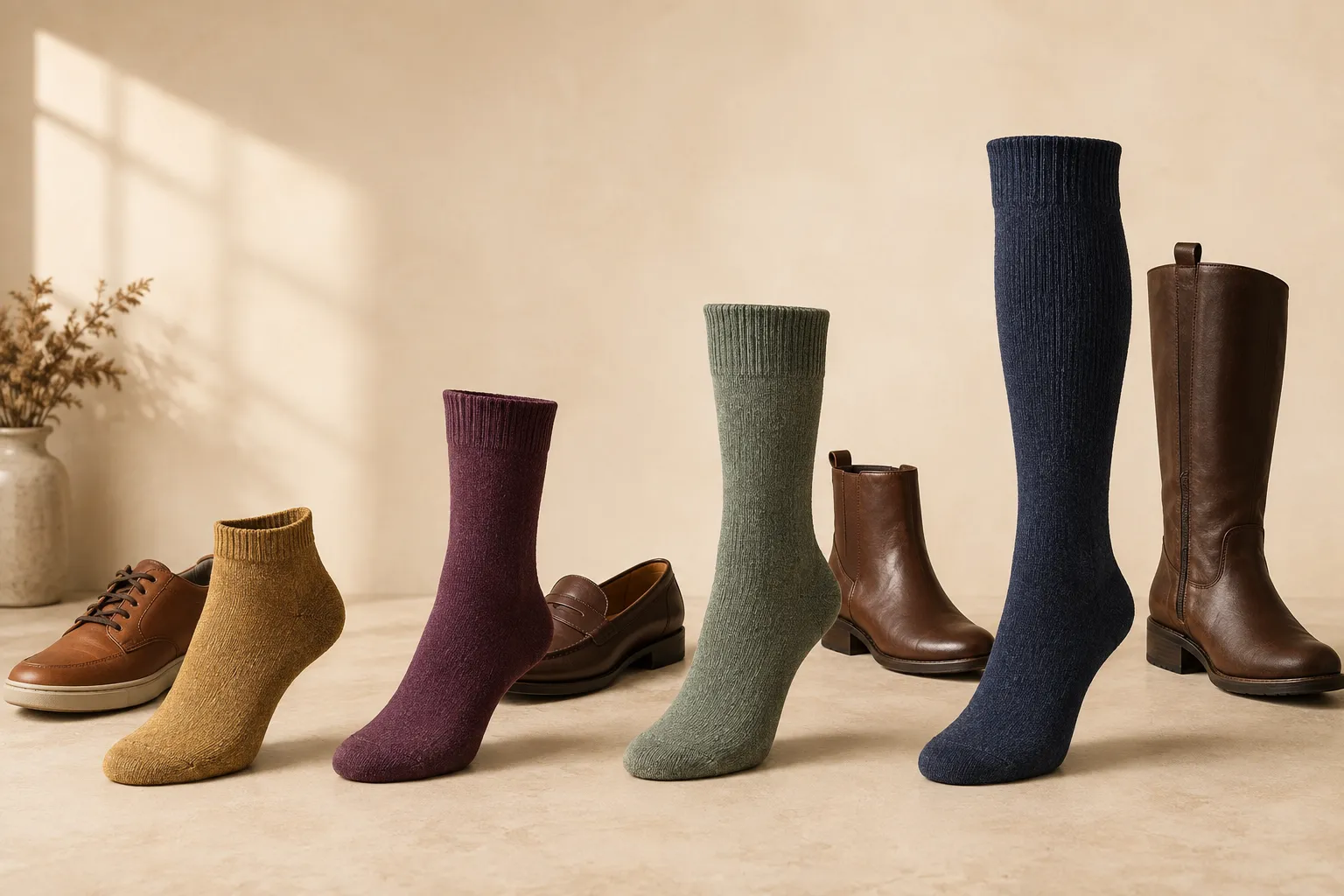
Ankle
Low coverage
Works with low casual shoes when the cuff clears the footwear edge and remains in place.
Crew
Everyday range
Covers the lower calf and pairs with many casual shoes, dress shoes, and short boots.
Mid-calf
Additional coverage
Provides more room for ribbing and may stay above taller footwear collars.
Knee-high
Full lower-leg coverage
Useful with tall boots or when more leg insulation is wanted, provided the calf fit is correct.
Interactive weight comparison
How much sock fits the footwear?
Select a knit weight to compare its likely footwear, cushioning, warmth, and fit priorities. These categories describe the finished construction, not only the alpaca percentage.
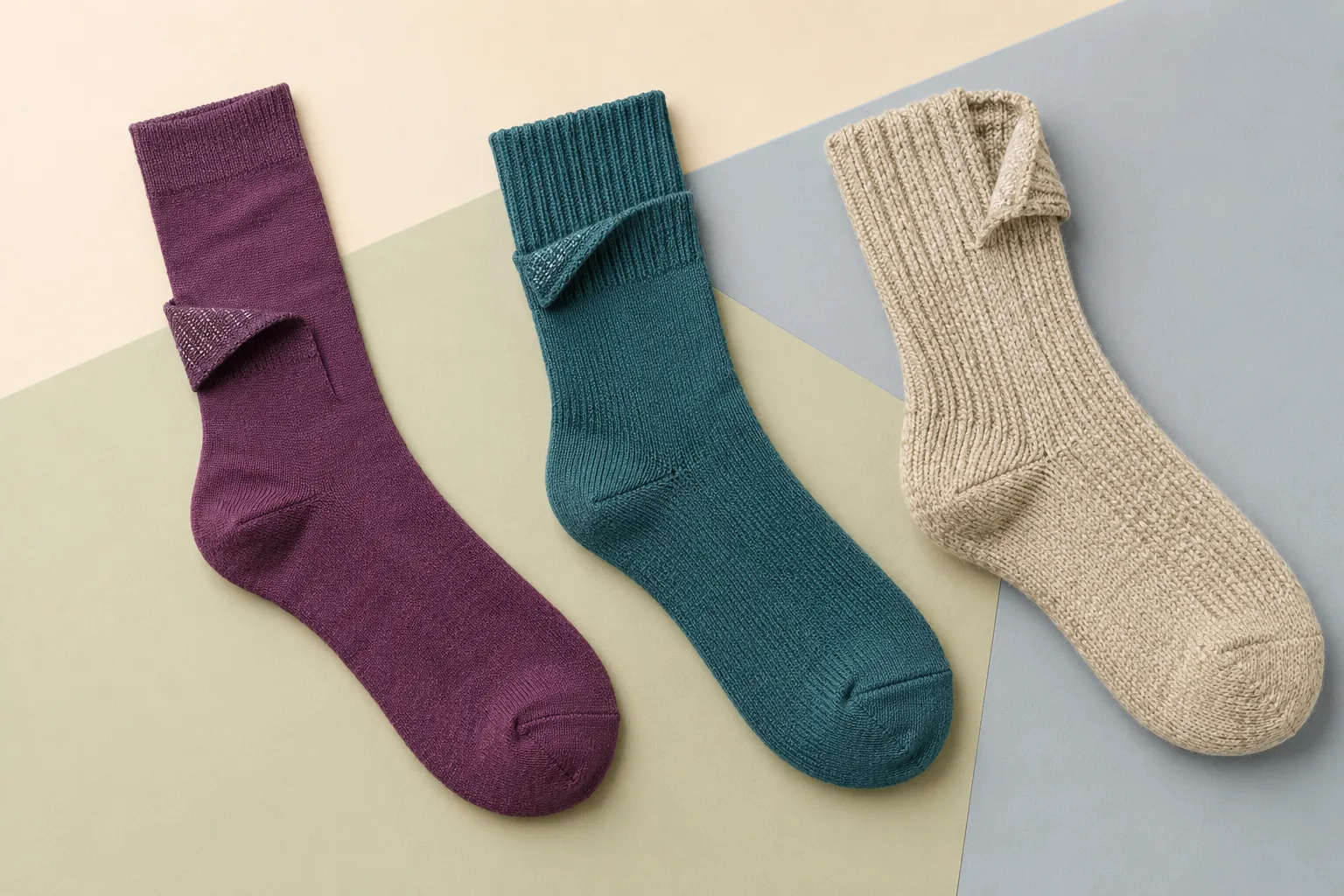
Fine gauge
Minimal bulk for close-fitting shoes
A thin, smooth knit can work with loafers, flats, or dress shoes that leave little room for cushioning. Check that the fabric remains opaque enough when stretched and that the toe seam lies flat.
- Warmth
- Light
- Cushioning
- Minimal
- Footwear
- Dress and low casual shoes
- Check
- Toe seam and durability
Everyday weight
Moderate structure for regular wear
An everyday crew sock may add more insulation and a small amount of underfoot density without becoming a full boot sock. It needs enough stretch recovery to remain fitted through walking and repeated wear.
- Warmth
- Light to moderate
- Cushioning
- Light or targeted
- Footwear
- Casual shoes and roomy loafers
- Check
- Heel alignment and cuff security
Boot weight
More insulation and cushioning when space permits
A denser sock can suit outdoor, work, or winter boots, but only when the boot has room for it. Compressed material and restricted toe movement are poor exchanges for additional thickness.
- Warmth
- Moderate to substantial
- Cushioning
- Targeted or full sole
- Footwear
- Roomy ankle and tall boots
- Check
- Toe room and boot volume
Showing the fine-gauge sock recommendation.
Construction over a single percentage
Read the complete fiber blend
Alpaca contributes insulation and fiber feel, while the supporting materials help a sock stretch, recover, and resist abrasion. The useful balance depends on the sock's weight and intended footwear.
The fiber character that distinguishes the sock.
Added strength at areas exposed to repeated friction.
Help the foot, leg, and cuff remain fitted.
May change texture, resilience, drying, or washing requirements.
Begin with the shoe or boot
The same foot may need different sock weights
Footwear volume, collar height, and the amount of walking change what a useful sock must do. One pair does not need to serve every shoe.
01
Loafers, flats, and dress shoes
Start with fine-gauge construction and a low-profile toe seam. Confirm that the added material does not create instep pressure or heel movement.
Usually: lightweight02
Casual shoes and sneakers
A light or everyday sock can work when the heel remains aligned and the cuff clears the footwear edge.
Usually: light to medium03
Ankle and tall boots
Match the sock height to the boot collar and add cushioning only if the toe box and instep have room.
Usually: medium to heavy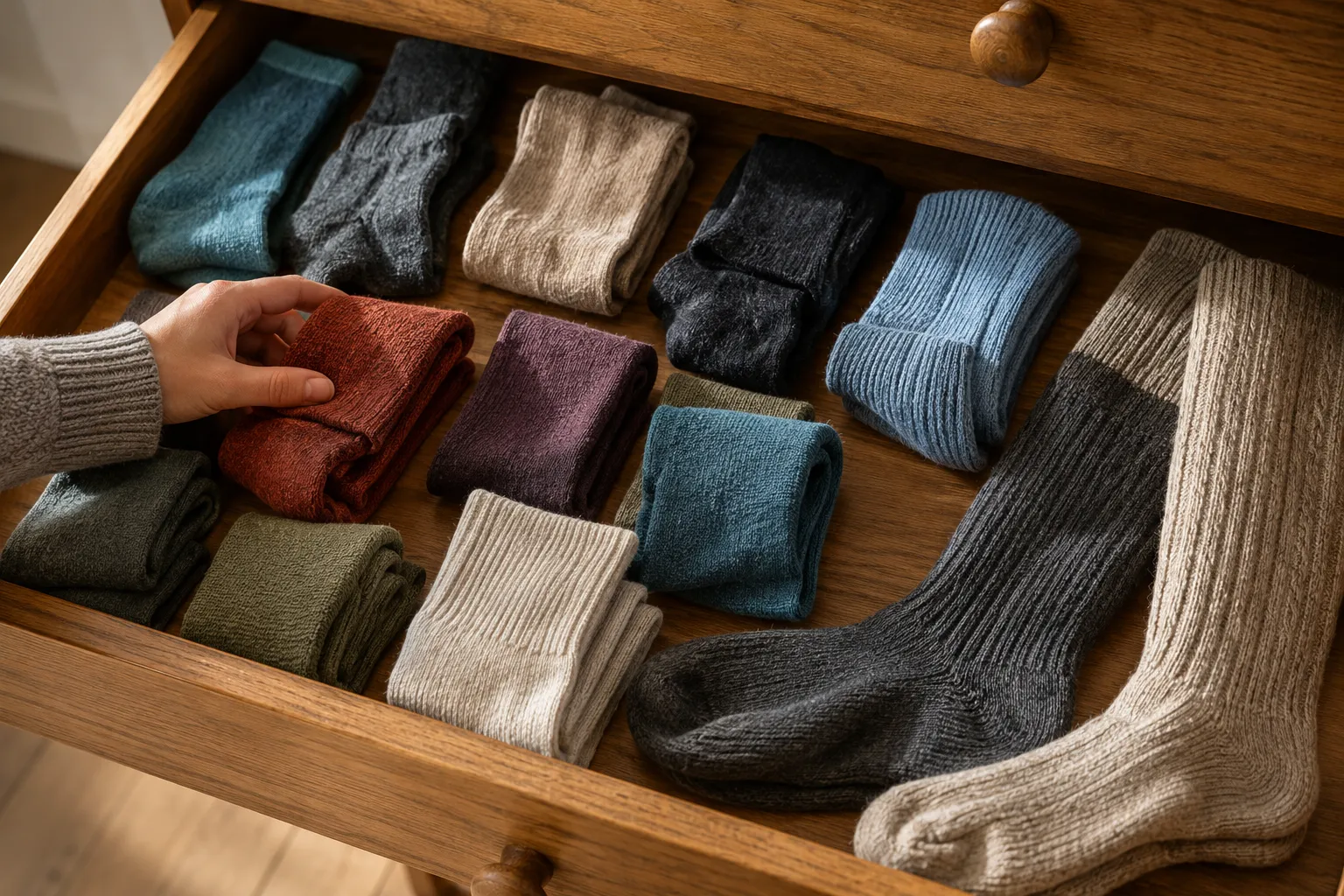
Care for a mixed sock drawer
Store each pair without stretching the cuff
Some farms that raise alpacas sell finished socks directly, but their blends and care requirements can differ considerably. Keep the instructions for each pair instead of assuming the entire drawer can be washed and dried the same way.
- Wash according to the specific care label
- Use cool water and gentle handling when directed
- Air-dry pairs that should not receive dryer heat
- Fold socks loosely instead of wrapping one cuff around both
- Keep lightweight pairs away from rough hooks or drawer hardware
Let the pair air and check the heel, toe, and cuff.
Separate pairs that have different fiber blends or label instructions.
Make sure both socks are completely dry and returned to shape.
Common questions
Women's alpaca sock FAQ
Are women's alpaca socks different from men's alpaca socks?
The alpaca fiber is not gender-specific. Differences may include the offered foot sizes, heel and leg proportions, sock heights, colors, or product styling. Compare measurements when the size ranges overlap.
What should I do if my foot and calf need different sizes?
Look for a maker that provides both foot and calf measurements or offers a wider-calf construction. Increasing the foot size may create excess material beneath the heel or toes without solving the cuff problem.
Should I size up for thick alpaca socks?
Use the maker's chart for that particular sock. A thicker knit does not always require a larger sock size, but it may require roomier footwear. Check heel placement and toe room in the complete sock-and-shoe combination.
Which sock height works with ankle boots?
The cuff should normally clear the boot collar so the footwear does not rub directly against the leg. Depending on the boot shaft, that may require a crew or mid-calf sock.
Are alpaca socks too warm for everyday indoor use?
Not necessarily. A fine-gauge or lightweight blend can be much less insulating than a boot or winter sock. Room temperature, footwear, activity, knit density, and personal preference all affect comfort.
Can women's alpaca socks be machine-washed?
Some can and some cannot. Washability depends on the complete fiber blend and how the sock was made. Follow the care label for the specific pair.
Choosing women's alpaca socks
Use the women's label as a starting point, then check the actual foot range, heel placement, calf fit, height, knit weight, fiber blend, and intended footwear. A sock that stays aligned and leaves normal room inside the shoe is more useful than one chosen by category name alone.