Alpaca sock guide
Alpaca dress socks
A dress sock has to provide warmth and remain fitted without adding the bulk of a hiking, boot, or winter sock. Fine-gauge construction, a smooth toe, appropriate height, and a stable fiber blend all affect how the sock feels inside close-fitting shoes.
- Profile
- Thin and smooth
- Height
- Usually crew or over-the-calf
- Priority
- Warmth without crowding
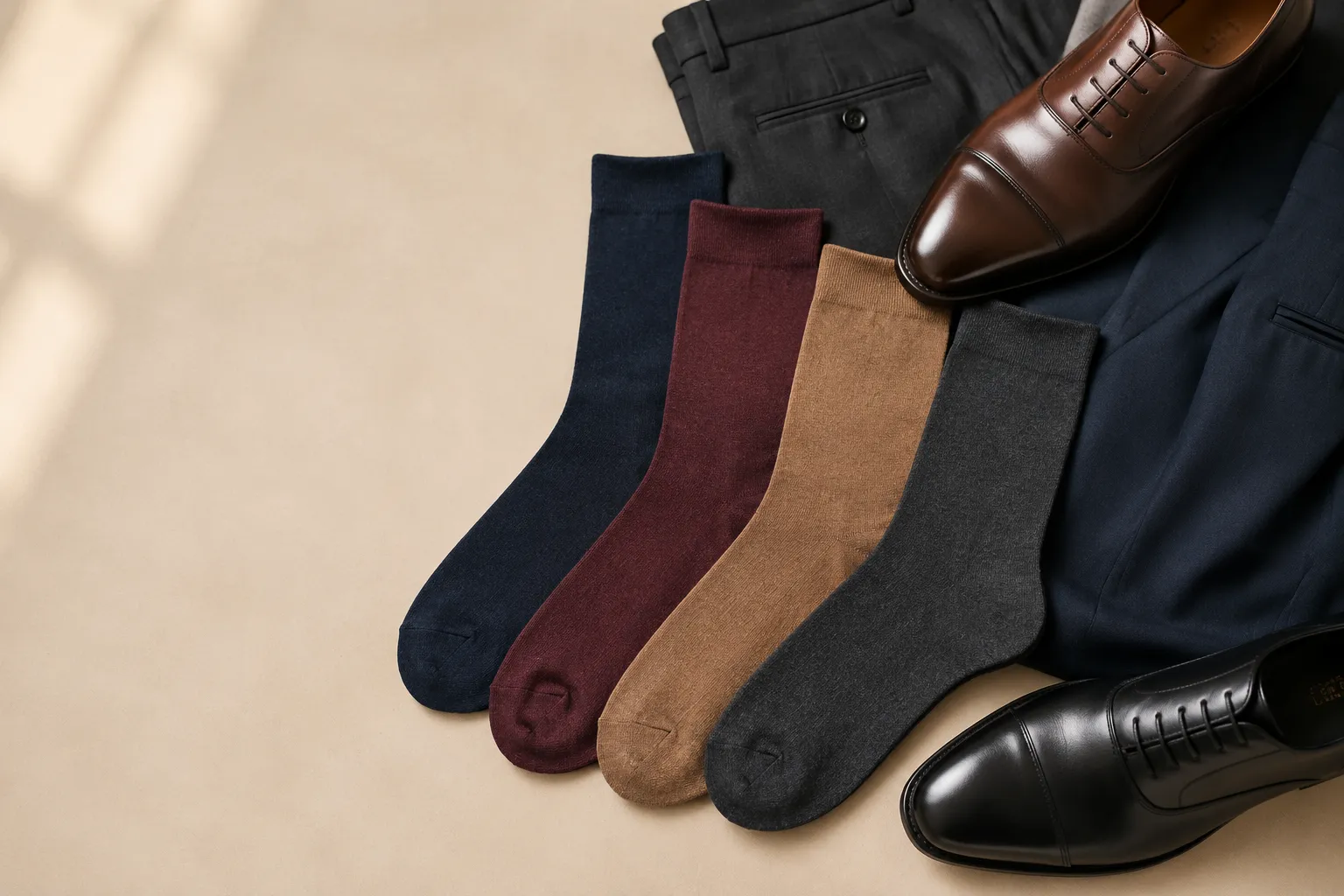
A different kind of warm sock
What makes an alpaca sock suitable for dress shoes?
Dress shoes generally leave less room for additional material than hiking shoes or work boots. The useful question is therefore not simply whether a sock uses alpaca fibers, but whether the complete sock has been knitted finely enough to fit the intended footwear.
Alpaca contributes insulation and a smooth fiber feel. Nylon, elastic fibers, wool, or other supporting materials can help a thin sock recover its shape and resist wear at the heel and toe. The finished knit should lie close to the foot without becoming transparent when stretched.
Some pairs are made for everyday office wear, while others are tall enough for formal clothing or slightly heavier for cool weather. A label that simply says "alpaca socks" does not reveal whether the pair will work in dress footwear.
Interactive construction guide
Anatomy of a dress sock
Select a numbered part of the sock to examine its role. Every area should contribute to a smooth, low-bulk fit rather than adding unnecessary thickness.
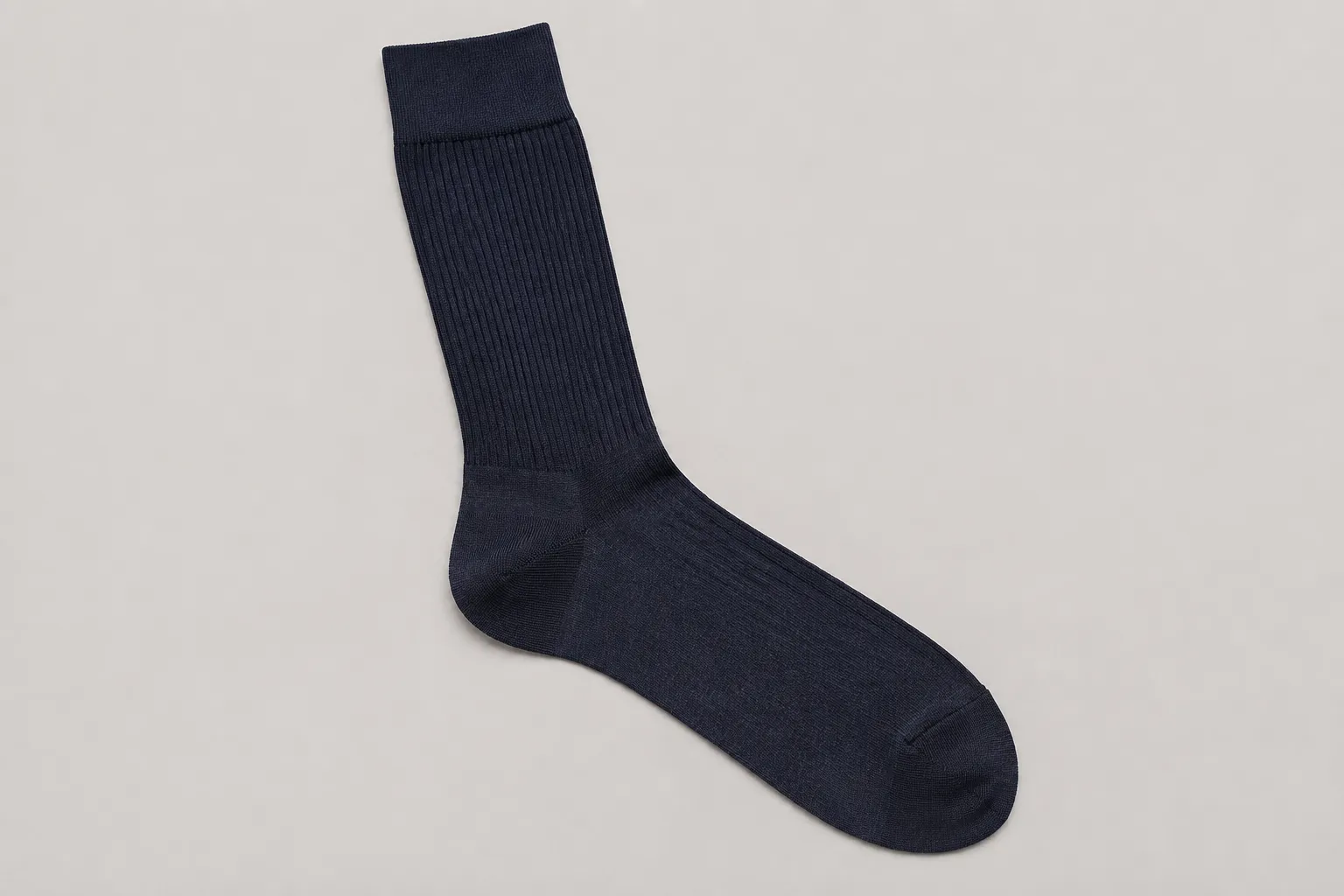
Part 01
A secure cuff without a hard edge
The cuff needs enough elasticity to remain upright beneath the trouser leg. It should not slide down, roll over, or leave a sharply defined pressure line after ordinary wear.
A wider cuff can distribute pressure across more of the calf, although its comfort still depends on sizing and the amount of elastic used.
Part 02
Fine ribbing helps the leg retain its shape
Vertical ribbing provides stretch while maintaining a refined surface. The leg should expand around the calf without becoming sheer or distorting a pattern beyond recognition.
Crew socks work for many outfits, while over-the-calf socks provide more coverage when the wearer is seated or crosses a leg.
Part 03
The heel pocket should remain centered
A shaped heel helps the sock follow the foot instead of gathering around the ankle. Reinforcement may use denser knitting or stronger supporting fibers, but it should not create a bulky ridge inside the shoe.
If the heel pocket sits beneath the foot or climbs toward the ankle, the size or proportions may be wrong.
Part 04
A low-profile seam reduces a common pressure point
Close-fitting shoes leave little room for a raised or poorly placed toe seam. Look for a flat, linked, or otherwise low-profile closure that sits smoothly across the toes.
The reinforced area should cover the toes without pulling them inward or creating extra fabric at the end of the shoe.
Part 05
The sole should add durability, not hiking-sock bulk
Many dress socks use the same fine knit around the foot, while others add modest density beneath the heel or forefoot. Heavy terry loops and deep cushioning can make a dress shoe feel smaller.
Judge the sole inside the actual shoe. A slightly denser knit may be useful, but the foot should retain its normal position and toe room.
Showing information about the cuff.
Inside close-fitting footwear
Choose the thickness with the shoe
A sock can look appropriate and still interfere with footwear fit. Try the complete combination before relying on it for a full day or a formal event.
-
Very thin
Minimal bulk for close-fitting shoes, with less insulation and cushioning.
-
Fine gauge
A common balance for everyday dress shoes and office wear.
-
Light cushion
Useful only when the shoe has room around the toes and instep.
-
Too bulky
May lift the heel, compress the toes, or change normal shoe fit.
Oxfords and other lace-up shoes
Laces provide some adjustment over the instep, but the heel and toe box still have fixed dimensions. Check that added sock thickness does not raise the foot or push the toes forward.
Loafers and slip-on shoes
Because there are no laces to adjust, a thicker sock can noticeably alter heel retention and instep pressure. Fine-gauge pairs are often easier to accommodate.
Dress boots and cool-weather shoes
A slightly denser sock may work when the footwear has additional volume. More insulation is useful only if the sock does not become tightly compressed.
More than black and charcoal
Color and pattern can be quiet or deliberate
Dress socks do not have to disappear, but their color should look connected to the rest of the clothing. The trouser color, shoe color, setting, and amount of sock visible all affect how noticeable a pair appears.
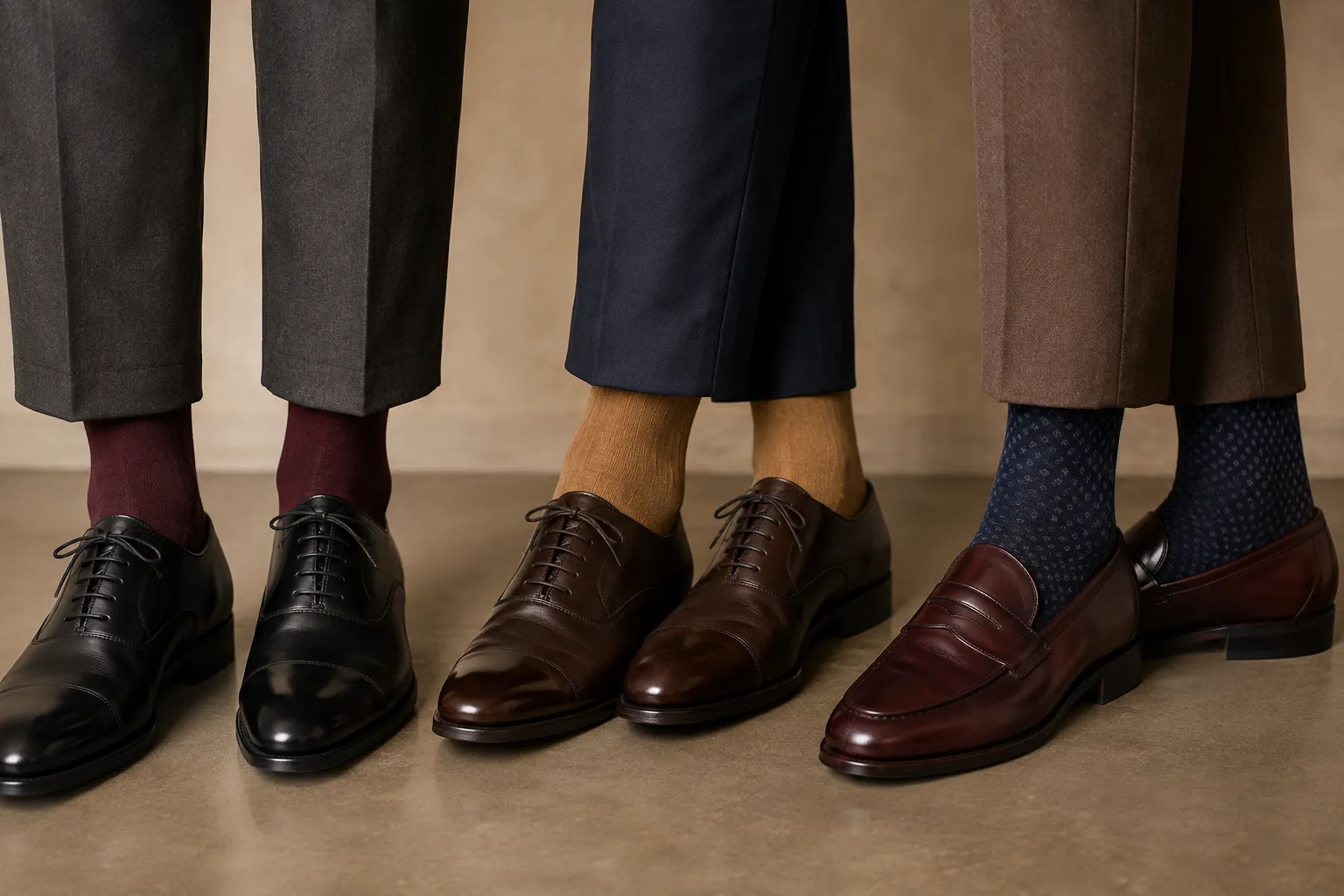
Quiet continuity
Relate the sock to the trousers
Navy with navy, charcoal with gray, or brown with earth tones creates a continuous line between the trouser hem and shoe.
Controlled contrast
Repeat a color already present elsewhere
Burgundy, muted green, camel, or rust can provide contrast without appearing unrelated when the color is repeated in another small part of the outfit.
Restrained pattern
Check the pattern while the sock is stretched
Dots, narrow stripes, or small repeating motifs should remain legible around the calf. If the knit becomes overly stretched, both the fit and pattern may be affected.
Read the complete fiber label
A thin sock still needs structure
Fine dress socks ask a relatively small amount of material to provide insulation, stretch, abrasion resistance, and shape recovery. Different fibers commonly handle different parts of that job.
Alpaca
Insulation and fiber feel
Contributes the warmth and character that distinguish the sock, even when supporting fibers make up a meaningful part of the blend.
Nylon or polyamide
Abrasion resistance
Helps reinforce areas that repeatedly contact the heel counter, insole, and toe box.
Elastic fibers
Fit and recovery
Help the cuff, leg, and foot return to shape rather than loosening through the day.
Other supporting fibers
Structure and handling
Wool, cotton, silk, or manufactured fibers may change the texture, resilience, drying, and washing requirements of the finished sock.
A higher alpaca percentage is not automatically a better dress sock. The useful blend is the one that produces a smooth, durable knit at a thickness compatible with the footwear.
Smooth from toe to cuff
Fit and height deserve equal attention
A pair that fits the foot but slides down the calf will eventually gather around the ankle. A pair that stays upright but pulls the toes inward is not the correct size either.
Align the heel
The heel pocket should sit around the heel rather than beneath the sole or above the ankle.
Check the toe seam
The closure should lie flat and remain away from areas where the shoe applies pressure.
Check the calf
The leg should remain smooth without becoming sheer, rolling over, or leaving a deep cuff mark.
Sit before deciding on height
Confirm that the chosen crew or over-the-calf height provides the amount of coverage you want while seated.
Treat them like a fine knit
Washing, drying, and rotating dress socks
Fine-gauge socks can be damaged by heat, aggressive washing, rough surfaces, and shoes with worn interior linings. Follow the maker's care label because washable blends do not all use the same fibers or construction.
Garment notes
Fine-gauge alpaca blend- Wash
Use cool water and a gentle method unless the label gives different instructions.
- Dry
Reshape and air-dry when directed; avoid high heat that can shrink or distort the knit.
- Rotate
Allow pairs to recover fully between wears rather than relying on the same socks every day.
- Inspect
Check toenails, shoe linings, and worn heel areas that can repeatedly catch the fine knit.
- Store
Fold pairs loosely instead of stretching one cuff around both socks.
Some farms that raise alpacas sell finished socks directly, but the blend, knit density, and washability can differ substantially from one maker to another. Keep the care instructions that came with the specific pair.
Common questions
Alpaca dress sock FAQ
Are alpaca dress socks too warm for indoor wear?
Not necessarily. Warmth depends on fiber content, knit density, thickness, footwear, room temperature, and personal preference. A fine-gauge alpaca blend can be substantially lighter than a boot or winter sock, but someone who usually feels warm indoors may still prefer a very thin pair.
Can alpaca dress socks be worn with loafers?
Yes, when the pair is thin enough for the specific shoe. Loafers have no laces to adjust, so additional thickness can change instep pressure or heel retention more noticeably than it does in some lace-up shoes.
Should dress socks match the trousers or shoes?
Matching or relating the socks to the trousers creates a continuous line, while coordinating with the shoes or another clothing color creates more contrast. Neither is a universal requirement. The setting and how much sock shows are more useful considerations than a single rigid rule.
Are over-the-calf alpaca socks appropriate for dress clothing?
They can be. Over-the-calf construction provides more coverage when seated and may stay upright more reliably for some wearers. Calf circumference and cuff elasticity still need to match the wearer.
Why do alpaca dress socks contain nylon or elastic?
These supporting fibers can improve abrasion resistance, stretch, and shape recovery. That is especially useful in a fine sock that must stay fitted while repeatedly rubbing against the shoe.
Do alpaca dress socks need to be hand-washed?
Some do and some do not. The correct method depends on the complete blend and how the sock was made. Follow the care label rather than assuming that every alpaca-blend pair has identical washing requirements.
Choosing alpaca dress socks
Start with the shoes, then choose a fine-gauge pair that leaves normal room around the toes and instep. Check the complete fiber blend, heel placement, toe seam, calf fit, and height. Color and pattern come after those practical details, not before them.