Alpaca sock guide
Alpaca compression socks
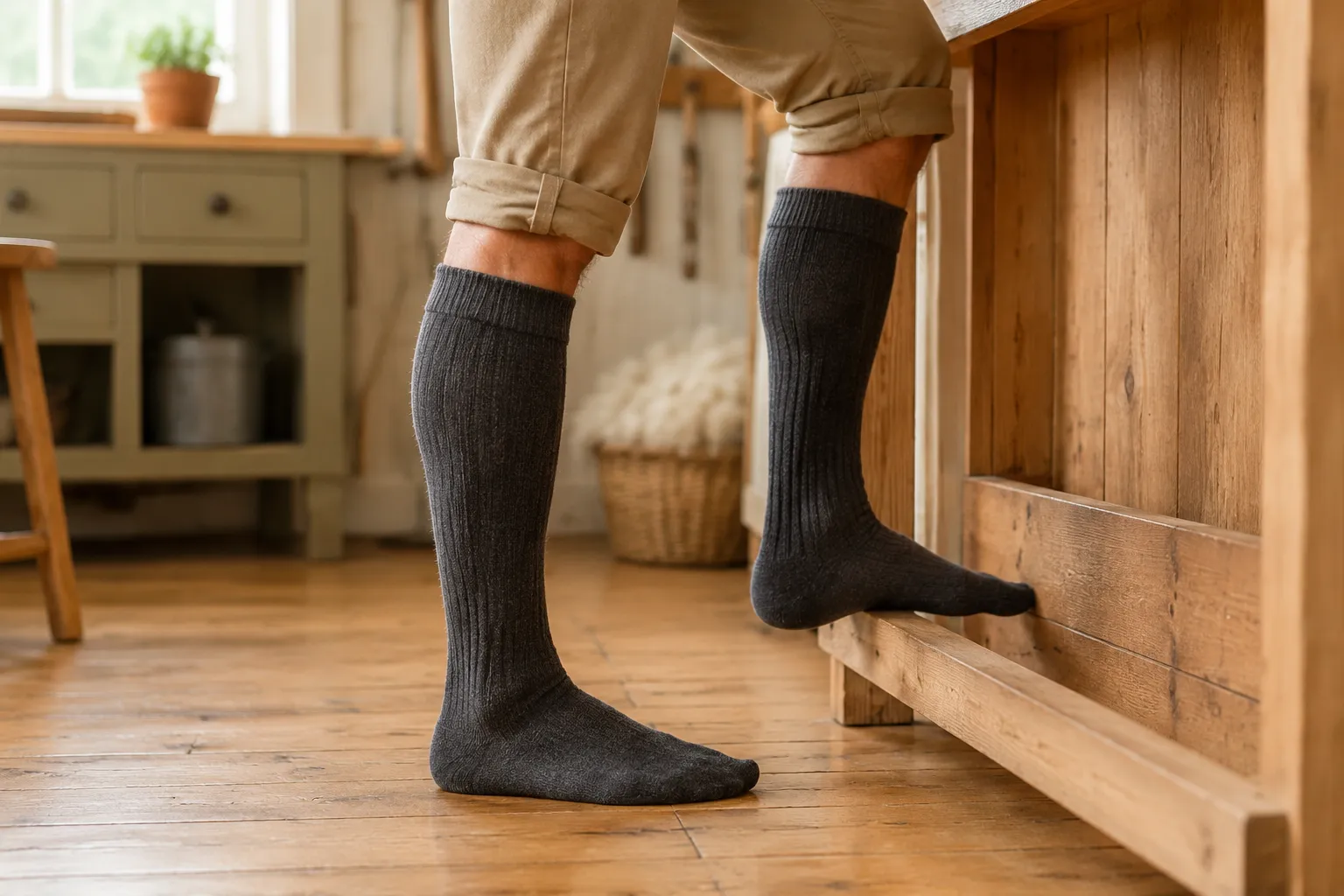
Compression and fiber solve different parts of the sock. The knit and elastic structure create graduated support; alpaca contributes warmth and fiber character. A useful pair needs a stated pressure level, accurate sizing, and a smooth fit—not merely a tight cuff.
Start with the distinction
Support comes from structure—not from alpaca alone
Alpaca is the featured natural fiber, but it does not create a controlled pressure gradient by itself. Compression depends on the sock’s dimensions, elastic yarns, knit tension, shape, and size range. The finished product must be engineered and tested as a compression sock.
This distinction matters when reading product descriptions. A ribbed alpaca sock may feel close around the calf without providing measured compression. If a maker does not state a pressure rating in millimeters of mercury (mmHg), treat the product as a supportive or snug-fitting sock rather than assuming a medical compression level.
Within the broader range of alpaca clothing, compression socks place unusually high demands on elastic recovery and precise sizing. Fiber percentage is only one part of that design.
Measured compression
Created by the knit structure, elastic yarns, graduated shaping, and correct size.
- Pressure rating
- Ankle-to-calf graduation
- Consistent recovery
Alpaca blend
Contributes warmth, softness, appearance, and the particular feel of the finished fabric.
- Fiber percentages
- Surface texture
- Care requirements
Read the number before the adjective
Understanding compression ratings
Compression is commonly expressed as a range in mmHg. Marketing terms such as “light,” “moderate,” and “firm” are not used identically by every company, so compare the number, size chart, and intended use together.
No mmHg stated Supportive fit
The sock may use ribbing or extra elastic to stay close to the leg, but there is no stated pressure range to compare. Do not infer graduated or medical compression from words such as “support,” “recovery,” or “circulation” alone.
Around 8–15 mmHg Light compression
This range is often marketed for everyday wear, travel, or prolonged sitting and standing. Confirm that the product actually states the range and provides measurements for choosing a size.
Around 15–20 mmHg Moderate compression
This is a stronger commonly sold range. Suitability depends on the wearer and reason for use; a product description is not a substitute for individual medical guidance.
20–30 mmHg and above Firm or medical compression
Higher ranges are used in medical care as well as some retail products. If compression is being considered for swelling, a circulation problem, recovery after a procedure, or another diagnosed condition, the pressure and fit should come from a qualified healthcare professional.
Important: These ranges describe common marketplace language, not a universal classification system or a personal recommendation.
Pressure should change gradually
Anatomy of a knee-high compression sock
True graduated compression is generally strongest near the ankle and decreases farther up the leg. Each part of the sock helps hold that shape during wear.
Wide top band
Holds the sock below the knee without being folded or rolled into a narrow band.
Shaped calf
Accommodates leg circumference while maintaining the intended graduation.
Defined ankle
Places the strongest stated pressure near the narrowest measured part of the lower leg.
Formed heel and foot
Keep the garment aligned so extra fabric does not gather around the ankle or toes.
A smooth fit is part of the function
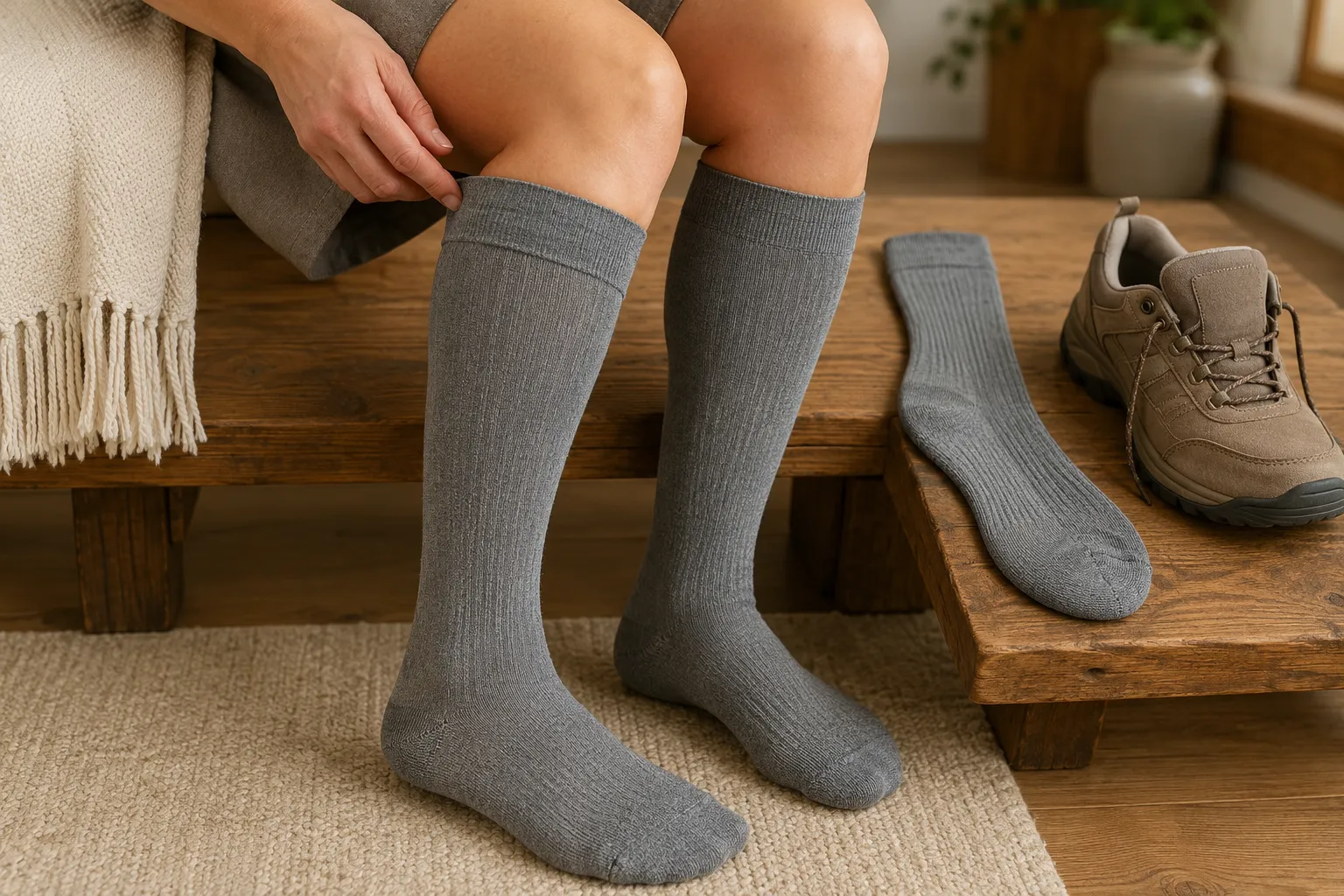
Check the fit from heel to knee
Use the maker’s size chart rather than relying only on ordinary shoe size. Depending on the product, the chart may ask for ankle circumference, calf circumference, and lower-leg length.
Once on, the sock should feel firm and supportive while lying smoothly against the leg. It should not be painful, folded at the top, or bunched around the ankle.
A blend has several jobs
Why alpaca compression socks are usually blended
A durable compression sock must stretch repeatedly, return toward its original dimensions, and tolerate friction inside footwear. Natural and manufactured fibers commonly divide those responsibilities.
Alpaca
Provides warmth, softness, natural color, and the fiber identity of the sock.
Read the stated percentageElastic fibers
Create stretch and recovery through the ankle, calf, and top band.
Essential to controlled fitNylon or polyamide
Adds strength and abrasion resistance while supporting a fine, stable knit.
Often carries structural loadWool or other fibers
May contribute resilience, moisture behavior, or additional warmth depending on the blend.
Varies by makerA useful product description should answer four questions
- PressureIs an mmHg range stated?
- SizingWhich leg measurements are required?
- BlendAre all fiber percentages listed?
- CareHow should elasticity be protected?
Choose for the actual situation
Everyday support, travel, and cold-weather wear
StandingLong periods on your feet
A knee-high alpaca blend may appeal to people who want measured support with more warmth than thin synthetic hosiery. Footwear still needs enough room for the finished sock, especially if the sole is cushioned.
Sitting and travelExtended periods with limited movement
Compression socks are commonly marketed for travel, but they do not replace ordinary movement and personal medical guidance. Stand, walk, or move the ankles when practical rather than treating the sock as the only measure.
Cool surroundingsSupport combined with warmth
Alpaca can make the blend useful in cool workplaces or during colder travel. In warm weather, however, a lighter compression fabric may be more comfortable than an insulating natural-fiber blend.
Walking and outdoor useMovement, footwear, and friction
Look for a formed heel, a smooth toe area, and reinforcement in contact zones. For trail-focused cushioning and abrasion questions, the alpaca hiking sock guide addresses a different set of priorities.
Protect both fiber and elasticity
Caring for alpaca compression socks
The care label for the complete blend takes priority. Compression performance depends on elastic recovery, so a method suitable for an ordinary alpaca sock may not be suitable for a measured compression garment.
- 01
Wash regularly
Remove body oils and soil that remain in contact with the fine knit and elastic yarns.
- 02
Use the stated method
Follow the label’s water temperature, detergent, hand-wash, or machine-cycle instructions.
- 03
Avoid unapproved heat
Do not tumble-dry or place near direct heat unless the maker specifically permits it.
- 04
Inspect the recovery
Replace a pair that remains stretched, develops damaged elastic, or no longer fits as intended.
Common questions
Alpaca compression sock FAQ
Do alpaca socks naturally provide compression?
No. Alpaca fiber can be knitted into a close-fitting sock, but controlled compression comes from the complete design: elastic yarns, knit tension, shaping, sizing, and testing. Look for a stated mmHg range if measured compression is important.
Are alpaca compression socks warmer than ordinary compression socks?
They may be warmer than a thin synthetic pair, depending on the alpaca percentage, fabric weight, cushioning, and overall construction. “Alpaca blend” alone does not establish a specific warmth level.
Should compression socks feel tight?
They should feel firm and supportive, but tightness alone does not prove correct compression. The sock should be the correct size, lie smoothly, and not cause pain, numbness, skin-color changes, or a rolled constricting band.
Can I choose compression socks using shoe size?
Some light-support products use shoe size, but many compression size charts also require ankle and calf circumference. Use every measurement requested by the maker rather than choosing from shoe size alone.
Can alpaca compression socks be worn in work boots?
Yes, when the boot accommodates the sock without crowding the foot and the sock stays smooth. A cushioned alpaca blend may occupy more space than the thin sock used when the boot was fitted.
Can I fold down a knee-high compression sock?
No. Folding or rolling the top concentrates material into a narrow band. If the sock is too long, recheck the size and product length rather than folding it.
Are compression socks and anti-embolism stockings the same?
No. Products intended for everyday wear, graduated medical compression, and anti-embolism use are designed for different circumstances. Follow the specific product or clinical instructions instead of treating those names as interchangeable.
Can alpaca compression socks go in the dryer?
Only if the care label permits it. Heat can affect both natural fibers and elastic components, so air-drying away from direct heat is often specified.
Choosing a useful pair
Start with the stated compression range and the reason you want to wear it. Then check the sizing measurements, fiber percentages, height, cushioning, footwear space, and care instructions. A higher alpaca percentage cannot compensate for a missing pressure rating or an inaccurate fit.
Shoppers comparing products from an alpaca farm or specialty maker should expect the same basic information they would need from any compression-sock seller: a clear strength, a usable size chart, a complete blend, and realistic wearing guidance.