Alpaca sock guide
Alpaca winter socks
Winter socks are selected for conditions, not by thickness alone. Activity level, time outdoors, wind, moisture, footwear insulation, and available toe room all affect whether a light, medium, or heavyweight alpaca blend is the practical choice.
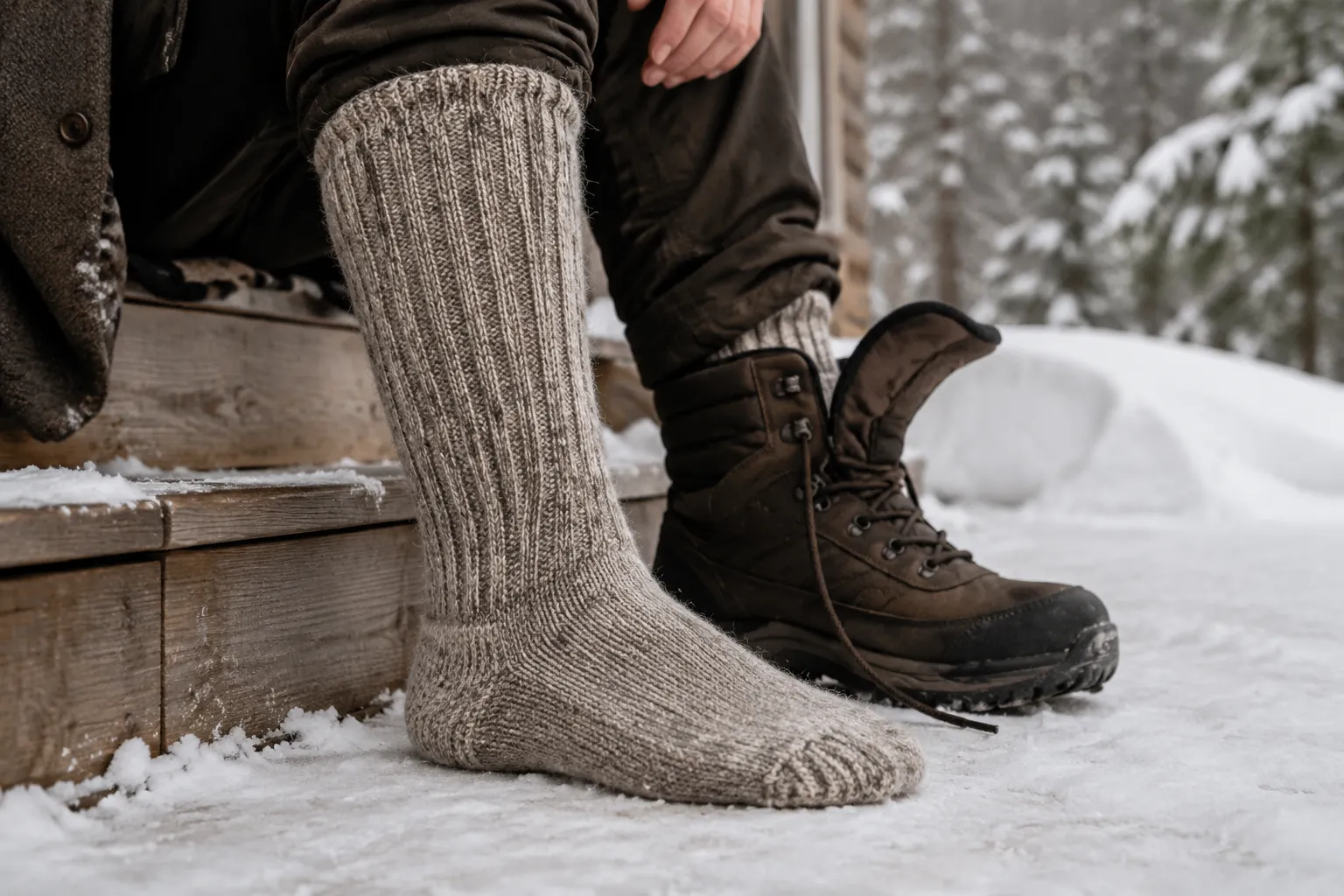
Think beyond the sock
Winter warmth works as a system
A sock is only one layer between the foot and the conditions outside. The same pair can feel comfortable during a slow outdoor task and overly warm during continuous movement.
Alpaca fiber contributes insulation and a smooth feel, while other fibers commonly add reinforcement, stretch, and shape recovery. Those qualities are useful, but they cannot correct a boot that is too tight, a cuff that slips, or a sock that becomes damp and remains against the foot.
Begin with the activity and footwear. Then consider how long you will be outside, whether the conditions are wet or windy, and whether you can change pairs if the sock becomes uncomfortable.
- Movement
- Continuous, intermittent, or mostly still
- Exposure
- Temperature, wind, wetness, and duration
- Footwear
- Insulation, fit, height, and ventilation
- Moisture
- Perspiration and outside dampness
Match warmth to movement
Activity level changes the useful sock weight
More movement generally produces more heat inside the footwear. Less movement may call for greater insulation, provided the boot has space for it.
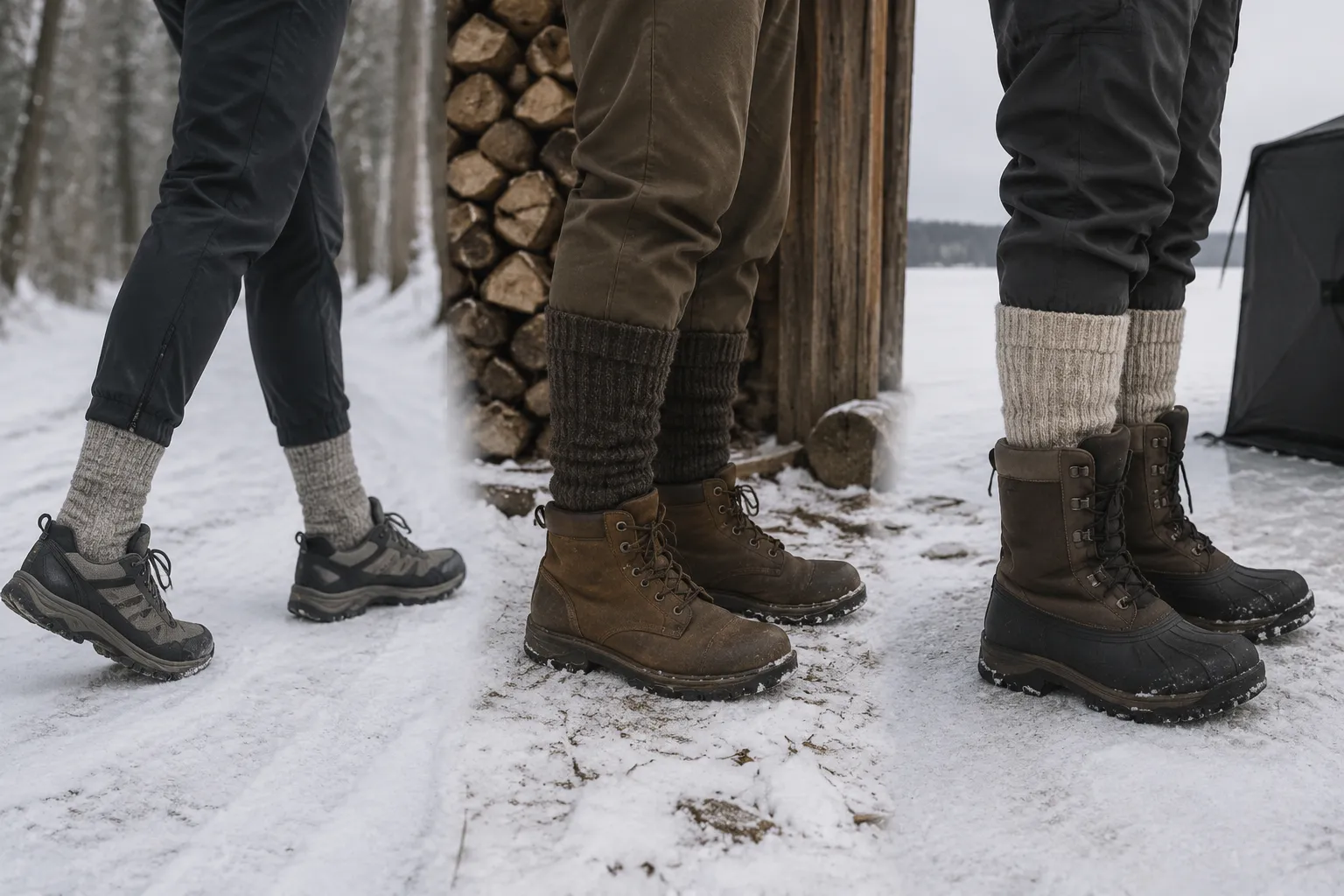
Start lighter
A light- or medium-weight blend may be sufficient for brisk walking, snowshoeing, or other steady activity. Excess insulation can lead to overheating inside the footwear.
- Typical weight
- Light to medium
- Primary concern
- Warmth without excess heat
Balance movement and pauses
Outdoor work often alternates between movement and standing. A medium or medium-heavy sock can provide cushioning and warmth without automatically filling the boot.
- Typical weight
- Medium to medium-heavy
- Primary concern
- Changing heat output
Insulation becomes more important
When little heat is produced through movement, a heavier sock may be useful. Toe room and footwear insulation still determine how much thickness is practical.
- Typical weight
- Medium-heavy to heavyweight
- Primary concern
- Warmth without compression
The temperature is only one factor
Read the full winter conditions
Air temperature
Lower temperatures may justify more insulation, but activity and footwear can change how the same temperature feels.
Wind exposure
Wind matters most when the footwear or clothing around the lower leg allows moving air to reach the sock area.
Wet snow and slush
A warm sock cannot keep outside moisture away if the boot leaks or snow enters around the cuff.
Time outdoors
A brief trip and several hours outside do not require the same margin for changing weather, dampness, or cooling during breaks.
Choose for the coldest and least active part of the outing, while still making sure the sock does not overfill the footwear during movement.
Inside the boot
Footwear insulation and toe room
An uninsulated leather boot, a waterproof rubber boot, and an insulated winter boot create different environments around the same sock.
Uninsulated boots
The sock may need to provide more of the insulation, but only if the boot was sized with that thickness in mind.
Check:Room around the toes and instepRubber or waterproof boots
Outside moisture may be blocked while perspiration and warmth remain inside. A secure fit and a dry replacement pair can be useful.
Check:Dampness and heel movementInsulated winter boots
The footwear already supplies insulation, so the heaviest sock may be unnecessary or may compress the available space.
Check:Whether extra thickness changes the fitFor a closer look at footwear volume, cuff height, and reinforcement, see the guide to alpaca boot socks.
Stay aware of dampness
A dry replacement can be more useful than added thickness
Winter socks can become damp from perspiration even when snow never enters the boot. Once activity slows, that damp pair may feel less comfortable than it did while you were moving.
For longer outings, keep a clean replacement pair protected inside the pack. Change socks when conditions and shelter allow, and open the footwear so both the boots and worn pair can begin drying.
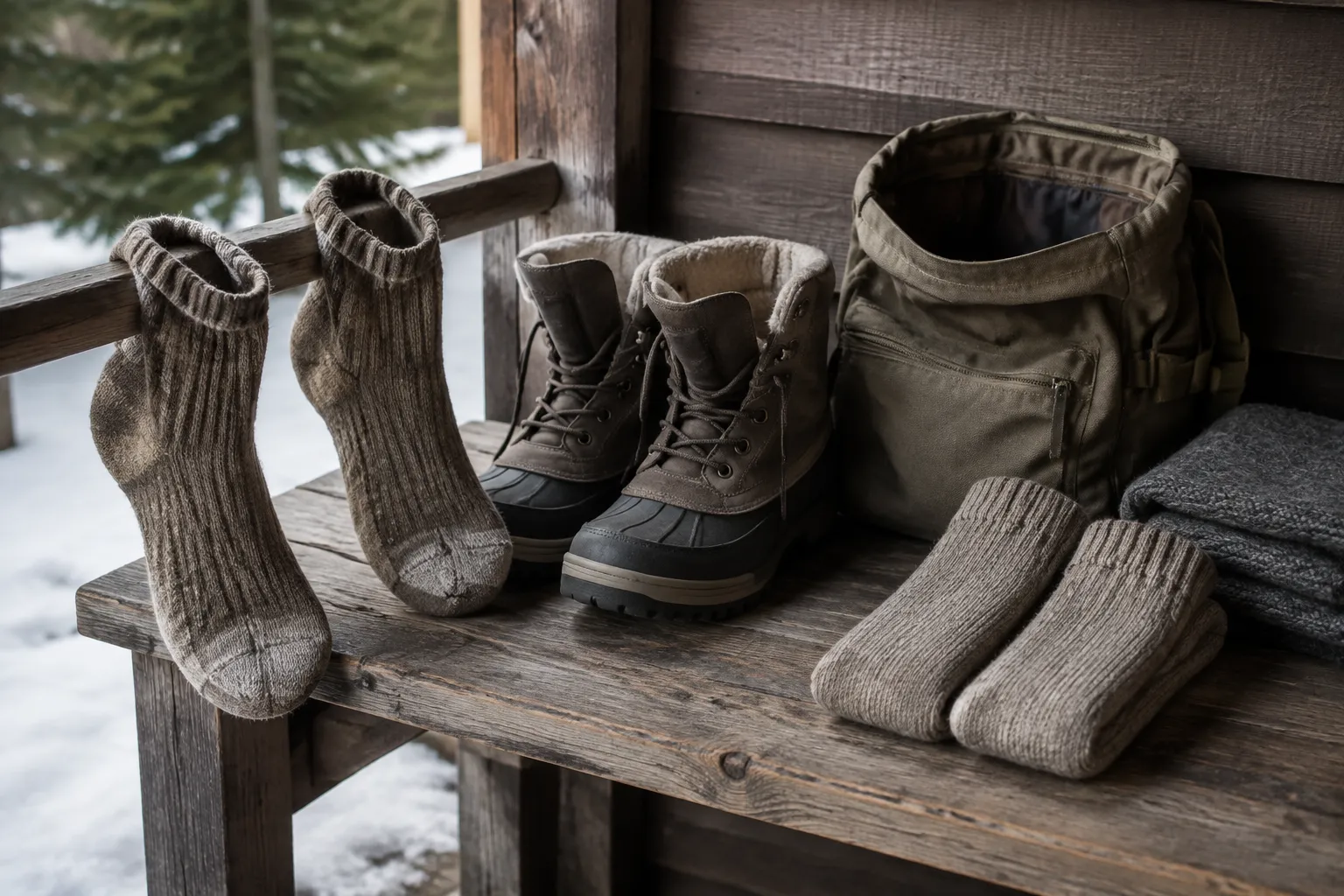
Pack the spare pair dry
Protect it from snow, leaking bottles, and damp equipment inside the bag.
Notice changes in comfort
Do not wait until a damp or folded sock becomes difficult to ignore.
Separate socks and footwear
Remove both pairs from the boots and let every item dry fully before reuse.
Related, but not identical
Winter socks versus thermal socks
Winter describes the use
Chosen for cold-weather conditions
A winter sock may be light, medium, or heavy depending on movement, exposure, and footwear. The category is defined primarily by when and where the sock is worn.
Thermal describes the construction
Built to retain insulating air
A thermal sock generally emphasizes loft, dense cushioning, or another insulating knit structure. That construction may be useful in winter, but not every winter outing requires it.
Learn about alpaca thermal socksRead beyond the front label
What to check in a winter sock blend
The alpaca percentage does not reveal whether the sock will stay fitted, resist abrasion, or suit the intended footwear.
Alpaca content
Contributes insulation and feel, but does not determine the whole performance of the sock.
Supporting fibers
Nylon, elastic, wool, or other fibers can add durability, resilience, and shape recovery.
Weight and cushioning
Indicate how much material the sock places inside the footwear and where that material is concentrated.
Care directions
Explain how the particular blend should be washed and dried without changing its intended fit.
Socks sold by alpaca farms and other makers can use very different blends, so compare the complete label rather than assuming all alpaca winter socks are constructed alike.
Restore the pair between uses
Winter sock care
- 01
Remove debris
Shake out grit, dried snow residue, and material picked up around the cuff.
- 02
Follow the label
Use the washing method and water temperature specified for the complete blend.
- 03
Dry fully
Keep socks out of boots while drying and avoid high heat unless the manufacturer permits it.
- 04
Check the fit
Before the next outing, inspect the cuff, heel, toe, and sole for stretching or thinning.
Common questions
Alpaca winter sock FAQ
Are alpaca socks warm enough for winter?
They can be, depending on the sock weight, blend, fit, activity, exposure, and footwear. No fiber alone guarantees that a particular pair is appropriate for every winter condition.
Should winter socks be as thick as possible?
No. Extra thickness is useful only when the footwear has room for it. A sock that compresses the toes or changes the heel position can make the boot less comfortable.
Are alpaca winter socks suitable for walking?
Yes, when the pair remains fitted and its weight matches the pace and weather. Continuous movement often calls for less insulation than standing still in the same temperature.
Do insulated boots still need heavy socks?
Not always. The boot already supplies insulation, and a medium-weight sock may preserve more toe room. Test the sock and boot together rather than choosing by thickness alone.
Should I carry a spare pair of winter socks?
A dry spare can be useful during longer outings, wet conditions, or activities that produce perspiration. Keep the replacement protected from moisture inside the pack.
Can alpaca winter socks be layered?
A thin liner and one fitted winter sock may work when the footwear was sized for both. Two bulky pairs can create folds, compress cushioning, and reduce available space.
Can alpaca winter socks go in the dryer?
Follow the care label for the specific blend. Some products permit low-temperature machine drying, while others should be air-dried. High heat can affect elastic fibers and fit.
Choosing a pair for winter conditions
Begin with the least active part of the outing and the amount of insulation already supplied by the footwear. Choose enough sock weight for the exposure, but preserve a smooth fit, normal toe room, and a plan for changing or drying the pair if it becomes damp.
Similar questions about fiber content, fit, layering, and care apply across other forms of alpaca clothing, although winter footwear makes sock thickness and moisture especially important.