From shearing to everyday warmth
Alpaca clothing & fiber
Alpaca fleece can be spun into exceptionally warm, soft goods that range from practical socks to lightweight sweaters, throws, and scarves. Each item uses the fiber a little differently.
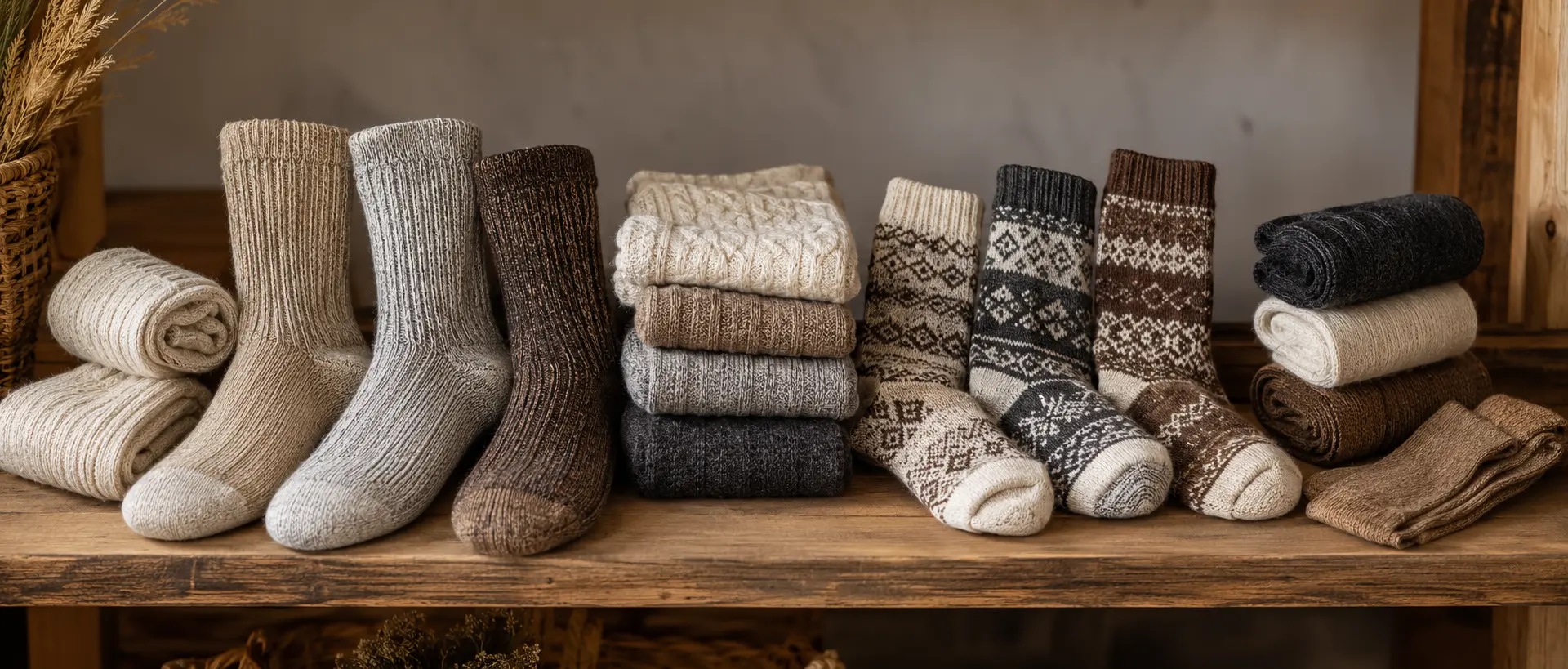
01 · Socks
Alpaca socks
Alpaca socks are often the first fiber product people try. The fleece is warm without needing the bulk of a heavy wool sock, and its smooth fibers can feel comfortable against the skin.
Everyday pairs, hiking socks, boot socks, and thick winter styles may all use alpaca in the blend. Makers often add another fiber for strength and stretch, especially in the heel and toe where a sock gets the most wear.
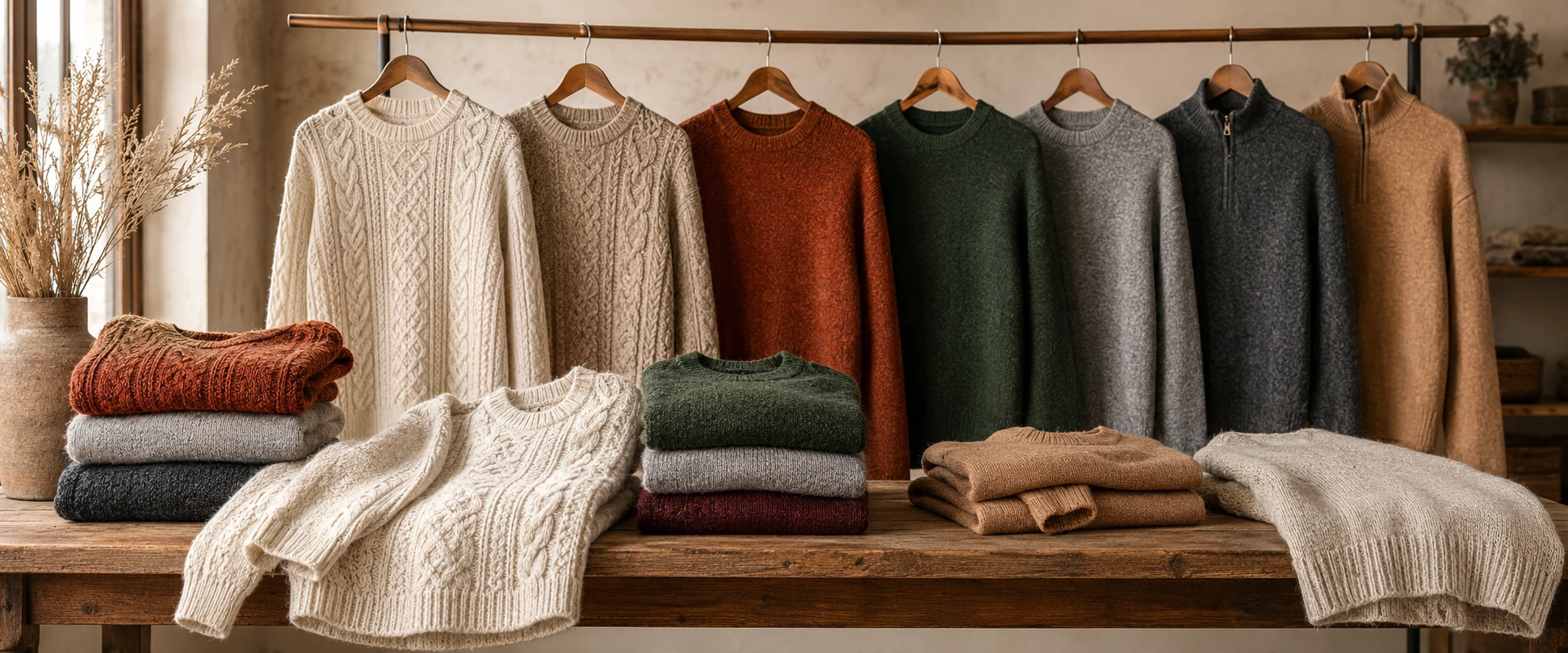
02 · Sweaters
Alpaca sweaters
An alpaca sweater is usually softer and less scratchy than many traditional wool sweaters. Fine alpaca fiber works well in close-fitting knits, while a thicker yarn brings out cable patterns and more relaxed cold-weather styles.
It is common to find crewnecks, V-necks, cardigans, and quarter-zip sweaters in undyed shades of ivory, fawn, brown, gray, and black. Dyed alpaca adds another range of color while retaining the fiber’s light warmth.
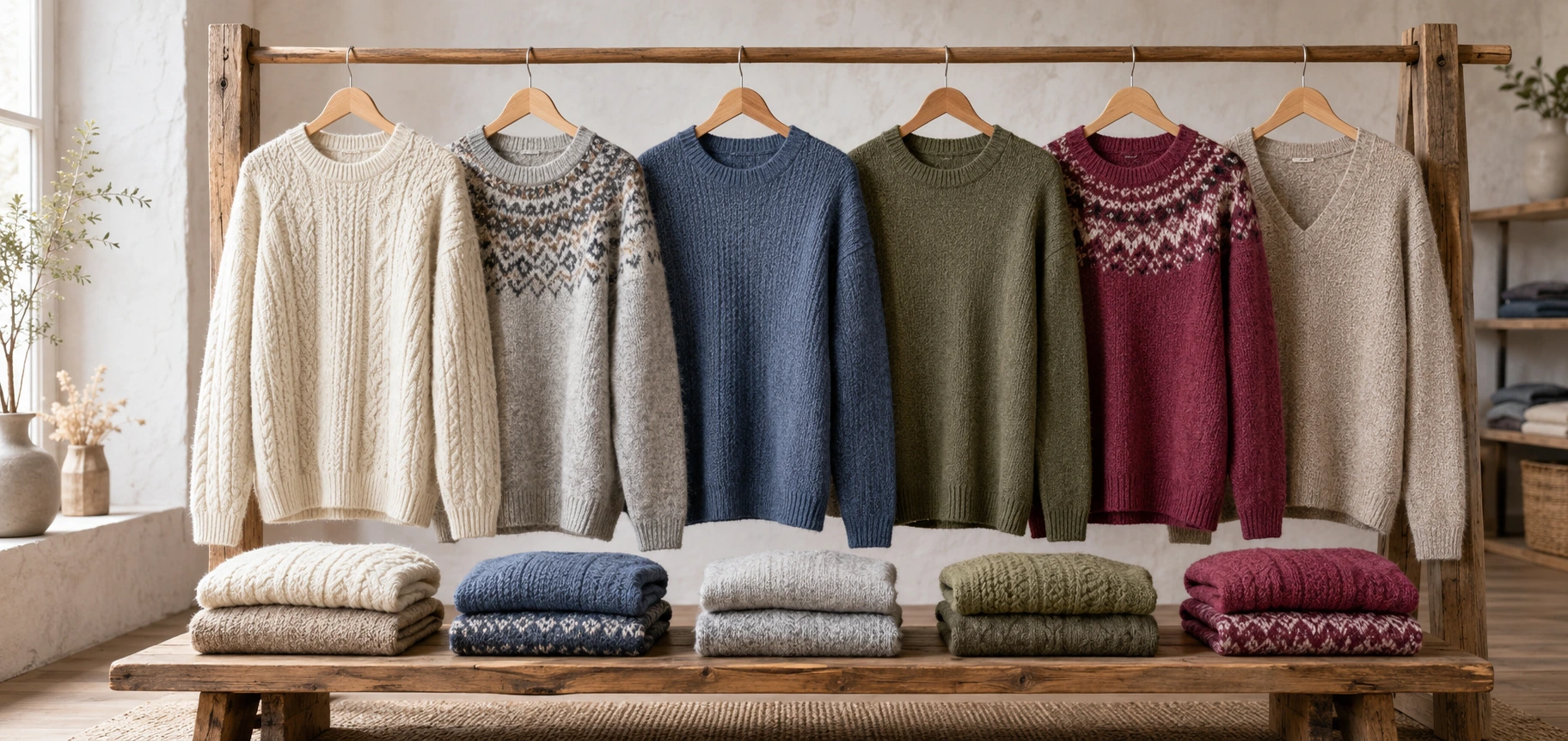
03 · Jumpers
Alpaca jumpers
In clothing, “jumper” is another name for a pullover knit. Alpaca jumpers can be fine and light enough for layering or made in a heavier yarn for a substantial, cozy feel.
Classic ribbed cuffs, Fair Isle patterns, and cable details are all popular choices. Because alpaca fibers have a natural sheen, even a simple plain-knit jumper can look polished without being fussy.
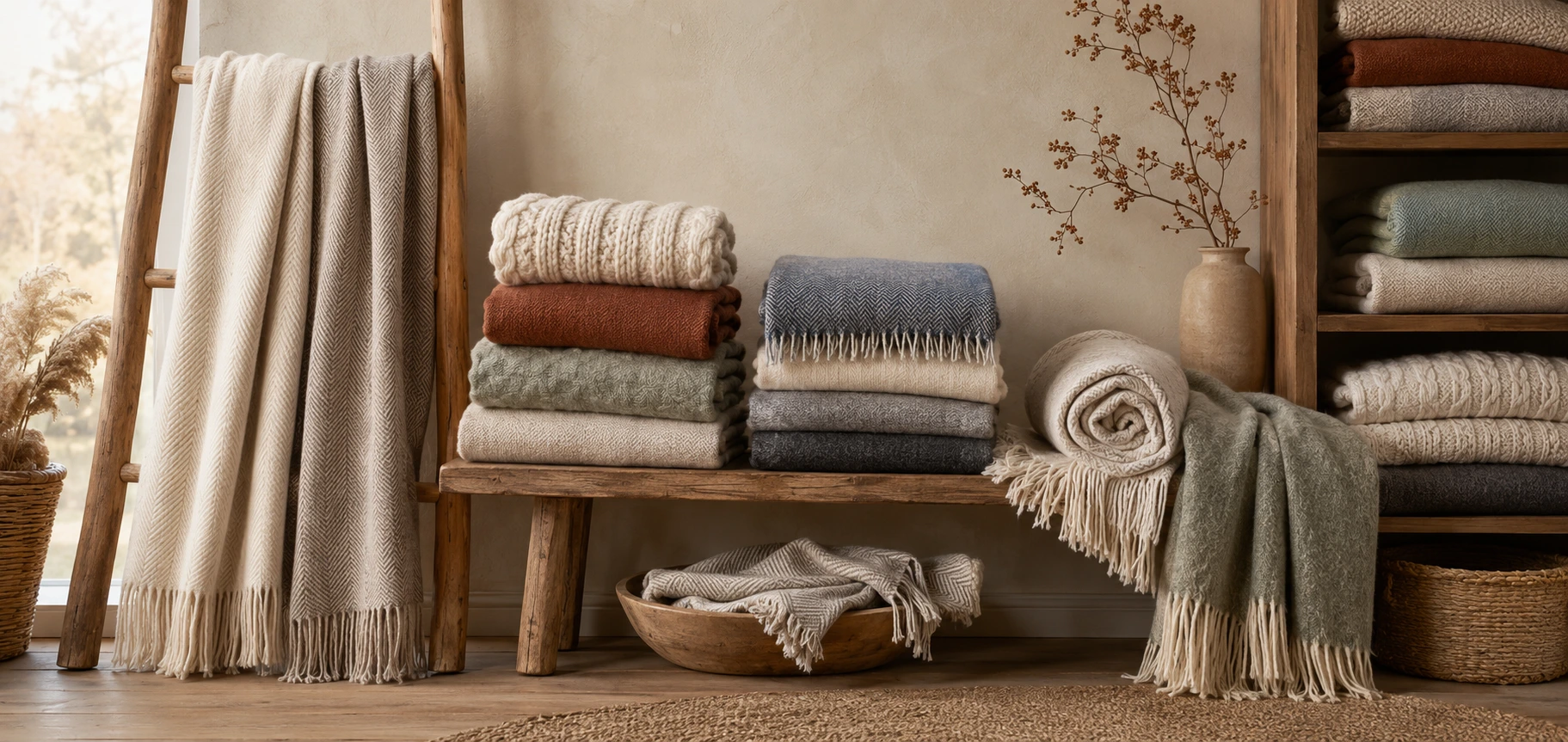
04 · Blankets
Alpaca blankets
Alpaca blankets and throws are made for the moments when warmth matters most. A woven throw can feel smooth and refined on a couch, while a chunky knit blanket gives a room more texture and weight.
Many alpaca blankets use natural undyed fiber colors, from creamy white to rich brown and charcoal. Those shades make it easy to create herringbone, stripes, and other patterns without relying entirely on dyes.
05 · Scarves
Alpaca scarves
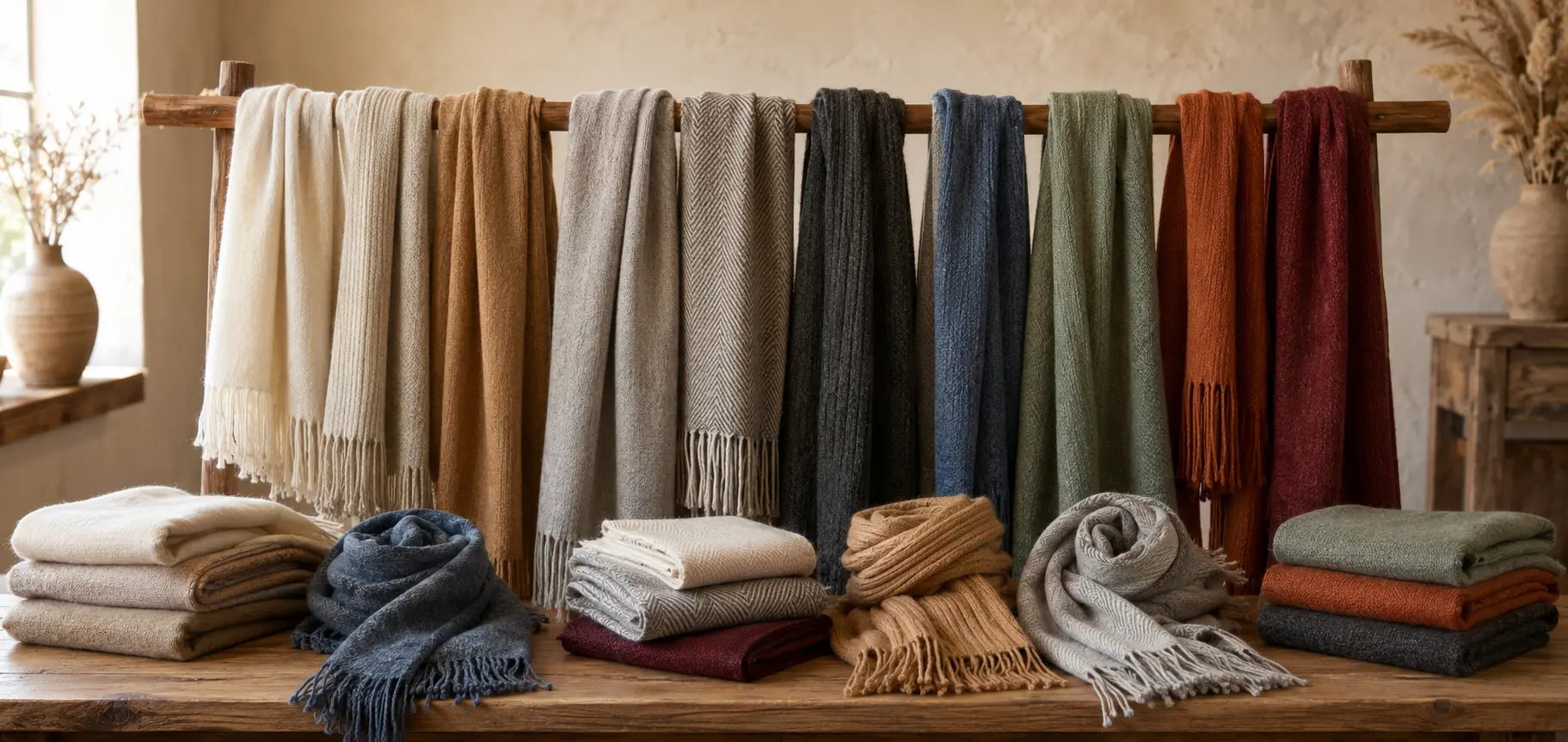
A scarf is one of the simplest ways to enjoy alpaca next to the skin. Fine woven scarves are light and easy to drape, while rib-knit or brushed styles provide more coverage on cold days.
Long fringed scarves, wraps, shawls, and narrow everyday styles all have a place in alpaca fiber. They also make good gifts because there is a wide range of colors, weights, and price points.
06 · How it is made
From fleece to finished clothing
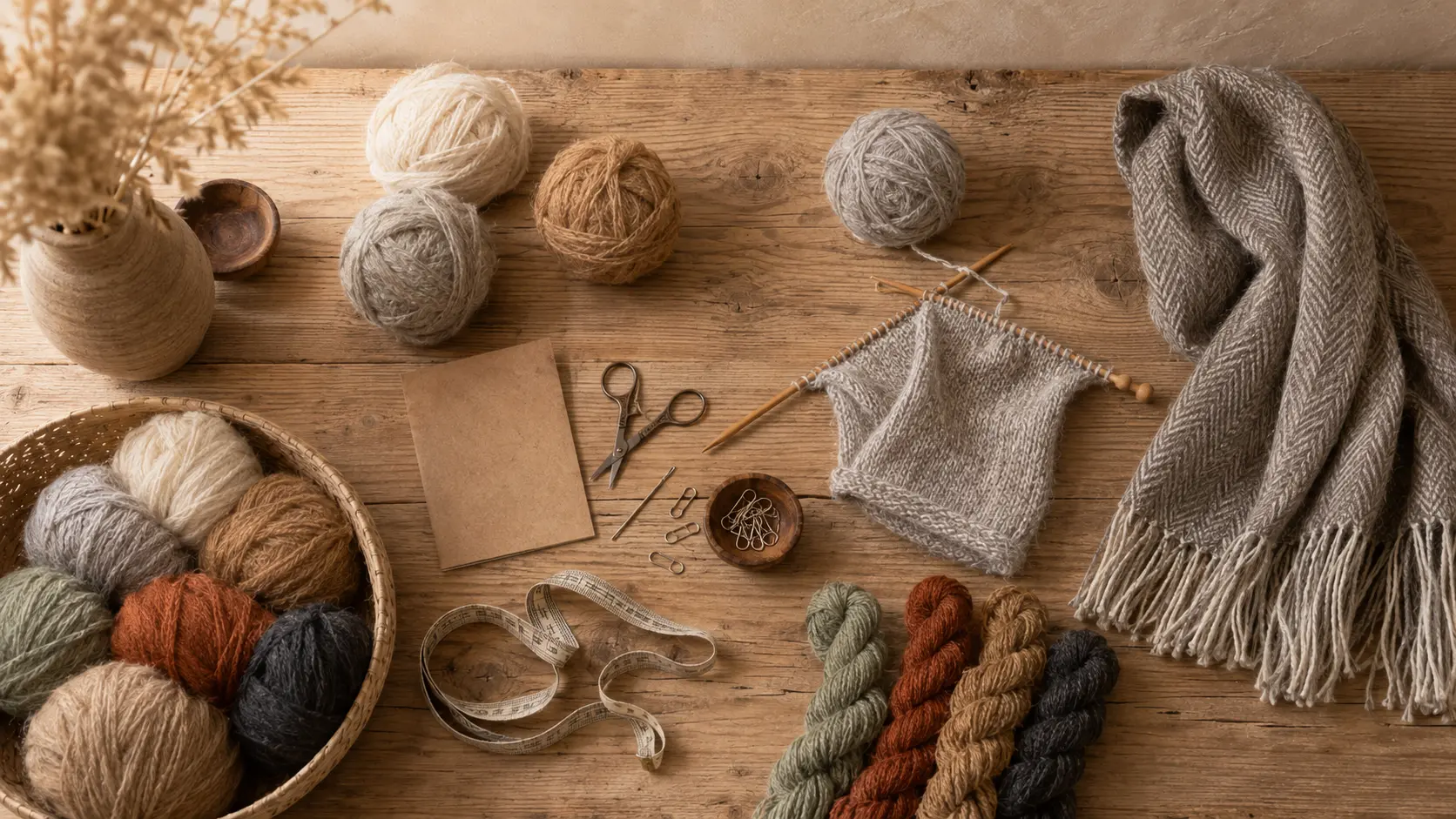
Before alpaca fleece becomes a sock, sweater, blanket, or scarf, it is sheared, sorted, washed, carded, spun into yarn, and then knitted or woven. Each step affects the finished item’s softness, strength, and warmth.
Many alpaca farms sell raw fleece, yarn, or finished goods, while others work with regional mills and makers. See the full process of making alpaca clothing, from the annual shearing to the final stitch.