Planning land, care, and a sustainable herd
How to start an alpaca farm
An alpaca farm begins with a clear purpose, suitable property, dependable animal care, and a realistic plan for both startup and continuing responsibilities. Work through those decisions before choosing the first animals.
Define the farm first
Where to start
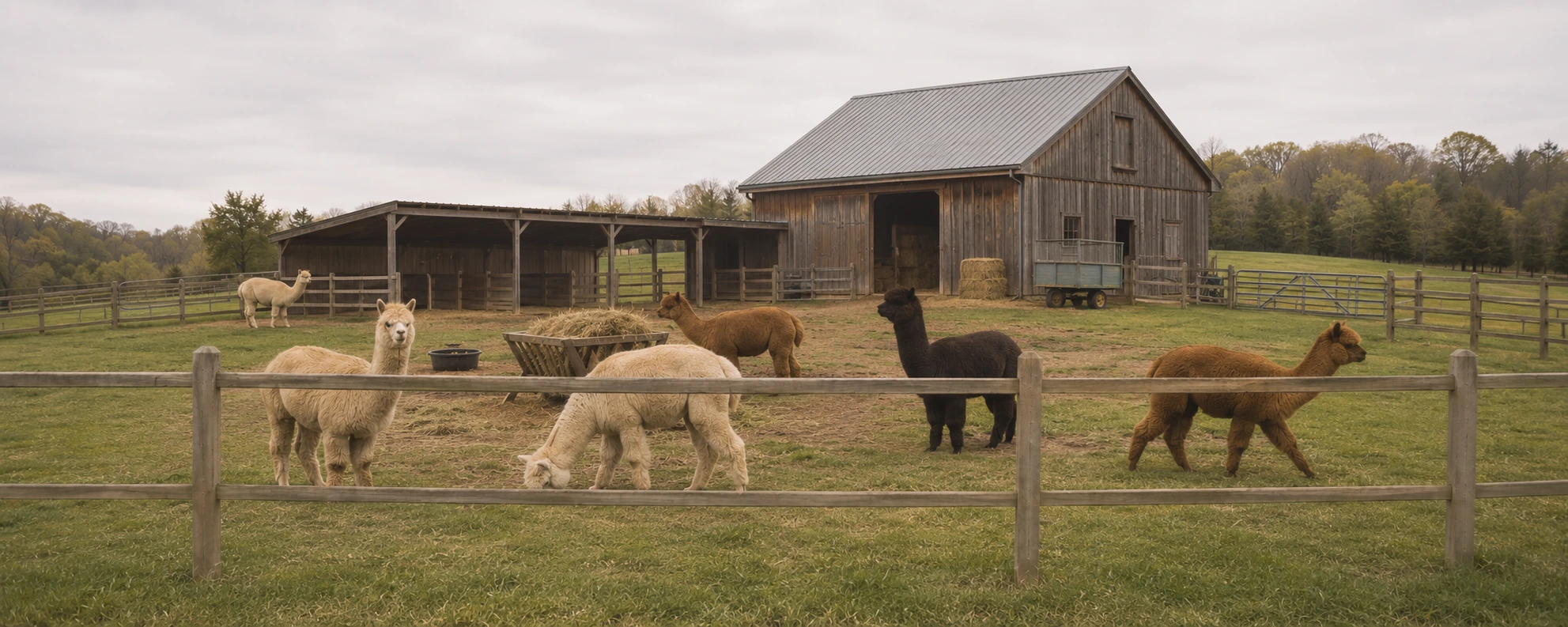
Start by deciding why you want to keep alpacas. A small fiber herd, a breeding operation, a farm that sells products, and a property that welcomes visitors require different facilities, insurance considerations, labor, equipment, and budgets. A written plan does not need to be complicated, but it should connect the intended use of the animals with the likely farm costs and the amount of time available for daily care.
Alpacas are social herd animals and should not be planned as solitary livestock. Their relationships, feeding routines, response to handling, and need for safe movement influence pasture divisions, gates, catch areas, shelters, and the number of animals the property can manage. Learning about alpaca behavior before designing the farm can prevent facilities that look adequate on paper but are difficult to use safely.
Before purchasing animals, visit established farms and talk with people who keep alpacas in conditions similar to yours. The directory of alpaca farms by state can help identify farms nearby. Ask about local hay availability, seasonal weather, shearing, veterinary access, predators, fencing, and the chores that consume more time or money than new owners usually expect.
Five planning areas
Building the farm’s foundation
These decisions are connected. The size and purpose of the herd affect the property, while the property determines what facilities, labor, and outside support will be needed.
-
Purpose and scale
Define whether the farm will focus on fiber, breeding, products, education, visitors, or a small personal herd. Set a scale that the available time and property can support.
-
Land and access
Evaluate usable pasture, drainage, vehicle access, manure handling, feed storage, water, and areas that may become muddy or difficult to reach during bad weather.
-
Fencing and shelter
Plan secure fencing, practical gates, dry shelter, shade, ventilation, and spaces where animals can be separated temporarily for care, feeding, or observation.
-
Herd management
Decide how animals will be grouped and handled. Include arrangements for new arrivals, illness, breeding, mothers with crias, and animals that need closer monitoring.
-
Local support
Identify an experienced veterinarian, dependable feed and hay sources, a shearer, transportation options, and knowledgeable farms before those services are urgently needed.
After the animals arrive
Planning for year-round care
Daily feeding should be planned around appropriate forage, clean water, pasture conditions, and any minerals or supplements recommended for the herd and region. Storage matters as much as purchasing: hay and feed need protection from moisture, pests, and contamination. The feed and nutrition guide examines these considerations in more detail, including seasonal changes and monitoring body condition.
A working relationship with an experienced veterinarian should be established before an emergency occurs. Preventive care, herd health records, parasite management, vaccinations recommended for the area, and a plan for urgent treatment should be discussed for the specific animals and location. The guide to veterinary care explains how to organize routine care, records, observation, and communication with the farm’s veterinarian.
Year-round planning also includes labor and recurring expenses. Fencing repairs, feed, bedding, shearing, equipment, manure management, veterinary services, and property maintenance continue regardless of whether the farm is currently earning income. A breeding program adds further responsibilities for animal selection, pregnancy care, births, crias, recordkeeping, and plans for the animals produced.
Continue planning
Starting an alpaca farm guides
Each guide focuses on one part of establishing and managing the farm. Read them together before making major purchases or committing to a herd plan.
 Alpaca breeding
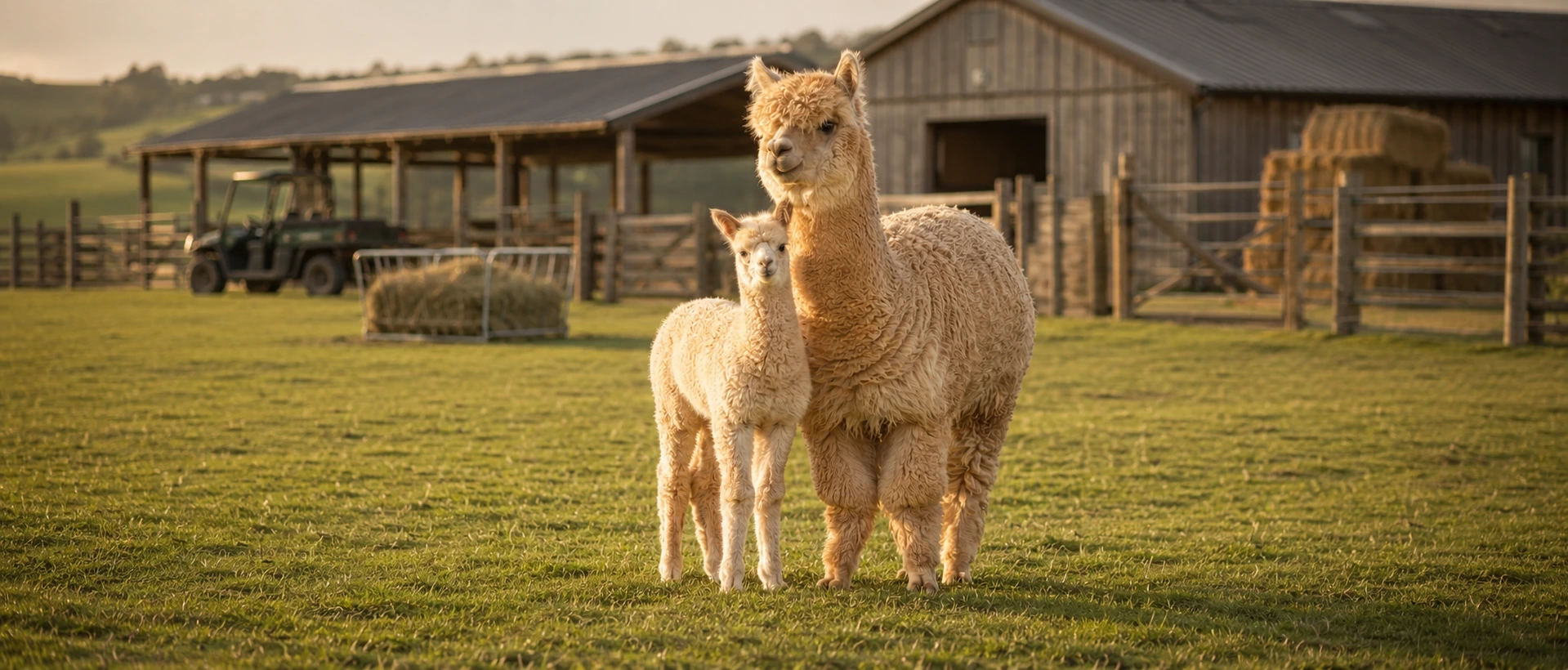
Set breeding goals and understand the added care, records, facilities, and long-term responsibilities.
Alpaca breeding
Set breeding goals and understand the added care, records, facilities, and long-term responsibilities.
 Farm costs
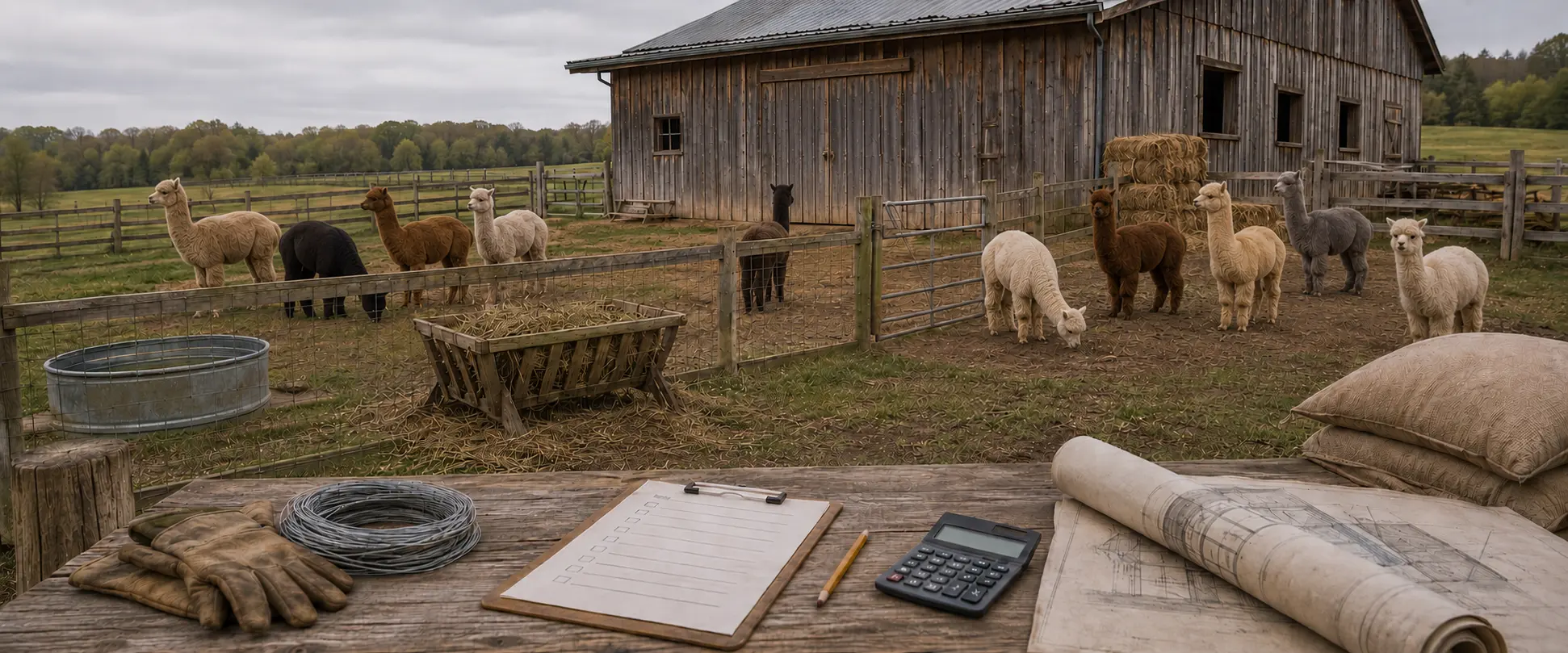
Separate property and startup expenses from the continuing costs of keeping and caring for the herd.
Farm costs
Separate property and startup expenses from the continuing costs of keeping and caring for the herd.
 Veterinary care
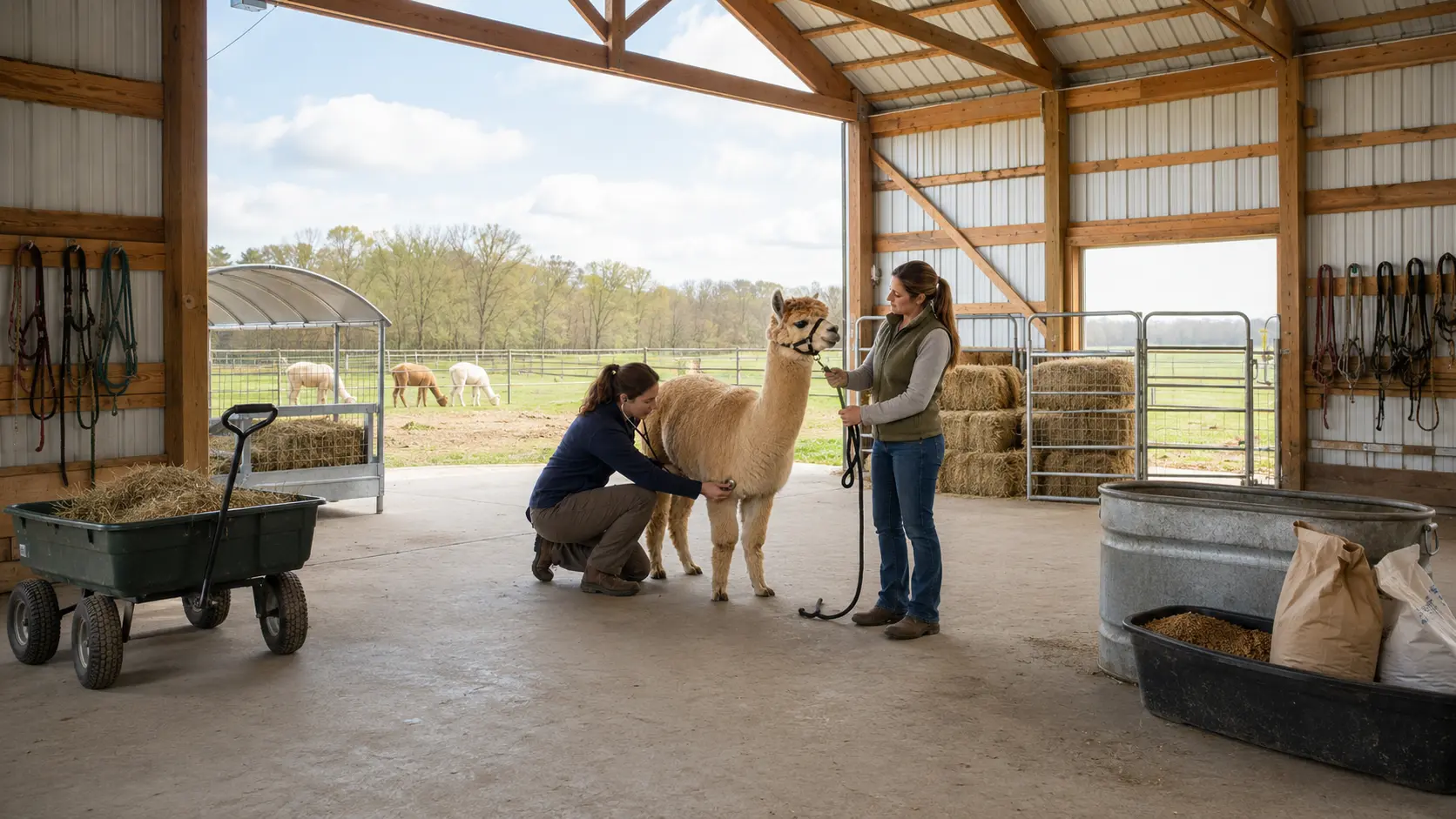
Prepare for preventive care, health records, routine observation, and access to treatment when needed.
Veterinary care
Prepare for preventive care, health records, routine observation, and access to treatment when needed.
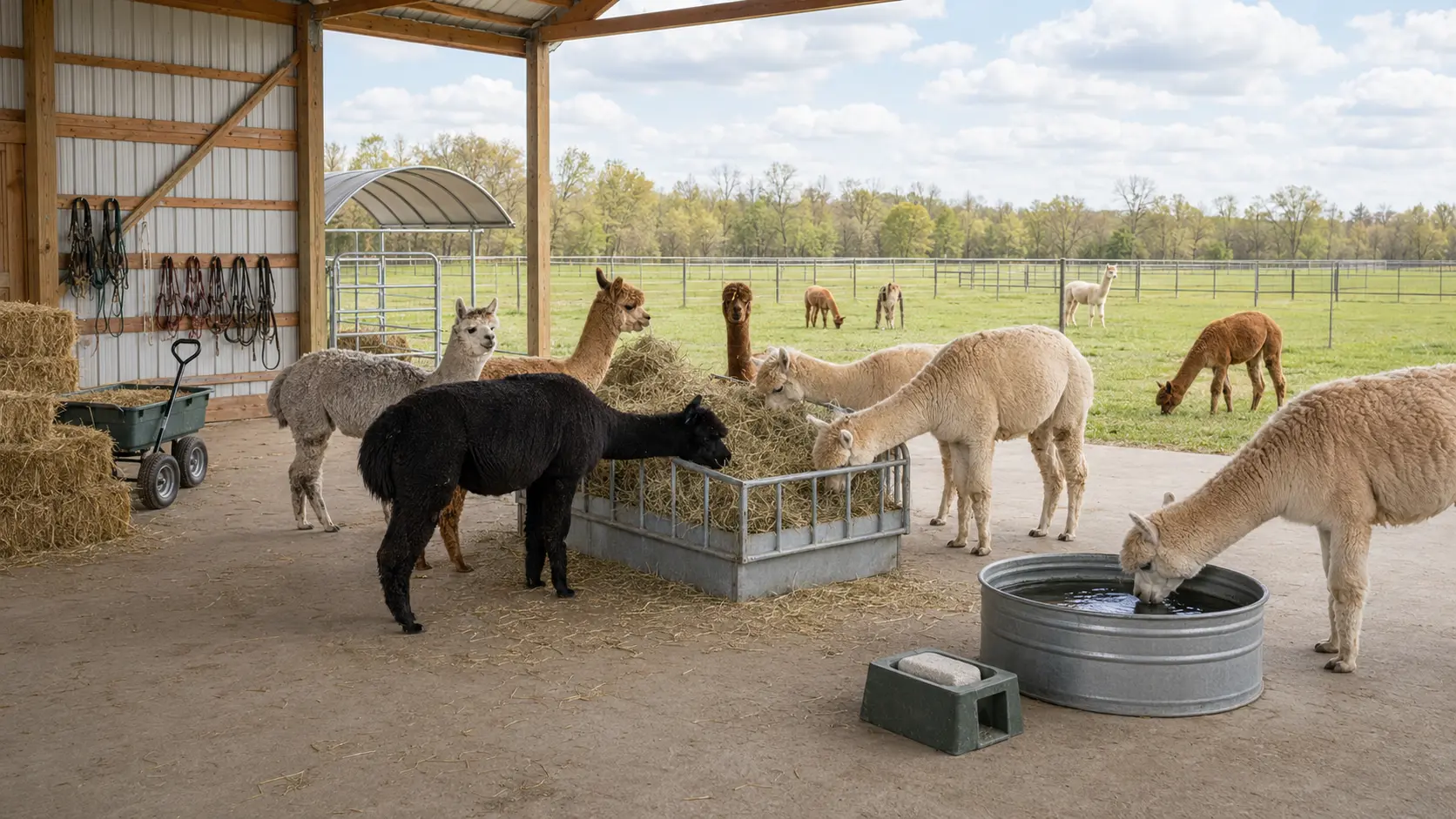 Feed and nutrition
Plan forage, hay, water, storage, minerals, seasonal adjustments, and body-condition monitoring.
Feed and nutrition
Plan forage, hay, water, storage, minerals, seasonal adjustments, and body-condition monitoring.