A herd is always talking
Alpaca behavior
Alpacas are quiet, observant herd animals. Once you know what to watch for, their sounds, spacing, posture, and daily habits make much more sense.
01 · Herd life
They are built to be together
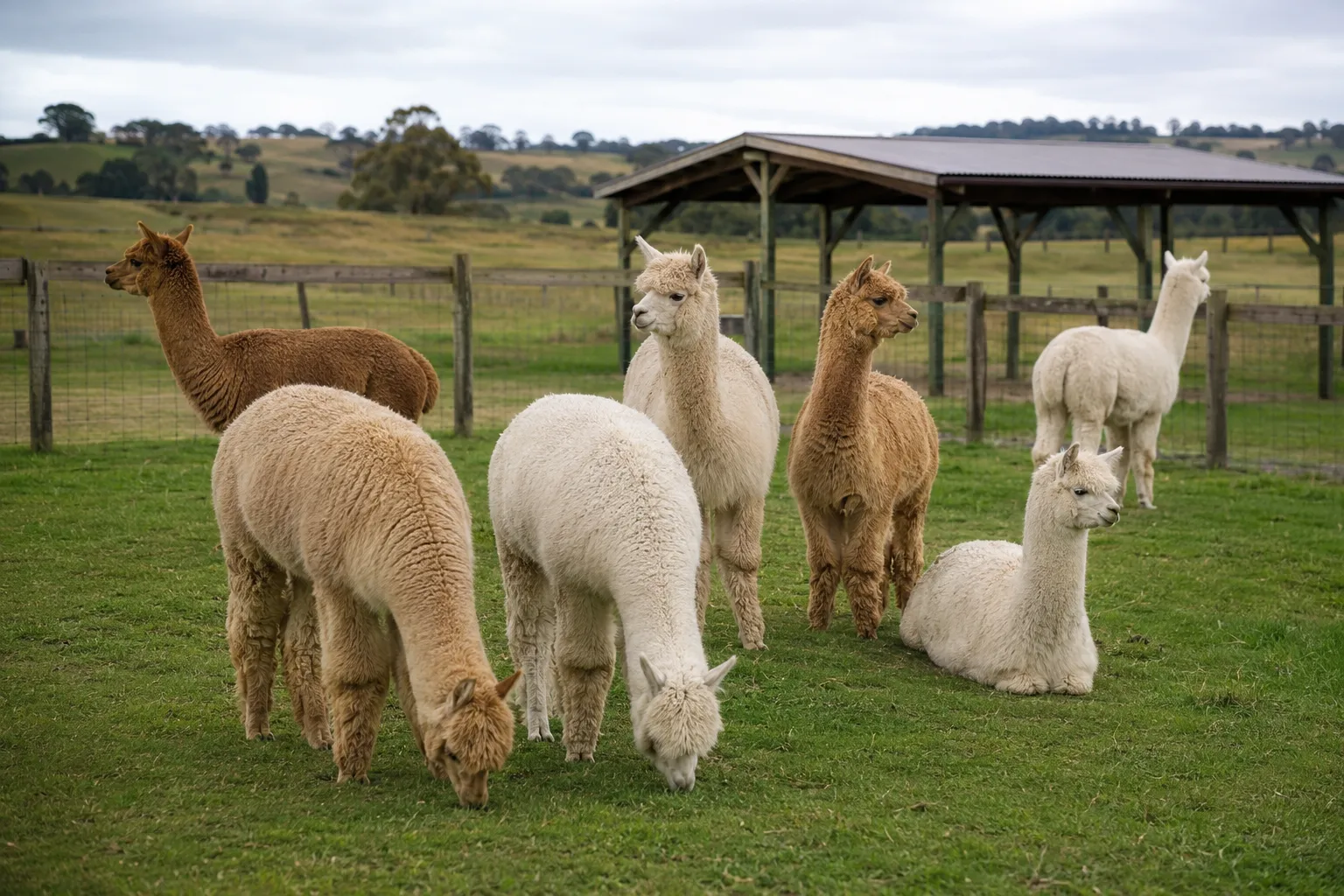
Alpacas are herd animals. They graze, rest, move, and watch the surroundings as a group, often keeping familiar companions close by. A calm herd may look uneventful, but there is usually plenty of quiet coordination happening.
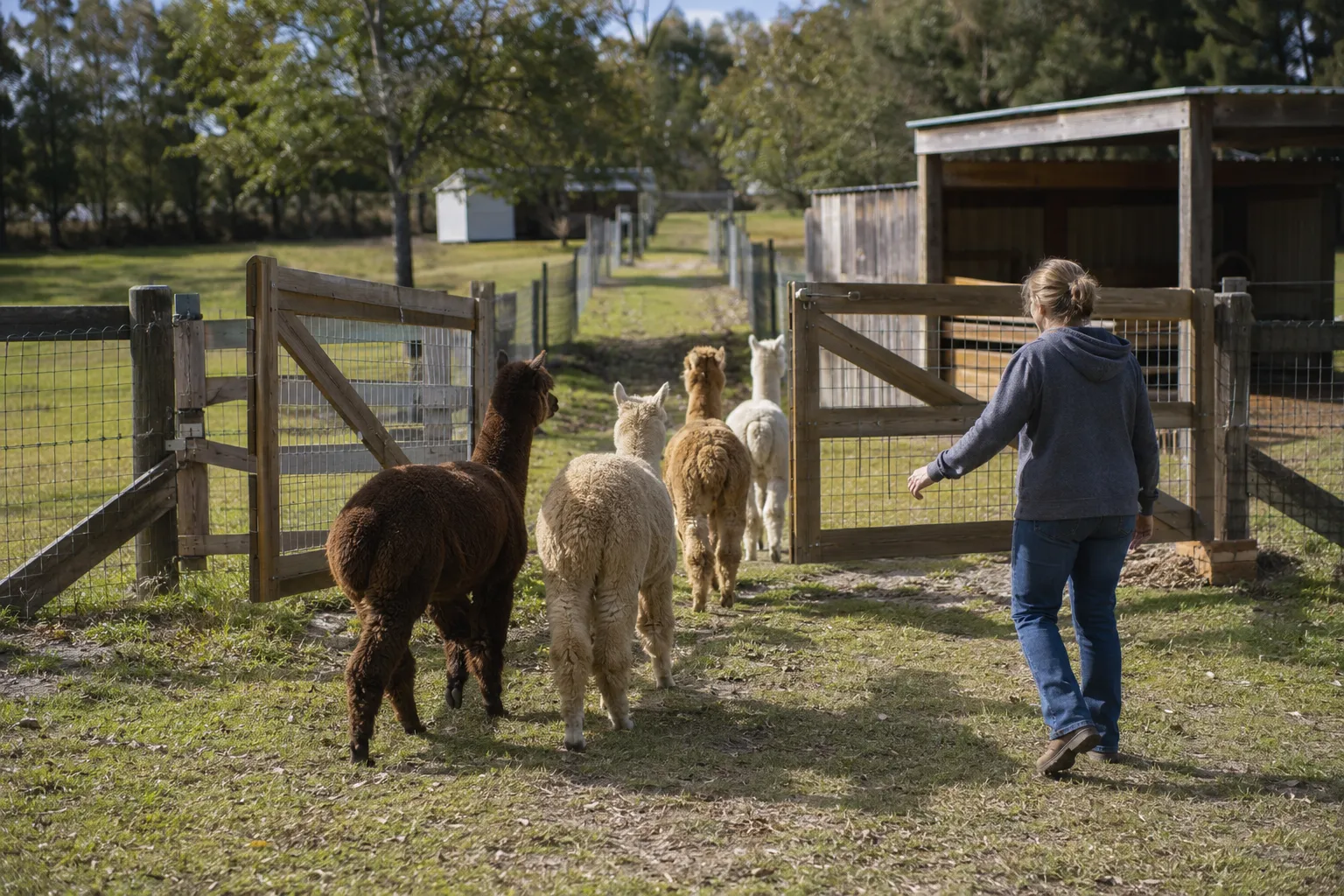
That social instinct matters on a farm. Separating one alpaca from its group can make it anxious, and a herd will often follow its most confident members when moving through a gate or toward a new pasture.
For people considering starting an alpaca farm, herd behavior should shape the layout from the beginning: open sightlines, room to move together, and spaces that do not force an animal into isolation.
02 · Communication
Quiet does not mean silent
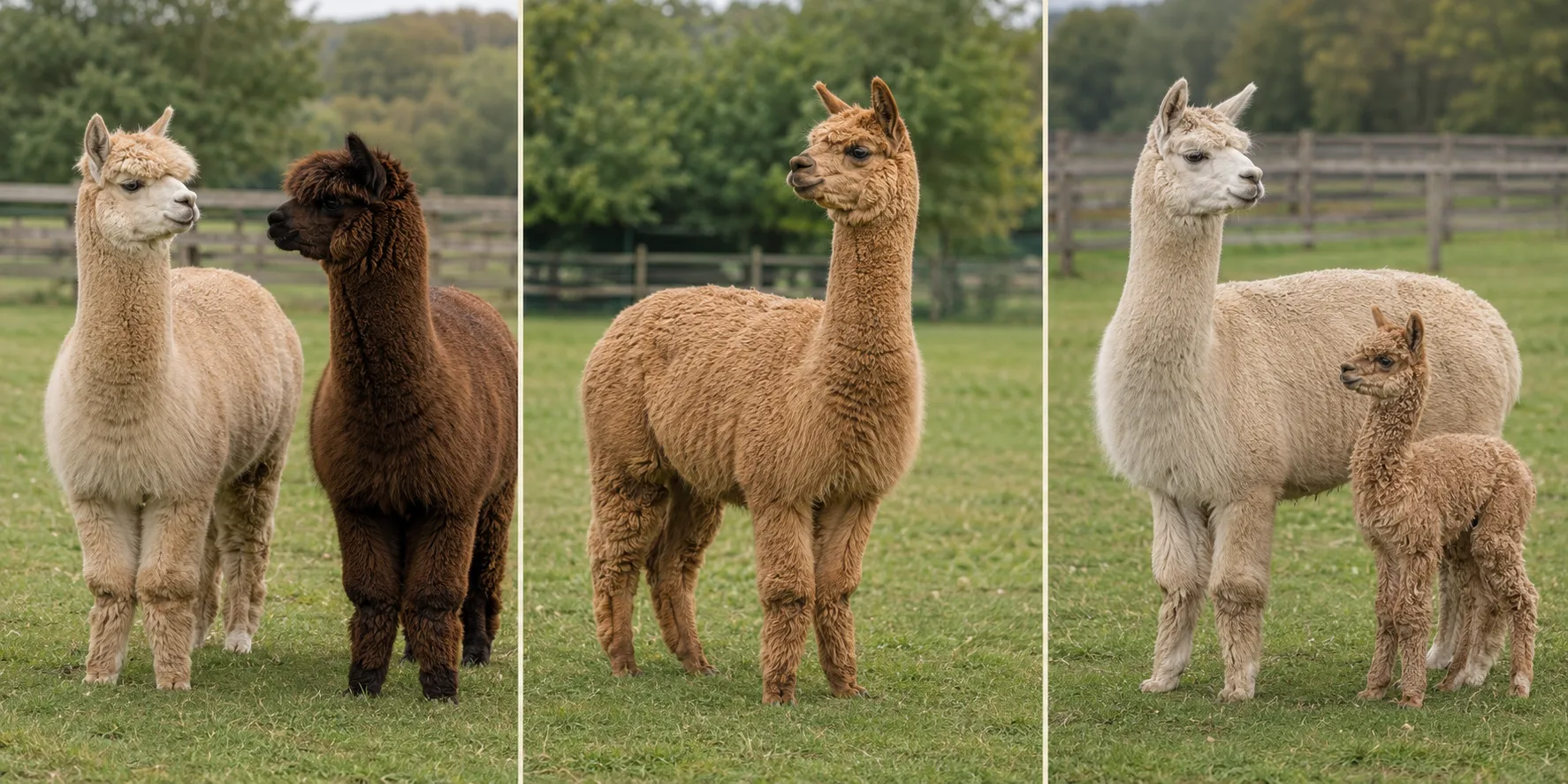
Humming is the sound most people notice first. Alpacas may hum while they are comfortable, curious, mildly worried, or keeping in contact with a nearby herd mate. The situation and body language give the sound its meaning.
They also use sharper alarm sounds, snorts, and grumbles. An alert alpaca can shift the attention of the entire herd in a moment, which is why even a distant noise or unfamiliar visitor can change the mood of a pasture.
Look at the whole animal: a hum from a relaxed alpaca and a hum from one standing stiffly with its ears fixed forward are not saying the same thing.
03 · Body language
Personal space has a language
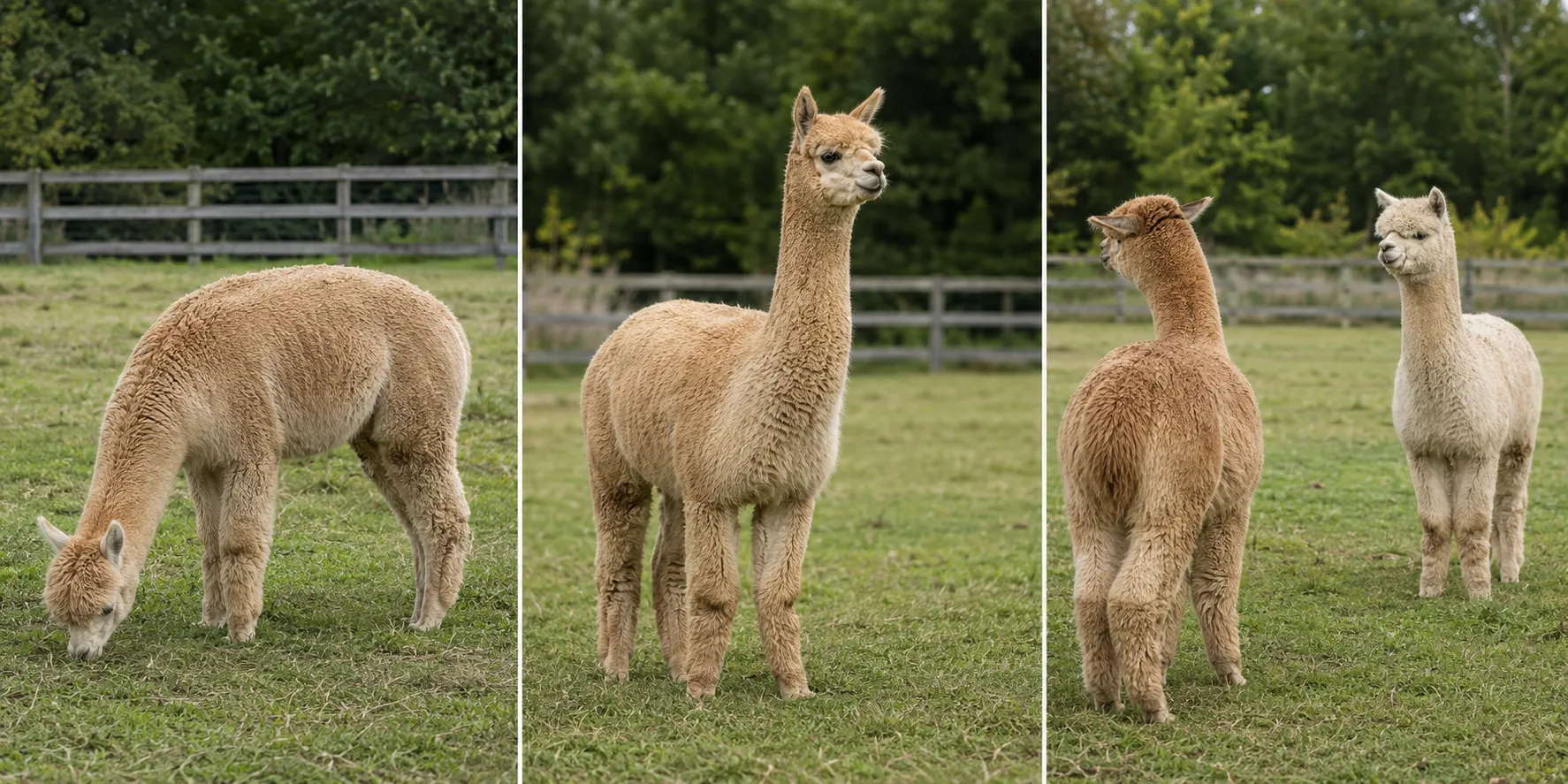
A relaxed alpaca usually has an easy stance and stays comfortably near the herd. An alert alpaca raises its head, focuses its ears, and watches. Turning away, moving off, or becoming stiff can be a simple request for more space.
Minor disagreements are normal in a herd. An alpaca may grumble, posture, or spit to settle a dispute over food, space, or rank. Spitting is not a random trick; it is usually a short-range signal that an interaction has gone too far.
For a closer look at that one behavior, see why alpacas spit. The useful habit is to respect the early signals, long before a person or another alpaca reaches that point.
04 · Daily routines
The everyday signs of a settled herd
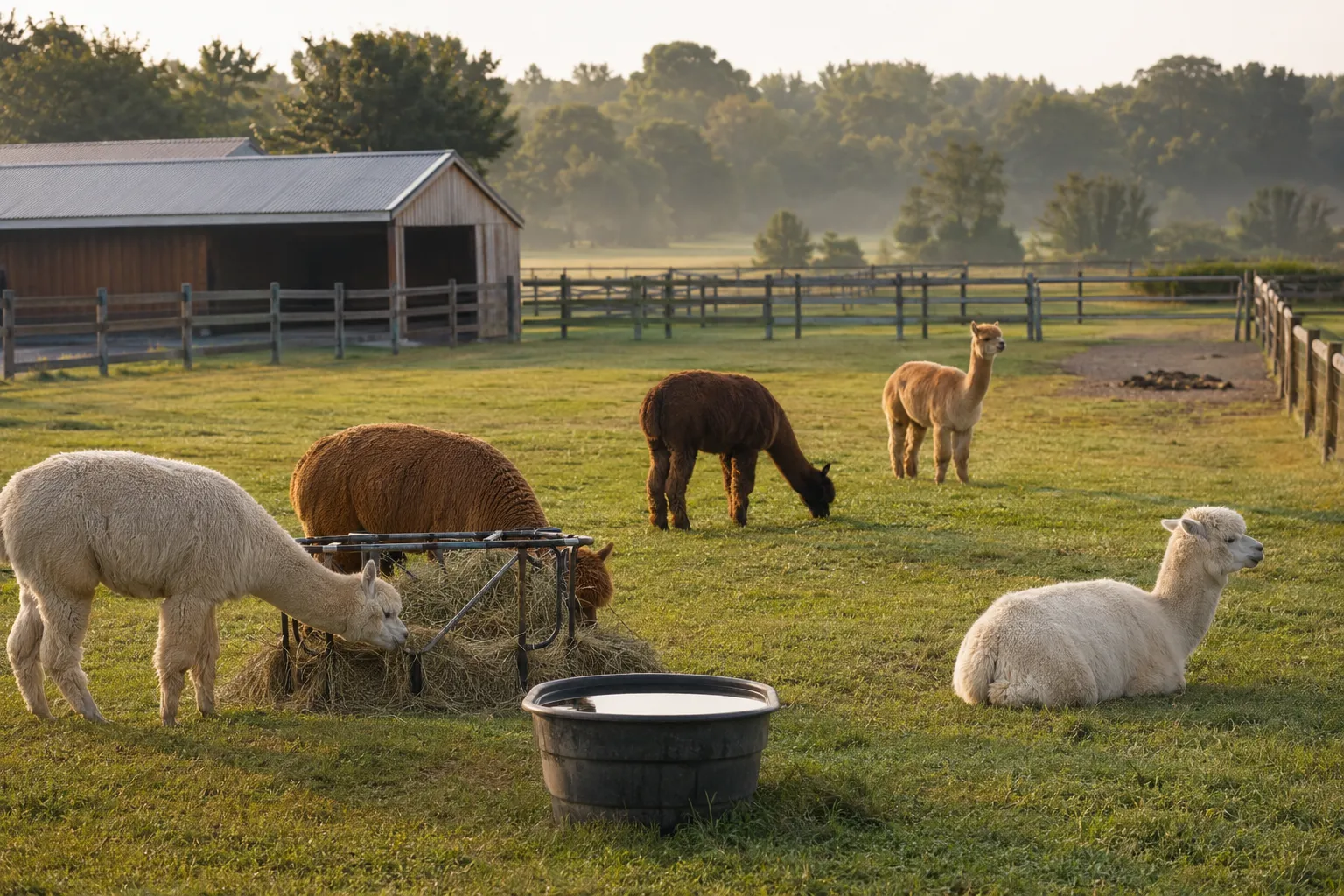
Grazing, resting, chewing cud, and watching the pasture make up most of an alpaca's day. Within those ordinary routines, a caretaker learns what is normal for each animal and for the herd as a whole.
Alpacas commonly use communal dung piles rather than scattering waste throughout the pasture. That neat habit is one of the more distinctive parts of alpaca life and makes routine cleanup easier on a well-managed farm.
When an alpaca suddenly eats alone, hangs back, avoids the group, or behaves unlike itself, the change is worth noticing. Behavior is often one of the first everyday clues that something needs a closer look.
05 · Handling & trust
Work with the herd, not against it
Alpacas respond best to calm, patient handling. Moving a small group instead of chasing one animal, allowing room around gates, and using familiar routines can lower stress for both people and animals.
They are observant, not naturally eager for close contact. The goal is not to make every alpaca act like a pet; it is to help the herd feel secure enough to be checked, led, fed, and cared for safely.
That balance is part of responsible ownership. The more a caretaker understands how alpacas use space, sound, and routine, the easier everyday farm work becomes.