Cousins, not the same animal
Alpaca vs. llama
Both are South American camelids and they can even interbreed, but they were domesticated from different wild ancestors for entirely different jobs. Here's how to tell them apart.
01 · The face
Start with the head
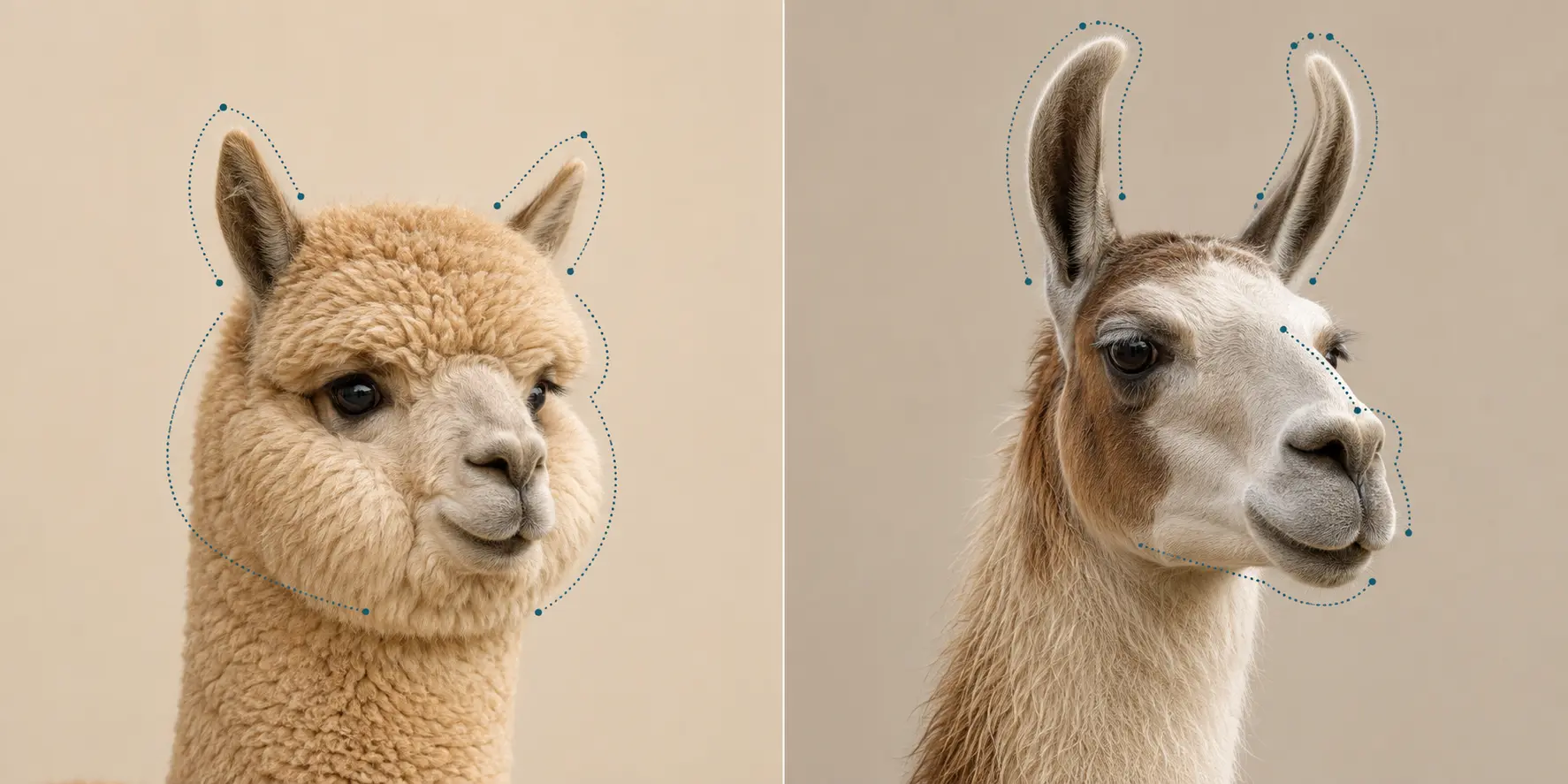
If you only remember one difference, make it this one. A llama has a long muzzle with short hair on the face — the snout looks almost bare compared to the rest of the animal. An alpaca's face is the opposite: a short, blunt muzzle surrounded by so much fluff the head reads as round.
Then check the ears. Alpaca ears are short, straight, and pointed — spear-shaped is the standard description. Llama ears are much longer and curve inward toward each other: banana-shaped. Ears are visible from farther away than any other feature, so they're the field mark that works from a moving car.
The difference isn't cosmetic accident. Alpacas descend from the small, fine-featured vicuña; llamas from the larger, rangier guanaco. The wild ancestors have different heads, and six thousand years of breeding kept them that way.
02 · The job
Bred for different work
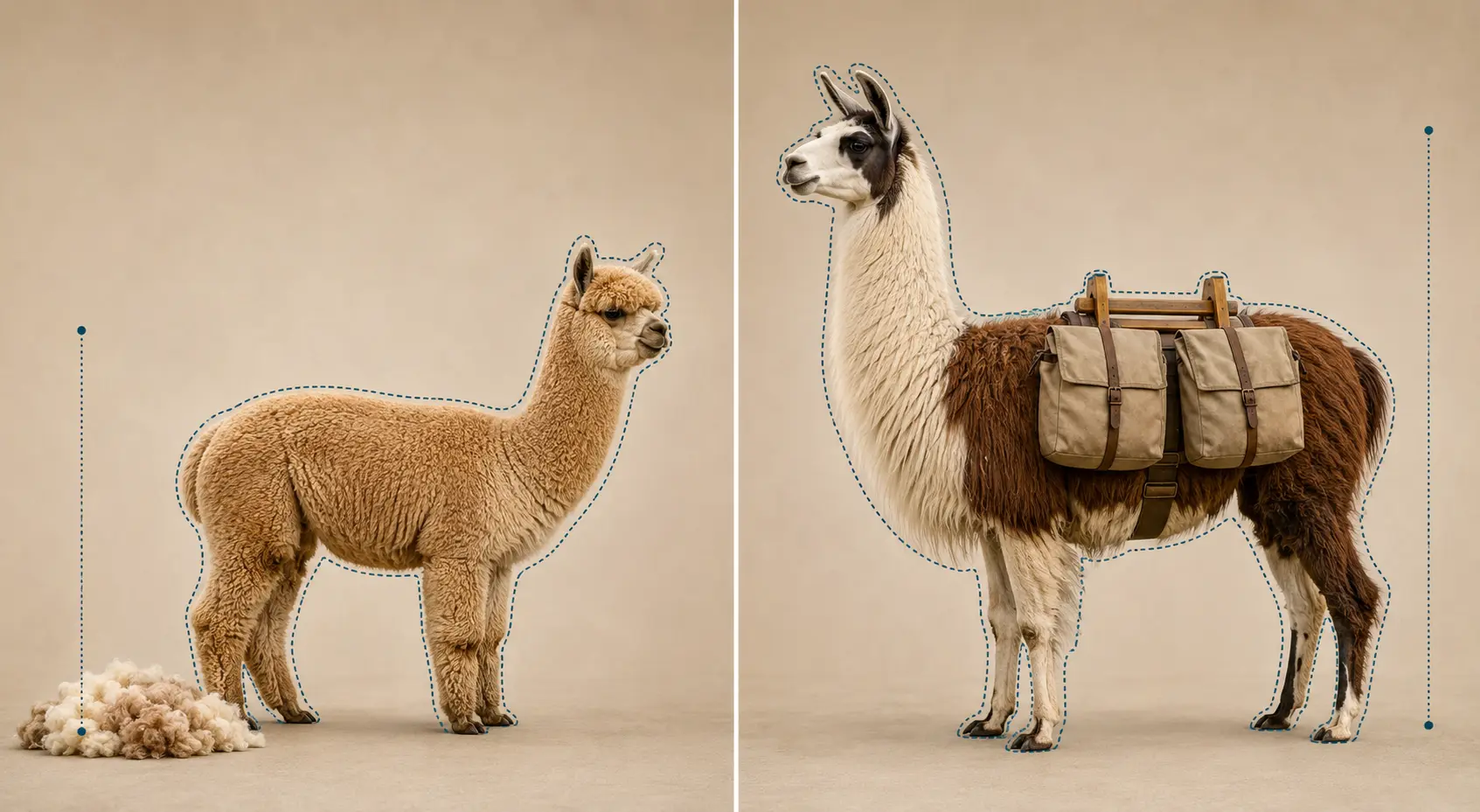
The alpaca is a fiber animal, full stop. Andean herders spent thousands of years selecting for one trait — a fine, uniform, fast-growing fleece — and a modern alpaca gives up five to ten pounds of it at every spring shearing.
The llama is a working animal. Bred from the guanaco for size and strength, a fit adult can pack roughly a quarter of its body weight across mountain terrain. Llama caravans moved goods through the Andes for centuries before wheels or horses reached the highlands.
Temperament follows the job. A pack animal has to accept being loaded, led, and handled, so llamas are confident and independent. A fleece animal just has to grow wool in a herd, so alpacas stayed shy, skittish, and happiest with their own kind.
03 · Size & coat
A foot apart, and a different fleece entirely
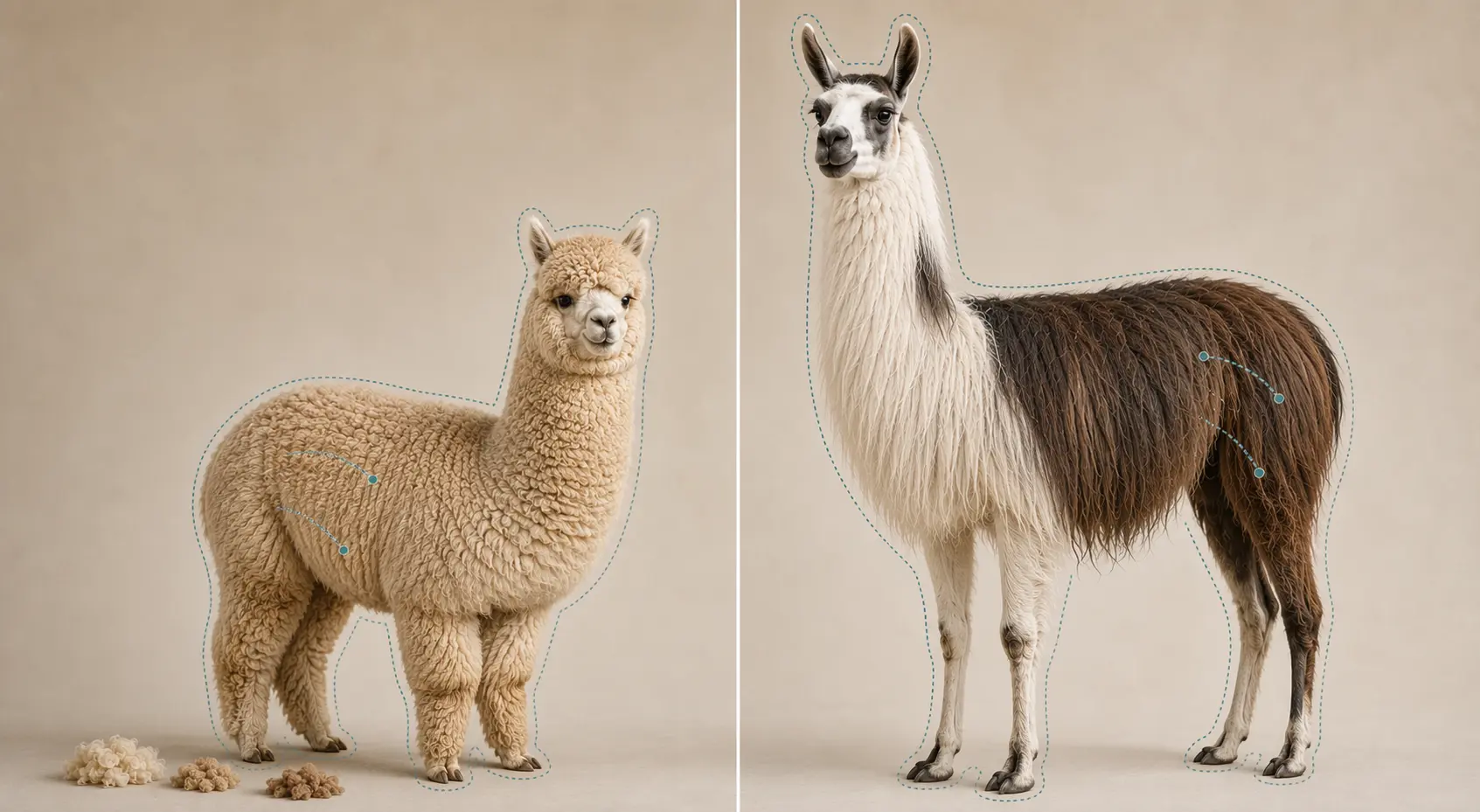
Put them side by side and there's no contest. An alpaca stands about three feet at the shoulder and weighs 120 to 190 pounds — big-dog territory. A llama runs closer to four feet and 250 to 450 pounds, tall enough to look you level in the eye.
The coats differ in kind, not just amount. An alpaca grows a single fine fleece soft enough to wear against bare skin. A llama grows a double coat: coarse guard hair over a softer undercoat, which is why llama fiber traditionally went into ropes and rugs rather than sweaters.
And a point of alpaca pride: the fleece grows in 22 recognized natural shades, from true white through fawns and browns to true black — the palette this website is painted in.
04 · Guard llamas
The llama watching over the flock
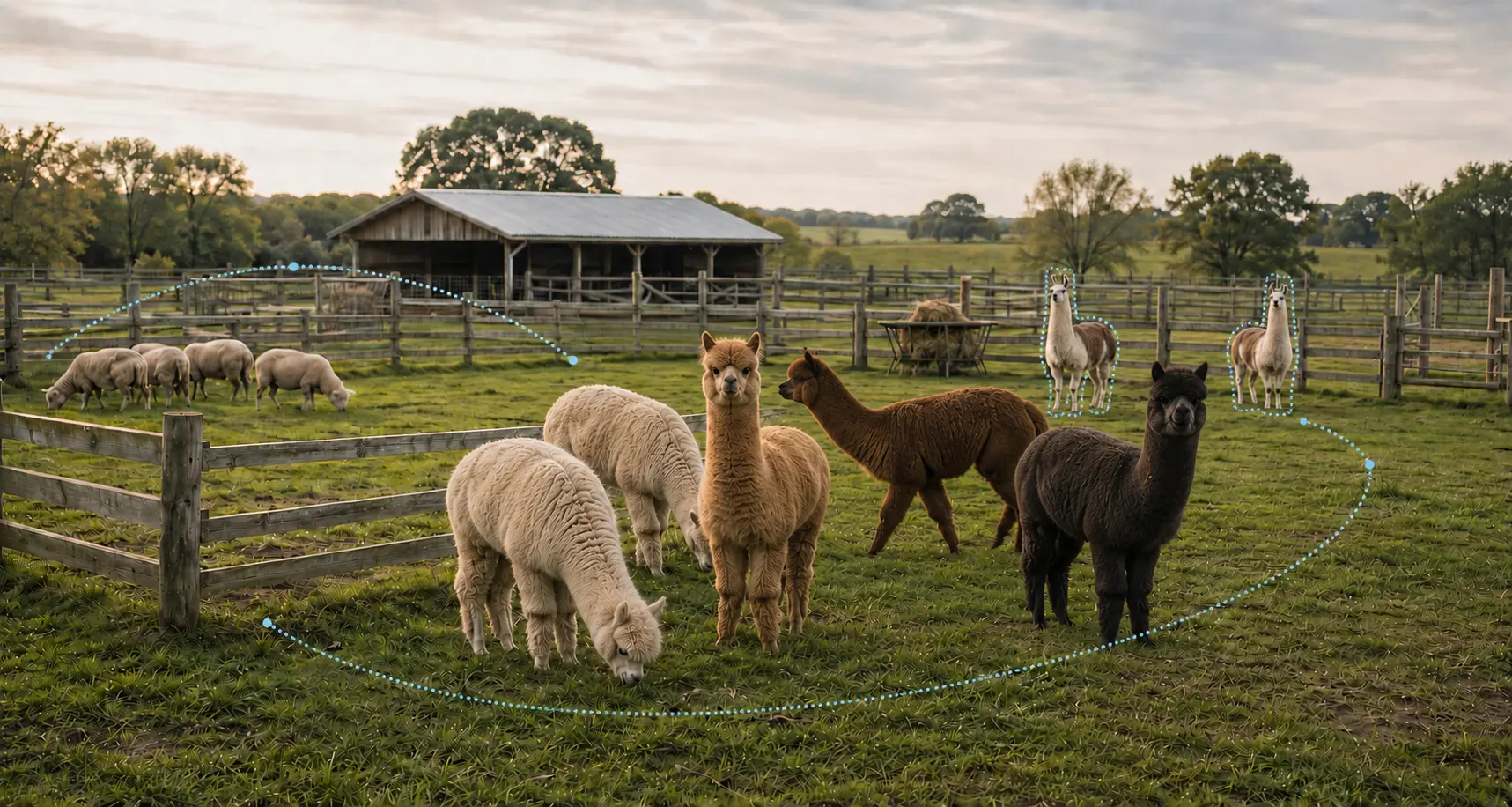
Here's the partnership that surprises people: llamas guarding other livestock, including alpacas. Llamas are naturally alert, naturally bossy, and instinctively hostile to canines — which describes most of what threatens a pasture.
A guard llama stations itself where it can see, sounds a shrieking alarm when something's wrong, herds its charges together, and will chase and stomp a coyote, fox, or loose dog. Standard practice is a single gelded male per flock — one llama bonds to the herd; two bond to each other and ignore everyone else.
This is why so many alpaca farms have exactly one tall head in a field of short ones. The llama isn't lost. It's working. For people starting a farm, a guard llama can be part of the plan.