Goals, health and lifelong responsibility
Alpaca breeding
A breeding program should begin with a reason for producing each cria, not simply with an available male and female. Clear goals, veterinary support, honest records, suitable facilities, and a realistic plan for every offspring come first.
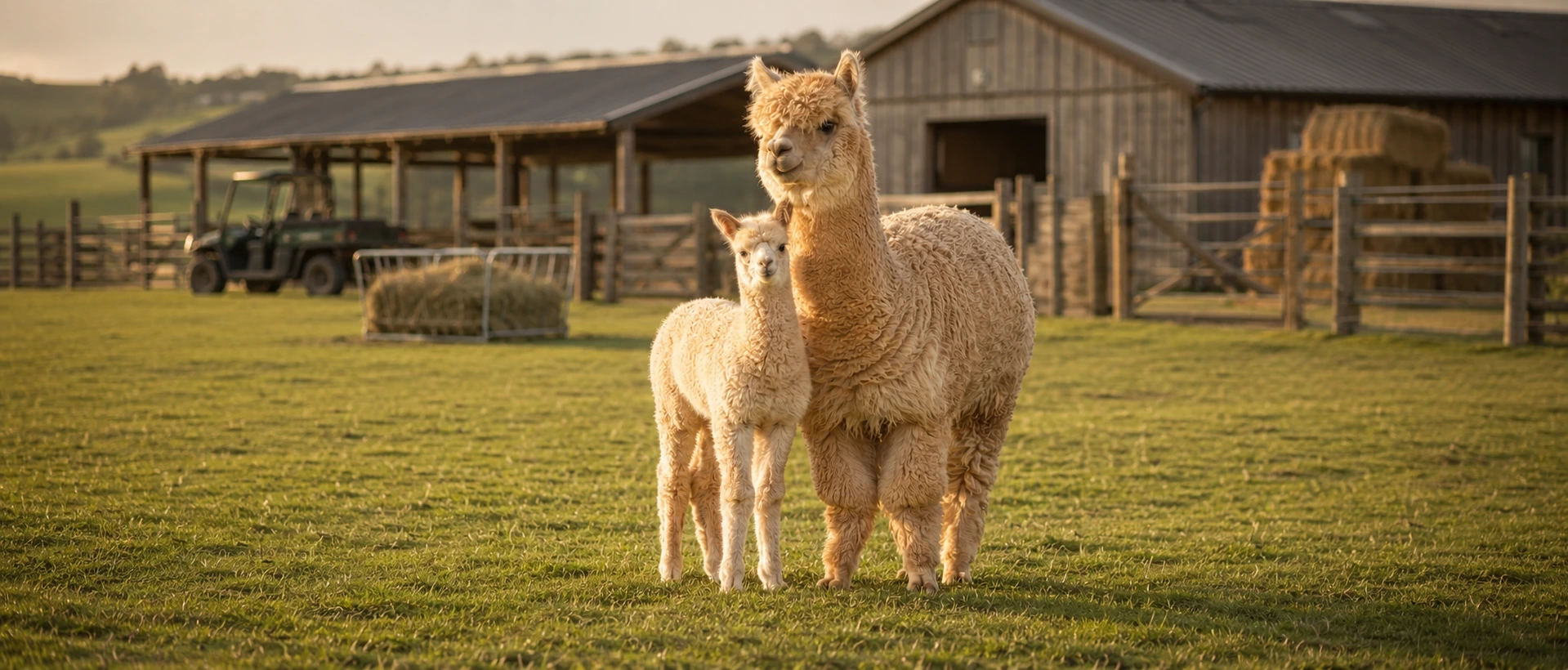
A deliberate decision
Should you breed your alpacas?
Not every alpaca needs to reproduce, and owning alpacas does not automatically require running a breeding program. Fiber production, companionship, education, agritourism, and other farm goals can be pursued without producing crias. Breeding adds reproductive examinations, pregnancy monitoring, nutrition decisions, birth preparation, registration and recordkeeping, additional space, and the possibility of urgent veterinary care.
Begin by defining what the proposed pairing is expected to contribute. That may include sound conformation, useful fiber characteristics, temperament, genetic diversity, or traits suited to a particular herd purpose. Awards, color, pedigree, or sale price should not substitute for evaluating health, structure, reproductive history, relatedness, and the weaknesses that either parent might pass forward.
Before committing to a pairing, speak with a veterinarian experienced with camelids and visit established alpaca farms in your state. Local breeders can help identify regional veterinary access, laboratories, mentors, feed sources, and practical challenges. The farm must also be financially prepared for routine care and complications; the alpaca farm costs guide provides a separate planning framework.
Write the plan first
Define the breeding program
A written plan makes it easier to reject a fashionable or convenient pairing that does not serve the herd’s long-term direction.
Purpose
State whether the herd is being developed for fiber, breeding stock, showing, a particular alpaca type, or another defined use. Avoid trying to select for every trait at once.
Selection criteria
List the health, structural, reproductive, temperament, and fleece traits that matter most, along with faults or risks the program will not knowingly reproduce.
Records and evidence
Use pedigrees, registration information, veterinary history, reproductive records, fiber measurements, and offspring results rather than relying only on appearance or marketing claims.
Herd capacity
Calculate space, shelter, feed, labor, quarantine options, and separate management areas for females, intact males, weanlings, and animals needing observation.
Future placement
Plan conservatively for crias that remain on the farm. A responsible program does not depend on every offspring selling quickly or at a projected price.
Look at the whole animal
Evaluate the dam and sire
The objective is not to match two impressive résumés. It is to evaluate whether both animals are appropriate breeding candidates and whether their strengths, weaknesses, health, and relatedness make the proposed pairing defensible.
Veterinary readiness
Review health history, current condition, medications, previous pregnancies, and any concerns that could affect breeding, gestation, birth, or nursing with a camelid veterinarian.
Body condition and nutrition
Fleece can disguise changes in condition. Use hands-on monitoring and a veterinarian-guided nutrition plan before breeding and throughout pregnancy and lactation.
Pedigree and relatedness
Confirm identity and pedigree records, consider genetic diversity, and investigate inherited conditions or repeated problems reported in close relatives or earlier offspring.
Structure and function
Assess sound movement, bite, body capacity, reproductive anatomy, and other functional traits. A desirable fleece characteristic should not outweigh a significant structural concern.
Temperament and management
Consider behavior around herd mates and handlers as part of the whole picture. Safe facilities and low-stress handling remain necessary regardless of temperament.
Plan beyond the pairing
From breeding to birth
Exact examinations, testing, nutrition, and intervention decisions belong in a farm-specific veterinary plan. This timeline identifies the conversations and preparations that should not be left until the last minute.
| Stage | What to plan | Records to keep |
|---|---|---|
| Before breeding | Veterinary review, breeding goals, pedigree research, disease-risk discussion, body condition, nutrition, facilities, contracts and emergency resources | Animal identification, health history, pedigree, earlier offspring, examinations, test results and the reason for the pairing |
| Breeding | Safe handling, accurate identification, agreed breeding method and clear communication between the owners of the dam and sire | Dates, animals involved, observations, services provided, fees, transport and contract terms |
| Pregnancy | Veterinary confirmation and monitoring, condition checks, an appropriate feeding plan, vaccination and parasite decisions, and expected timing | Examinations, results, weight or condition trends, diet changes, treatments and estimated due period |
| Birth preparation | A clean observation area, supplies recommended by the veterinarian, staff availability, emergency transport and written instructions for when to call | Veterinary contacts, normal observations for the individual dam, escalation instructions and supplies on hand |
| Dam and cria | Prompt assessment of both animals, nursing and maternal-behavior observation, veterinary care when indicated, identification and a continuing health plan | Birth time, observations, weights, nursing, examinations, treatments, parentage and registration information |
The program is measured over time
Responsibility after the cria arrives
A live birth is not the final measure of a breeding decision. Continue evaluating the dam’s recovery, the cria’s development, soundness, temperament, health, and eventual fleece. Record outcomes honestly, including disappointing ones. Those records should influence whether either parent is used again and whether the program’s selection criteria need to change.
Plan herd groups and weaning arrangements before space becomes urgent. Alpacas are herd animals, so a sale or transfer should preserve appropriate companionship and place the animal with an owner prepared for its needs. Written records, identification, registration where applicable, and clear disclosure of health and breeding history help the next owner make informed decisions.
Breeding also changes the workload across the rest of the farm. Pregnancy and lactation affect feed planning; dams and crias need an established veterinary-care plan; and additional animals increase fencing, shelter, shearing, labor, and emergency reserves. The program should expand only as fast as the farm can maintain good care for every animal already present.
For veterinary background, review the Merck Veterinary Manual’s alpaca and llama reproduction overview. The Alpaca Owners Association also provides registry, genetics, breed-standard, husbandry, and educational resources for U.S. owners.
Part of the farm-planning series