Startup and continuing expenses
Alpaca farm costs
There is no single national price for starting an alpaca farm. The useful question is what your property already has, what the planned herd will require, and how much cash the farm needs before relying on uncertain income.
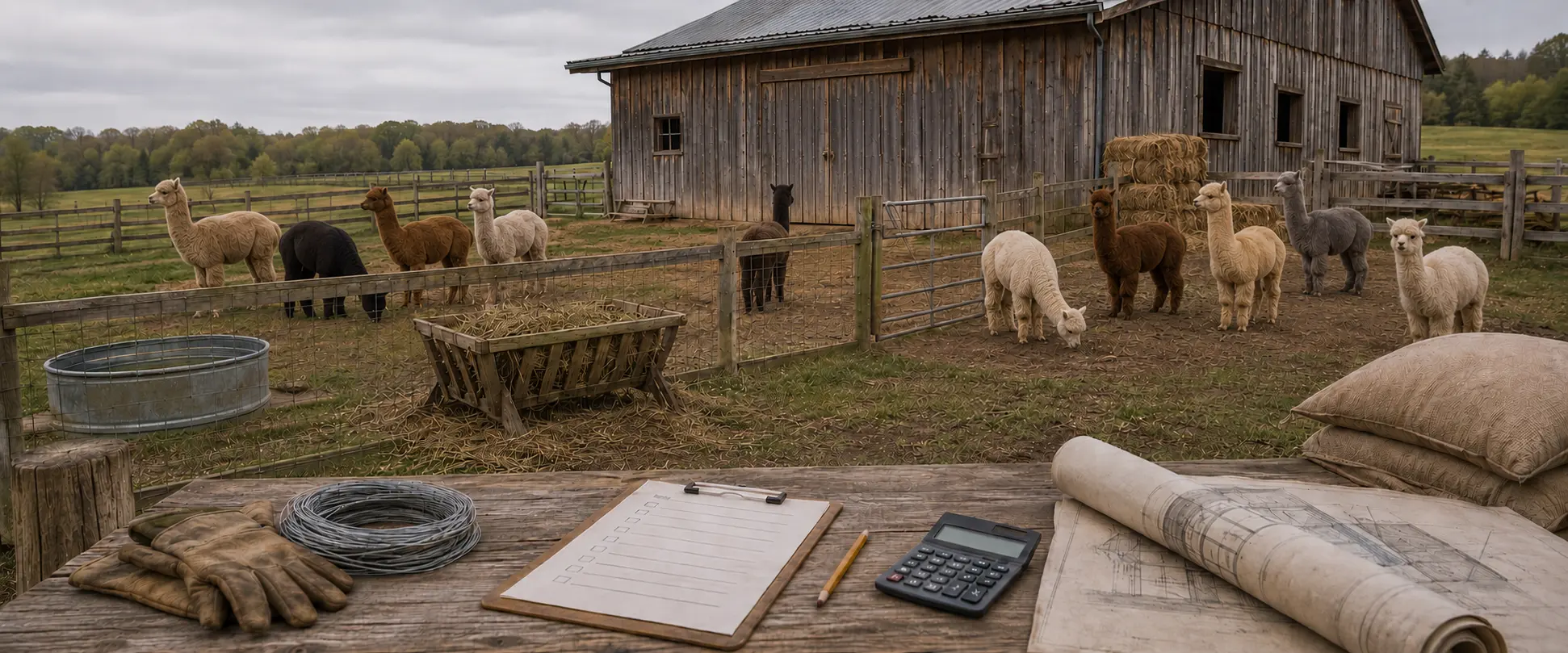
Start with the property
Why alpaca farm costs differ
A property with secure fencing, usable shelter, dependable water, dry feed storage, and safe animal-handling areas begins in a very different financial position from bare land. Repairing unsuitable facilities can also cost more than expected. Before comparing animal prices, inspect what must be built, replaced, permitted, connected to utilities, or made accessible to delivery and emergency vehicles.
The size and purpose of the herd change the budget. A small fiber herd has different facility, marketing, recordkeeping, and labor needs than a breeding program. A farm that welcomes the public may need parking, safer visitor routes, additional insurance, restrooms, signs, and local approvals. The original plan should distinguish personal enjoyment from an operation expected to produce business income.
Location affects land values, construction, hay, veterinary access, insurance, utilities, permits, predator protection, and the amount of shelter or climate management required. For that reason, a credible budget uses written local quotes and current supplier prices. Visiting alpaca farms by state can help identify regional services and expense categories, although another farm’s total should not be copied without adjusting it to your property and goals.
Before the herd arrives
Alpaca farm startup costs
These five categories normally require quotes or purchase decisions before animals are brought to the property.
Land and site work
Include purchase or lease costs, surveys, permits, drainage work, driveway access, pasture establishment, utility connections, water systems, and any required cleanup or grading.
Fencing and gates
Measure the actual linear footage and count every gate. Include posts, hardware, labor, interior divisions, catch areas, repair tools, and added predator protection where appropriate.
Shelter and storage
Budget for dry shelter, ventilation, shade, lighting, feed and hay storage, bedding areas, water access, electrical work, and spaces used to separate or examine animals.
Animals and transport
Purchase price is only one line. Include pre-purchase evaluation, health records, transport, suitable companion animals, initial supplies, and arrangements for receiving new animals safely.
Equipment and supplies
List feeders, waterers, halters, panels, scales, manure tools, storage containers, first-aid supplies, maintenance tools, protective equipment, and any vehicle or tractor needs.
Month after month
Ongoing alpaca farm expenses
Estimate a full year rather than multiplying one inexpensive month. Feed, weather, repairs, veterinary needs, and farm activity can change with the season.
Feed and forage
Account for pasture management, hay, minerals, supplements when recommended, clean water, delivery charges, storage losses, and higher seasonal demand. See the feed guide for planning considerations.
Veterinary and health
Include routine veterinary work, preventive care, testing, medications, health supplies, recordkeeping, and an emergency reserve. Local access can affect both service and transport costs.
Shearing and fiber
Plan for annual shearing, travel or minimum charges, fleece storage, shipping, mill processing, yarn preparation, packaging, and any unsold product inventory.
Property and equipment
Fences, gates, roofs, water lines, vehicles, tools, and pasture require maintenance. Add utilities, fuel, bedding, manure handling, pest control, and eventual equipment replacement.
Business and labor
Include insurance, licenses, bookkeeping, taxes, professional advice, website and sales expenses, event costs, hired help, and the value of the owner’s time even when no wage is drawn.
Turn questions into quotes
First-year alpaca farm budget worksheet
Use the final column for a written quote, current local price, or documented calculation. Keep uncertain estimates separate from confirmed amounts.
| Budget area | What to include | How to estimate it |
|---|---|---|
| Property | Purchase or lease, permits, site work, pasture, access, water and utilities | Local records, agencies and contractor quotes |
| Fencing | Perimeter, divisions, gates, posts, hardware, labor and repairs | Measured footage plus written installation quotes |
| Shelter | Barn or shelter, storage, shade, ventilation, lighting and handling areas | Contractor, material and utility estimates |
| Animals | Purchase, evaluations, transport, receiving supplies and companions | Seller documents and transport quotes |
| Equipment | Feeders, waterers, panels, tools, storage, manure and vehicle needs | Itemized supplier prices |
| Feed | Hay, pasture, minerals, water, delivery and storage loss | Annual quantity multiplied by current local prices |
| Health | Veterinary care, testing, supplies, medication and emergency reserve | Discuss expected services with a local veterinarian |
| Fiber | Shearing, storage, shipping, processing, packaging and inventory | Shearer and mill price schedules |
| Operations | Utilities, fuel, insurance, maintenance, bookkeeping, marketing and labor | Monthly estimate plus annual and seasonal bills |
| Reserve | Unexpected repairs, animal care, feed changes and delayed income | Set an amount based on the farm’s largest plausible short-term risks |
Check the plan before spending
Building a realistic first-year budget
Separate confirmed quotes, reasonable estimates, and unknown amounts. Then divide expenses into one-time purchases, annual bills, monthly operating costs, and costs that increase with each additional animal. This prevents a low animal purchase price from hiding the larger cost of preparing the property and supporting the herd.
Build the first budget without assuming income from breeding, farm visits, fleece, yarn, or finished alpaca products will arrive immediately. Production, processing, marketing, and sales take time, and not every part of a fleece becomes a high-value product. A farm intended as a business should have its assumptions reviewed by appropriate financial, tax, legal, insurance, and agricultural professionals.
The U.S. Small Business Administration provides a general startup-cost worksheet, while the USDA farm-finance resources explain federal loan and assistance programs. Eligibility and available programs vary, so financing should be evaluated separately from whether the underlying farm plan is affordable.
Part of the farm-planning series