Forage, water and careful monitoring
Feeding alpacas
A sound alpaca feeding plan starts with forage and clean water, then adjusts for forage quality, life stage, health, weather, and body condition. It is a monitoring system—not a universal scoop or a ration copied from another farm.
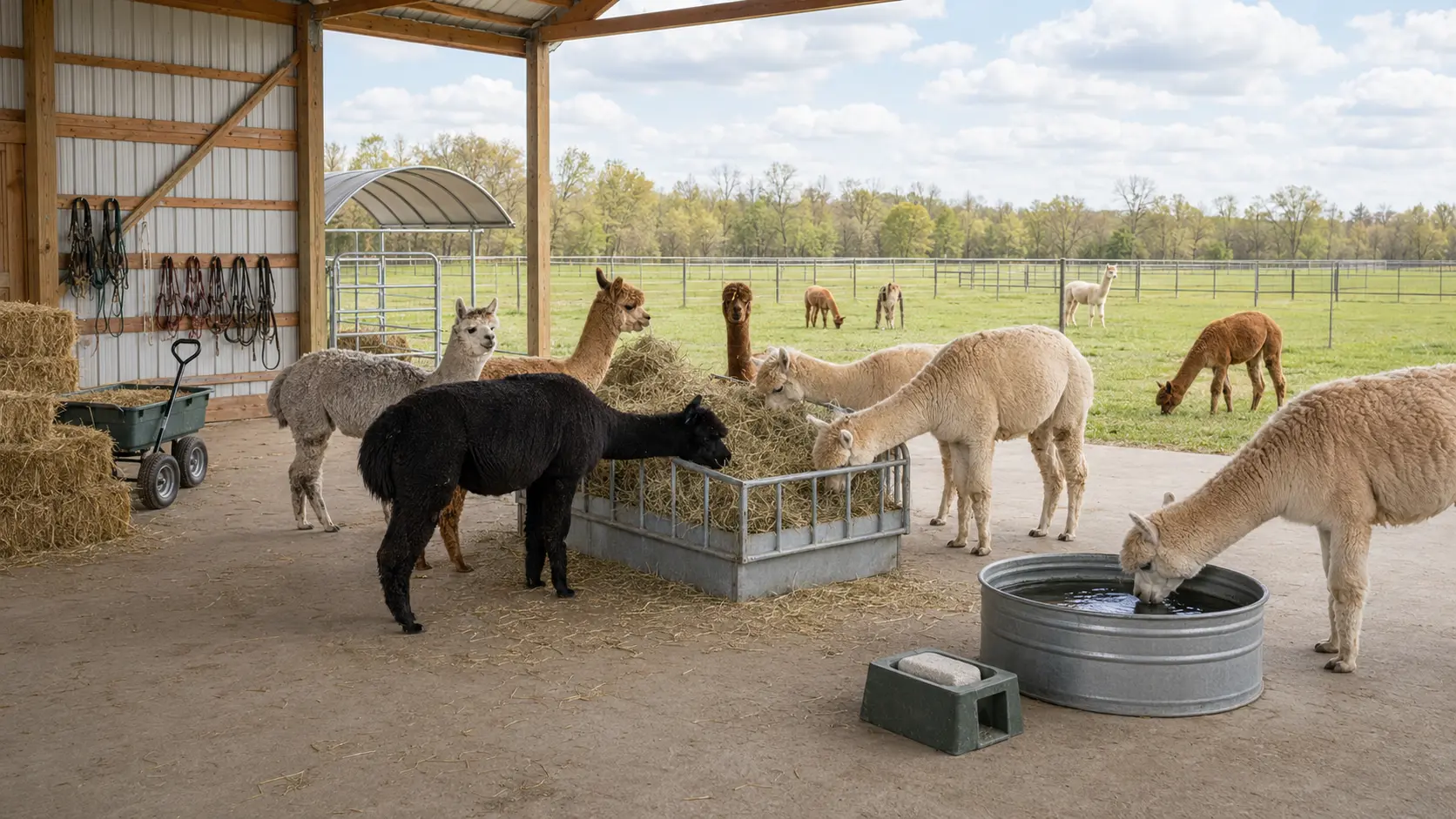
Begin with what the forage provides
The foundation of an alpaca diet
Pasture and hay may look similar from one field or cutting to the next while differing substantially in maturity, energy, protein, fiber, minerals, moisture, weeds, and cleanliness. A feeding plan therefore begins by identifying the available forage and, when appropriate, obtaining a laboratory forage analysis. The results give a veterinarian or qualified nutrition professional something more useful than color, smell, or guesswork when evaluating the ration.
Availability is not the same as intake. Weather, pasture growth, feeder design, competition, dental problems, illness, pregnancy, lactation, age, and the animal’s position within the herd can all change what an individual actually consumes. Observe animals eating, provide sufficient feeder access, and investigate when one alpaca consistently hangs back, drops feed, eats slowly, or separates from the group.
Because dense fleece disguises the outline of the body, visual impressions alone are unreliable. Regular hands-on body-condition assessment and weight or growth records help show whether the plan is working. Sudden loss of appetite, weight, condition, manure changes, weakness, abdominal discomfort, or abnormal behavior deserves prompt attention under the farm’s veterinary-care plan.
Five connected parts
Build the feeding plan
Each part affects the others. Supplements should address an identified need rather than compensate for unknown forage quality or inconsistent monitoring.
Pasture and hay
Provide suitable, clean forage and manage pasture so animals are not forced to eat around heavily contaminated areas, toxic plants, mold, dust, or spoiled material.
Clean water
Keep fresh water continuously accessible and check the source, containers, flow, cleanliness, temperature, and winter operation. Consumption can change with weather and diet.
Minerals and salt
Choose products and access methods using forage, water, regional, and veterinary information. More is not automatically better; excesses and nutrient interactions can matter.
Concentrates and supplements
Use only for a defined nutritional reason and include every product in the total ration. Introduce changes carefully and prevent dominant animals from consuming another animal’s portion.
Feeder access
Provide enough safe feeding space for the whole group, reduce waste and contamination, and create a practical way to feed or observe animals that need individual management.
Feed the individual, not the average
Adjust for life stage and condition
Animals sharing a pasture do not necessarily have identical needs. Grouping and individual observation make targeted feeding possible without overfeeding the rest of the herd.
Maintenance animals
Mature, nonworking animals maintaining a healthy condition may need no concentrated source of energy. Evaluate forage first and watch for gradual weight gain hidden by fleece.
Growing alpacas
Track development over time and review forage quality, minerals, group competition, parasite control, and health with the veterinarian rather than chasing one target measurement.
Pregnancy and lactation
Requirements and appetite can change through reproduction. Coordinate the diet with the farm’s breeding plan and monitor the dam rather than making abrupt assumptions.
Older alpacas
Dental wear, chronic disease, mobility, competition, and reduced ability to use a particular forage can require examination and an individualized plan.
Ill or recovering animals
Reduced intake or weight loss can be a sign of disease, not merely a feeding problem. Seek veterinary direction before adding calorie-dense products or changing the ration.
Measure the response
How to tell whether the plan is working
Good feeding records connect what was offered with what the animals actually did. Review trends, not isolated numbers, and investigate meaningful changes.
| Monitor | What to record | Why it matters |
|---|---|---|
| Forage | Source, field or cutting, analysis, condition, date opened, amount offered and refusal or waste | Quality and intake can change even when the farm buys the same general type of hay |
| Water | Source, cleaning, flow, freezing or heat concerns, unusual consumption and water-test information when relevant | Access and palatability influence intake, while water may also contribute minerals |
| Body condition | Consistent hands-on scores, weight when practical, growth trends and the person making the assessment | Fleece can hide loss or gain, so repeated assessment is more useful than appearance |
| Consumption | Appetite, feeding position, chewing, dropped feed, time at the feeder and access within the group | Changes may reveal competition, dental difficulty, illness, or a feed-quality problem |
| Health and output | Manure, behavior, activity, veterinary findings, reproduction, growth and fleece observations | The complete response helps professionals decide whether nutrition or another cause should be investigated |
Protect the feed and the herd
Feed storage and safe changes
Store hay and packaged feeds where they remain dry, ventilated, protected from pests, and separated from chemicals, medications, machinery fluids, and other contaminants. Make delivery areas accessible without allowing animals into storage. Label products, retain lot information when useful, rotate stock, and discard feed that is moldy, spoiled, contaminated, or otherwise questionable rather than blending it into a new batch.
Keep feeders and water containers clean and inspect them for sharp edges, entrapment risks, unstable mounting, and accumulated waste. Feeding locations should not force animals to stand in mud or manure. When pastures are rotated or hay lots change, compare the old and new forage and plan a gradual transition appropriate to the situation. Sudden diet changes can disrupt normal digestive function.
Budget for testing, storage, waste, winter access, delivery, minerals, and professional help as part of the farm’s continuing operating costs. The cheapest feed per bale is not necessarily economical if quality is inadequate, much of it is wasted, or it creates a health problem. Likewise, a premium product is not automatically appropriate merely because its label or marketing sounds comprehensive.
Penn State Extension maintains a collection on llama and alpaca nutrition and feeding, including resources on forage quality, body-condition scoring, and copper nutrition. Use these as educational background while developing the farm’s actual ration with qualified local professionals.
Part of the farm-planning series