From Andean herds to farms worldwide
The history of alpacas
Alpacas have lived alongside people in the Andes for thousands of years. Their history follows the development of Andean herding, textile traditions, and the eventual spread of alpaca farming far beyond South America.
01 · Andean origins
Thousands of years in the Andes
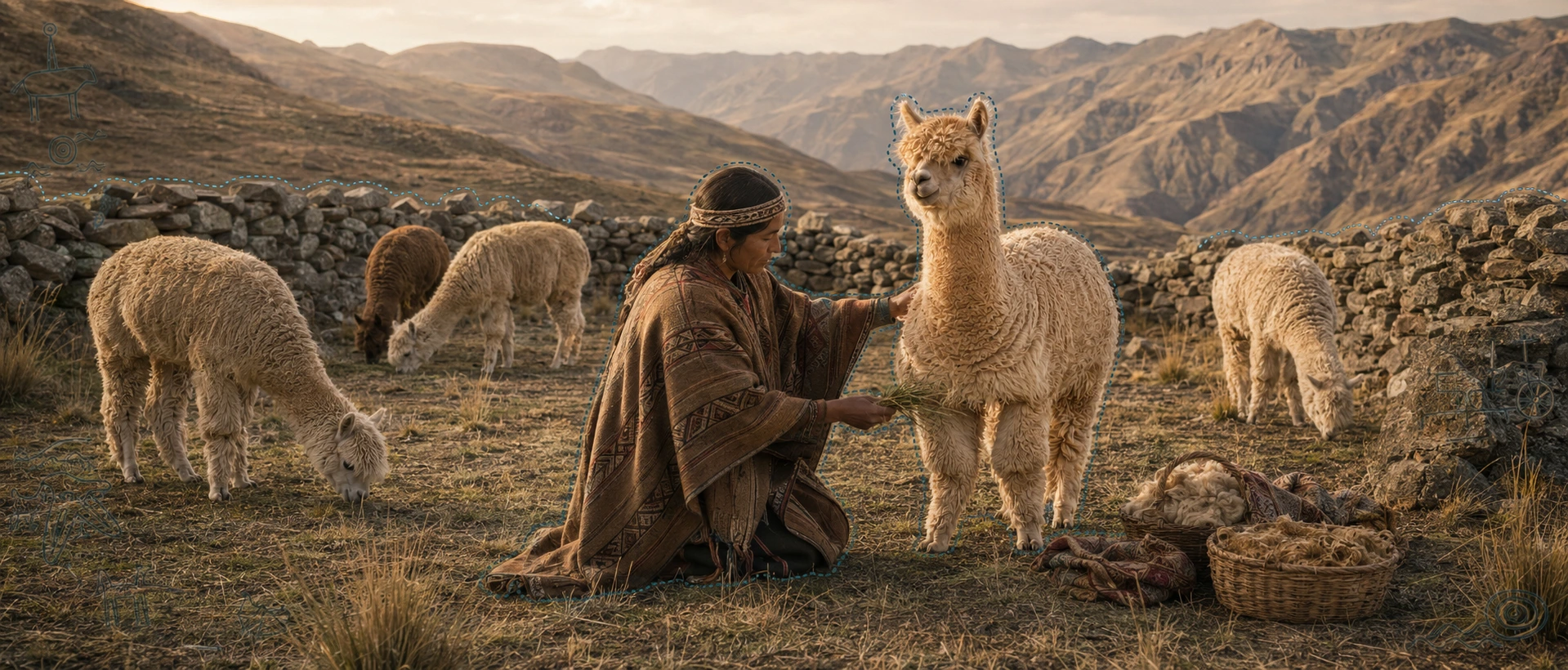
The story of alpacas begins on the high plateaus of South America. Indigenous communities in what are now Peru, Bolivia, Chile, and Argentina developed herds suited to cold temperatures, thin air, and sparse mountain grasslands.
Modern genetic evidence closely connects the domestic alpaca with the wild vicuña. Over many generations, Andean herders selected animals for manageable temperaments and increasingly useful fleece, turning a wild camelid lineage into a dependable domestic fiber animal.
Alpacas became part of a wider pastoral system that also included llamas. Herds supplied fiber, food, fuel, and trade goods, while the animals themselves became woven into local ceremony and community life.
02 · Clothing & textiles
A fiber shaped by ancient weavers
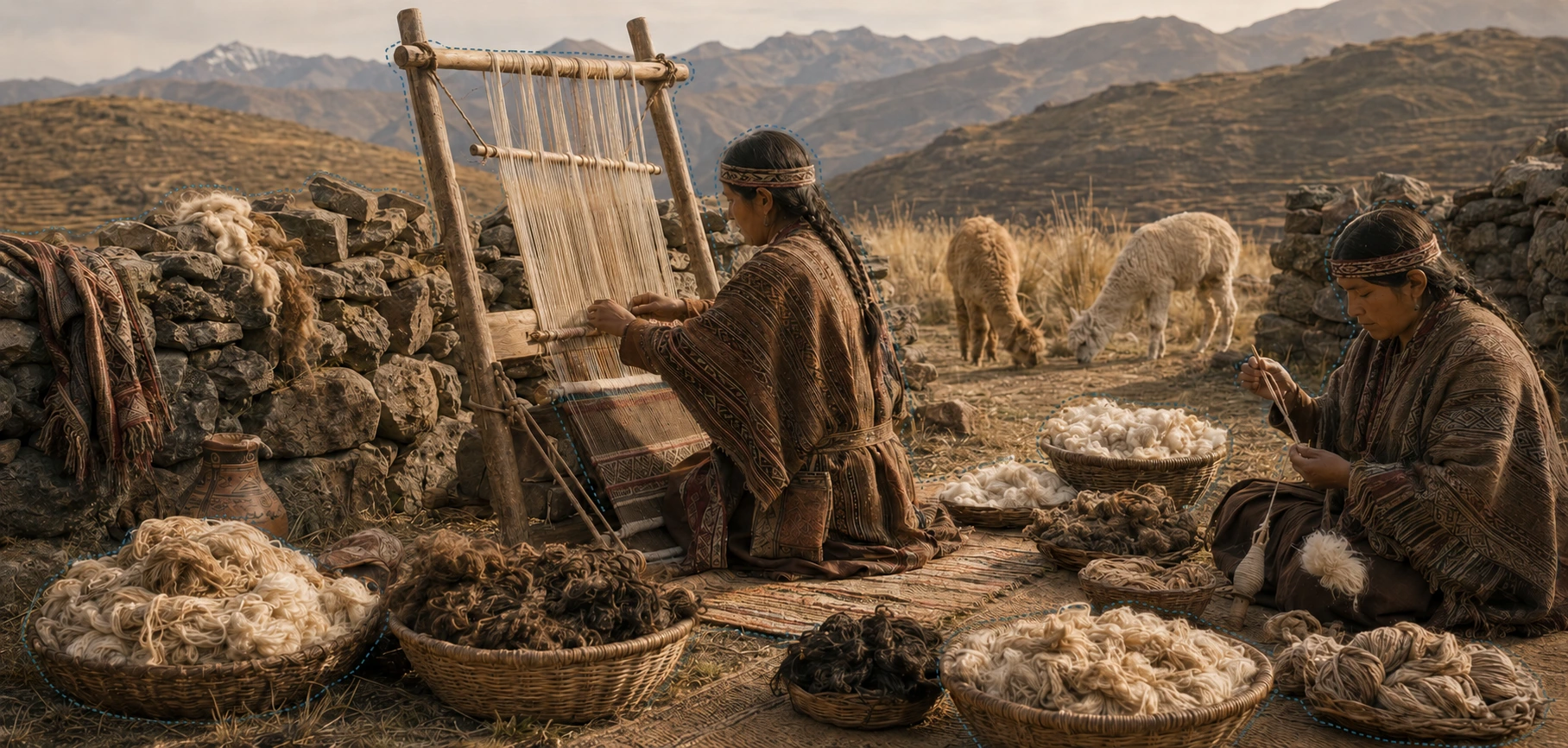
The history of alpaca clothing began with practical need. Life at high elevation required warm, durable material, and alpaca fleece could be cleaned, spun, dyed, and woven into garments, blankets, bags, and ceremonial cloth.
Andean textile traditions were already highly developed centuries before the Inca Empire. Under the Inca, cloth production became organized on a large scale, and textiles served as clothing, tribute, gifts, markers of status, and objects used in religious and political life.
Spanish colonization disrupted Indigenous herding and introduced sheep and European textile practices. Alpaca fiber nevertheless remained important in Andean communities, and its warmth, softness, and natural colors eventually brought it into international textile markets.
03 · Modern farms
From mountain herds to modern farms
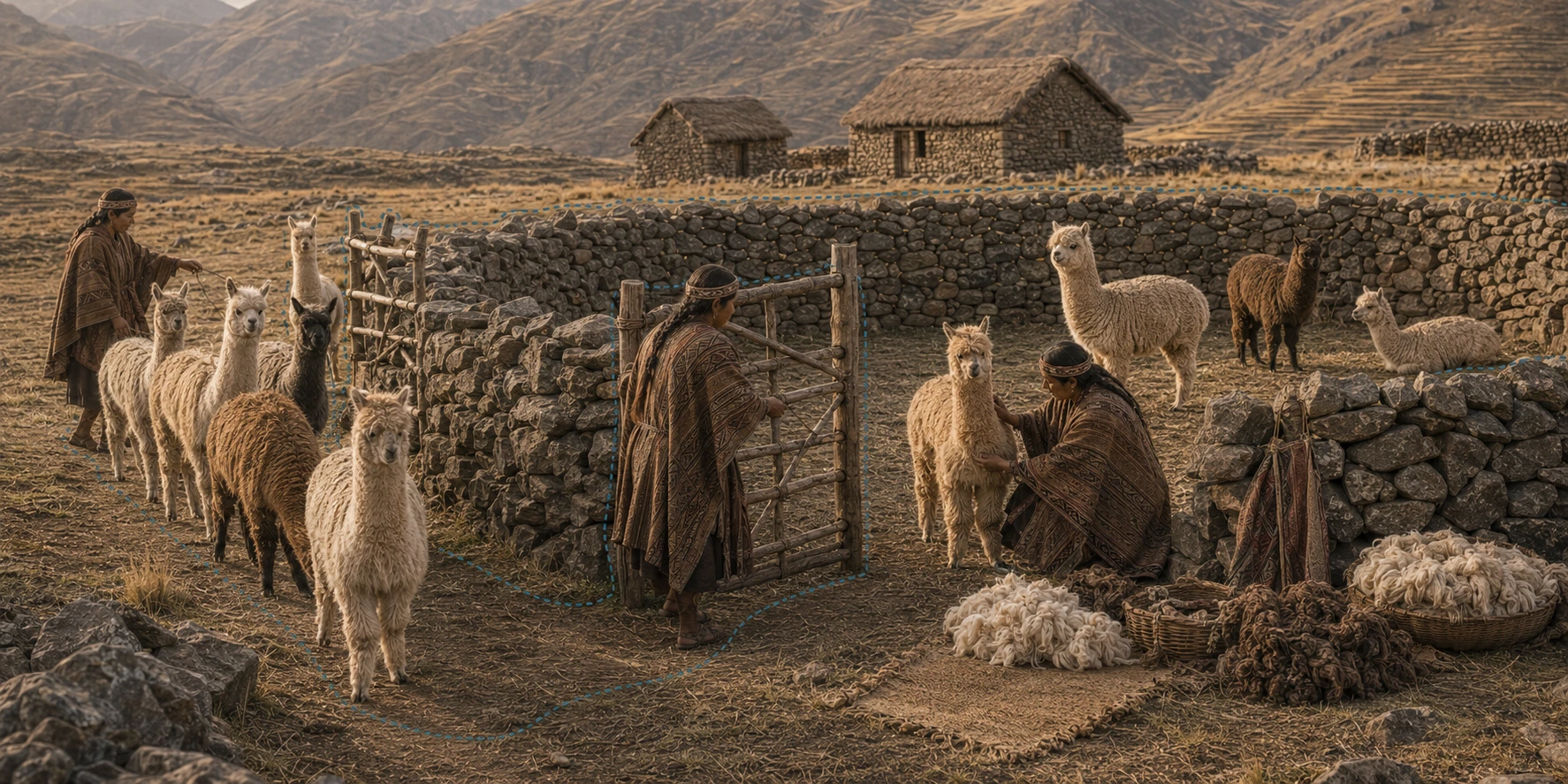
For most of their history, alpacas remained concentrated in the Andes. Following the Spanish conquest, introduced livestock and changes in land use pushed many alpaca herds toward remote, higher-elevation pastures where Indigenous communities preserved both the animals and the knowledge needed to raise them.
Alpacas began reaching North American farms in significant numbers during the mid-1980s. Breeding herds were also established in Australia, New Zealand, Europe, and other regions, turning an animal once closely associated with the Andes into international livestock.
Today, an alpaca farm may focus on breeding, fleece production, finished fiber goods, farm visits, or a combination of these activities. The setting has changed, but the basic cycle of herd care, annual shearing, and selection for better fleece remains tied to the animal's long pastoral history.
04 · Alpacas & llamas
Two animals, two historical roles
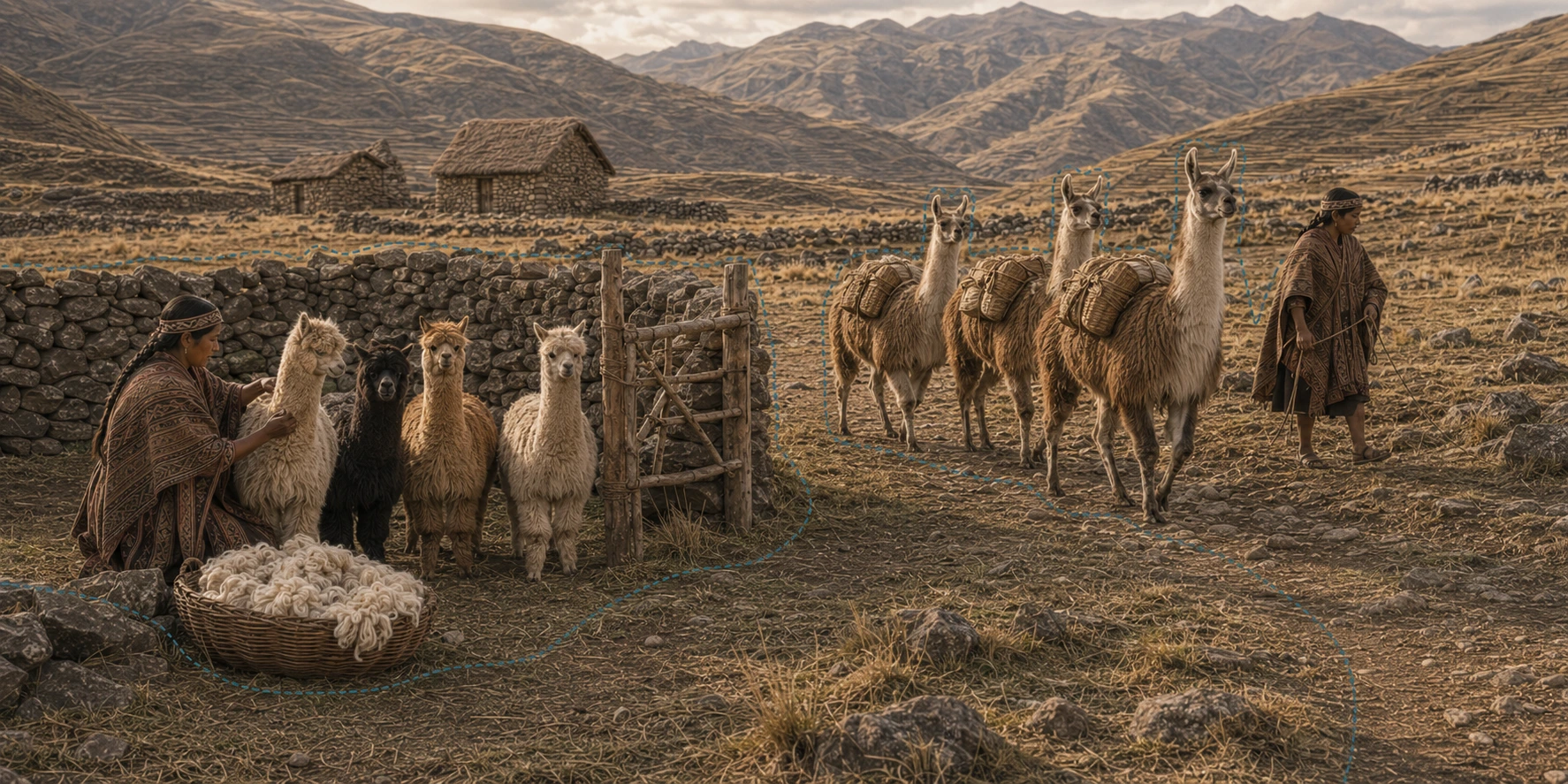
The history of alpacas and llamas is closely connected, but the animals were not developed for the same purpose. Alpacas were selected primarily for fleece, while the larger llama was bred to carry loads and serve as a working animal.
Their wild ancestry also differs. Alpacas are most closely associated with the vicuña, while llamas descend primarily from the guanaco. Andean societies kept both, using each animal where its size, coat, and behavior were most valuable.
Those historical jobs still explain many of the differences visible today. The alpaca is smaller, more herd-oriented, and covered in fine fleece; the llama is taller, more independent, and physically suited to packing and guarding.