Prevention, observation and preparation
Alpaca veterinary care
Good veterinary care begins before an alpaca becomes sick. Establish a relationship with a veterinarian familiar with camelids, build a written herd-health plan, keep useful records, and prepare the farm to recognize and respond to problems promptly.
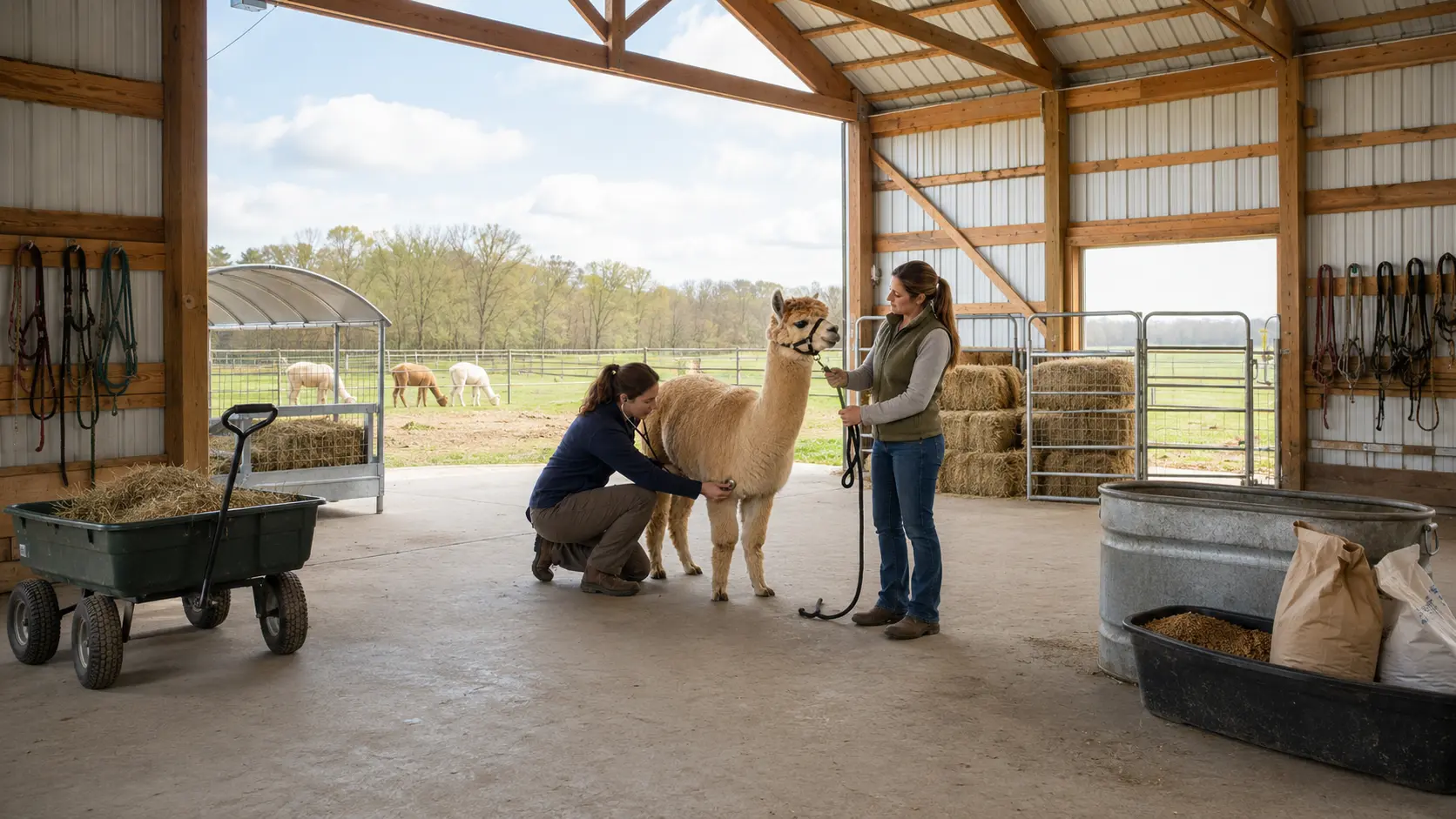
Call before the herd arrives
Find a veterinarian familiar with camelids
Veterinary availability varies by region, and not every livestock practice routinely treats alpacas. Contact potential practices before buying animals. Ask whether they provide farm calls, routine herd work, reproductive services if relevant, diagnostic sampling, emergency coverage, and referrals for hospitalization or specialized procedures. Confirm the geographic service area and how after-hours calls are handled.
Share the planned herd size, animal purpose, property layout, handling facilities, and transportation options. A veterinarian can help identify practical needs such as a safe catch area, adequate lighting, clean water, an examination space, electrical access, or a way to separate an animal without leaving it socially isolated. Experienced alpaca farms in your state may also know which regional practices, laboratories, and referral facilities work with camelids.
The first conversation should produce more than a phone number. Develop a written plan covering routine examinations, vaccinations appropriate to the animals and location, parasite monitoring, dental and foot evaluation, nutrition and body condition, reproduction when applicable, testing, movement requirements, medication records, and signs that warrant a call. Review the plan as the herd, property, or local disease risks change.
A herd-specific schedule
Build the preventive-care plan
Routine care should be selected with the veterinarian for the particular animals, region, management system, and current risks—not copied from an online calendar.
Physical examinations
Schedule routine veterinary assessment and use it to review condition, movement, eyes, mouth, heart and lungs, skin, feet, diet, reproduction, and changes since the last visit.
Vaccination decisions
Discuss which products, timing, handling, and records are appropriate. Recommendations can depend on location, age, pregnancy, exposure, travel, and the individual animal.
Parasite management
Base monitoring and treatment decisions on the herd’s risks, clinical findings, diagnostic results, pasture management, and veterinary advice rather than automatic whole-herd dosing.
Teeth, feet and fleece
Plan evaluation of incisors, fighting teeth where present, toenails, skin, and fleece. Coordinate shearing and seasonal care with weather and the animal’s health.
Nutrition and reproduction
Connect hands-on body-condition monitoring and the feeding plan with pregnancy, lactation, growth, aging, and other individual needs.
Know what is normal
Daily alpaca health observation
Owners do not replace the veterinarian by observing the herd. They give the veterinarian better information by noticing changes early and describing them accurately.
Appetite and drinking
Watch who approaches feed and water, who finishes, who is displaced, and whether an individual chews differently, drops feed, or stops participating.
Behavior and posture
Note separation from the herd, unusual quietness, repeated position changes, reluctance to rise, abnormal head or neck position, or a change in normal social behavior.
Movement and feet
Look for uneven movement, shortened stride, stiffness, swelling, difficulty rising, reluctance to bear weight, or changes after trimming, weather, or pasture conditions.
Breathing and appearance
Observe breathing effort, coughing, nasal or eye discharge, facial symmetry, wounds, swelling, skin changes, and anything visibly different from that animal’s baseline.
Manure and condition
Monitor manure patterns and use regular hands-on body-condition assessment. Dense fleece can conceal gradual weight loss, gain, swelling, or muscle loss.
Make the history usable
Health records and farm biosecurity
A record is valuable when a caretaker and veterinarian can quickly identify the animal, reconstruct events, and see what changed. Keep a backup and make essential information accessible during an emergency.
| Record area | What to keep | How it helps |
|---|---|---|
| Identity | Name, permanent identification, sex, birth date, color, photographs, ownership, pedigree and current herd group | Prevents records, samples, treatments and movement documents from being assigned to the wrong animal |
| Baseline and trends | Examinations, weight or body condition, dental and foot observations, diet, reproductive status and normal individual behavior | Gives later changes context and helps the veterinarian evaluate a timeline rather than one isolated observation |
| Tests and procedures | Dates, reason, veterinarian or laboratory, samples, results, vaccinations, procedures, shearing and follow-up instructions | Supports preventive planning and avoids unnecessary repetition or missed follow-up |
| Medications | Prescriber, product, animal, reason, amount, route, dates, response, adverse events and applicable withdrawal information | Helps the veterinarian assess effectiveness and safety and creates an accurate treatment history |
| Movement and exposure | Purchases, sales, shows, breeding visits, transport, contact herds, isolation, testing and animals entering or returning to the farm | Improves biosecurity decisions and provides a history if an infectious disease concern develops |
Prepare before the urgent call
Emergency and biosecurity planning
Ask the veterinarian which observations to collect during an urgent call and what should not be attempted without instruction. Make the farm address, directions, gate access, animal identification, recent history, medications, and transport options easy to provide. Keep a suitable halter, lead, lighting, charged phone, and veterinarian-approved supplies organized where trained caretakers can reach them.
Facilities should allow an alpaca to be caught and examined with as little stress as practical while protecting handlers and veterinary staff. Plan how to separate an animal while maintaining safe visual or social contact when appropriate. Practice loading before an emergency, identify a suitable vehicle or transporter, and know which clinic or hospital can receive a camelid if care cannot be provided on the farm.
Biosecurity belongs in ordinary routines, not only during an outbreak. Discuss procedures for newly acquired, borrowed, or returning animals; visitors and farm equipment; shows and breeding trips; manure and carcass handling; wildlife and pests; and animals showing signs of illness. The required separation period and testing should be chosen with the veterinarian for the source, destination, diseases of concern, and current regional situation rather than treated as one fixed number.
The plan should also address difficult decisions. Know who is authorized to approve treatment, referral, transport, surgery, or humane euthanasia when the owner cannot be reached. Set financial and logistical expectations in advance as part of the farm’s cost and emergency-reserve planning. A written plan does not remove emotion, but it reduces delay and uncertainty when an animal needs timely care.
For veterinary background, consult the Merck Veterinary Manual’s herd-health overview for llamas and alpacas. The Ohio State University Veterinary Medical Center also maintains International Camelid Institute resources for camelid health and management.
Part of the farm-planning series