A signal, not a party trick
Do alpacas spit?
Yes—but usually at another alpaca. Spitting is a short-range way of settling a disagreement, protecting personal space, or saying no.
01 · The short answer
Yes, but it is usually herd communication
Alpacas can spit, but it is not something they do for attention or amusement. In most cases, one animal is telling another that it has come too close, challenged a resource, or ignored a clear boundary.
The target is usually another alpaca. People tend to notice the behavior because it is memorable, but a quiet alpaca farm has many more ordinary moments of grazing, humming, and resting than spitting.
Understanding the situation matters more than counting the incidents. A brief dispute at a feeder is very different from a herd that seems consistently tense or crowded.
02 · The reason
Most spits mean “back off”
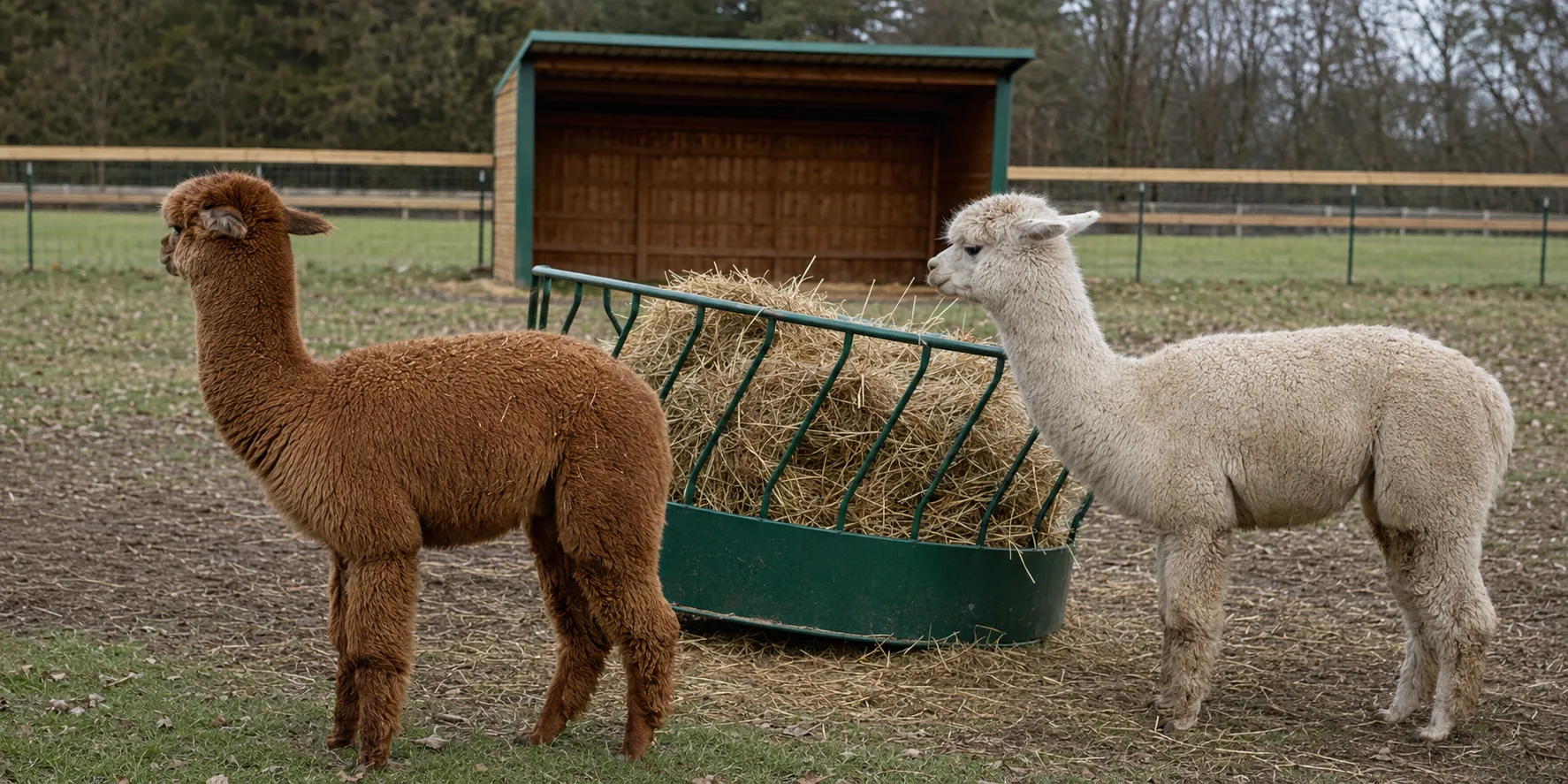
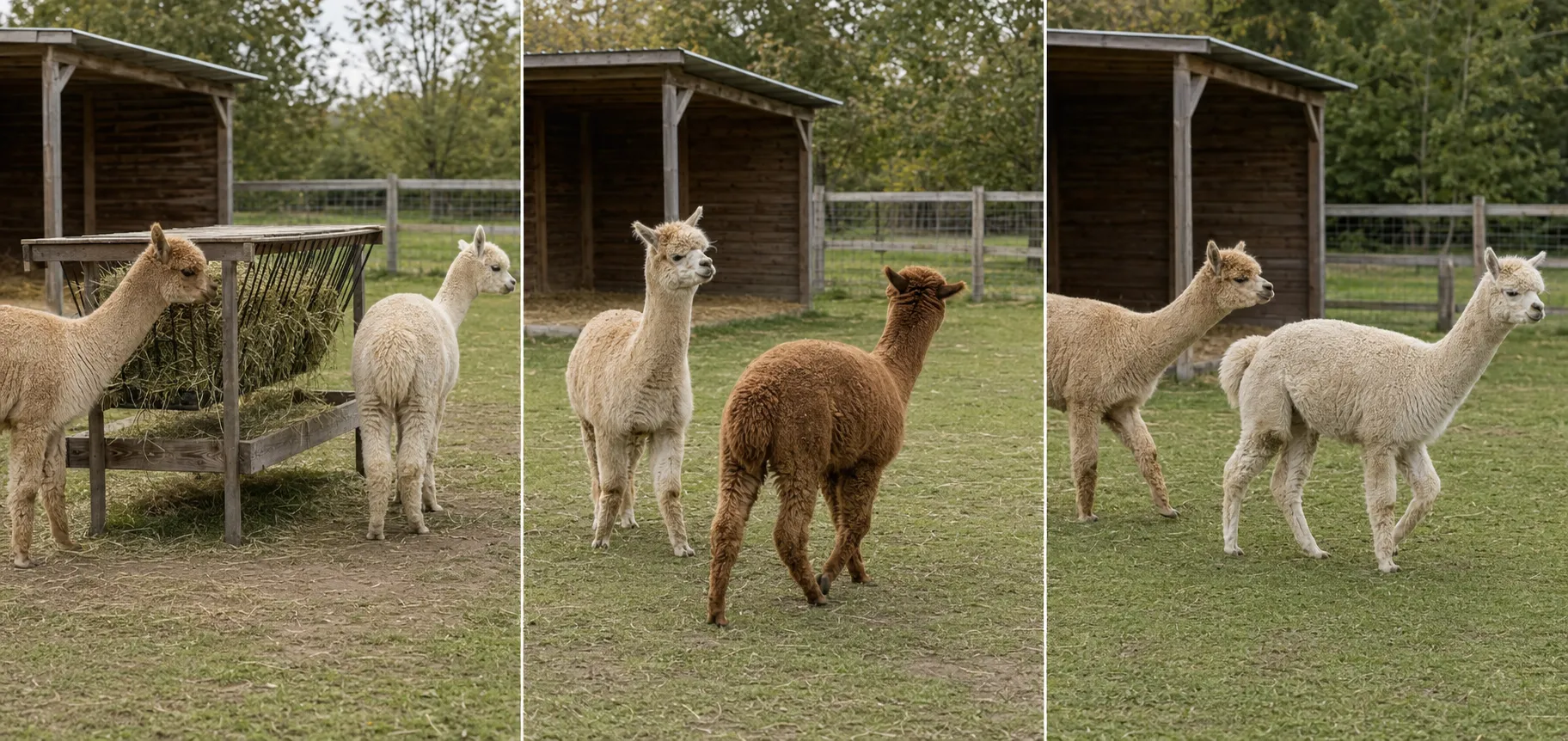
Feed is a common flashpoint. One alpaca may guard a preferred spot, hay pile, or feeder opening, especially when there is not enough room for the herd to eat comfortably. A small warning can end the disagreement quickly.
Spitting can also appear during breeding. A female that is not receptive may use it to reject a male. In both cases, the message is clear without needing a long fight.
It belongs to the larger behavior of a herd: animals use spacing, posture, sound, and occasional stronger signals to work out daily interactions.
03 · Read the warning
Watch the space around the animal
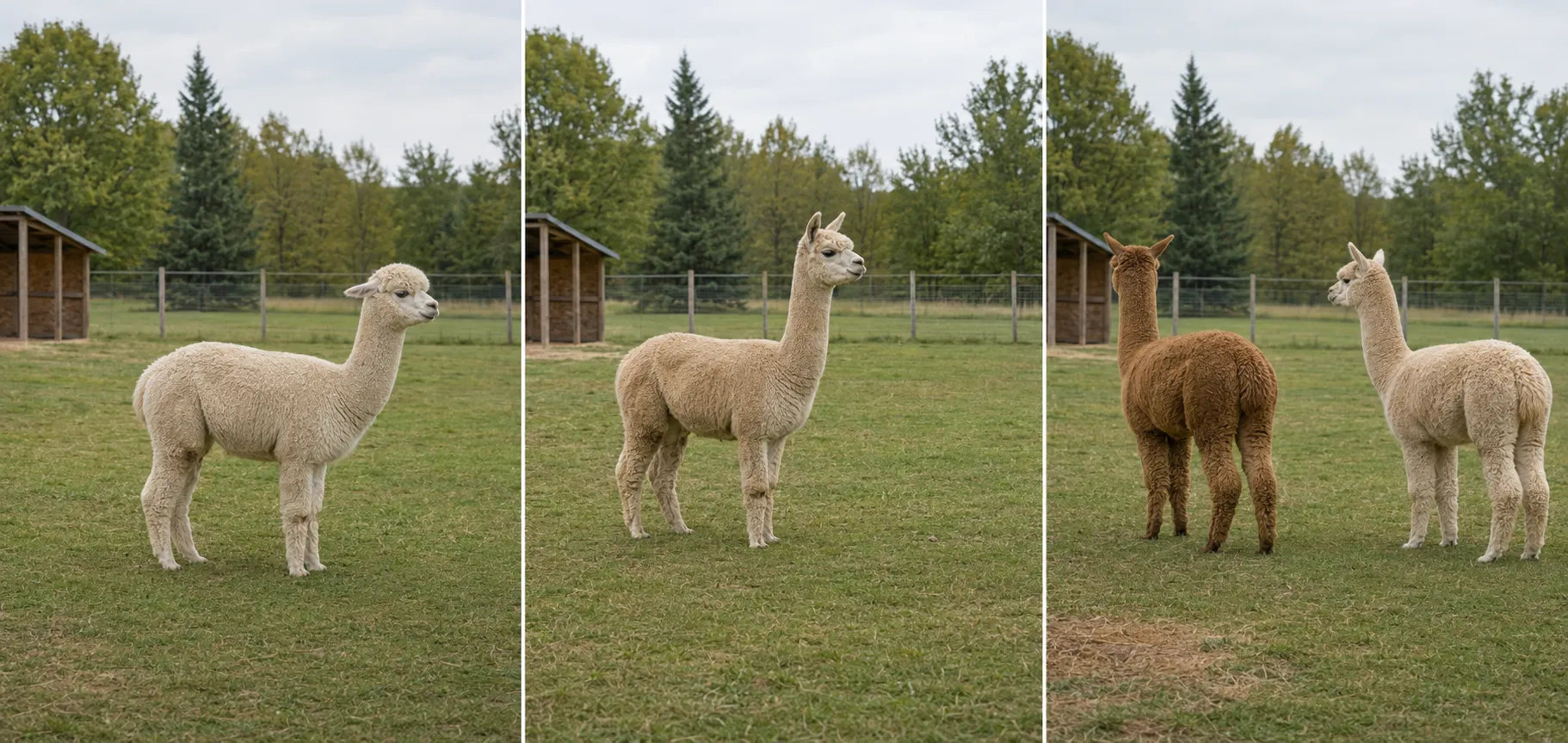
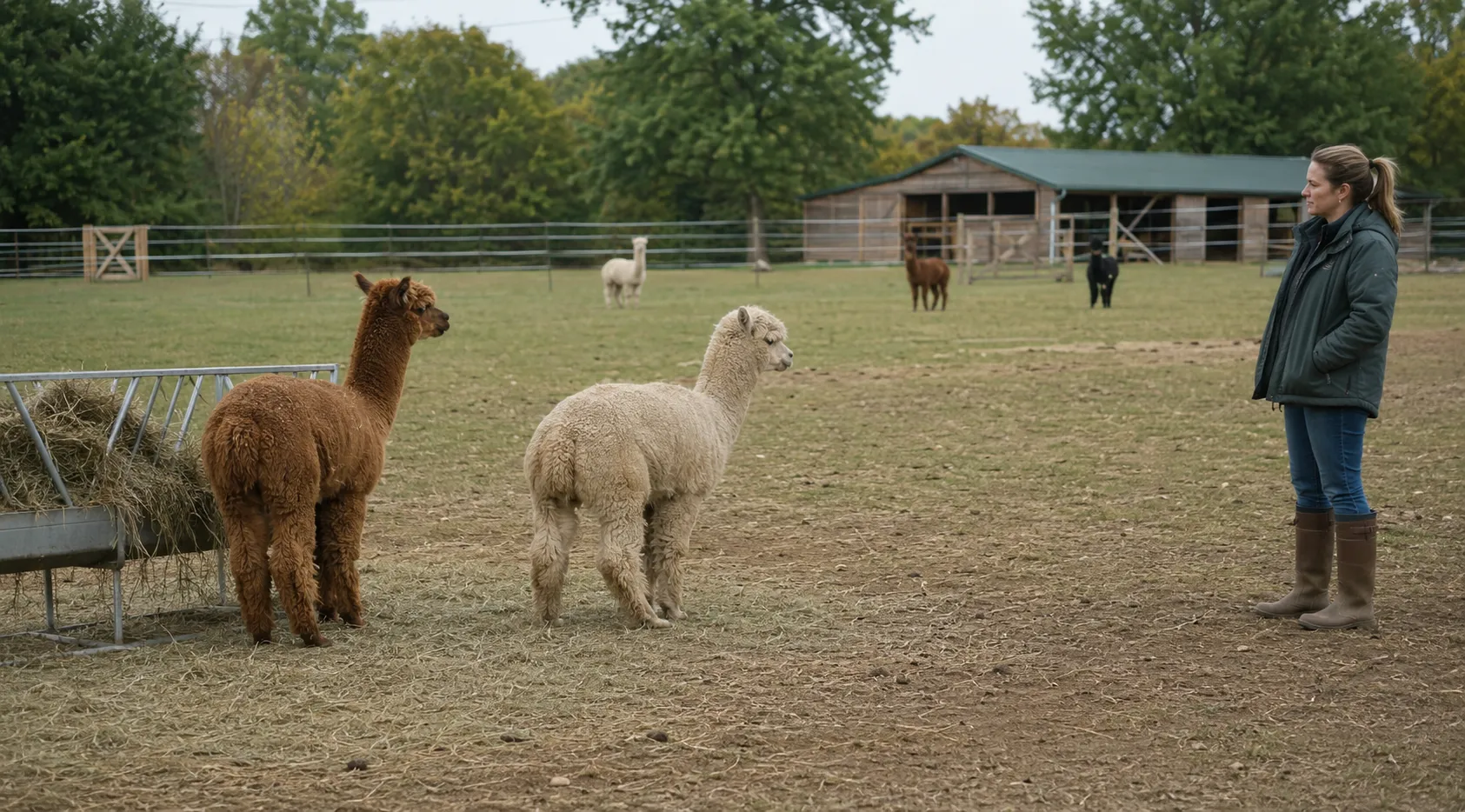
A stiff stance, focused ears, a turn of the head, grumbling, or one alpaca moving another away from feed can all signal that the interaction is getting tense. Giving the animals room is usually more useful than stepping closer to investigate.
Both alpacas and llamas use body language and occasional spitting in social disagreements. The important thing to read is the immediate setting—food, space, herd rank, or breeding—not a stereotype about either animal.
At feeding time, more than one access point and enough room for animals to move away can prevent many small disputes from building.
04 · Around people
Why humans sometimes get caught in it
An alpaca may spit toward a person when frightened, crowded, handled roughly, or simply aiming past them at another animal. That does not mean it is generally aggressive toward people; it often means the person was standing in the wrong place at the wrong moment.
Stay calm, step back, and avoid turning a short disagreement into a chase. The broader behavior of the herd will usually tell you whether the animals simply need a little more room or whether a routine needs adjusting.
Calm handling is especially useful around feed, gates, and close quarters. Move groups together when possible and give each animal an easy path away.
05 · At a glance
What an alpaca spit usually means
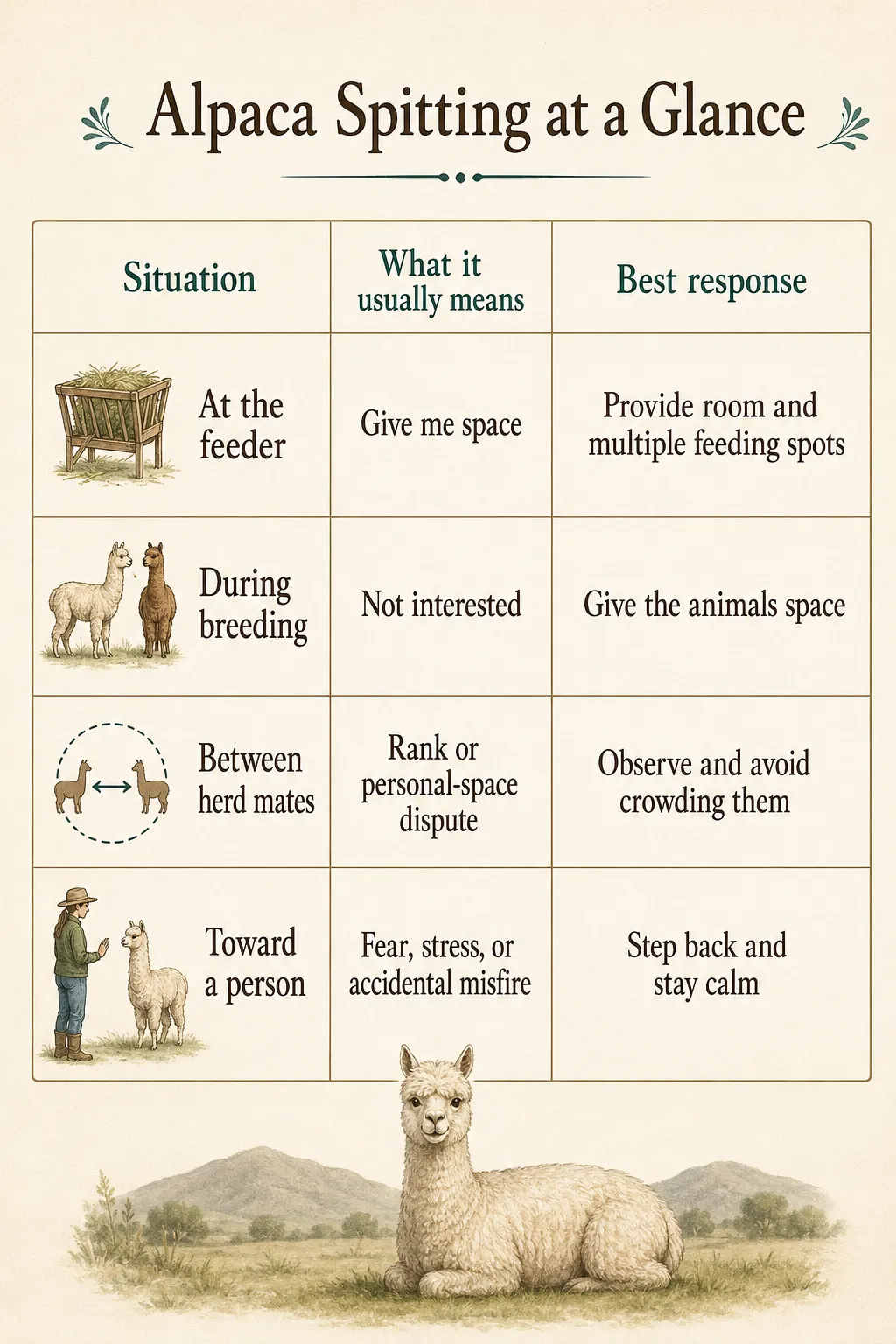
Context is the clue. A quick look at the setting can make the response much clearer.