Alpaca clothing guide
Alpaca blankets
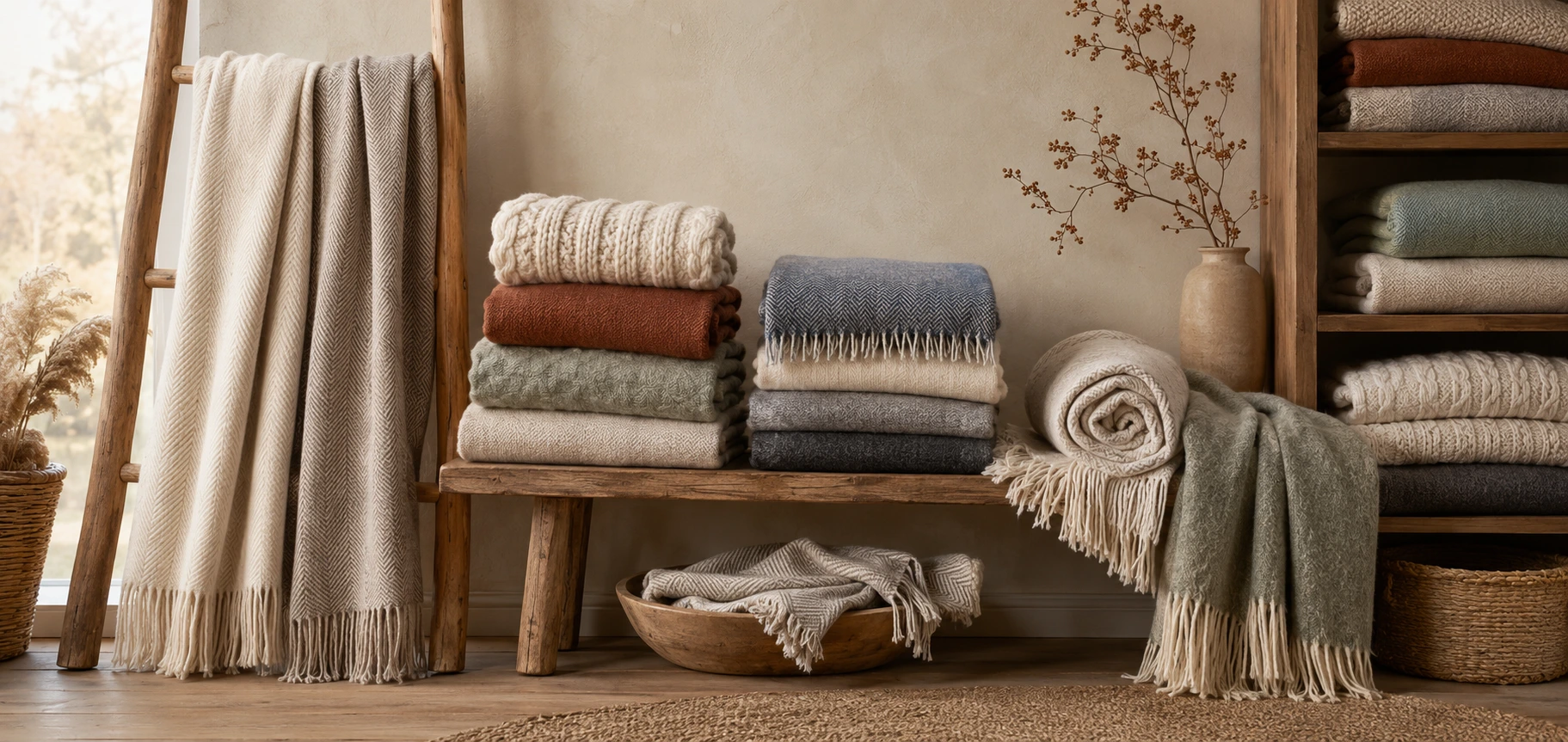
Alpaca blankets and throws bring warmth, drape, and texture to a room. A smooth woven throw and a chunky knit blanket can use the same fiber very differently.
Why alpaca suits blankets
Alpaca blankets are made for the moments when warmth matters most. The fiber can be woven into a smooth, refined throw for a couch or knitted into a thicker blanket with more visible texture and weight. Its natural color range runs from creamy white to rich brown and charcoal, so pattern does not always depend on dye.
Blanket makers often use alpaca in a blend that balances softness, warmth, and durability. The fiber comes from alpacas, whose fleece can be sorted into shades before it is spun or woven into finished goods.
01 · Light and versatile
Woven alpaca throws
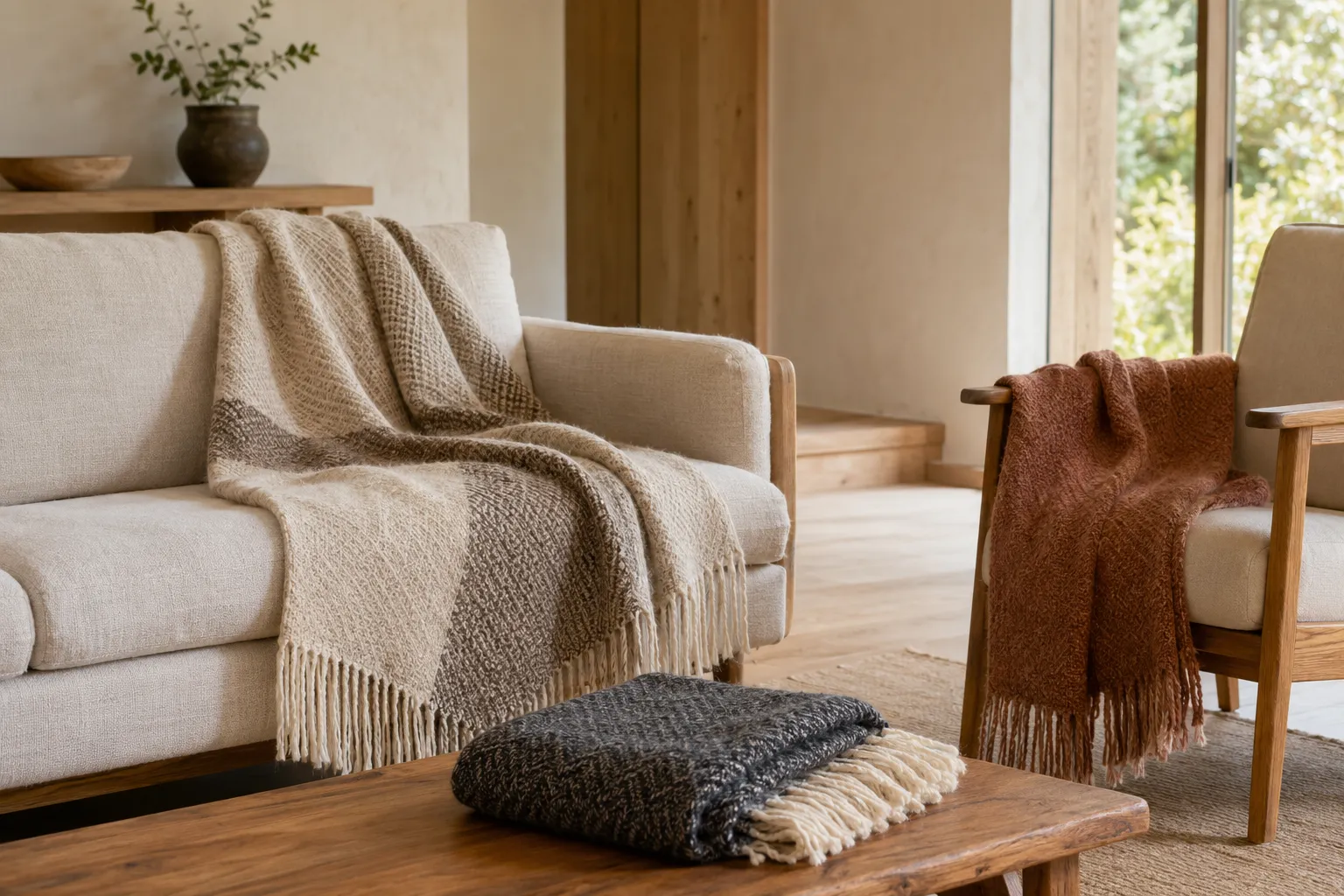
A woven throw is usually the most versatile kind of alpaca blanket. Its flat weave lets it drape easily over a chair, sofa, or lap without feeling as heavy as a thick knit. Fringed edges and a smooth surface give it a more finished, tailored look.
For a room that already has plenty of color and texture, a cream, taupe, gray, or charcoal throw can quietly add warmth. A muted rust or blue accent works well when the blanket is meant to become part of the room’s color scheme.
02 · Visible stitches
Chunky knit alpaca blankets
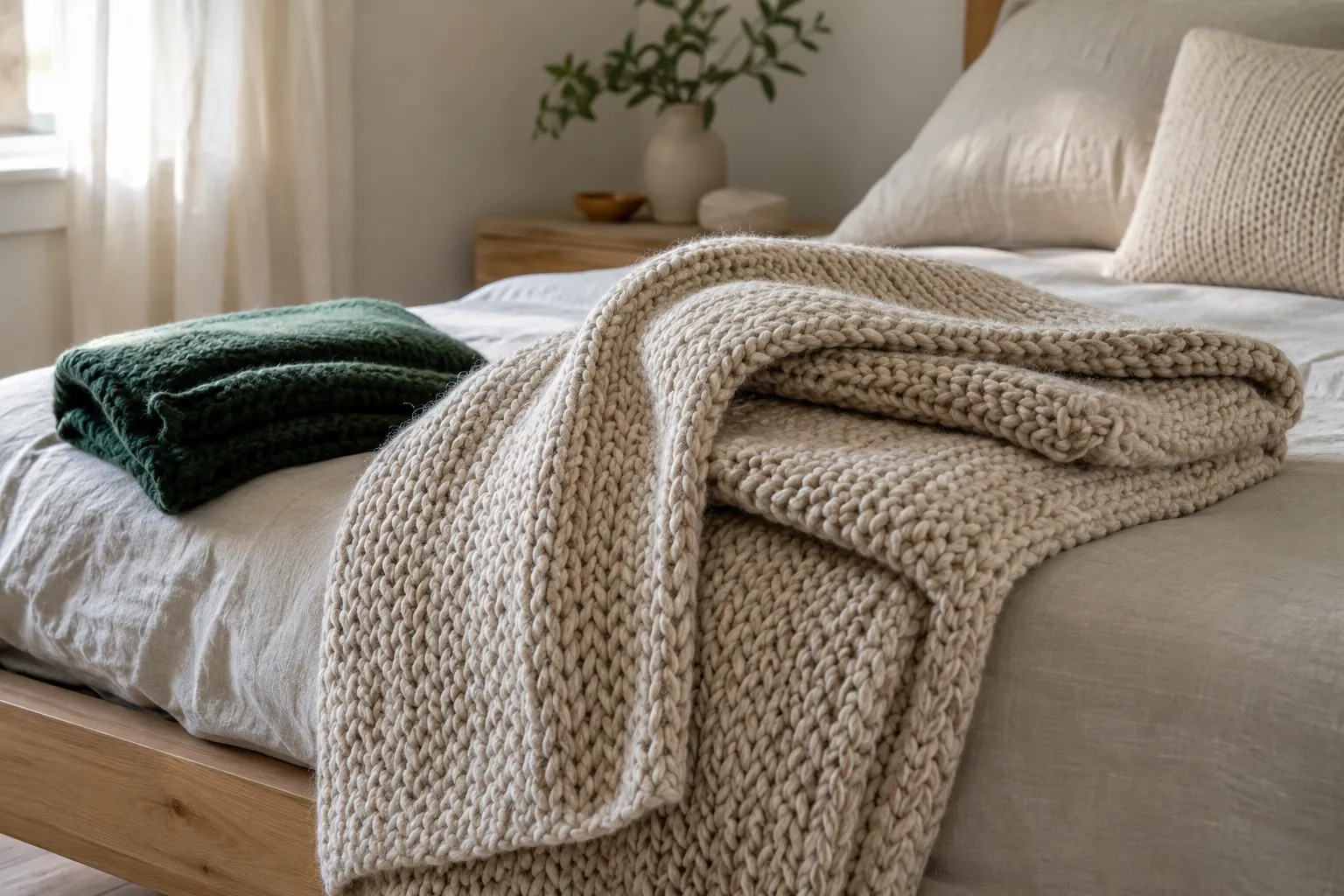
A chunky knit blanket makes the construction part of the design. Large stitches add depth, trap warm air, and give a bed or sofa a more relaxed, tactile feel. These blankets are typically best as an accent layer rather than a tightly tucked bed covering.
Natural oatmeal is a familiar choice for a chunky alpaca knit, but a deep green or muted blue can make the same texture feel more contemporary. Because thicker blankets have more loft, they benefit from gentle care and room to dry fully after washing.
03 · A refined weave
Herringbone alpaca blankets
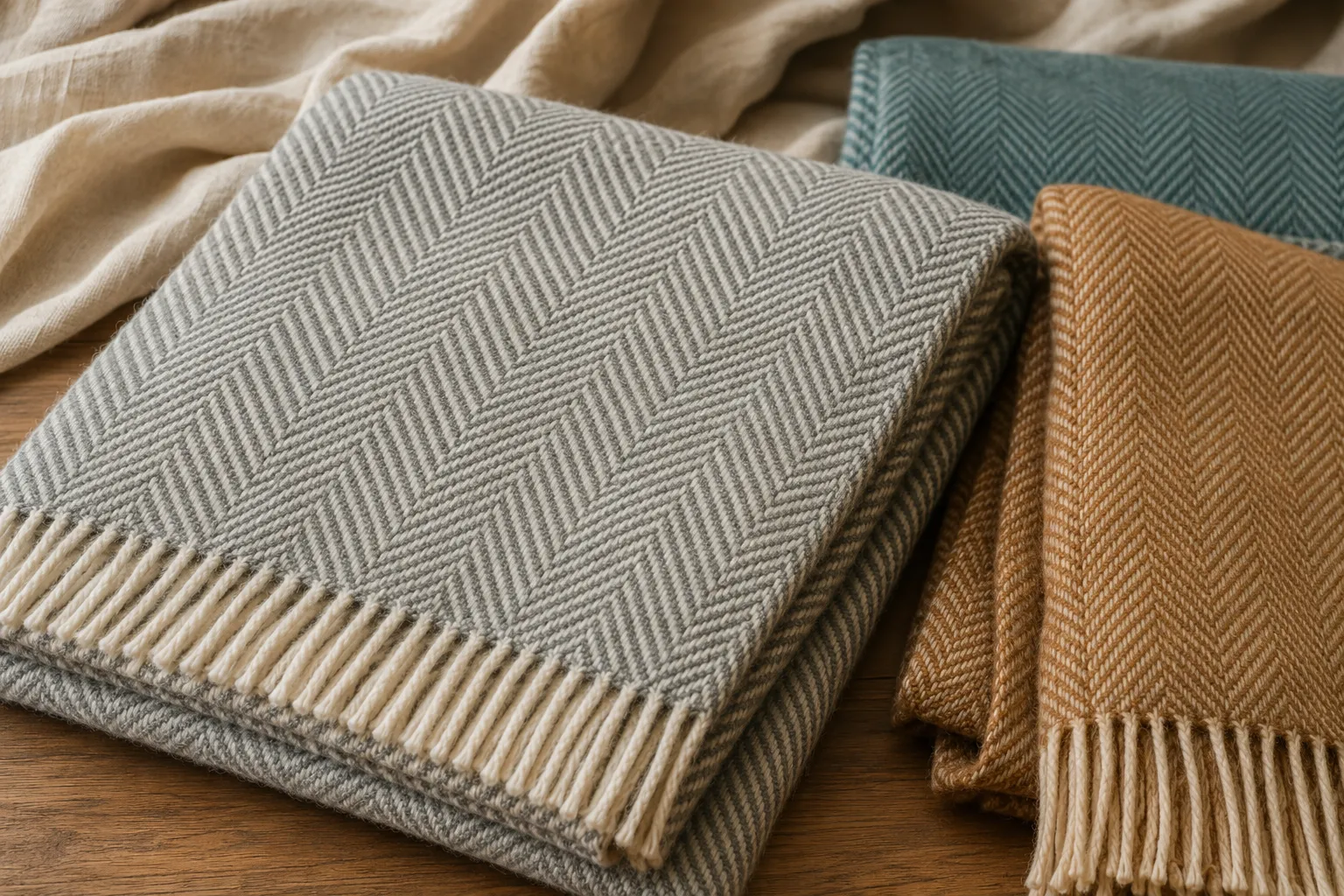
Herringbone is a repeating diagonal pattern that looks especially crisp in a woven blanket. It gives a throw visual structure without making the design busy, and it works just as well in nearly monochrome natural shades as it does with one restrained accent color.
Gray and cream show the pattern clearly, while camel and teal offer a little more contrast. The long textile history of alpaca helps explain why such traditional woven patterns remain a natural fit for the fiber today.
04 · Color in the room
Striped alpaca blankets
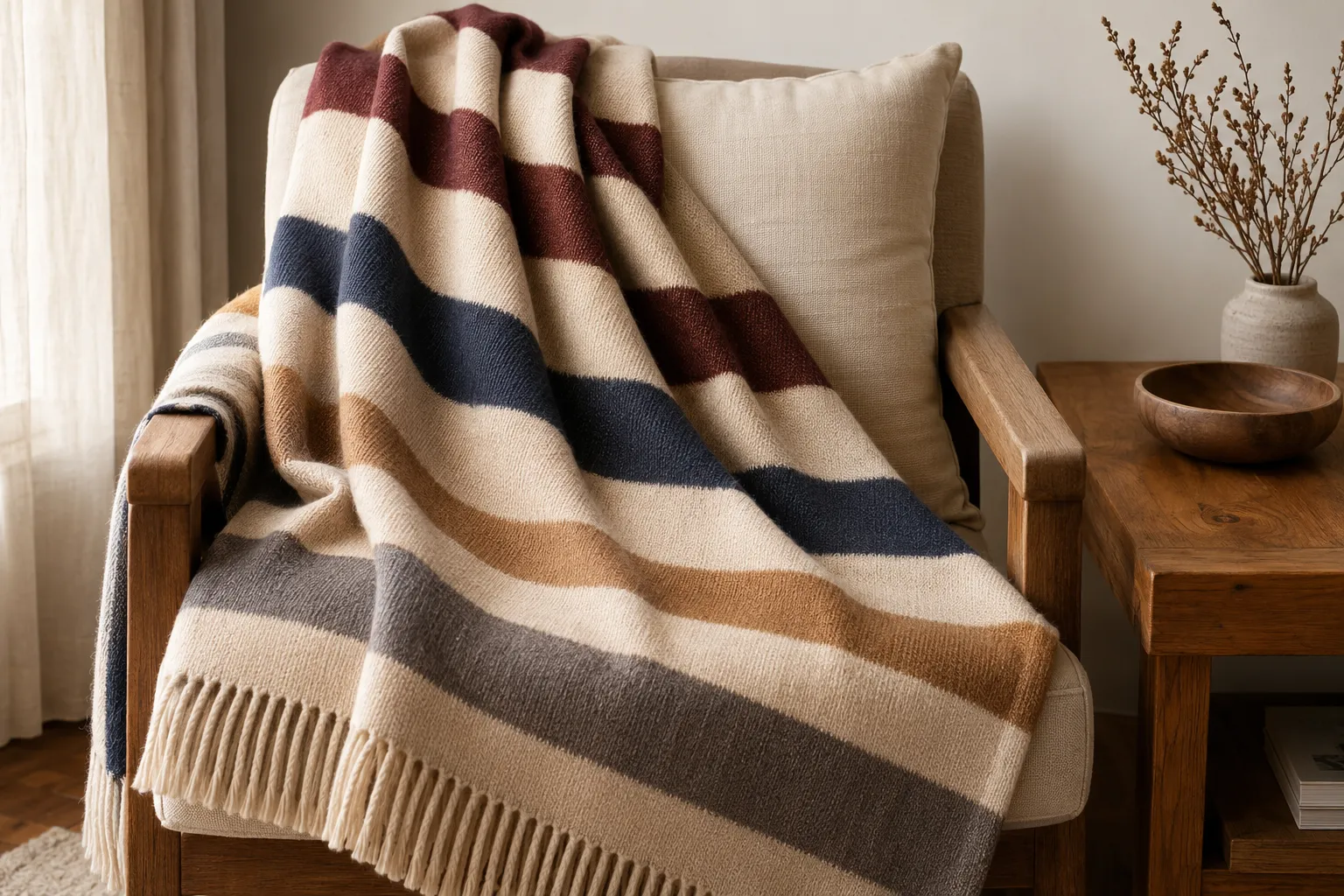
Stripes are one of the easiest ways to bring dyed color into an alpaca blanket. A cream base keeps the pattern light, while burgundy, navy, camel, or gray bands make the blanket feel intentional rather than overly decorative.
Wide stripes are usually calmer than narrow ones and work well across an armchair or at the foot of a bed. For people who enjoy the fiber but want to see more than undyed neutrals, this is a practical way to add color without losing the quiet character of alpaca.
05 · Larger layers
Alpaca bed blankets
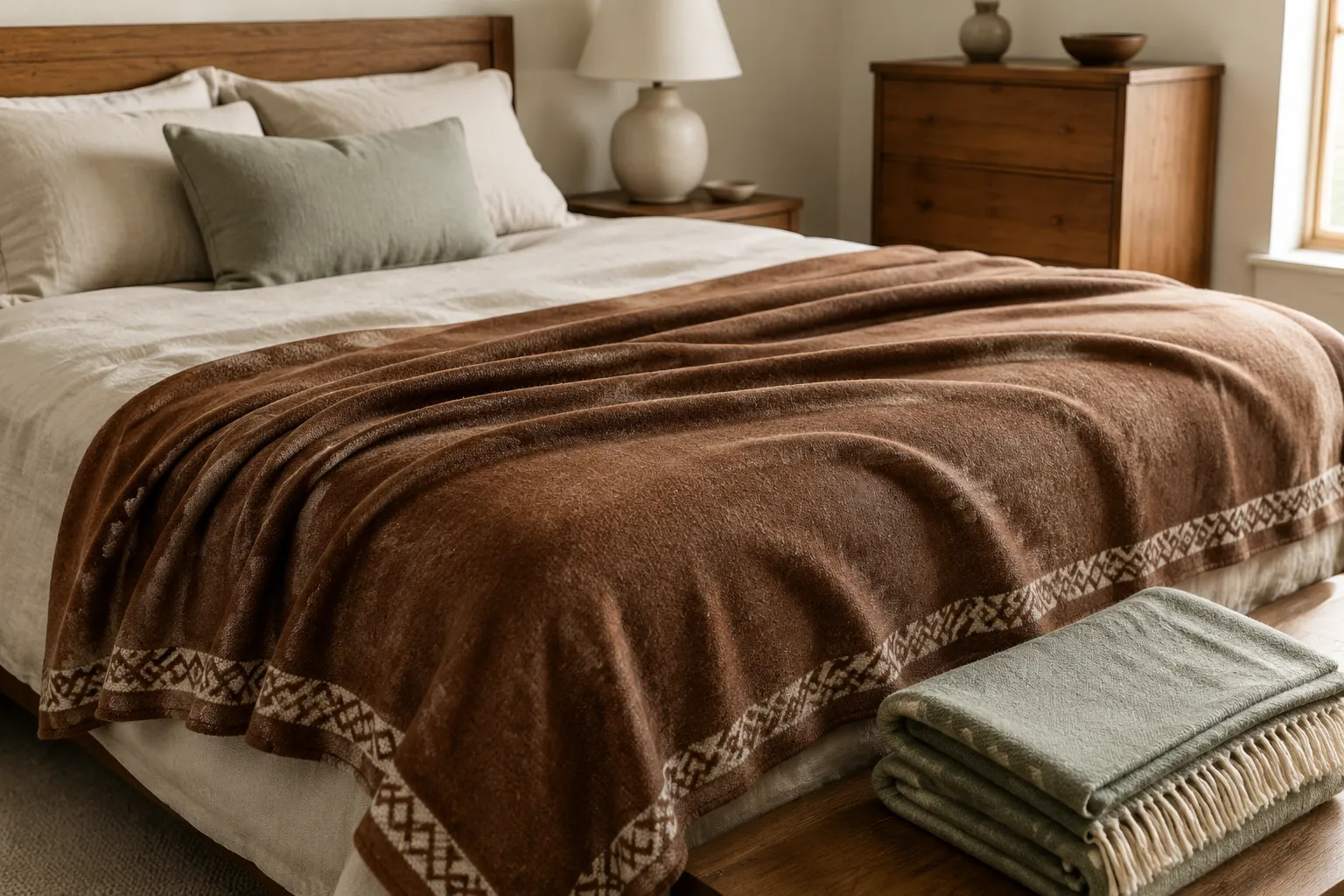
A larger alpaca blanket works well as a top layer on a made bed, where its drape and color can be seen rather than hidden under sheets. Woven bed blankets tend to lie flatter, while a knit version adds more volume and texture at the foot of the bed.
Natural brown, cream, and gray work well with most bedding, while a sage or muted blue throw can provide a second layer of color. If you are looking for fiber goods made closer to home, an alpaca farm may sell blankets, yarn, or other textiles directly.
Choosing an alpaca blanket
Start with where and how you will use it. A light woven throw suits a sofa or chair, a chunky knit gives a room more texture, and a larger woven blanket works well across a bed. Pattern and color matter, but the weight, construction, and care needs will determine how the blanket feels in everyday use.