Plan the size, fabric, and finish
How to make an alpaca blanket
An alpaca blanket can be knitted in one piece, assembled from smaller panels, or woven on a loom. Its intended use determines the size, yarn, fabric density, tools, and edge treatment needed for the project.
Define the project
Choose a blanket pattern
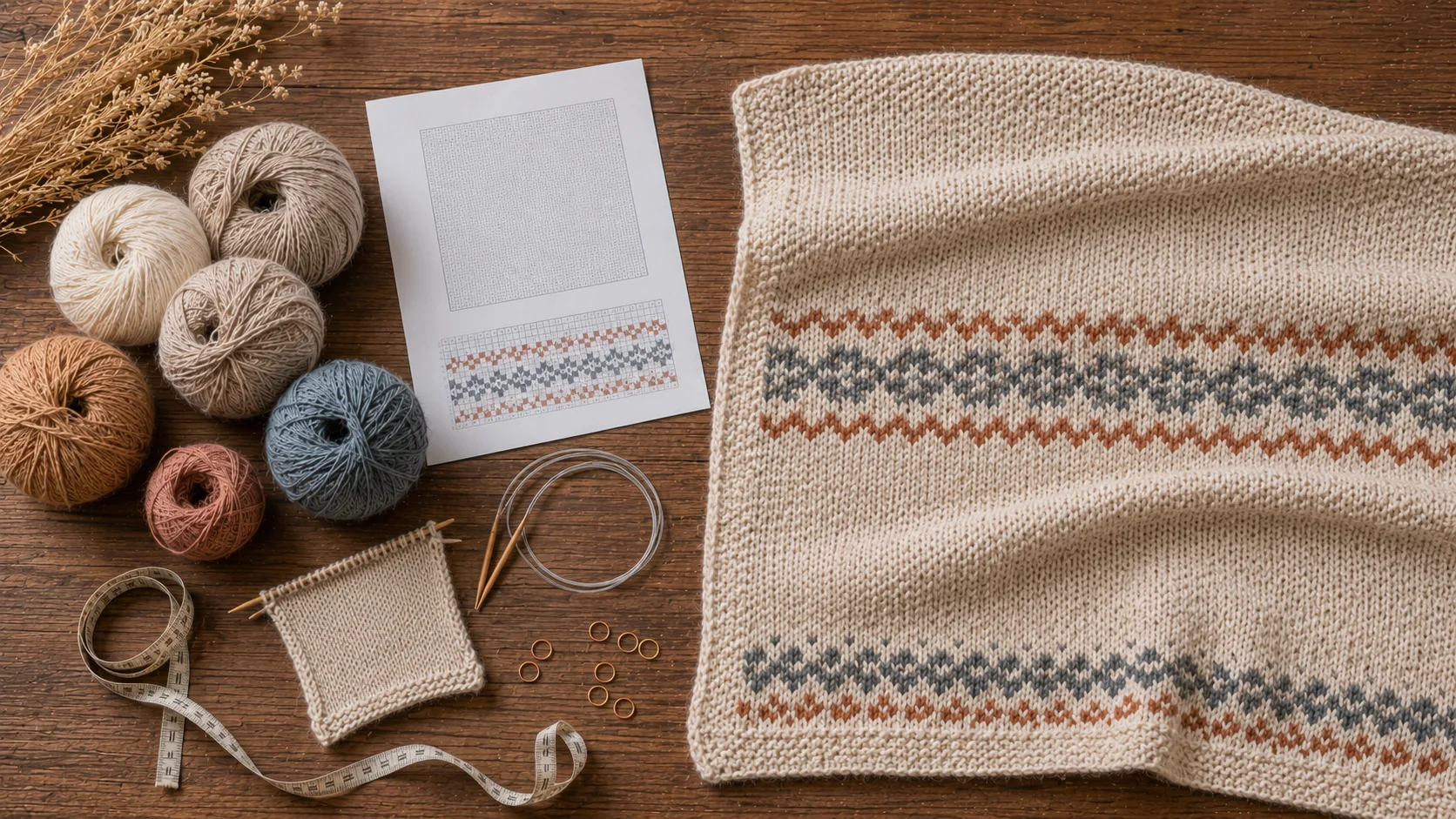
Select a pattern or draft a complete project plan before buying yarn. The plan should identify the finished dimensions, yarn weight, gauge or sett, construction method, approximate yardage, stitch or weave structure, border, and finishing steps. Large differences in size or gauge can change the required amount of yarn substantially.
For a first blanket, a repeating stitch pattern or straightforward woven structure is easier to resize and monitor than a design containing many separate motifs or complicated color changes. Read the complete instructions before beginning and determine whether the project can be made with the available needles, loom, workspace, and washing area.
A blanket pattern may be free or paid. More important considerations are clear dimensions, a tested material estimate, understandable repeats, and finishing instructions. If the pattern uses a different fiber, the alpaca yarn must be sampled to determine whether its warmth, drape, weight, and behavior after washing are suitable.
- Finished width and length
- Yarn weight and estimated yardage
- Knitted, paneled, or woven construction
- Gauge or woven sett
- Border and finishing method
Balance softness and weight
Choose alpaca blanket yarn
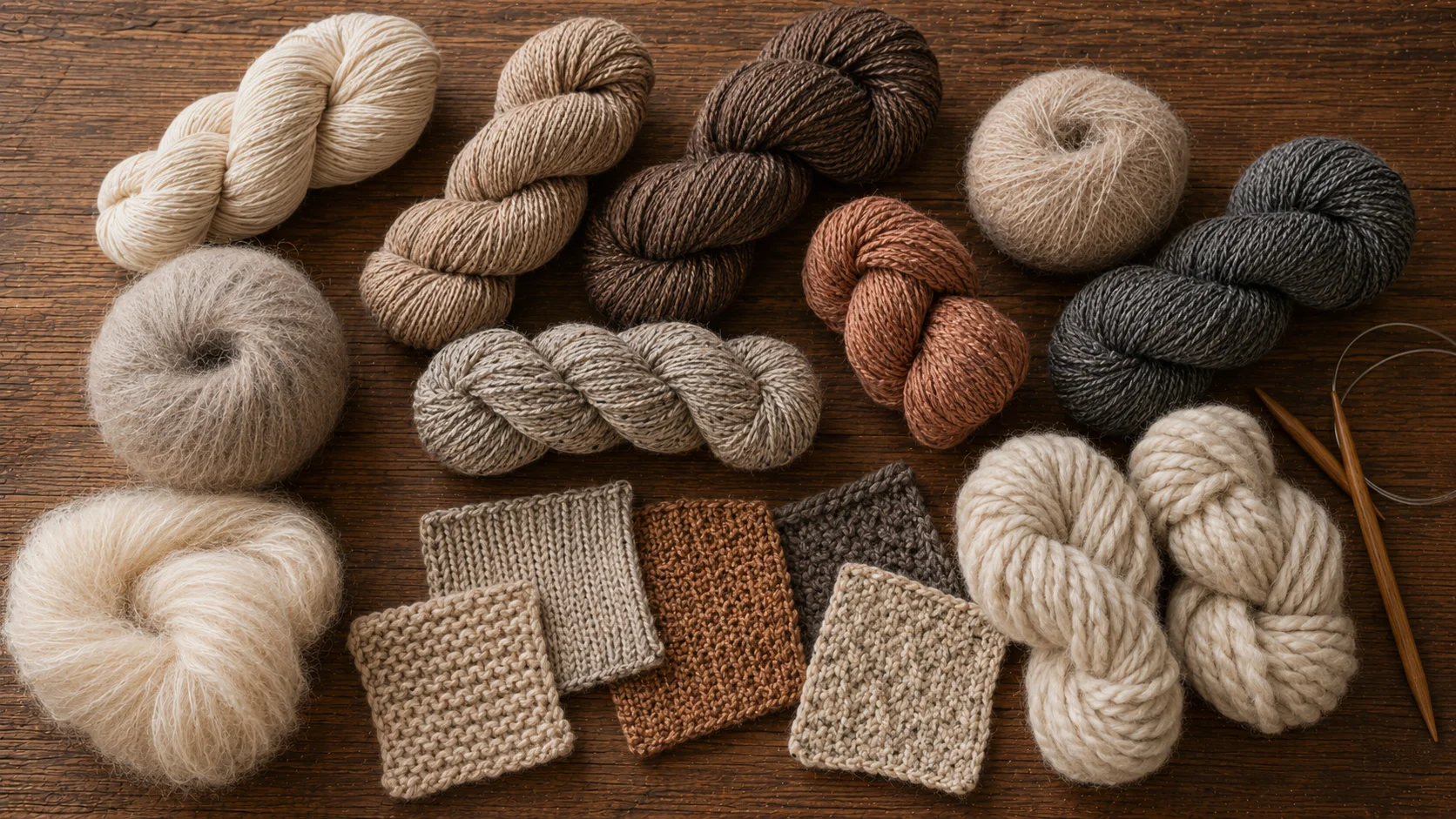
Match the yarn weight, fiber content, and approximate yardage specified by the pattern. Pure alpaca can create a soft and warm blanket with fluid drape, but a large, densely worked blanket can become heavy. A blend containing wool may add elasticity and structure, while other fibers can change durability, texture, cost, or care requirements.
Consider where the blanket will be used. A lightweight lap blanket has different requirements from a large bed blanket, and a decorative throw may not need the same resistance to frequent washing as a blanket used every day. Smooth, consistently spun yarn makes repeats and edges easier to inspect, while very fuzzy or loosely spun yarn can obscure stitch definition.
Natural yarn can combine cream, fawn, brown, gray, and black without requiring dye. Some alpaca farms sell yarn made from their own animals and may be able to explain its fiber content, processing, weight, and care. Purchase the full amount from one dye lot or production batch when possible, and retain the labels until the blanket has been completed.
How the fabric is formed
Choose a construction method
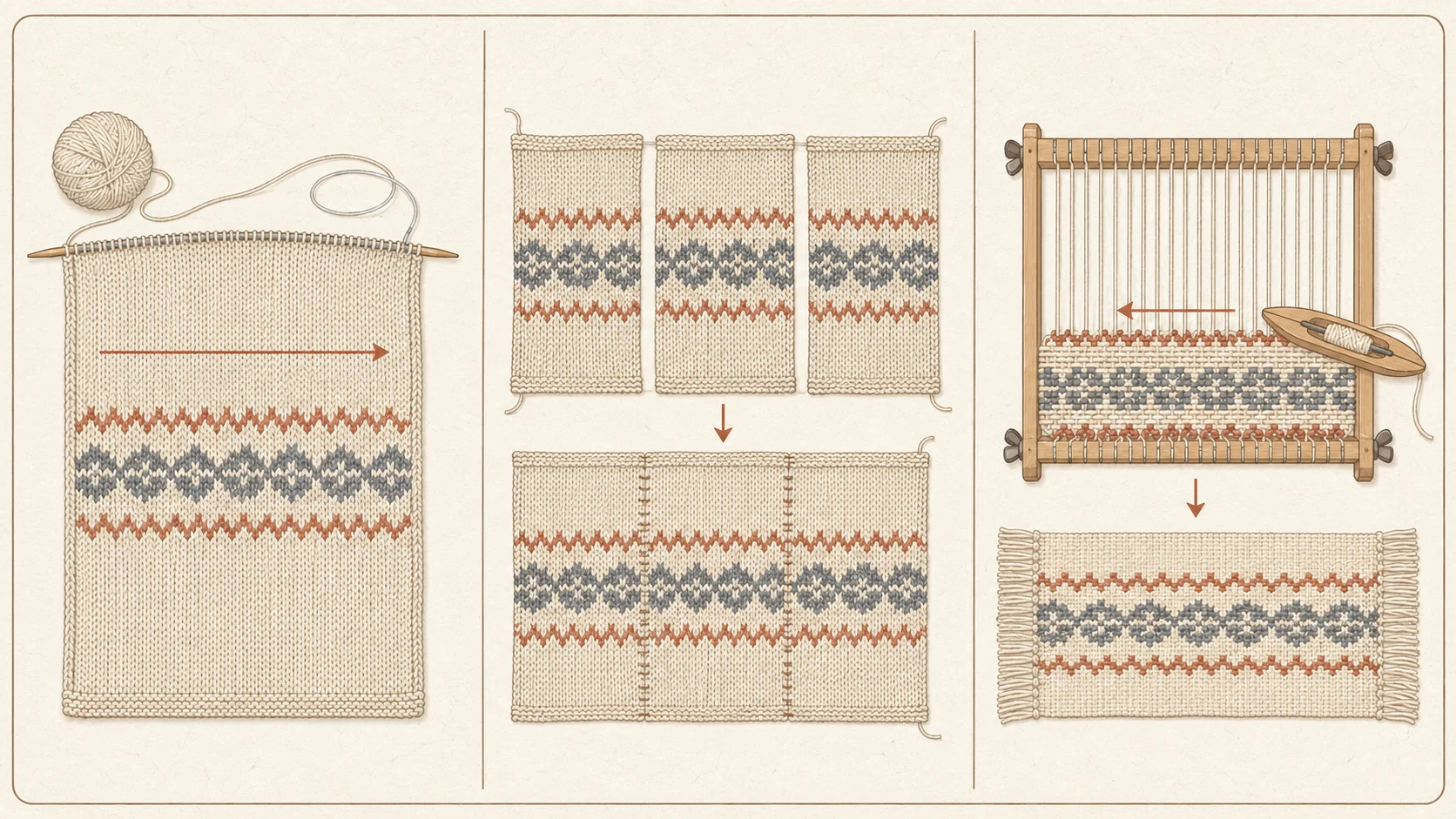
A one-piece knitted blanket is worked across its full width. A long circular needle can hold more stitches than a pair of straight needles, even when the blanket is worked back and forth rather than in the round. As the blanket grows, its weight must be supported so it does not pull heavily on the needles or the knitter's hands.
A paneled blanket is made in narrower strips or sections that are joined later. Panels are easier to carry and can fit smaller needles or a narrow loom, but their measurements and edge tension must remain consistent so the seams lie flat. Alternating the direction or color of panels can also become part of the design.
A woven blanket is formed from warp and weft on a loom. The loom's weaving width limits the width of a single piece, so a bed-sized blanket may require a wide loom or joined panels. Warp yarn must be strong enough to remain under tension, which may lead to a different fiber blend or yarn structure than the one chosen for the weft.
Set the target dimensions
Choose the blanket size
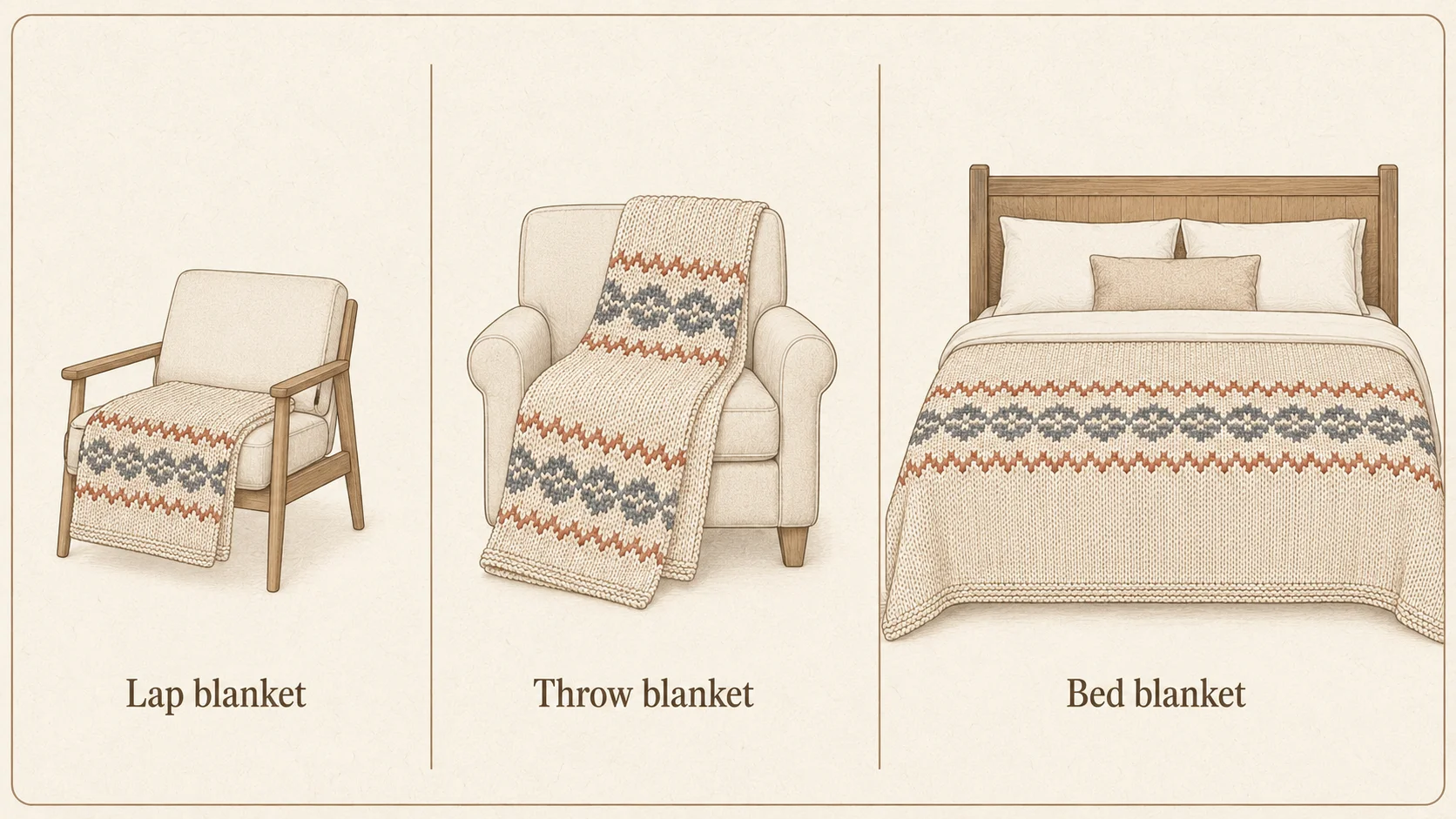
A lap blanket is intended to cover the legs while seated and is often planned around approximately 36 by 48 inches. A throw commonly measures around 50 by 60 inches, although larger and smaller versions are widely used. These are planning dimensions rather than fixed standards, so the intended person, chair, or sofa should guide the final choice.
A bed blanket should be planned from the actual mattress measurements plus the desired amount hanging over the sides and foot. Mattress depth, whether the blanket will be tucked in, and whether it must cover pillows can all affect the finished dimensions. Do not rely only on a label such as twin, queen, or king.
Check that the chosen size can be worked, washed, dried, and stored with the available equipment and space. Increasing both width and length adds more area than increasing only one dimension, so even a modest enlargement can require noticeably more yarn.
Test before committing
Make and wash a sample
For a knitted blanket, make a swatch using the intended stitch pattern, yarn, and needles. Measure both stitch and row gauge after washing and drying it according to the yarn label. Gauge affects the finished dimensions, fabric density, drape, and yardage even when exact fit is not required.
For a woven blanket, sample the intended warp, weft, sett, and finishing method. The fabric can change when removed from the loom and again during washing, so measurements taken under loom tension do not show the final width and length. Record the sample's dimensions before and after finishing.
Handle the finished sample as the blanket will be used. Check whether it feels too dense, loose, warm, heavy, or delicate and whether the border or fringe behaves as expected. Adjust the tools, gauge, sett, or yarn before purchasing additional material or beginning the full project.
Maintain consistent fabric
Knit or weave the blanket
Cast on or prepare the loom according to the selected pattern and finished width. Count carefully before beginning the main fabric and place markers between knitted repeats where useful. For weaving, check the warp order, width, and tension before advancing beyond the opening rows.
Measure the work at regular intervals and record completed repeats, color changes, panels, or woven sections. A large project may be worked over many sessions, and changes in tension can become visible across the finished blanket. Support the growing fabric rather than allowing its weight to pull continuously on the needles or loom.
When making separate panels, compare their length and width before casting off or removing them from the loom. Wash and prepare them consistently before joining if the pattern directs, since unequal shrinkage or relaxation can make the finished seams difficult to align.
Complete the perimeter
Finish the edges
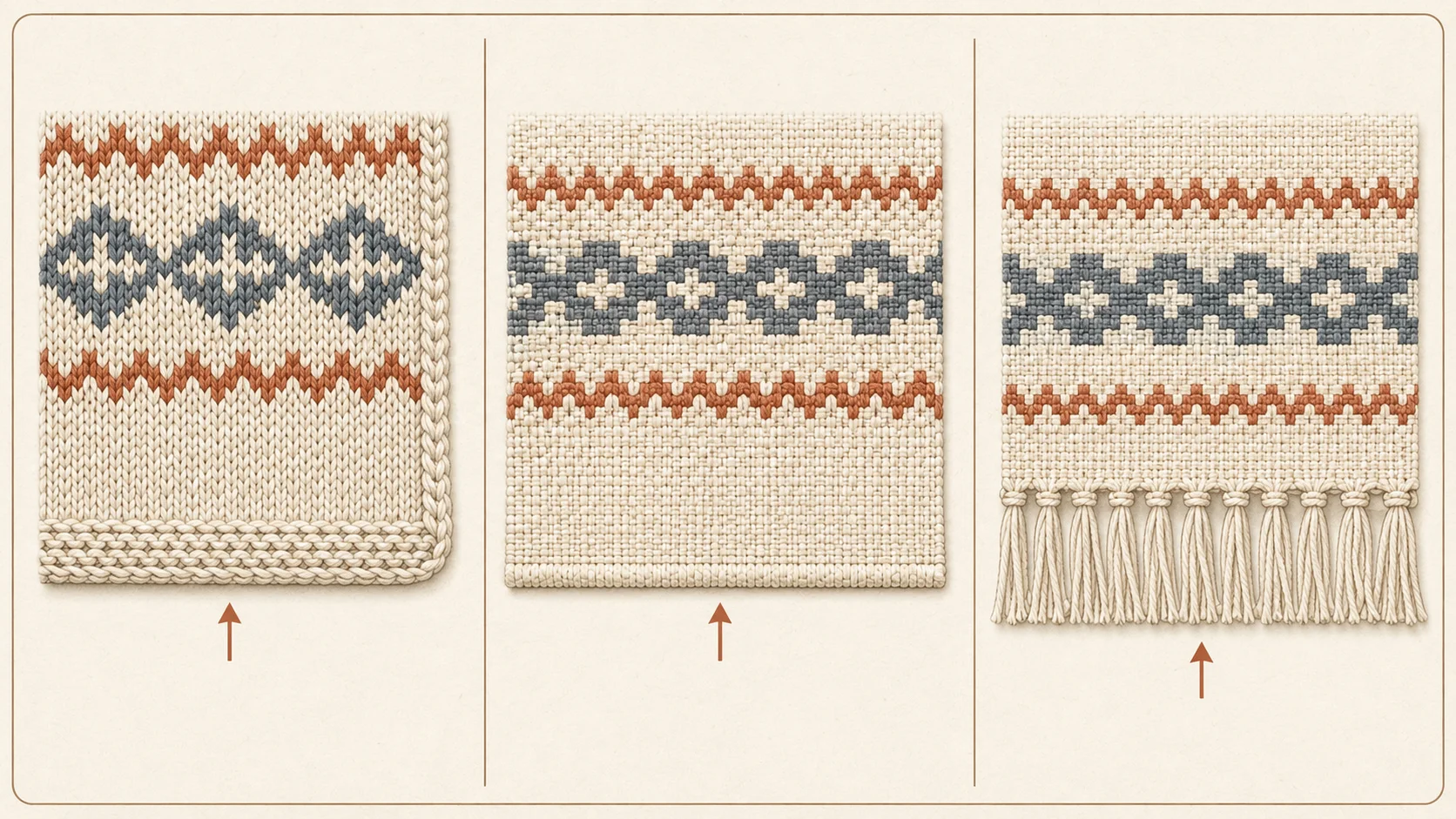
A knitted border can be worked at the same time as the blanket or added afterward by picking up stitches. Garter stitch, seed stitch, and other balanced borders can help reduce curling, but the selected border must be wide and stable enough for the main fabric.
A woven edge may be hemmed, bound, or otherwise secured so the weft cannot work loose. Fringe can be formed from warp ends or added later, but it should be even, firmly secured, and suitable for the blanket's intended use. Long fringe may be impractical where it can snag or receive frequent wear.
Join panels with a method that produces a flat, durable seam and does not create a stiff ridge. Weave in all yarn ends securely, wash the finished blanket using the method tested on the sample, and dry it in its intended shape without stretching the fabric beyond the planned dimensions.
After the project
Store and care for the blanket
Follow the care method proven by the finished sample and supported by the yarn label. A large wet blanket can be heavy, so lift it with support and avoid hanging it where its weight can stretch the fabric. Allow it to dry completely before folding or storing it.
Store the blanket clean, dry, and protected from pests. Avoid compressing it for long periods if doing so flattens the fabric or fringe. Keep the pattern notes, yarn labels, and a small amount of leftover yarn together for later cleaning reference or repairs.