Two natural fibers, different strengths
Alpaca Fiber vs Sheep Wool
Alpaca fiber and sheep wool can both be soft, warm, and breathable. Their differences show up in texture, elasticity, natural color, and the kinds of garments they suit best.
01 · The starting point
Two animal fibers, not one simple comparison
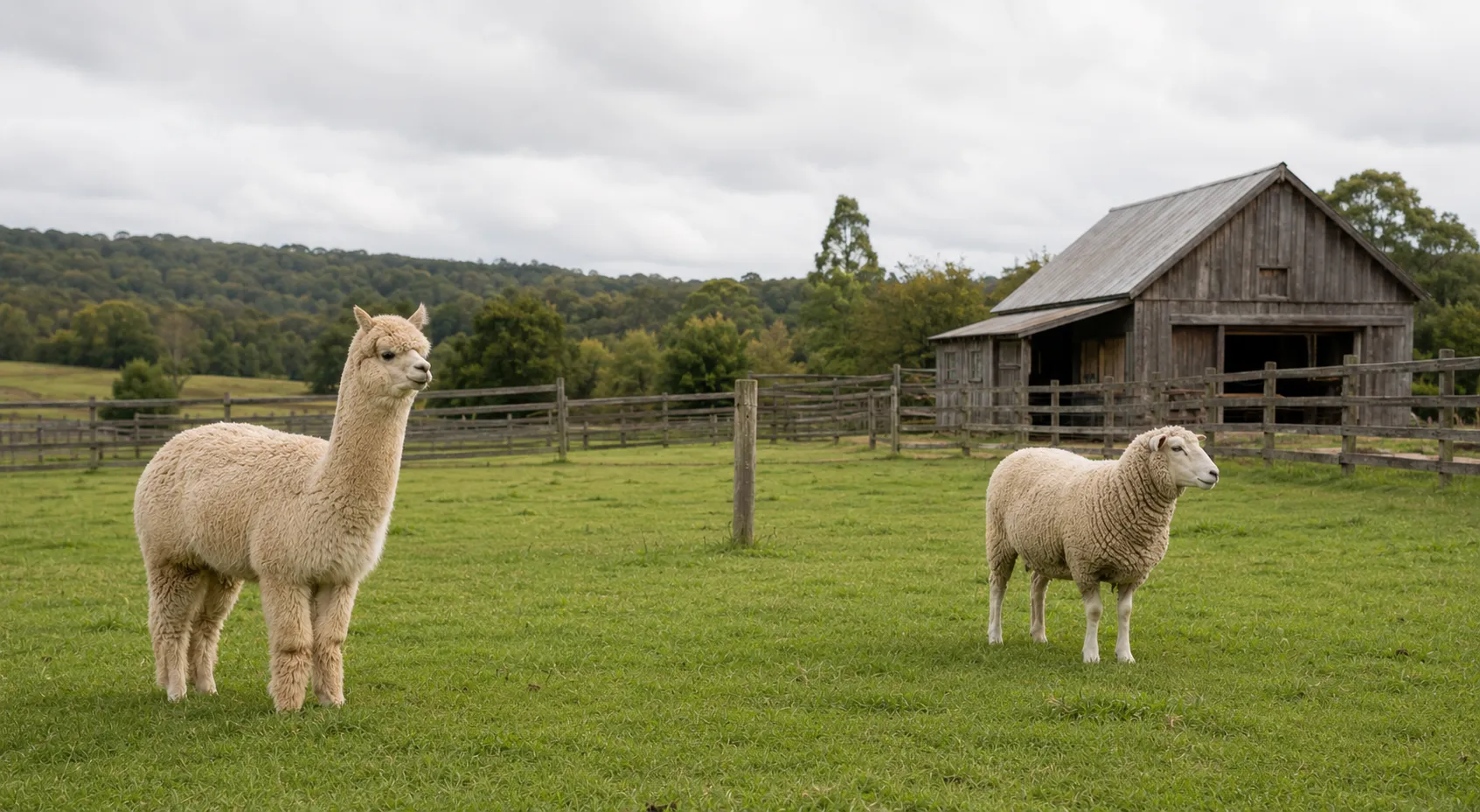
Alpaca fiber comes from alpacas, while sheep wool comes from sheep. Both are natural protein fibers that can be shorn, cleaned, spun, knitted, and woven into clothing and home textiles.
The important detail is that sheep wool covers many breeds and grades. Fine Merino wool belongs in a different conversation from coarse carpet wool, just as a fine alpaca fleece differs from a coarser one.
For visitors learning about alpacas, the practical question is less about declaring one fiber better and more about matching the material to the garment.
02 · Feel & structure
Softness is not the only difference
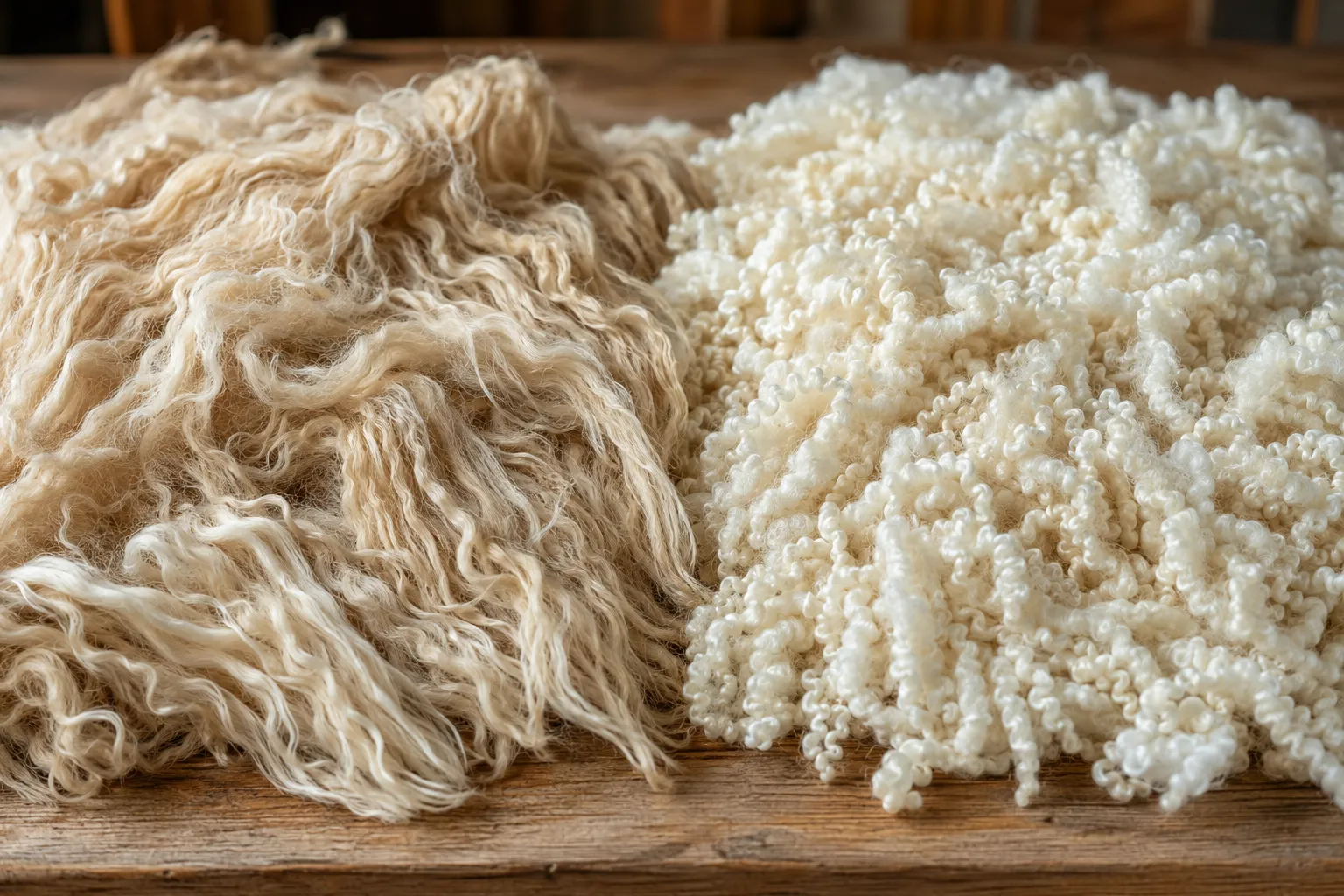
Fine alpaca is known for a smooth hand and gentle luster. Fine Merino can also feel soft against the skin, but its more pronounced crimp gives wool yarns a springier character.
That spring helps many wool garments stretch and recover their shape. Alpaca has less natural bounce, which can make it beautiful for draping scarves and sweaters but may call for a blend or careful construction in fitted knits.
Both fibers vary from animal to animal. The fiber grade and the finished fabric tell a more useful story than a label alone.
03 · Warmth & comfort
Warm in different ways
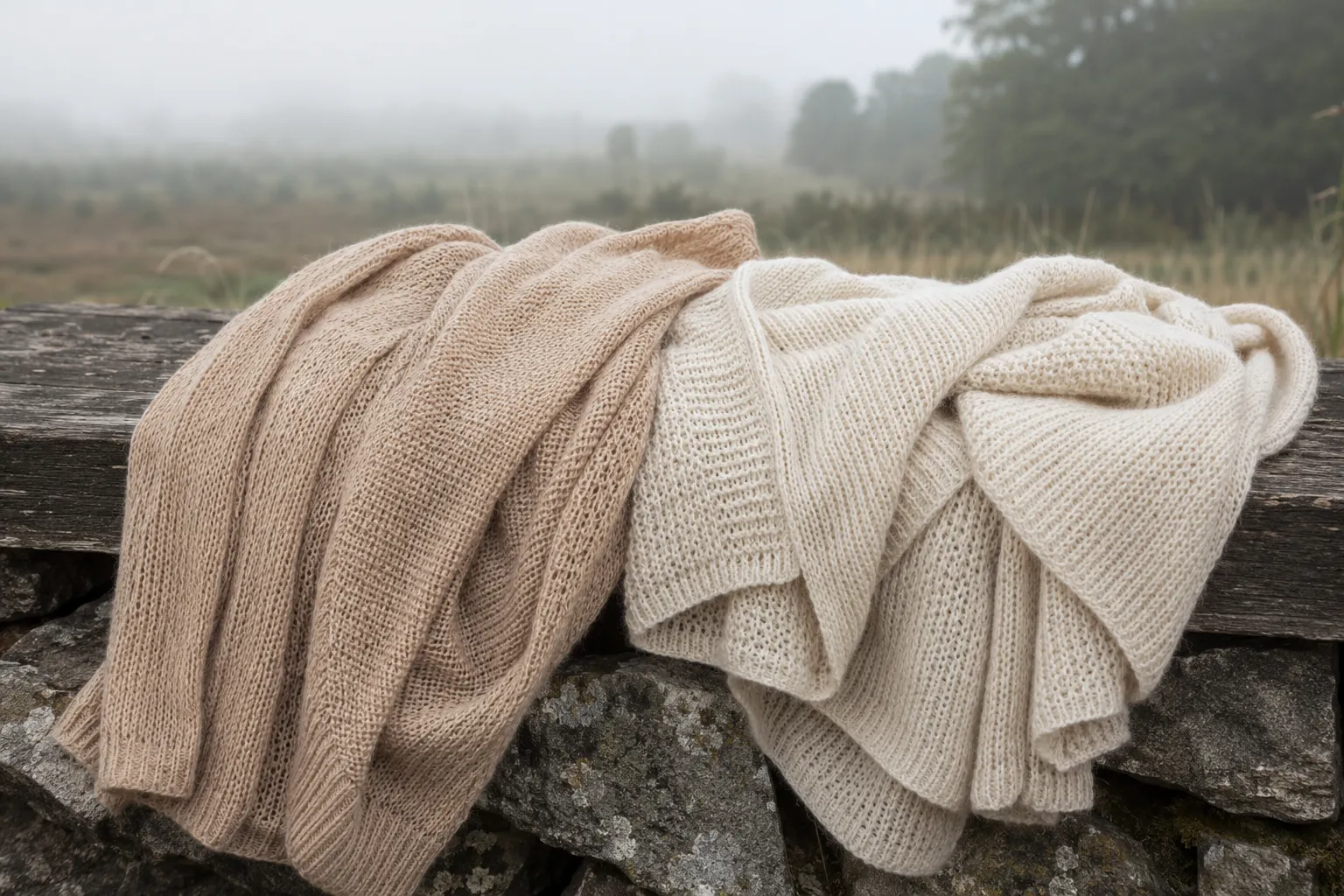
Both alpaca fiber and wool can make warm, breathable layers. Alpaca is often valued for warmth without much bulk, while Merino is widely used where moisture management and next-to-skin comfort matter.
Neither fiber should be reduced to one claim. A loose open-knit sweater behaves differently from a dense coat fabric, even when both use the same type of yarn.
Alpaca fleece contains little to no lanolin. That may make it a comfortable option for some people sensitive to wool, although no animal fiber can promise to be irritation-free for everyone.
04 · At a glance
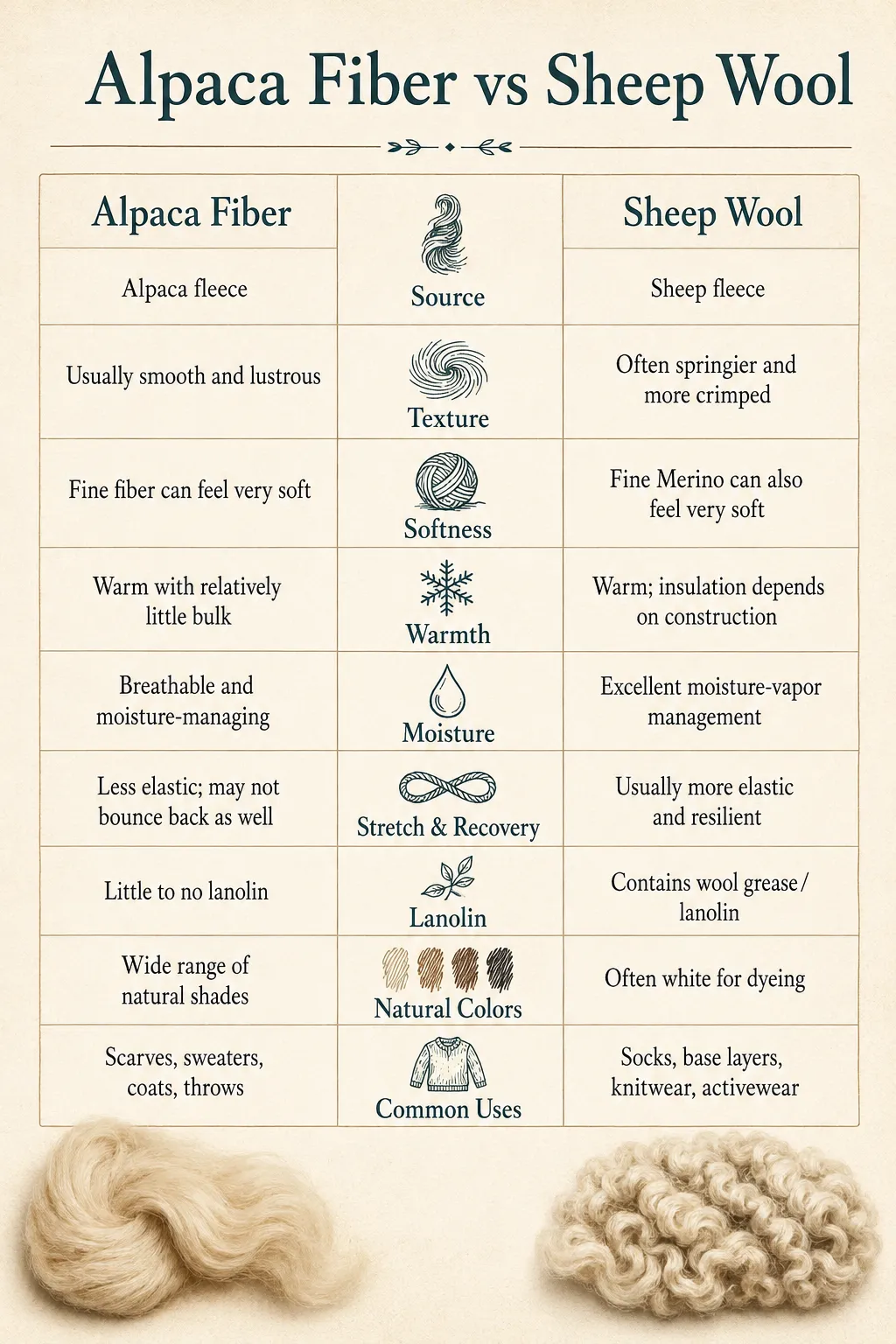
Alpaca fiber vs sheep wool comparison chart
Use this as a quick guide, then choose a fiber by the garment, fiber grade, and finished fabric you have in mind.
05 · Choosing a fiber
Match the fiber to the job
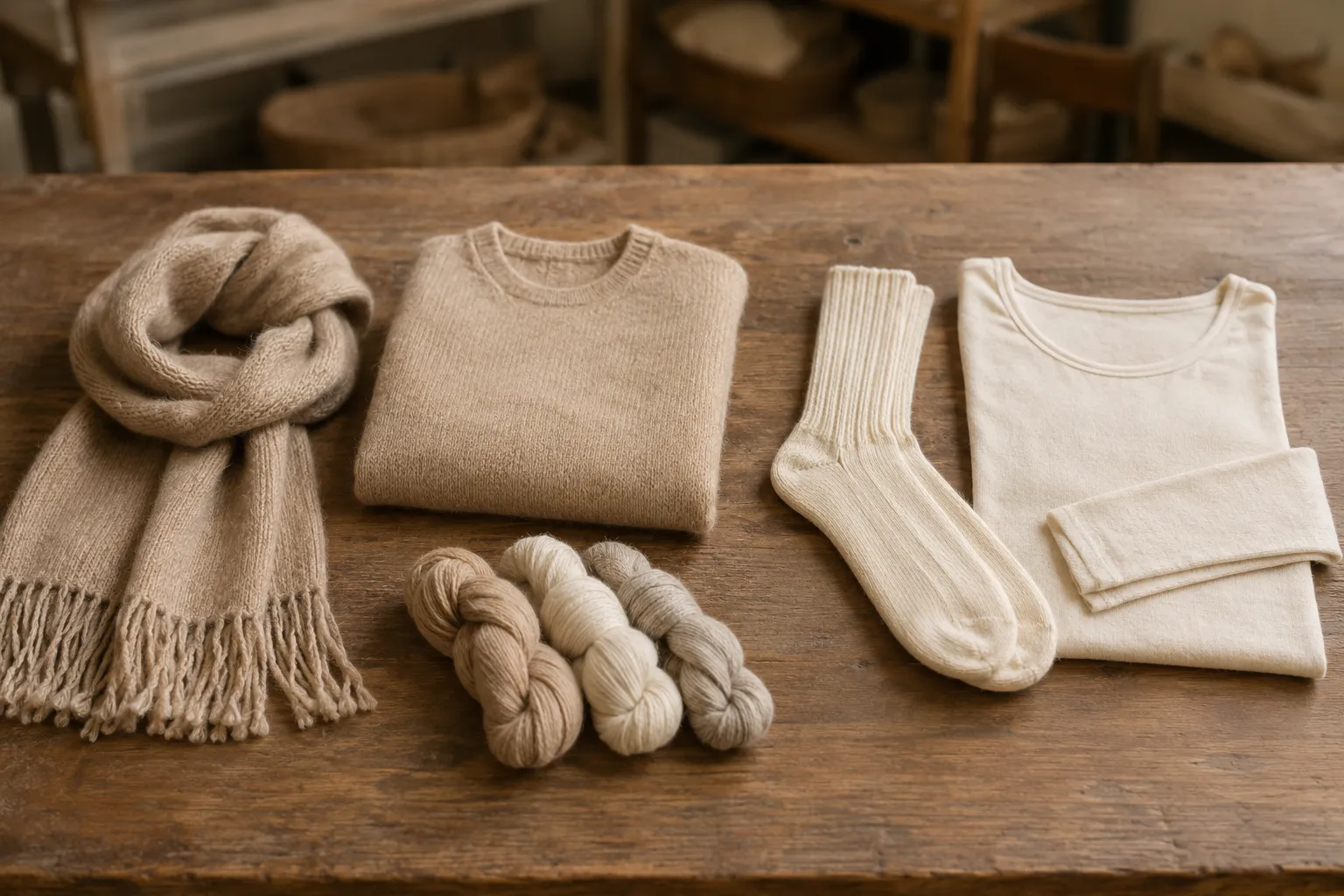
Alpaca is a natural fit for scarves, sweaters, coats, blankets, and other pieces where softness, warmth, and drape are welcome. Its natural palette also makes undyed clothing especially appealing.
Sheep wool, particularly Merino, is common in socks, base layers, activewear, and garments that benefit from resilience and recovery. A blend can bring together alpaca’s softness with wool’s spring.
Explore alpaca clothing for examples of pieces made from the fleece, or search for an alpaca farm near you.