Alpaca clothing guide
Alpaca scarves
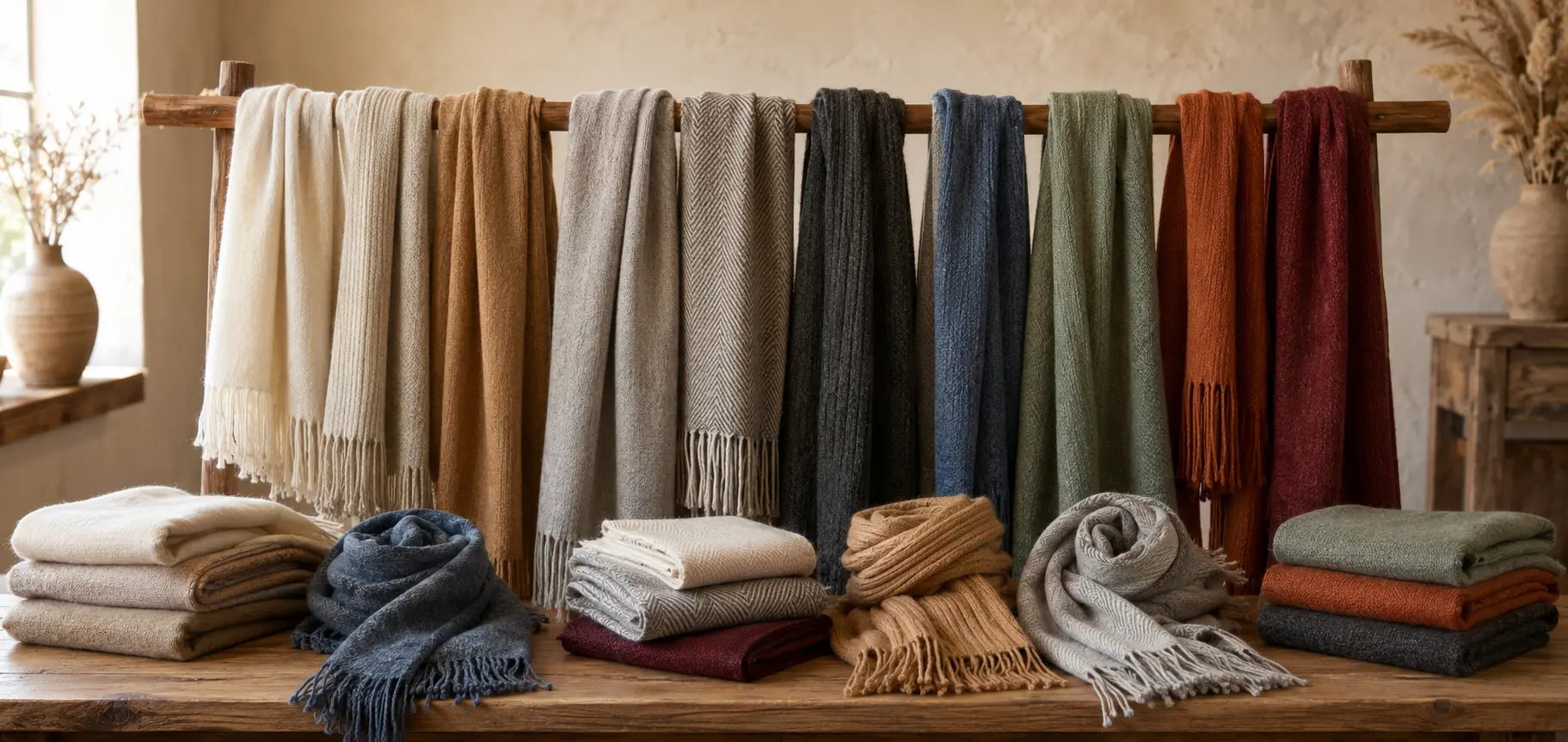
A scarf is one of the simplest ways to enjoy alpaca next to the skin. Fine woven pieces are light and easy to drape, while rib-knit and brushed styles offer more coverage on cold days.
Why alpaca works so well in scarves
Scarves place the fiber close to the neck and face, so softness and weight both matter. Alpaca can be spun finely for a smooth, light scarf or used in a fuller knit that gives more insulation. The right choice depends on whether you want easy drape, a little extra warmth, or a generous layer for cold weather.
The fleece from alpacas comes in a broad natural range, including white, fawn, brown, gray, and black. Dyeing expands that range further, making it possible to find a scarf in quiet neutrals, rich colors, or a pattern that combines both.
01 · Light and flowing
Fine woven alpaca scarves
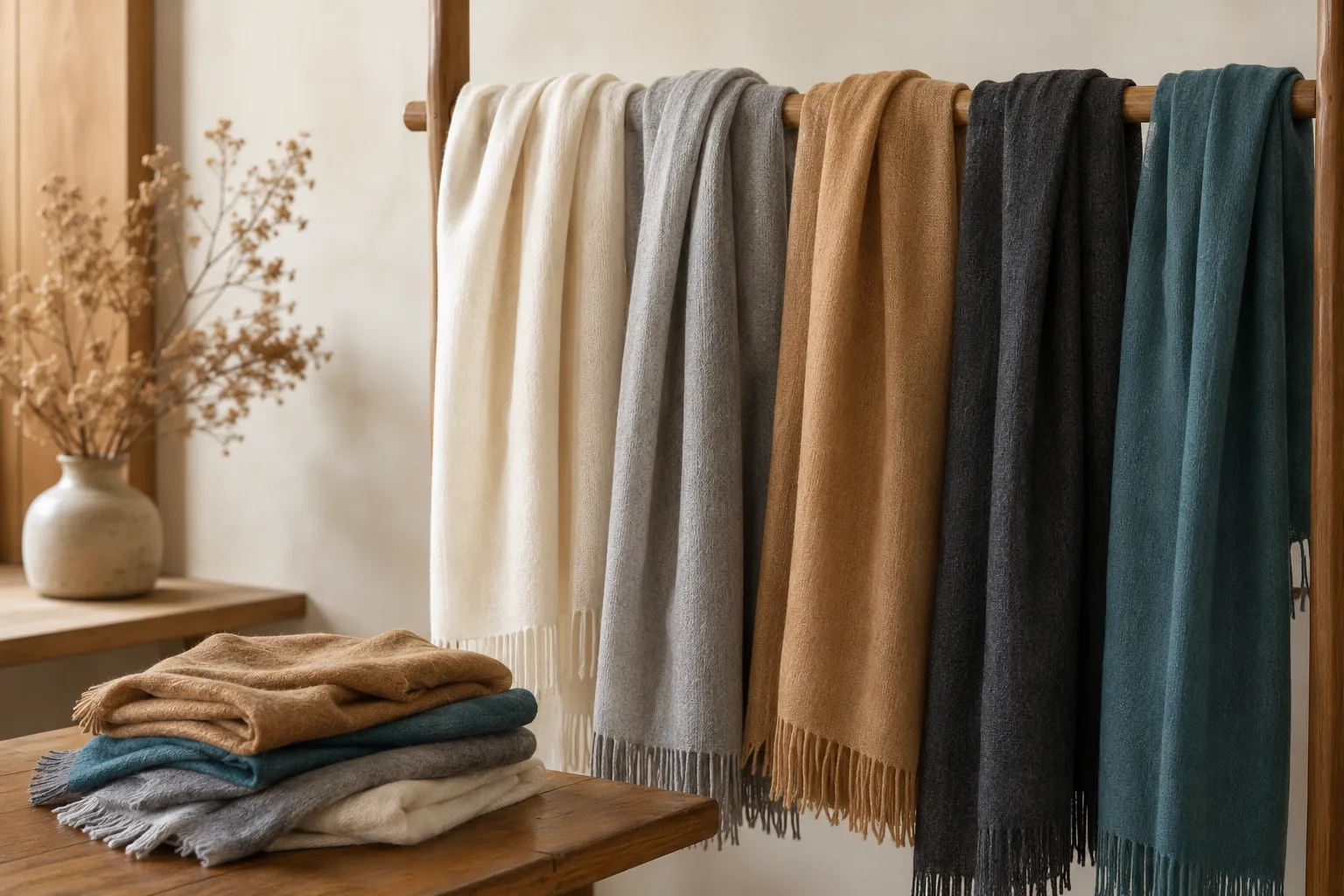
Fine woven scarves are made to hang softly rather than sit heavily around the neck. Their light weight makes them useful indoors, in mild weather, or as a finishing layer with a coat. A little fringe at the ends gives a woven scarf movement without adding bulk.
Cream, camel, gray, and charcoal are easy everyday choices, while a deep teal or muted berry color can brighten a neutral outfit. An alpaca farm may carry this kind of finished scarf alongside its yarn and raw fleece products.
02 · More coverage
Rib-knit alpaca scarves
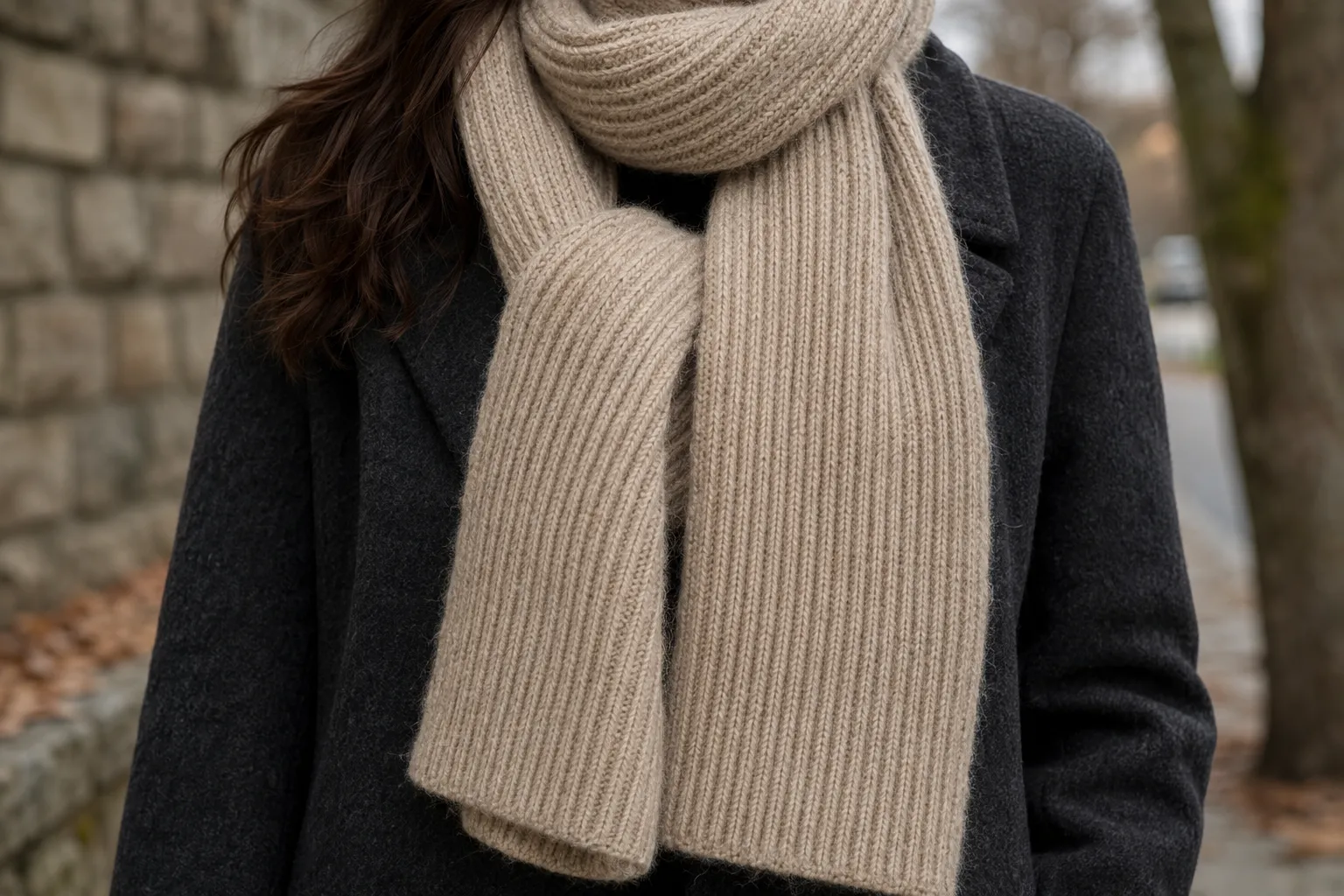
Ribbing gives a scarf stretch and visible vertical texture. A rib-knit alpaca scarf feels more substantial than a fine woven one and can be looped once or twice around the neck without losing its shape. It is a useful choice for walking, commuting, or spending time outside in cool weather.
Oatmeal, charcoal, and deep brown put the stitch pattern first, while a stronger color such as burgundy or forest green can give the same knit more presence. The weight should feel warm but not so thick that it crowds the collar of a coat.
03 · Soft surface
Brushed alpaca scarves
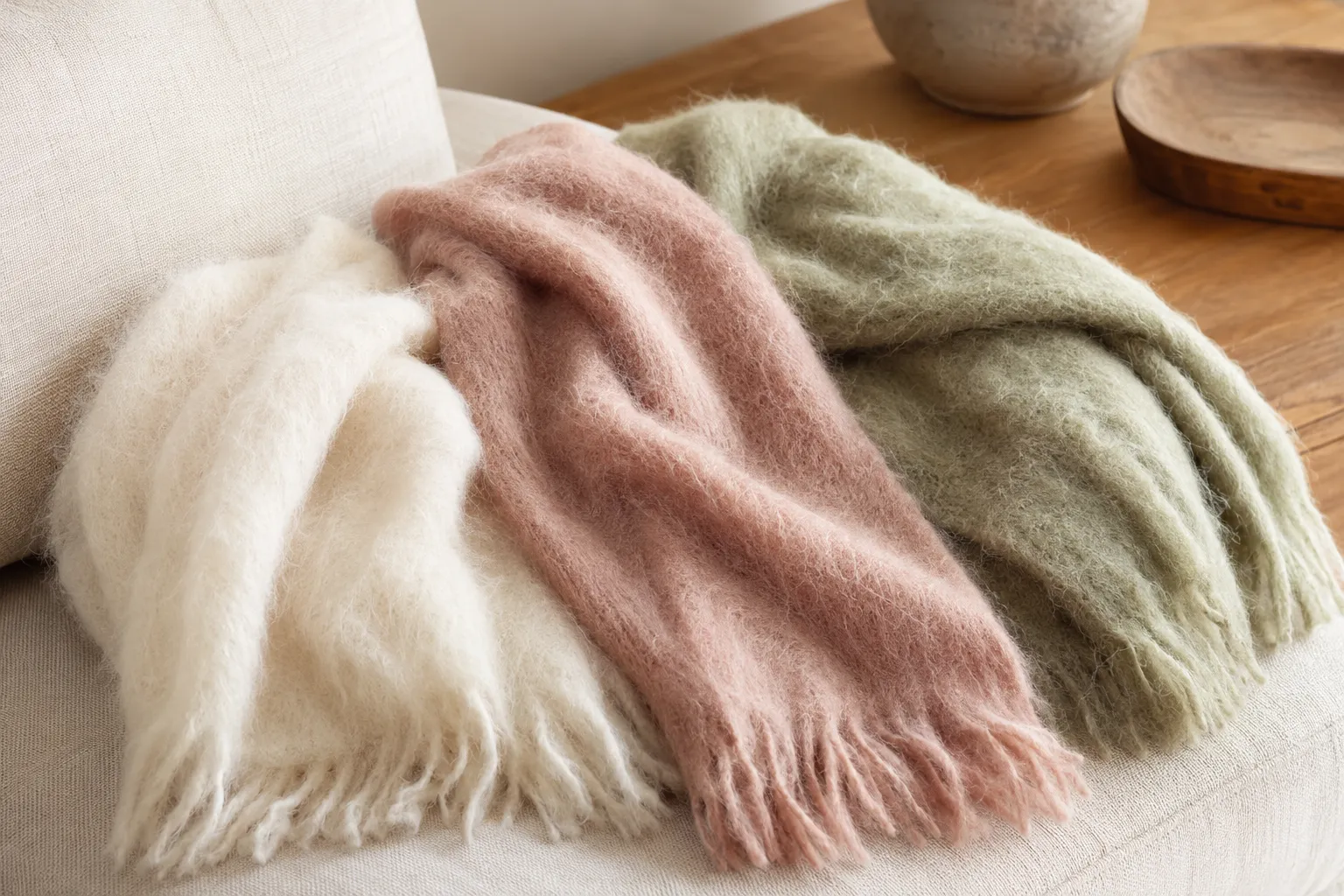
Brushing lifts a fine halo from the surface of a scarf, making the fabric look airy and feel especially soft. The finish adds warmth without the dense look of a heavy cable or rib knit, which makes brushed scarves a good balance between coverage and lightness.
Cream, dusty rose, and muted sage show the softness of the surface especially well. This finish is delicate, so gentle handling and careful storage will help prevent snagging and preserve the raised fibers.
04 · A generous layer
Alpaca wraps and shawls
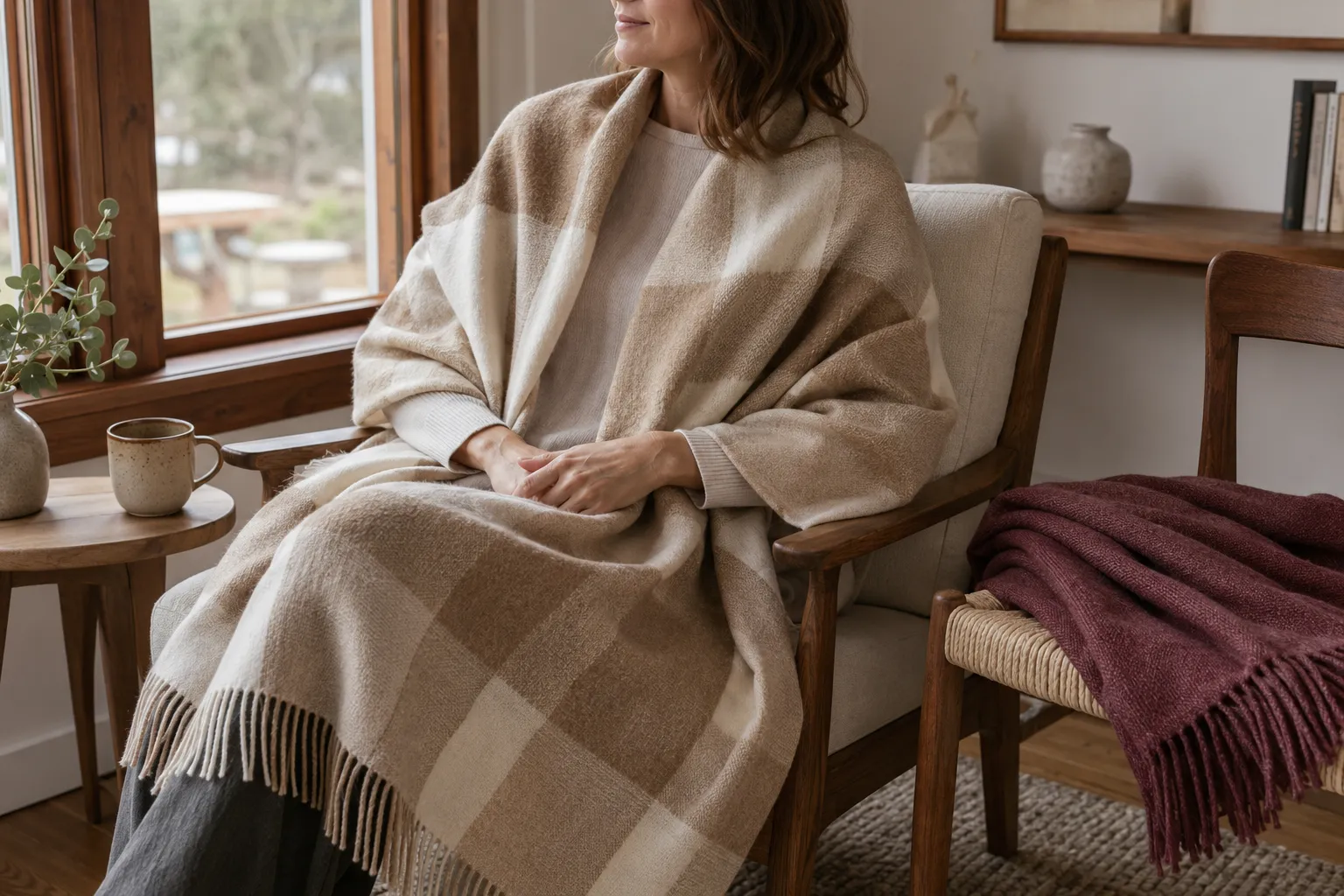
A wide wrap or shawl can serve as a scarf, shoulder layer, or light lap blanket. Because there is more fabric to drape, a smooth weave is especially useful: it falls neatly over the shoulders instead of becoming stiff or bulky.
A cream-and-camel plaid is classic, but wraps also work in a single deep color such as burgundy or navy. If you are looking for regional makers and fiber goods, the alpaca farm directory can help you start close to home.
05 · Everyday color
Colorful fringed alpaca scarves
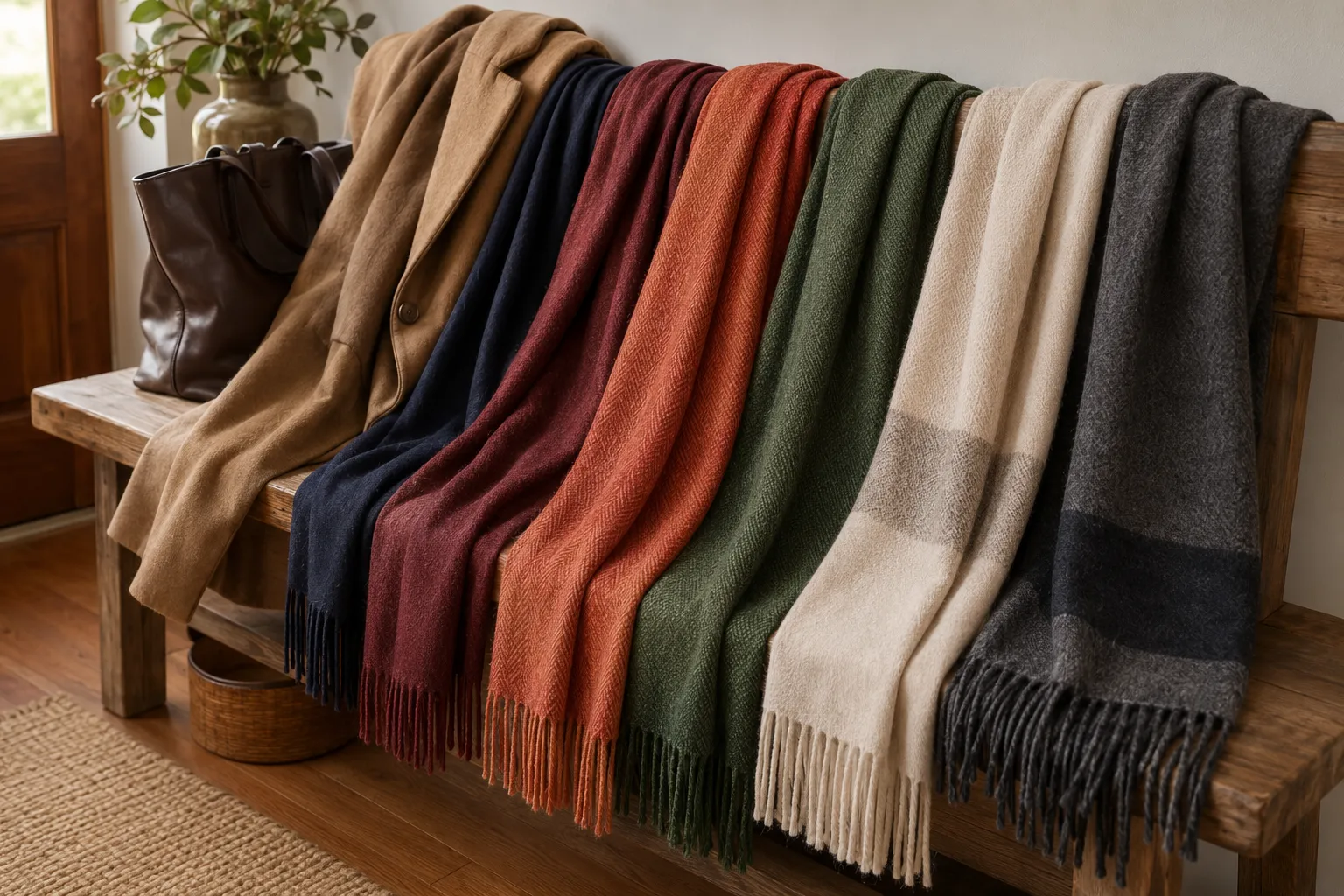
Long fringed scarves are an easy way to add color to cold-weather clothing. Navy, burgundy, rust, and forest green work well with the fiber’s natural depth, while a cream or charcoal stripe keeps the design grounded. They can be wrapped close for warmth or worn loose as a lighter accent.
Fringe is mostly decorative, but it also gives a scarf a relaxed finish and movement as it drapes. When choosing a colorful piece, consider the scarf’s length and weight first; those details have a bigger effect on comfort than the pattern alone.
Choosing an alpaca scarf
Choose a fine woven scarf when you want light warmth and easy drape, a rib-knit style for more coverage, a brushed finish for softness, or a wrap when you want a more generous layer. The best scarf is the one whose weight, length, and texture suit the way you plan to wear it.