Alpaca clothing guide
Alpaca jumpers
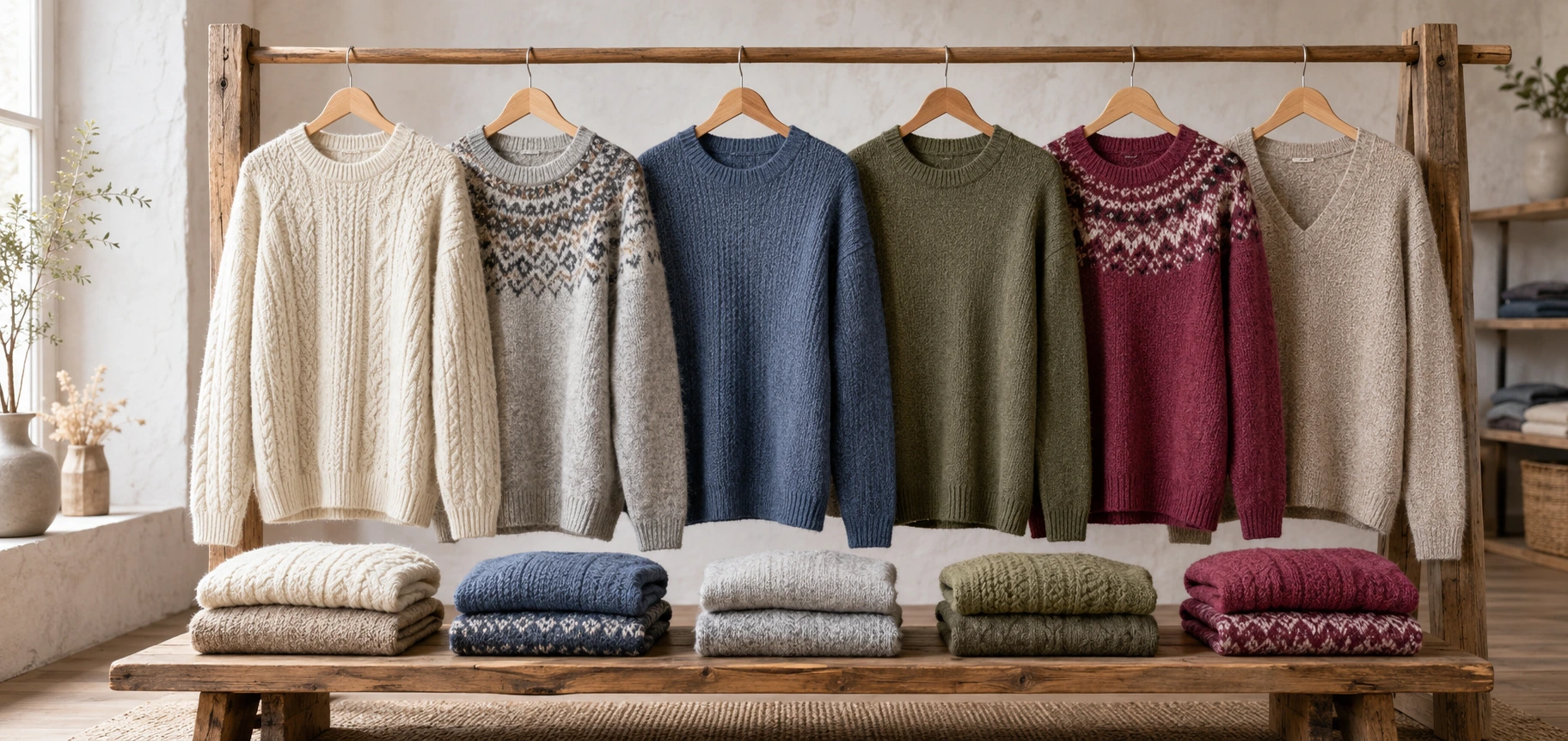
A jumper is a pullover knit—easy to layer in a fine yarn or substantial enough for cold weather in a thicker one. Alpaca gives these patterns softness, warmth, and a gentle natural sheen.
What is an alpaca jumper?
In clothing, “jumper” is another name for a pullover knit. Unlike a cardigan, it is pulled over the head and usually finished with a crew neck, V-neck, or higher collar. Alpaca jumpers can be fine and light enough for layering or made in a heavier yarn for a more substantial, cozy feel.
Classic ribbed cuffs, Fair Isle patterns, and cable details are all popular choices. Because alpaca fibers have a natural sheen, even a simple plain-knit jumper can look polished without being fussy. At an alpaca farm, the fleece may be sold as raw fiber, yarn, or finished knitwear; a blend can add useful stretch and help a patterned jumper keep its shape through regular wear.
01 · Pattern around the yoke
Fair Isle alpaca jumpers
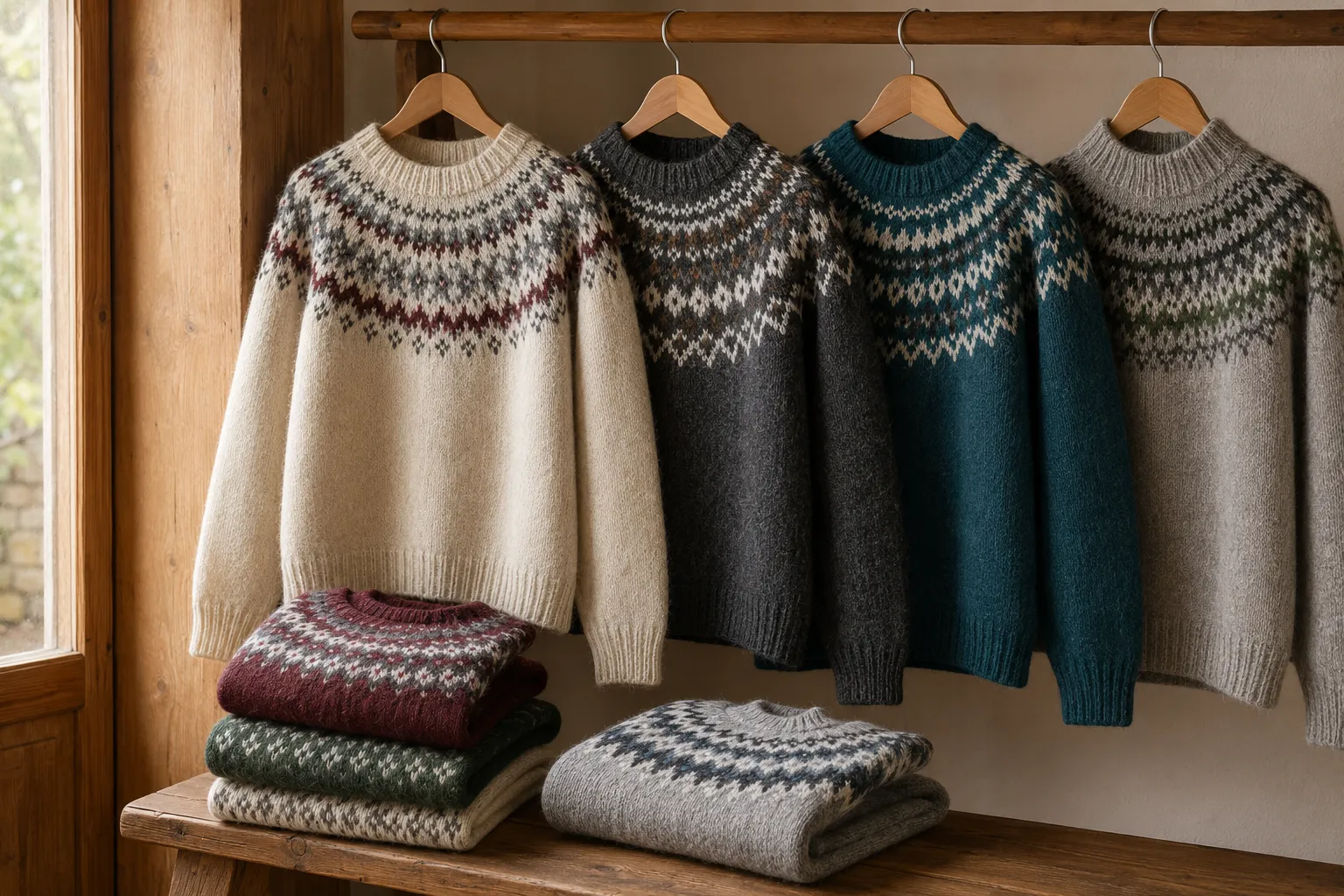
Fair Isle is a form of stranded colorwork, often arranged in narrow bands around the yoke, chest, or sleeves. The repeating motifs bring several colors into one garment while keeping the overall jumper balanced and wearable.
Alpaca is especially well suited to this kind of pattern because its natural shades—cream, gray, brown, and charcoal—pair easily with restrained dyed colors such as burgundy, teal, and forest green. The most successful designs use contrast clearly, without relying on too many bright colors at once. The long history of alpaca textiles helps explain why pattern and fiber are so closely connected.
02 · Simple color
Striped alpaca jumpers
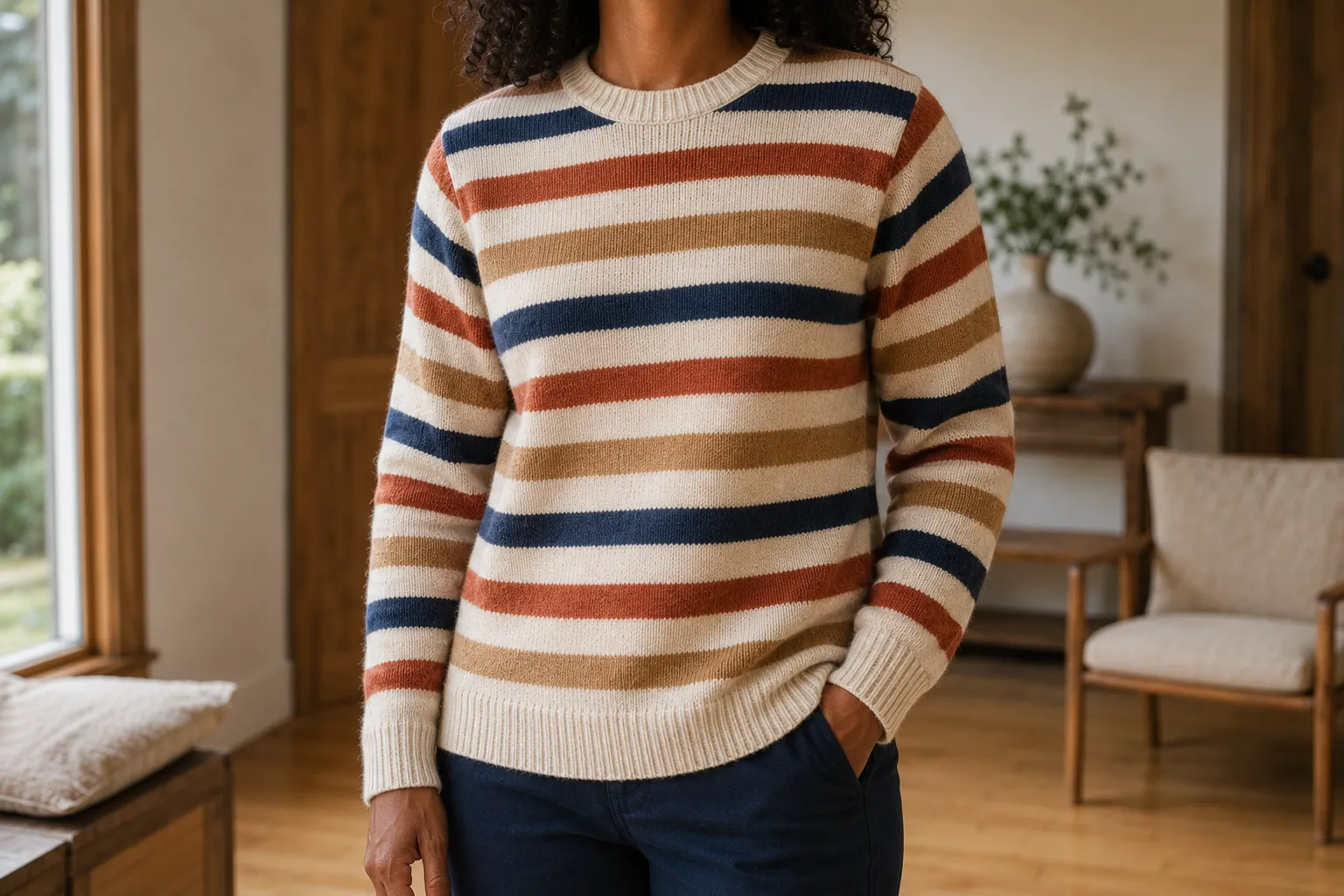
Stripes are a simpler way to use color in a jumper. A few well-chosen bands can make the garment feel lively while keeping the construction straightforward. Horizontal stripes are common, but a narrow contrast stripe at the cuff, hem, or shoulder can be just as effective.
Natural cream and camel make good anchors for muted rust, navy, and charcoal. In a smooth, medium-weight knit, a striped alpaca jumper is comfortable for everyday wear and brings more personality than a plain solid color.
03 · Texture without bulk
Ribbed and textured jumpers
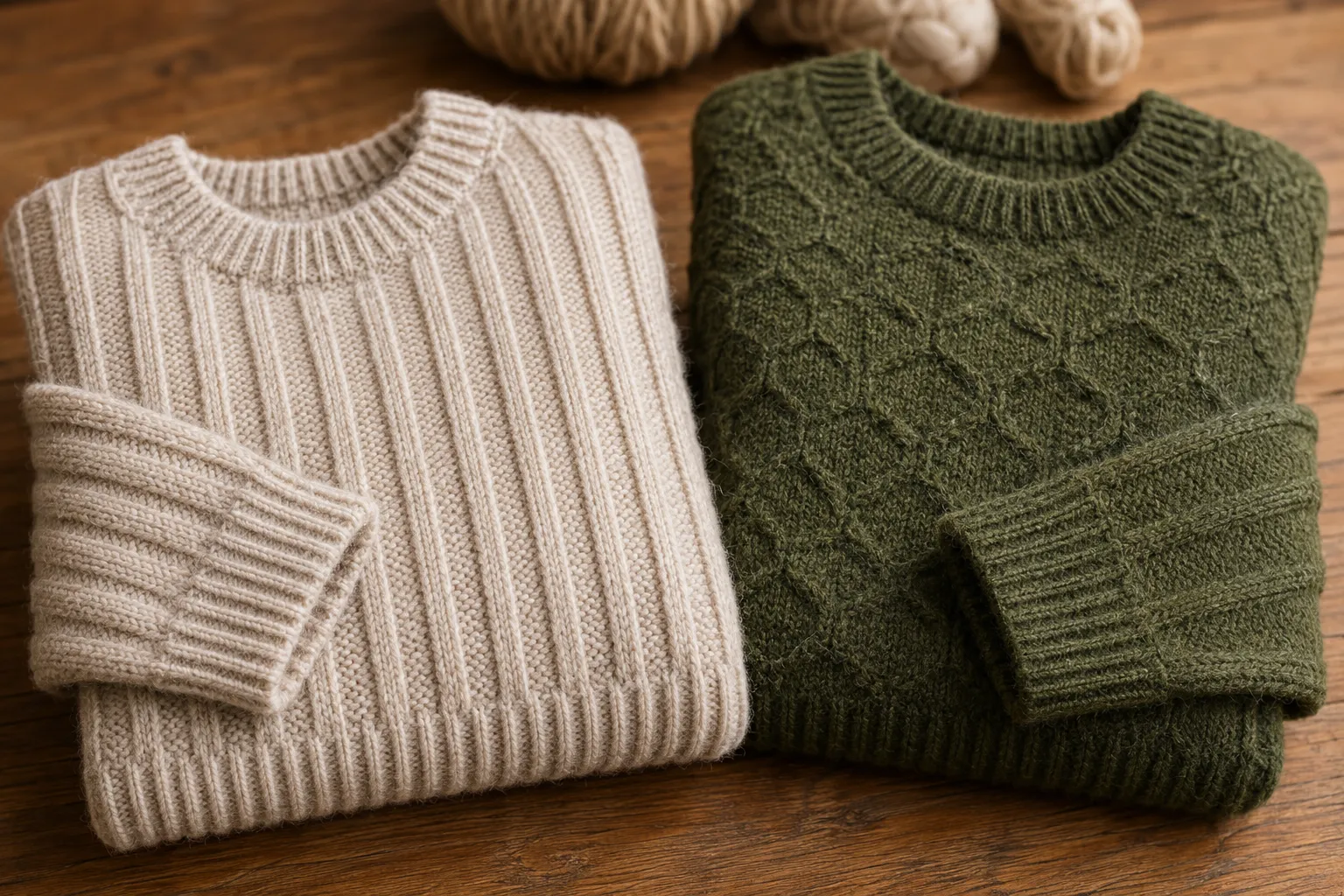
Ribbing is useful beyond cuffs and hems. A full ribbed body gives a jumper stretch, vertical definition, and a texture that remains visible even in a solid color. Other raised patterns can add the same interest while keeping the garment lighter than a dense cable knit.
Texture works particularly well in alpaca because the fiber reflects light softly across the stitches. Oatmeal, moss green, and heathered gray show the surface detail clearly, while the pullover shape keeps the overall look relaxed. The fleece from alpacas is valued for this soft luster as well as its warmth.
04 · A substantial knit
Cable-knit alpaca jumpers
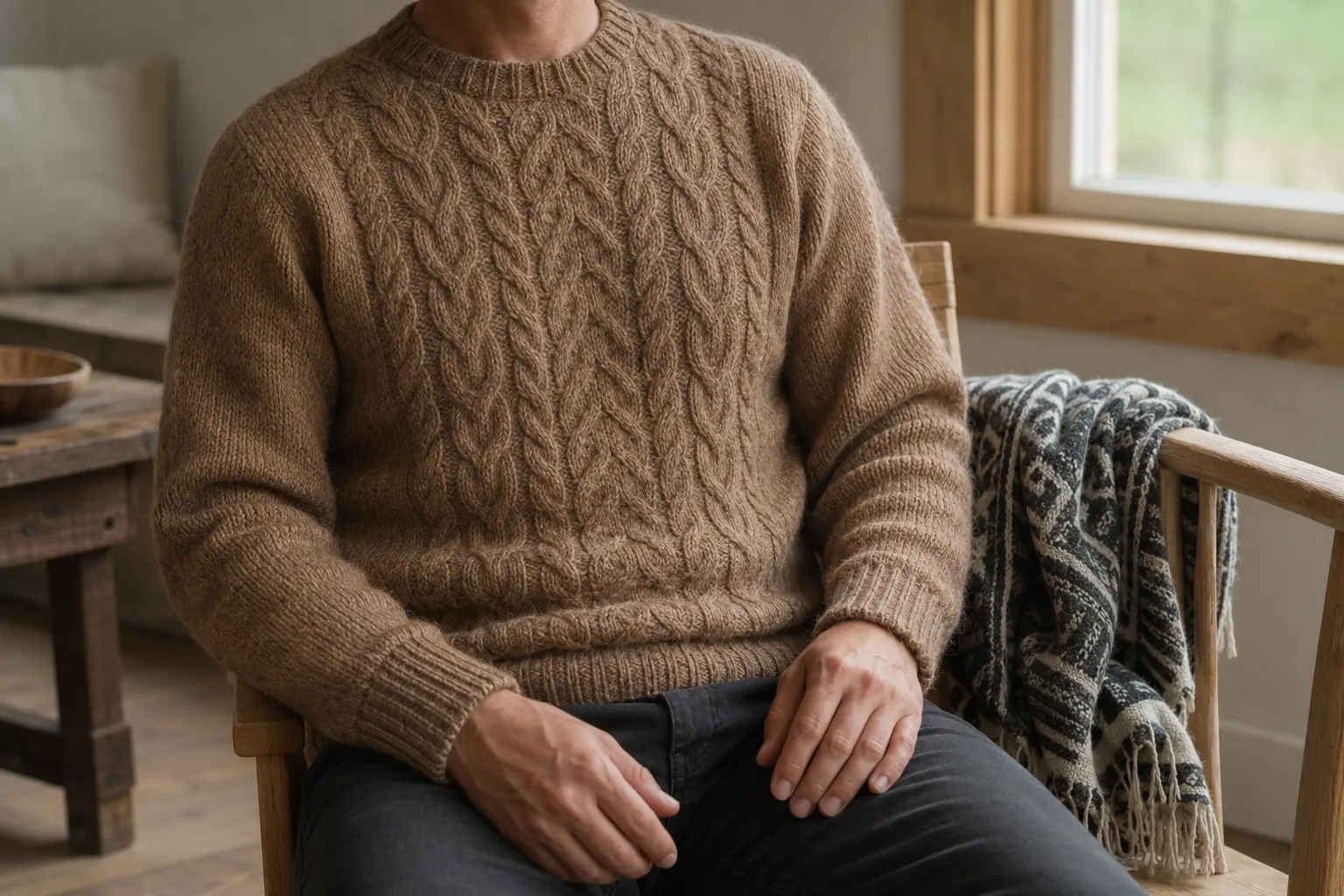
Cables create a dimensional surface by crossing groups of stitches over one another. A cable-knit jumper feels more substantial than a smooth pullover, making it a natural choice for colder weather and for people who enjoy a traditional knit look.
Because cables add both weight and texture, they often look best in fawn, cream, brown, or other shades that let the pattern do the work. A little extra ease through the shoulders and sleeves keeps a thicker jumper comfortable when worn over a shirt. If you are deciding between fibers for a textured knit, it also helps to compare alpaca fiber and sheep wool.
05 · Patterned cold-weather layers
Colorwork jumpers for cool weather
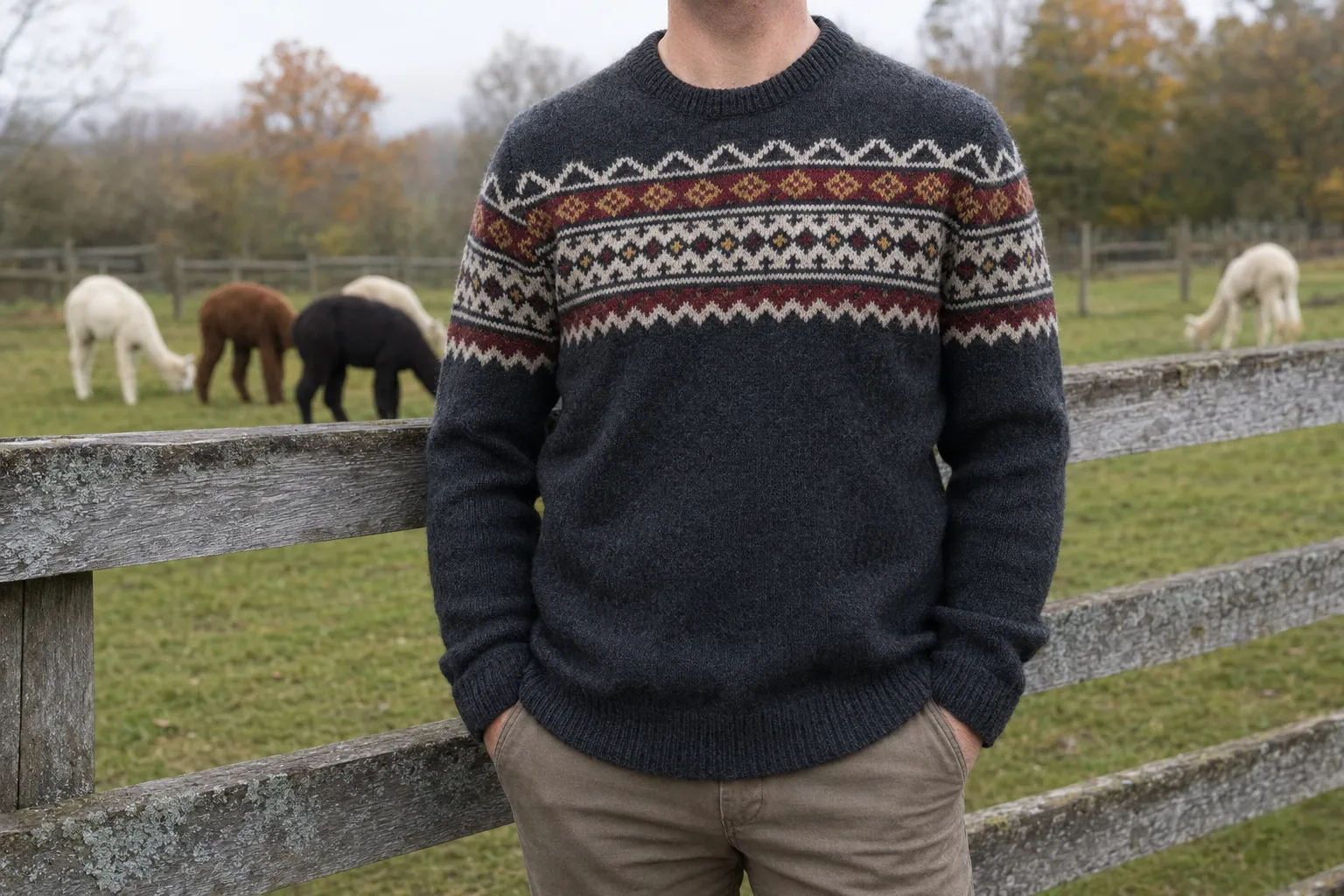
A heavier patterned jumper can be a useful outer layer on a crisp day or a warm middle layer beneath a coat. A dark base with a clear colorwork band keeps the design visible while making the garment easy to wear with jeans, boots, and other outdoor clothes.
For a comfortable cold-weather jumper, look for a neckline that sits well under a jacket and cuffs that stay in place without feeling restrictive. The fit should have enough room for movement and for an undershirt, especially when the yarn is thick. If you would like to look for yarn or finished pieces locally, the alpaca farm directory is a useful starting point.
Choosing a patterned alpaca jumper
Choose the pattern to suit the role of the jumper. Fine stripes and light ribbing are easy for ordinary layering, while Fair Isle, cables, and heavier colorwork create a warmer garment with more visual presence. Consider the yarn weight and fit alongside the design, especially if you plan to wear the jumper under a jacket.
A clear pattern, a comfortable fit, and the right yarn weight will matter more in daily wear than whether a jumper is highly decorated. Choose the details that make sense for the way you plan to layer and use it.