Alpaca clothing guide
Alpaca sweaters
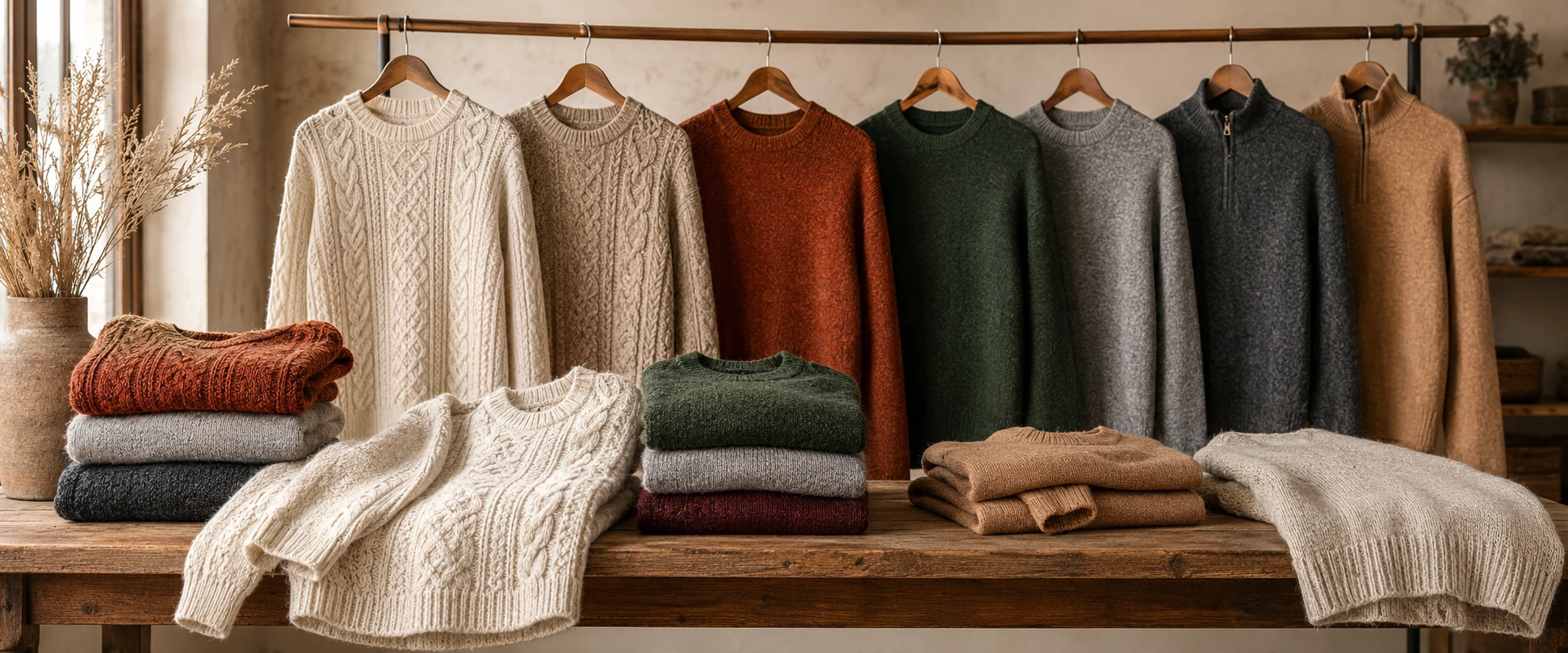
Alpaca sweaters can be fine enough for everyday layering or richly textured for colder weather. The yarn weight, stitch pattern, and fit all change how a sweater looks and feels.
Why alpaca works well in sweaters
Alpaca fiber is known for soft warmth and a smooth surface, which makes it especially appealing in garments worn close to the skin. A finer yarn can create a neat, lightweight sweater, while a thicker yarn gives cables, ribbing, and other textured stitches more depth.
Most everyday alpaca sweaters use a blend rather than pure alpaca. Combining fibers can improve resilience, help cuffs and necklines recover their shape, and make the garment easier to wear over time. The label and knit construction matter as much as the percentage of alpaca.
01 · Easy layering
Everyday crewneck sweaters
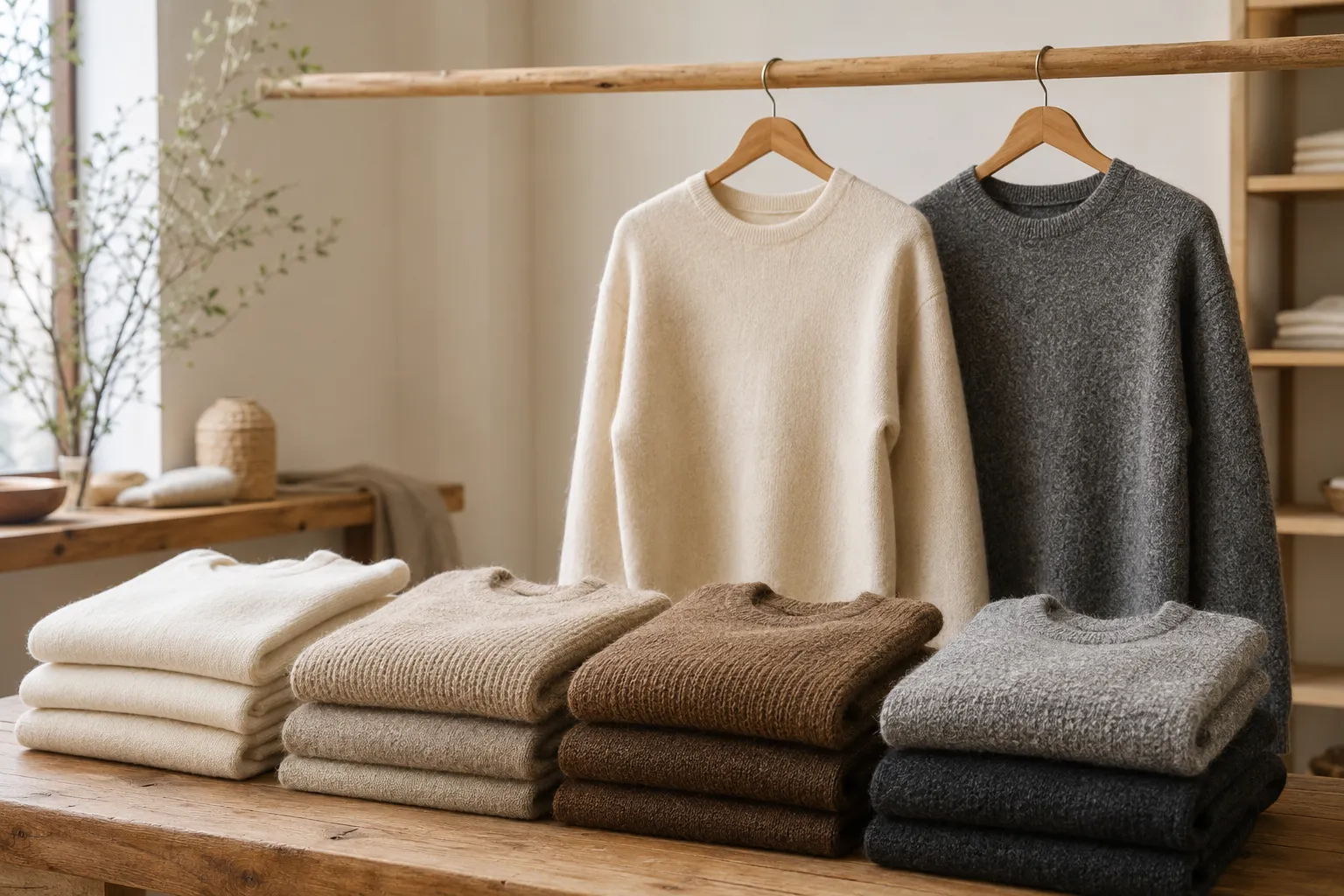
A crewneck is the most familiar alpaca sweater style: a round neckline, straightforward shape, and enough versatility for daily wear. Fine-gauge crewnecks layer easily over a shirt, while medium-weight styles can stand on their own in cool weather.
Natural shades of ivory, fawn, brown, gray, and charcoal make a crewneck especially easy to pair with the rest of a wardrobe. A simple smooth knit keeps the look quiet; a subtle rib or flecked yarn adds interest without making the sweater feel heavy.
02 · Lighter layers
Fine V-neck sweaters
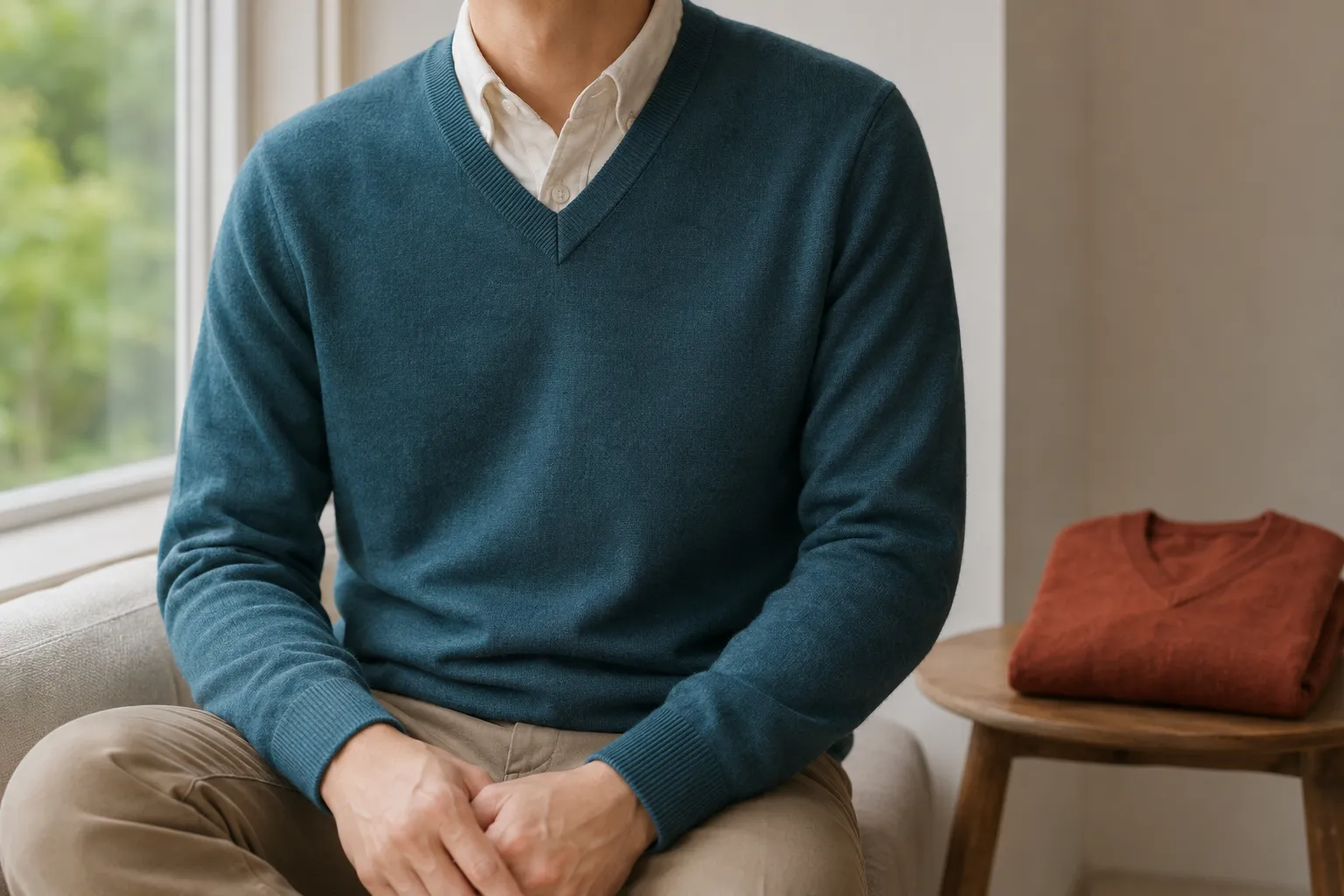
A V-neck creates a little more visual openness than a crewneck and layers naturally over a collared shirt, T-shirt, or simple dress. In a fine alpaca blend, it can provide warmth without the bulk that makes layered clothes feel restrictive.
Dyed alpaca brings more color into the sweater range. Deep teal, muted rust, burgundy, and soft green all work well with the fiber’s natural depth and gentle sheen. For a close-fitting V-neck, a blend with enough structure is useful around the neckline and cuffs.
03 · Adjustable warmth
Alpaca cardigans
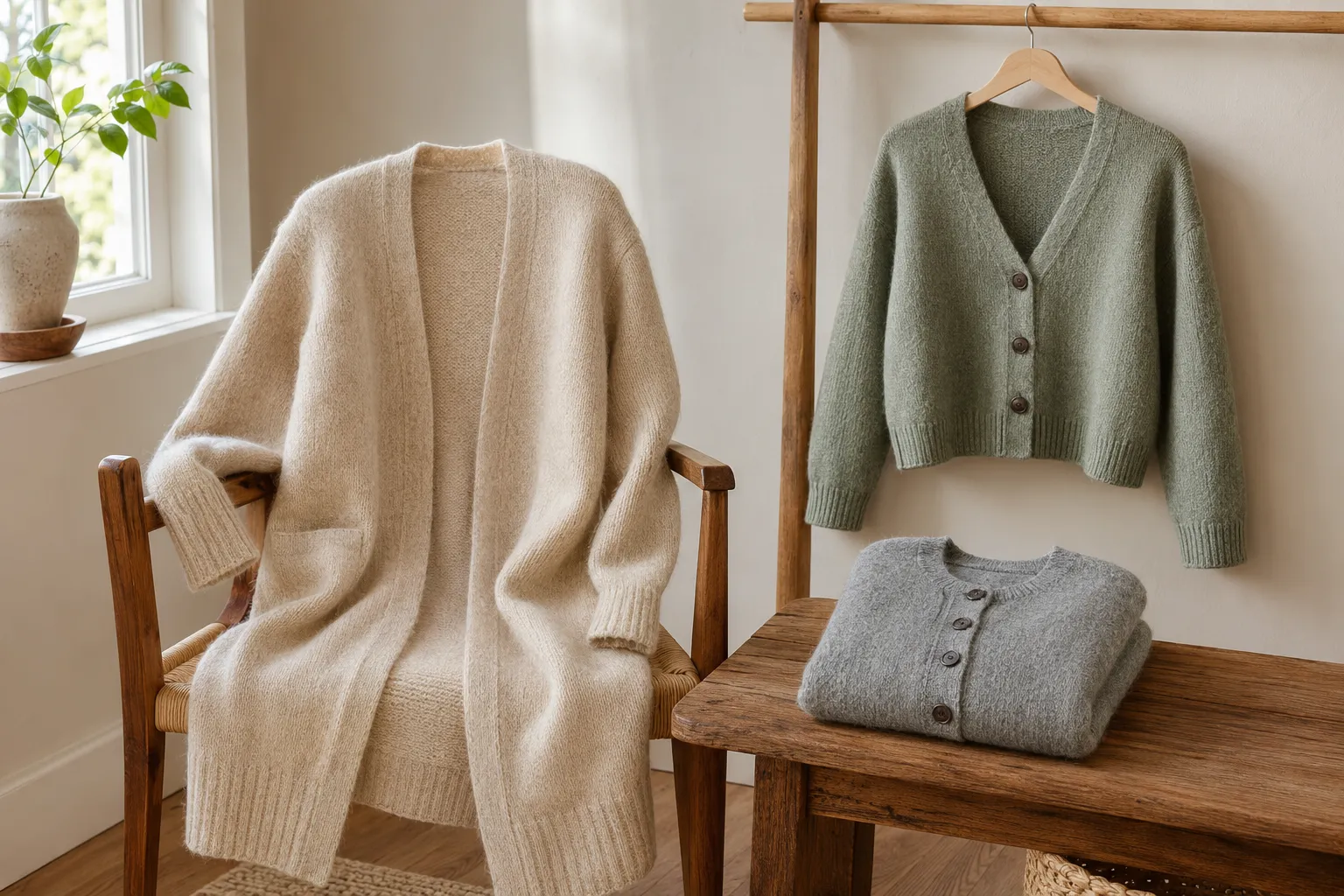
A cardigan is a practical way to use alpaca’s warmth because it can be opened, closed, or slipped off as the temperature changes. Short button-front styles, longer open-front layers, and more structured shawl-collar shapes each create a different balance of warmth and drape.
Cardigans also show how the same fiber can move from natural neutrals to color. An oatmeal or gray cardigan may feel classic and understated, while muted sage or blue gives the same soft knit a more contemporary look.
04 · Depth and structure
Cable-knit and textured sweaters
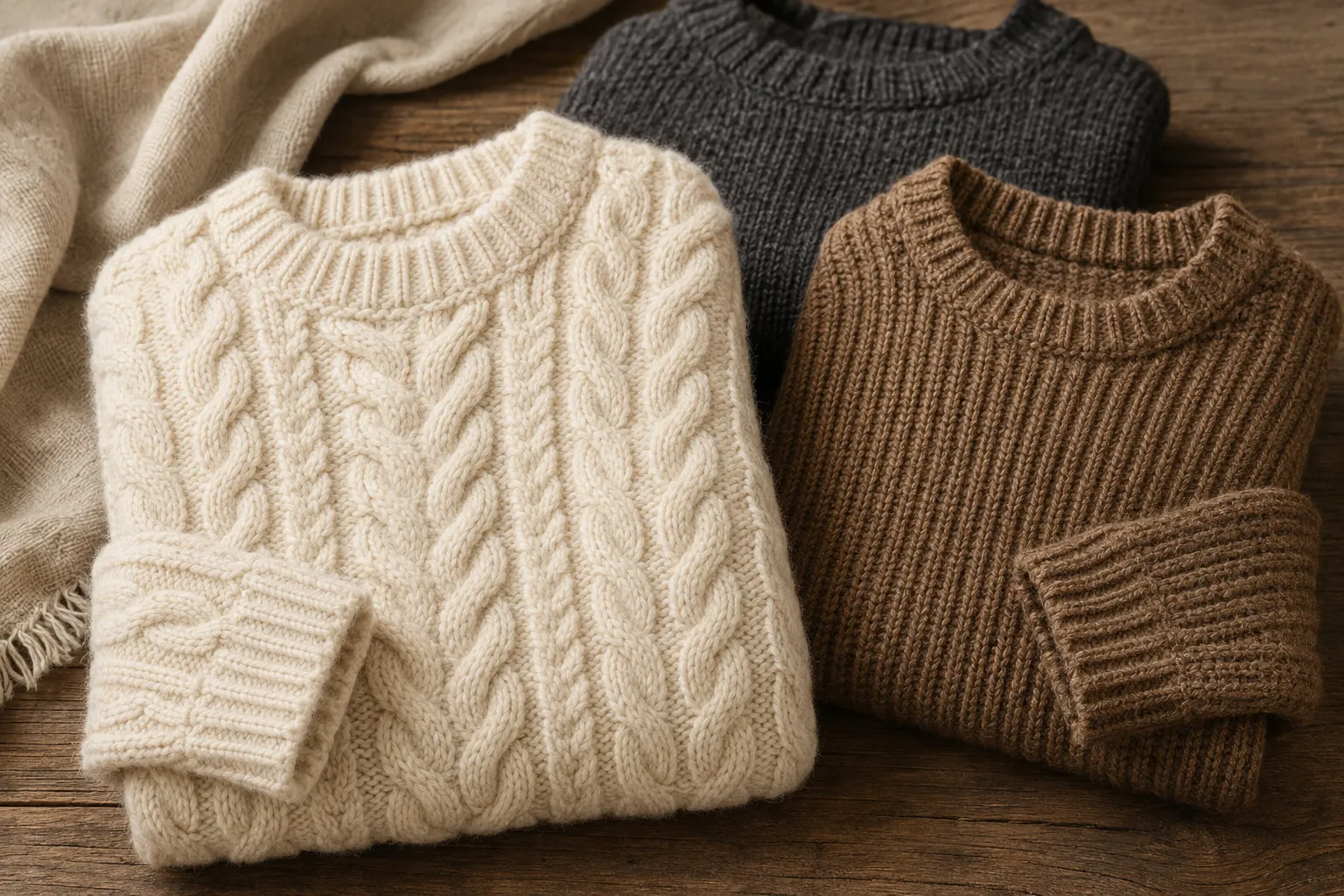
Thicker alpaca yarn gives cable patterns, fisherman ribbing, and other textured stitches a stronger profile. These sweaters tend to feel more substantial and are often chosen for colder days, when the knit itself becomes part of the look.
A heavily textured sweater does not need a bright color to stand out. Cream, natural brown, and heathered charcoal make the pattern visible while keeping the garment grounded. Look for durable finishing at the cuffs, hem, and neckline, where the extra weight of the knit can pull over time.
05 · Cold-weather layers
Quarter-zip and heavier sweaters
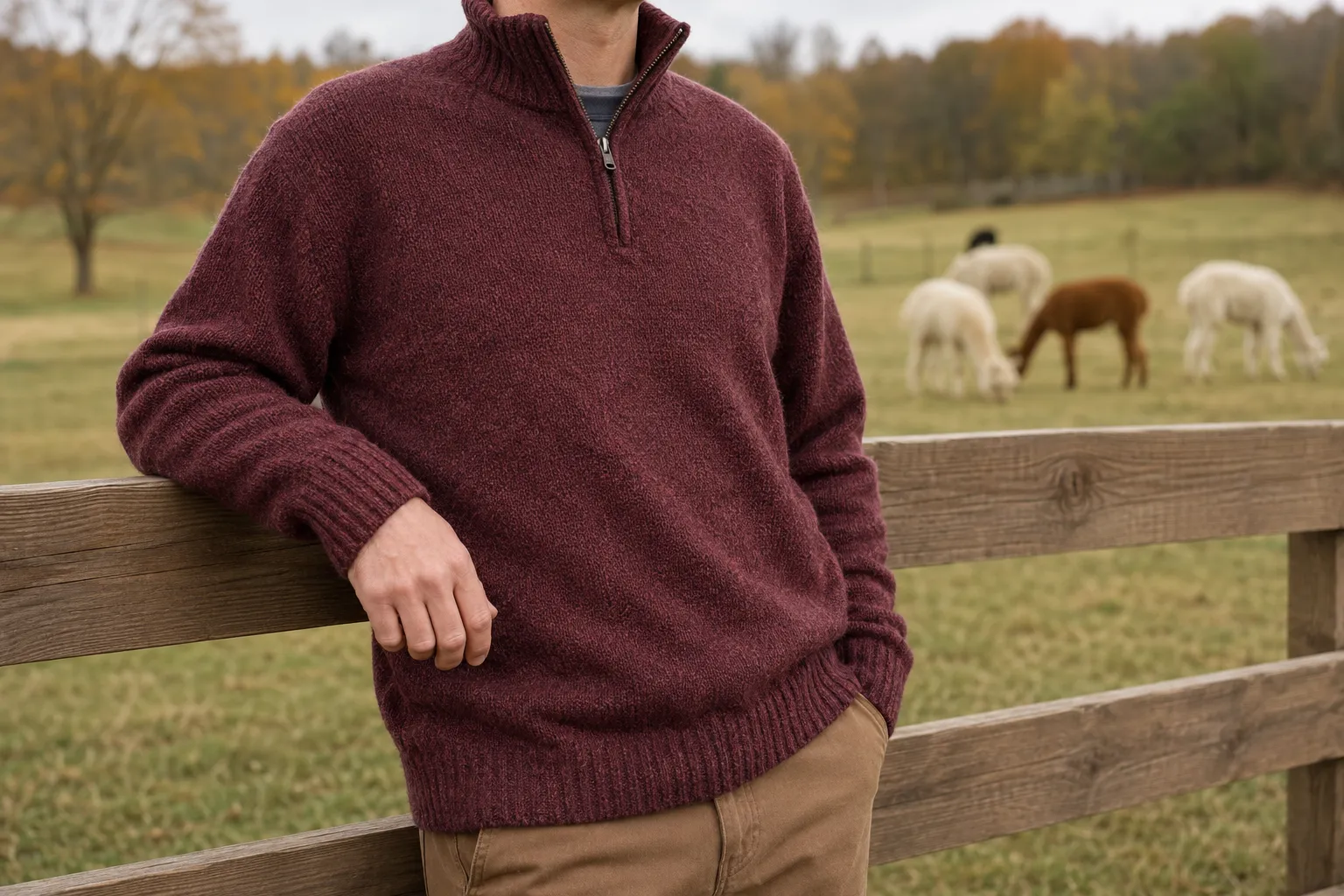
Quarter-zips and heavier pullovers are designed for the days when a light layer is not enough. A raised collar protects the neck, and the zipper makes the sweater easier to pull on or vent as conditions change. They work well over a shirt or under a coat.
A rich burgundy, deep green, or dark blue gives a heavier alpaca blend a more outdoors-ready character while still working with the fiber’s natural texture. Check that the shoulders and sleeves have room to move; thick yarn feels best when the sweater is not overly tight.
Choosing an alpaca sweater
Begin with how you plan to wear it. A fine crewneck or V-neck is useful for regular layering, a cardigan offers flexibility indoors, and a textured or quarter-zip sweater is better suited to colder weather. Consider the yarn weight, fit, and blend—not simply the word “alpaca” on the label.
To learn more about the animals behind the fiber, explore alpacas and their fleece. Many an alpaca farm sells yarn or finished clothing, making the farm directory a useful place to look for regional fiber products.