Alpaca sock guide
Alpaca thermal socks
Thermal socks are built to hold insulating air around the foot through loft, cushioning, and knit structure. Alpaca can contribute warmth and softness, but the way the complete sock is constructed—and whether the footwear leaves room for it—determines how useful that insulation will be.
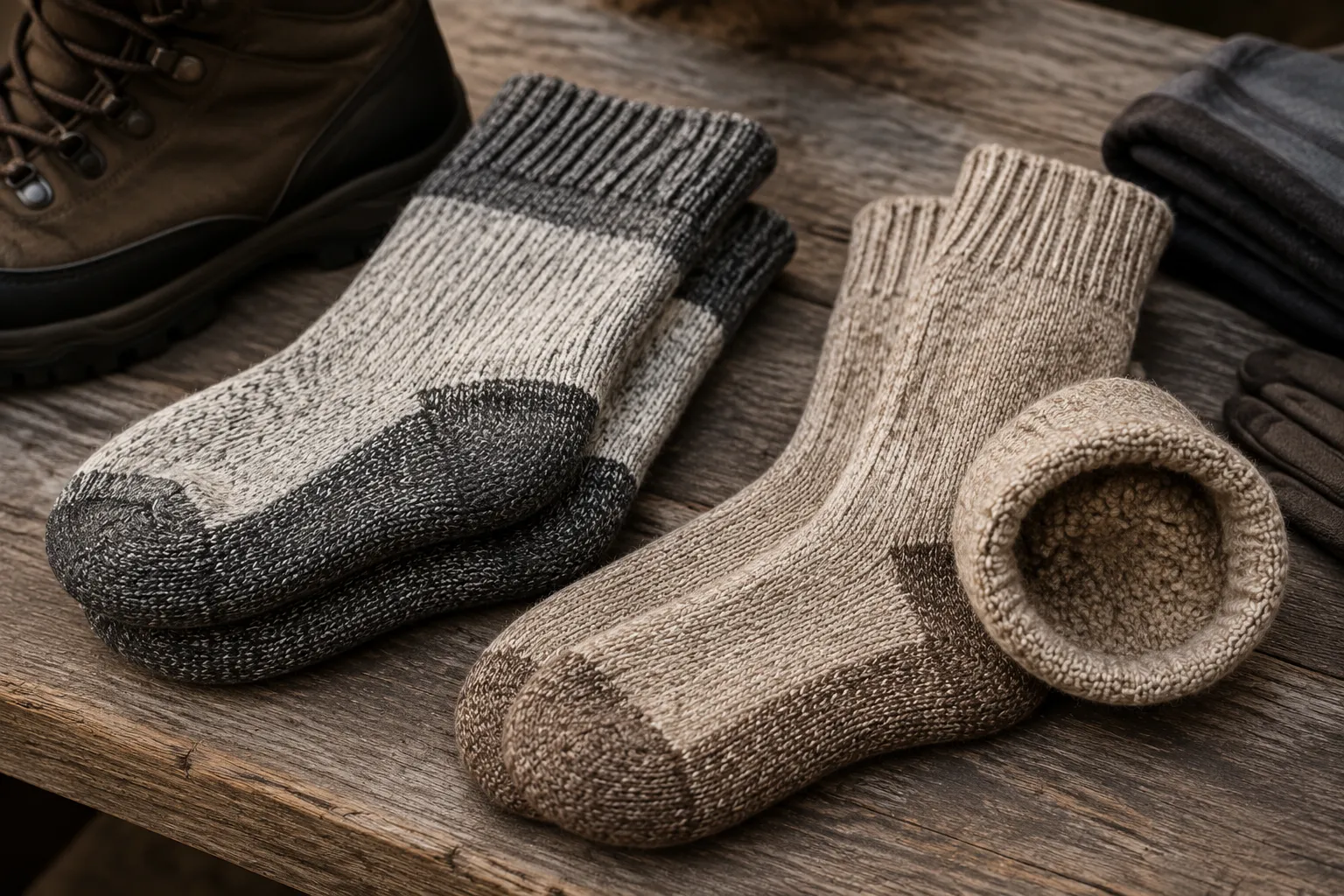
A construction, not a temperature rating
What does “thermal” mean for socks?
“Thermal” generally signals that a sock has been designed with insulation in mind. It does not identify one standardized thickness, knit, fiber percentage, or temperature range. Two products described as thermal may use different amounts of cushioning and may fit very differently inside the same footwear.
The main idea is retained air. A lofty knit creates small spaces within and around the fibers, while cushioning gives the sock depth. If that structure is flattened tightly inside a shoe or boot, some of the loft that distinguished the sock is lost.
The alpaca fiber contributes insulating character and feel, while the supporting fibers and knit structure help the sock retain its shape through wearing and washing.
Loft
Creates space within the knit where insulating air can remain.
Coverage
Determines whether cushioning is limited to the sole or extends through the leg.
Recovery
Helps the sock return to shape instead of remaining stretched or flattened.
Available space
Allows the finished sock to fit without being densely compressed.
Inside and outside
How thermal sock construction works
A thermal sock may look relatively smooth from the outside while using loops, pile, or denser cushioning on the inside. Examining both surfaces provides more information than judging the cuff alone.
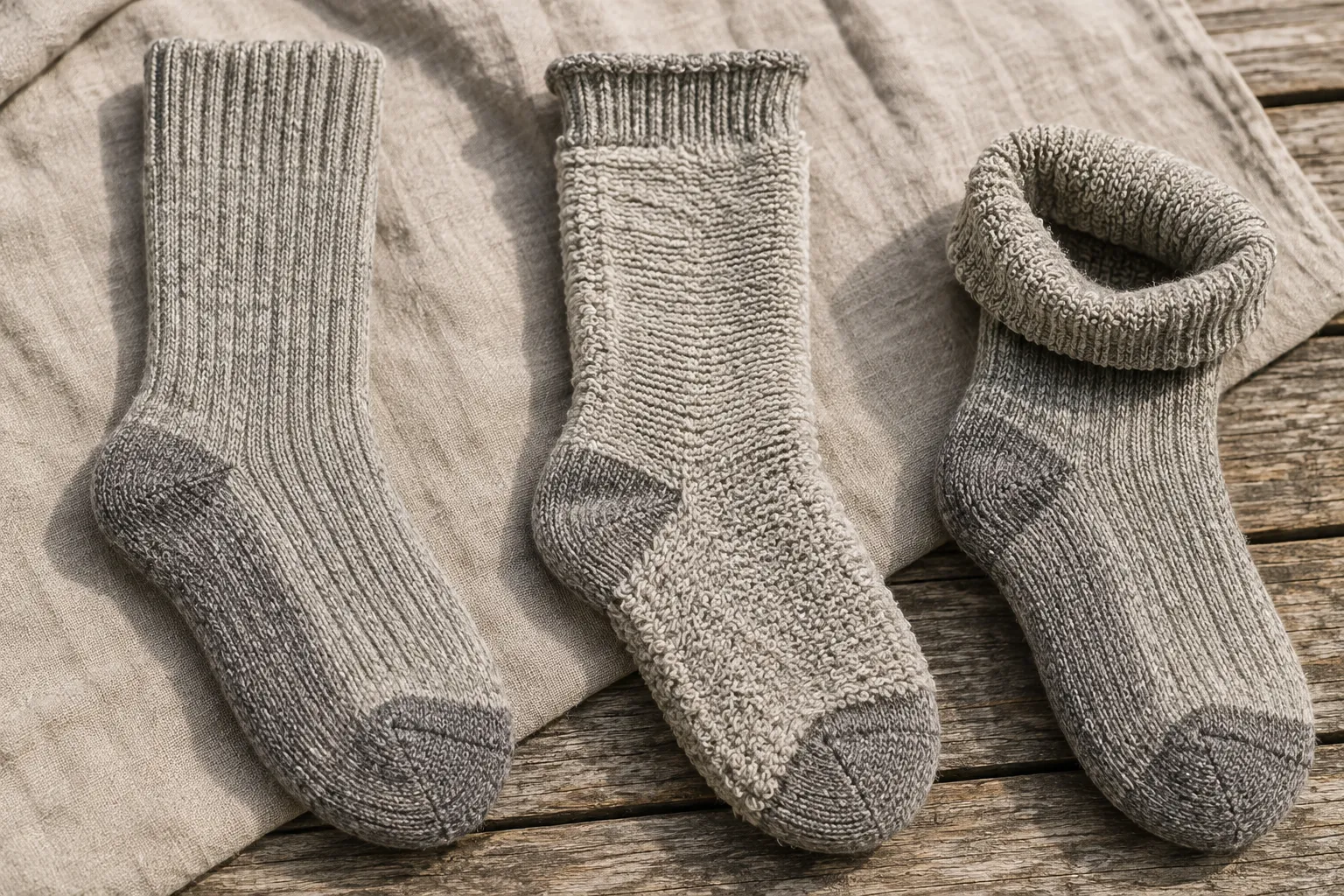
Ribbed exterior
Helps the leg stretch over the foot and return toward its intended shape.
Looped interior
Adds depth and creates more space within the knit than a flat interior surface.
Shaped heel
Positions the cushioned areas and reduces loose material around the ankle.
Reinforced contact areas
Use denser knitting or stronger fibers where the heel and toe experience repeated abrasion.
Insulation needs room
Loft and compression
A thermal sock may feel thick and resilient when it is lying flat, but footwear changes that structure. A comfortably fitted boot can support the foot while leaving some depth in the cushioned knit. A close boot can flatten the sock around the instep, ankle, and toes.
Compression is not automatically harmful—every sock is compressed to some degree when worn—but a visibly crowded boot is a sign that the sock weight and footwear volume may not be compatible.
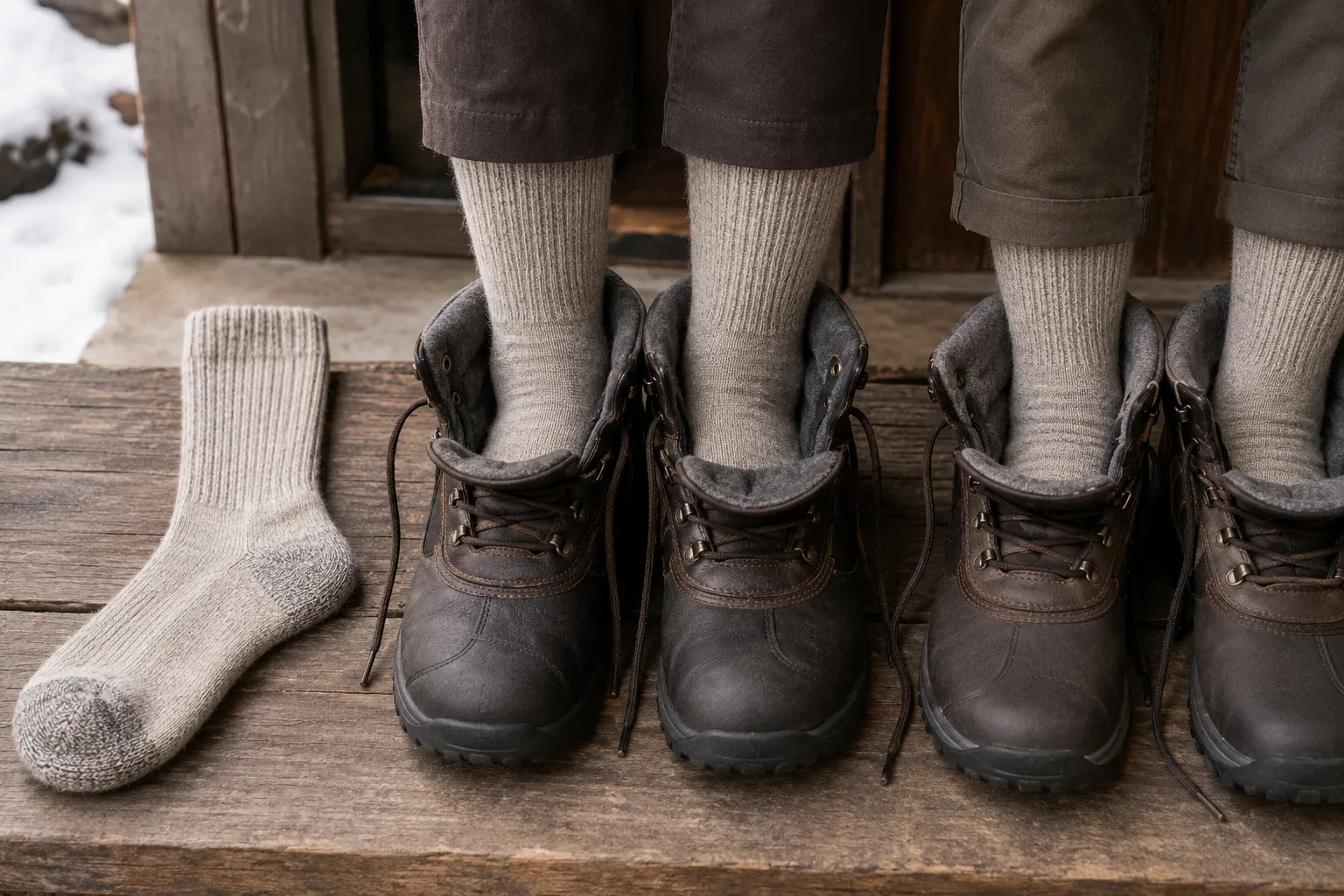
What the boot-and-sock combination can tell you
Where the depth is placed
Full cushioning and partial cushioning
“Heavyweight” describes overall sock weight, while “full cushion” describes where the cushioning is placed. Product descriptions may use both terms, but they do not mean exactly the same thing.
The blend supports the structure
What each fiber may contribute
A thermal sock must remain lofty enough to insulate while also stretching over the foot, holding its shape, and resisting abrasion.
Alpaca
Contributes insulation and the fiber character that distinguishes the sock.
Nylon or polyamide
Strengthens high-contact areas and helps the knit withstand repeated friction.
Elastic fibers
Help the cuff, ankle, and body of the sock return toward their intended shape.
Wool or other fibers
May contribute resilience, moisture behavior, or knit stability depending on the blend.
As with other types of alpaca clothing, a higher alpaca percentage does not by itself prove that the finished product is better suited to its intended use.
Translate the description
Reading thermal sock product labels
These terms are helpful, but makers may define them differently. Read them alongside the fiber percentages, size chart, and care instructions.
ThermalDesigned with insulation as a primary purpose
Look for an explanation of how the insulation is produced, such as a looped interior, dense cushioning, or a heavier knit. The word alone does not provide a temperature rating.
HeavyweightA more substantial overall sock
This generally describes material weight or thickness. It does not reveal whether cushioning covers the sole, the full foot, or the leg.
Full cushionCushioning through most or all of the sock
Check the maker’s diagram or description because some products use “full cushion” for the entire foot while others include the leg as well.
Brushed or looped interiorA loftier inner surface
This describes the surface against the foot. A deeper interior can add insulation and softness, but it also increases the room required inside the footwear.
Reinforced heel and toeExtra durability in high-contact areas
Reinforcement may use stronger fibers, denser knitting, or both. It is separate from the thermal construction but important for repeated wear.
Thermal socks sold by alpaca farms and other makers can use very different blends and definitions, so compare the complete product description rather than the category name alone.
Where the construction makes sense
When thermal socks are useful—and when they are not
A thermal pair may suit
- Roomy winter or outdoor boots
- Low-activity time in cold surroundings
- People who prefer substantial underfoot cushioning
- Situations where the sock can dry fully between uses
A lighter construction may suit
- Close-fitting shoes or boots
- Continuous, heat-producing activity
- Mild conditions where full cushioning feels excessive
- Footwear that already provides substantial insulation
For guidance organized around weather, movement, dampness, and time outdoors, compare alpaca winter socks.
Protect the knit structure
Caring for thermal socks
The product label takes priority because the supporting fibers and finishing methods differ.
Turn them inside out
Expose the looped or cushioned surface that has been in direct contact with the foot.
Wash gently
Use the specified water temperature and cycle or hand-washing method for the complete blend.
Avoid unapproved heat
High dryer temperatures can affect elastic fibers and change the fit or recovery of the sock.
Let the pair recover
Dry it fully and avoid leaving the cushioned knit compressed inside footwear between wears.
Common questions
Alpaca thermal sock FAQ
Are thermal socks the same as winter socks?
Not exactly. “Thermal” usually describes an insulating construction, while “winter” describes cold-weather use. A thermal sock can be worn in winter, but not every winter activity requires a heavyweight thermal construction.
Are thicker thermal socks always warmer?
Thickness can add insulation, but fit and compression matter. A bulky sock crowded into a close boot may lose loft and restrict the space around the foot.
What is a terry-loop interior?
It is an inner knit surface made with loops that add depth and cushioning. The loops create a loftier interior than a flat knit and may cover the sole or more of the sock.
Do alpaca thermal socks need synthetic fibers?
Many use nylon, elastic, or other supporting fibers for abrasion resistance, stretch, and recovery. The most appropriate blend depends on the construction and intended use.
Can thermal socks be worn in work boots?
Yes, if the boot has sufficient room and the sock remains smooth. A full-cushion thermal pair may be too bulky for a work boot fitted with a lighter sock.
Can alpaca thermal socks be worn indoors?
They can, although their weight may feel excessive in a heated space or inside ordinary shoes. A lighter everyday or cabin sock may be more comfortable for prolonged indoor wear.
Can alpaca thermal socks go in the dryer?
Follow the care label for that particular blend. Some permit low-temperature drying, while others should be air-dried. Avoid assuming that every alpaca blend has the same requirements.
Choosing a thermal pair
Look for a clear description of the interior knit, cushioning coverage, overall weight, reinforcement, and blend. Then test the sock in the intended footwear. A useful thermal pair should retain some cushioning depth while allowing the boot or shoe to fit normally.
The same questions about fiber blend, construction, and care apply when choosing other alpaca garments and accessories.