Alpaca sock field guide
Men's alpaca socks
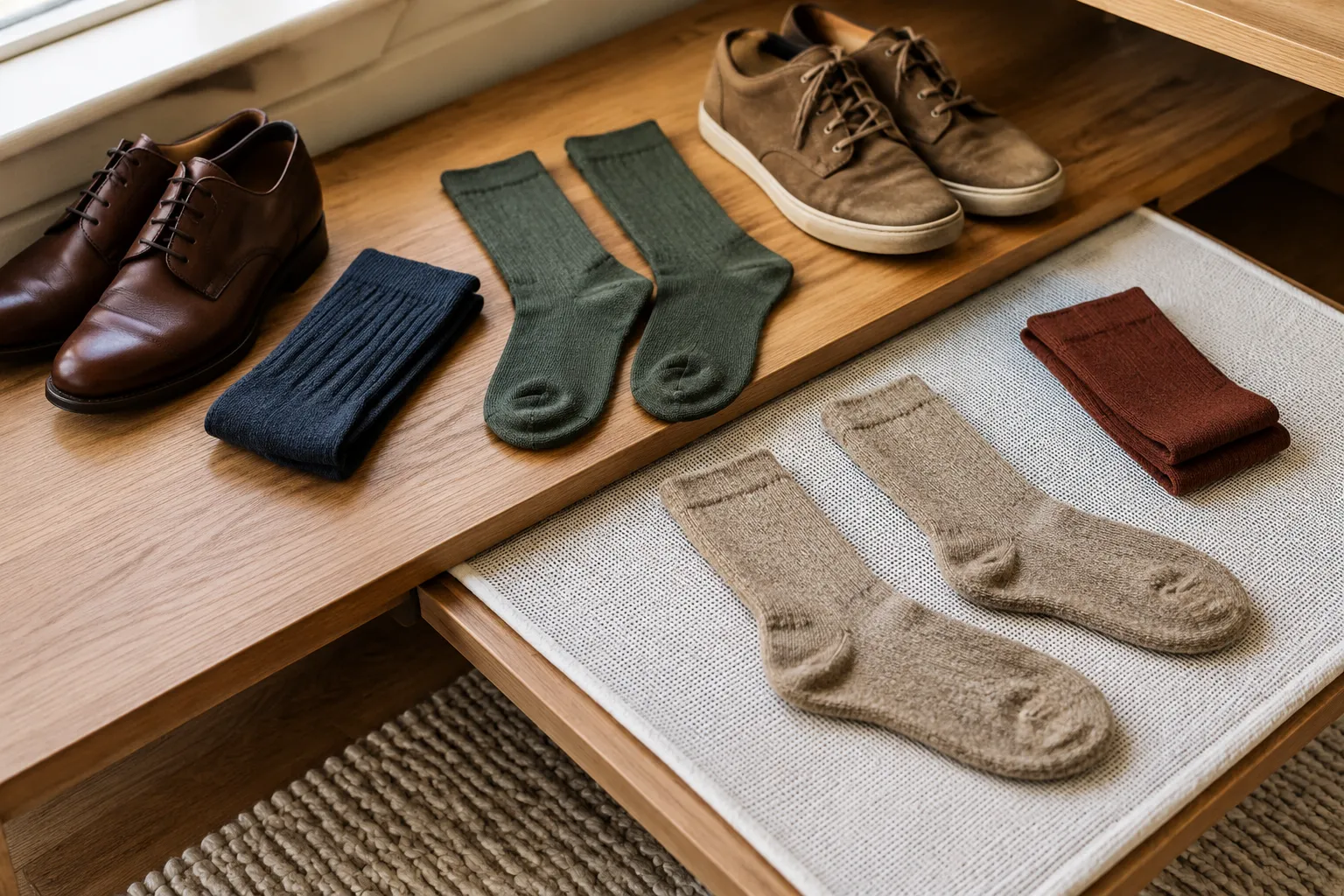
Choose the sock and footwear as a working pair. Size labels help narrow the field, but heel placement, instep volume, cuff fit, knit weight, and shoe or boot space determine whether the combination works.
- Measure
- Foot, instep, and calf
- Match
- Height and knit to footwear
- Inspect
- Heel, toe, cuff, and sole
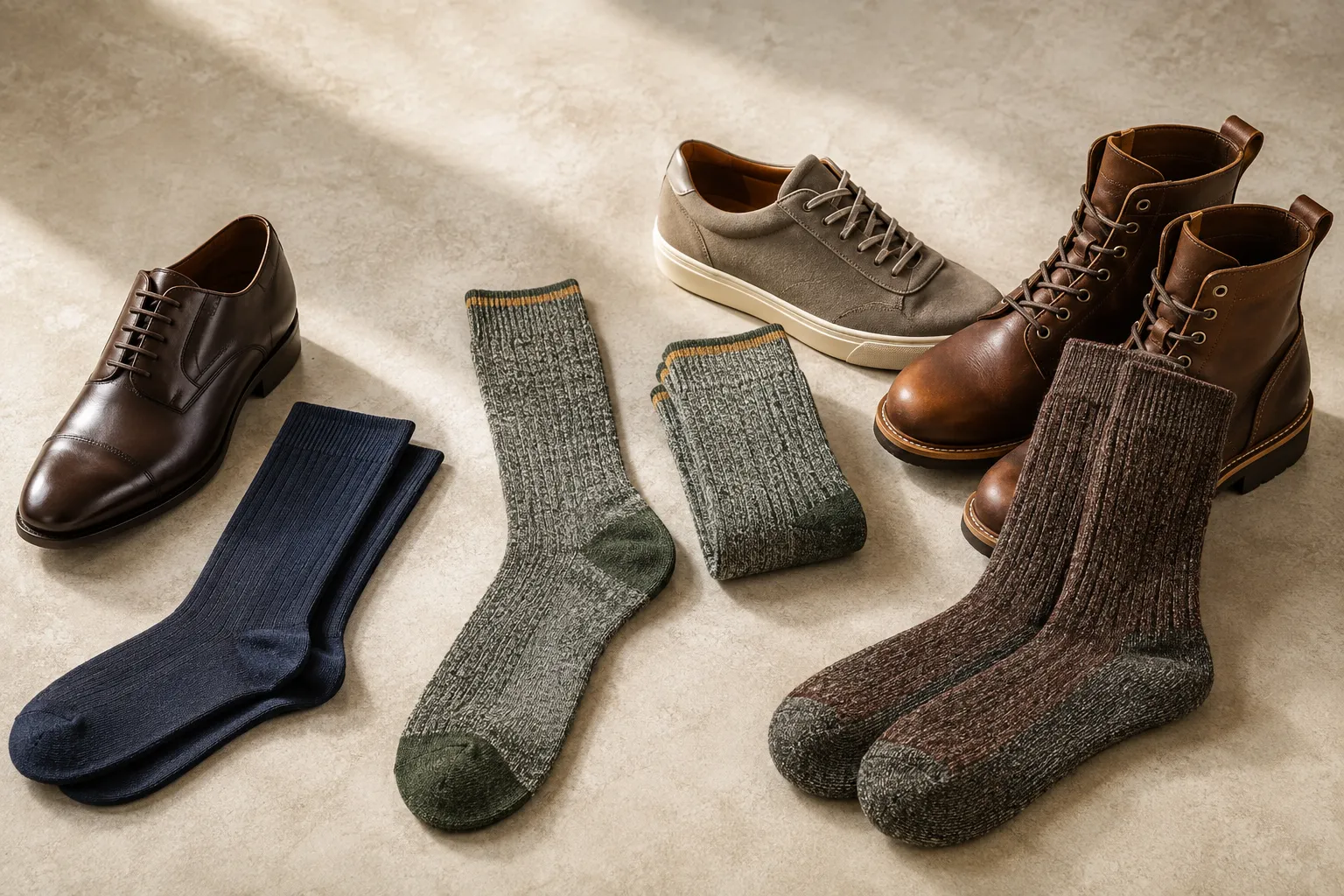
Read past the department label
The category is only a starting point
The properties of alpaca fibers are not gender-specific. Men's lines commonly emphasize larger foot ranges, extended sizing, conventional dress colors, and crew or boot heights, but those choices vary by maker.
When size ranges overlap, anyone can compare either category. Use the chart for the actual product and judge how its heel, leg, cuff, and knit weight suit the wearer and footwear.
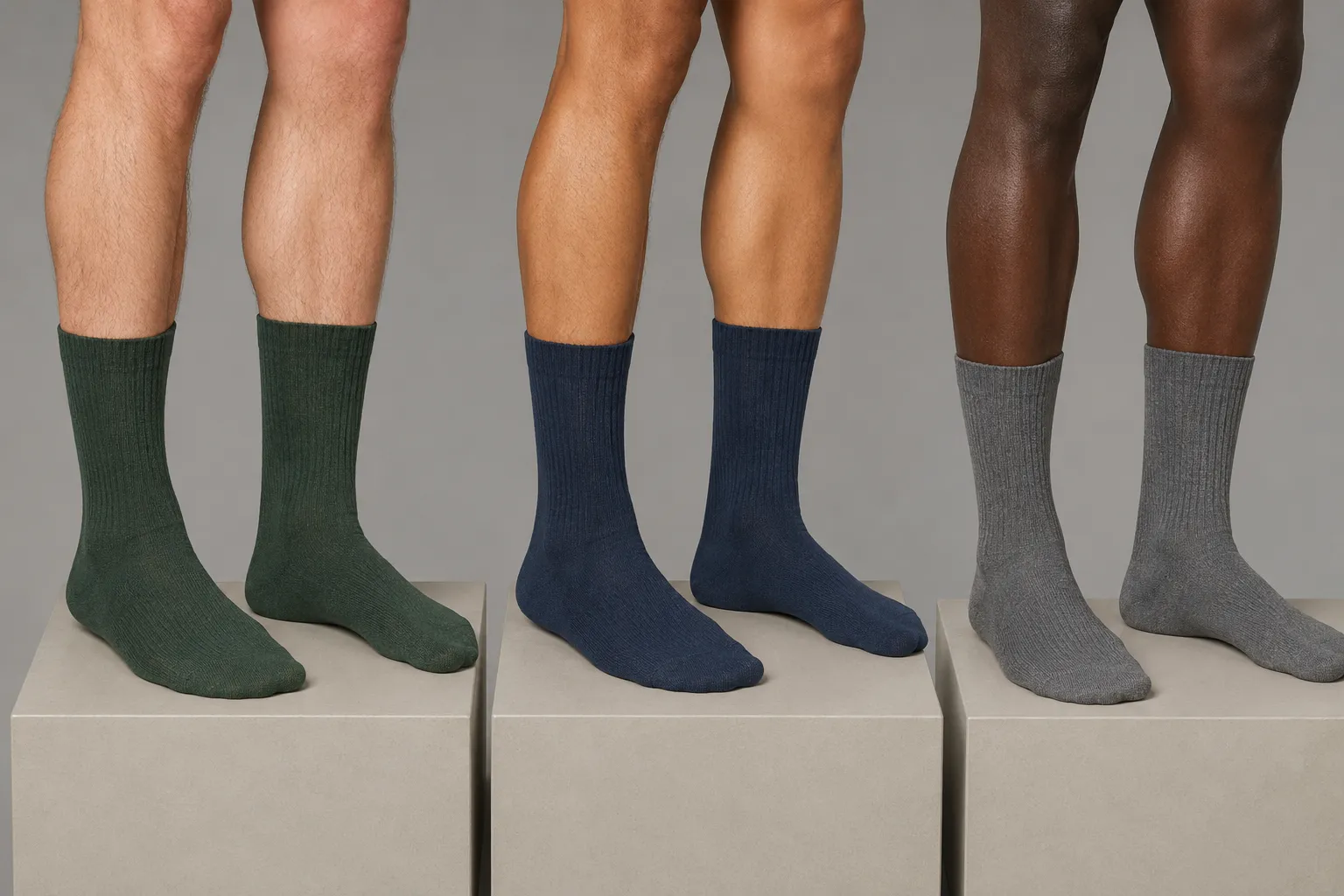
The four-point fit ledger
Check the places a shoe-size label misses
A broad shoe-size range cannot describe every foot. Review the maker's chart, then use these four checkpoints after the sock is on and again after walking.
-
01
Toe and foot length
The toes should lie naturally. Avoid a stretched toe box, a seam pulled across the nails, or loose fabric folding beneath the forefoot.
-
02
Heel position
The shaped heel should wrap the wearer's heel rather than sit under the sole or climb above the back of the foot.
-
03
Instep and shoe volume
A high-volume foot or dense knit occupies more space. Lacing should remain comfortable and the shoe should not compress the toes.
-
04
Calf and cuff
The leg should not become overly sheer, slide down, or end in a cuff that rolls or leaves a deep, sharply defined mark.
Interactive specification board
Match the sock to the footwear
Select a footwear type to compare useful sock height, knit weight, cushioning, and the fit detail most worth checking. The footwear's available space sets the practical limit.
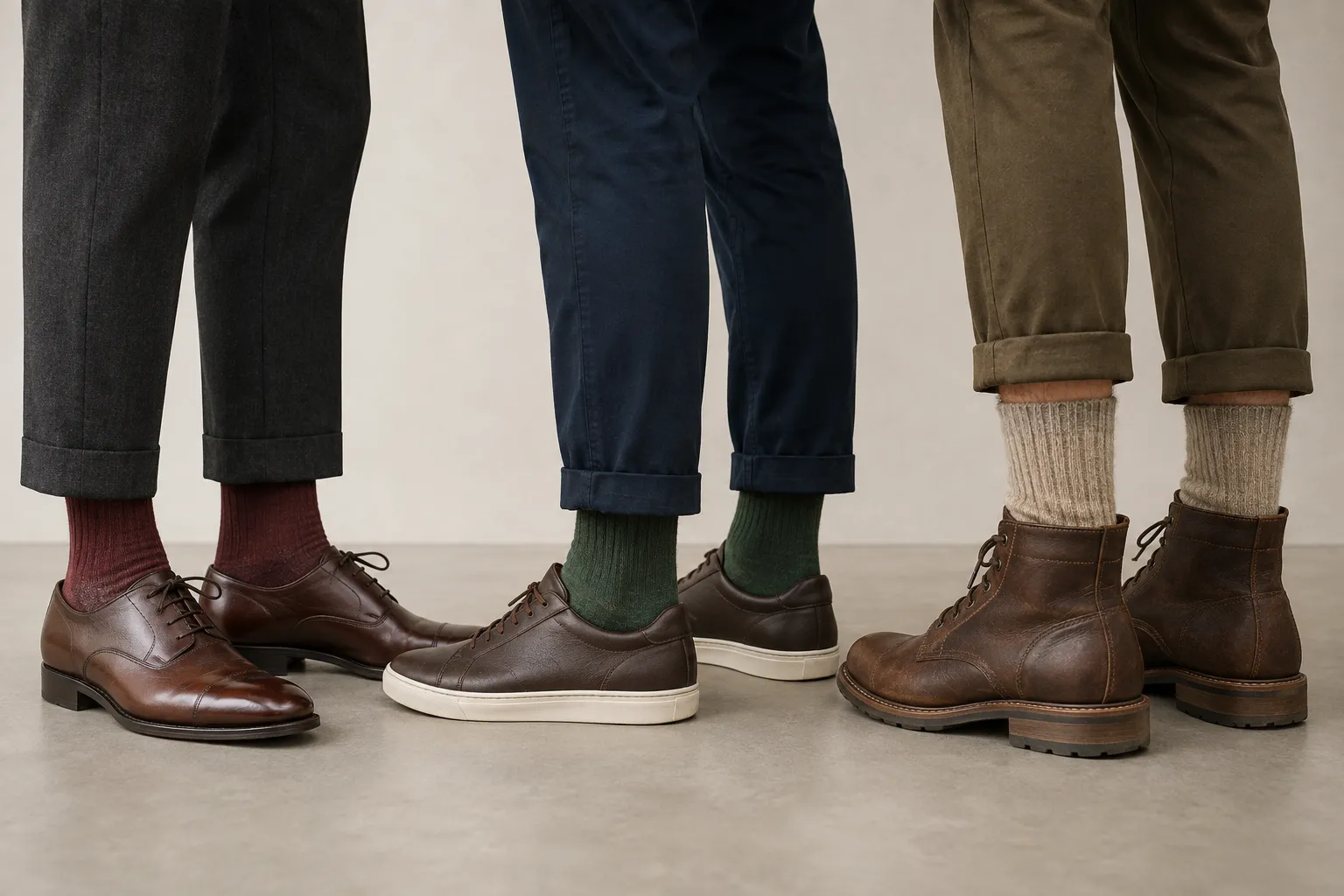
Dress shoes
Fine gauge and a clean surface
Close-fitting oxfords, loafers, and similar shoes generally leave little space for loft or cushioning. A fine knit, flat toe seam, and mid-calf height can reduce bulk and limit exposed skin when seated.
- Weight
- Lightweight or fine gauge
- Height
- Crew to mid-calf
- Cushion
- Minimal
- Check
- Instep pressure and toe seam
Casual shoes
Moderate structure for repeated wear
Sneakers and roomier casual shoes may accept a light everyday knit or targeted sole cushioning. Choose a cuff height that clears the shoe edge and check that the heel remains aligned while walking.
- Weight
- Light to medium
- Height
- Ankle or crew
- Cushion
- None to targeted
- Check
- Heel movement and cuff position
Everyday and work boots
Coverage above the collar
A crew or boot-height sock can place fabric between the leg and boot shaft. Cushioning at the sole, heel, or shin may help in some boots, but dense padding should not create pressure through the toe box or instep.
- Weight
- Medium to heavy
- Height
- Crew or boot height
- Cushion
- Targeted or full sole
- Check
- Collar clearance and boot volume
Cold-weather boots
Insulation without compression
A heavier alpaca blend can add insulation, but only if the boot preserves toe movement and does not compress the sock flat. Height should cover the full boot collar, and damp pairs need time to dry between uses.
- Weight
- Medium-heavy to heavyweight
- Height
- Boot height or over-calf
- Cushion
- Moderate to substantial
- Check
- Toe room, circulation, and drying
Showing the dress-shoe sock specification.
Inspect the working parts
Construction determines how the sock behaves
Alpaca content is only one part of the finished product. Knit density, reinforcement, stretch recovery, seams, and cushioning affect durability and fit.
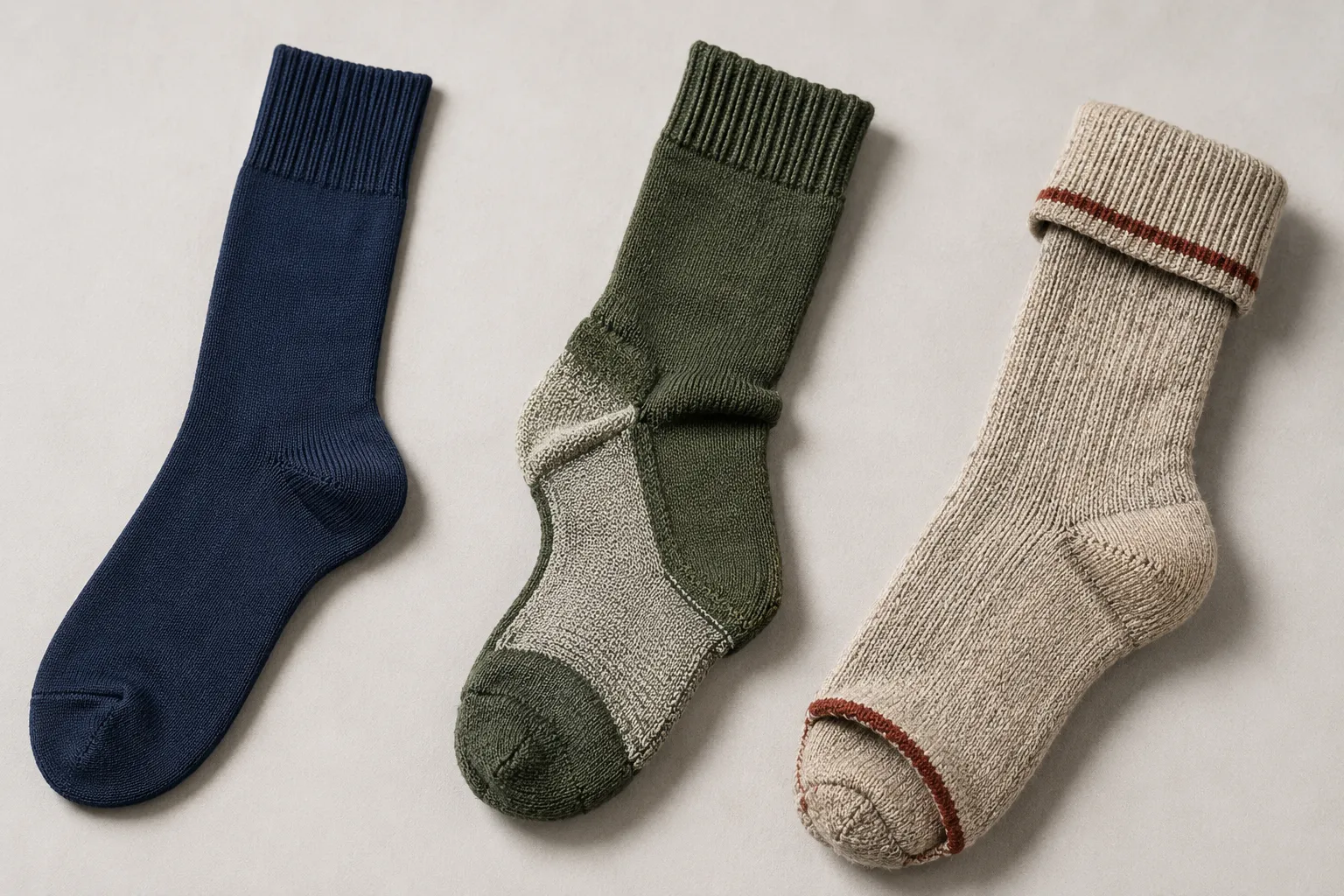
Hold without constriction
Elastic recovery should keep the leg up without relying on a narrow, overly tight band.
Stay centered
A shaped, reinforced heel helps maintain alignment in an area exposed to repeated friction.
Use space deliberately
Targeted cushion can add density where wanted without making the entire sock equally bulky.
Reduce ridges
A smooth, low-profile seam is especially important in firm or close-fitting footwear.
Material specification
Read the blend as a division of labor
Different fibers and yarns contribute different functions. The right balance depends on whether the finished sock is intended for a dress shoe, everyday use, or a boot.
Alpaca
Contributes insulation and the fiber feel associated with the sock.
Nylon or polyamide
Can reinforce areas exposed to abrasion and repeated flexing.
Elastic fibers
Help the foot, leg, and cuff stretch and return toward shape.
Other fibers
May change texture, structure, drying behavior, or care requirements.
Wear, air, wash, rotate
Build drying time into the sock rotation
Some farms that raise alpacas sell finished socks directly, but fiber blends and care directions vary. Follow the label for each pair, especially when switching between fine dress socks and heavier boot socks.
- Wear
Use the pair with footwear that leaves normal toe and instep room.
- Air
After removal, open the socks fully and allow moisture to disperse.
- Inspect
Check the heel, toe, sole, and cuff for thinning or loss of shape.
- Wash
Use the water temperature, cycle, detergent, and drying method on the label.
- Rotate
Return completely dry socks to use instead of repeatedly wearing a damp pair.
Common questions
Men's alpaca sock FAQ
Are men's alpaca socks made from a different alpaca fiber?
No. The category normally refers to sizing, proportions, colors, heights, or product styling. Compare measurements and construction when men's and women's size ranges overlap.
How should men's alpaca socks fit?
The shaped heel should remain centered, the toes should move naturally, the fabric should lie smoothly, and the cuff should stay up without rolling or sharply constricting the calf.
Can I wear thick alpaca socks in work boots?
Only when the boots have enough interior space. Added thickness should not crowd the toes, create instep pressure, or restrict circulation. A medium sock may fit better than a heavyweight one in a close boot.
Which height works with dress shoes?
Crew or mid-calf lengths are common. A taller cuff can keep the lower leg covered when seated, provided it fits the calf securely and comfortably.
What if the largest listed size is slightly too small?
Look for a true extended size instead of relying on stretch. An undersized sock may pull the heel out of position, tighten the toe area, and thin the knit.
Can men's alpaca socks be machine-washed?
Some can and some cannot. The answer depends on the complete blend and construction, so follow the care label for the specific pair.
Final checklist
Choosing men's alpaca socks
Begin with actual measurements, not the category label. Match sock height and knit weight to the footwear, confirm heel and cuff alignment, inspect the construction and full fiber blend, and follow the care directions for that pair.
Return to the alpaca socks guide