Forage first, with thoughtful extras
What do alpacas eat?
Most alpacas thrive on a simple forage-based diet: grass when pasture allows, good grass hay when it does not, clean water, and carefully chosen minerals or supplements when needed.
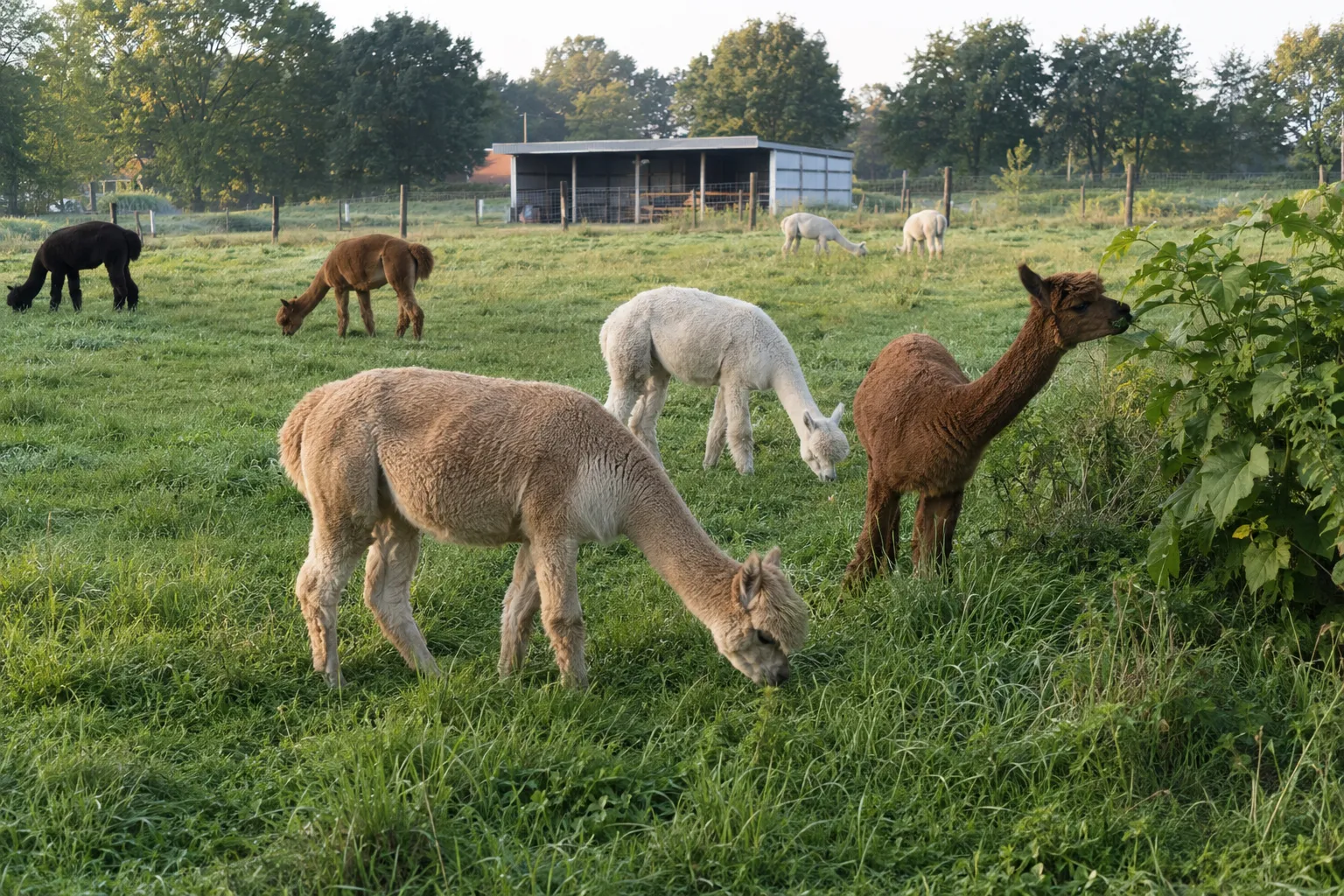
01 · Pasture & forage
Grass is where the diet starts
Alpacas are adapted to forage. When a pasture is healthy and managed well, they spend much of the day selecting grasses and other suitable plants while moving calmly with the herd.
Pasture quality changes with season, weather, soil, plant growth, and stocking level. Good rotation and avoiding overgrazing protect both the land and the animals that depend on it.
That is one reason pasture planning matters on an alpaca farm. The goal is not a lush lawn; it is safe, steady forage with enough room for a herd to graze without exhausting the field.
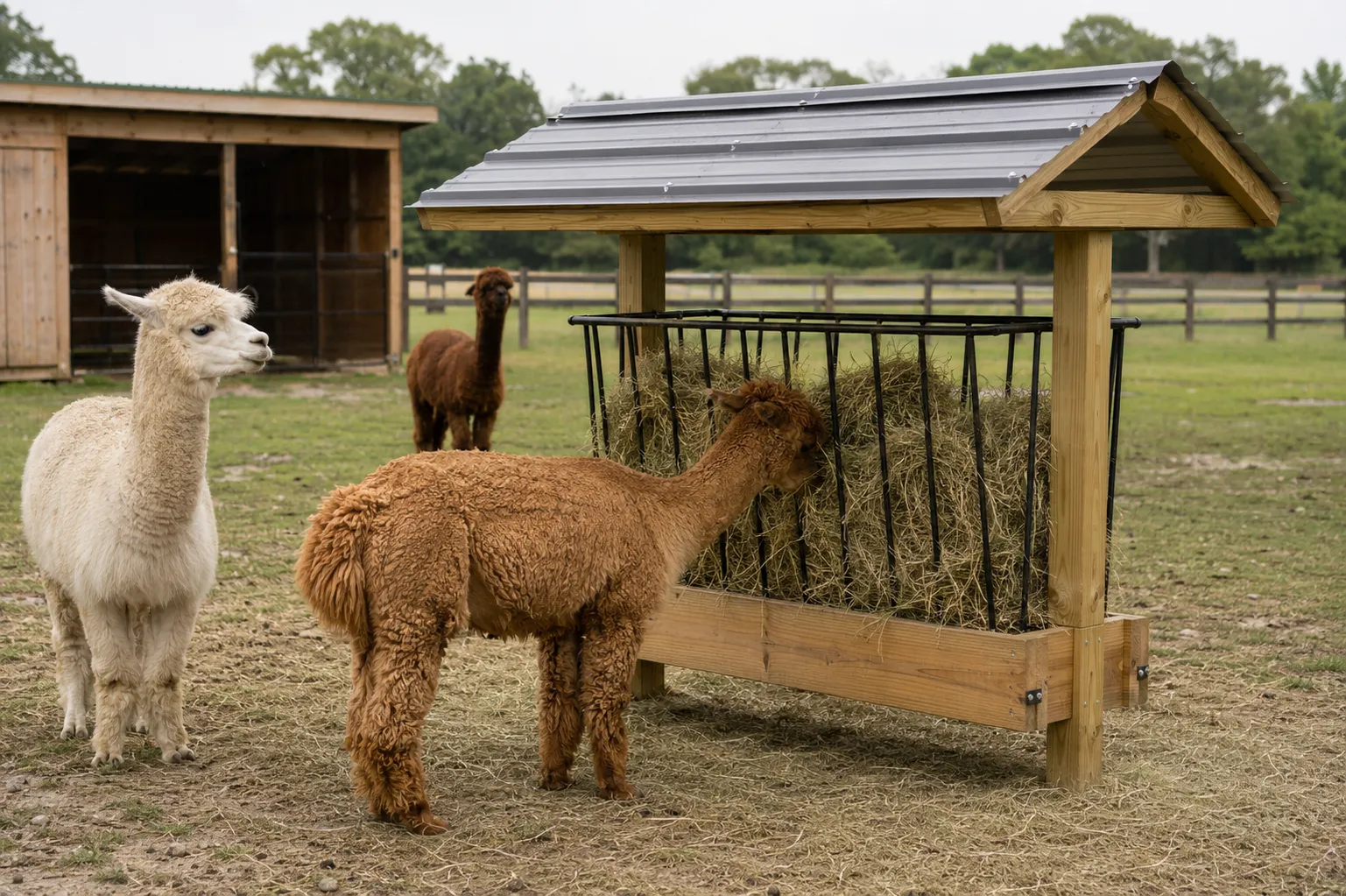
02 · Hay
Good grass hay is the everyday backup
Quality grass hay is the foundation of many alpaca diets, especially during dry seasons, winter, or whenever pasture cannot meet the herd's needs. Hay should be clean, dry, free of obvious mold, and stored where it stays protected from moisture.
Not every bale is equal. Protein, sugar, minerals, and fiber can vary by grass type, growing conditions, and harvest timing, which is why larger farms often test their forage rather than relying on appearance alone.
- Pasture or grass hay as the main forage
- Fresh water available at all times
- Minerals or supplements only for the herd's actual needs
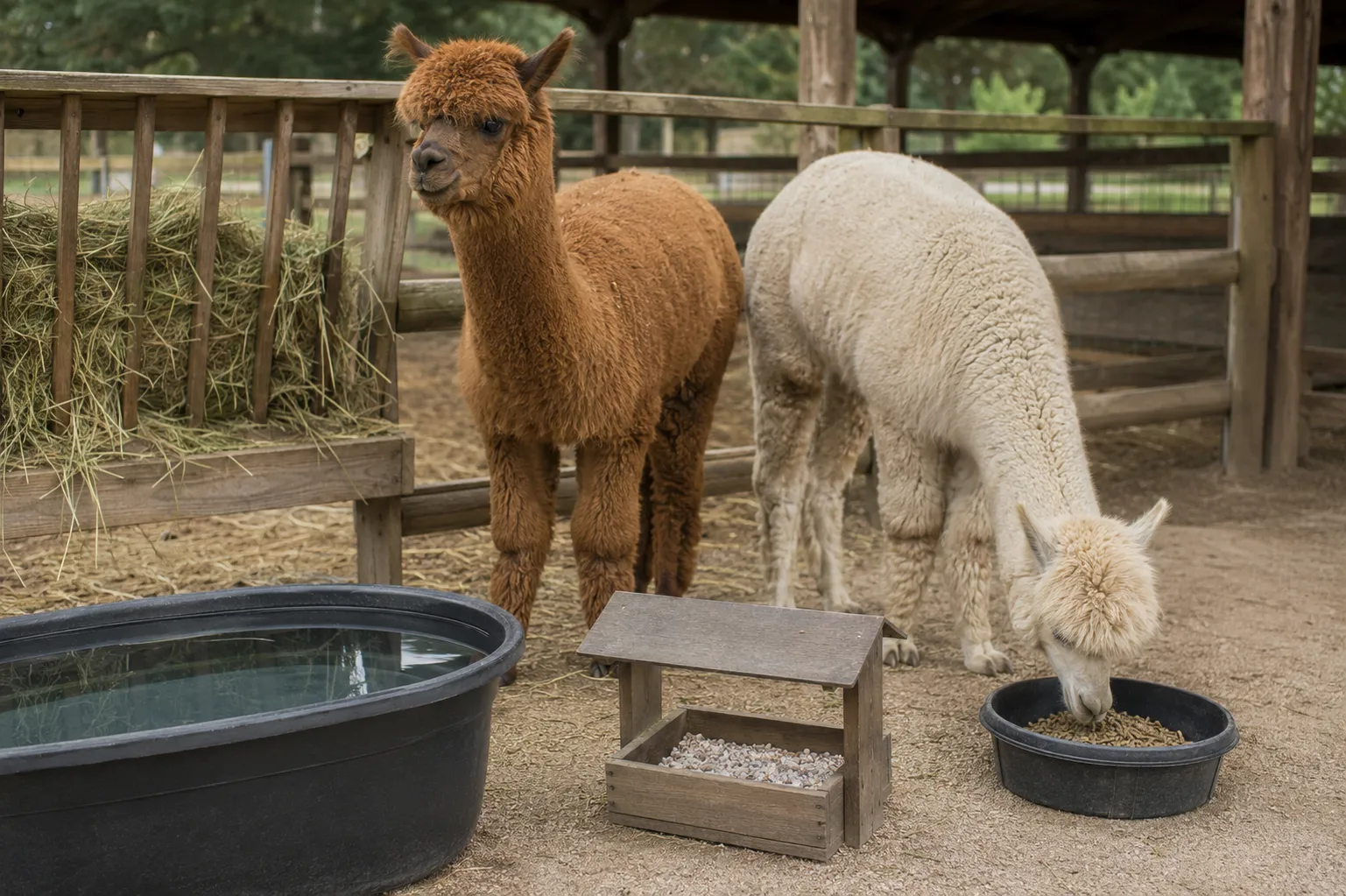
03 · Water & minerals
Fresh water is never optional
Alpacas need access to clean, fresh water every day. A clean trough, regular checks, and dependable shade or winter protection make it easier for the herd to drink normally through changing weather.
Minerals and supplements should be chosen carefully. Local forage and water can vary, and camelids have different needs from horses, cattle, and goats. A veterinarian or camelid-savvy nutrition professional can help identify what a specific herd actually needs.
Watching everyday behavior is part of feeding well. Changes in appetite, drinking, chewing cud, or where an alpaca stands in the group can be useful reasons to take a closer look.
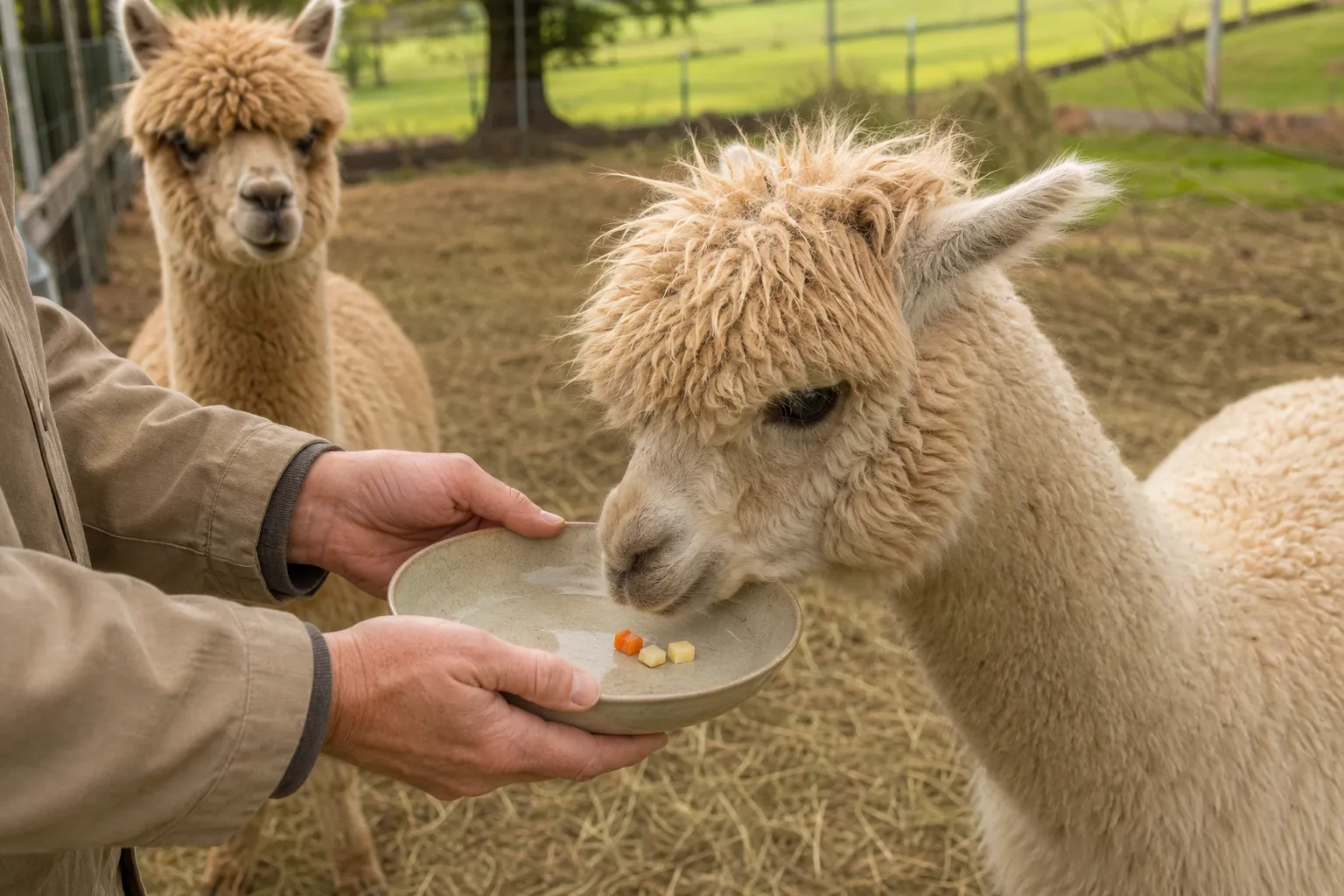
04 · Treats & snacks
A little can go a long way
Alpacas may enjoy a small, appropriate treat during training or routine handling. The important word is small: snacks are not a major part of the diet and should not turn into a daily source of concentrated calories or sugar.
Using a treat sparingly can make calm handling easier, especially when an alpaca is learning a familiar routine. It should never be used to crowd an animal, encourage pushing, or replace patient herd-aware handling.
Nutrition also shifts with life stage. Pregnant females, growing crias, and animals selected for breeding may need individual attention from a qualified professional rather than a one-size-fits-all feeding plan.
05 · Digestion & safety
Forage is good; every plant is not
Alpacas are modified ruminants that regurgitate and chew cud, so steady forage supports the way their digestive system works. Sudden feed changes, questionable hay, and rich extras deserve more caution than a simple forage-based routine.
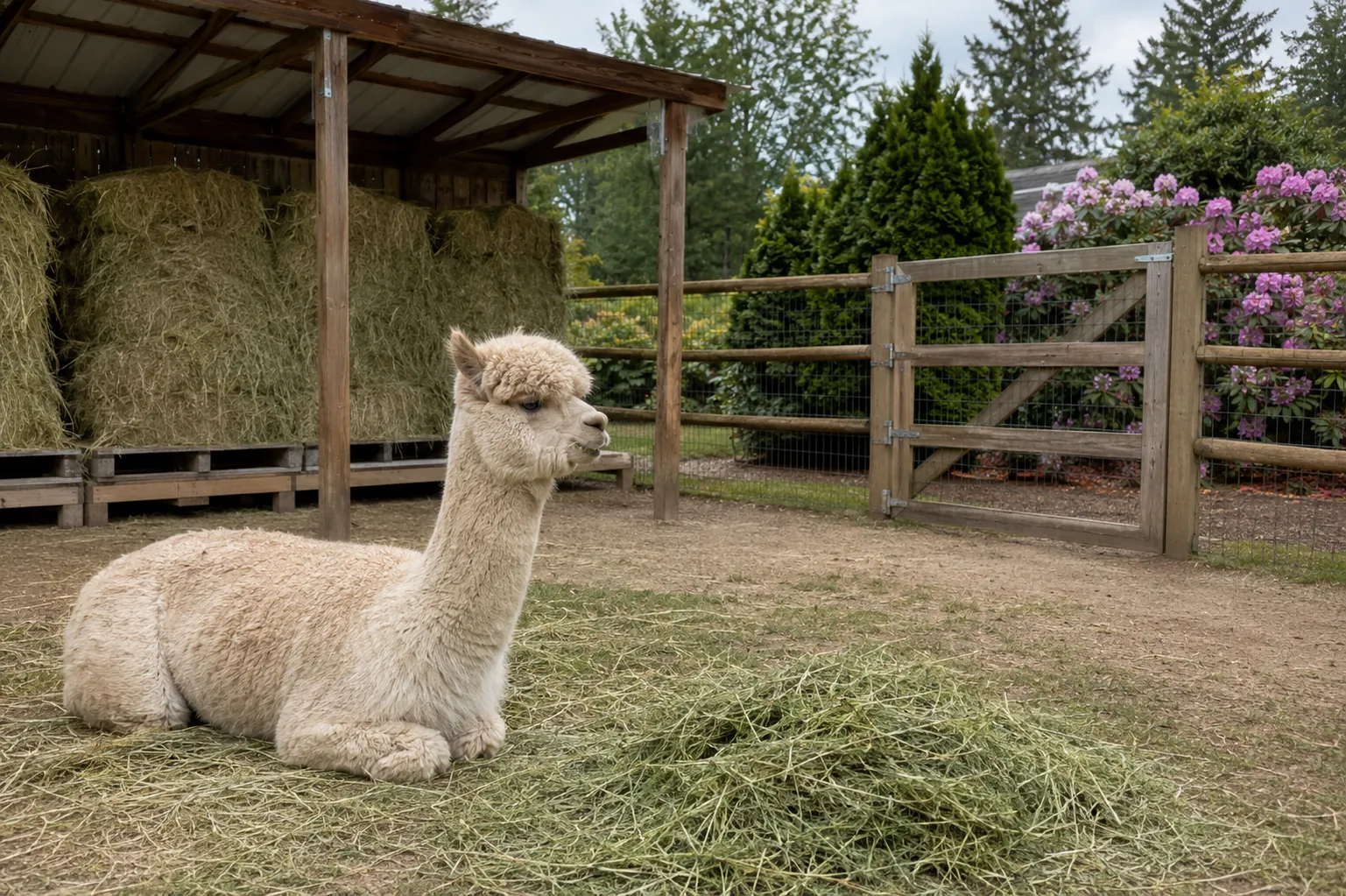
Some ornamental plants and trees can be dangerous to camelids. Yew, rhododendron, azalea, wilted cherry leaves, and other regional hazards should be fenced off or removed, not left for an alpaca to test.
When in doubt, keep the plant or feed out of reach and ask a local veterinarian or agricultural extension office. You can also find a farm to see how experienced alpaca keepers organize forage, water, and safe pasture space.