From first days to later years
The alpaca life cycle
Every alpaca moves through the same broad stages: birth, early dependence on its mother, growth within the herd, adult life, and the senior years. Learning how those stages fit together makes it easier to understand alpacas at every age.
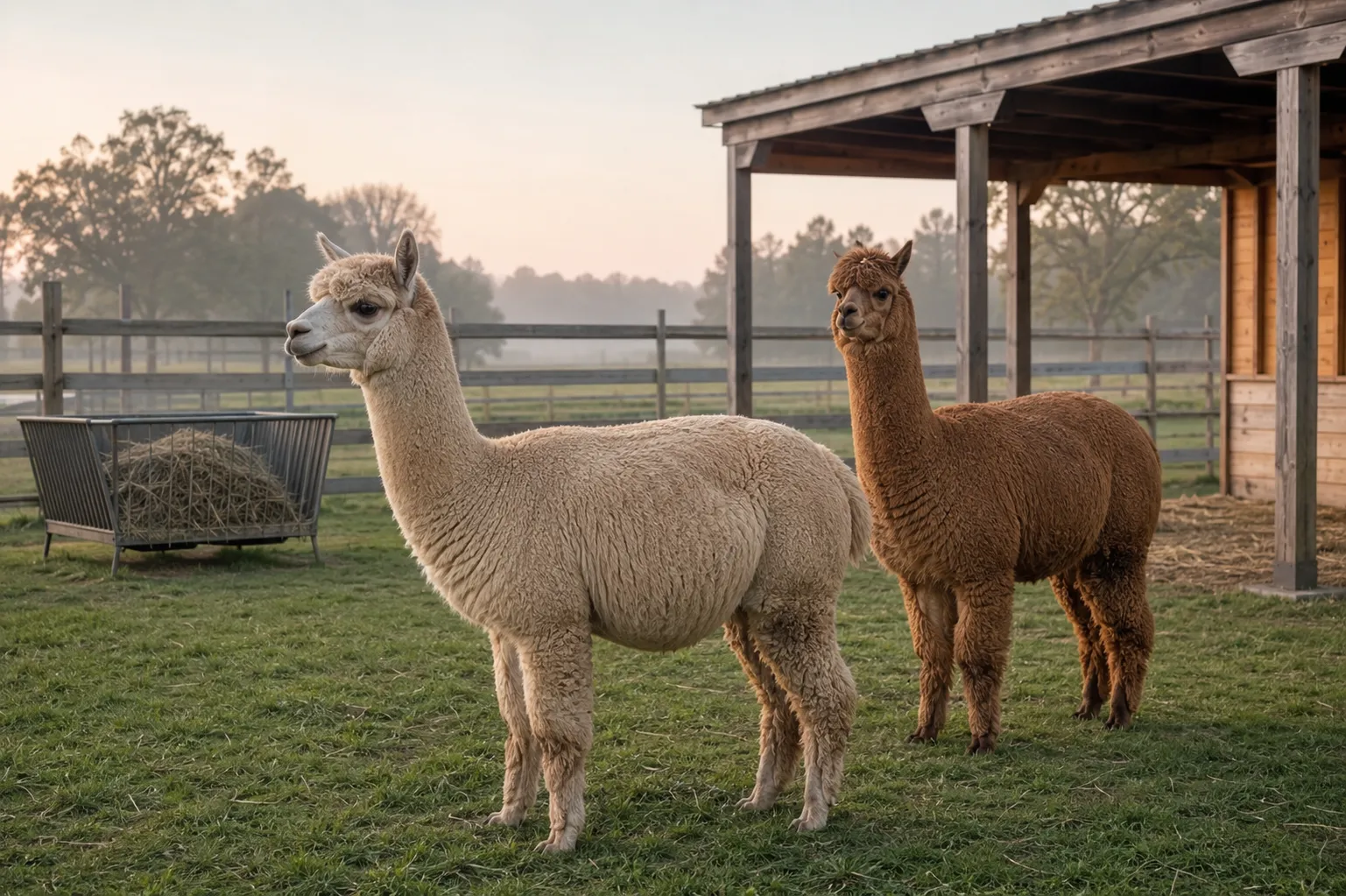
01 · Birth
Before birth and the first day
An alpaca’s life begins long before a cria appears in the pasture. Pregnancy usually lasts close to a year, and a healthy birth is normally a quiet event that happens during daylight hours. The mother, called a dam, usually gives birth standing up.
The first hours matter because a newborn needs to stand, nurse, and begin taking in colostrum. The detailed guide to alpaca birth explains gestation, what farmers watch for, and how a cria joins the herd.
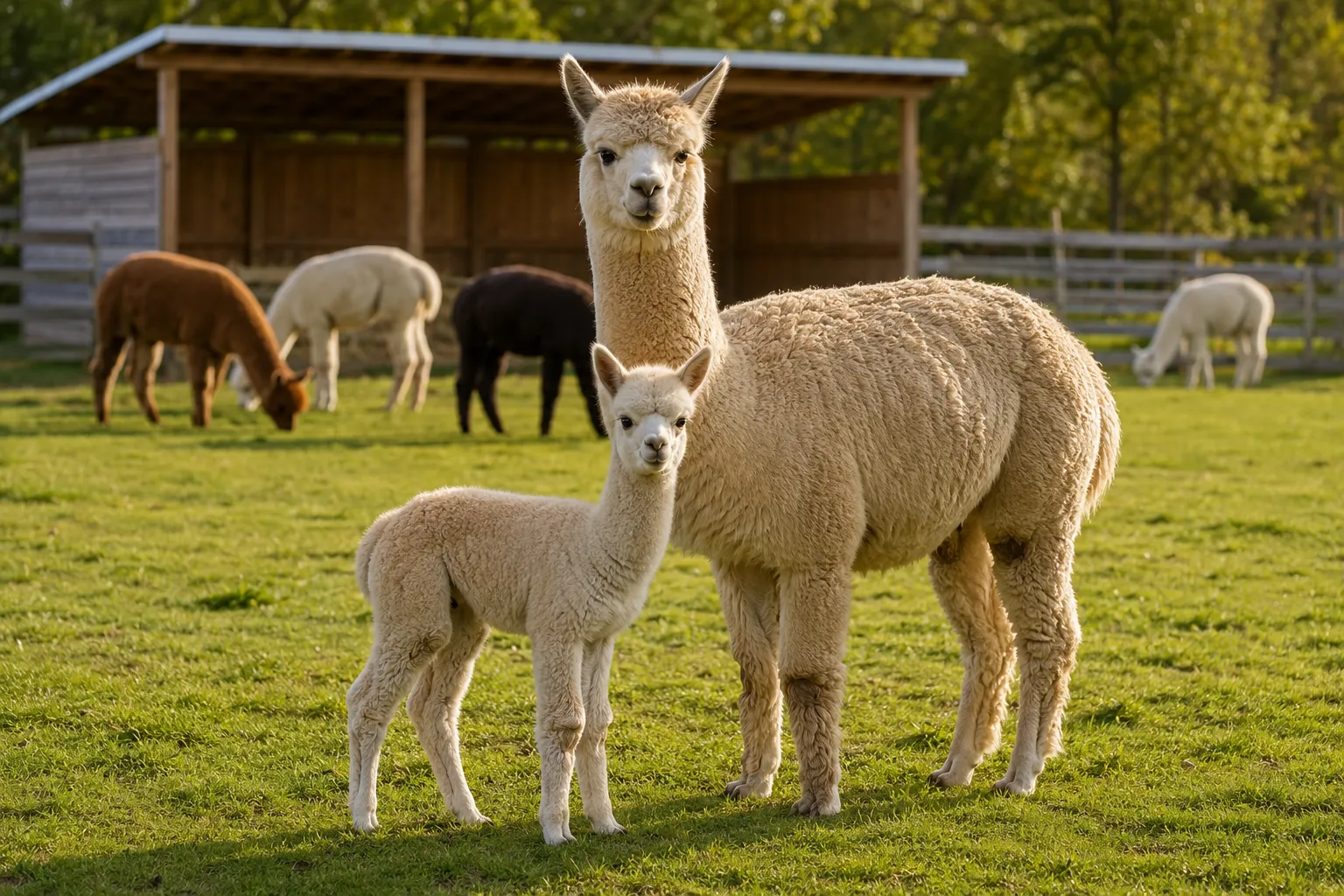
02 · Cria
Criahood and weaning
A baby alpaca is called a cria. In its first months, the cria nurses from its mother while also starting to investigate hay, grass, water, and the social routines of the herd. Frequent observation helps a caretaker notice whether it is nursing, gaining weight, and behaving normally.
Weaning is a gradual change from dependence on milk to a forage-based diet and life with age-appropriate companions. Visit criahood and weaning for a closer look at this fast-moving stage.
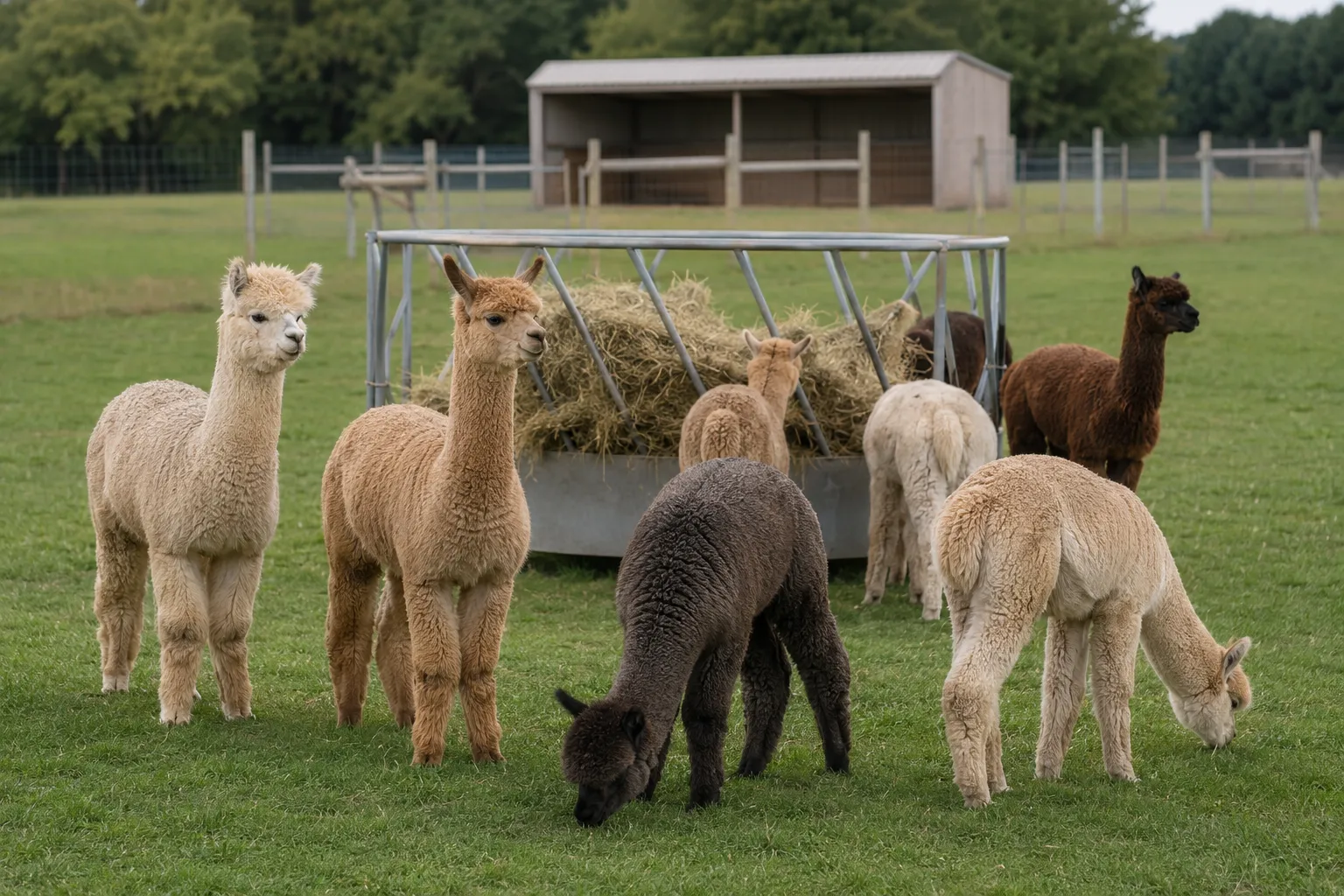
03 · Growing
Growing up in the herd
After weaning, young alpacas continue building size, strength, and confidence. They learn where to eat, rest, and use the communal dung pile, and they begin to settle into the social order of the group. Good nutrition, routine health care, and room to move all support steady development.
This stage also brings changes in fleece, body condition, and behavior. Read more about maturing alpacas, including the transition from young animal to mature herd member.
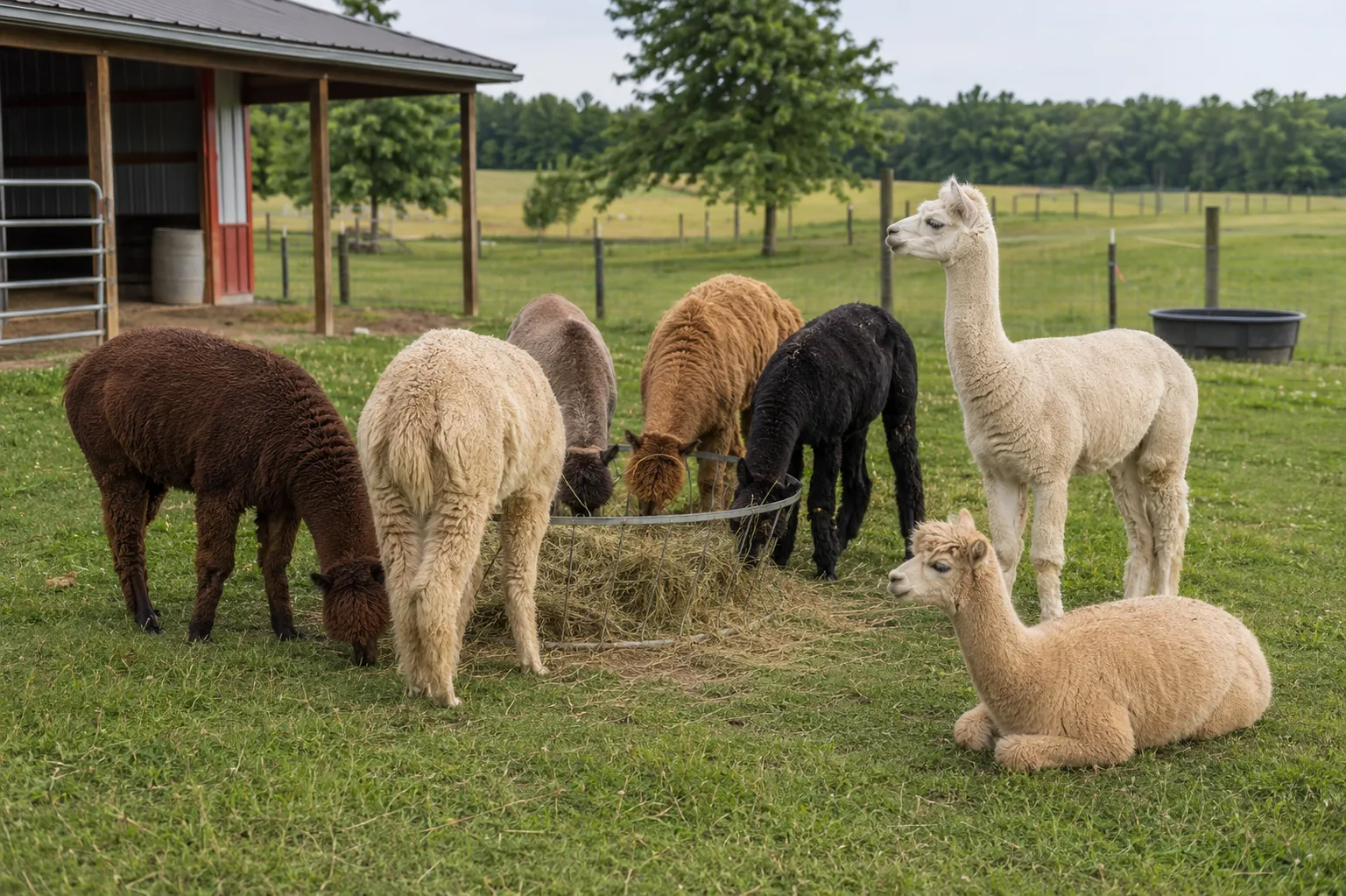
04 · Adult
Adult alpaca life
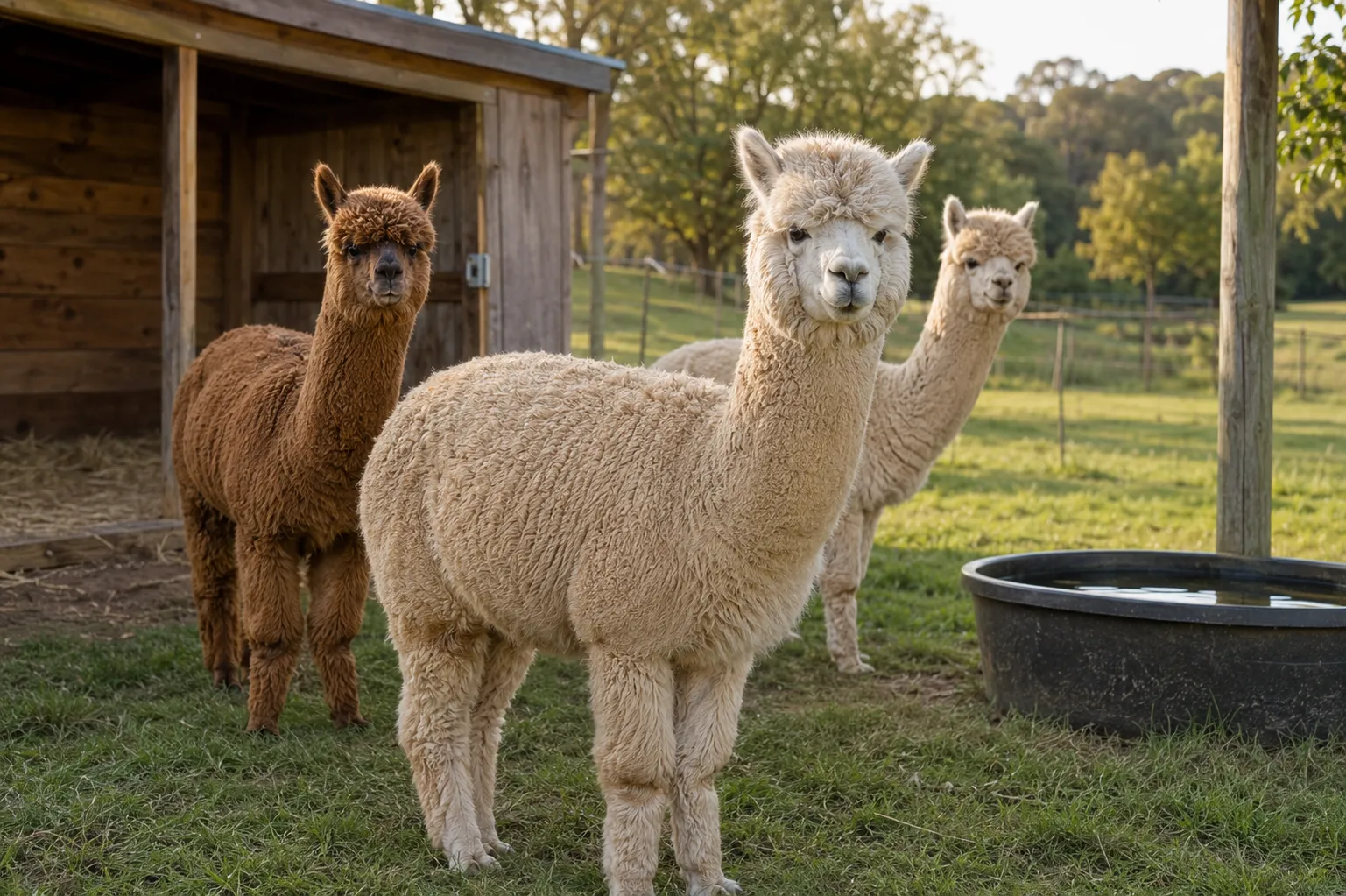
Adult alpacas spend most of their time grazing, eating hay, resting, and staying close to their herd. Their care is built around dependable basics: appropriate forage, clean water, shelter, routine shearing, hoof care, and veterinary attention when needed.
Some adults are part of a breeding program, while others are kept for fiber, companionship, education, or farm visits. An alpaca farm may look different from place to place, but calm handling and social companionship remain important throughout adult life.
05 · Lifespan
Senior years and lifespan
Many alpacas live into their teens and beyond, and individual lifespan depends on genetics, health, nutrition, dental condition, and long-term management. Older animals may need closer monitoring for weight changes, mobility, teeth, and signs that their daily routine is becoming harder.
The final stage is about preserving comfort and making thoughtful decisions with a qualified veterinarian. Our guide to senior alpacas and lifespan covers aging care and respectful end-of-life planning.