The early months
Alpaca crias: growing, learning, and weaning
A baby alpaca is called a cria. Like all alpacas, a cria learns through daily herd life: staying close to its mother, exploring forage, and gradually becoming more independent.
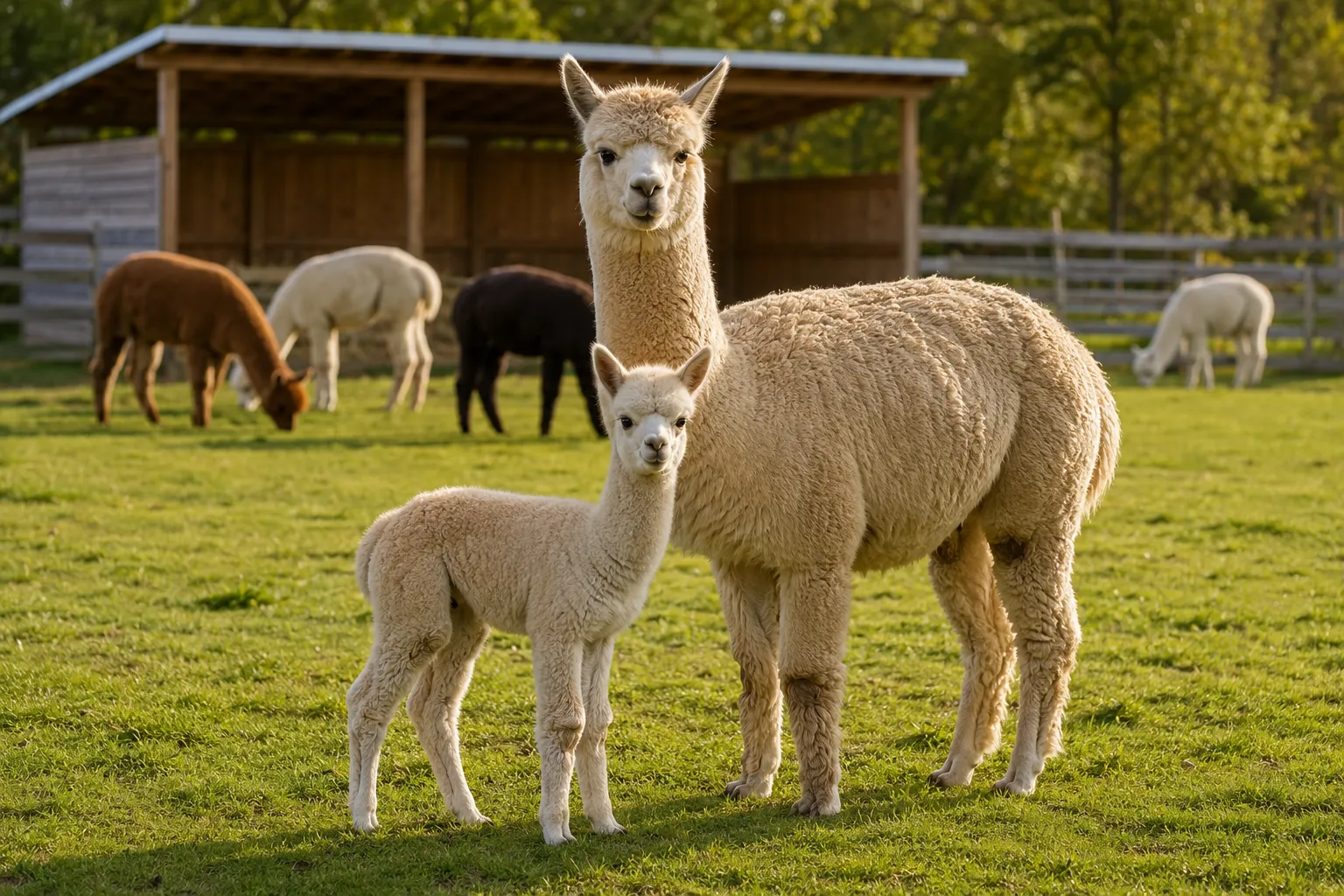
A quick overview
Criahood at a glance
- First weeks
- Stay close to the dam and nurse regularly
- Early learning
- Explore forage and daily herd routines
- Weaning
- Shift toward independent eating and herd life
01 · First weeks
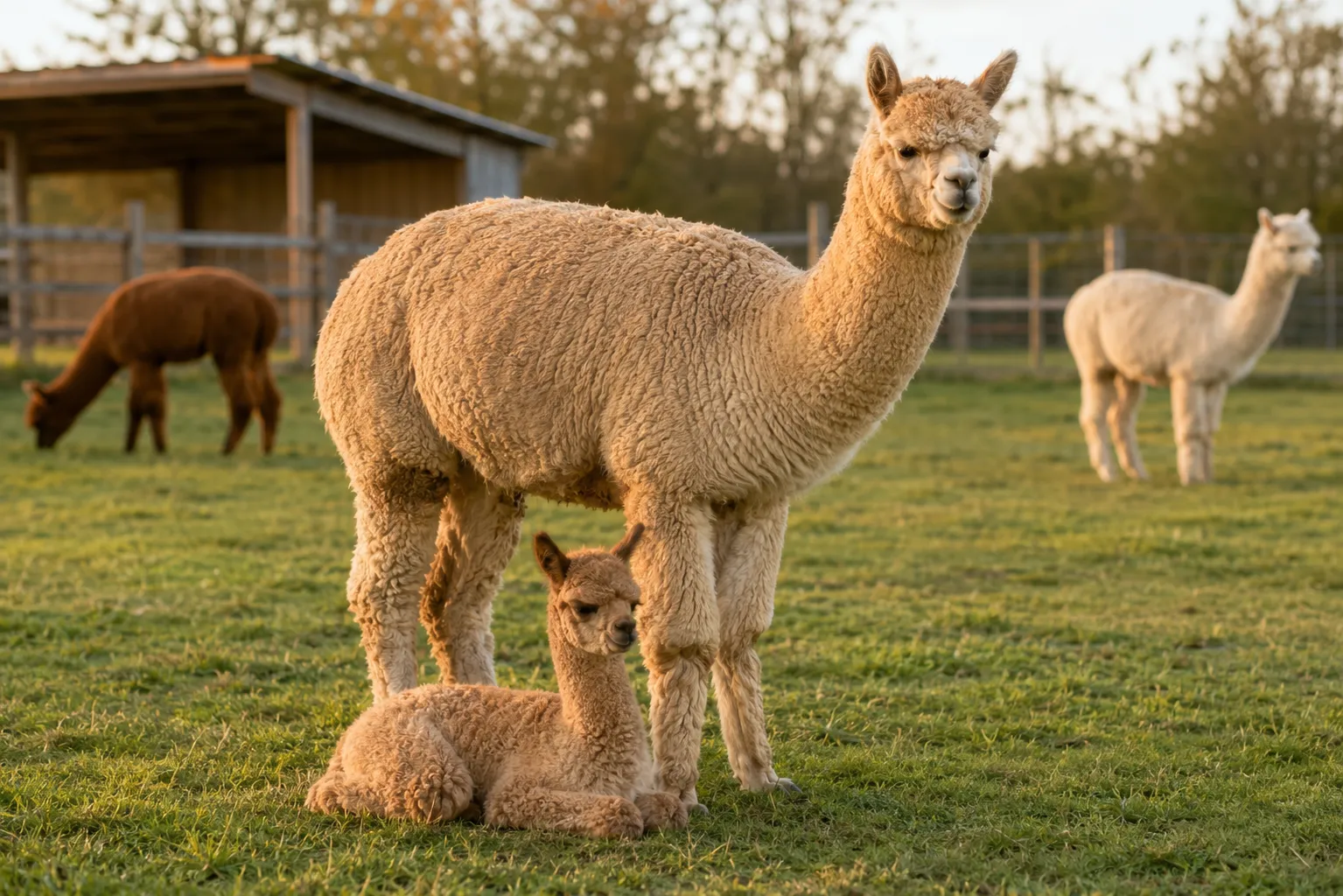
Close to the dam
A healthy cria spends its earliest days nursing, resting, and following its mother. That close relationship gives the cria food, warmth, and a model for the basic routines of the herd.
Caregivers watch for normal nursing, steady growth, and a bright, alert demeanor. The goal is not to over-handle a healthy cria, but to notice promptly when something seems different from its usual behavior.
A growing routine
Five parts of criahood
- 01NursingThe dam remains the main food source.
- 02ExploringGrass and hay become familiar.
- 03LearningThe cria follows herd routines.
- 04GrowingWeight and body condition are observed.
- 05WeaningIndependence develops over time.
02 · Food and growth
Learning to eat and grow
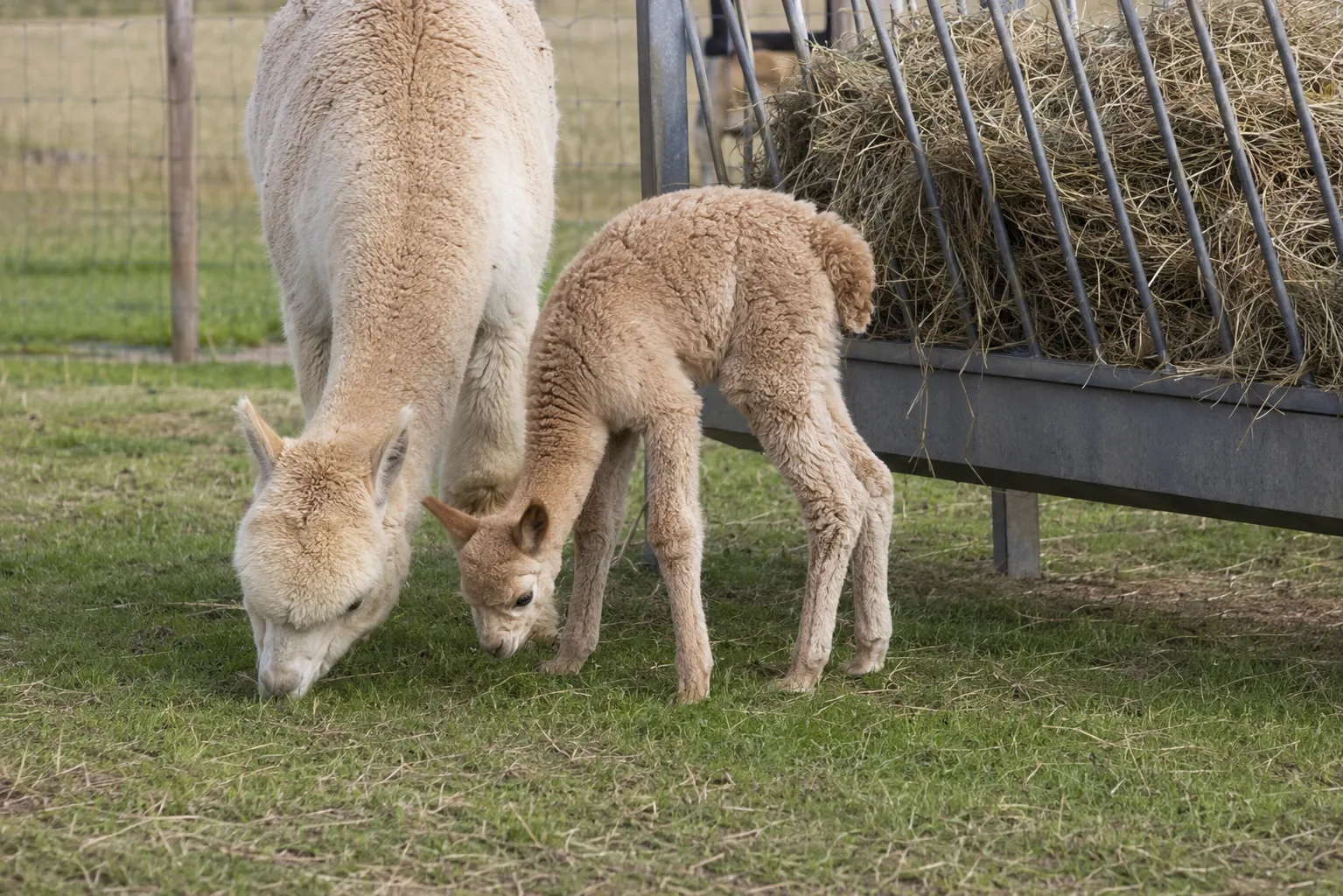
Before weaning, a cria begins showing interest in grass, hay, and water while still nursing from its mother. This gradual exploration helps it become comfortable with the forage-based diet it will rely on as it matures.
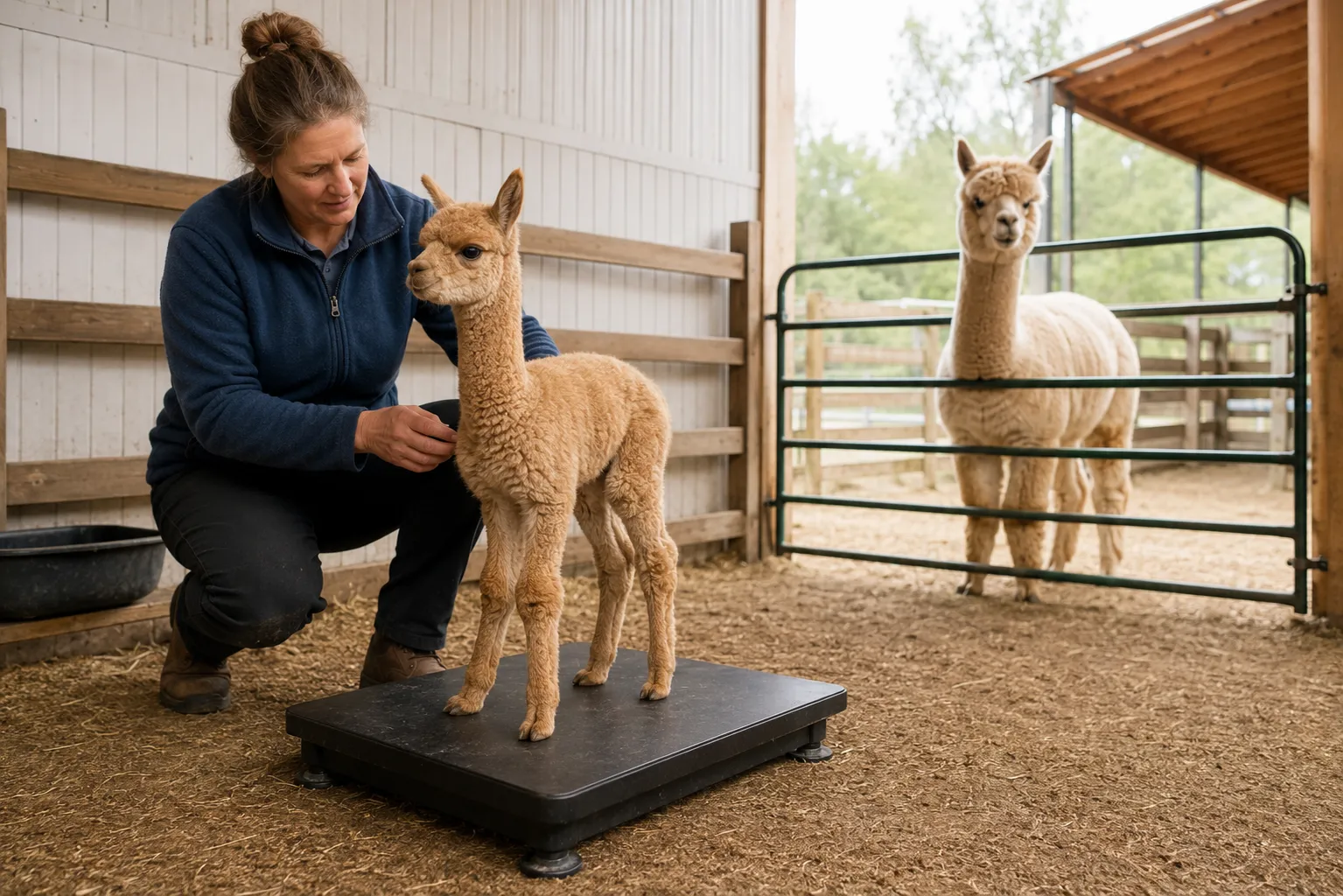
Routine weighing and observation help farmers keep track of healthy development. Forage, water, and clean feeding areas matter at every age; see more about what alpacas eat.
03 · Social learning
Finding a place in the herd
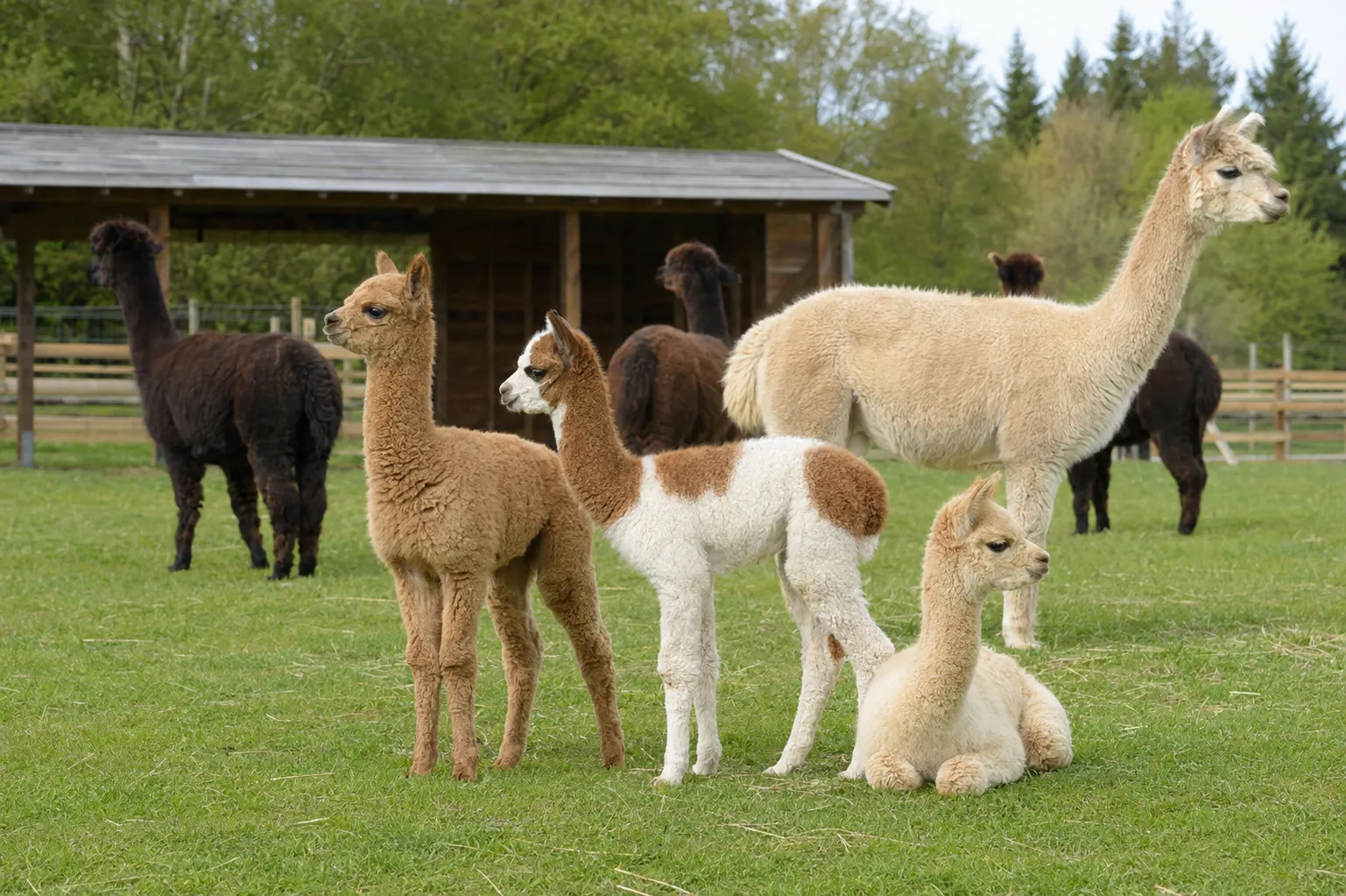
Young alpacas learn by staying near older animals and other crias. They begin to understand where the herd eats and rests, how the group moves through gates or into shelter, and how much personal space other alpacas prefer.
That early social experience is why a cria should not be raised in isolation. The herd offers steady companionship and helps a young animal grow into a calm, responsive adult.
04 · The transition
Weaning is a readiness milestone
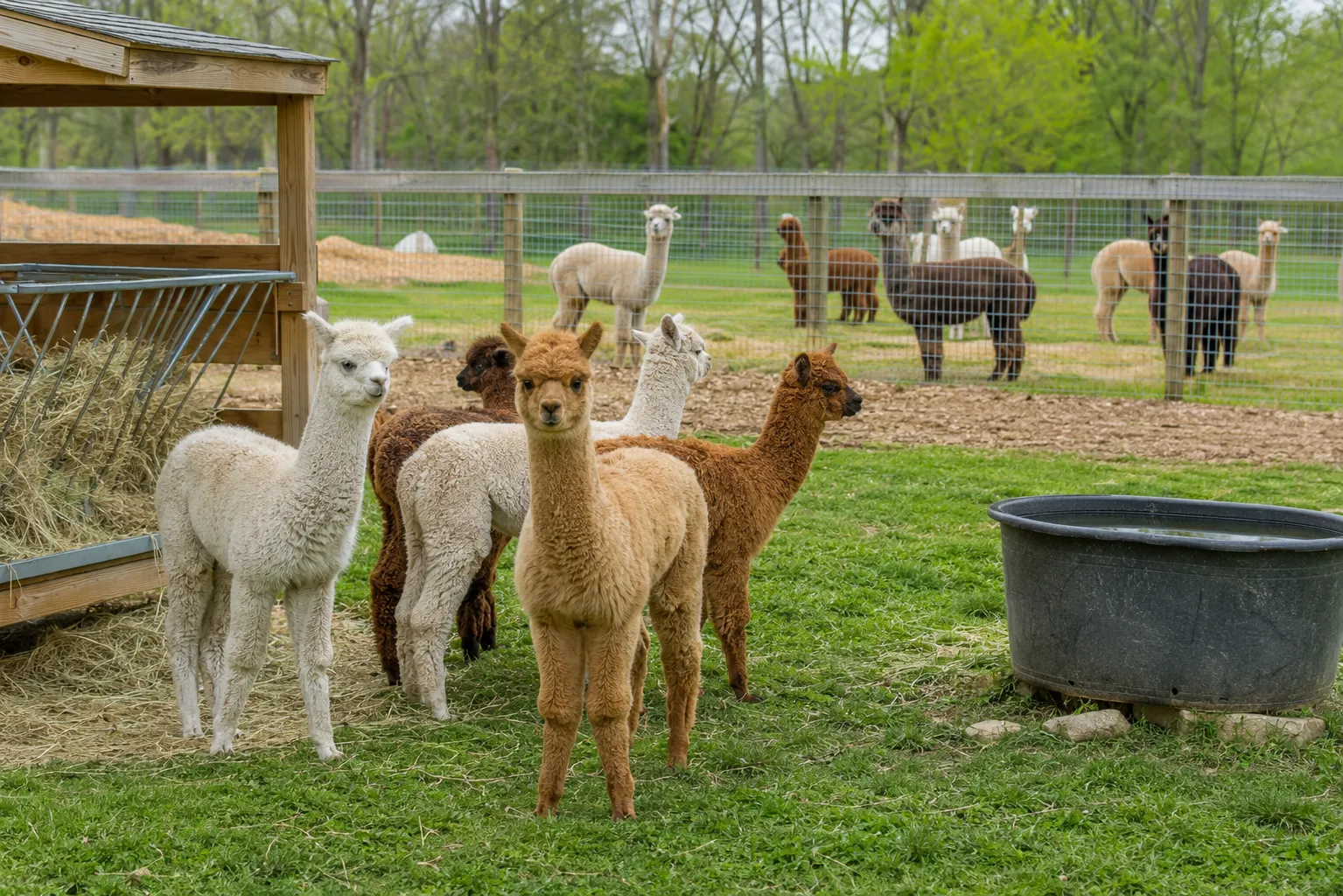
Weaning is the move from dependence on the dam’s milk to a more independent routine with forage and age-appropriate companions. Timing depends on the cria’s growth, feeding habits, and the management approach of the farm.
- Eating hay or grass comfortably
- Drinking water independently
- Growing steadily and maintaining condition
- Settling calmly with other young alpacas
05 · Moving forward
After weaning
After weaning, young alpacas continue developing in the company of their herd mates. Their needs shift toward consistent forage, social stability, regular health observation, and room to move as they gain size and confidence.
The next stage is growing up, when the young animal moves from criahood toward maturity. A well-run alpaca farm makes that transition part of its ordinary daily care.