After weaning
Young alpacas: growing and maturing
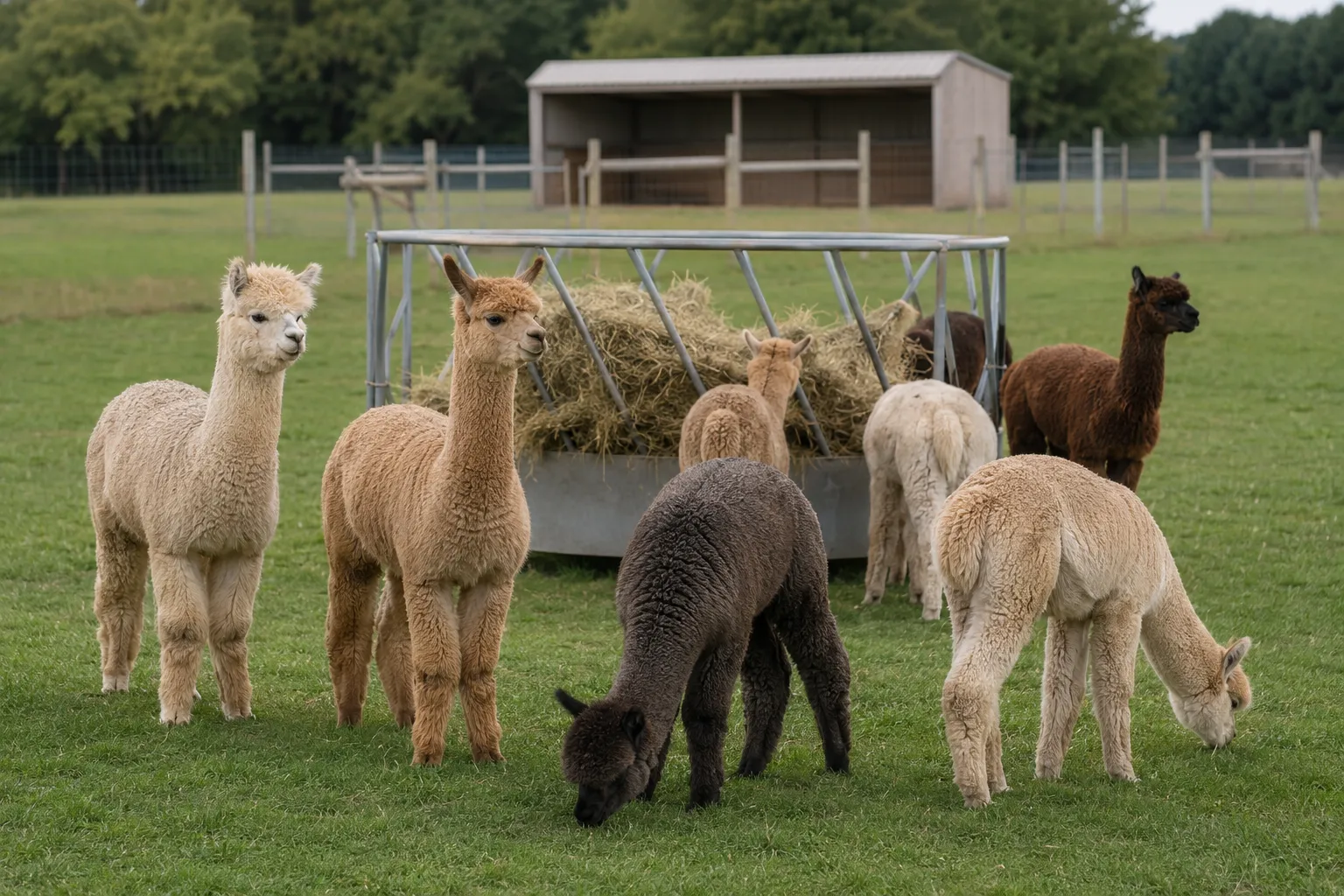
The growing years bridge criahood and adult life. Young alpacas gain size, settle into herd routines, and build the confidence needed for long-term health and calm handling.
A quick overview
The growing stage
- Body
- Steady size and condition changes
- Fleece
- Young fiber develops with each shearing cycle
- Confidence
- Farm routines become familiar
01 · After weaning
Growing with the herd
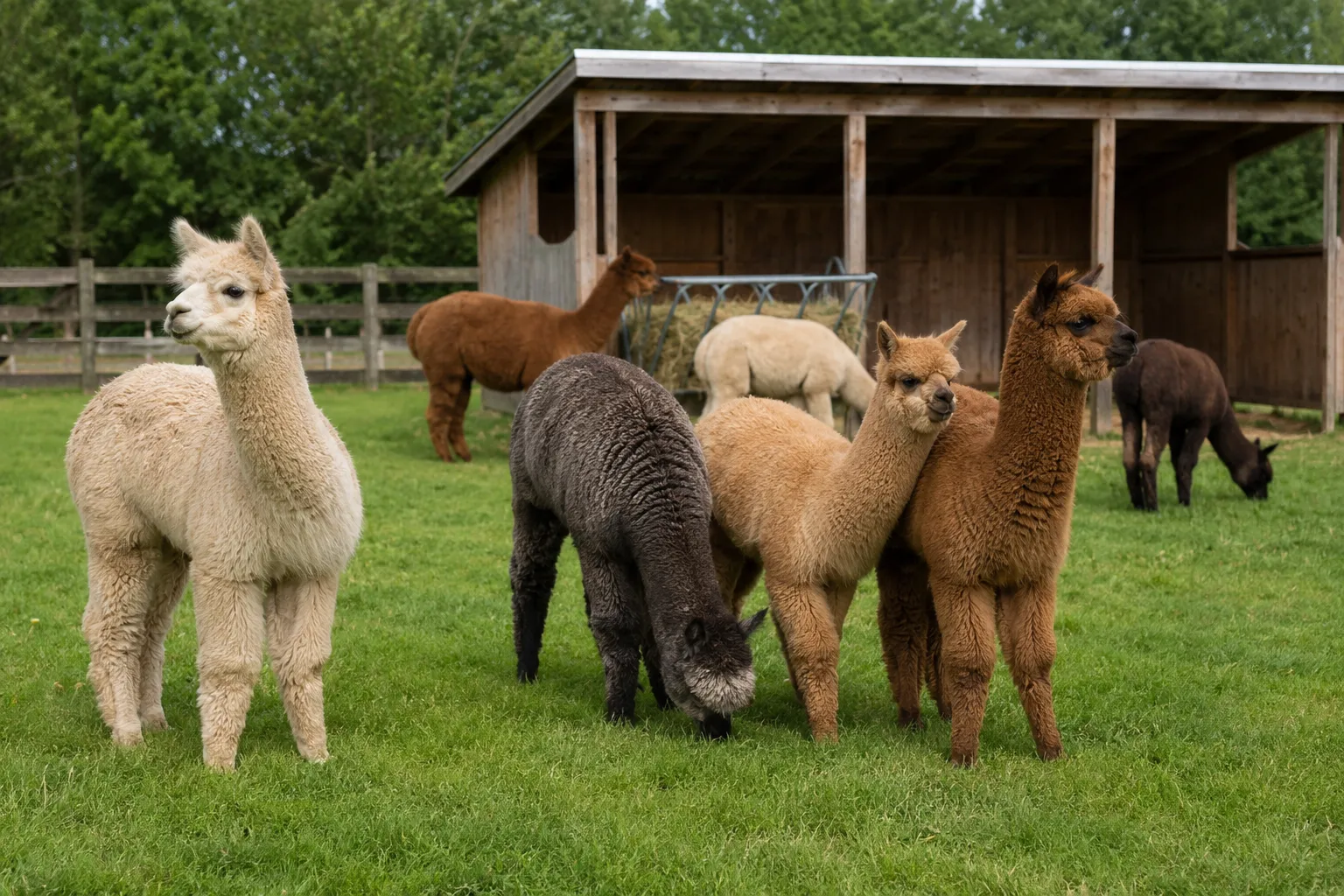
Once a cria is weaned, it continues learning through herd life. Young alpacas watch older animals, stay close to familiar companions, and become more comfortable with everyday activity around the pasture and shelter.
Social stability matters at this age. A young animal gains confidence by eating, resting, and moving with other alpacas rather than being kept alone.
The transition
From young cria to adult herd member
- 01Independent forageHay, grass, and water become routine.
- 02Herd confidenceDaily social patterns settle in.
- 03Physical growthBody and fleece continue changing.
- 04Routine careHandling and health checks stay familiar.
- 05MaturityAdult responsibilities come later.
02 · Body and care
Fleece, body condition, and routine handling
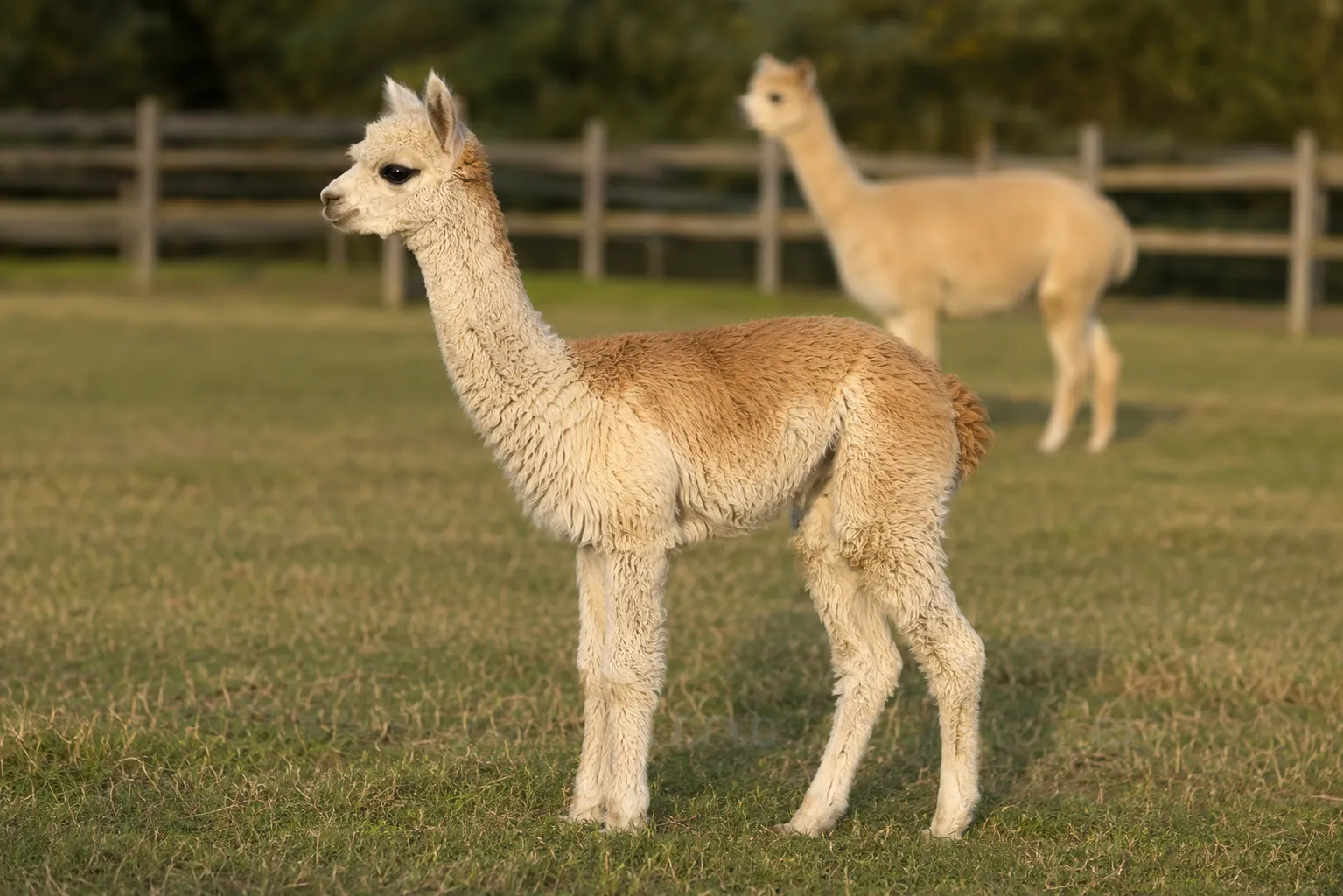
Young alpacas are still changing physically, even after they no longer look like small crias. Their fleece develops, their frame fills out, and regular observation helps a caretaker understand what is normal for each individual.
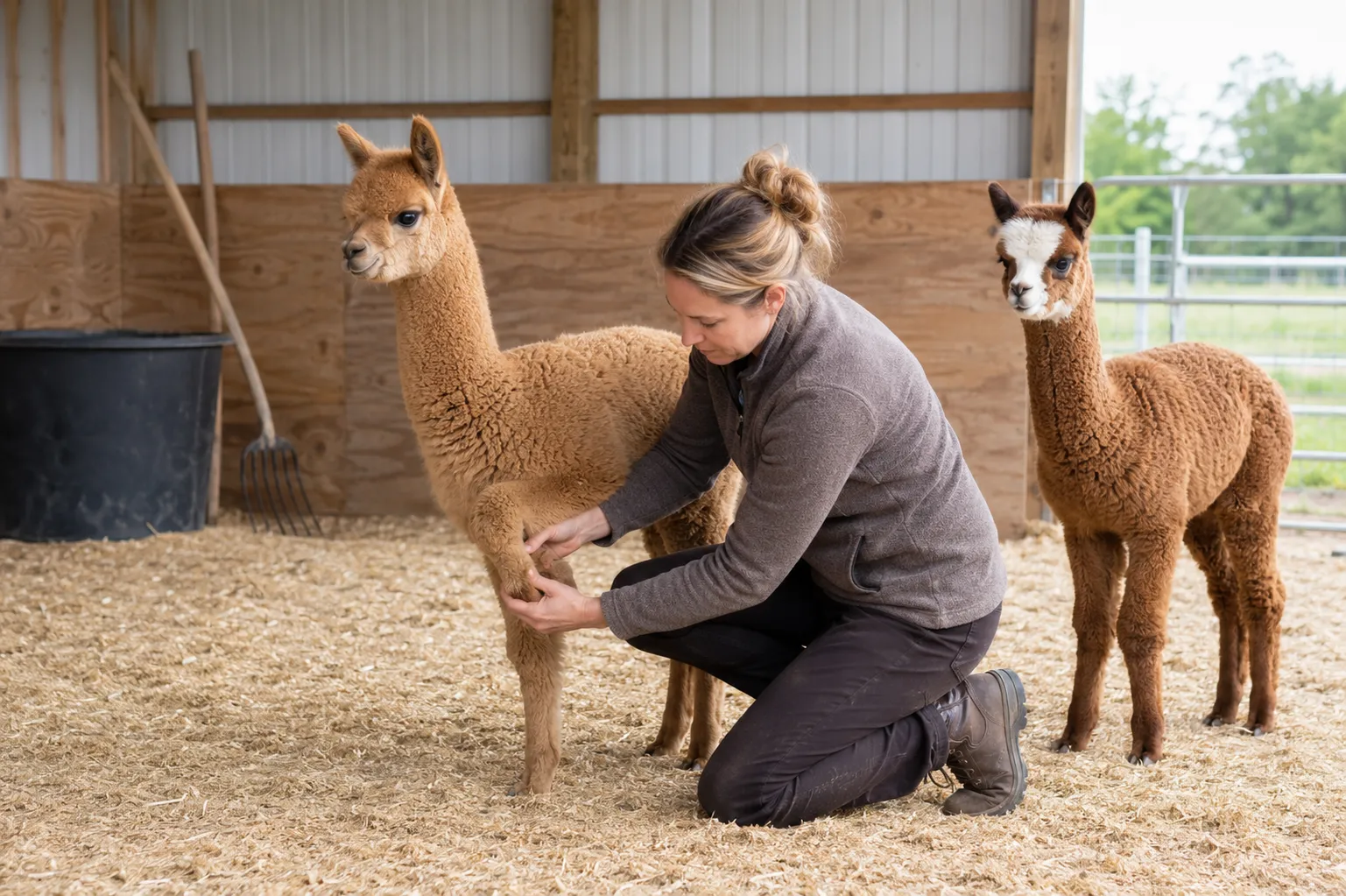
Routine hoof checks, shearing, and calm handling make later care easier. Consistency is more useful than making every interaction a major event.
03 · Daily life
Learning farm routines
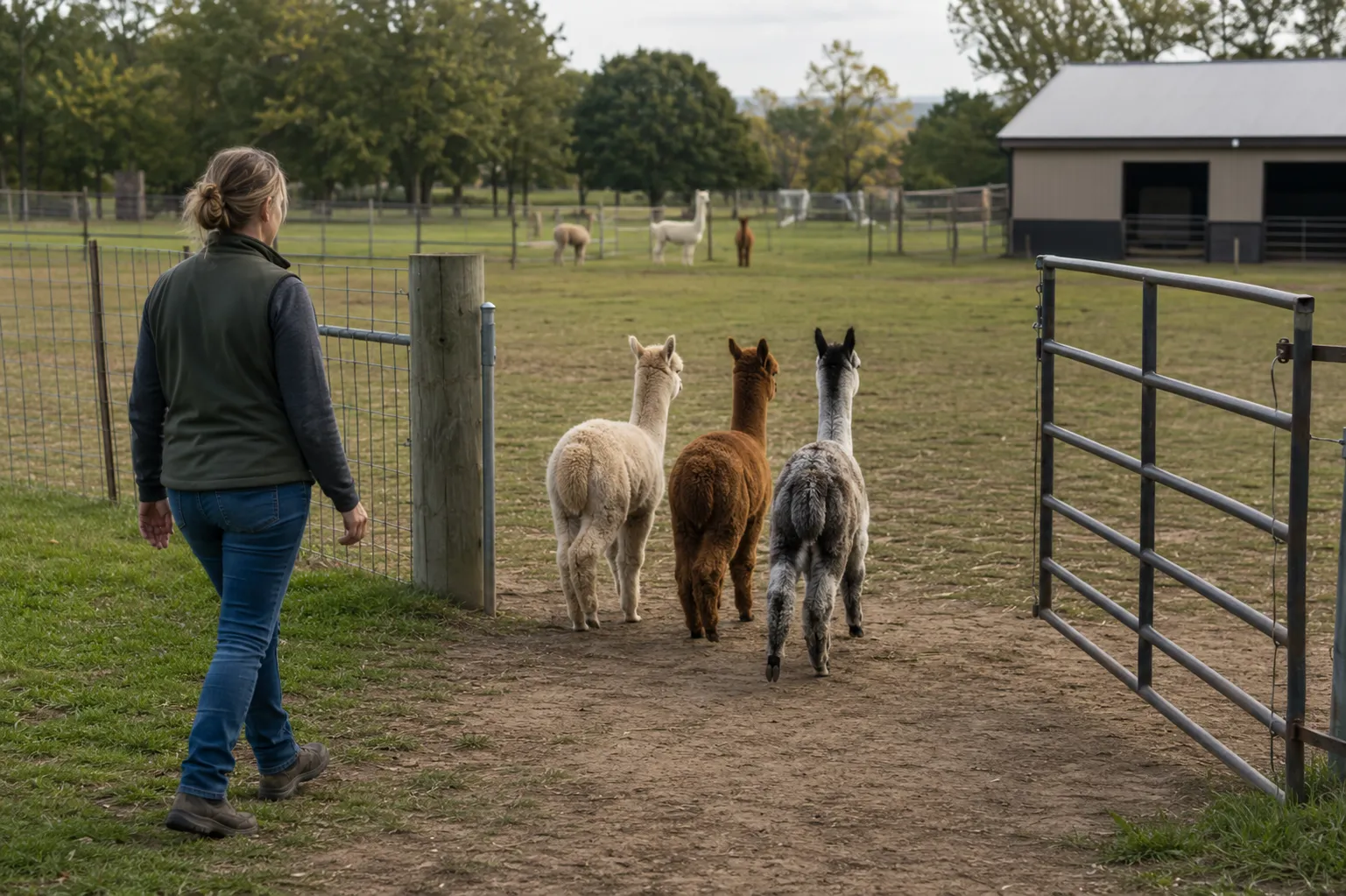
Moving through gates, coming in for care, and staying calm near people are learned gradually. Young alpacas do best with quiet, repeatable routines and enough space to move as a group.
That early confidence supports future veterinary visits, hoof care, shearing, and everyday management at an alpaca farm.
A steady foundation
What supports healthy maturation
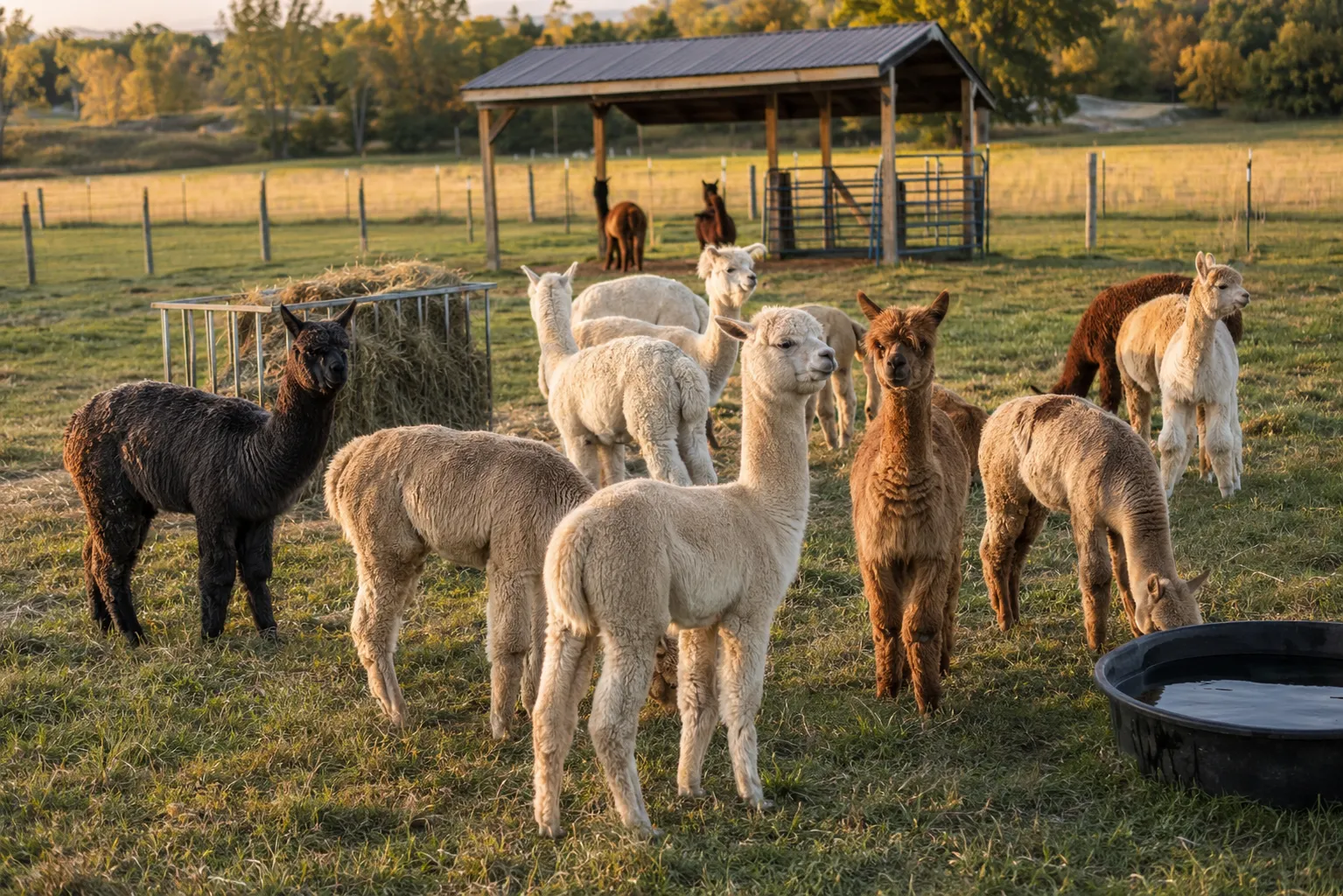
Growing alpacas need ordinary good management carried out consistently, not a complicated program.
- Appropriate forage and fresh water
- Companionship within a stable herd
- Routine body and hoof observation
- Dry shelter and room to move
04 · Looking ahead
Approaching adult life
As young alpacas near maturity, their care becomes more like that of the adult herd. Some may eventually enter breeding programs, while others remain valued for fiber, companionship, education, or farm visits.
Continue to adult alpaca life to see how long-term care, herd relationships, and daily routines carry forward.