The first stage of life
Alpaca birth: pregnancy, delivery, and first days
Alpaca births are often calm and uncomplicated, but they still deserve close observation and thoughtful preparation. From late pregnancy through a cria’s first nursing, the goal is a quiet environment, a healthy mother, and prompt help whenever something does not look right.

A quick overview
Alpaca birth at a glance
- Pregnancy
- About 11–12 months
- Birth
- Usually one cria, often in daylight
- First hours
- Stand, nurse, and stay close to the dam
Pregnancy and the last weeks before birth
Alpaca pregnancy lasts for about a year, and most births result in a single cria. As delivery approaches, the most useful approach is usually consistency: familiar companions, reliable forage and water, dry footing, and a caretaker who knows each animal’s normal appearance and routine.
A pregnant female may look fuller through her abdomen, but outward signs alone do not provide a precise due date. A veterinarian who knows camelids can help with pregnancy questions and can advise an alpaca farm on monitoring a dam safely.
The sequence
From late pregnancy to first nursing
- 01Late pregnancyQuiet routine and observation
- 02Prepared spaceDry footing, water, and shelter
- 03DeliveryGive the dam calm, respectful space
- 04First standWatch the cria’s early movement
- 05First nursingConfirm the cria finds the dam
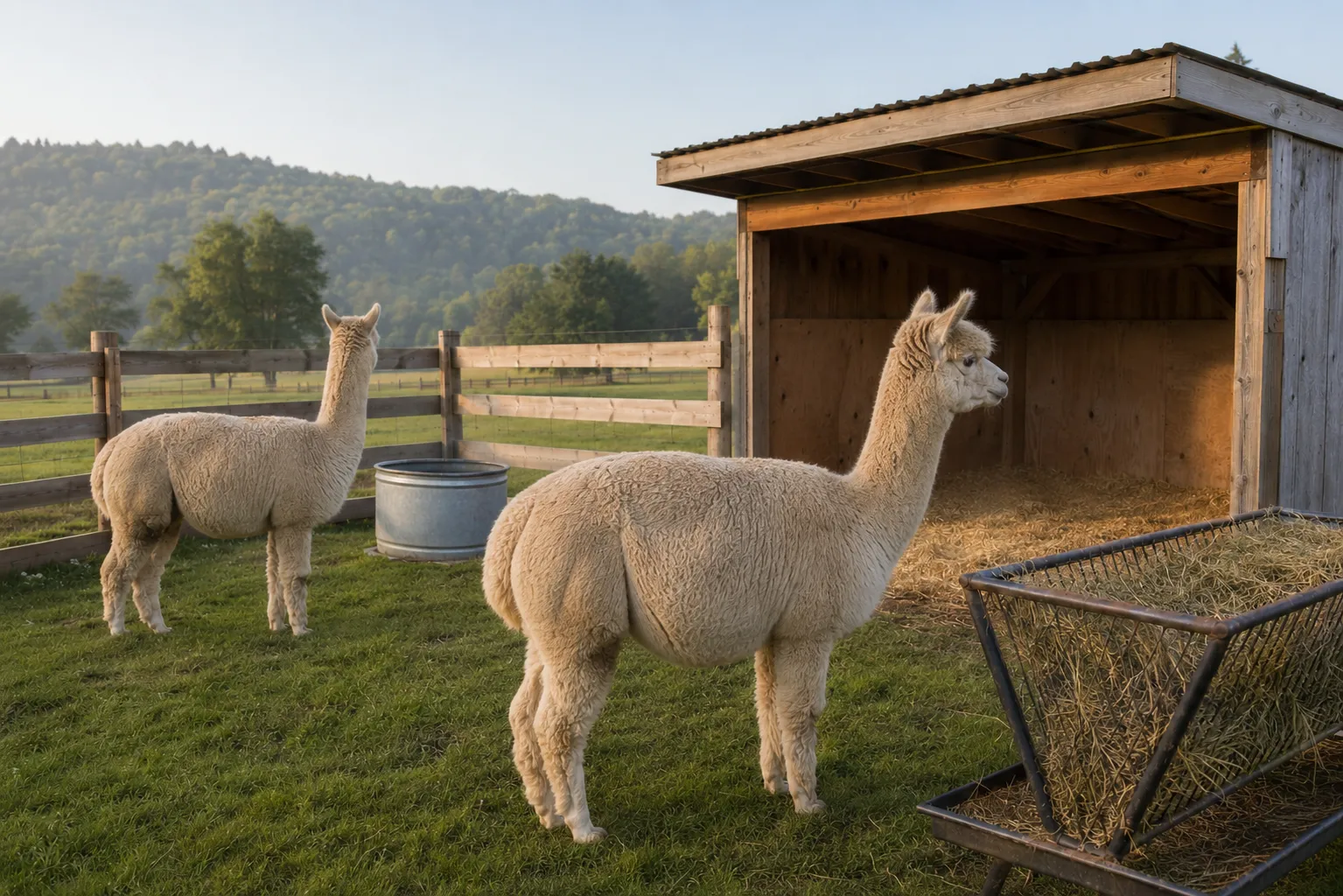
Before delivery
Preparing a safe place for birth
Preparation does not need to be elaborate. A well-maintained pasture or sheltered paddock with clean water, dry ground, secure fencing, and room for the dam to move naturally is often more useful than a busy or unfamiliar setup.
Keep basic contact information and a plan for veterinary help ready before the due period. Birth and newborn care are not situations to improvise around.
During delivery
What a normal birth can look like
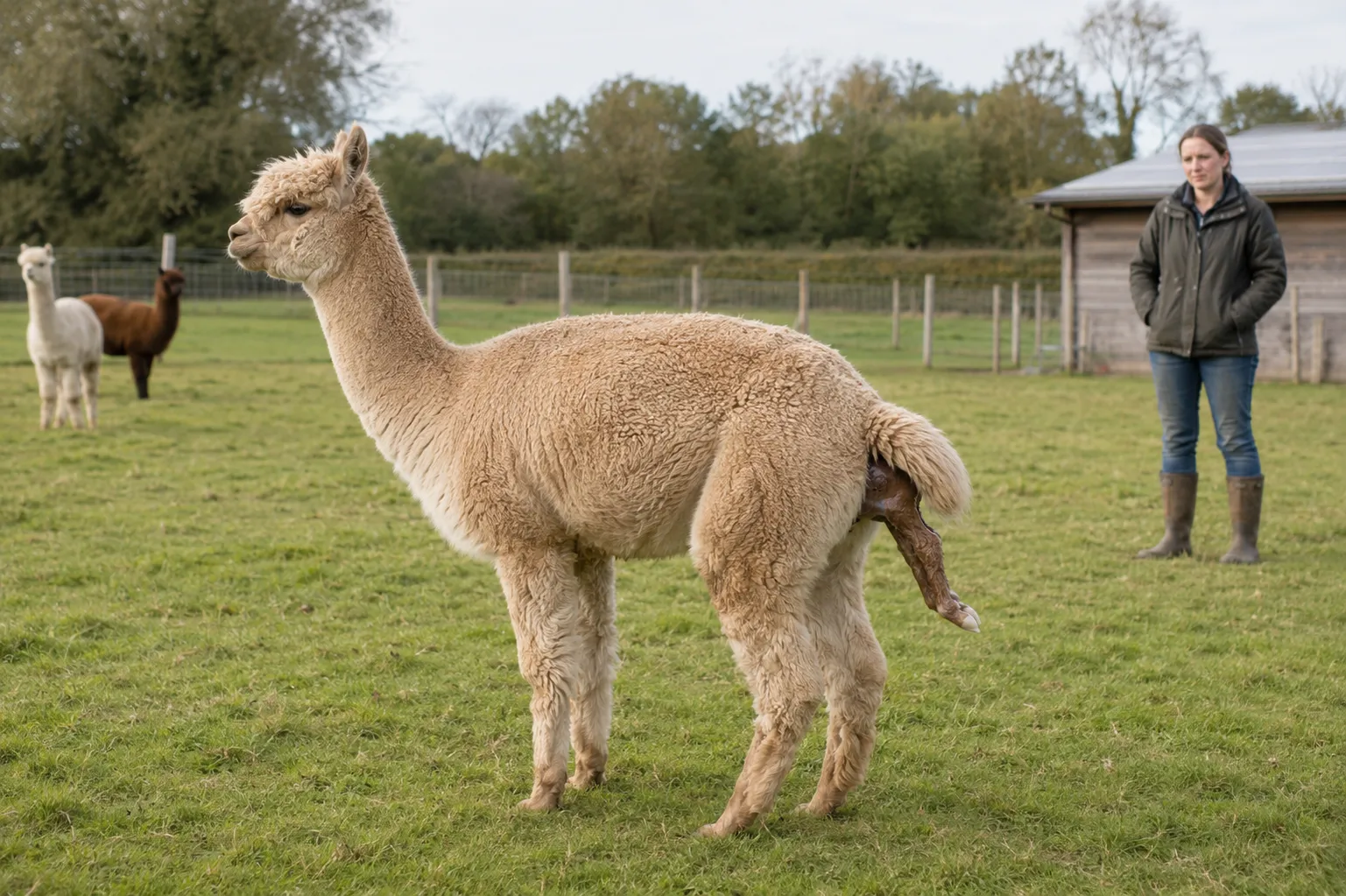
Alpacas commonly give birth during daylight hours, often while standing. The mother may separate herself slightly from the group, then return to a normal herd rhythm after delivery. A calm caretaker watches from a respectful distance rather than interfering with an otherwise normal process.
Every animal and birth is different. If the birth does not seem to progress normally, or if there is any concern about the dam or cria, contact a qualified veterinarian promptly rather than waiting for a problem to resolve on its own.
The first hours
Standing, nursing, and bonding
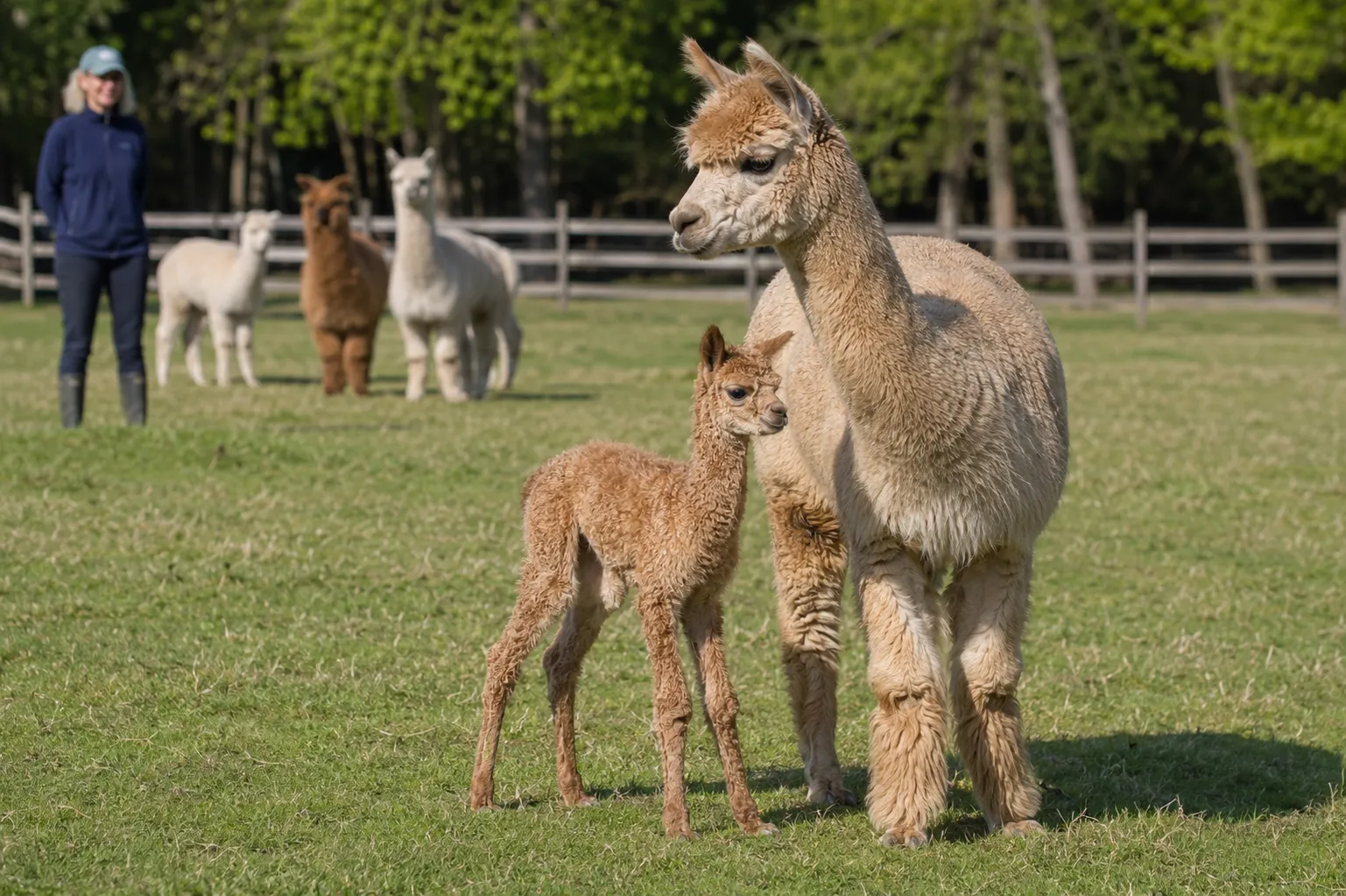
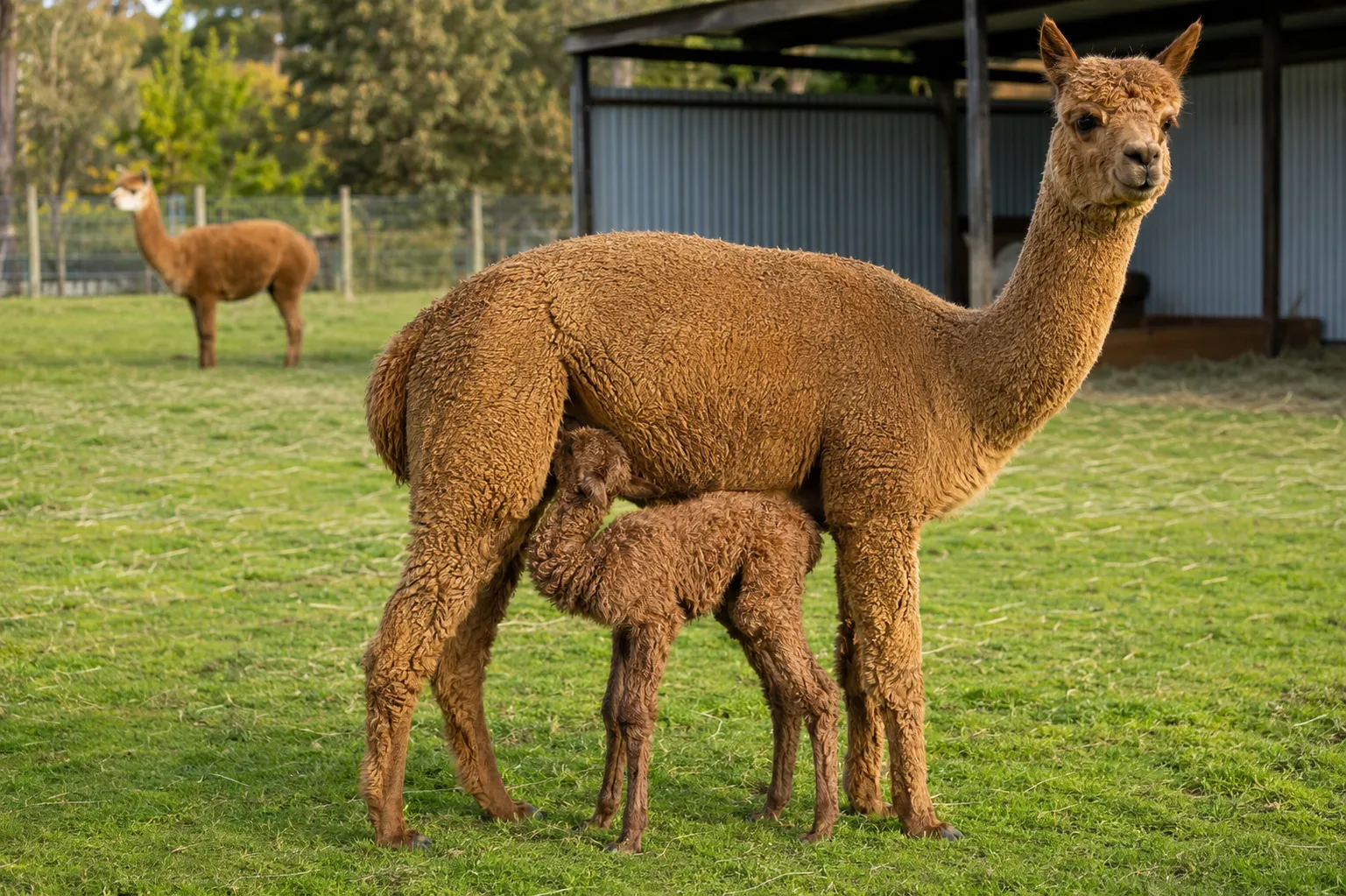
Newborn crias are usually alert quickly. In the first hours, a caretaker watches for normal movement, interest in the mother, and successful nursing. The dam provides colostrum in her first milk, which gives the cria important early immune support.
A cria also begins learning from the animals around it immediately: where the herd gathers, how to rest close to its mother, and what everyday movement looks like. The next stage, criahood and weaning, follows that change from newborn dependence to a more independent young alpaca.
Professional support
When a veterinary check is important
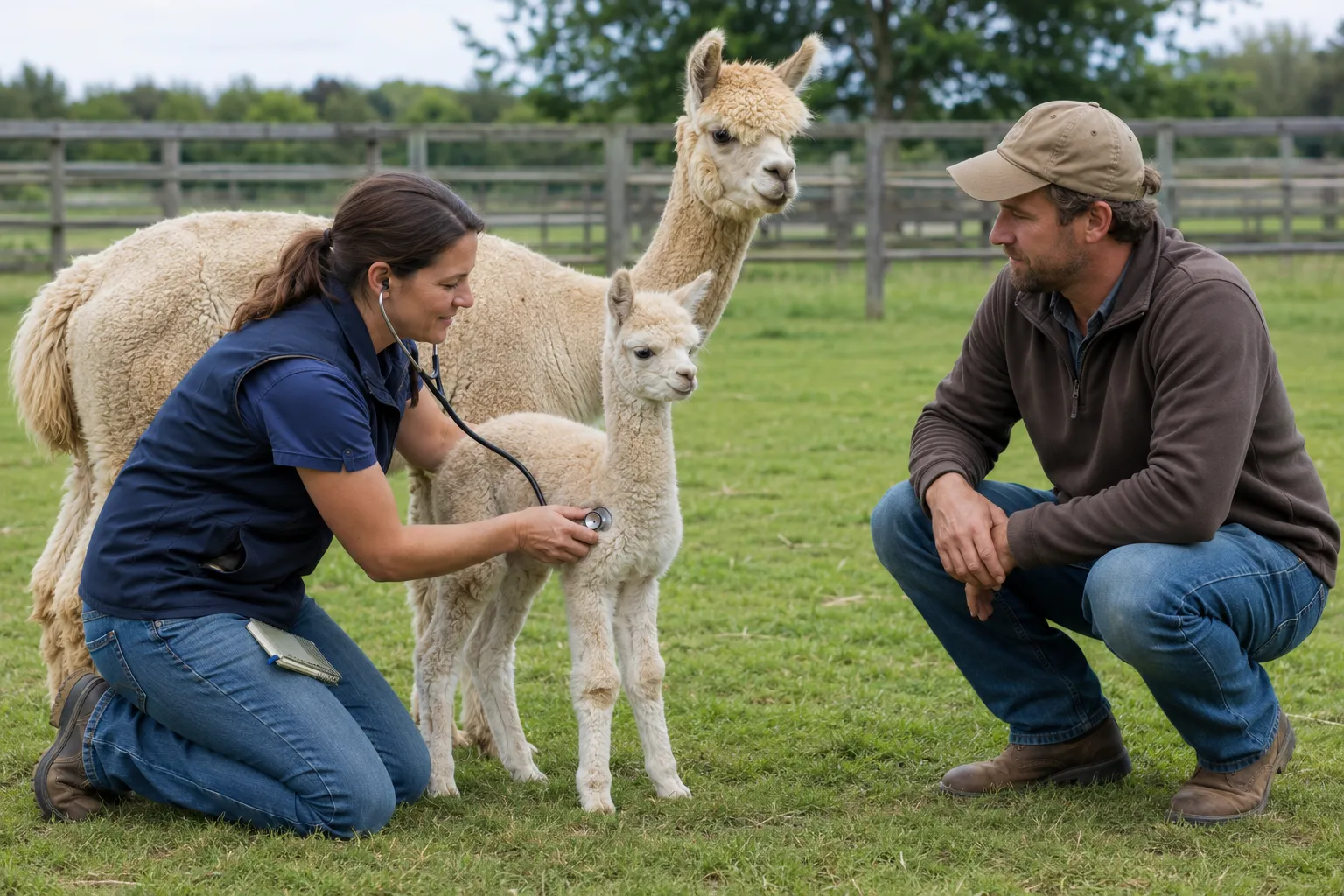
Routine observation is valuable, but it does not replace veterinary care. A veterinarian should be contacted quickly for difficult or delayed delivery, a cria that cannot stand or nurse, unusual weakness, heavy bleeding, retained placenta concerns, or any sign that the mother is distressed.
Starting life with attentive care helps set up the rest of an alpaca’s development. Explore the full alpaca life cycle, or learn more about the daily food and forage needs of alpacas as they grow.