Long-term herd life
Adult alpacas: daily life and long-term care
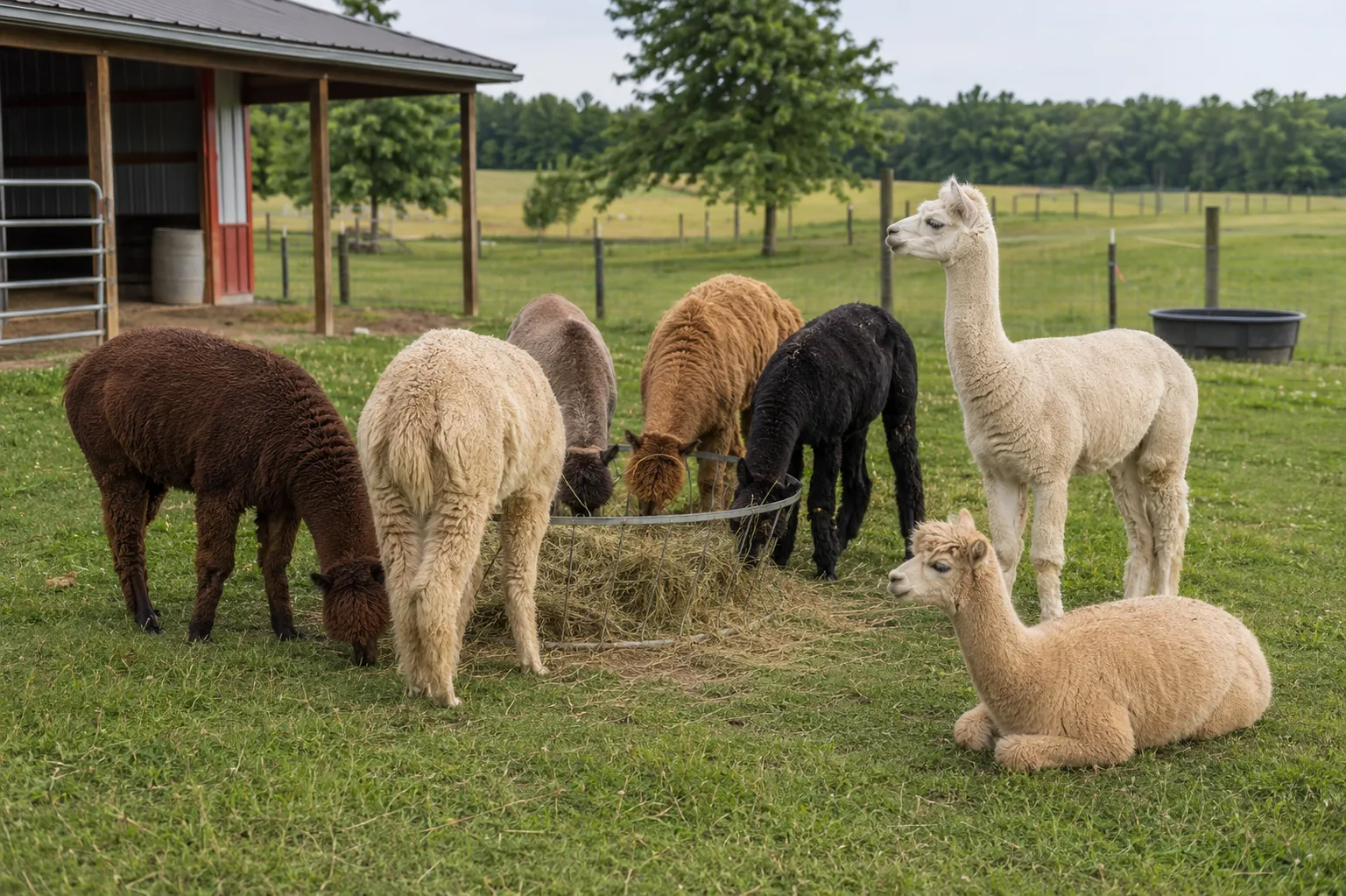
Adult alpacas settle into the familiar rhythms of the herd: grazing, resting, socializing, and receiving the regular care that supports a healthy life on an alpaca farm.
A quick overview
The adult stage
- Herd life
- Companionship remains central
- Care cycle
- Observation and seasonal tasks continue
- Purpose
- Every animal can have a different role
01 · Everyday life
A settled place in the herd
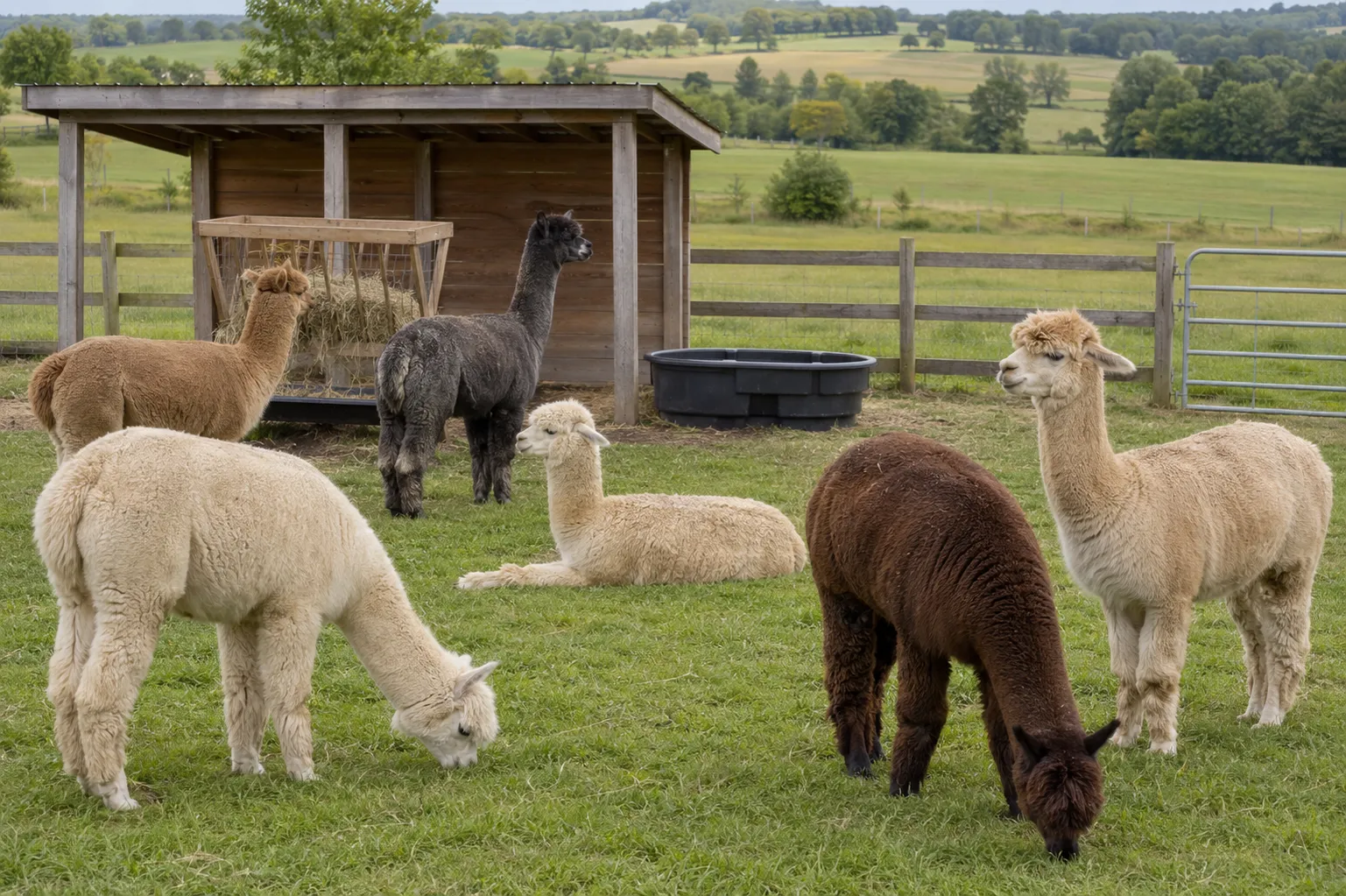
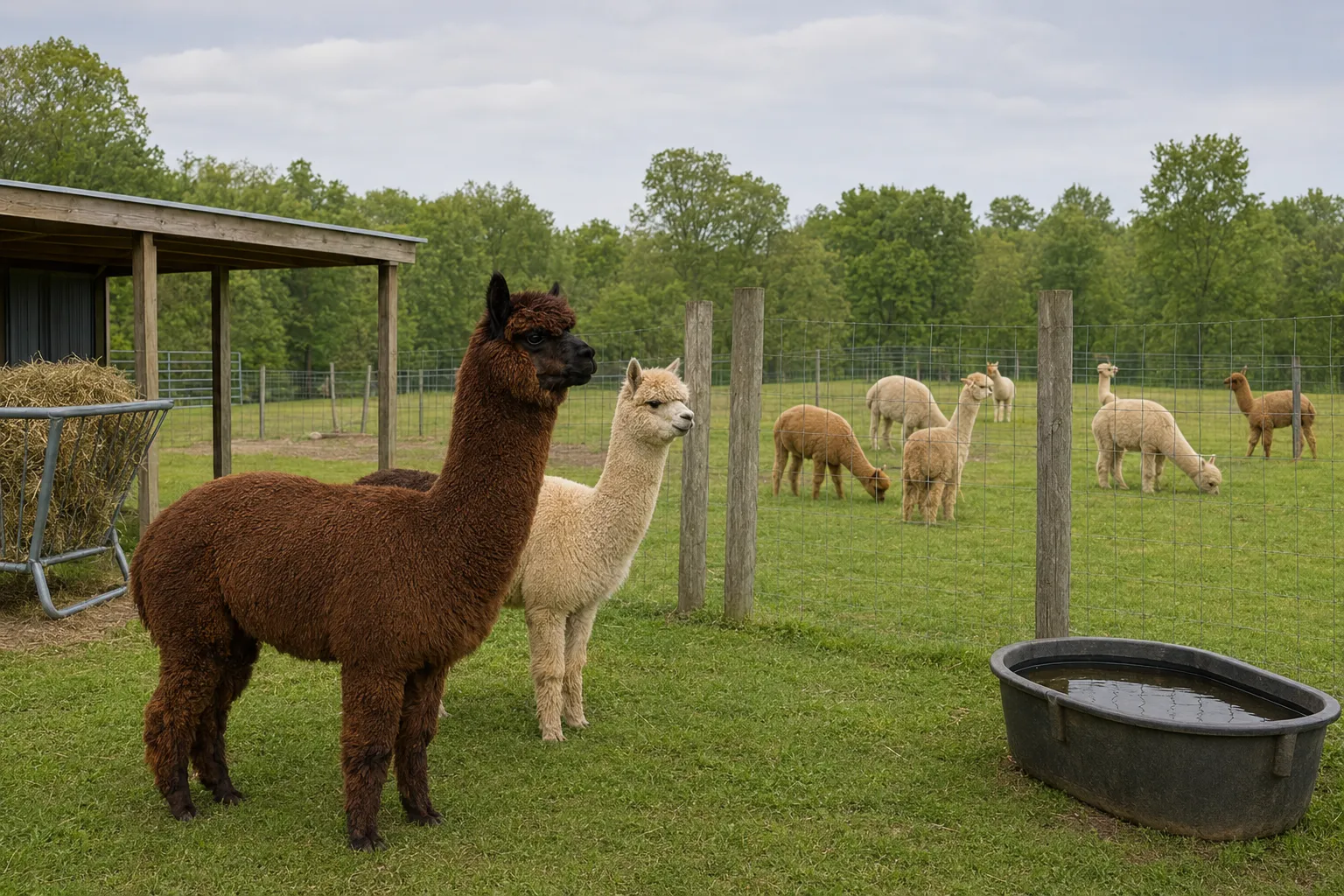
Adult alpacas are social animals. They generally spend their days alongside familiar herd mates, with time to graze, rest, watch their surroundings, and move between pasture and shelter.
Good management supports those ordinary patterns. Clean water, appropriate forage, dry footing, shelter, and enough space all help the herd stay comfortable through changing weather and seasons.
The rhythm of care
A year of familiar routines
- 01ForageFood and water are checked every day.
- 02Herd timeCompanionship is part of normal life.
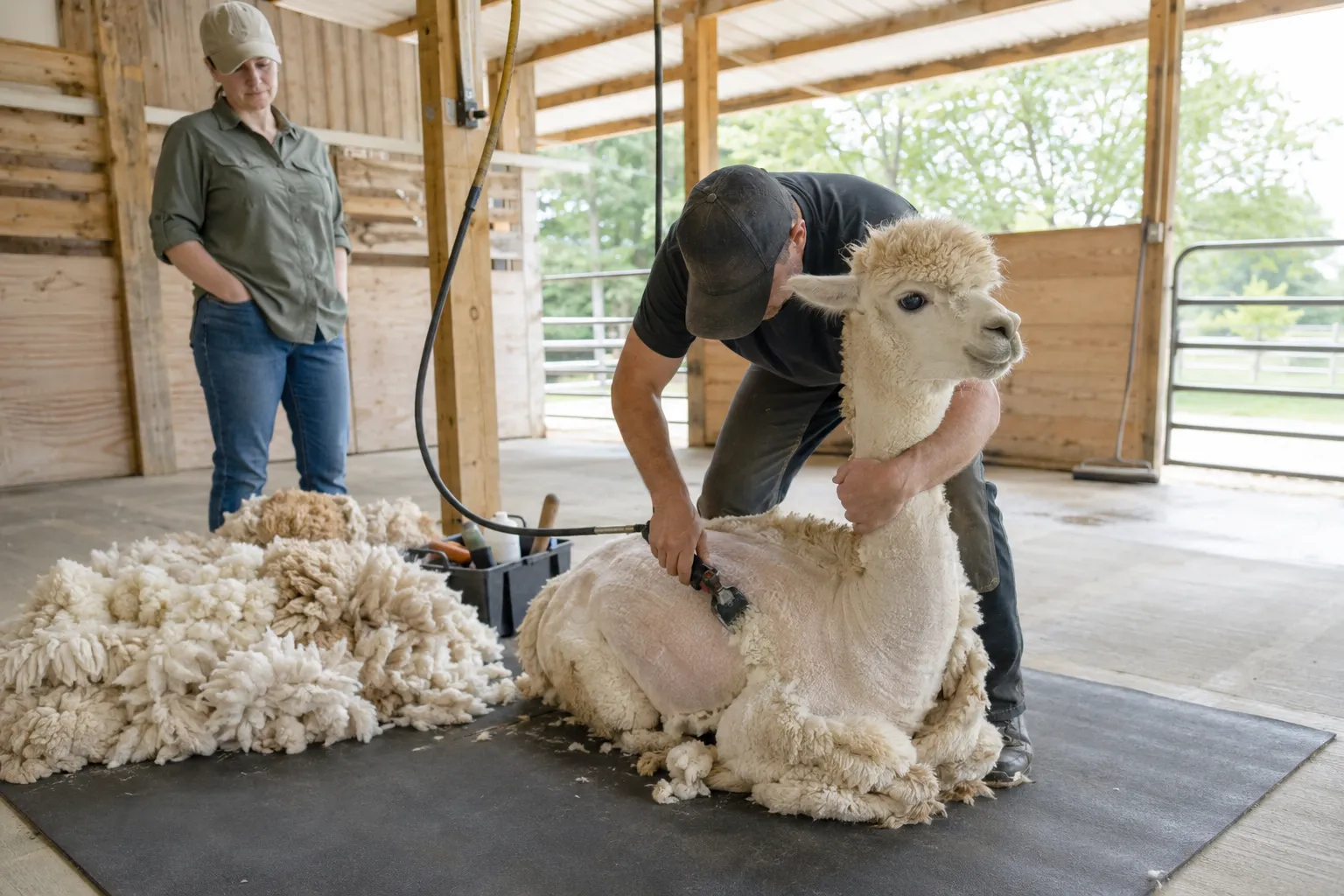
- 03Fleece careShearing fits into the annual cycle.
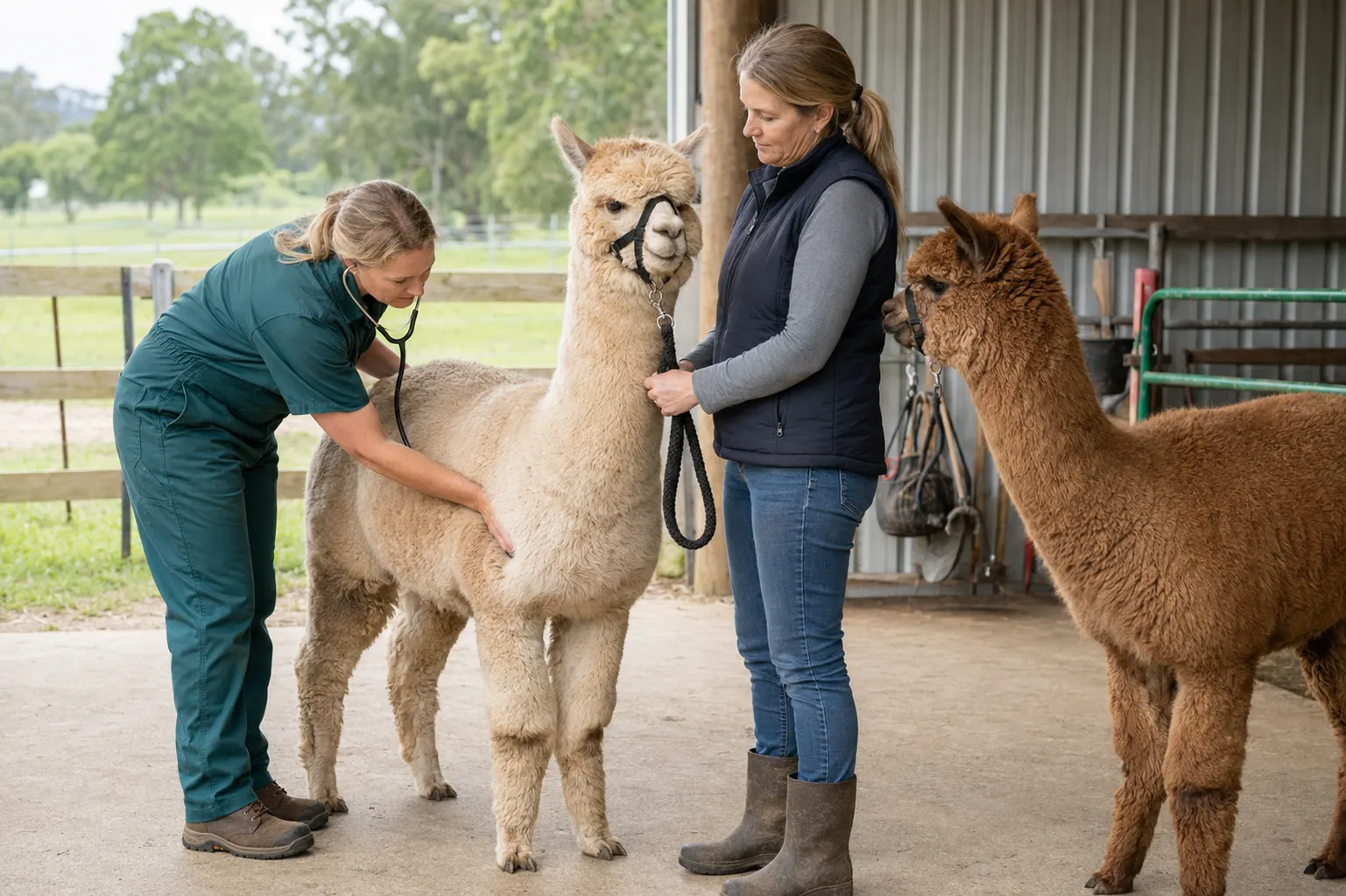
- 04Health careRoutine observation supports early attention.
- 05ShelterComfort changes with the weather.
02 · Ongoing care
Fleece, feet, and regular observation
Adult care is usually built around calm repetition. Shearing, hoof checks, body-condition observation, and veterinary care are easier when alpacas are accustomed to routine handling.
Care needs differ among individuals and farms. A knowledgeable veterinarian and experienced local support can help an owner make decisions appropriate for their herd.
03 · Different roles
Adult life is not one-size-fits-all
Some adult alpacas are kept for fiber, some are part of carefully managed breeding programs, and some are valued companions or members of an educational farm. Their daily welfare is the common foundation, whatever their role.
Responsible breeding involves more than pairing animals. It includes planning, health knowledge, facilities, records, and a long-term commitment to the offspring.
A life with purpose
Ways adult alpacas may contribute
One animal can be important to a farm in more than one way over the course of its life.
- Producing fiber
- Joining a breeding program
- Providing herd companionship
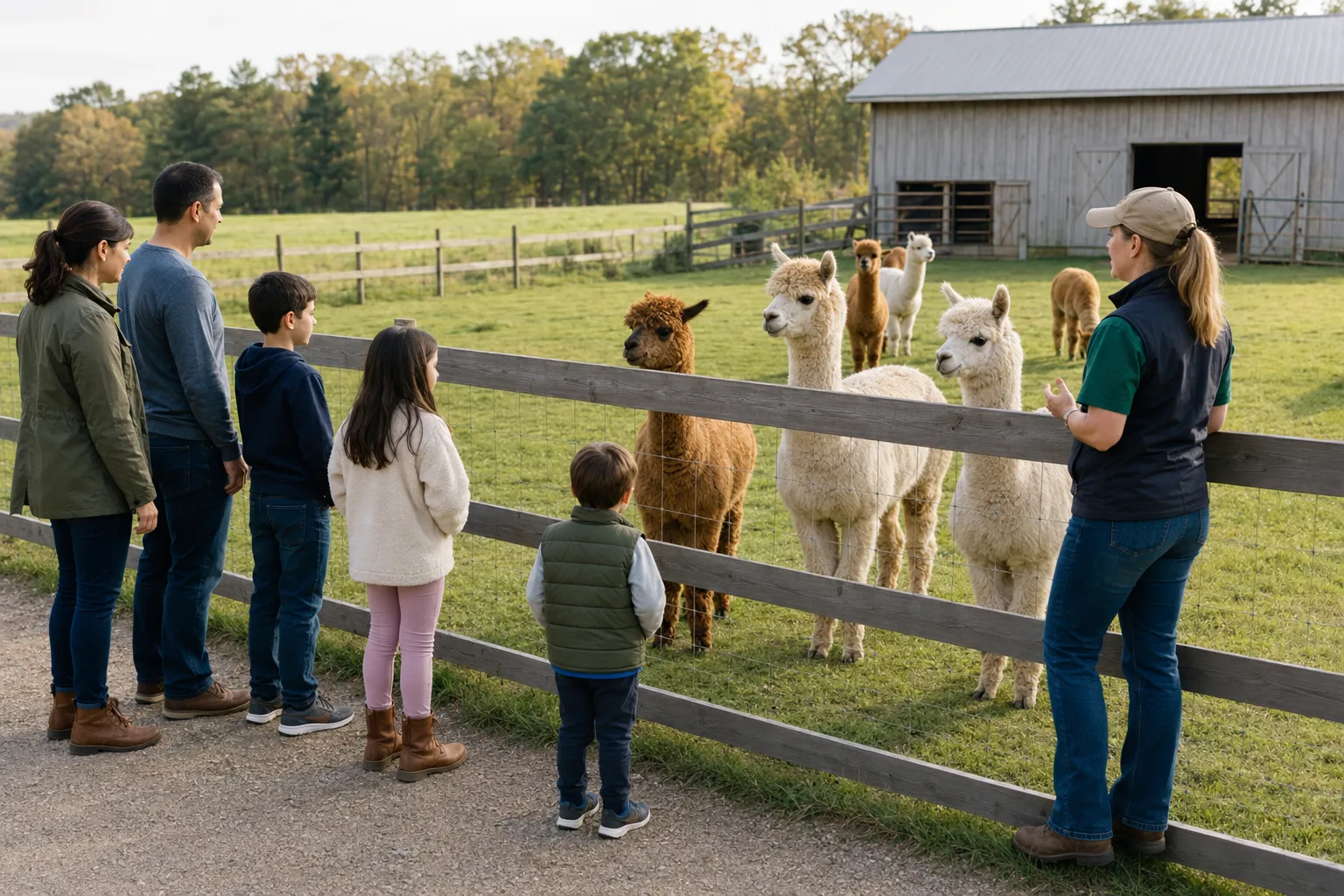
- Supporting calm, supervised farm visits
04 · Sharing the farm
Calm connections with people
When a farm welcomes visitors, adult alpacas may be part of the experience from a comfortable distance. Clear boundaries, quiet movement, and a guide who understands the herd help keep visits positive for people and animals.
Adult life eventually leads into the senior years, when comfort and individual care become even more important. Continue to alpaca lifespan and senior care.