Draping locks, a smooth handle and visible luster
Suri alpacas
Suri is the less common of the two alpaca breeds. Its fleece forms organized locks that hang downward close to the body, creating a long, fluid outline and a fiber known for luster and drape.
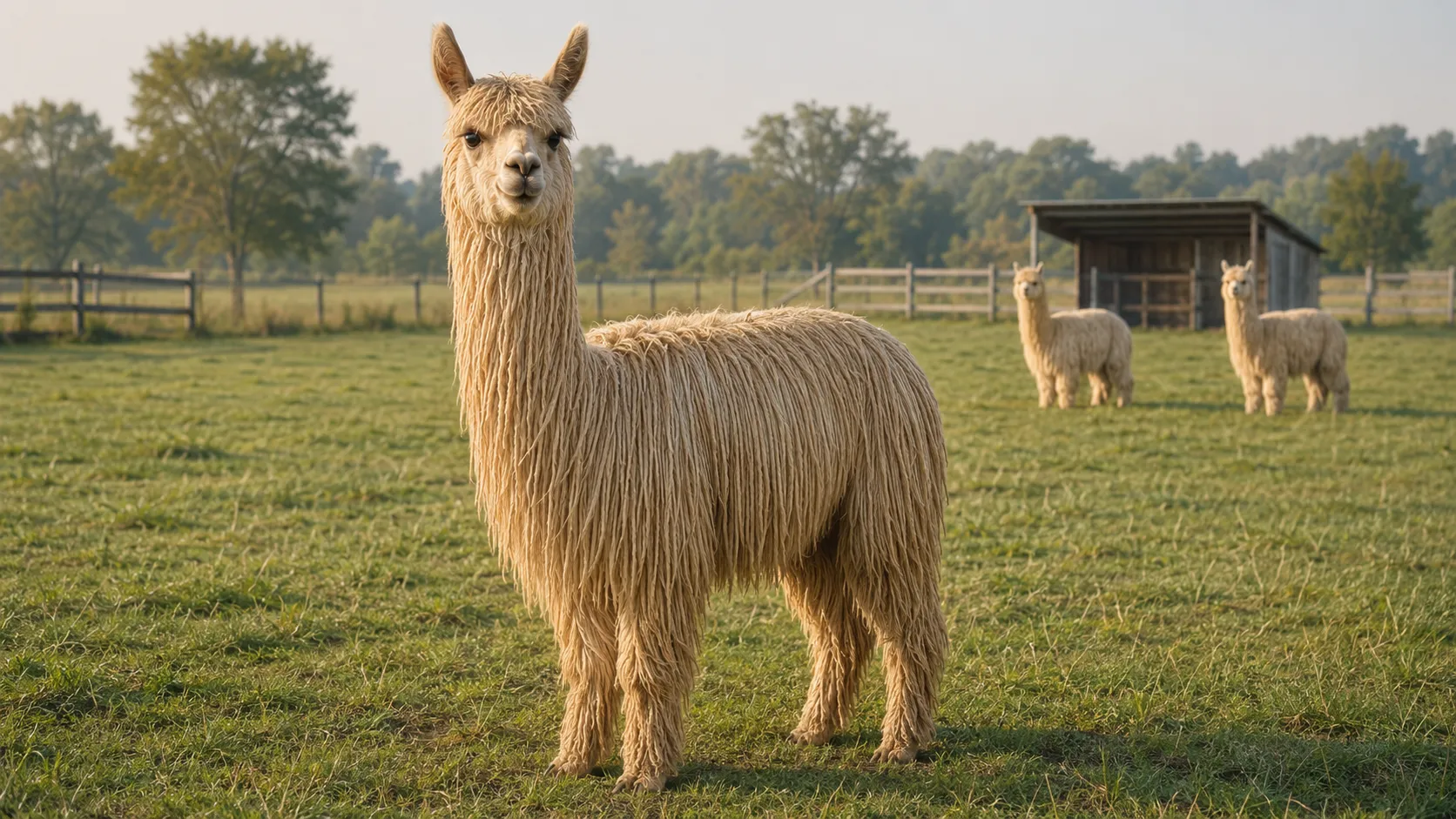
- Breed
- Suri
- Fleece form
- Draping locks
- Growth direction
- Downward along the body
- Recognized quality
- Natural luster
Recognizing the breed
What makes an alpaca a Suri?
Huacaya and Suri are the two breeds of alpacas. They share the same species, basic anatomy, herd behavior, and care needs. A Suri is identified primarily by its fleece phenotype: fibers organize into locks that drape with the body instead of forming the dense, outward-growing coat of a Huacaya.
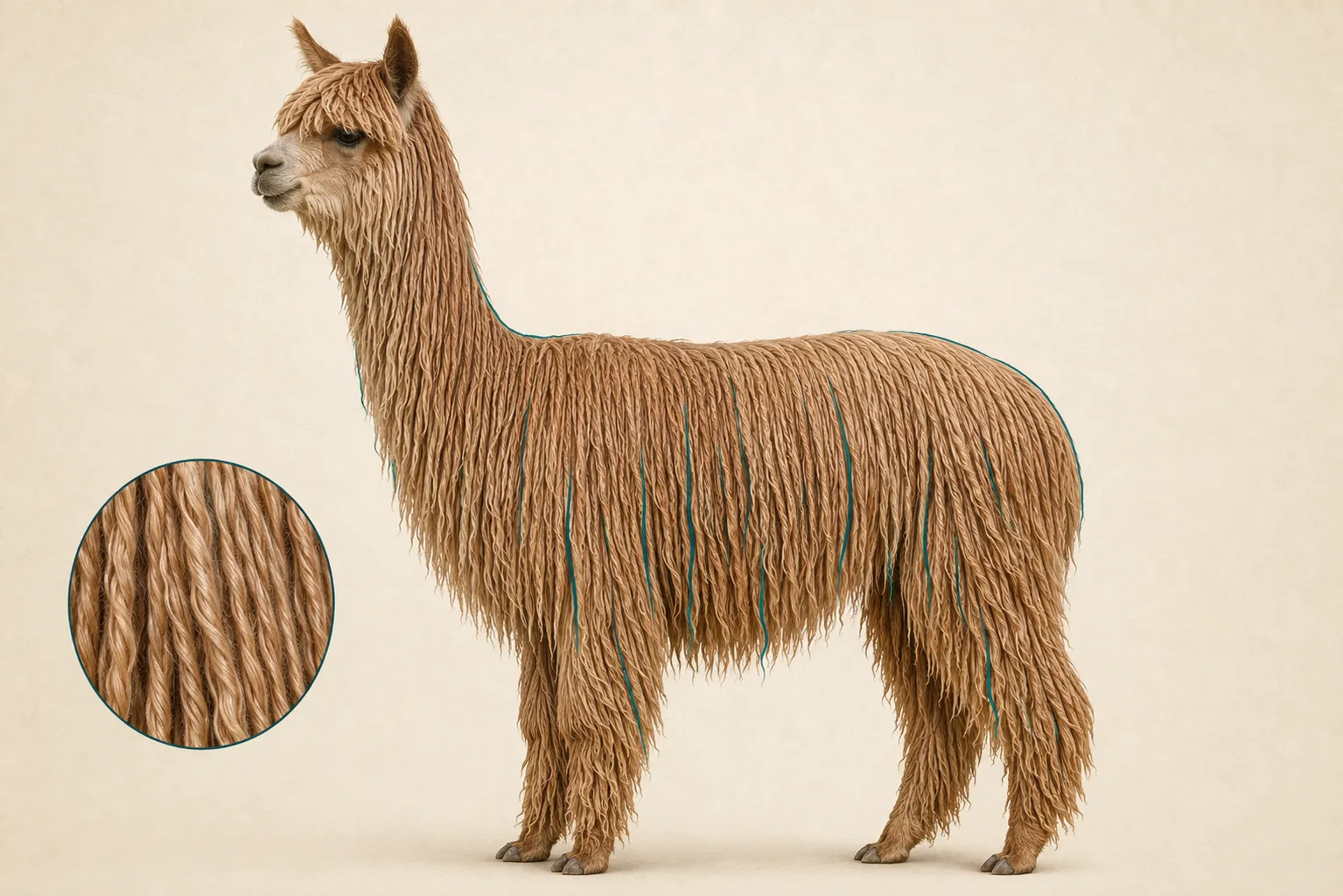
- Direction
- Fleece follows a downward line. Locks hang close to the neck, barrel, belly, and upper legs instead of adding rounded volume around the body.
- Separation
- The coat divides into distinct locks. Lock size and style can differ among animals, but the fleece should not resemble an unstructured fluffy mass.
- Movement
- Mature locks move with the animal. Clean, sound fleece can swing and separate without appearing felted, tangled, or wet.
- Reflection
- Luster is visible in natural light. It comes from the fiber surface and should be evaluated within the fleece, not confused with moisture or artificial shine.
Suris are less widely distributed than Huacayas, so seeing several ages and fleece colors may require comparing more than one alpaca farm or attending a regional fiber or livestock event.
Examine the fleece itself
Suri lock structure, luster, and fiber quality
Lock structure is the most visible breed feature, but it is only one part of a useful fleece. Fineness, uniformity, density, length, strength, cleanliness, and the amount of coarse fiber must be evaluated separately.
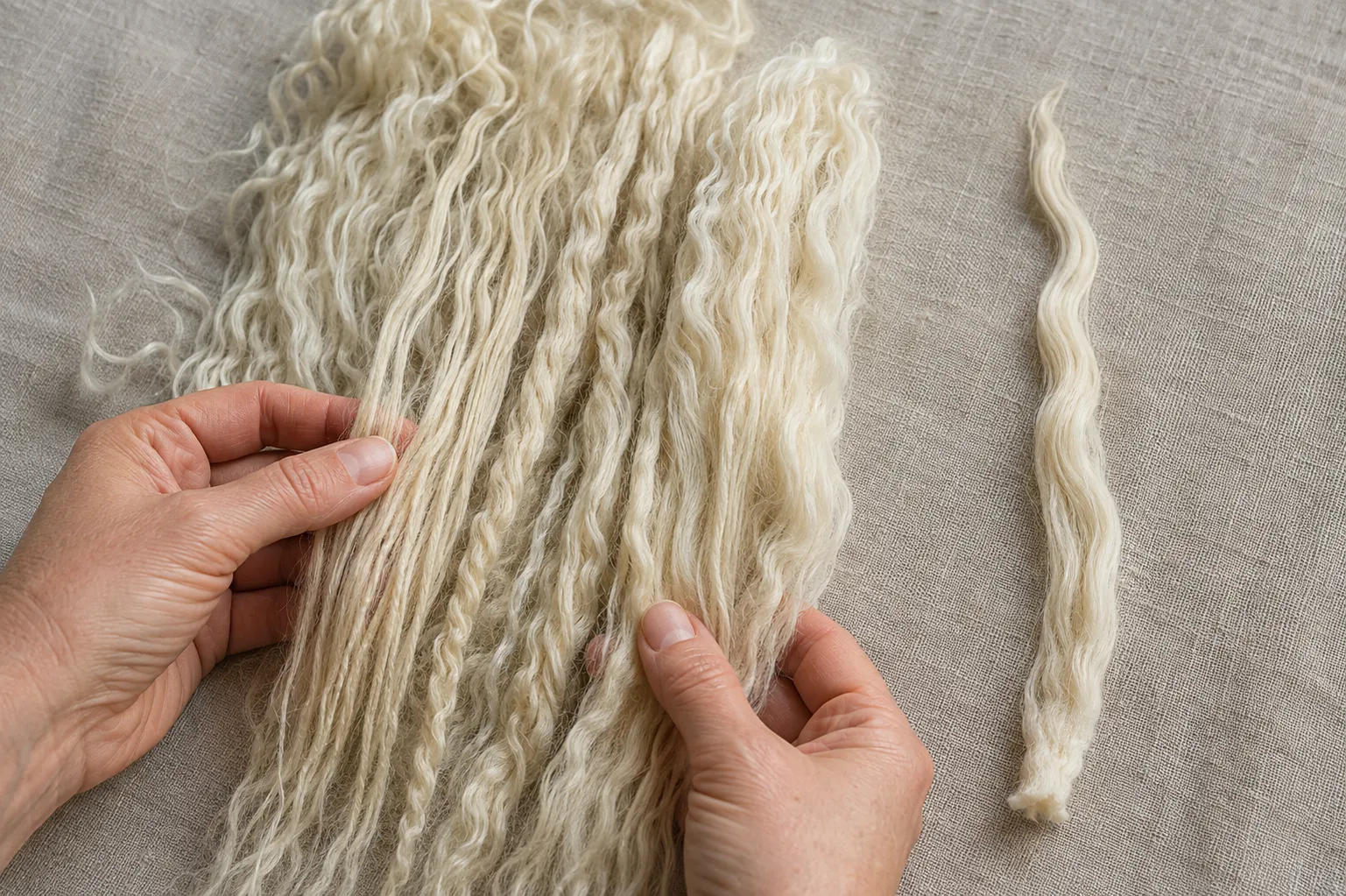
Lock architecture
Locks may appear narrow, twisted, waved, or more broadly organized. Consistency across the blanket matters more than assigning every lock a decorative name.
Luster
Luster describes light reflected from the fiber. It should remain evident within the lock and across different areas of the blanket.
Fineness and uniformity
Average diameter affects potential use, while variation among fibers affects handle and comfort. A lustrous fleece is not automatically fine.
Density and length
Density contributes to fleece production; usable length affects preparation. Neither measurement can be determined reliably from a sale photograph.
Strength and condition
Weak sections, matting, heavy contamination, or weathered tips can reduce usable yield even when the lock pattern remains attractive.
Handle and coarse fiber
A smooth or cool impression is part of Suri handle, but coarse fibers and unevenness still influence the finished yarn or fabric.
Breed is not determined by color
Suri alpacas occur in many natural colors
Suris can be white, fawn, brown, gray, black, or patterned. The same broad range occurs in Huacayas. Color may be part of a textile or breeding plan, but the downward lock structure is what identifies the Suri breed.
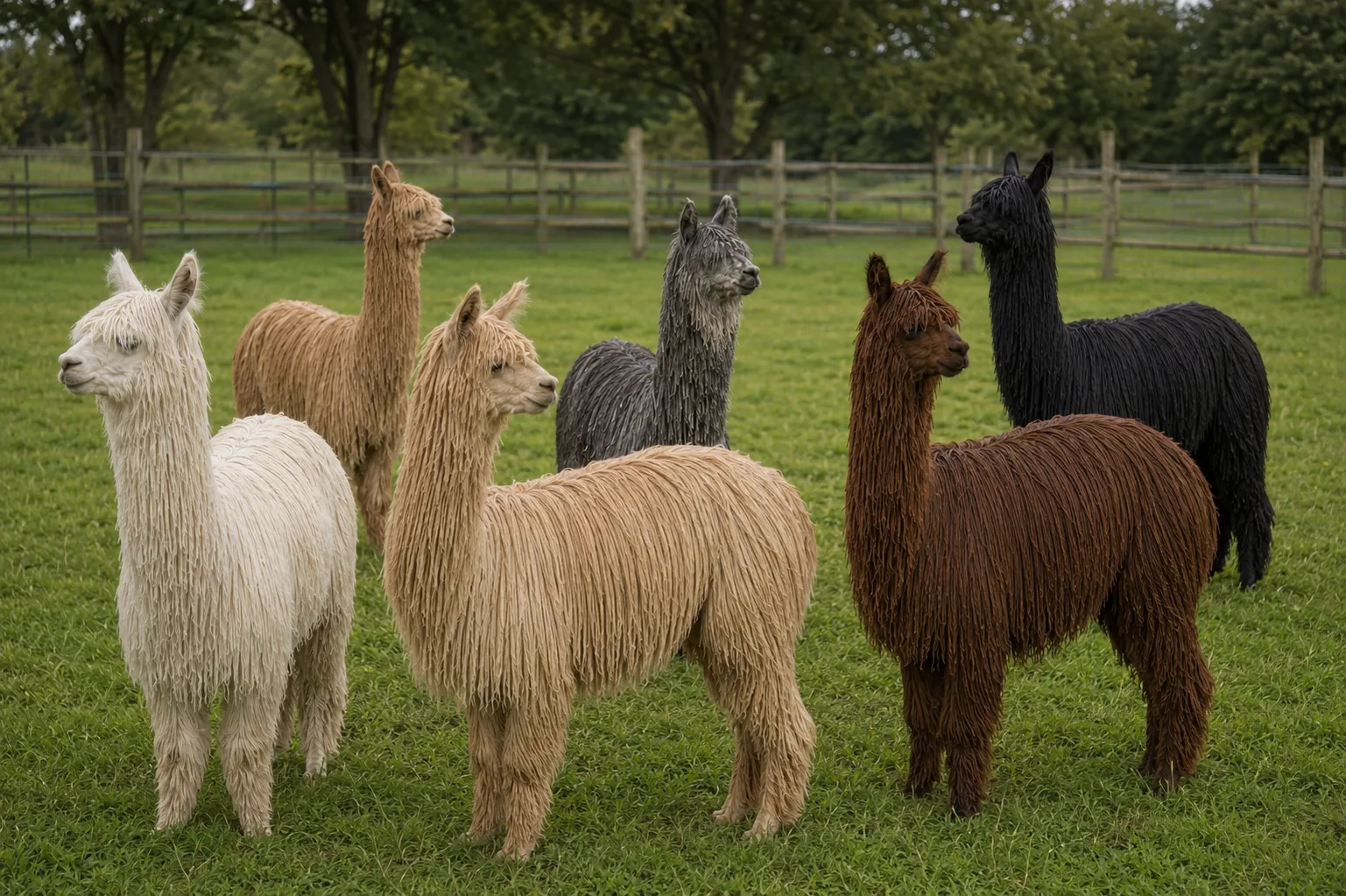
Natural textile palettes
Compatible fleeces can be sorted and blended into undyed shades, but matching color alone does not create a consistent fiber lot.
Evaluating dark fleece
Dark fiber can make some visual inspection more difficult, so strong light, hands-on examination, and measurement remain useful.
Breeding for color
Color selection should remain secondary to health, functional conformation, reproductive fitness, sound fleece, and the long-term direction of the herd.
Protect the information in the fleece
Shearing and sorting Suri fleece
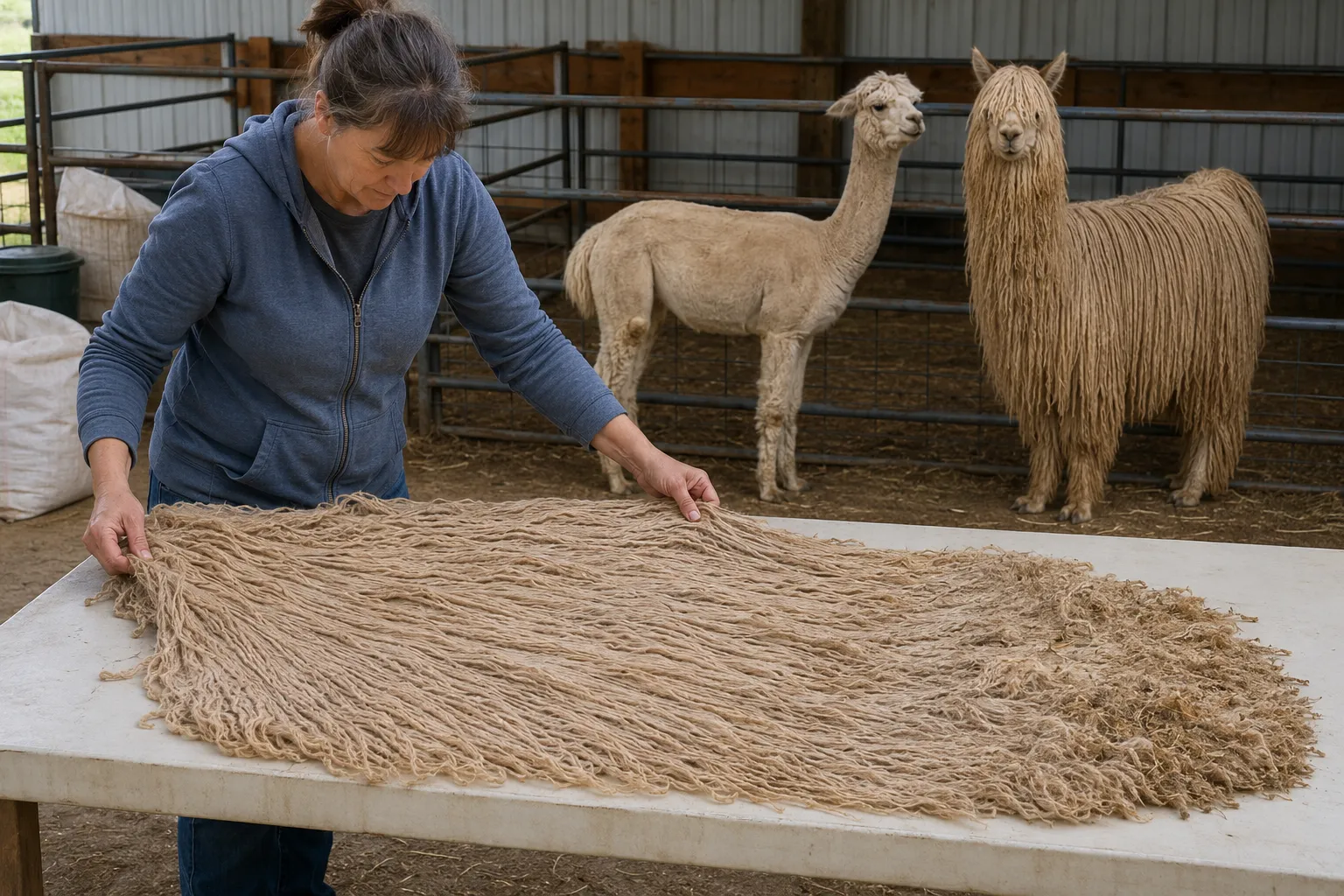
Annual shearing is necessary for the animal’s care and provides the chance to examine the complete fleece. Keeping the blanket organized during collection makes it easier to judge consistency and separate fiber that belongs in different processing groups.
- 01
Remove and identify the fleece
Record the animal and shearing date, then keep the main blanket separate from belly, leg, and other less-uniform fiber.
- 02
Open it without mixing grades
Lay the blanket where lock direction, consistency, contamination, and coarse edges can be examined before the structure is disturbed.
- 03
Skirt for the intended use
Remove heavy debris, mats, short cuts, weak areas, and fiber that differs substantially from the usable blanket.
- 04
Measure and record
Fleece weight, lock length, condition, and fiber-test results make year-to-year changes easier to see.
- 05
Select the preparation
Washing, combing, carding, blending, and spinning should fit the fiber and final textile rather than preserving lock appearance at every cost.
Luster and drape after processing
What Suri fleece can become
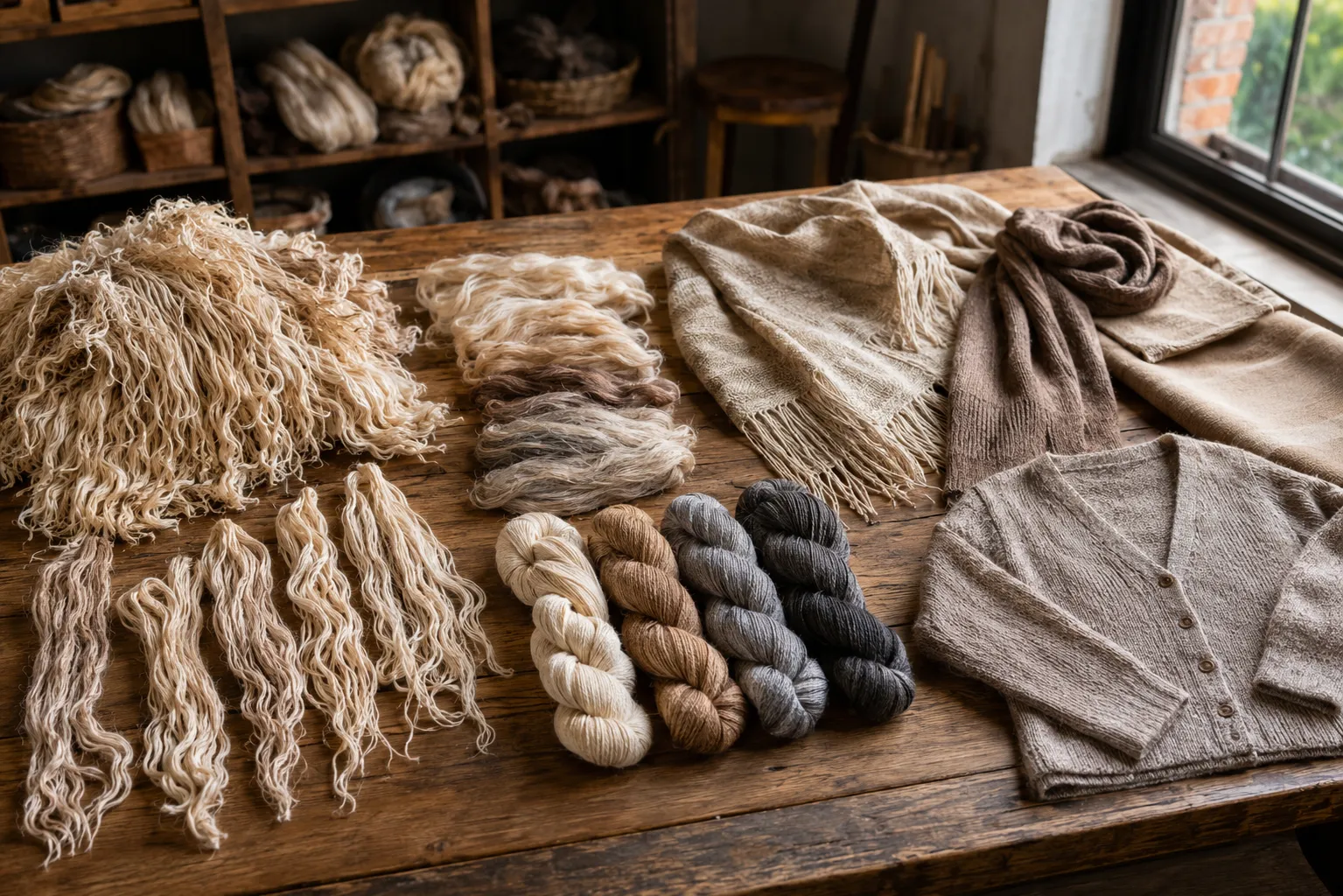
Suri fiber can be spun, woven, knitted, felted, or blended. Its smooth surface, length, and luster can support fluid fabrics, but the finished result also depends on fiber grade, preparation, yarn construction, fabric structure, and any other fiber in the blend.
Luster
Appropriate preparation can carry natural reflected light into yarn and fabric; harsh handling or unsuitable blending may make it less apparent.
Drape
Smooth, long fiber can contribute to fabrics that fall and move fluidly, particularly in woven wraps, scarves, and lightweight garments.
Yarn and blends
Fiber may be blended or spun in different ways to add elasticity, memory, strength, loft, or durability for a particular product.
Match grade to use
Fine, uniform fiber may suit skin-contact garments; coarser sound fiber can be directed toward outer layers, household textiles, or durable objects.
A product labeled Suri can vary greatly in fiber grade, blend, yarn, and construction. Finished alpaca clothing should be judged by how the textile feels, performs, and is made—not by breed name alone.
Evaluate the whole animal
Selecting a Suri for a farm
Rarity can make Suri animals and breeding options harder to find locally, but it does not make every Suri suitable for every farm. Intended role, health, conformation, temperament, records, and the qualities of the individual fleece remain more useful than breed scarcity by itself.
For every Suri
- Identity
- Confirm age, ownership, health history, and registration or pedigree information where applicable.
- Function
- Evaluate movement, bite, body condition, conformation, and the animal’s ability to live comfortably in its intended role.
- Management
- Consider temperament, routine handling, herd compatibility, shelter, and the practical availability of Suri-experienced support.
For fleece and breeding decisions
- Fleece history
- Compare annual weights, lock length, fiber measurements, strength, uniformity, and changes associated with age.
- Breeding evidence
- Review pedigree, relatedness, reproductive history, health concerns, and earlier offspring rather than selecting on luster or color alone.
- Herd direction
- Define what the animal is expected to contribute and how every resulting cria would be housed, evaluated, and cared for.