Two breeds, two distinct fleece structures
Huacaya and Suri: the two alpaca breeds
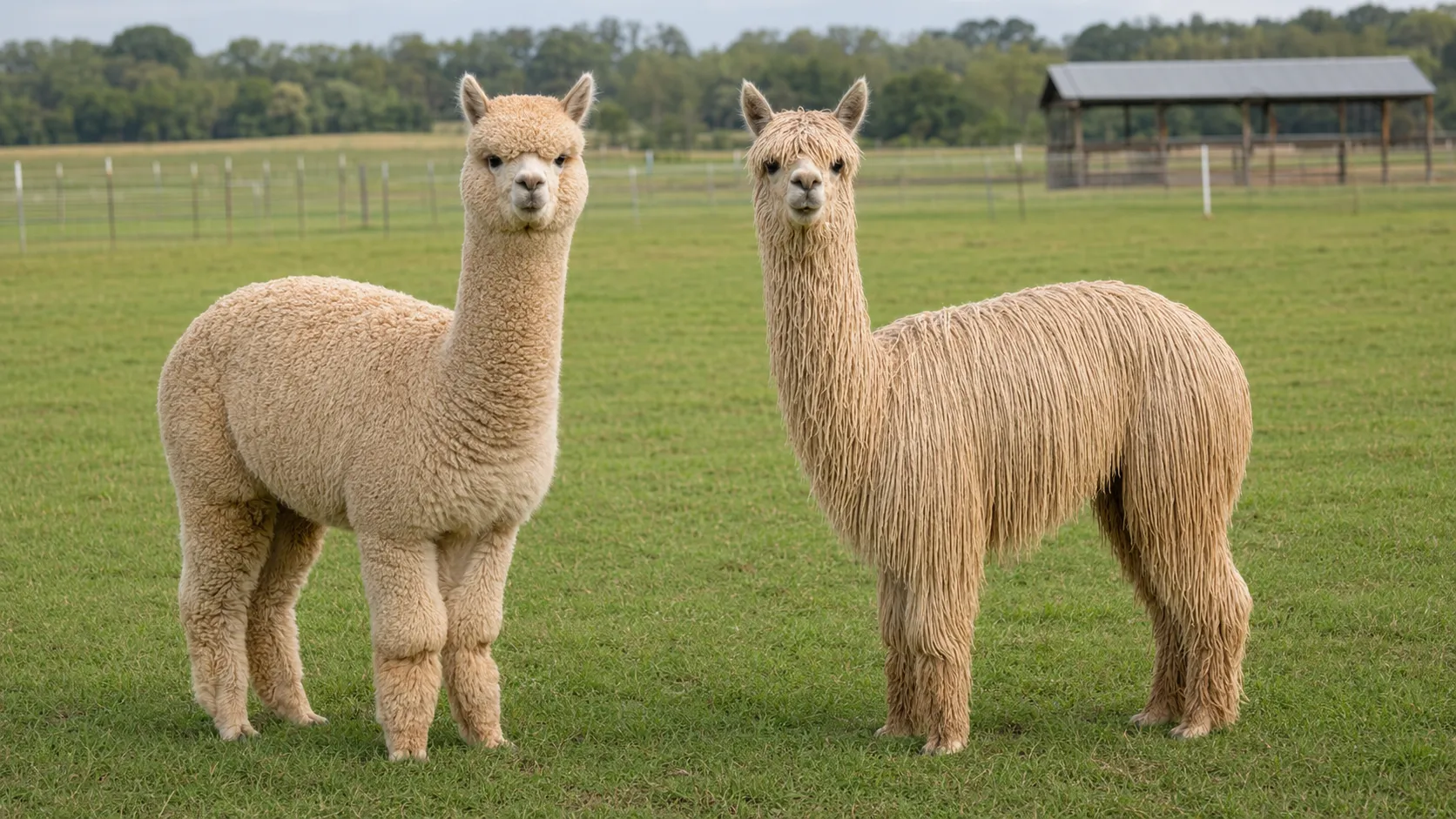
Huacaya and Suri alpacas belong to the same species and require the same basic care, but their fleece grows in noticeably different ways. That difference affects how each breed looks, how its fiber is prepared, and the kinds of yarn and fabric it can produce.
The complete breed list
There are two breeds of alpaca
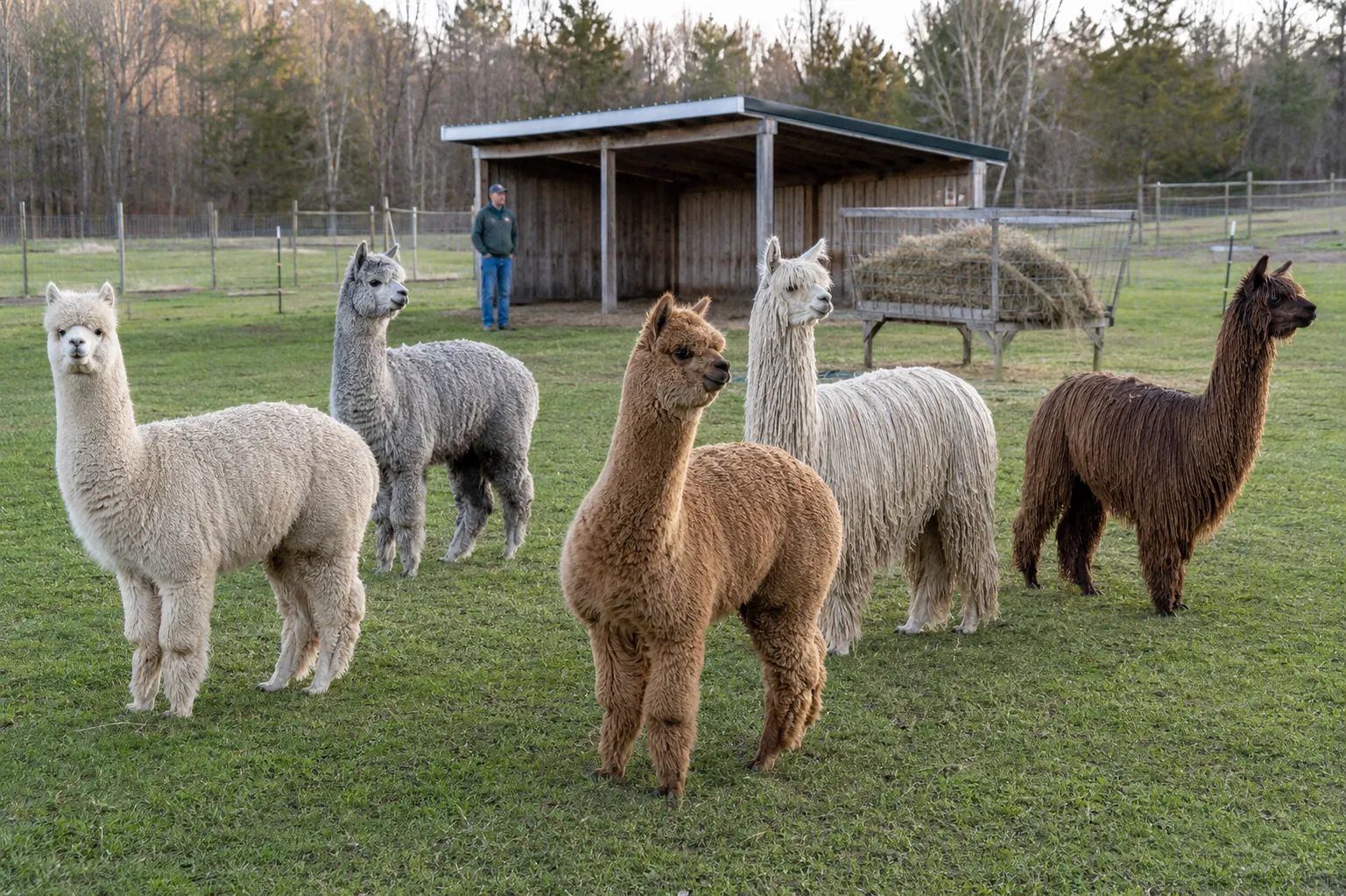
Huacaya and Suri are not different species, and color does not determine which breed an animal belongs to. Both can be white, fawn, brown, gray, black, or multicolored. The distinction is found primarily in the structure and growth pattern of the fleece.
Huacayas are much more common, so most of the alpacas encountered on American farms have the familiar fluffy appearance. Suris are less common and are recognized by the long locks that drape close to the body.
Dense, crimped fleece
Huacaya alpaca
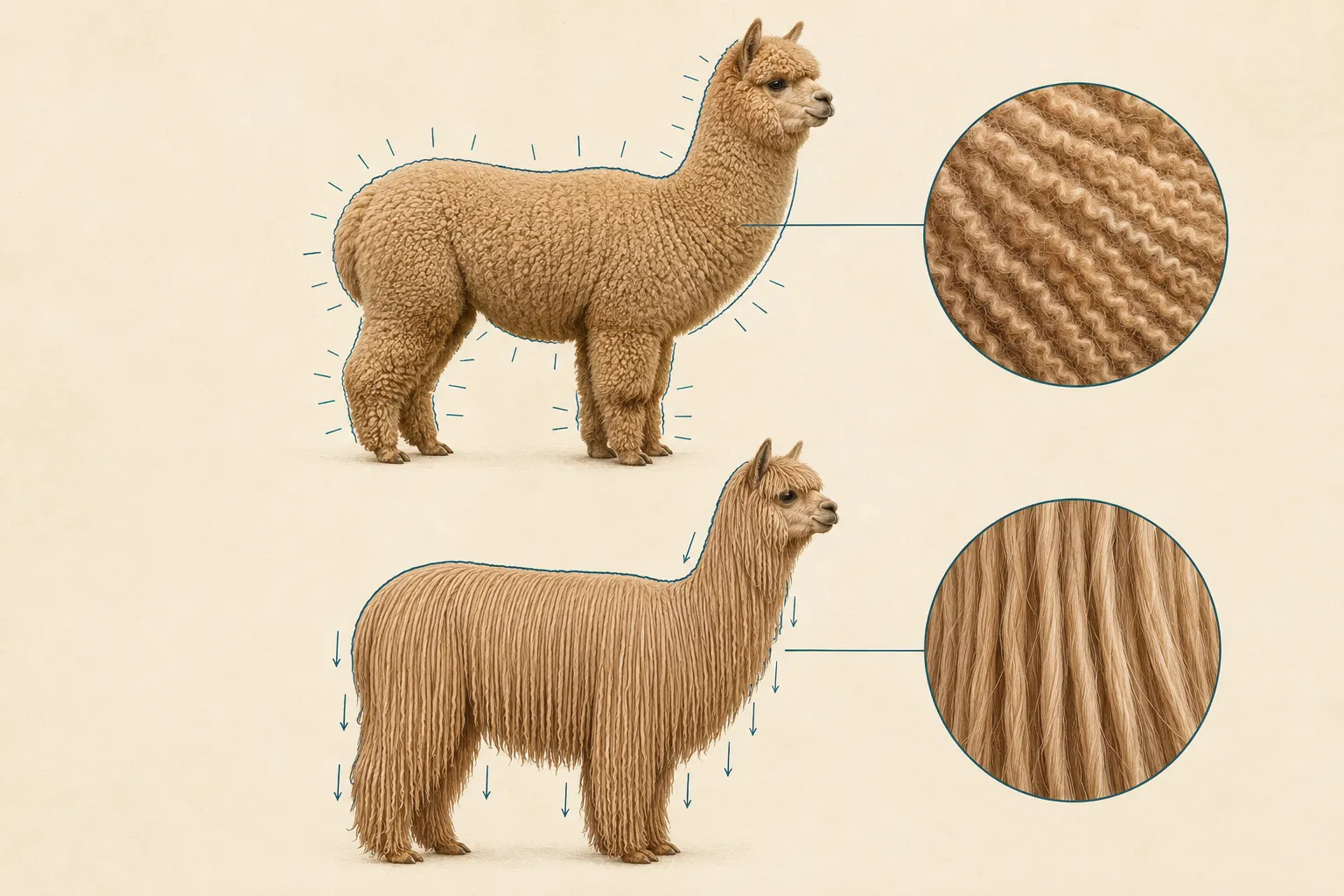
Huacaya fleece grows outward from the skin. Its crimp and density give the animal a plush, rounded outline and produce fleece that is commonly made into lofty yarns, knitted clothing, and other warm textiles.
Huacaya breed guideLong, lustrous locks
Suri alpaca
Suri fleece grows in organized locks that hang down from the body. The fiber is known for its smooth surface, visible luster, and fluid drape when it is prepared and spun to preserve those characteristics.
Suri breed guideWhat both breeds share
- The same species: Vicugna pacos
- The same basic needs for herd companionship, pasture, shelter, shearing, and veterinary care
- The same broad range of natural fleece colors
- Wide individual variation in fineness, density, uniformity, temperament, and conformation
Look at the fleece, not the color
How to tell Huacaya and Suri alpacas apart
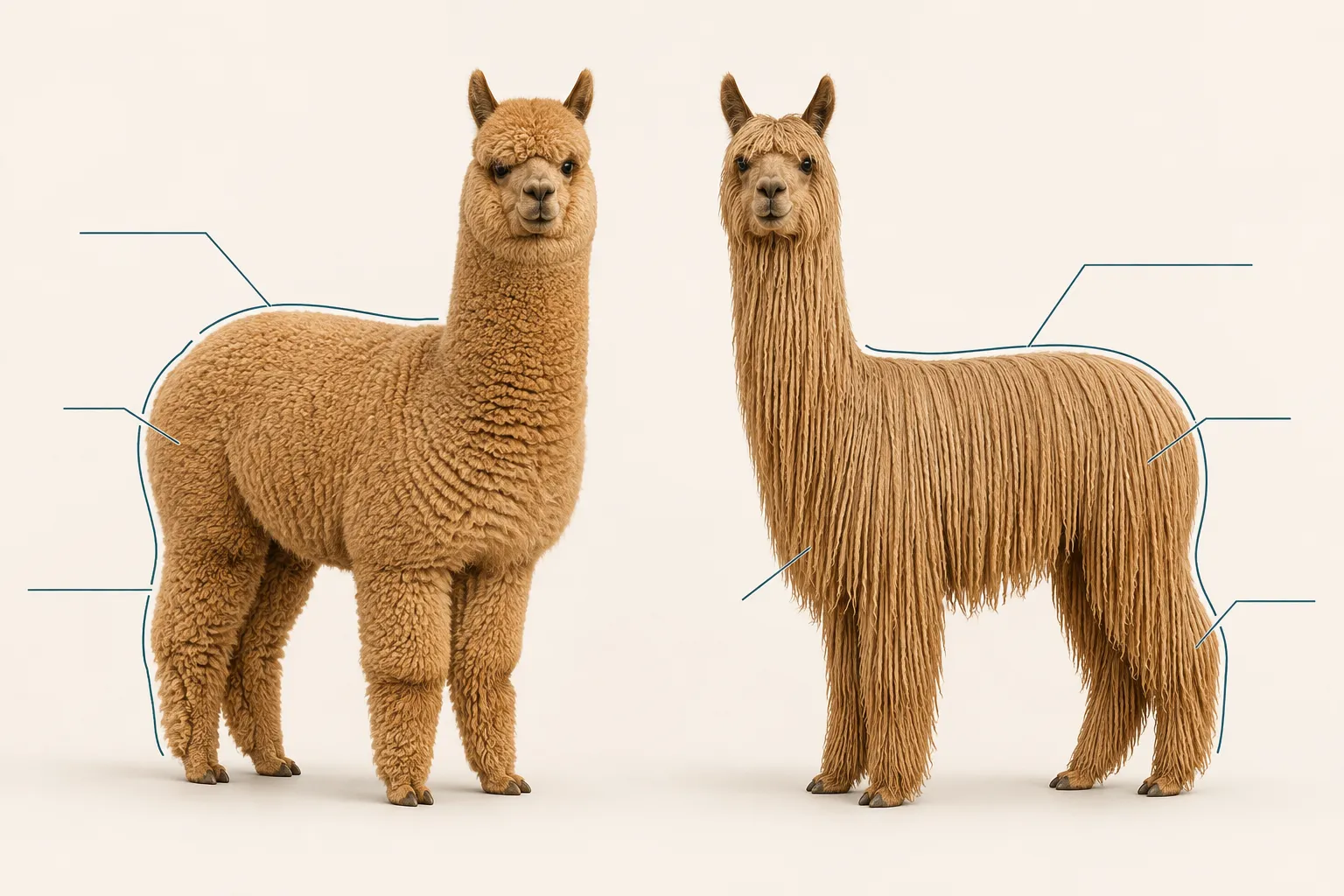
The difference is usually obvious on an animal carrying a full coat. It becomes less obvious immediately after shearing, when the fleece length and outline that identify each breed have been removed.
| Feature | Huacaya | Suri |
|---|---|---|
| Overall outline | Rounded and plush because the fleece stands away from the body | Narrower and draped because the locks hang close to the body |
| Fleece structure | Dense staples with visible crimp | Distinct locks that may form pencil, wave, or ringlet structures |
| Surface appearance | Soft, matte-to-gently lustrous fleece with visible loft | Smooth fleece with more readily visible luster |
| Fleece direction | Grows generally outward from the skin | Falls downward, largely parallel to the body |
| Availability | The more common breed in the United States | Less common, so local animals and breeding options may be more limited |
| Natural colors | White through black, including grays and multicolored patterns | The same broad natural color range |
The defining difference
How the two fleece types are structured
An alpaca’s breed tells you how its fleece is organized, but it does not tell you whether a particular fleece is fine, uniform, clean, dense, or suitable for a specific project. Those qualities must be evaluated on the individual animal and within the shorn fleece.
Growth pattern changes the finished fleece
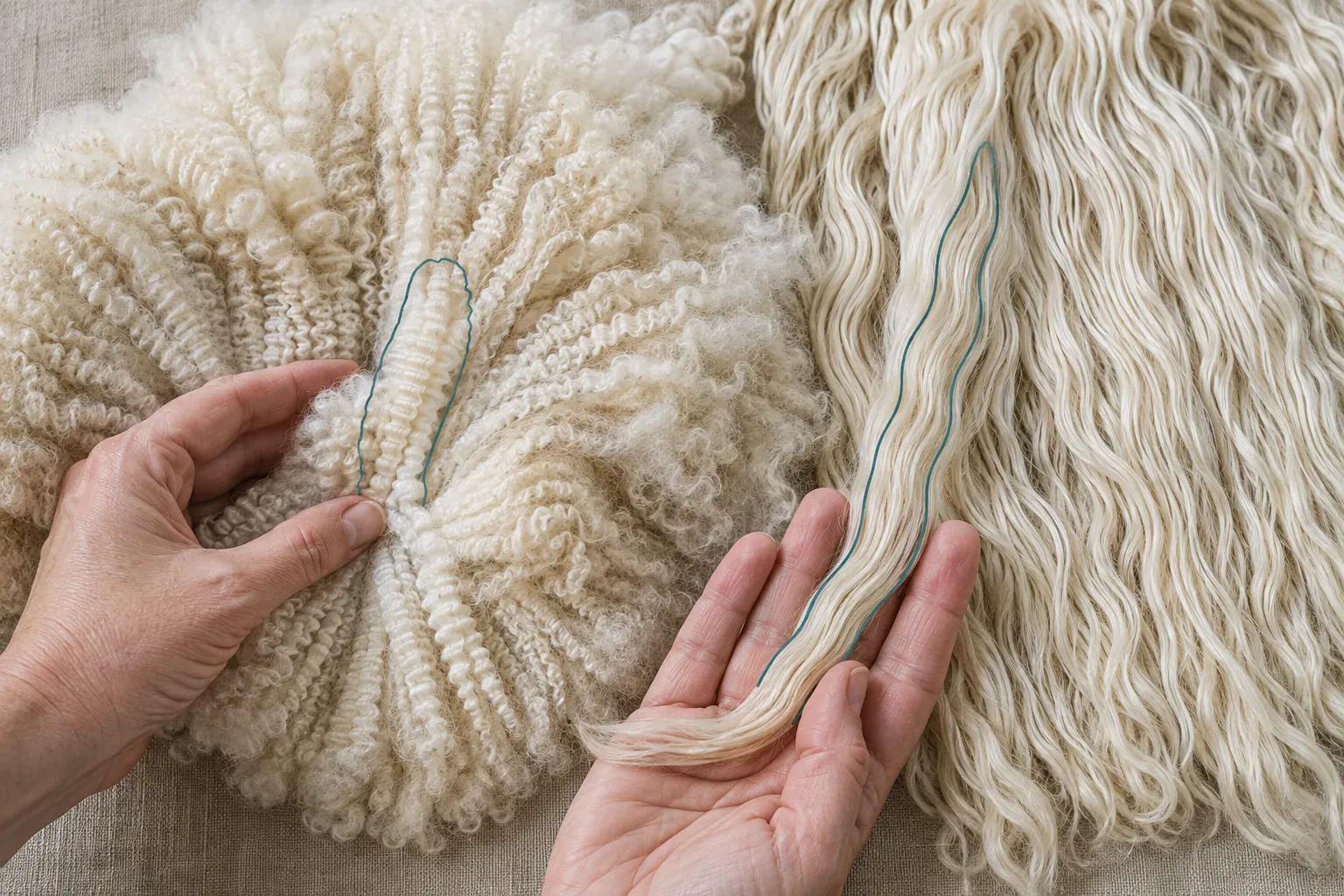
Huacaya fibers are grouped into staples with a repeating wave or crimp. The fleece holds air and stands away from the body, which creates its familiar volume. Crimp can help fibers hold together during spinning, although alpaca yarn generally has less natural elasticity than sheep-wool yarn.
Suri fibers organize into locks that grow downward. A well-prepared Suri fleece can produce smooth yarn and fabric with pronounced luster and drape. Processing choices matter because aggressive preparation can obscure the lock structure and blend away some of the qualities for which Suri fiber is selected.
What a fleece sample can reveal
Handle the fleece rather than judging only from a photograph. Look for consistency in fiber diameter, staple or lock length, strength, cleanliness, and the amount of coarse fiber. A soft-looking coat may contain noticeable variation, while an unremarkable photograph may hide a very useful fleece.
Age and location on the body also matter. Fiber from the blanket area is normally more uniform than fiber from the legs, chest, or belly, and fleece commonly becomes coarser as an alpaca ages. Annual samples and shearing records show more than a single inspection.
From fleece to fabric
How Huacaya and Suri fiber are used
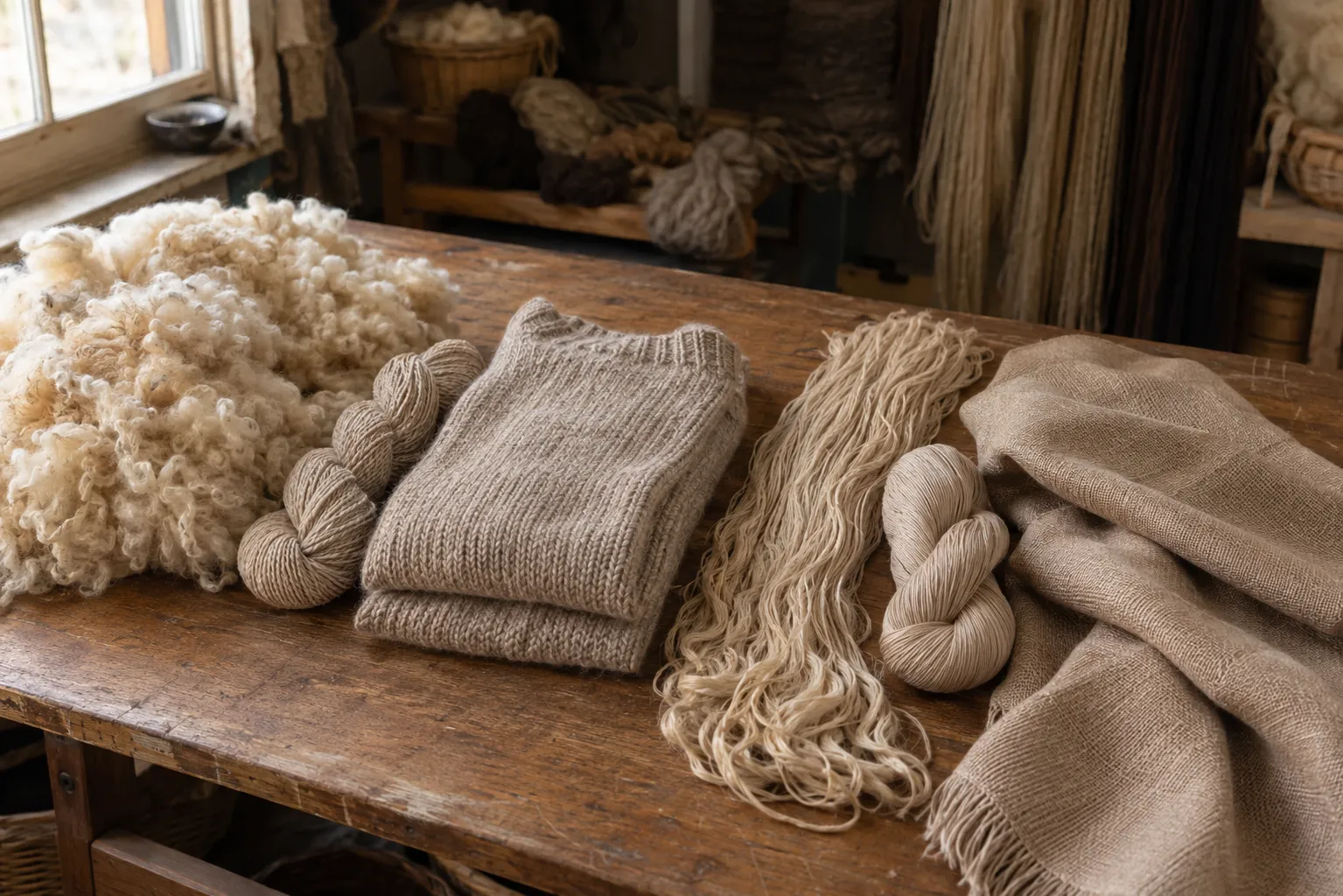
Both breeds can supply fiber for yarn, clothing, and household textiles. The useful distinction is not that one breed makes clothing and the other does not; it is that their fleece structures lend themselves to different yarn constructions, fabric surfaces, and finished effects.
Huacaya fiber
Its crimp and loft are commonly used in rounded yarns for sweaters, hats, scarves, socks, blankets, and other knitted or woven pieces where warmth and a soft surface are wanted.
Suri fiber
Its length, smoothness, and luster can work well in yarns and fabrics designed for drape, sheen, or a sleek surface, including woven wraps, scarves, and refined knitwear.
The individual fleece still decides the project
Fine fiber may be comfortable near the skin, while coarser fiber can be directed toward outerwear, rugs, or durable household uses. Blending with wool or another fiber can add elasticity, memory, strength, or a different surface. Breed name alone is not a fiber grade.
Match the animals to the plan
Choosing a breed for a farm
Neither breed is automatically the better farm animal. The practical choice depends on the fiber or breeding goals of the herd, the animals available within traveling distance, and whether the farm can evaluate and market the fleece it intends to produce.
Decide what the fleece is for
A farm selling raw fleece, breeding stock, yarn, finished clothing, or farm experiences will evaluate the value of each breed differently. Define the intended product before selecting animals.
Evaluate individual records
Compare health history, age, conformation, temperament, pedigree, reproductive history, annual fleece weights, fiber measurements, and the quality of earlier offspring where applicable.
Account for local availability
Huacayas are easier to find in many regions. A Suri program may require longer travel for animals, breeding services, or mentors familiar with evaluating and processing Suri locks.
Plan for fleece management
Both breeds need annual shearing and protection from excessive contamination. Dense Huacaya fleece can hide body-condition changes, while long Suri locks require attention to matting, debris, and preservation of lock structure.
Does one alpaca breed cost more?
Suri alpacas are less common, but rarity alone does not establish the price of an individual animal. Purchase prices also reflect age, sex, training, health, pedigree, reproductive status, conformation, fleece quality, location, and whether the animal is sold as a companion, fiber animal, or breeding prospect. Those same factors can make one Huacaya cost considerably more than another Huacaya—or more than a particular Suri.
Breed choice is only one line in a farm budget. Feed, fencing, shelter, shearing, veterinary care, equipment, transport, and the need to keep alpacas with compatible herd companions continue regardless of fleece type. A realistic alpaca farm cost estimate should include both the purchase and the ongoing care of the herd.
Seeing mature animals and handled fleece together is more informative than comparing sale photographs alone. An established alpaca farm may keep Huacayas, Suris, or both, allowing visitors to compare the animals’ coats, shorn fiber, and finished products in the same setting.