Dense staples, visible crimp and a rounded coat
Huacaya alpacas
Huacaya is the more common of the two alpaca breeds. Its fleece grows outward from the body in organized, crimped staples, giving a fully fleeced Huacaya the rounded appearance most people associate with alpacas.
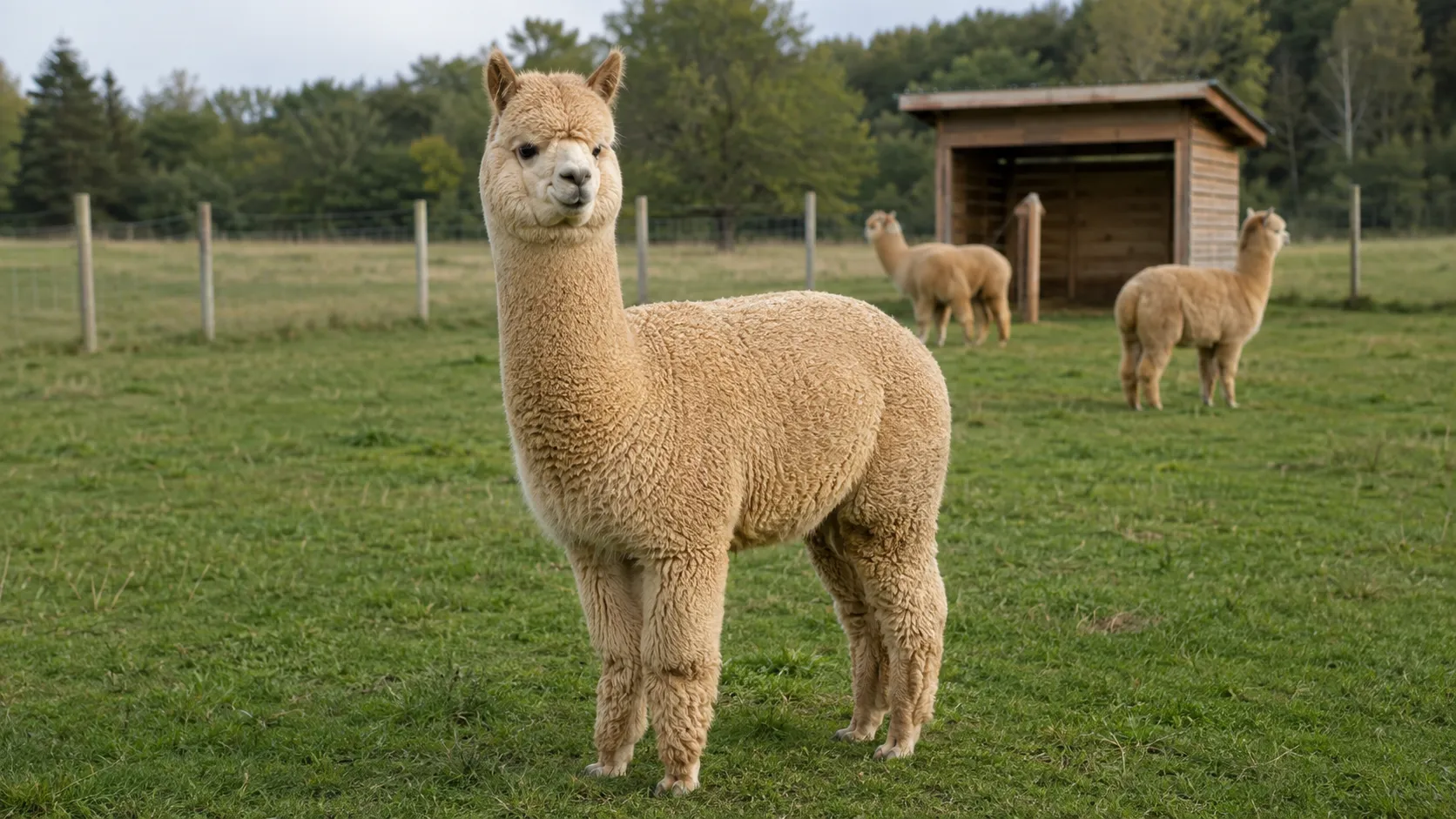
- Breed
- Huacaya
- Fleece form
- Crimped staples
- Growth direction
- Outward from the body
- Natural colors
- White through black
Recognizing the breed
What makes an alpaca a Huacaya?
Huacaya and Suri belong to the same species and share the same basic body structure, behavior, and care requirements. The distinction is primarily the way the fleece is organized and how it grows from the skin—not the animal’s color, sex, height, or temperament.
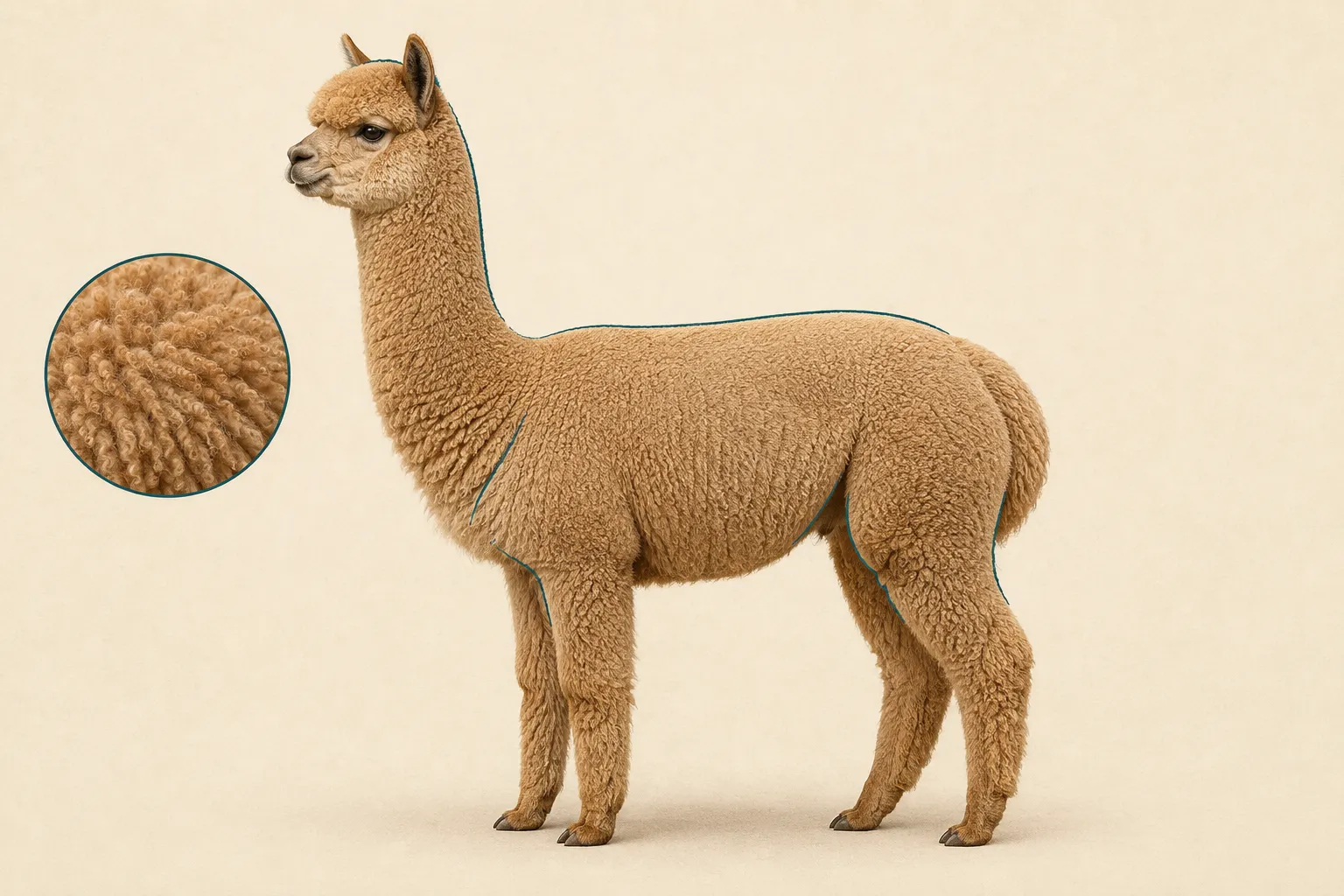
A rounded outline
The coat stands away from the skin instead of falling in long locks, giving the body and neck a full, plush appearance.
Fleece arranged in staples
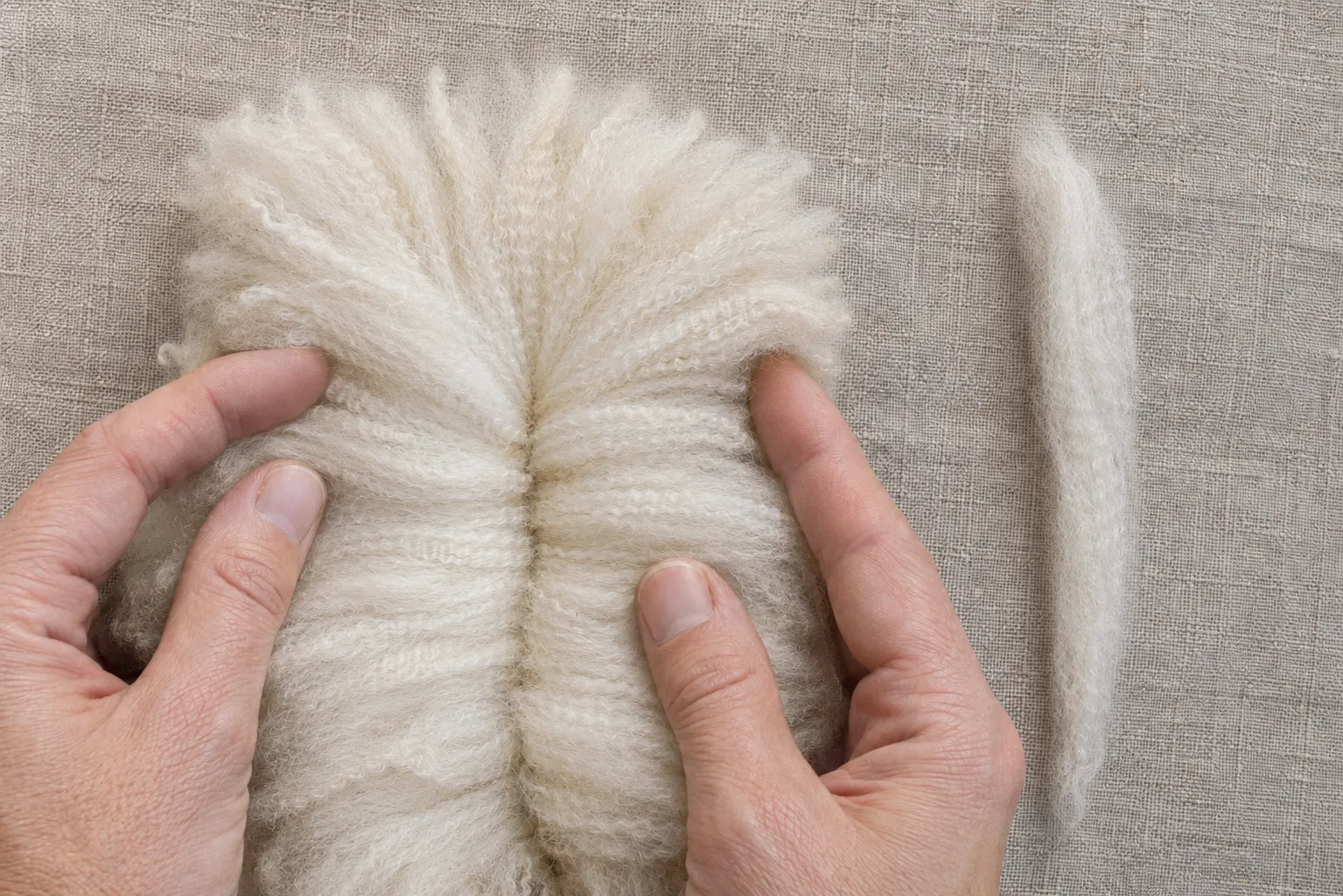
Fibers gather into visible bundles called staples. Opening the coat reveals how those staples are organized from skin to tip.
Crimp within the fleece
The fibers show a repeating wave. Crimp character can vary across animals and across different areas of one fleece.
Coverage without Suri locks
Fleece may cover the head, neck, body, and upper legs, but it does not form the long, hanging lock structure that identifies a Suri.
Because Huacayas are widely raised in the United States, they are the breed visitors are most likely to encounter at alpaca farms, public farm events, and fiber demonstrations.
Open the coat
Inside a Huacaya fleece
The fluffy exterior identifies the breed, but it does not establish the quality or intended use of the fleece. A meaningful evaluation separates several characteristics that are often collapsed into the single word “soft.”
Fineness
Fiber diameter influences how a fleece feels and where it can be used. A fine average alone is not enough if coarse fibers are scattered through the sample.
Uniformity
Consistency within a staple and across the blanket area helps a processor produce more predictable yarn and fabric.
Density
Density describes how much fiber is carried over an area of skin. It affects total fleece production but should not be confused with fineness.
Staple length
Usable length affects preparation and spinning choices. Annual growth, breakage, health, nutrition, and shearing timing can change it.
Crimp and organization
Look for well-organized staples and consistency. A tighter-looking wave does not automatically mean that the fiber is finer.
Strength and cleanliness
Weak sections, excessive debris, matting, or weathered tips can reduce how much of an otherwise attractive fleece is usable.
Color does not identify the breed
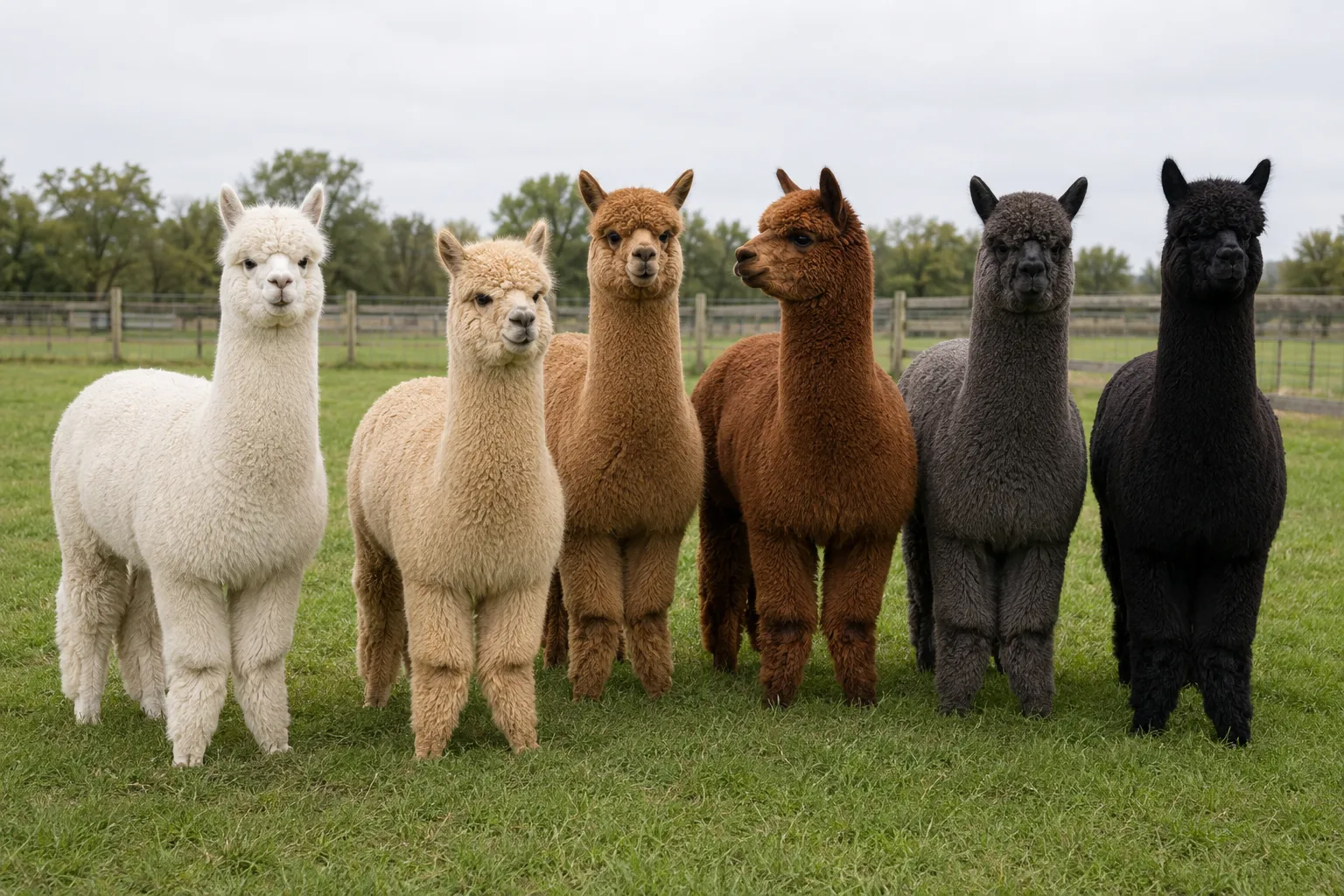
Huacaya alpacas occur in many natural colors
Huacayas can be white, fawn, brown, gray, black, or patterned. The same broad range also occurs in Suris, so a white alpaca is not automatically a Huacaya and a dark alpaca is not a separate breed.
Natural color can affect breeding goals, sorting, and the products a farm plans to make, but it does not replace an evaluation of fineness, uniformity, staple length, strength, or usable fleece weight. Dark and light fleeces can both be high quality.
Undyed palettes
Natural shades can be sorted and combined without dye, allowing yarn and fabric to retain the original fleece color.
Consistent lots
A processor making a larger batch needs enough compatible fiber in color, grade, and length—not merely several fleeces that look similar from a distance.
Breeding for color
Color goals should remain part of a broader plan that also protects health, sound conformation, reproductive fitness, and useful fleece characteristics.
One coat, several fiber grades
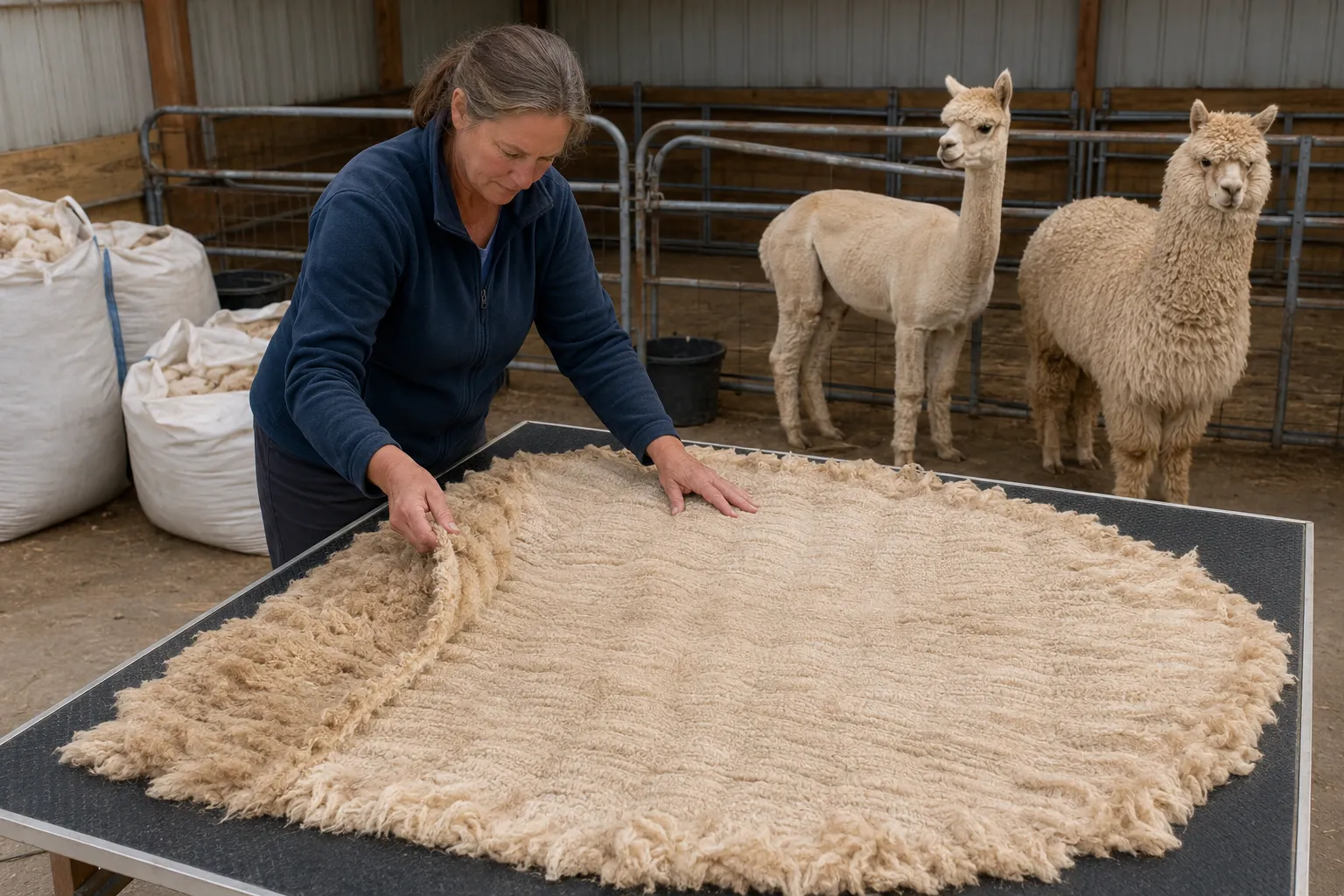
From shearing to a usable Huacaya fleece
Annual shearing removes the coat as a physical necessity and creates the raw material for fiber work. What happens immediately afterward determines whether different grades remain identifiable or become mixed together.
-
01
Shear and separate
Keep the main blanket distinct from neck, belly, leg, and other fiber so different grades do not become inseparable.
-
02
Skirt the fleece
Remove heavy contamination, very coarse fiber, matted areas, short cuts, and sections that do not match the usable blanket.
-
03
Evaluate and record
Record fleece weight, staple length, condition, and observations. Fiber testing can add measurements that photographs and touch cannot provide.
-
04
Choose the preparation
Washing, carding, combing, blending, and spinning should be selected for the fiber’s length, uniformity, fineness, and intended product.
Match the fiber to the object
What Huacaya fleece can become
Huacaya fiber is used in knitted and woven clothing, accessories, blankets, and other textiles. The breed supplies the crimped fleece structure; the individual fiber grade and the way the yarn is built determine the finished product.
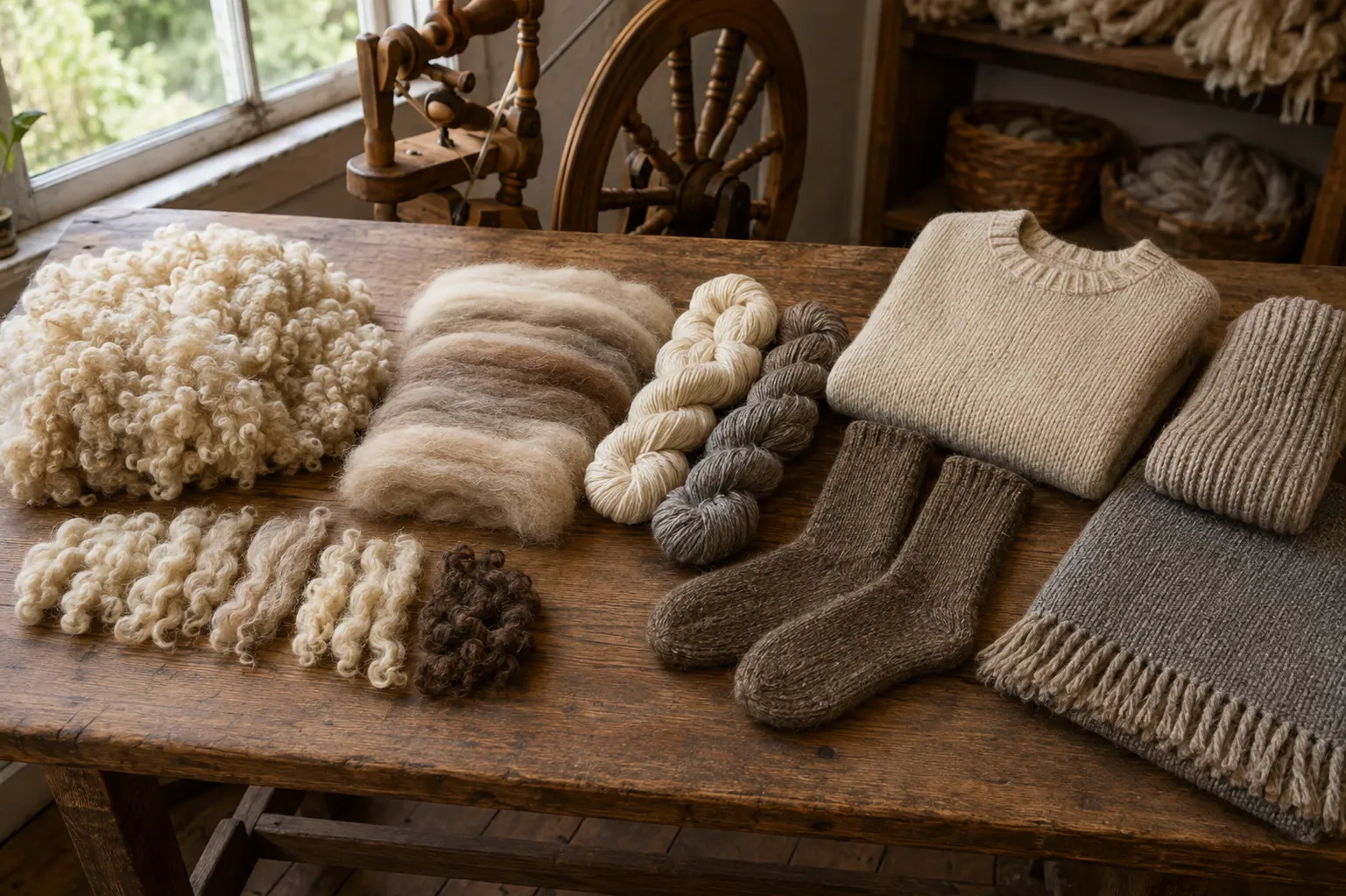
Next-to-skin garments
Sweaters, scarves, hats, and other garments worn close to the skin generally call for fine, consistent fiber and a yarn suited to the design.
Everyday clothing and accessories
Socks, mittens, outer layers, and practical knitwear may use different yarn structures or blends to add strength, recovery, and durability.
Household and durable uses
Blankets, rugs, felted items, and other projects can use sound fiber that would not be comfortable in a garment worn against bare skin.
The same raw fiber can produce very different results depending on preparation, yarn construction, blend, and fabric structure. Finished alpaca clothing should therefore be evaluated as a textile, not solely by the breed named on its label.
Select for a defined purpose
Evaluating a Huacaya for a farm
Being a Huacaya tells you the animal’s breed, not whether it fits a particular herd. A companion, fiber animal, breeding prospect, and show animal should not be evaluated from the same short list or priced as though those roles were interchangeable.
For every role
- Identity, age, ownership, and health records
- Sound movement, bite, body condition, and functional conformation
- Temperament and response to routine handling
- Compatibility with the planned herd group
For fiber production
- Recent fleece samples rather than fleece-on photographs alone
- Annual blanket weight and staple-length records
- Fineness, uniformity, strength, density, and contamination
- How fleece characteristics have changed with age
For breeding
- Pedigree, relatedness, reproductive history, and earlier offspring
- Health and structural traits that should not be reproduced
- Evidence that the proposed animal supports a written herd goal
- A plan for every cria, including those that remain on the farm