Herds · roads · textiles · ceremony
Alpacas and llamas in the Inca Empire
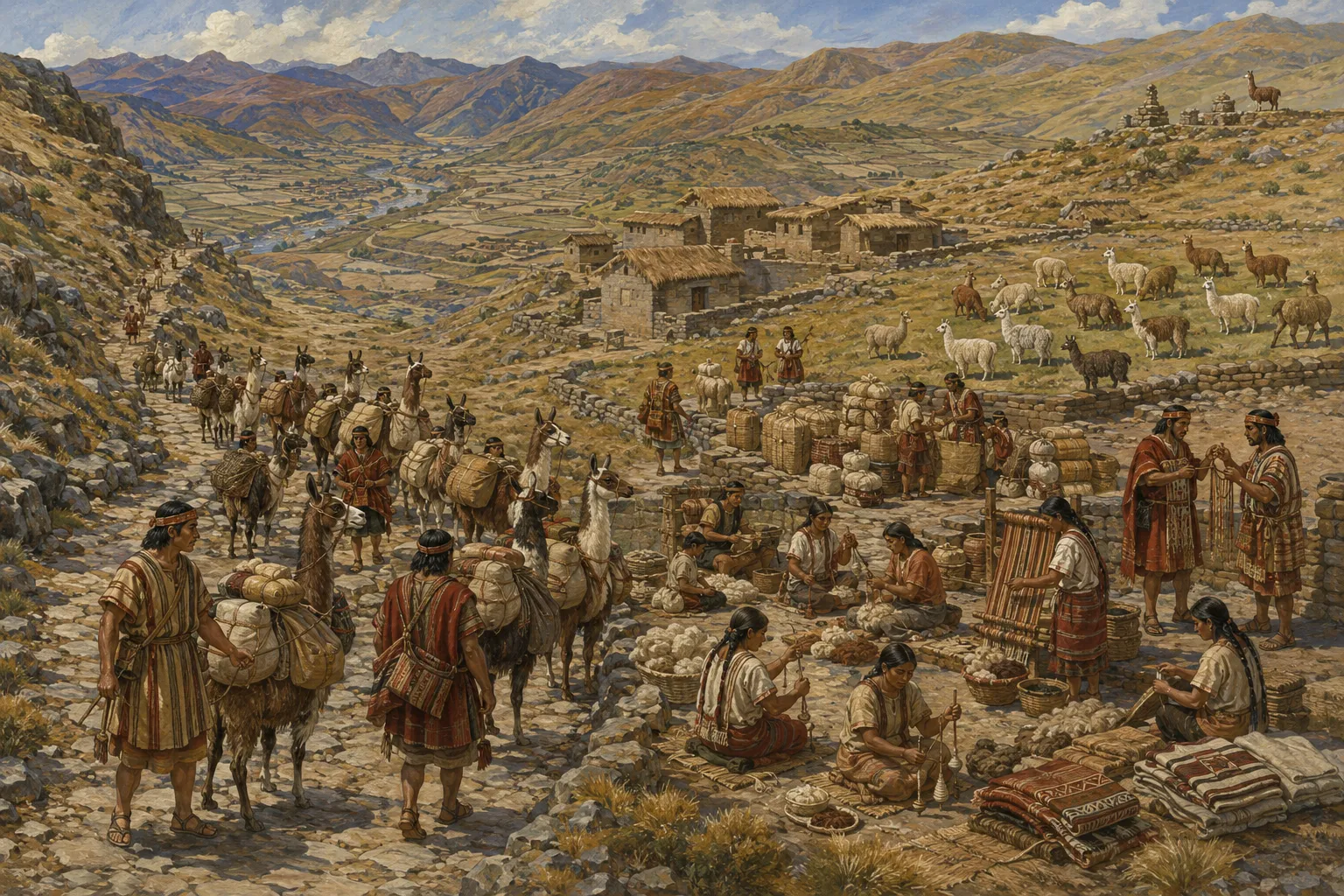
The Inca did not domesticate alpacas and llamas. They inherited thousands of years of Andean herding knowledge and connected camelid herds to an imperial system of labor, textiles, transportation, storage, political exchange, and religious life.
- 01Ancient tradition
- 02Organized herds
- 03Daily resources
- 04Textiles and power
- 05Roads and ceremony
The story did not begin with the Inca
The Inca inherited an ancient camelid tradition
By the time the Inca Empire began expanding across the Andes, people had already been raising alpacas and llamas for thousands of years. The empire inherited established herds, experienced pastoral communities, and generations of knowledge about life with camelids.
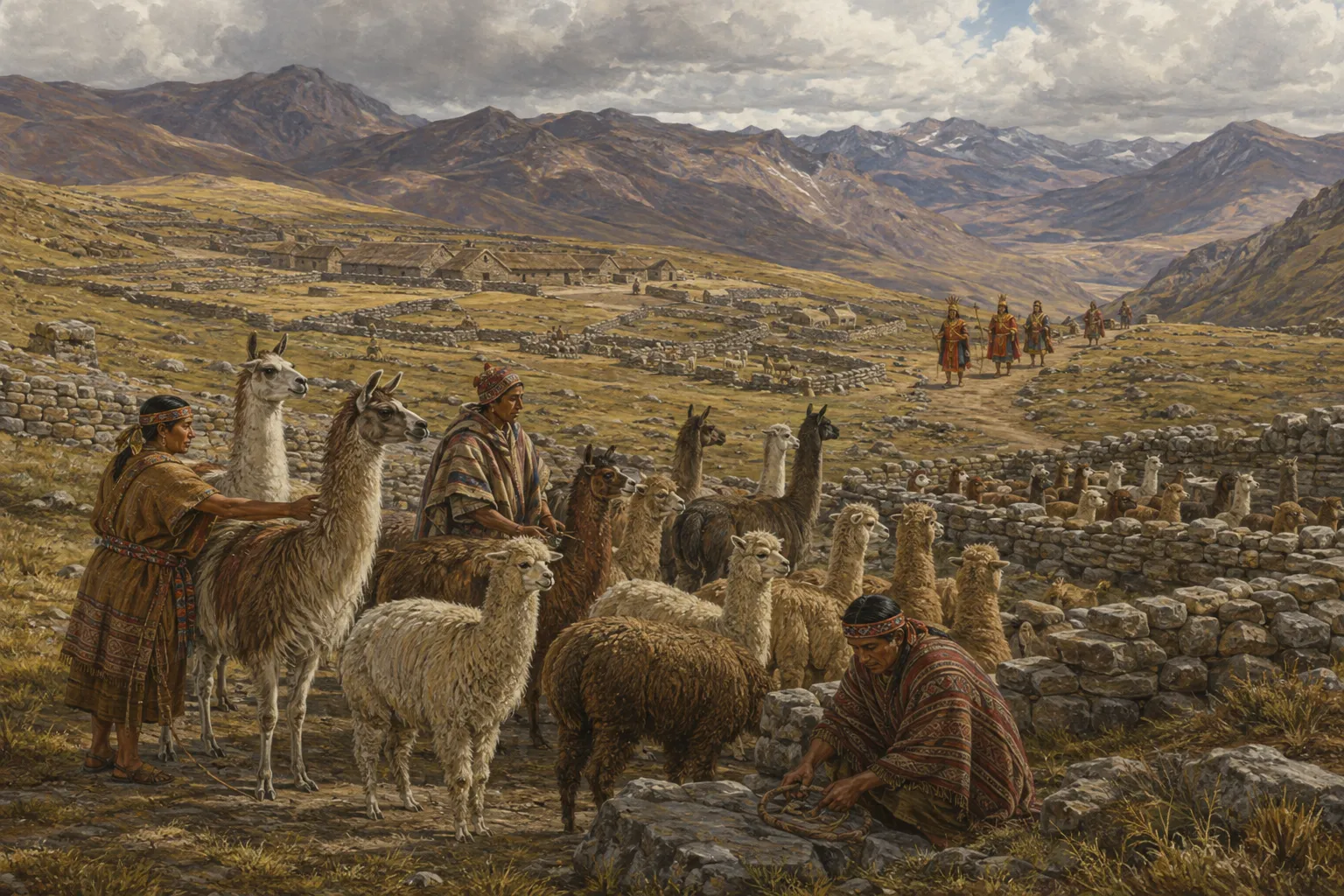
Alpacas and llamas were not created by the Inca, nor did organized camelid herding begin with the empire. Their domestication had taken place thousands of years earlier, and earlier Andean societies had already developed pastoral economies built around fiber, transport, meat, hides, fuel, and exchange.
Highland herders understood where animals could graze during different seasons, how to protect newborns, when to separate parts of a herd, and which animals possessed desirable characteristics. Corrals, pasture routes, breeding practices, and relationships between herding settlements were already parts of Andean life.
As Inca power spread, it encountered these existing regional traditions. The empire could claim animals, grazing land, and labor for state or religious purposes, but it still depended on the practical knowledge of the people who raised the herds. Local herders remained the ones who understood the animals and the difficult high-altitude environment.
What changed under the Inca was primarily the scale of organization. Herds and the materials they produced became connected to a political system extending across much of western South America. Camelids could now support not only a household or community, but also imperial storehouses, armies, officials, construction projects, religious institutions, and long-distance networks.
What did the Inca change?
An old tradition entered a larger system
Andean people already maintained domestic herds, used stone corrals, managed seasonal grazing, selected breeding animals, processed fiber, and moved goods with llamas. These practices developed long before the Inca Empire.
- Skilled local herders
- Established pasture routes and corrals
- Specialized alpaca and llama herds
- Fiber production and caravan exchange
The Inca incorporated animals, grazing lands, herders, and existing traditions into a wider administrative system. Some herds supported state projects, religious institutions, redistribution, and travel across the empire.
- Larger state- and temple-associated herds
- Administrative counting and oversight
- Fiber and cloth collected for state use
- Caravans connected to imperial roads and storehouses
Animals, pasture, labor, and oversight
How the empire organized its herds
Camelid management in the Inca world was not one enormous ranch directed from Cusco. Animals existed in different household, community, state, and religious settings, while experienced Andean herders performed the daily work that kept them alive.
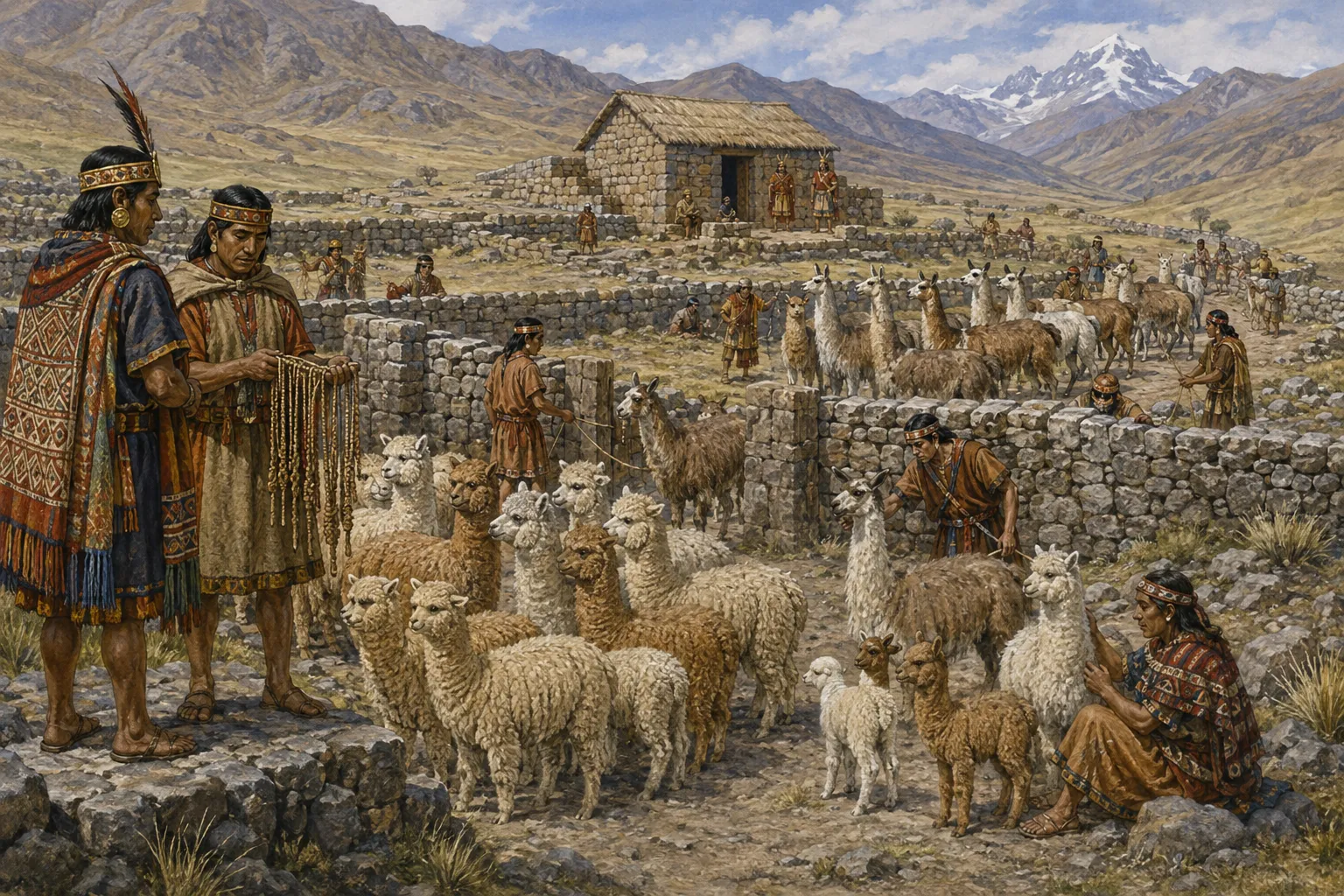
A herd required attention throughout the year. Herders guided animals between grazing areas, watched for predators and severe weather, assisted during births, protected young animals, separated groups when necessary, and recognized changes in health or behavior. Their knowledge was rooted in direct experience with particular landscapes and animals.
Alpacas and llamas could be grouped according to practical needs. Age, sex, reproductive status, fleece, color, size, and intended use could all matter. Taller, stronger llamas were useful for caravan work, while dense and desirable fleece was especially valuable in alpaca herds. Females with young animals required different handling from males being prepared for transport.
The Inca state brought some herds and pasturelands into wider systems of administration. Officials could oversee animals and the labor associated with them, while quipus allowed quantities and obligations to be recorded with knotted cords. Herds could supply fiber, meat, pack animals, ceremonial animals, and goods distributed through state institutions.
Even under imperial rule, however, camelid ownership and use did not fit into a single category. Families and local communities continued to depend on animals, while other herds were associated more directly with state or religious purposes. These contexts could overlap, and the precise arrangement differed across the enormous territory controlled by the Inca.
Explore the herd system
One empire, several herd contexts
Select a context to see how animals, labor, and resources could be connected.
Herds supported ordinary domestic life.
Families could depend on camelids for fiber, food, hides, fuel, exchange, and the reproduction of their own herds. Household animals linked everyday work with the wider pastoral economy.
- Managed by
- Family members and local herders
- Supported
- Clothing, food, fuel, exchange, and herd growth
Pasture and labor could connect many households.
Communities coordinated access to land, water, seasonal grazing, and collective work. Local arrangements differed, but camelid pastoralism often depended on cooperation beyond a single household.
- Managed by
- Local pastoral communities and designated herders
- Supported
- Shared obligations, local exchange, and community needs
Some herds supplied resources on an imperial scale.
State-associated animals and labor could provide pack llamas, fiber, cloth, meat, and other resources for officials, workers, armies, storehouses, and acts of redistribution across the empire.
- Overseen by
- Officials working with skilled local herders
- Supported
- Transport, state labor, storage, supply, and political gifts
Selected animals served sacred institutions and ceremonies.
Herds associated with temples and religious authority could provide fiber, food for ceremonial occasions, and animals selected for offerings. Appearance and color could carry particular ceremonial importance.
- Connected to
- Temples, sacred places, attendants, and ritual specialists
- Supported
- Ceremonies, offerings, religious textiles, and feasts
Different strengths within one camelid economy
Two animals at the center of daily life
Alpacas and llamas were not interchangeable. Alpacas were especially important for their fleece, while llamas supplied fiber and other materials but also performed work no alpaca could replace: carrying loads through the Andes.
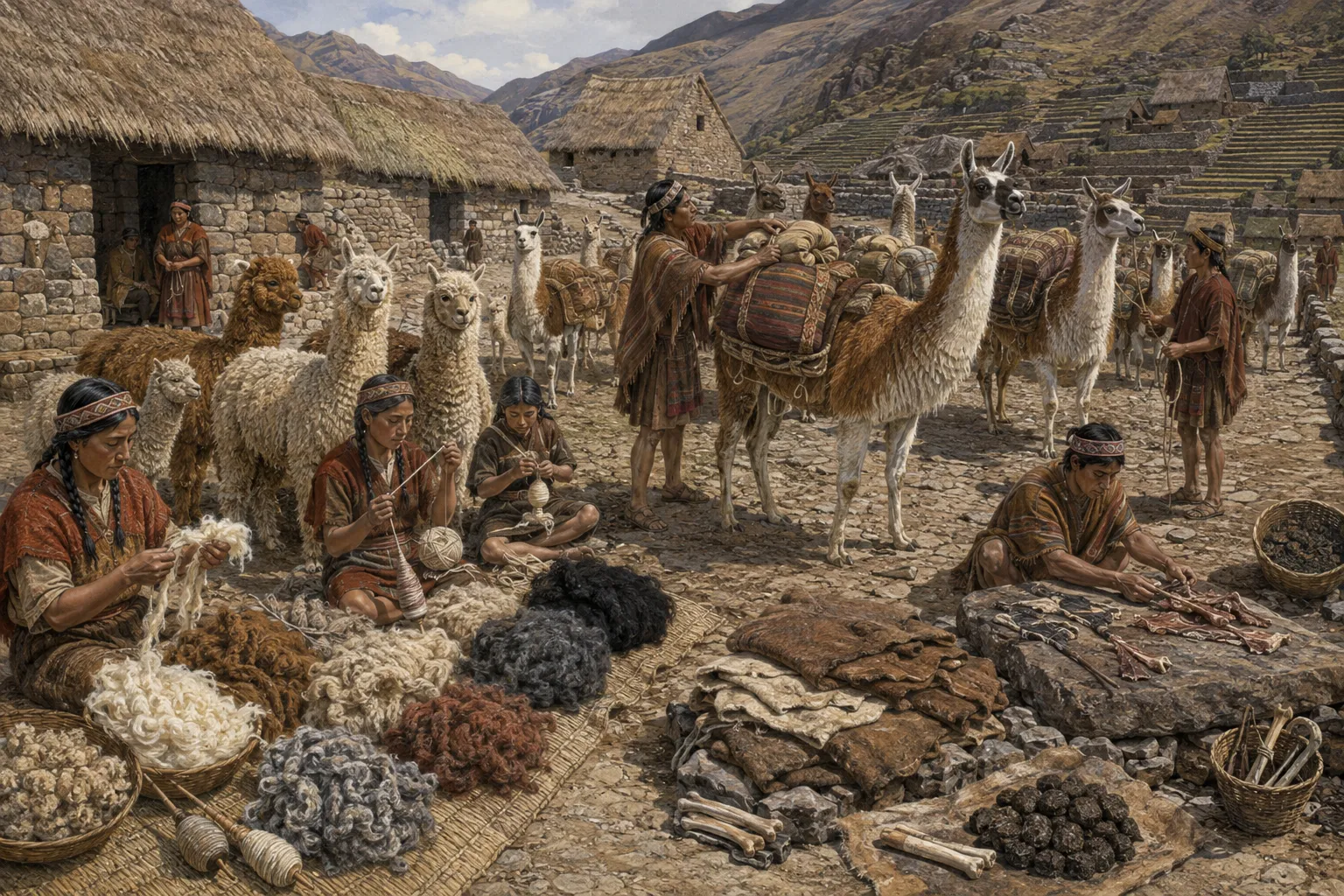
Alpaca fleece was well suited to the enormous textile demands of Andean life. Its density, softness, warmth, and range of natural colors made alpacas particularly valuable to communities that spun and wove camelid fiber. Repeated shearing allowed a living animal to supply material over many years.
Llamas also produced usable fiber, but their larger bodies gave them another crucial role. A trained pack llama could carry a compact load along mountain roads and established trails. Caravans moved food, fiber, cloth, pottery, metals, and other goods between ecological regions that produced very different resources.
Neither animal had only one use. Both could provide meat, hides, bones, fat, and dung in addition to fiber. Dried camelid dung was particularly useful as fuel in high-elevation environments where wood was scarce. Meat could be eaten fresh or preserved as dried charqui for storage and travel.
The difference was therefore one of emphasis rather than an absolute division. Alpacas were the more specialized fleece animals. Llamas combined material resources with size, strength, and transport ability. Together they helped make permanent settlement, textile production, exchange, and imperial movement possible across demanding Andean terrain.
Choose an animal
How each animal contributed
The principal role is highlighted first, followed by resources the animals could share.
Alpacas were especially valuable as renewable fiber animals. Their fleece helped supply yarn for warm clothing, woven cloth, household use, exchange, and larger systems of textile production.
- Natural colorsWhite, cream, brown, gray, and black fleece
- Meat and hidesResources obtained when animals were slaughtered
- DungFertilizer and an important highland fuel
- Herd valueBreeding animals and growing domestic wealth
Llamas carried balanced loads rather than riders. Organized caravans extended the reach of human transport and moved goods between highlands, valleys, settlements, roads, and storehouses.
- FiberCoarser and finer fibers used for different textiles
- Meat and charquiFresh meat and dried provisions for storage
- Hides and bonesMaterials used after an animal was slaughtered
- DungFuel and fertilizer in highland communities
From the living herd to imperial cloth
When fleece became wealth and power
Camelid fleece gained much of its value through human labor. Cleaning, spinning, dyeing, and weaving transformed an animal fiber into cloth that could warm a household, identify rank, reward service, fulfill obligations, and reinforce political relationships.
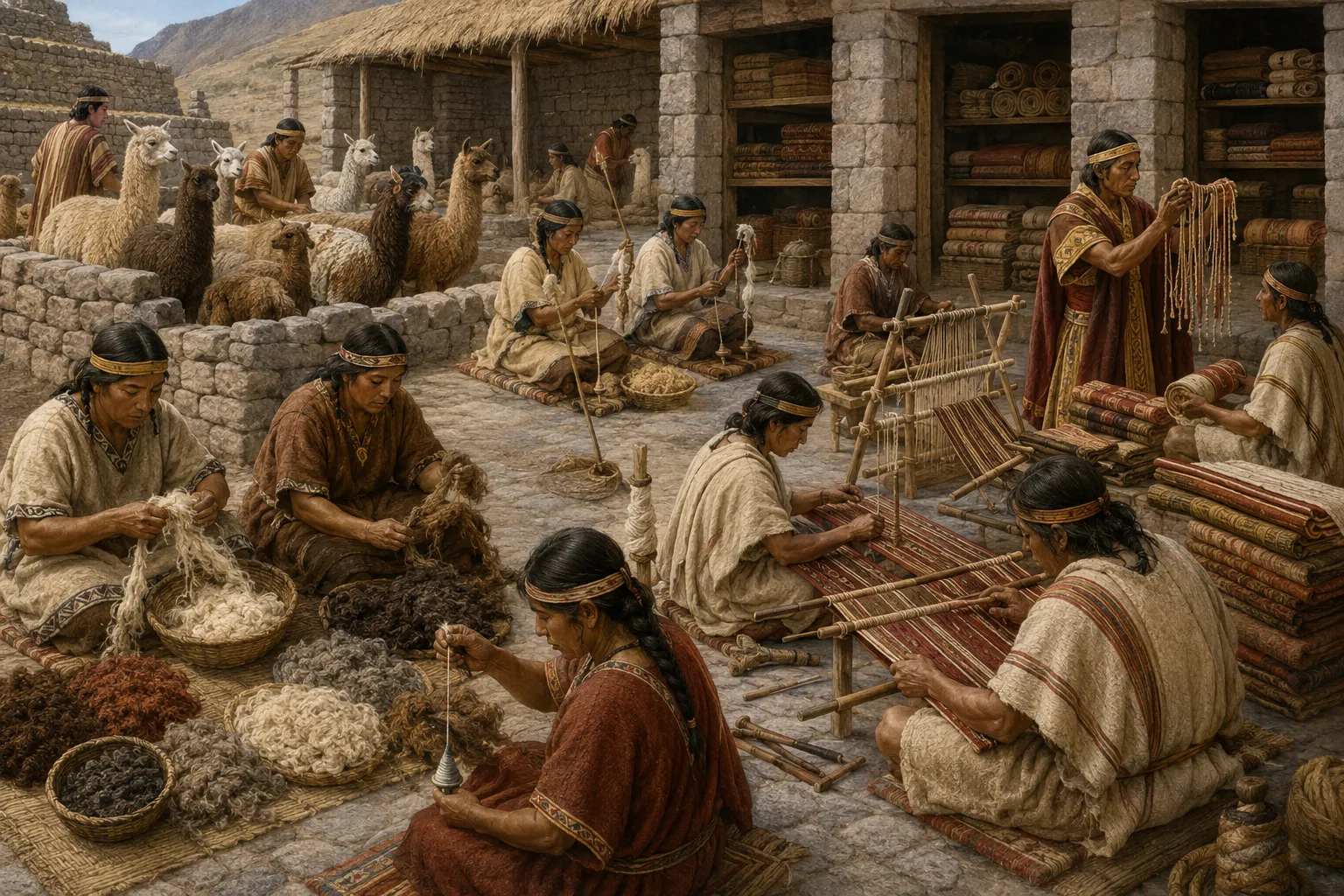
Fleece did not leave an alpaca or llama as a finished economic resource. It had to be collected, cleaned, sorted, spun into consistent yarn, sometimes dyed, and woven into cloth. Every stage required time and practiced hands, making textiles concentrated stores of both material and labor.
Different fibers and levels of workmanship produced cloth for different purposes. More ordinary textiles served daily needs, while exceptionally fine cloth demanded carefully selected material and highly skilled production. Camelid fiber could also be combined with cotton, especially where goods and materials moved between highland and coastal regions.
Under Inca rule, textile production reached beyond household clothing. The state collected and distributed cloth, supplied garments to workers and soldiers, and presented textiles as rewards or political gifts. Fine clothing could express authority and status, while the giving of cloth helped create obligations between rulers, officials, local leaders, and communities.
This made camelid herds part of a much longer chain of value. An alpaca grazing in the highlands was connected to spinners, dyers, weavers, administrators, storehouses, ceremonies, and political exchange. Fleece became powerful because the empire could organize the labor that turned it into cloth and control where some of that cloth went.
Follow the work
From fleece to political value
Each step added labor, skill, and meaning to the original material.
- 01 Herd and fleece Herders sustained the animals and the renewable supply of camelid fiber.
- 02 Sorting and spinning Workers cleaned and separated fleece before twisting fibers into usable yarn.
- 03 Dyeing and weaving Color, pattern, structure, and skilled workmanship transformed yarn into cloth.
- 04 Collection and storage Finished textiles could be counted, gathered, and held for later distribution.
- 05 Use, gift, and authority Cloth supplied people, marked rank, rewarded service, and strengthened political relationships.
A finished textile carried the value of the animal, the pasture that sustained it, and every person whose labor transformed the fleece.
Practical work and sacred significance
On the imperial road and in the sacred world
Llamas helped connect distant parts of the Inca Empire, but they were more than freight animals. The same species that carried ordinary supplies across the Andes also appeared in blessings, offerings, public ceremonies, sacred objects, and relationships with powerful places.
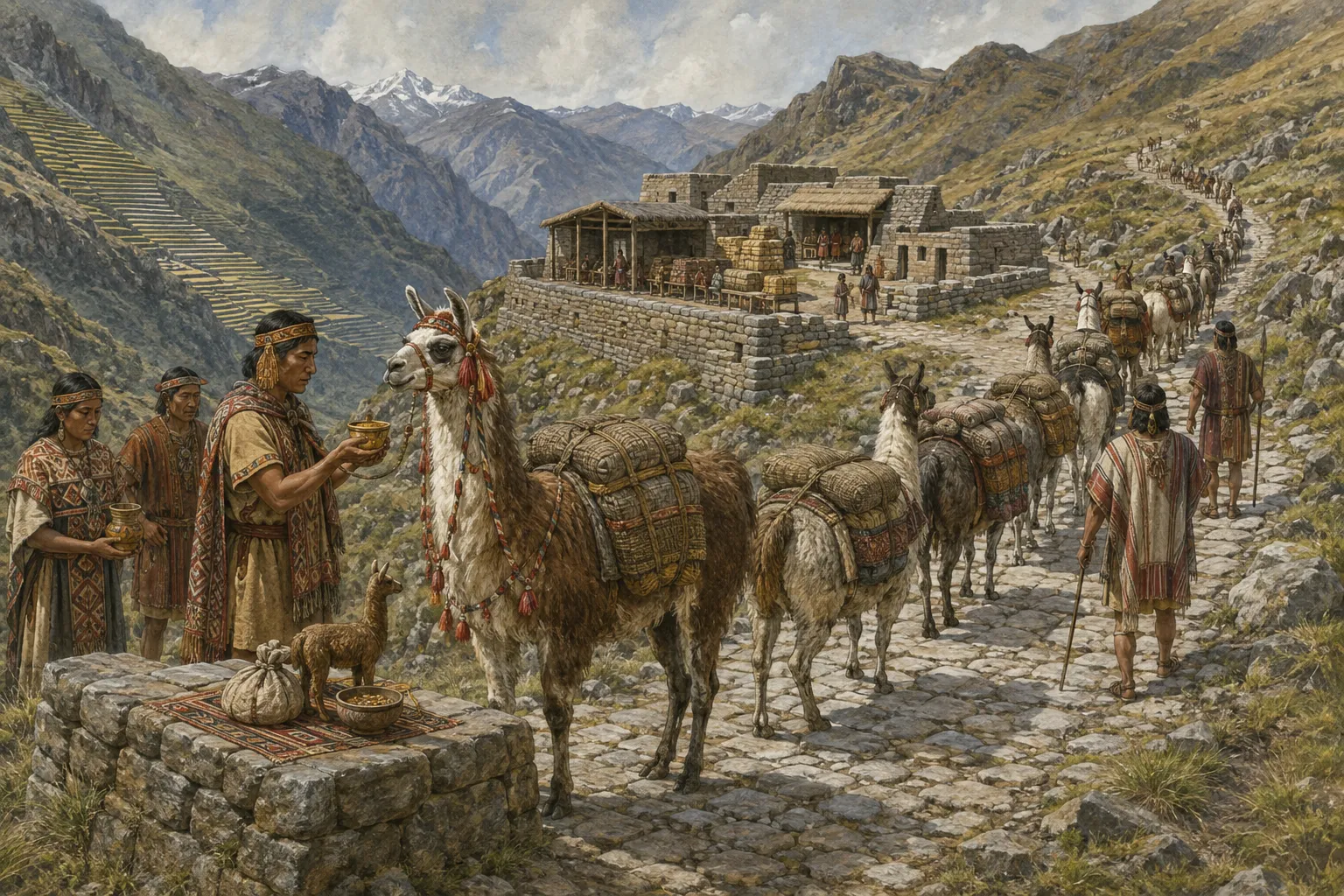
The Inca road system crossed mountains, plateaus, valleys, and deserts, connecting regions with sharply different climates and resources. Human travelers and porters remained essential, but llama caravans increased the amount of material that could move along these routes without wheeled freight vehicles or large Old World draft animals.
Pack llamas carried balanced loads rather than riders. Caravan leaders guided strings of animals between settlements, administrative centers, storehouses, and way stations. Loads could include food, fiber, finished textiles, pottery, metals, and other supplies collected or redistributed through imperial networks.
Llamas also held religious significance. Selected animals could be decorated, blessed, presented in public ceremonies, or offered at important moments. Color and appearance could affect ceremonial selection, while miniature camelid figures made from stone, shell, silver, or gold placed the animal’s form within sacred offerings.
These roles were connected. A caravan journey could begin with ritual attention to its animals, and the resources carried along the road could support ceremonies as well as practical needs. Llamas helped sustain the empire physically while also participating in the beliefs through which Andean people understood animals, landscapes, authority, and the sacred world.
One animal, two connected roles
Follow the llama through the Inca world
A chain of animals connected distant regions.
-
Herd
Suitable pack llamas were selected, gathered, and prepared by experienced handlers.
-
Load
Compact woven bags and balanced cargo were secured to the animals’ backs.
-
Road
Caravans traveled established routes through terrain linking highlands, valleys, and coast.
-
Way station
Tampus and nearby storehouses supported travelers, officials, labor, and supplies.
-
Destination
The goods reached settlements, workers, armies, administrators, or redistribution centers.
Llamas carried religious meaning as well as physical loads.
Ritual attention could accompany a caravan’s departure and express concern for a safe and successful journey.
Color, appearance, and ceremonial purpose could influence which animals were chosen for particular observances.
Miniature llamas fashioned from valued materials placed the animal’s form within offerings and sacred deposits.
Llamas could be presented or offered during events connected with religion, political authority, and the annual cycle.
The larger meaning
Camelids helped make the empire possible
Alpacas and llamas did not build the Inca Empire by themselves, but the empire could not have functioned in the same way without them. They connected pasture to textile, road to storehouse, household labor to political authority, and practical survival to sacred life.