Hand spinning
Turning prepared fiber into yarn
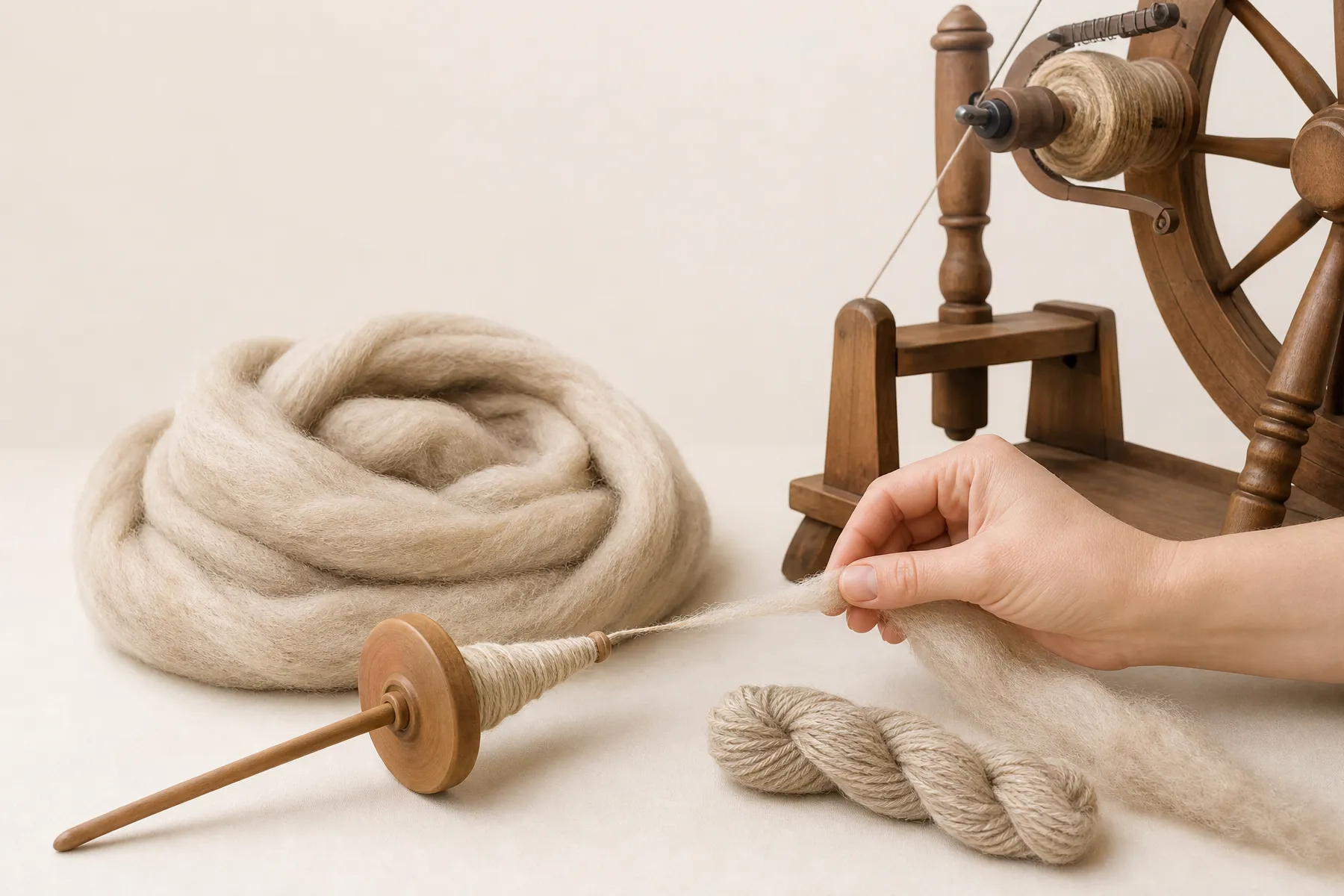
Roving can be spun by hand into yarn, giving the spinner direct control over twist, thickness, and the character of the finished strand.
Alpacas / Fiber / Uses
Once fleece has been sorted, cleaned, prepared, and spun, it can become far more than yarn. Explore clothing, blankets, fiber arts, felted pieces, and other practical uses.
Explore the uses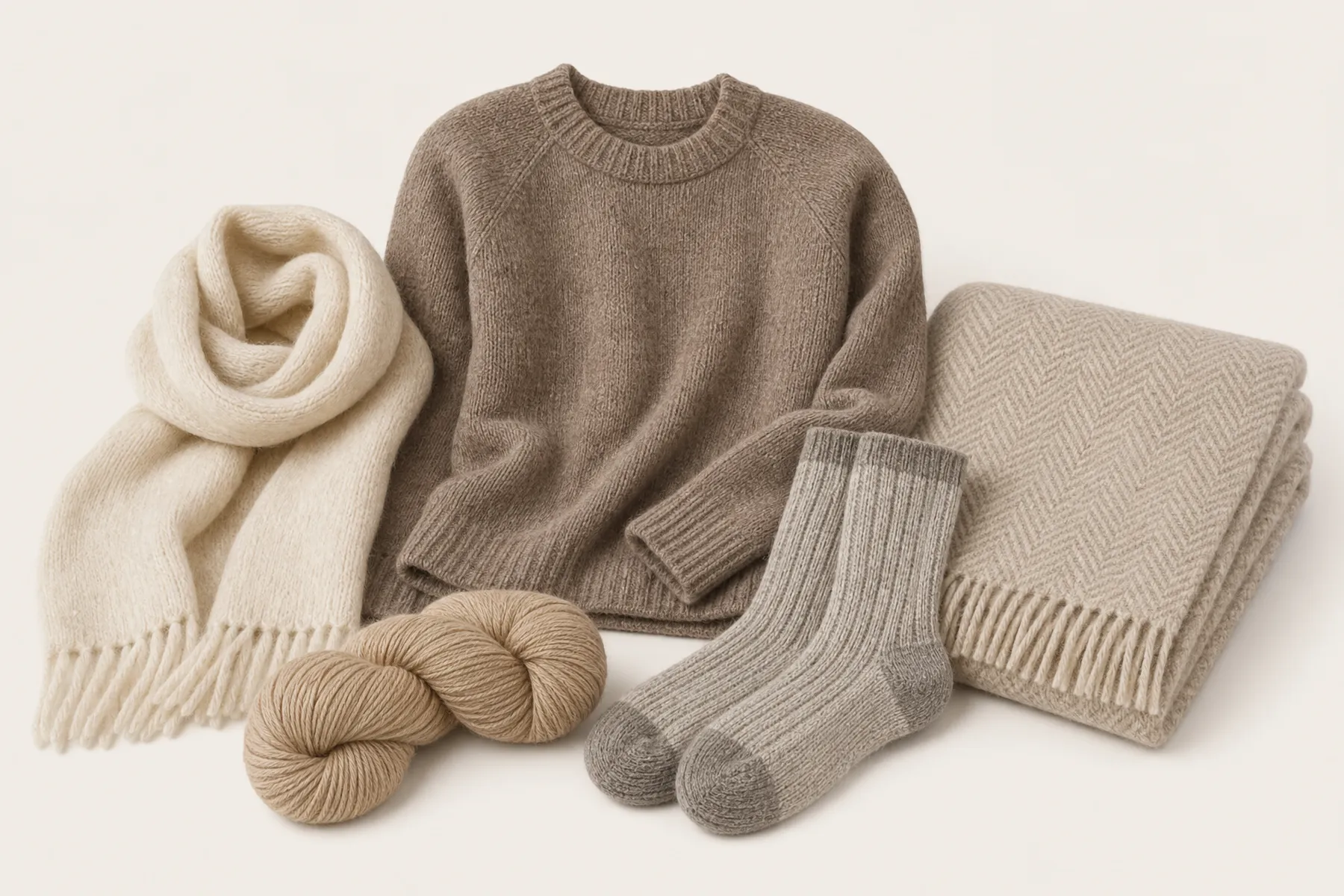
From fleece to everyday objects
Fiber from an alpaca can be spun into yarn for clothing, woven into home textiles, used by hand spinners and fiber artists, or directed toward practical uses where softness is not the only goal.
Across alpacas, fleece varies in fineness, consistency, length, and color. Those differences help determine whether a particular portion is better suited to a scarf, socks, a blanket, a felted item, or another use.
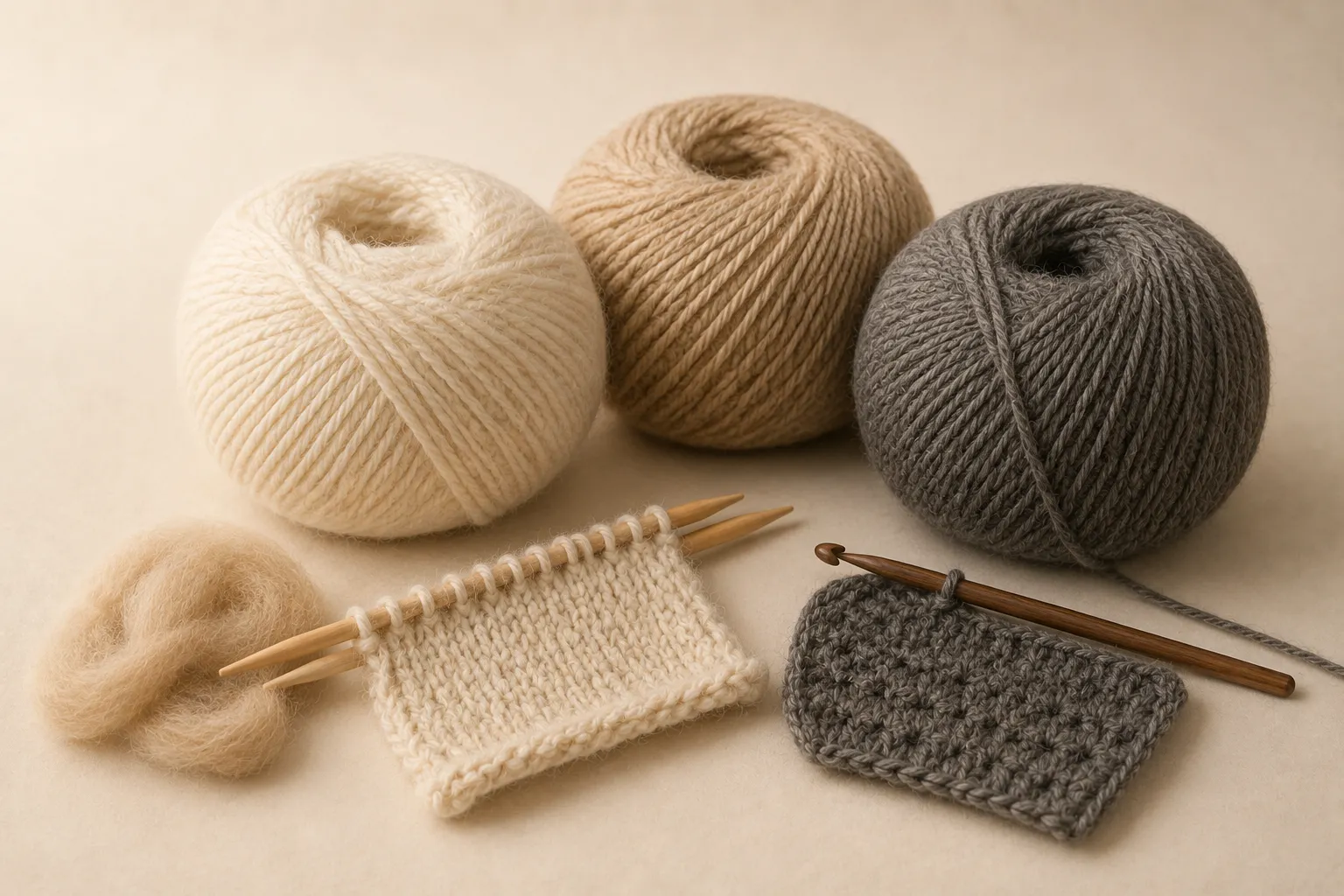
Finished products also depend on how the fiber was prepared and constructed. The same raw material can behave very differently once it becomes yarn, knitted fabric, woven cloth, felt, or loose filling.
01 / Choose a category
Start with a broad category, then look at a more specific example.
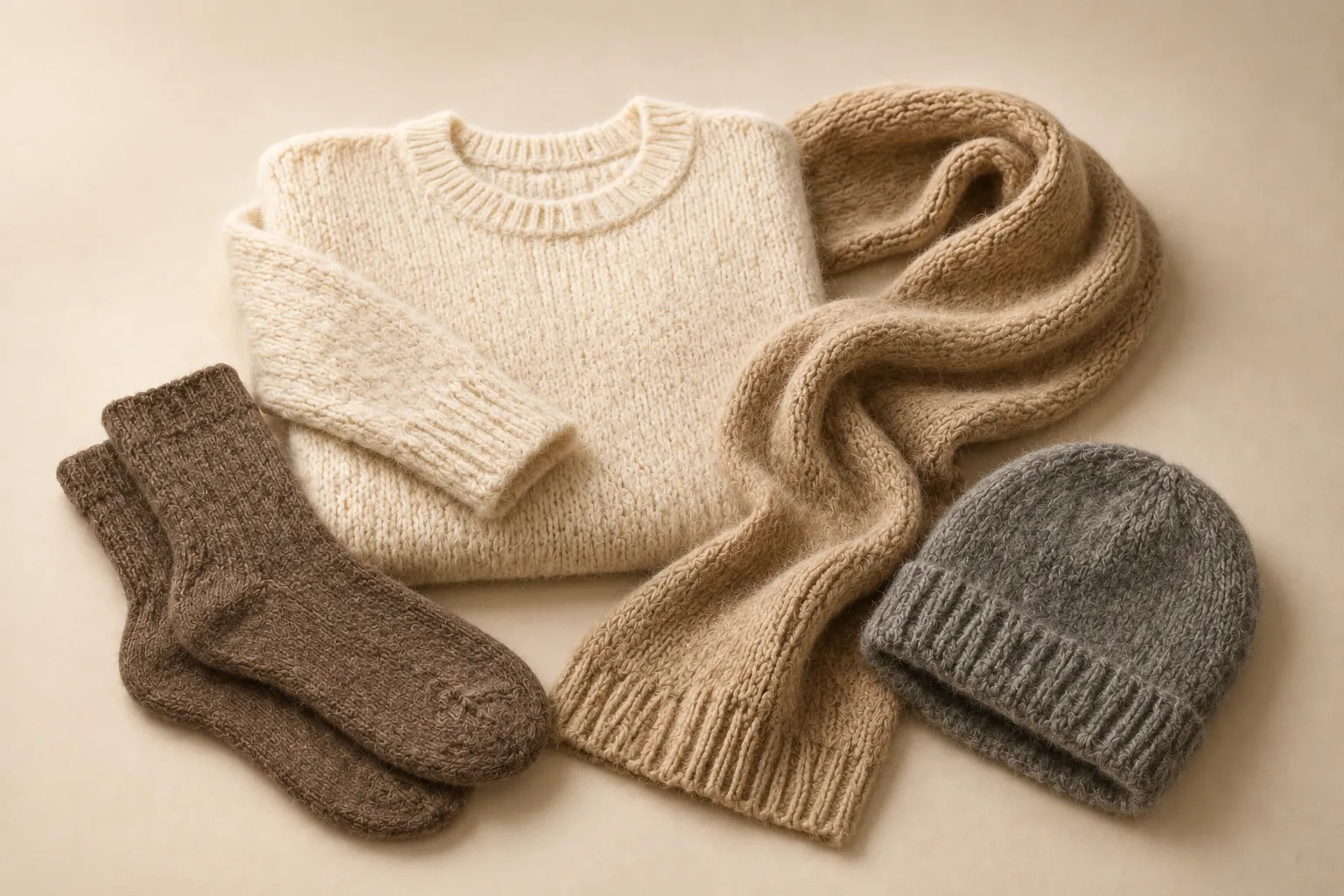
Clothing
Garments made from alpaca fiber can include scarves, socks, sweaters, jumpers, hats, and other cold-weather pieces. Fineness and consistency matter more when the textile will sit directly against sensitive skin.
02 / Clothing
Choose an item to see why the finished use changes what matters.
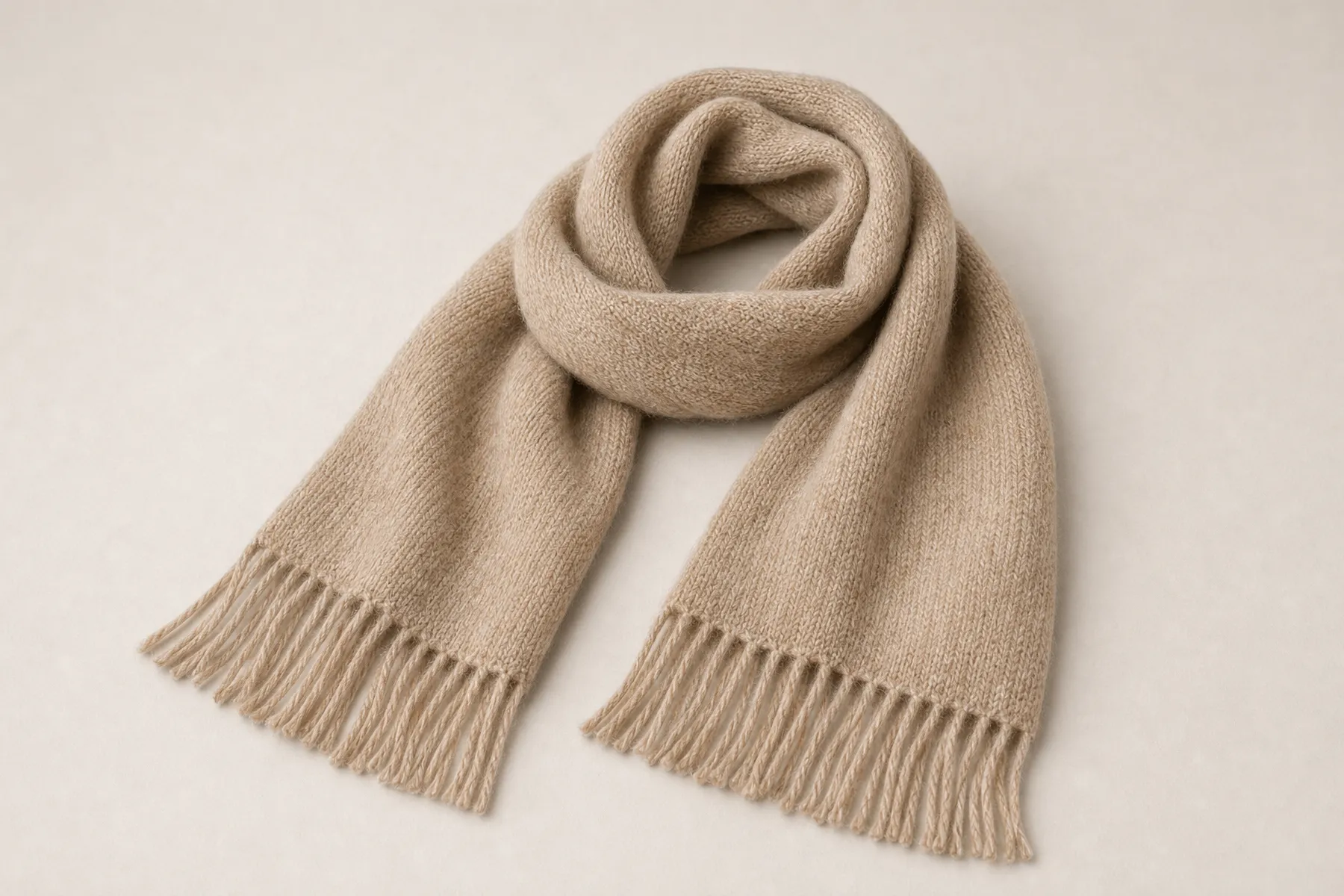
Scarf
Scarves spend a lot of time against the skin, so fineness, uniformity, and the presence of coarse fibers can become especially noticeable.
Explore alpaca scarvesFor a broader look at wearable pieces, see alpaca clothing.
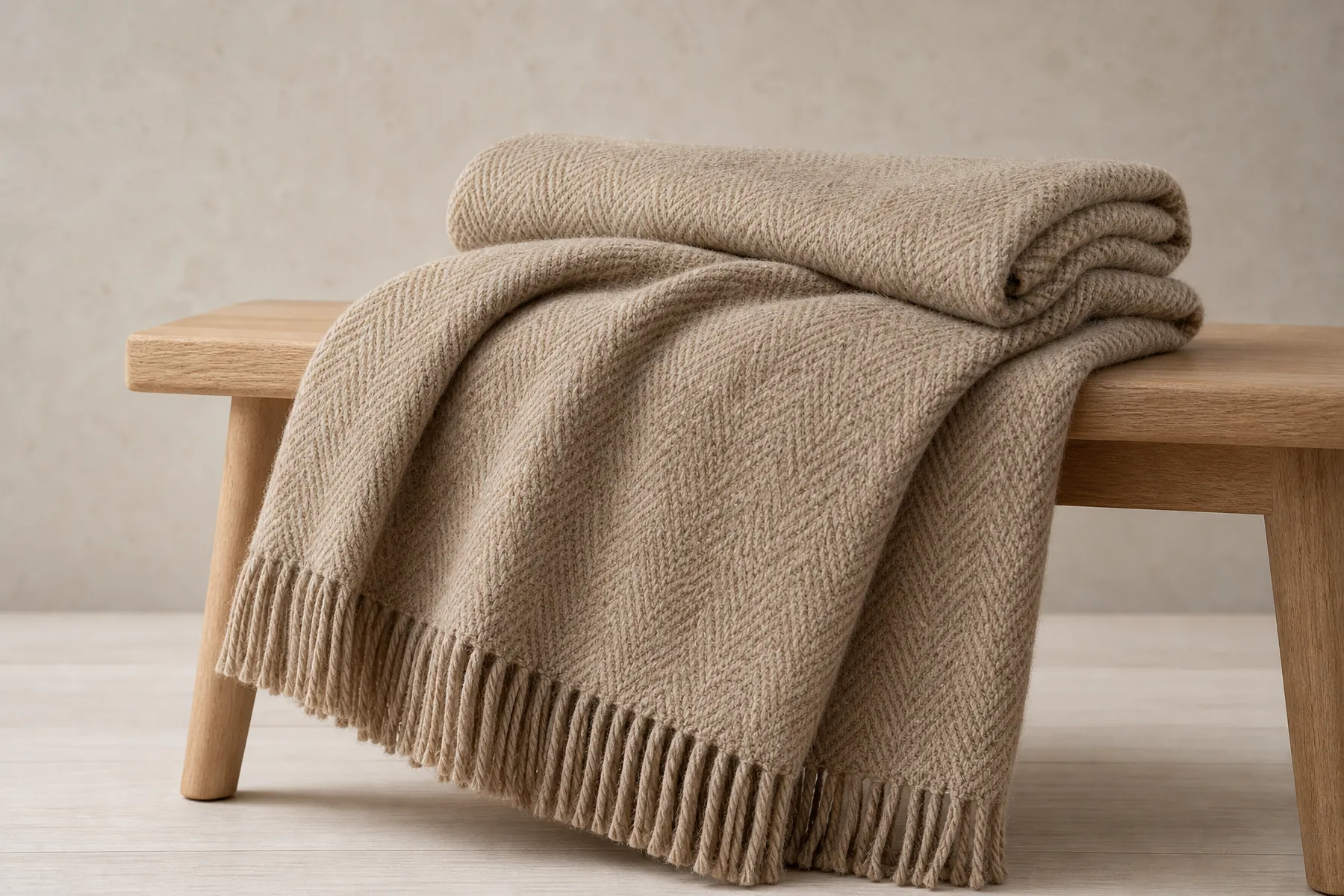
03 / Home textiles
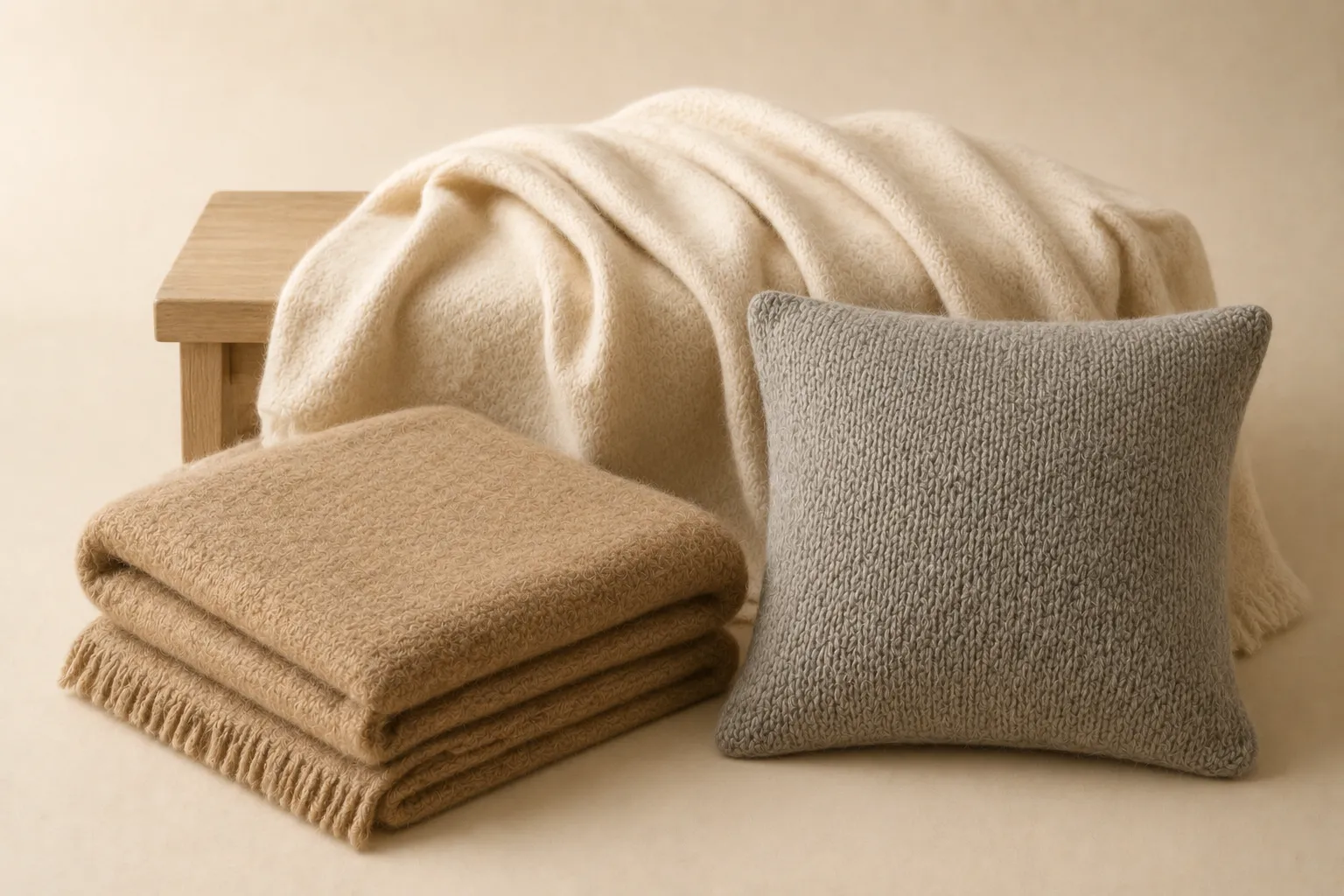
A blanket still needs to feel comfortable, but it does not always need the same next-to-skin fineness expected from a scarf or lightweight sweater.
Warmth, drape, weight, weave or knit structure, and the overall feel of the finished textile all contribute.
Explore alpaca blanketsNot every fiber needs the same job
A fleece can contain finer areas and coarser areas. The portion chosen for a soft garment may not be the same portion used for a felted object, filling, or another practical material.
That does not automatically make the coarser fiber waste. It means the use should match the character of the material. This is one reason fiber grading and sorting matter before processing begins.
Once fiber has been selected for a purpose, the processing steps determine how it changes from loose fleece into the form needed for that finished use.
04 / Fiber arts
Spinning and felting let the material itself remain part of the experience.
Hand spinning
Roving can be spun by hand into yarn, giving the spinner direct control over twist, thickness, and the character of the finished strand.
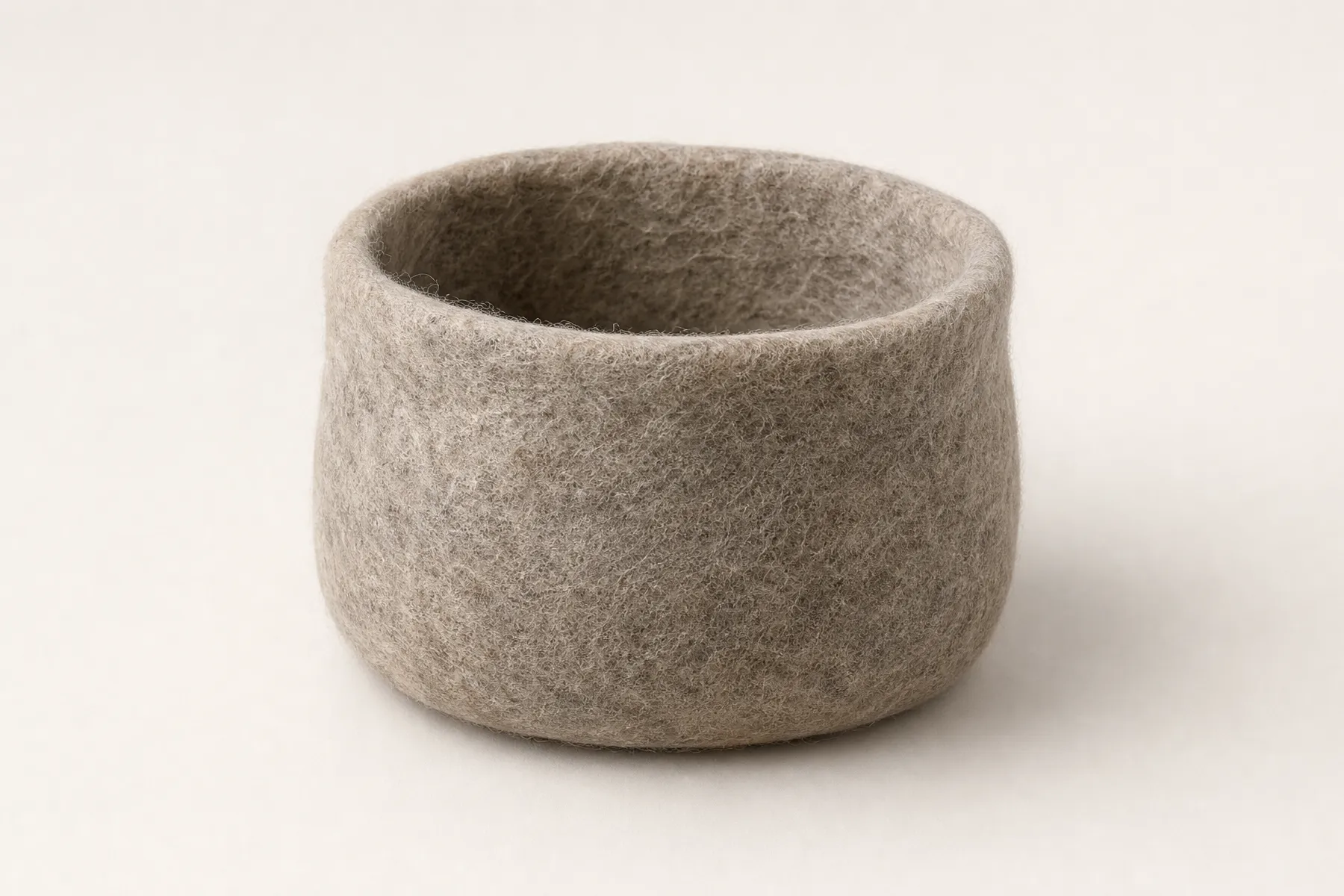
Felting
Felted material is made by compressing and entangling fibers into a dense textile form rather than first turning them into yarn.
05 / Beyond yarn
Fiber that is not selected for soft clothing may still be useful in forms where extreme fineness matters less.
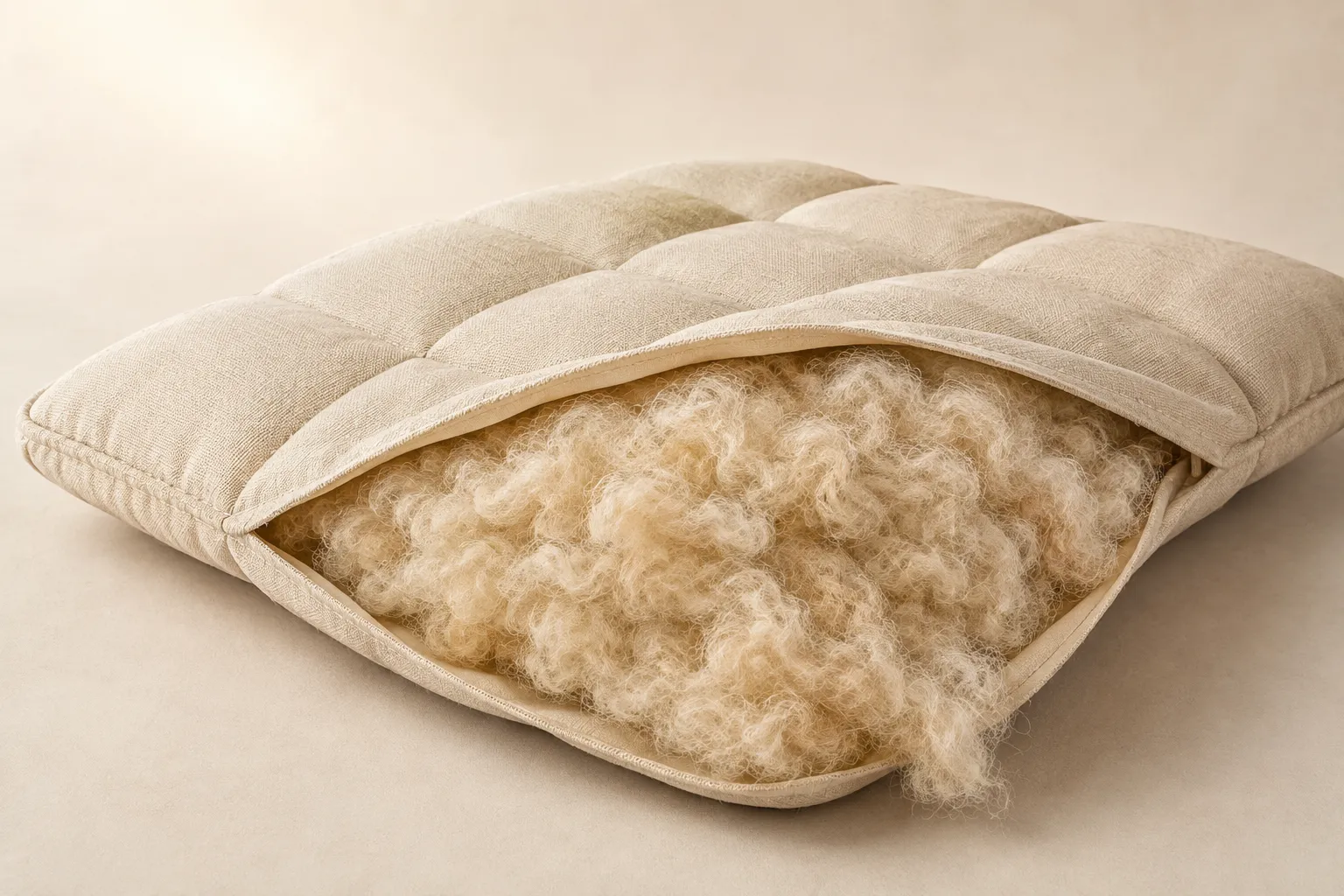
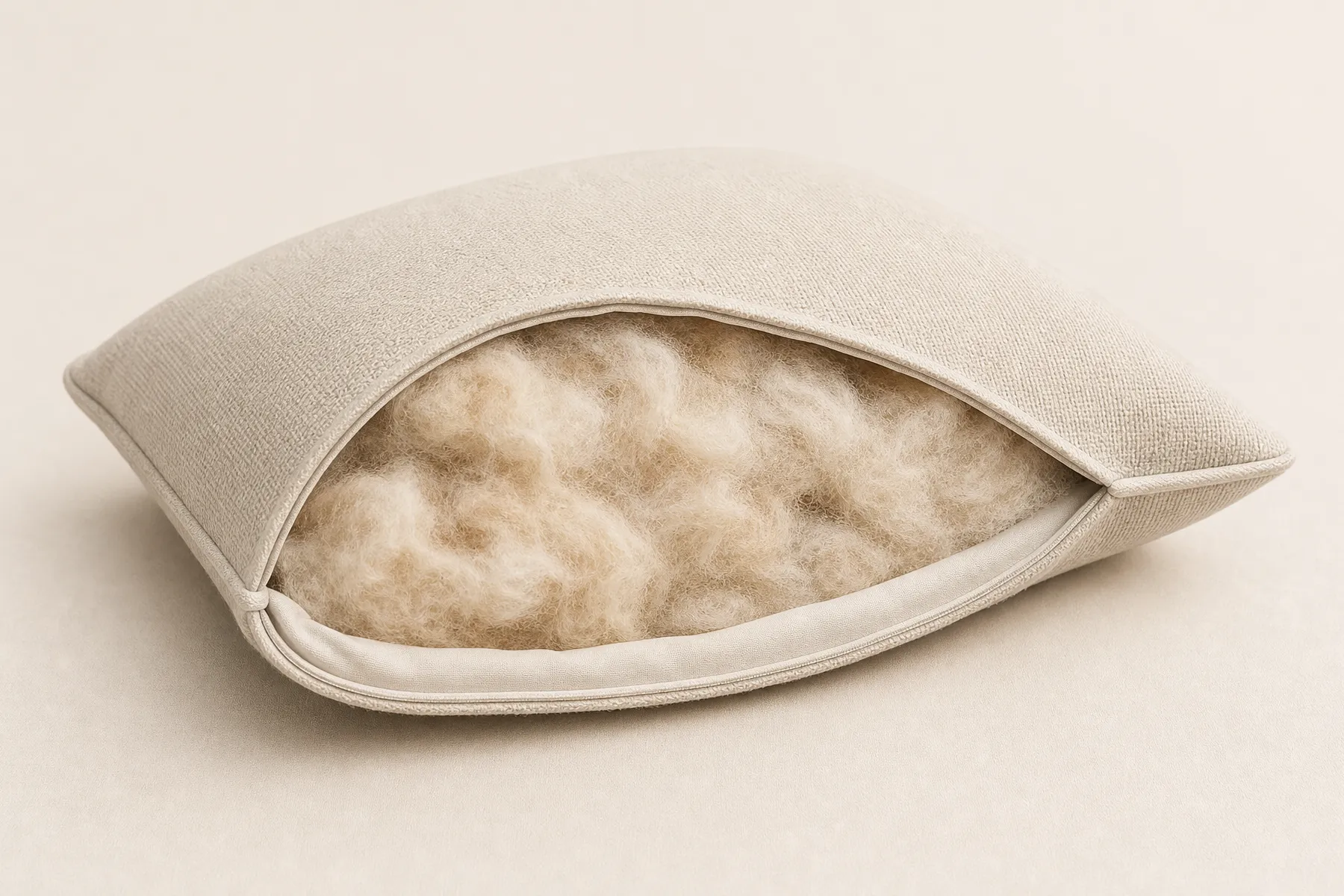
Prepared alpaca fiber can be considered for filling, felted material, padded textile applications, or other uses where its fibrous structure is useful.
The exact application matters, so broad performance claims should be treated carefully. The important idea is that not every useful path ends in yarn.
06 / The broader picture
The same fiber can move toward very different outcomes depending on its quality, preparation, and intended use.