Alpaca fiber
Fine alpaca fiber can feel extremely soft, particularly when the fleece has good uniformity and relatively little coarse guard hair.
Alpacas / Fiber
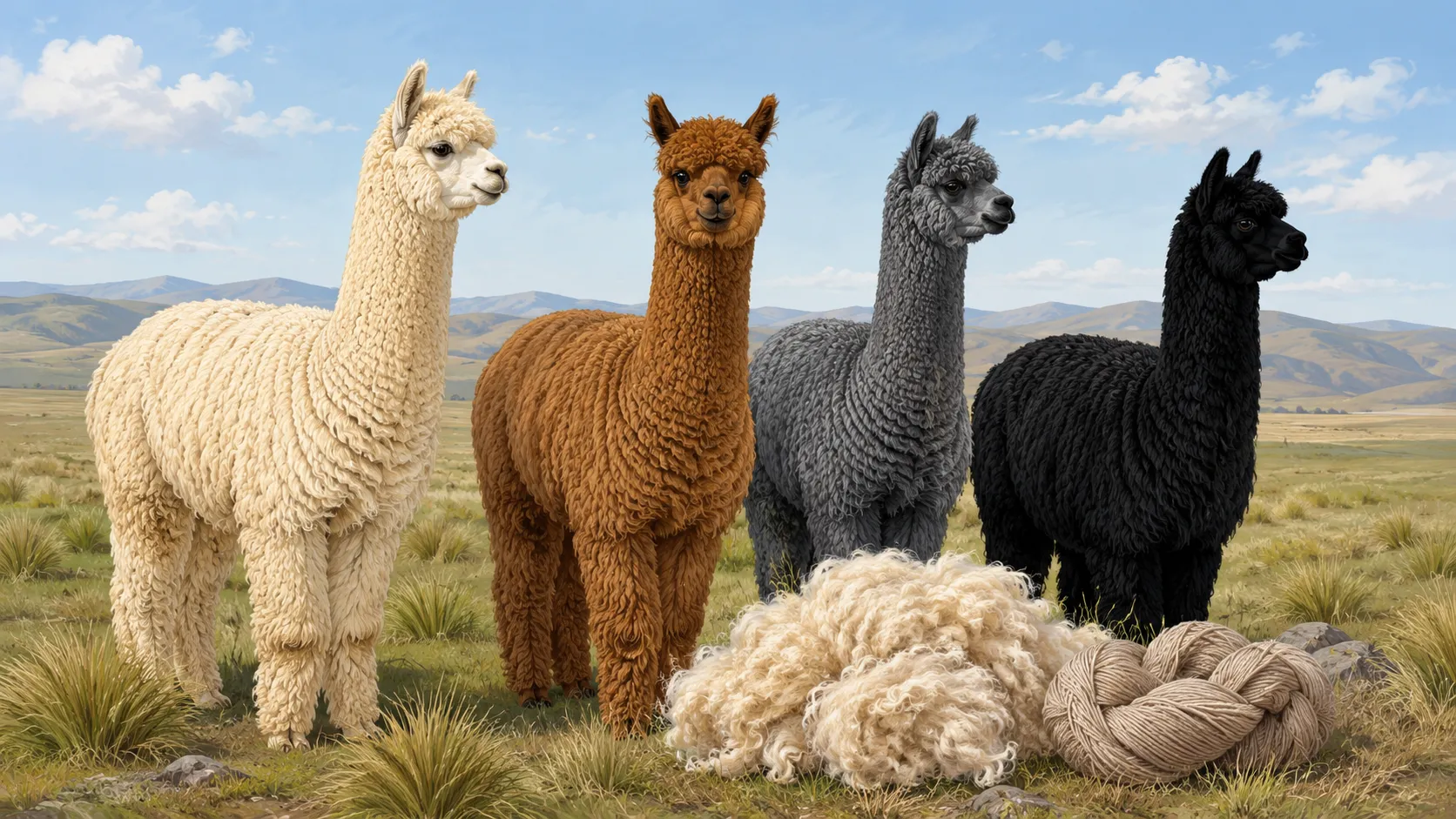
Alpacas are raised largely for their fleece, but alpaca fiber is not one uniform material. Its softness, fineness, color, length, and overall quality can vary considerably from one animal to another and even between different parts of the same fleece.
Huacaya and Suri alpacas also produce noticeably different types of fleece. This hub explores what alpaca fiber feels like, what determines its quality, how it compares with sheep wool, how fleece becomes finished fiber, the natural colors alpacas produce, and the many ways the fiber can be used.
01 / Fiber diameter
Fine alpaca fiber can feel very soft and smooth, particularly when it comes from areas of the fleece that contain relatively uniform, fine fibers. But not every alpaca produces fiber that feels the same.
One of the most important measurements is fiber diameter, usually expressed in microns. A micron is one-millionth of a meter.
Very fine fiber. At this diameter, the individual fibers are relatively flexible and can feel exceptionally soft against the skin.
Fiber diameter is only part of the story. Uniformity, guard hair, processing, yarn construction, and the finished textile can all affect how alpaca fiber ultimately feels.
02 / Quality
Fiber quality depends on more than softness alone. Producers and fiber processors look at several characteristics that affect how a fleece can be prepared, spun, and used.
Two alpacas can produce fleeces that look similar from a distance but differ substantially when the individual fibers are examined.
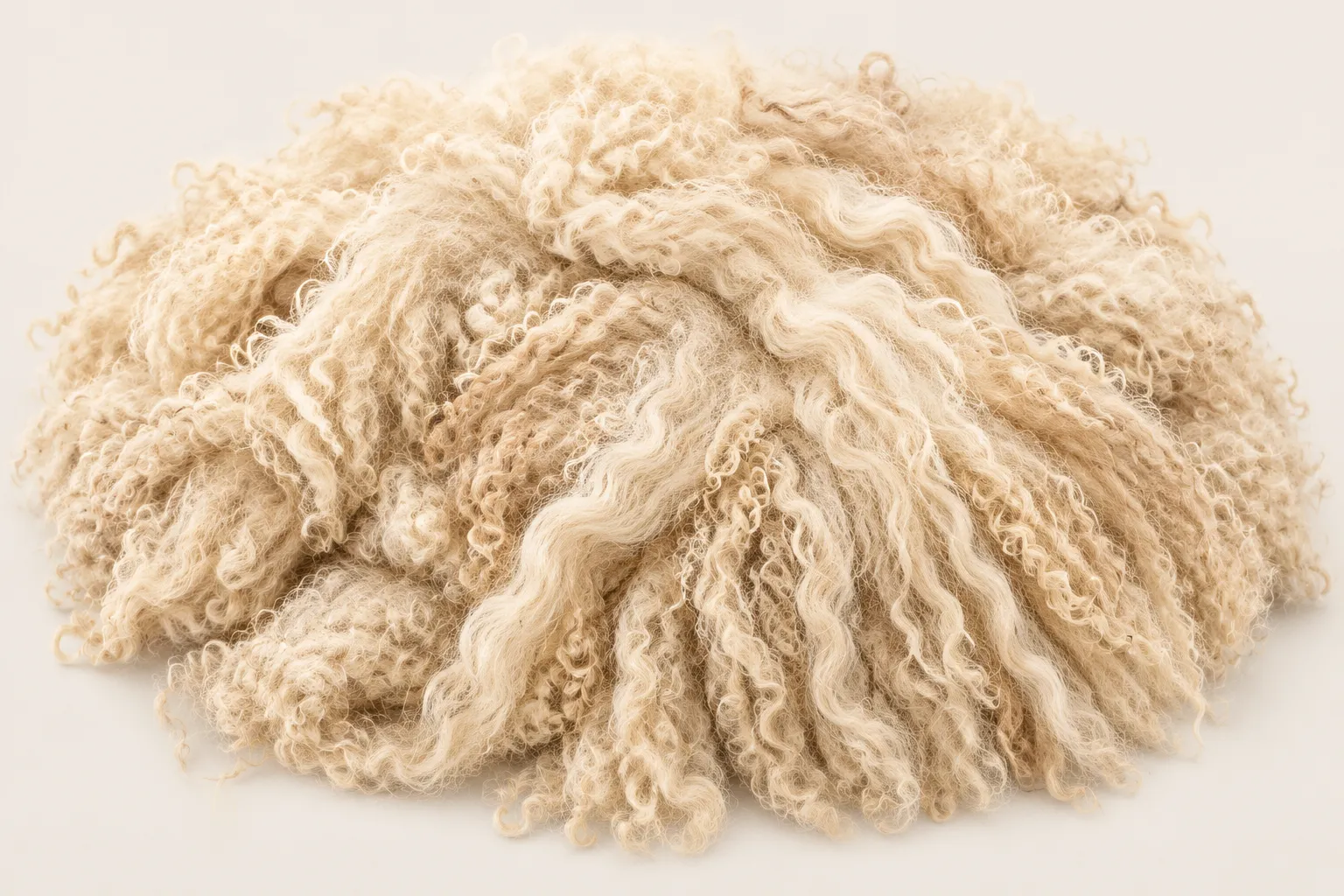
Fiber diameter
Fiber diameter is measured in microns. Finer fibers tend to feel softer, while larger-diameter fibers generally feel coarser.
Understand alpaca fiber grades03 / Comparison
Alpaca fiber and sheep wool are both animal fibers, but they are not identical. The way they feel, behave during processing, and perform in finished textiles depends on the type and quality of the fiber being compared.
Broad claims such as “alpaca is always softer” or “wool is always warmer” miss much of the variation within both materials.
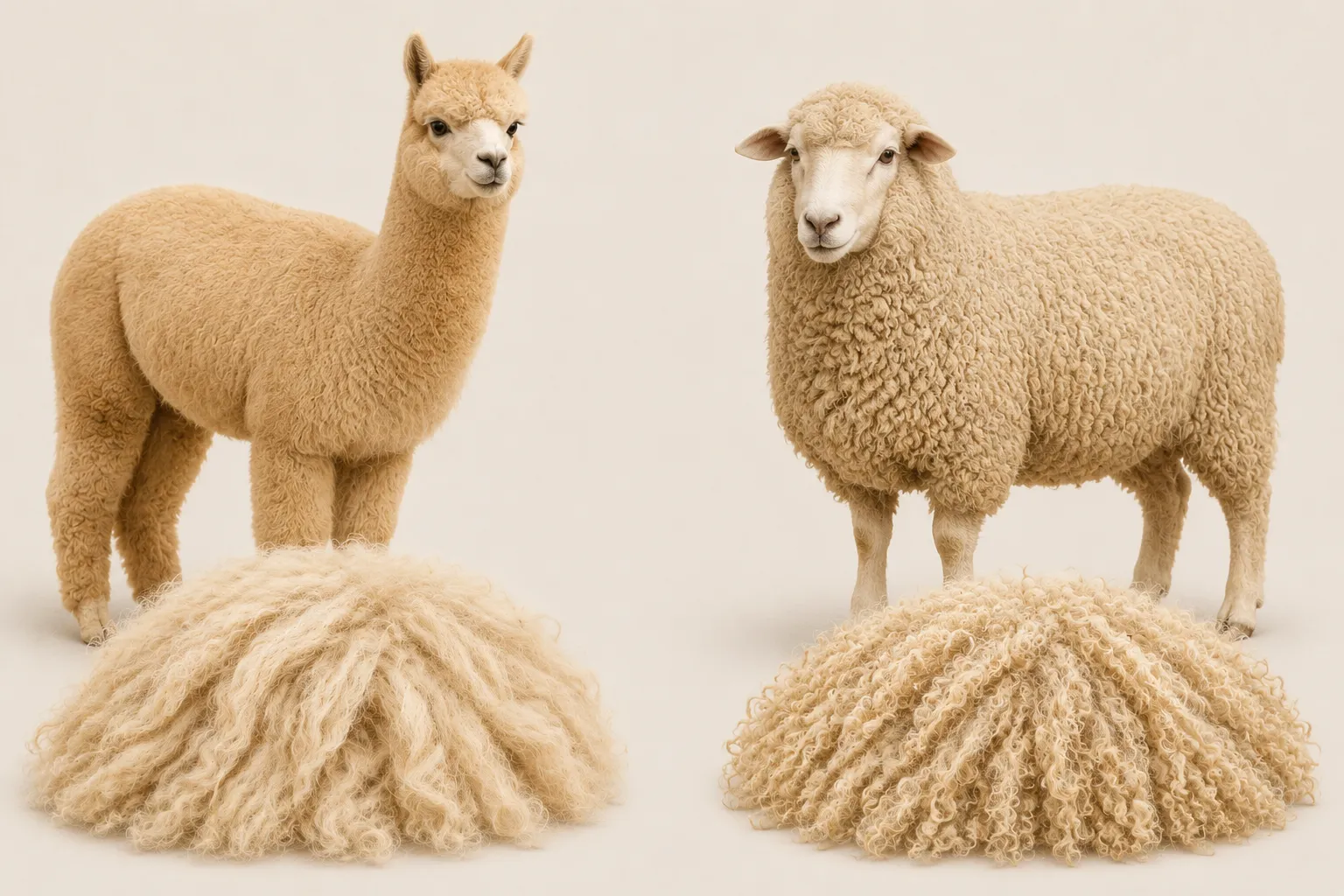
Alpaca fiber
Fine alpaca fiber can feel extremely soft, particularly when the fleece has good uniformity and relatively little coarse guard hair.
Sheep wool
Sheep wool ranges from very fine to quite coarse. Fine wool breeds can also produce extremely soft fiber.
04 / Processing
Raw alpaca fleece does not become yarn immediately. After the fleece has been removed from the animal, it goes through a series of steps that clean, organize, and prepare the fibers for spinning.
The exact process varies, but the basic journey moves from loose fleece toward increasingly organized fiber.
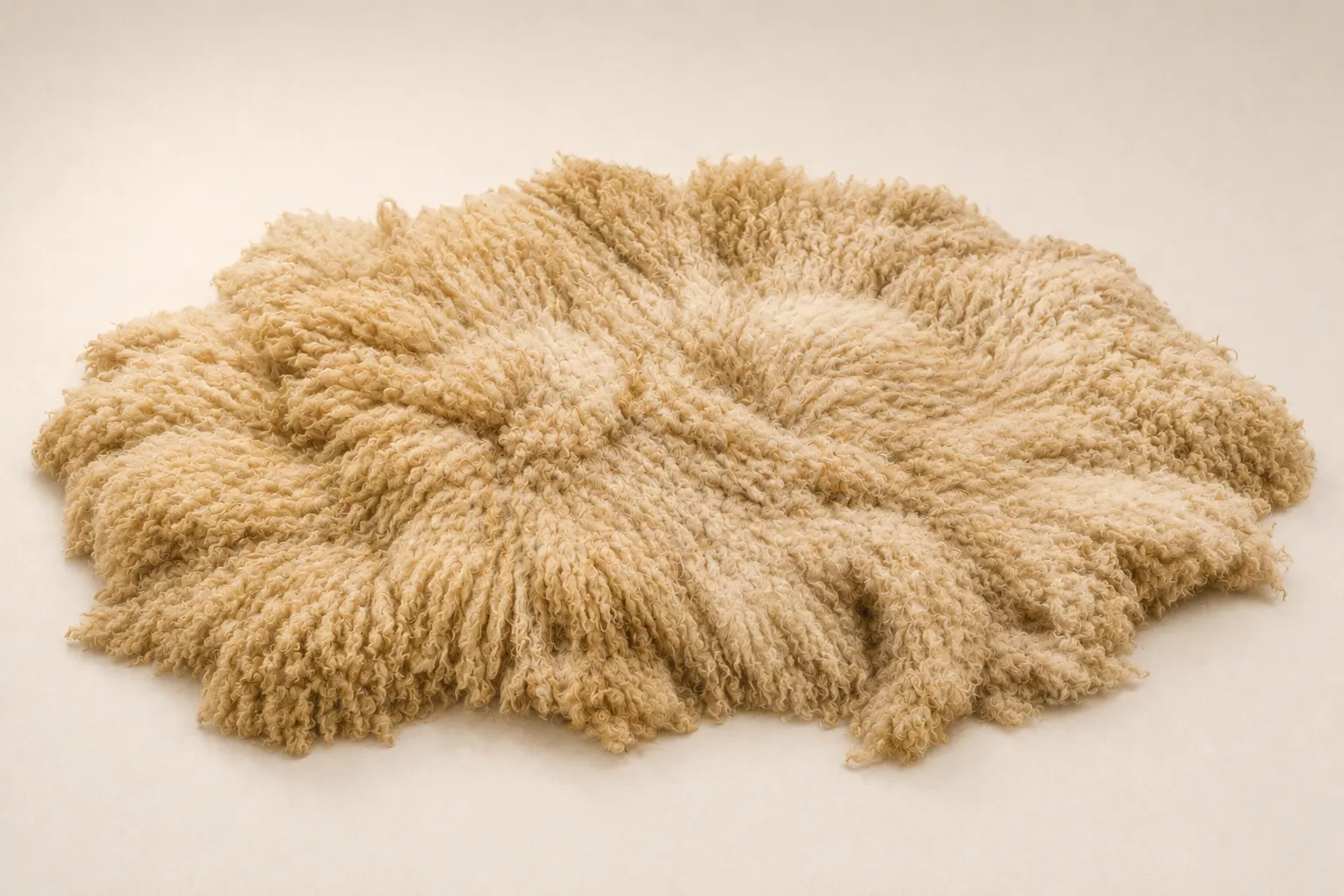
Raw fleece
The process begins with fleece that has been removed from the alpaca. At this stage, the fibers are still in their natural arrangement and may contain dirt, vegetation, and sections of different quality.
05 / Natural color
One of the distinctive features of alpaca fleece is the range of natural colors it can produce. Alpacas can be white, cream, fawn, brown, black, gray, and combinations of these colors.
Color does not determine softness or quality. A black or brown alpaca can produce very fine fleece, while a white alpaca can produce fiber that is considerably coarser.
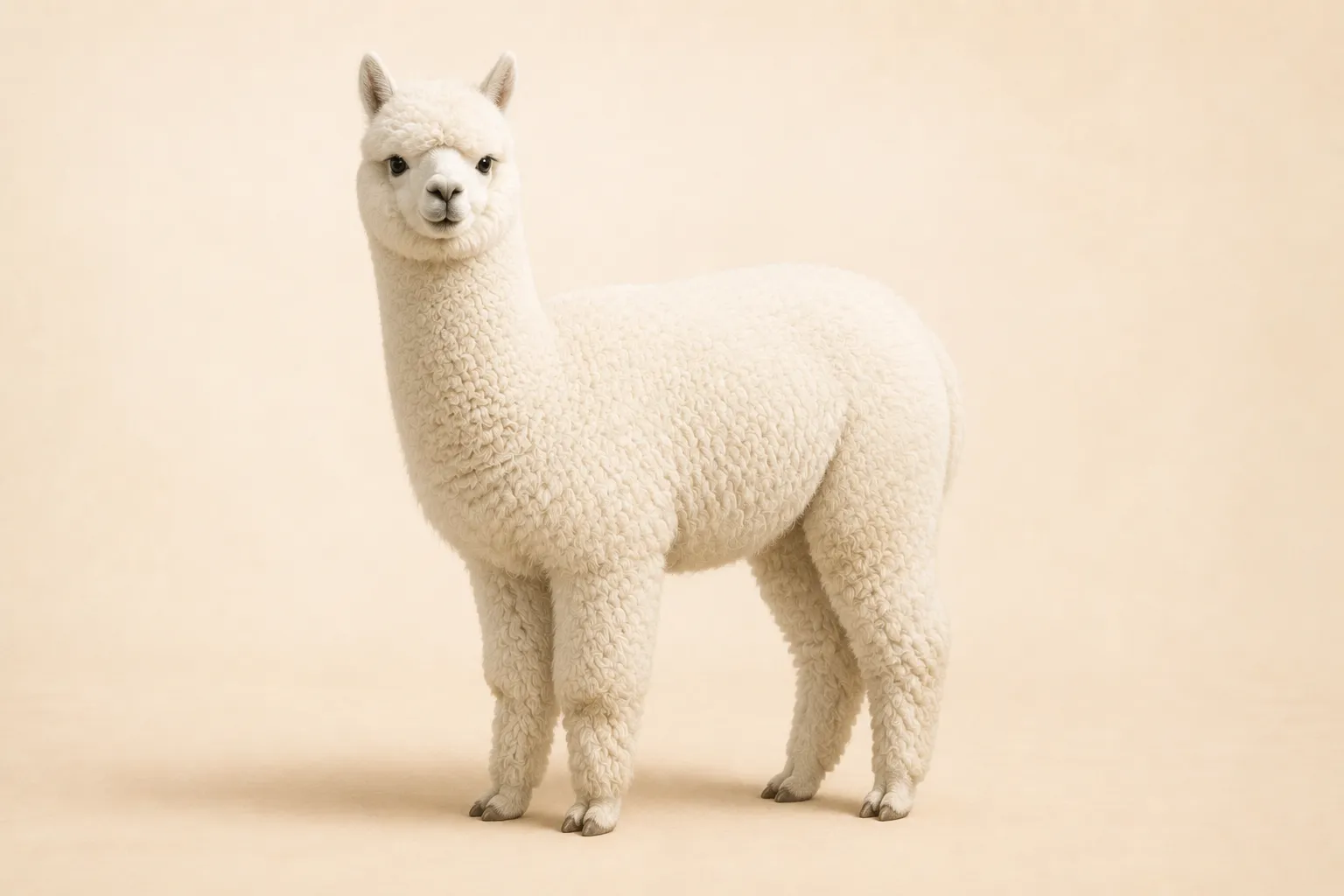
White
White fleece provides a clean natural color and also gives dyers the widest range of options when creating other colors.
06 / Finished uses
Alpaca fiber can be used in much more than one type of product. The appropriate use depends partly on the quality and characteristics of the fleece.
Very fine fiber may be desirable for clothing that sits directly against the skin, while stronger or coarser fiber can be useful where durability matters more than extreme softness.
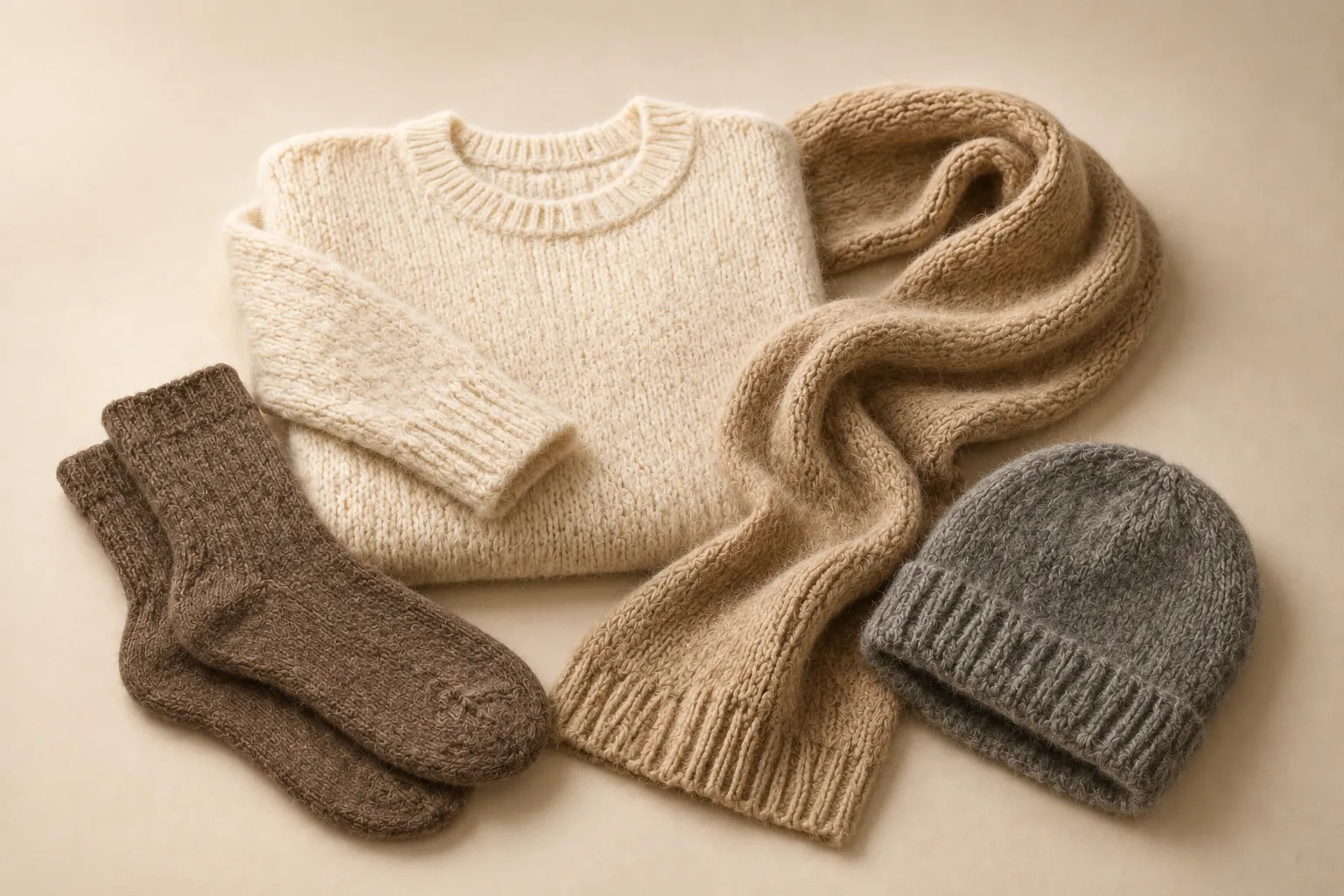
Clothing
Alpaca yarn is used for sweaters, socks, scarves, hats, gloves, wraps, and other garments. Different products place different demands on softness, warmth, strength, and durability.
07 / Fleece type
The two recognized alpaca types produce visibly different fleece structures. Those differences affect how the animals look and how their fiber is handled.
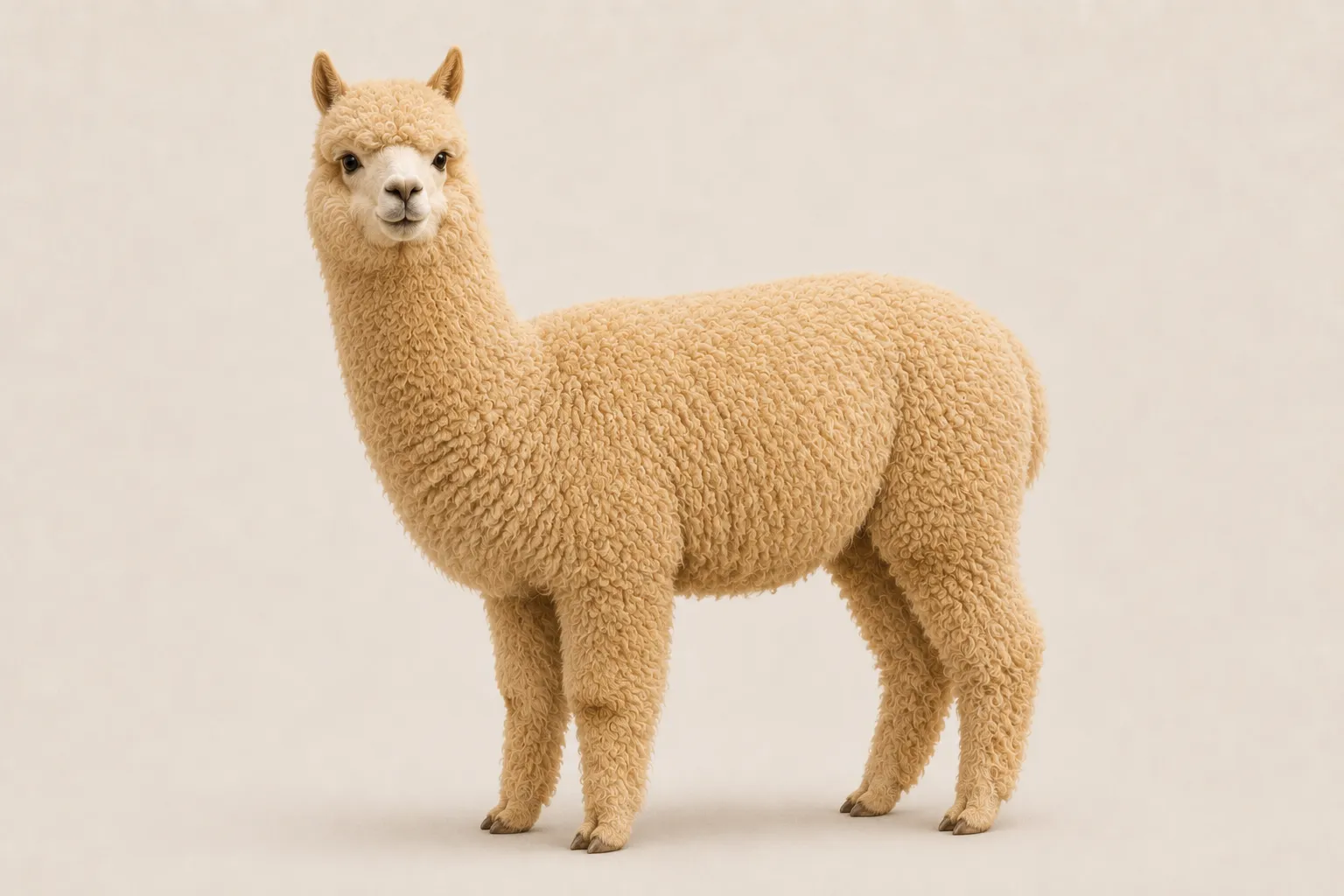
Huacaya
Huacaya alpacas have dense fleece that grows outward from the body, giving them the rounded appearance most people associate with alpacas. The fibers often show visible crimp, creating a springy, textured fleece.
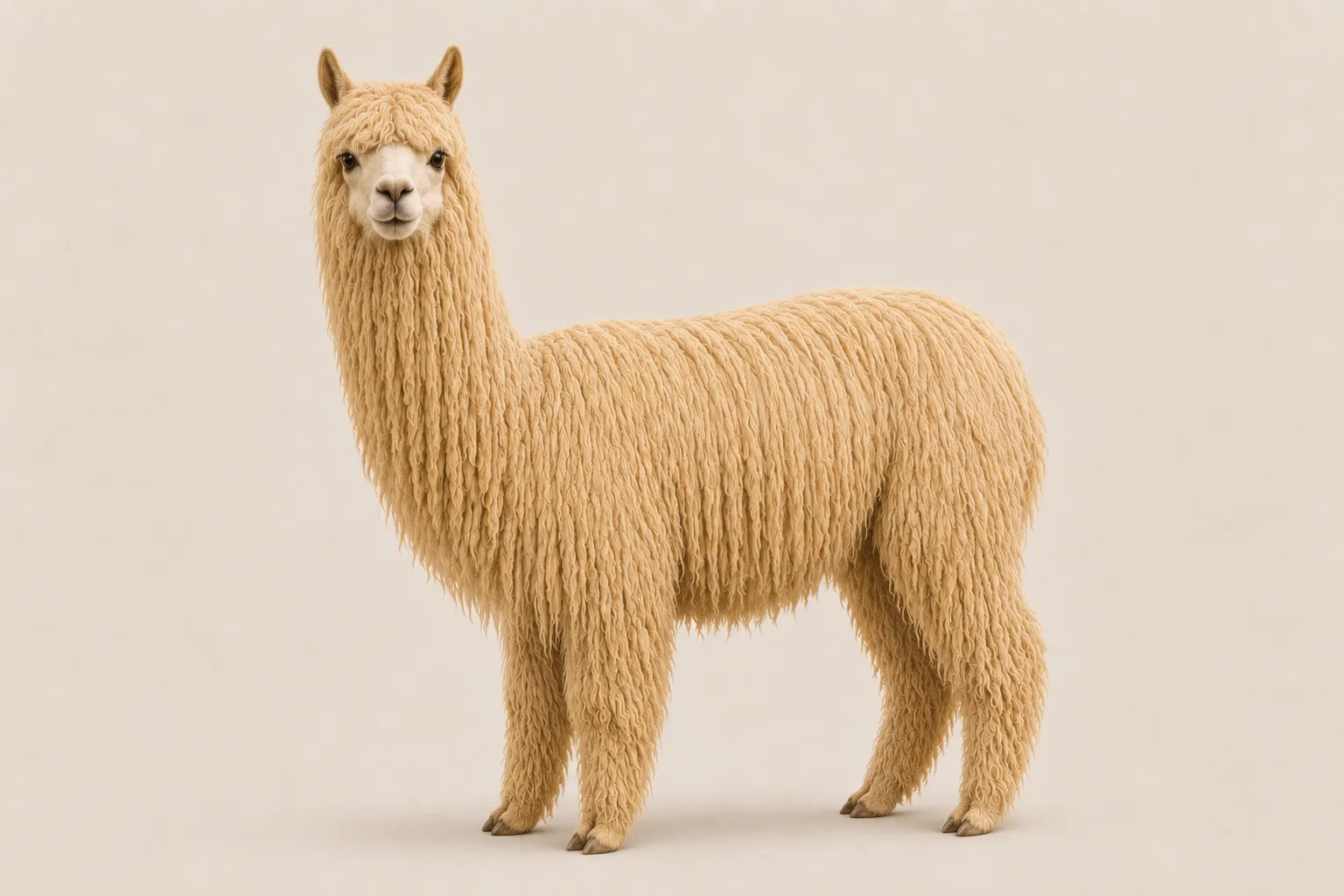
Suri
Suri alpacas grow fleece in long locks that hang downward along the body rather than forming the dense outward-growing coat seen on Huacayas. Suri fiber is known for its smoother appearance and visible luster.
Neither fleece type is simply a better version of the other. Huacaya and Suri produce different fiber structures, and those differences influence how their fleece is processed and used.
08 / Explore further
An alpaca's fleece is only the beginning. The characteristics of the individual fibers help determine quality, natural color influences how the fleece may be used or dyed, processing transforms loose fleece into yarn, and the finished yarn can become everything from clothing to household textiles.