Alpacas / Fiber / Grades
Alpaca Fiber Grades
Why can fleece from two alpacas feel completely different? Fiber diameter, consistency, length, and even where the fleece grew all help tell the story.
Start with one tiny fiber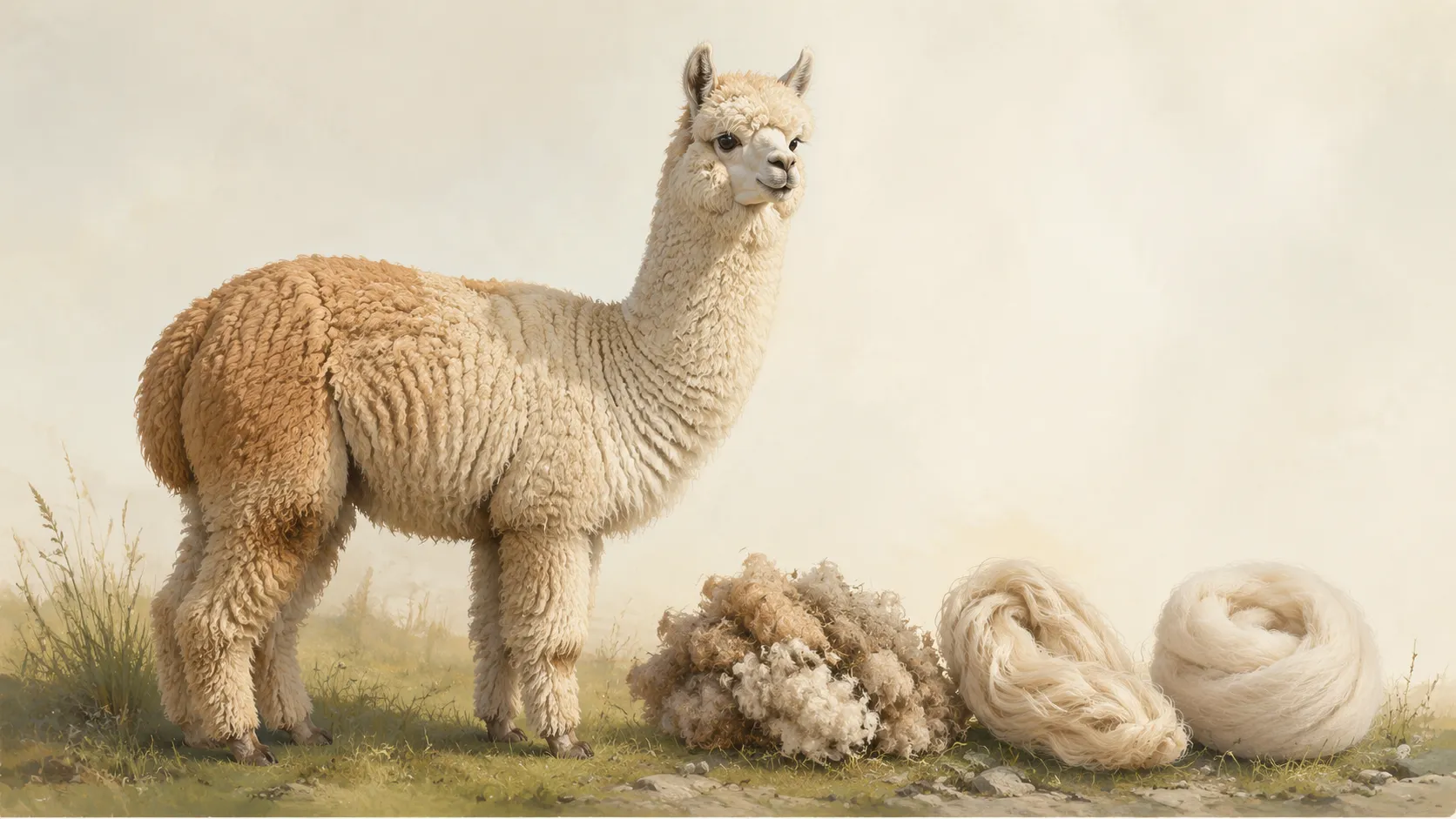
A closer look
What Makes Alpaca Fleece Different?
Every alpaca grows a fleece with its own combination of fiber diameter, length, consistency, and texture. Those characteristics help determine how the fleece feels and what it may be suited for after it is sorted and processed.
Even among alpacas, the fleece is not identical from animal to animal or from one part of the body to another. A fine main blanket can sit beside coarser fiber on the legs or belly, which is why producers separate different portions of a fleece.
Different breeds can also produce fleece with noticeably different structure. Rather than treating one measurement as the whole answer, the interactive examples below let you compare several of the characteristics used to describe fiber quality.
01 / Microns
How Thin Is One Fiber?
A micron is one-millionth of a meter. Tap the numbers and watch the fiber itself change.
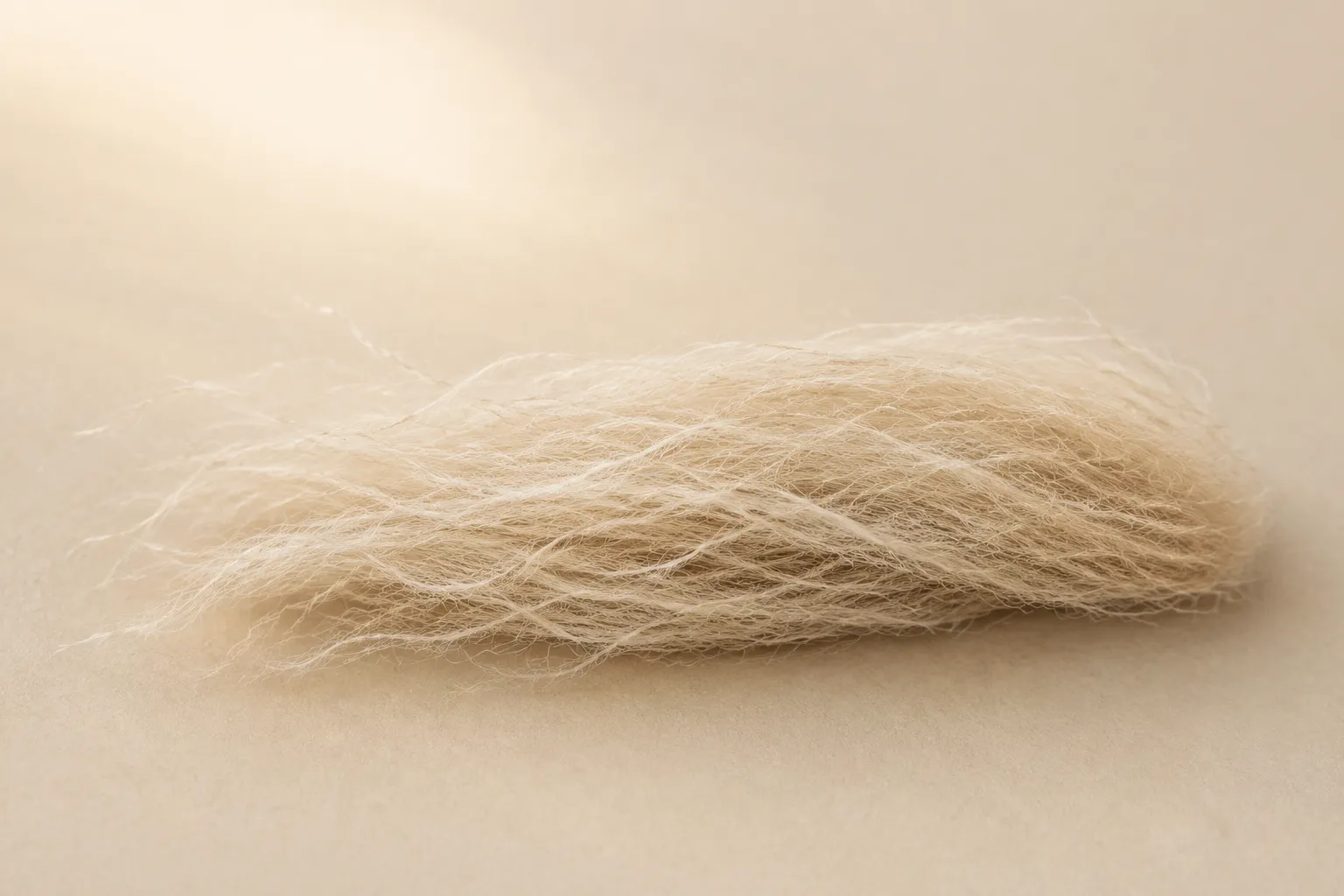
Very fine fiber
Thin fibers bend easily, which is one reason very fine fleece can feel especially soft against skin.
02 / Uniformity
Do the Fibers Match?
A fleece can contain lots of fine fiber and still feel less consistent if noticeably thicker fibers are mixed through it.
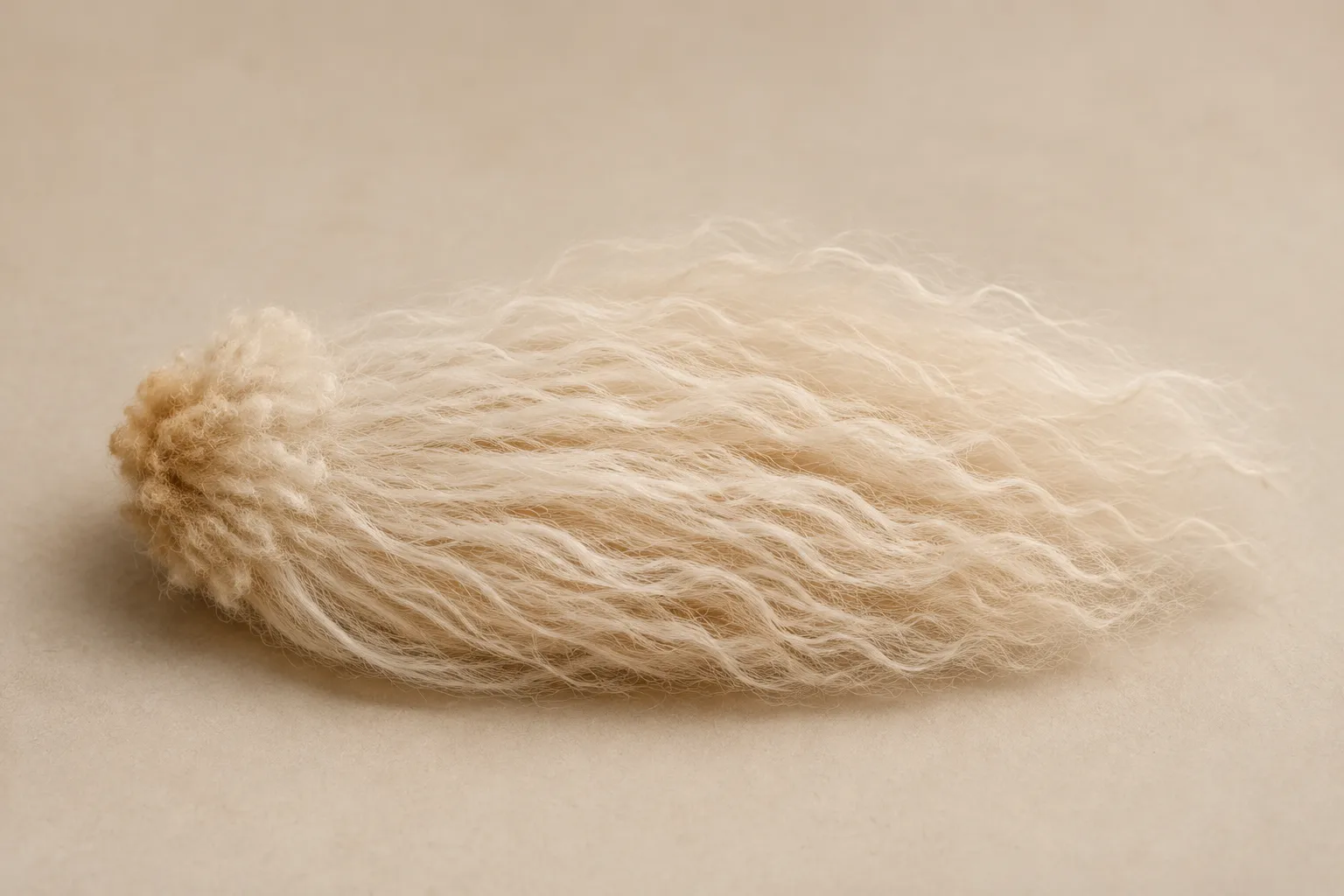
More even
Most of the visible fibers are similar in thickness, so the fleece has a more consistent character.
Look closely: the average micron number is useful, but it cannot show every thick and thin fiber hiding inside a fleece.
03 / Fleece location
Where Did the Fiber Grow?
One alpaca can produce several kinds of fiber. Choose a body area to compare what may come from different parts of the fleece.
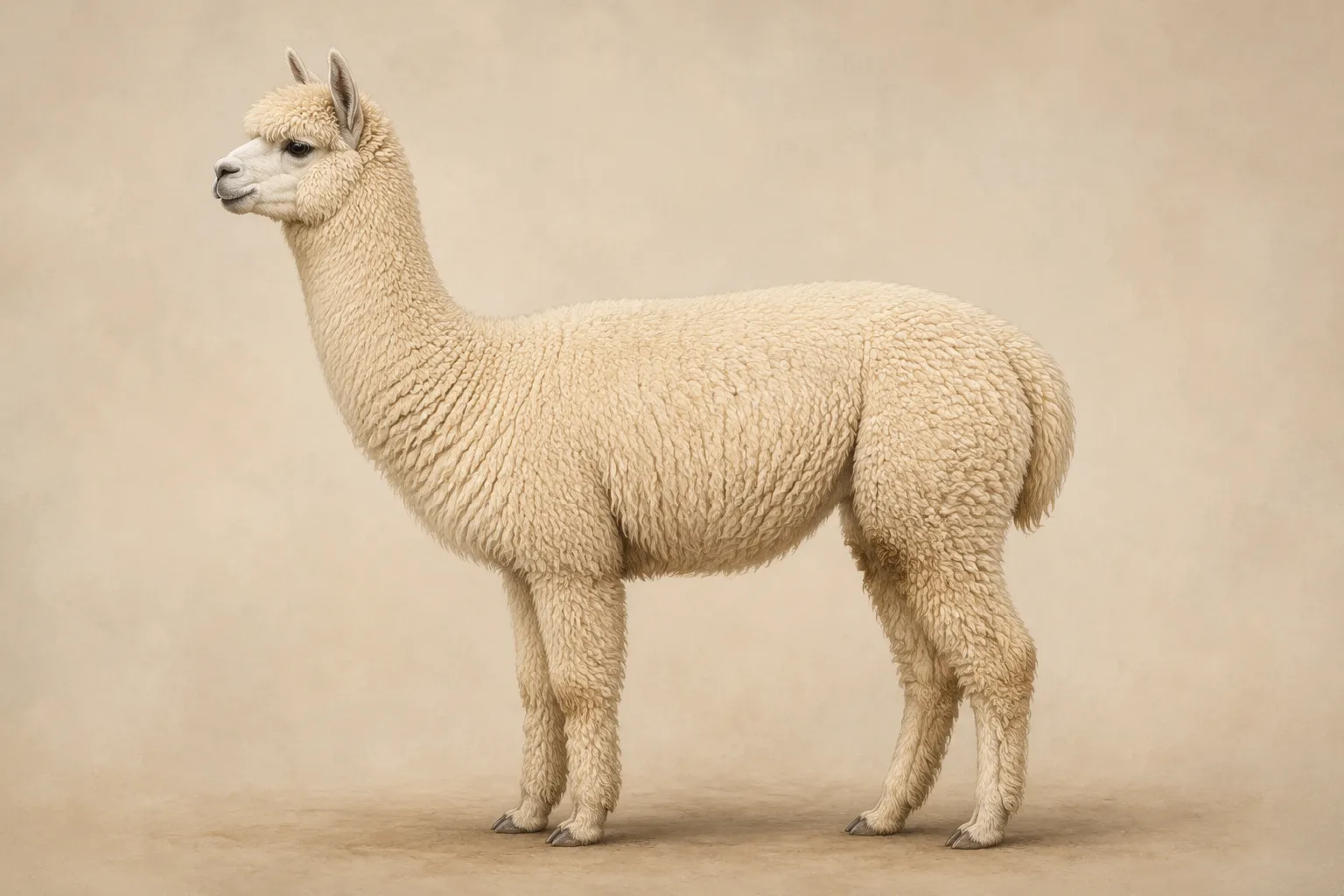
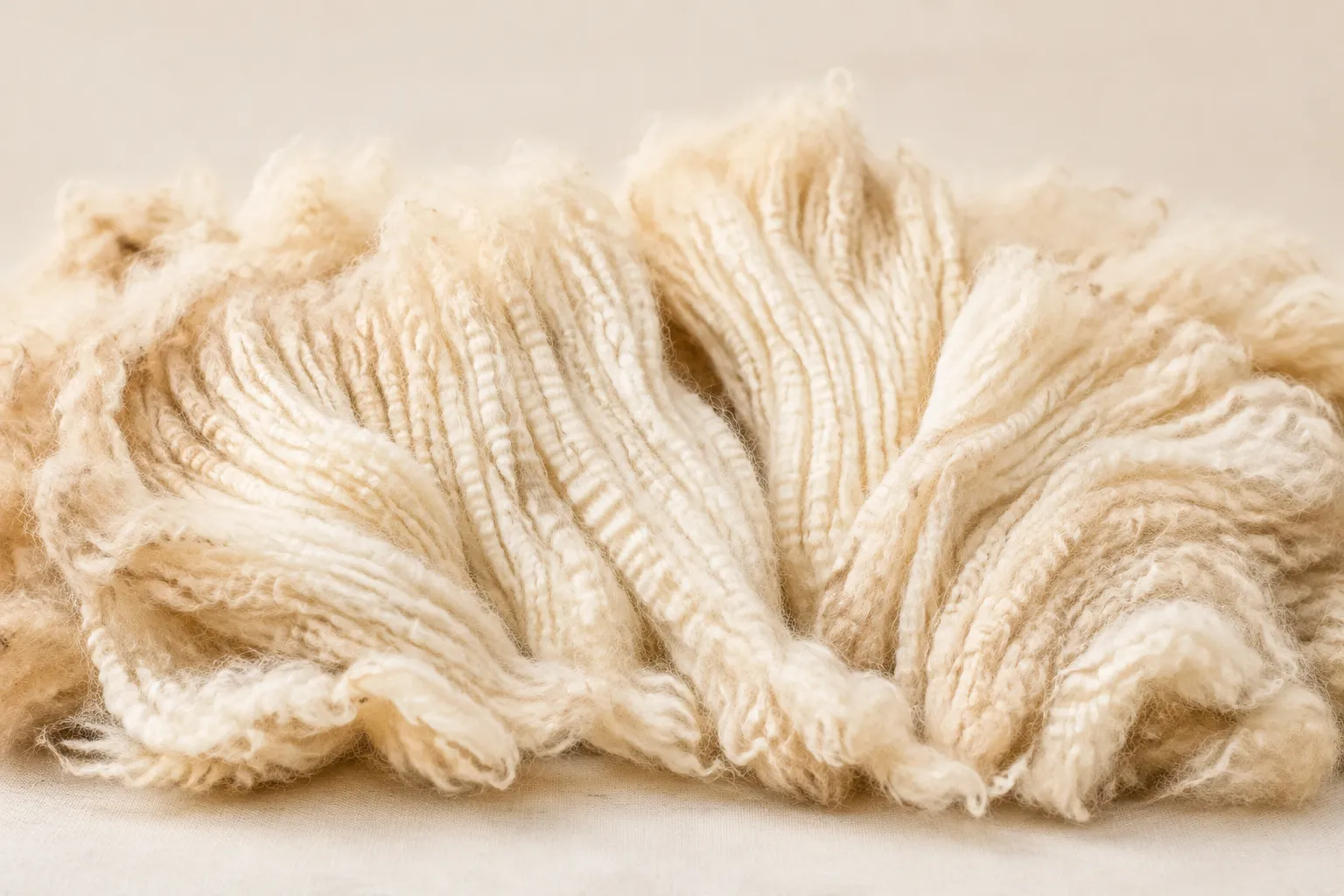
Main blanket
The largest area of more consistent fleece
The main body, often called the blanket, commonly provides the largest portion of fleece selected for finer textile work.
04 / Staple length
How Long Is the Fiber?
Staple length simply means the length of the fiber. Switch between the samples and compare them visually.
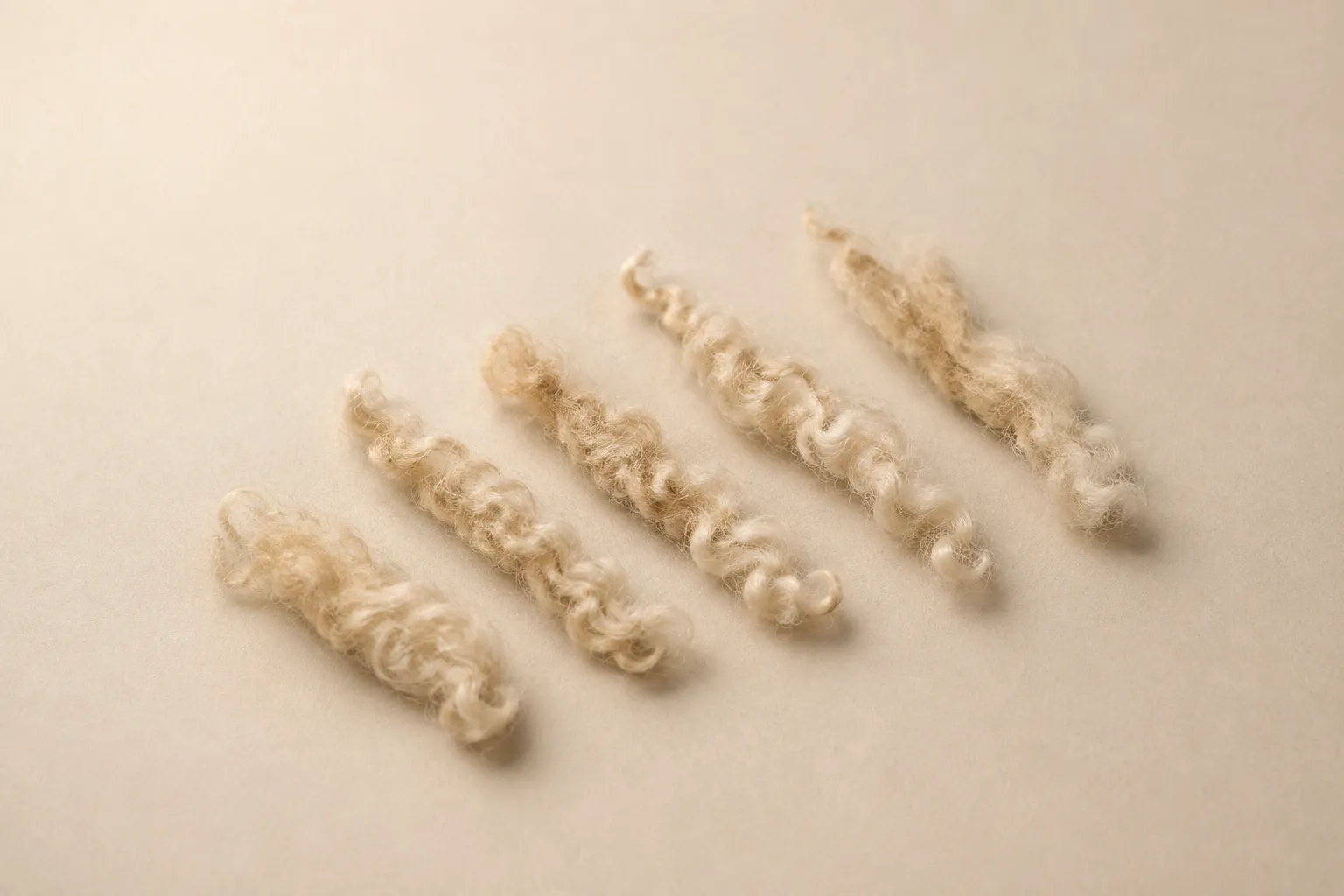
Shorter staple
Short fibers can still be useful, but fiber length affects how easily fleece can be prepared and held together during spinning.
05 / Best for what?
“Better” Depends on What You Make
The finest fleece is not automatically the right choice for every job. Pick a finished use and see which characteristics move to the front.
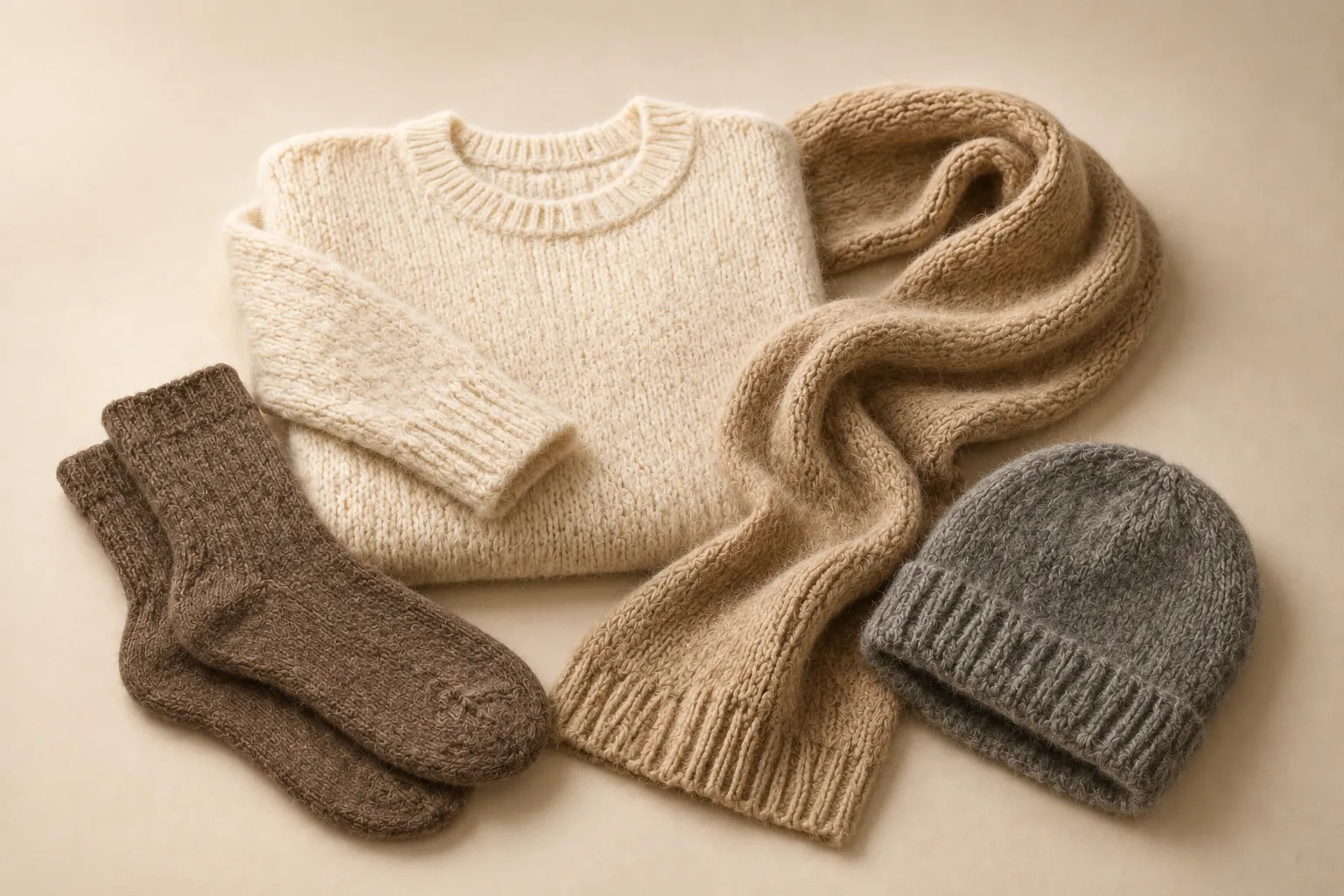
Clothing
Softness and consistency matter more near skin
For garments worn close to the body, finer diameter, good uniformity, and fewer noticeably coarse fibers usually matter more.
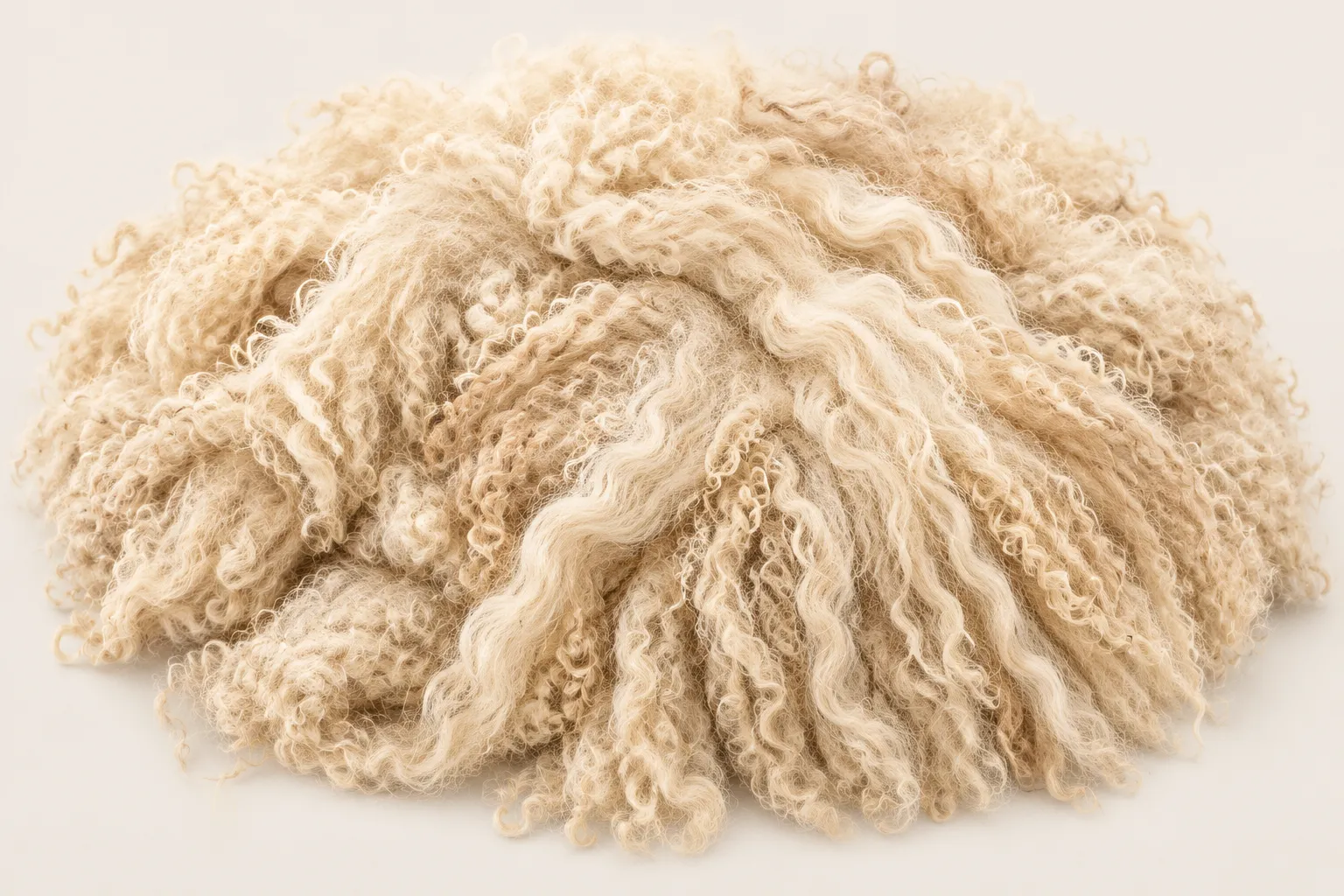
One more thing
A Grade Is a Shortcut, Not the Whole Story
Microns are important, but fleece quality is a combination of characteristics. Age, genetics, fleece location, uniformity, and the intended use can all change how a fiber is evaluated.