Alpacas / Fiber / Natural colors
Alpaca Fiber Colors
Alpaca fleece naturally appears in a broad range of shades, from white and cream through fawn, brown, gray, and black. Explore the range one color at a time.
Explore the colors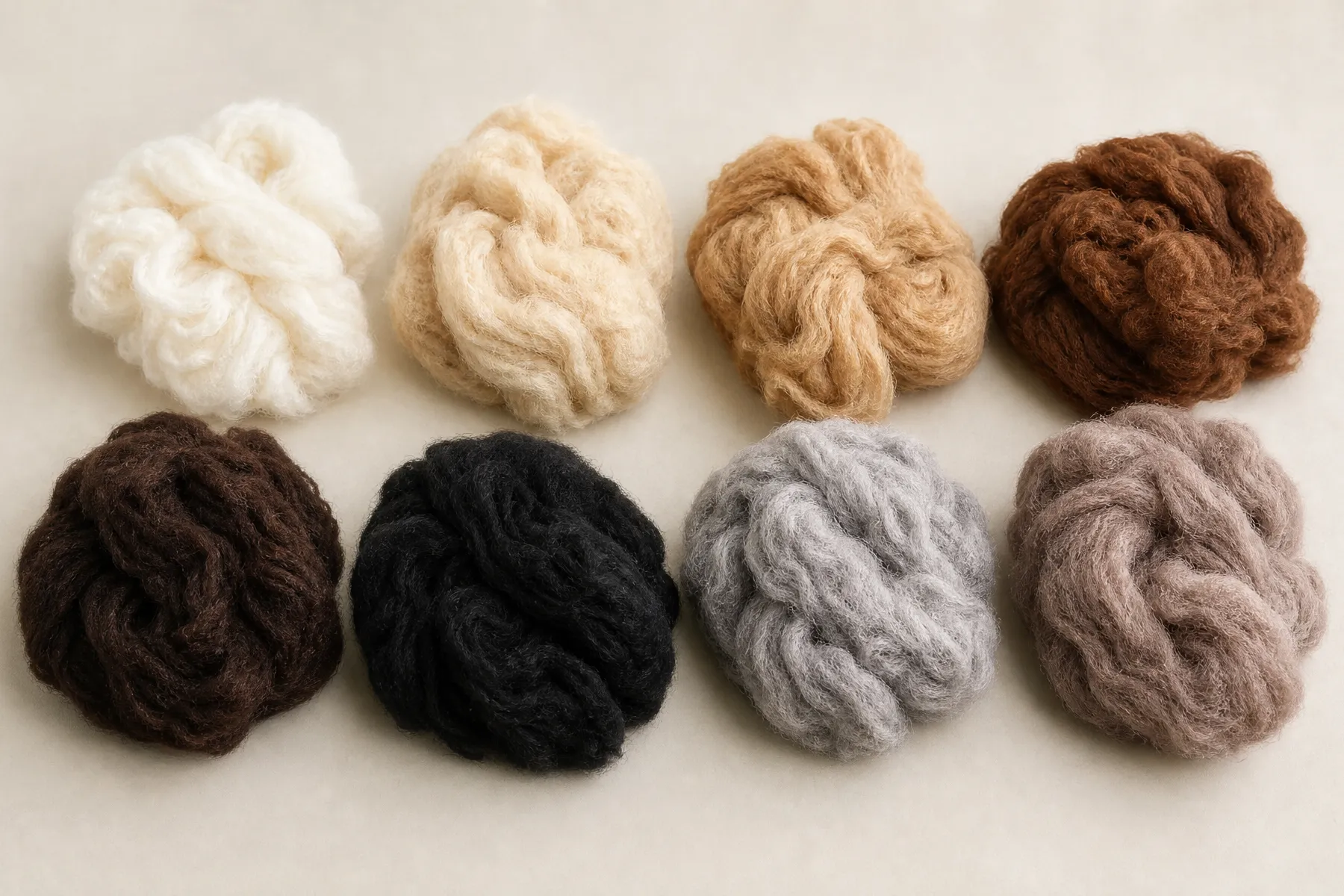
A natural palette
The Color Is Already in the Fleece
An alpaca does not need to produce white fleece to be useful for textiles. Natural shades can range from very pale cream to deep brown, true black, and complex gray mixtures.
Across alpacas, the same broad color family can also contain lighter and darker shades. Fawn, for example, can range from very light sandy tones to much deeper warm colors.
Color is only one characteristic of a fleece. Fineness, uniformity, staple length, and processing still matter, but natural color gives producers and fiber artists another way to work with the material before dye is ever considered.
01 / Color explorer
Move Through the Natural Range
Choose a shade. The fleece stays in the same position so the color itself is the main thing that changes.
Light colors
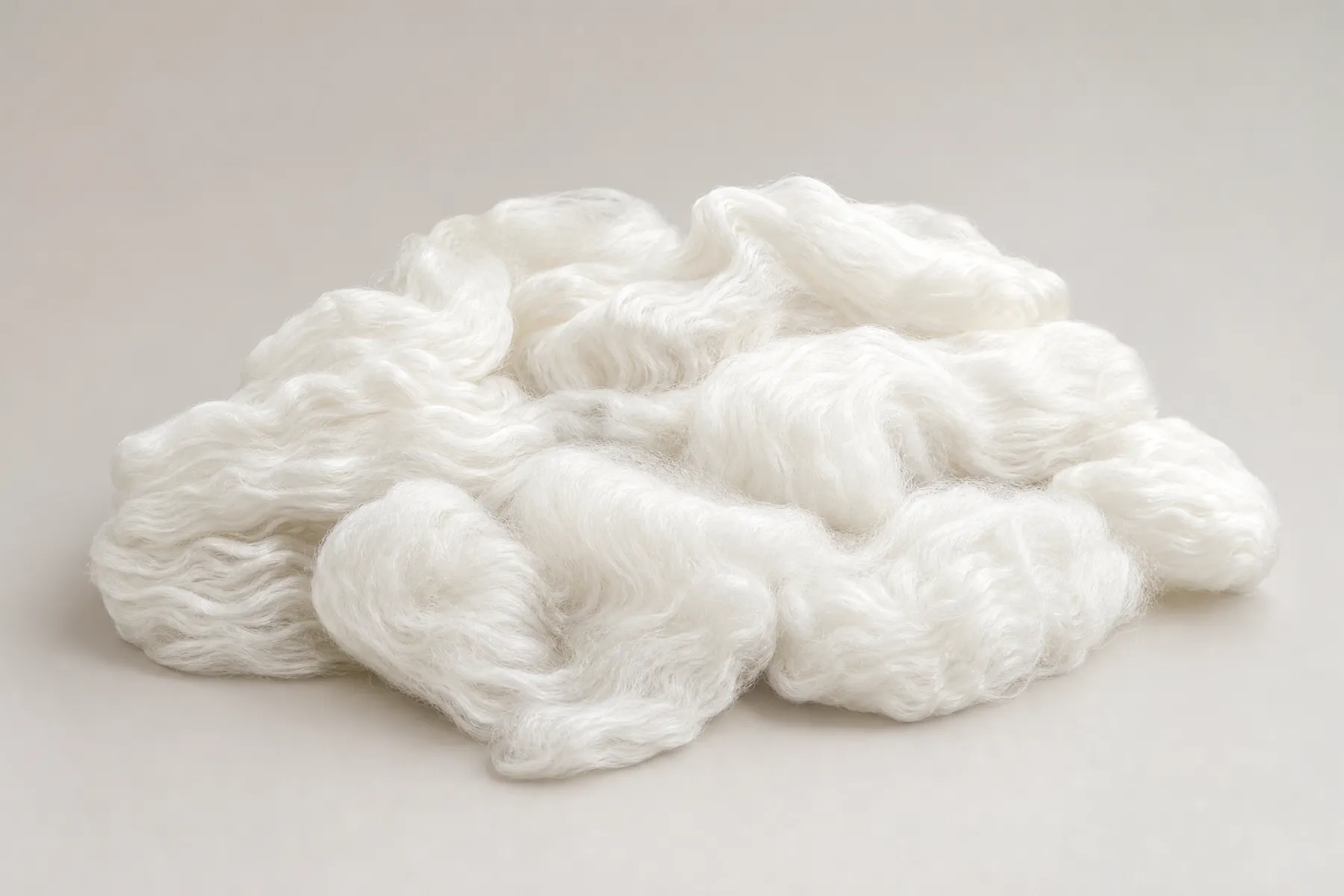
White
White alpaca fleece still shows natural shadows and fiber definition. It can be used in its natural state or provide a light base when dyeing is desired.
The lightest end of the natural alpaca color range.
02 / On the animal
The Range Starts With Living Alpacas
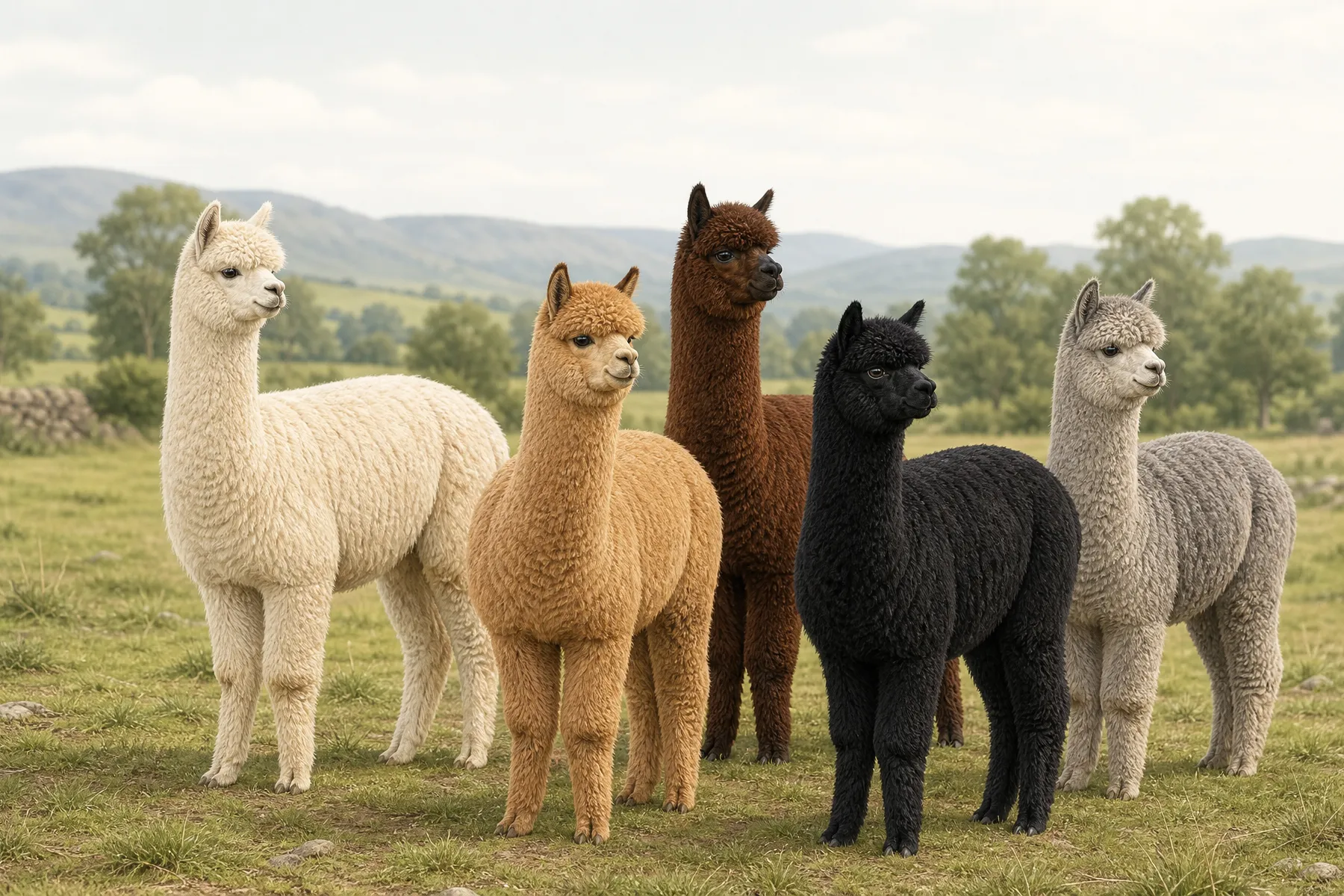
Natural color is not something added after shearing. It is part of the fleece growing on the animal itself.
A group of alpacas can include pale, warm, dark, and gray animals standing side by side. The exact shade, pattern, and consistency can vary from one animal to another.
Color is not always flat
One Fleece Can Contain Subtle Variation
Natural fleece does not always behave like a perfectly uniform paint sample. Individual locks can carry slightly lighter or darker tones while the fleece still reads as one overall color.
That variation can become more noticeable once fleece is opened, sorted, and prepared. It is one reason working with natural fiber is visually different from choosing a manufactured color from a printed chart.
When fleece is evaluated for use, color sits alongside characteristics covered in fiber grades. A beautiful shade does not replace the need to consider diameter, consistency, length, and the intended finished product.
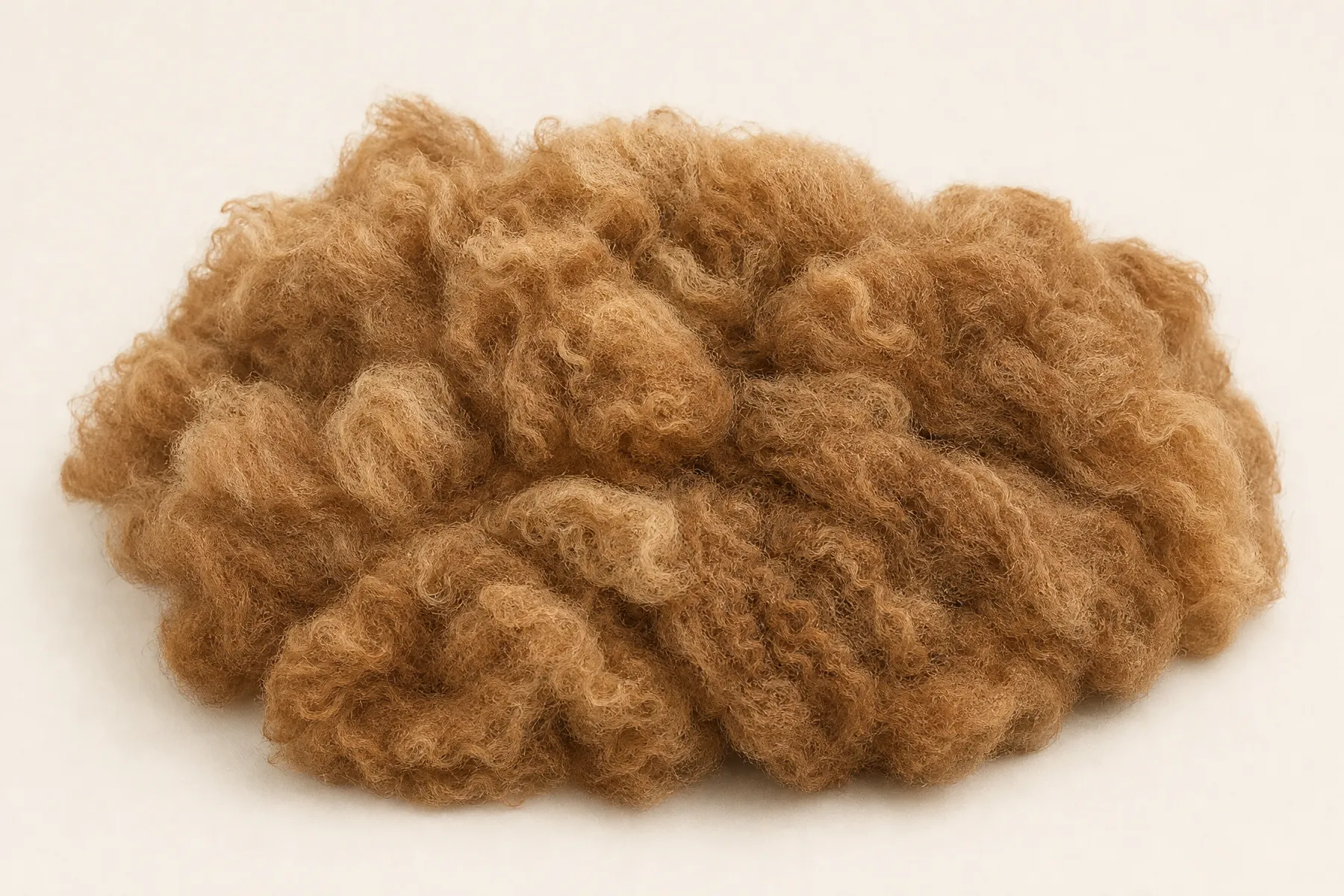
Within one fleece
Variation Without Becoming a Different Color
A medium fawn or brown fleece can include small shifts in tone. Those differences are part of the natural material rather than evidence that the fleece has been dyed or altered.
03 / Gray is different
Silver Gray and Rose Gray Are Mixtures
Gray alpaca fleece can contain visibly mixed fibers, which gives these colors more complexity than a flat solid shade.
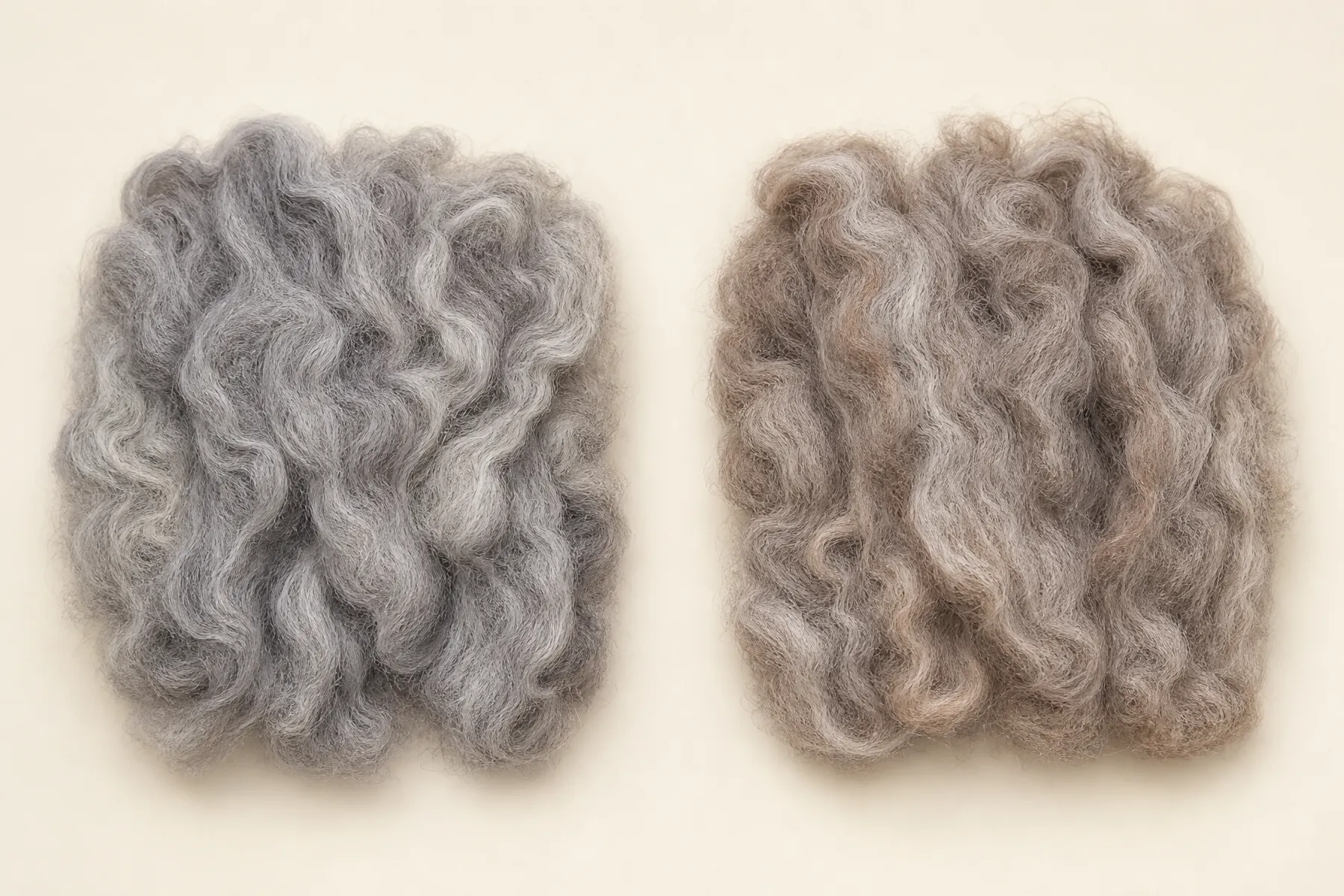
Silver gray
Cooler neutral mixtures
Silver gray commonly reads as a mixture of lighter and darker gray fibers without the warm brown influence associated with rose gray.
Rose gray
Gray with warmer undertones
Rose gray does not mean pink fleece. It refers to gray mixed with warmer brown, taupe, or reddish-brown tones.
04 / Keep the natural shade
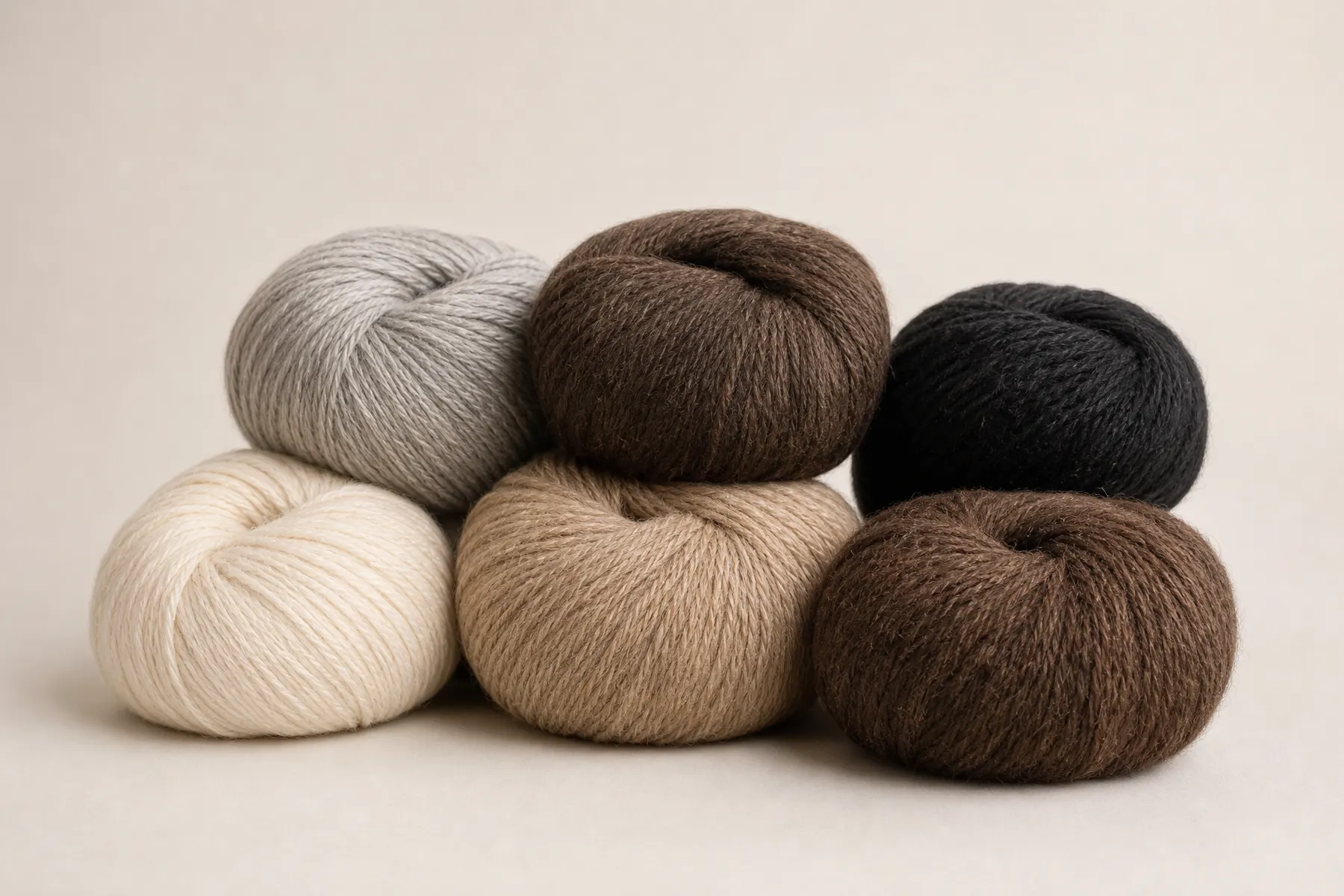
The Color Can Continue Into Yarn
When fleece is processed without changing its color, the finished yarn can preserve the natural palette of the animal it came from.
That creates creams, fawns, browns, grays, and blacks without requiring bright synthetic-looking color. The finished yarn still reflects the sorting, preparation, and spinning steps used to transform the fleece.
That connection between fleece and finished material is part of the larger fiber-making process.