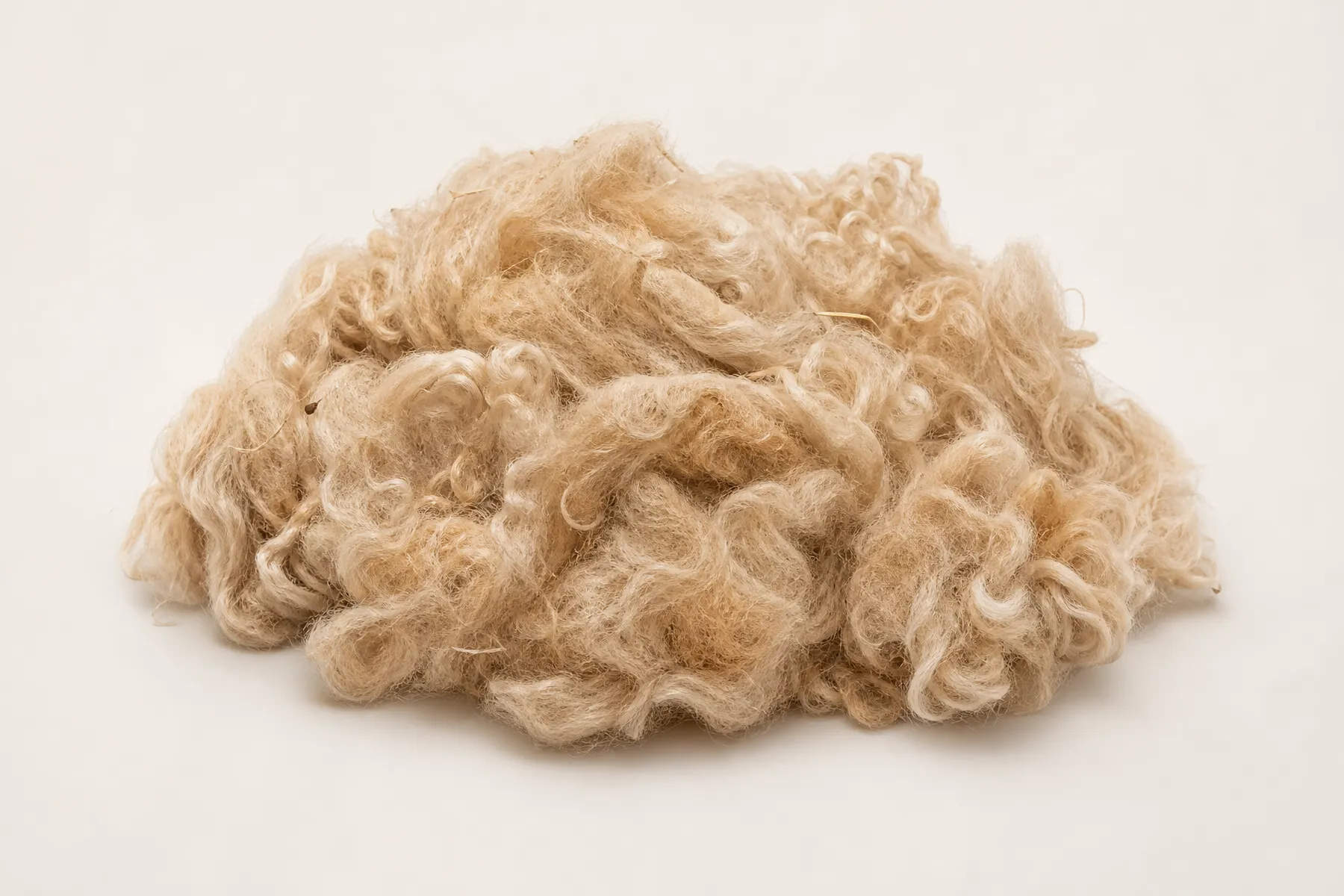
AlpacaFine, smooth fiber
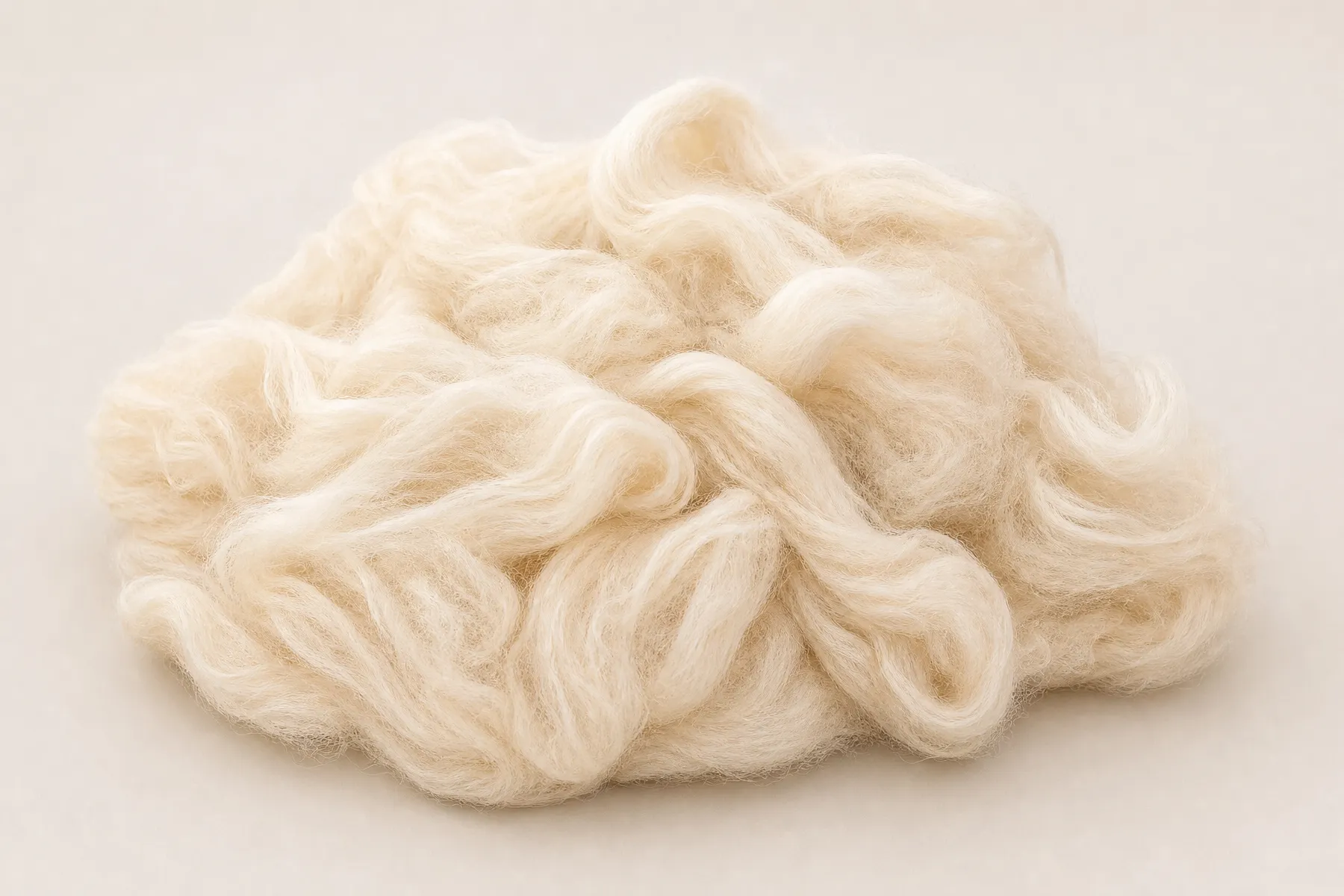
Fine alpaca fiber can feel very soft, especially when the fleece is uniform and contains relatively few coarse fibers.
Alpacas / Fiber / Comparison
Alpaca fiber and sheep wool can both be soft, warm, useful natural fibers, but they are not the same material. Compare them side by side and see where the differences actually show up.
Start comparing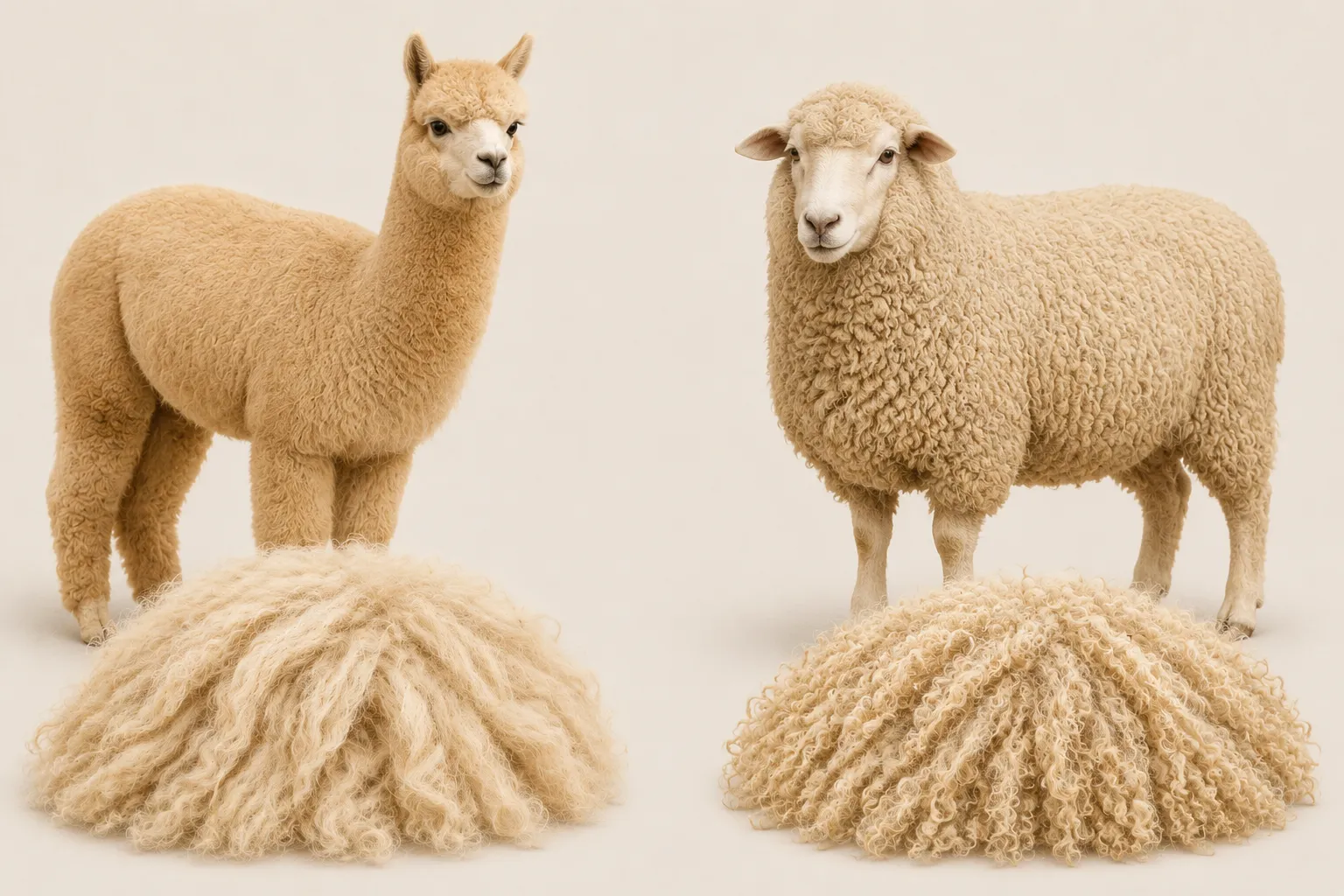
A fair comparison
Fiber from an alpaca can vary in diameter, length, uniformity, and texture, and sheep wool varies just as widely between animals and breeds. That is why broad claims such as “alpaca is always softer” or “wool is always warmer” leave out too much.
The differences become more useful when you compare the fibers for a particular purpose. Fine material may matter more for clothing worn close to the skin, while other characteristics become important in blankets, socks, or heavier textiles.
Once fibers become yarn and fabric, construction matters too. The examples below focus on the materials themselves, then connect those differences to the kinds of alpaca clothing and textiles people actually use.
01 / Side by side
Pick a characteristic. Both sides change together so you can inspect the same question in alpaca fiber and sheep wool.
Fine alpaca fiber can feel very soft, especially when the fleece is uniform and contains relatively few coarse fibers.
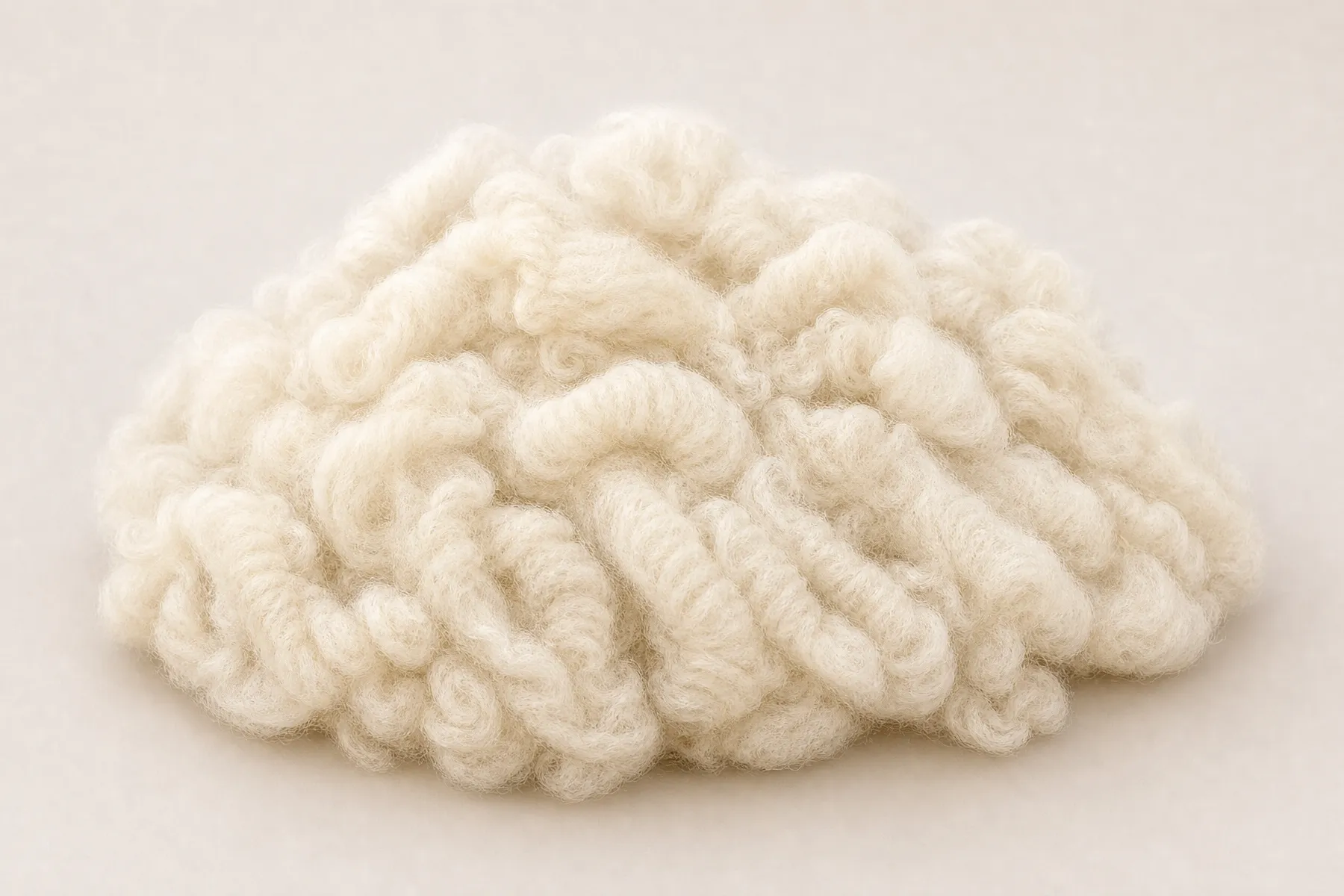
Fine sheep wool can also be extremely soft. Wool ranges from very fine fibers to much coarser types.
The softness of either material depends heavily on fiber diameter and uniformity, not simply on whether it came from an alpaca or a sheep.
02 / Look closer
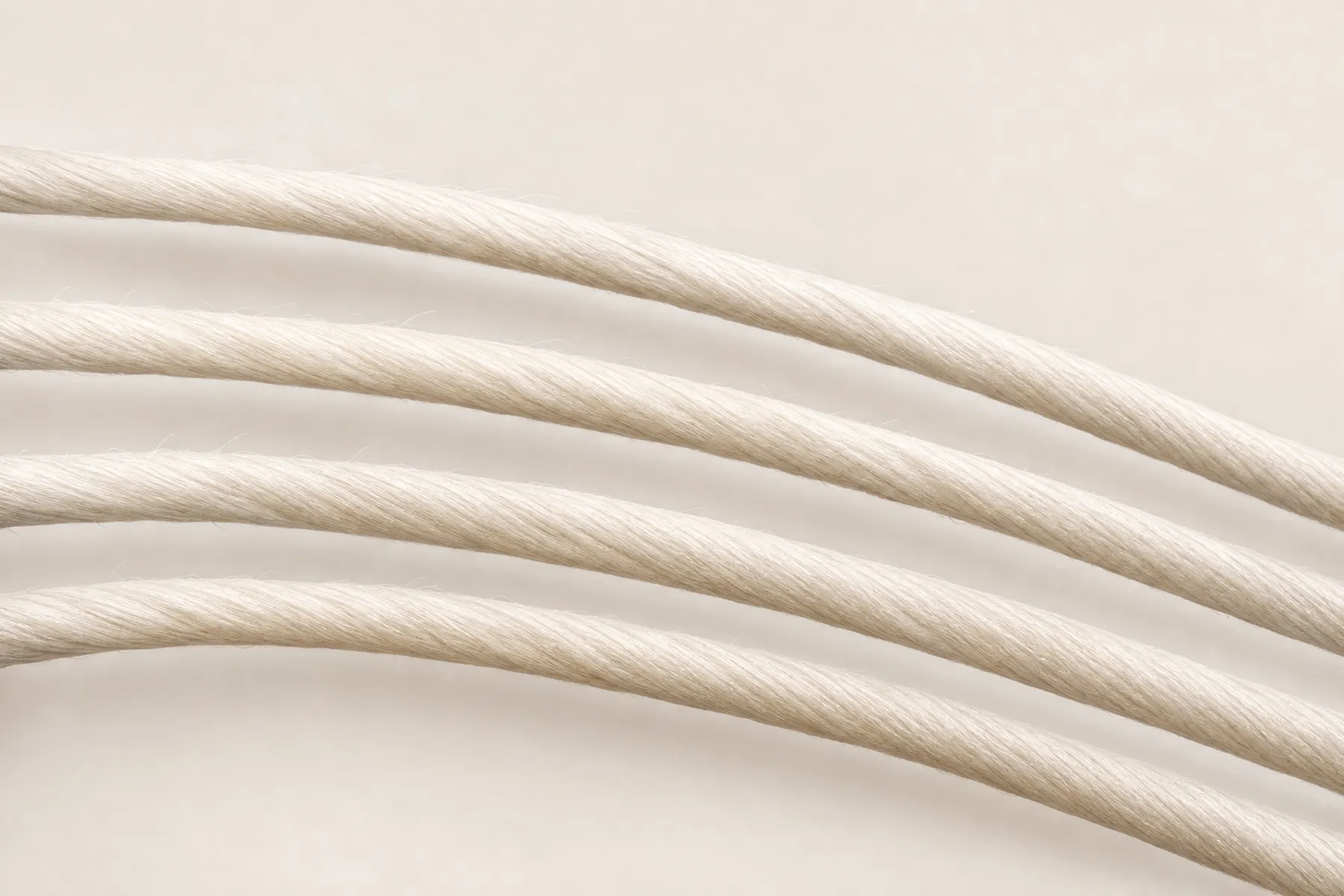
At a closer scale, the two materials show different character. Switch between them without changing the framing.
Alpaca fiber
Alpaca fibers can appear relatively smooth and softly curved in a macro view. Their exact surface and diameter still vary from fleece to fleece.
03 / Raw fleece
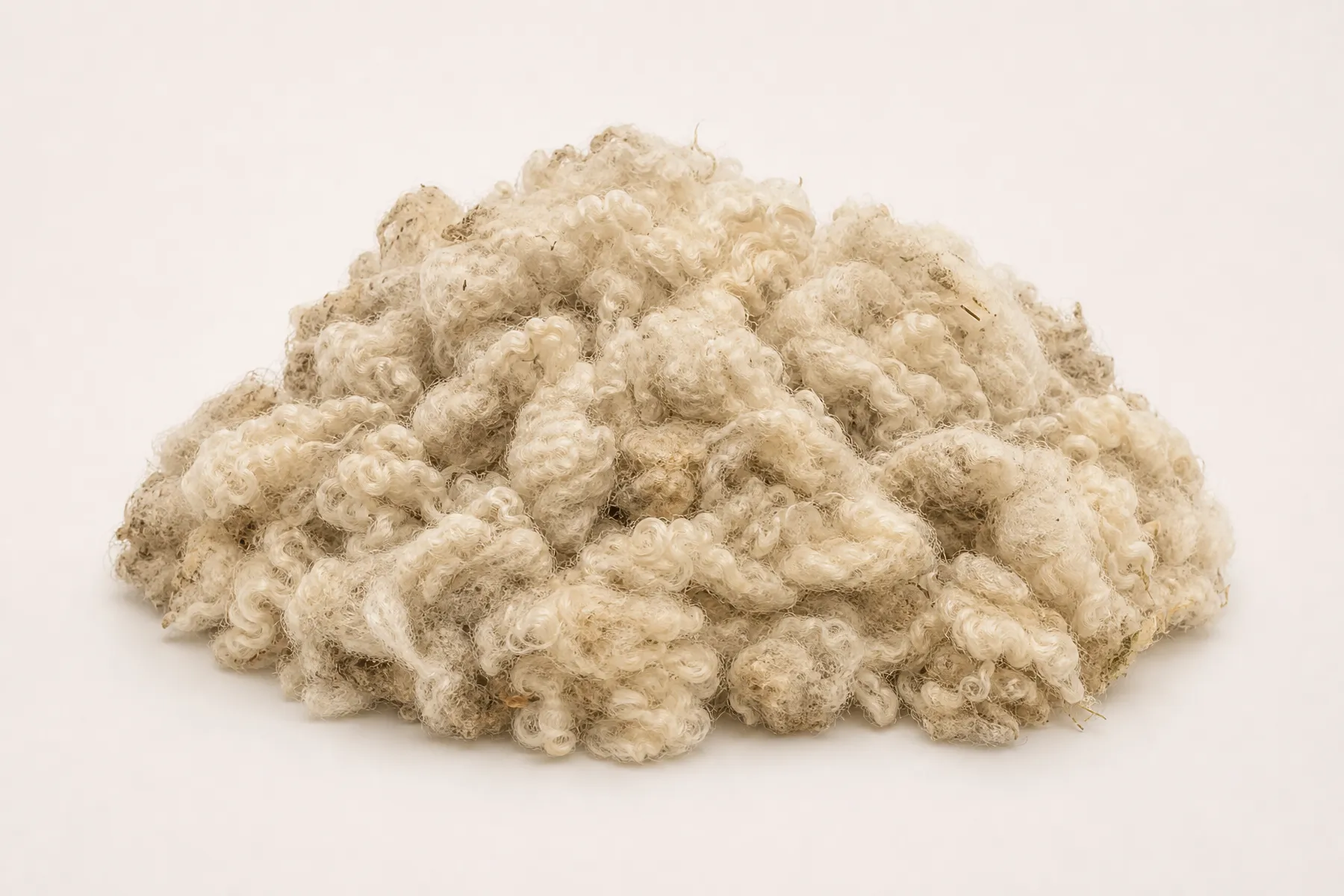
Raw sheep wool naturally carries lanolin, a waxy substance associated with the fleece. Alpaca fleece does not have the same heavy lanolin coating.
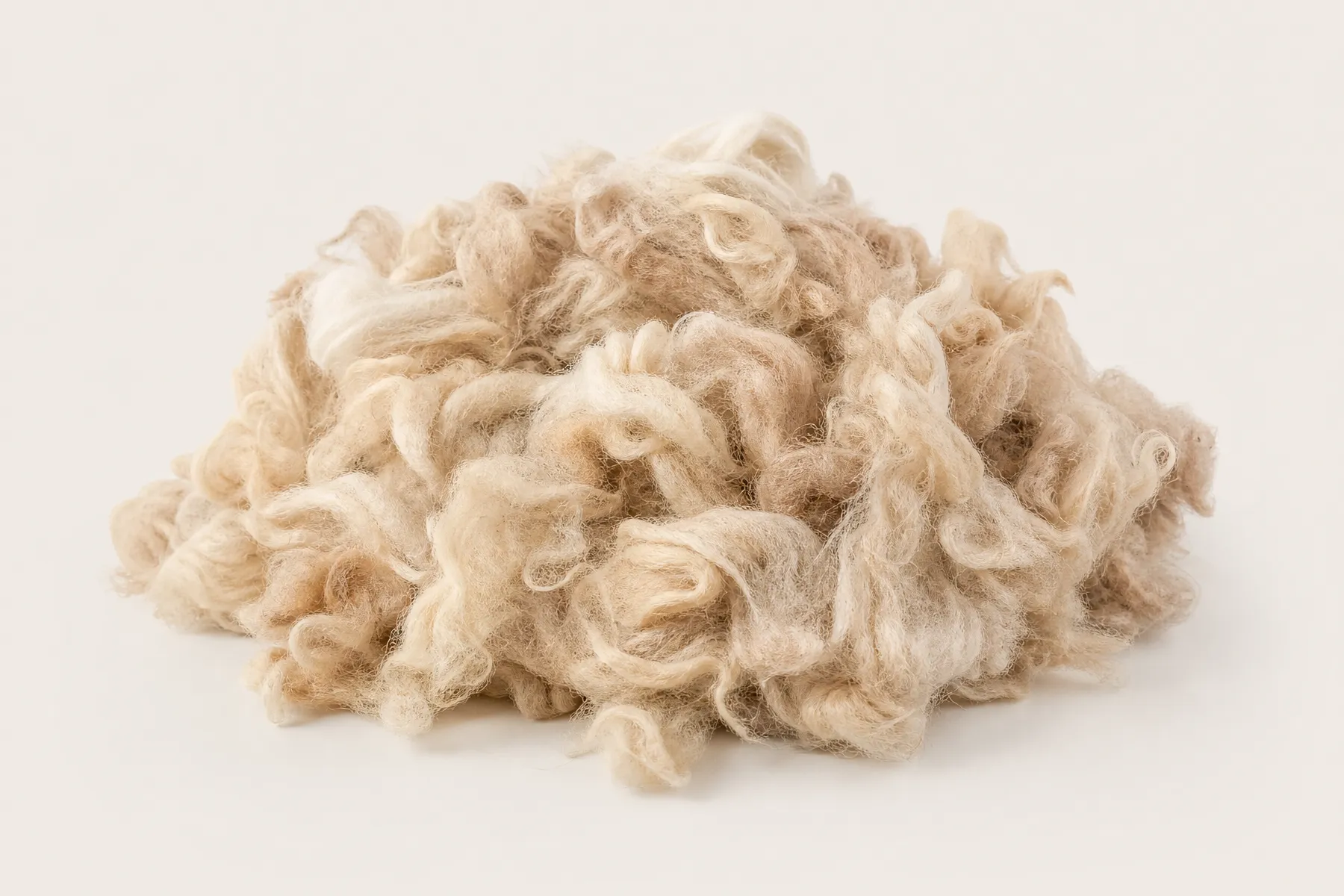
Alpaca fleece
Fresh alpaca fleece still needs cleaning and processing, but it does not carry the same lanolin coating found in raw sheep wool.
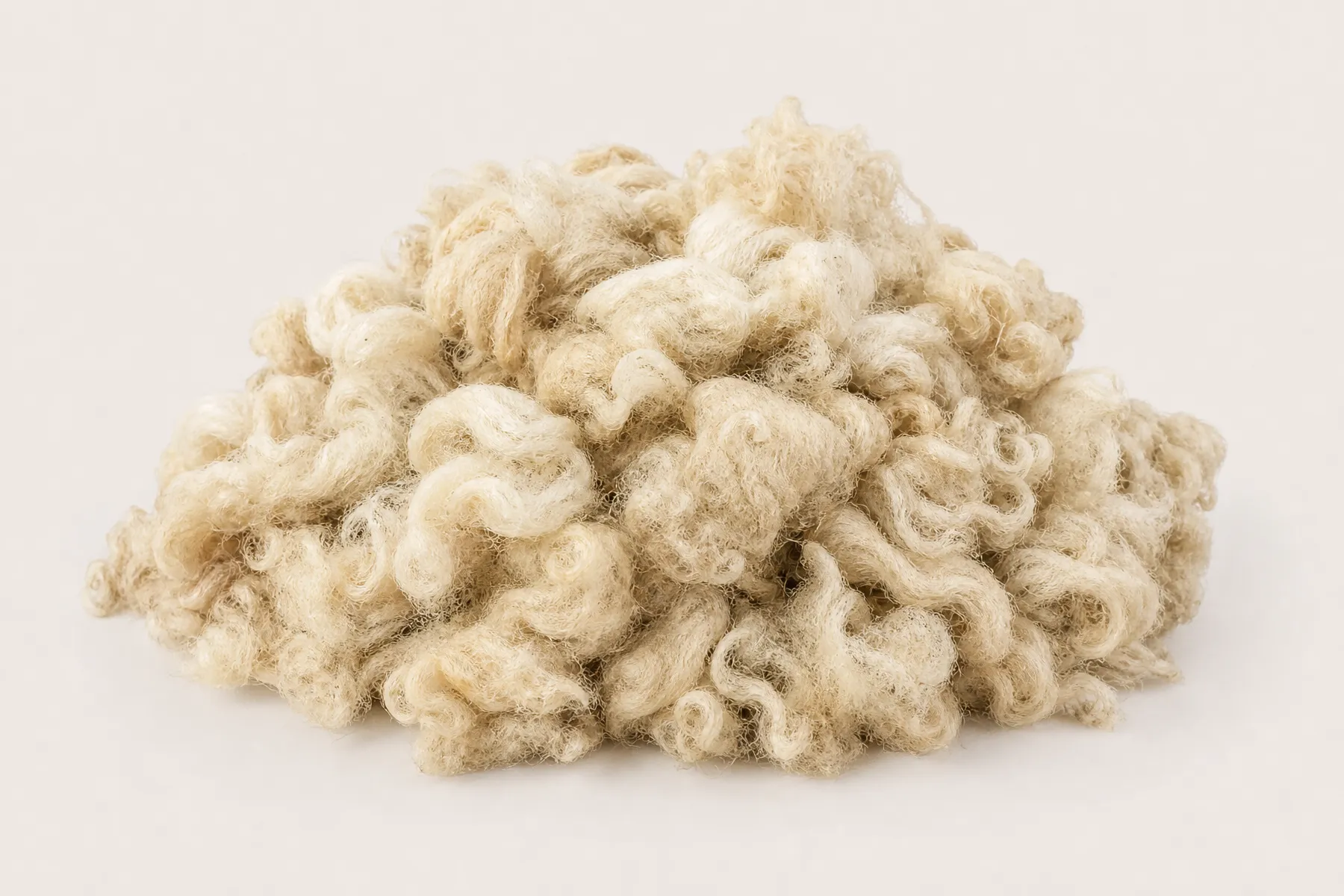
Sheep wool
Raw sheep wool contains lanolin, much of which is removed during washing and processing before the wool becomes finished yarn or fabric.
The important part
A scarf, sock, sweater, or blanket is more than loose fiber. Spinning, yarn thickness, knitting or weaving, blends, and finishing can all change how the material feels and performs.
That is why comparing two raw fibers is useful, but it cannot predict every finished product. A finely made wool garment may feel softer than a coarse alpaca one, while a carefully selected alpaca fleece can produce exceptionally soft yarn.
For families exploring how alpaca fleece becomes something familiar, finished products make the comparison easier to see. The next interaction connects fiber characteristics with five common textile categories.
04 / From fiber to product
Choose a product to see why different fiber characteristics matter in different ways.
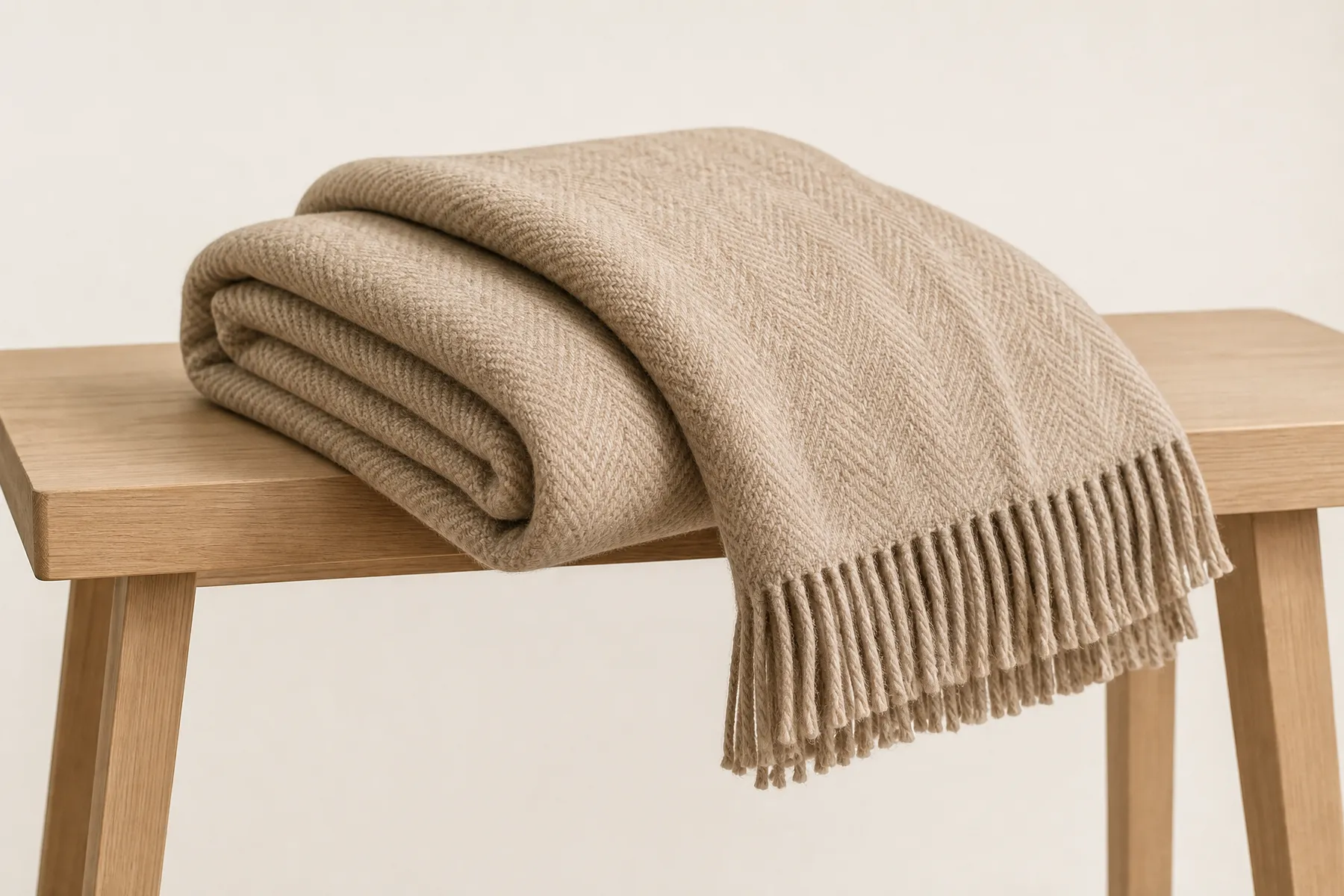
Blanket
Blankets and throws can use a wider range of fiber than clothing worn directly against sensitive skin. Warmth, handle, weight, and construction all matter.
Explore alpaca blankets05 / Before processing
Before either fiber becomes yarn, its natural fleece structure is easier to see.