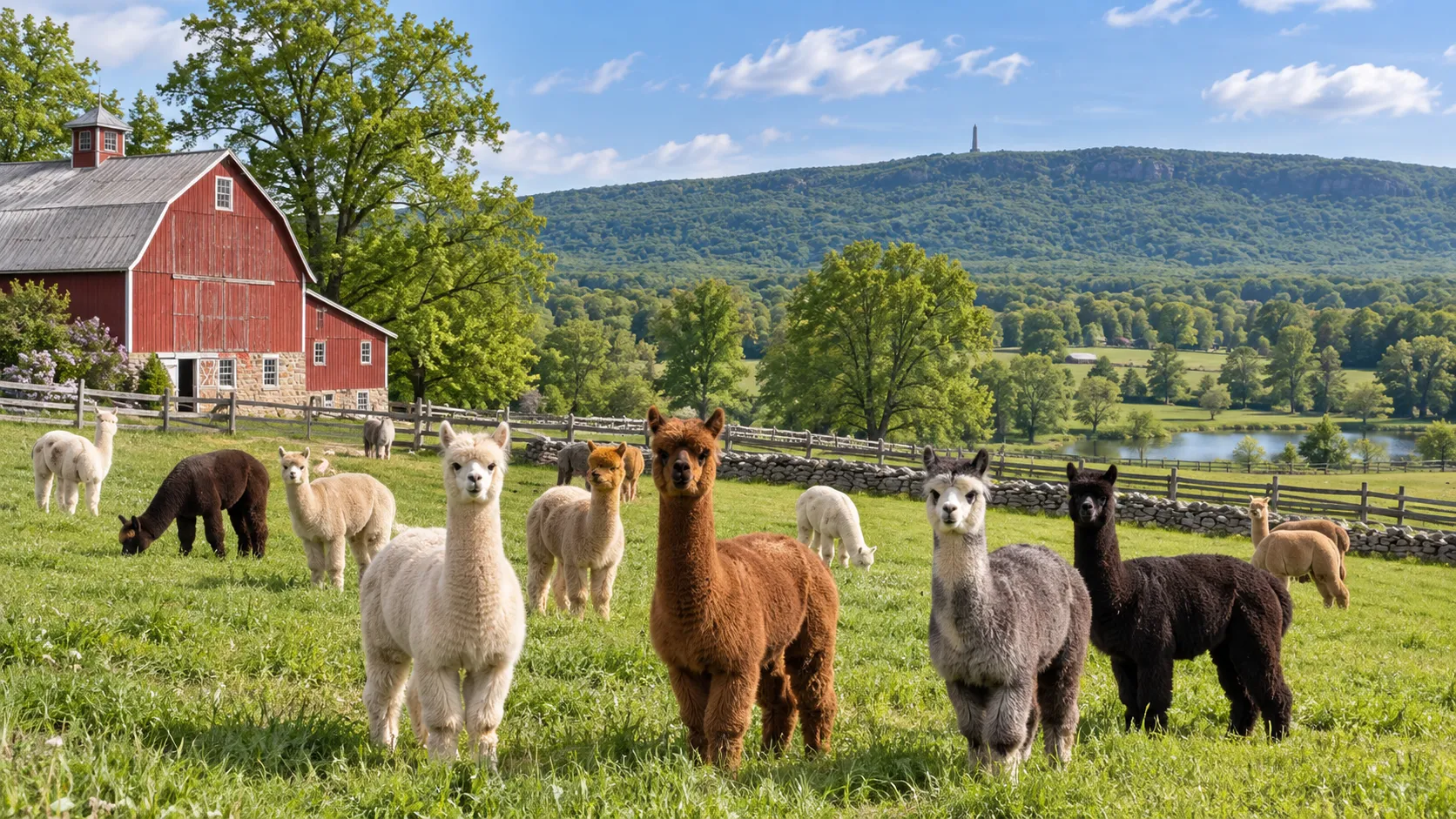
Regional farm outings
A calm first encounter
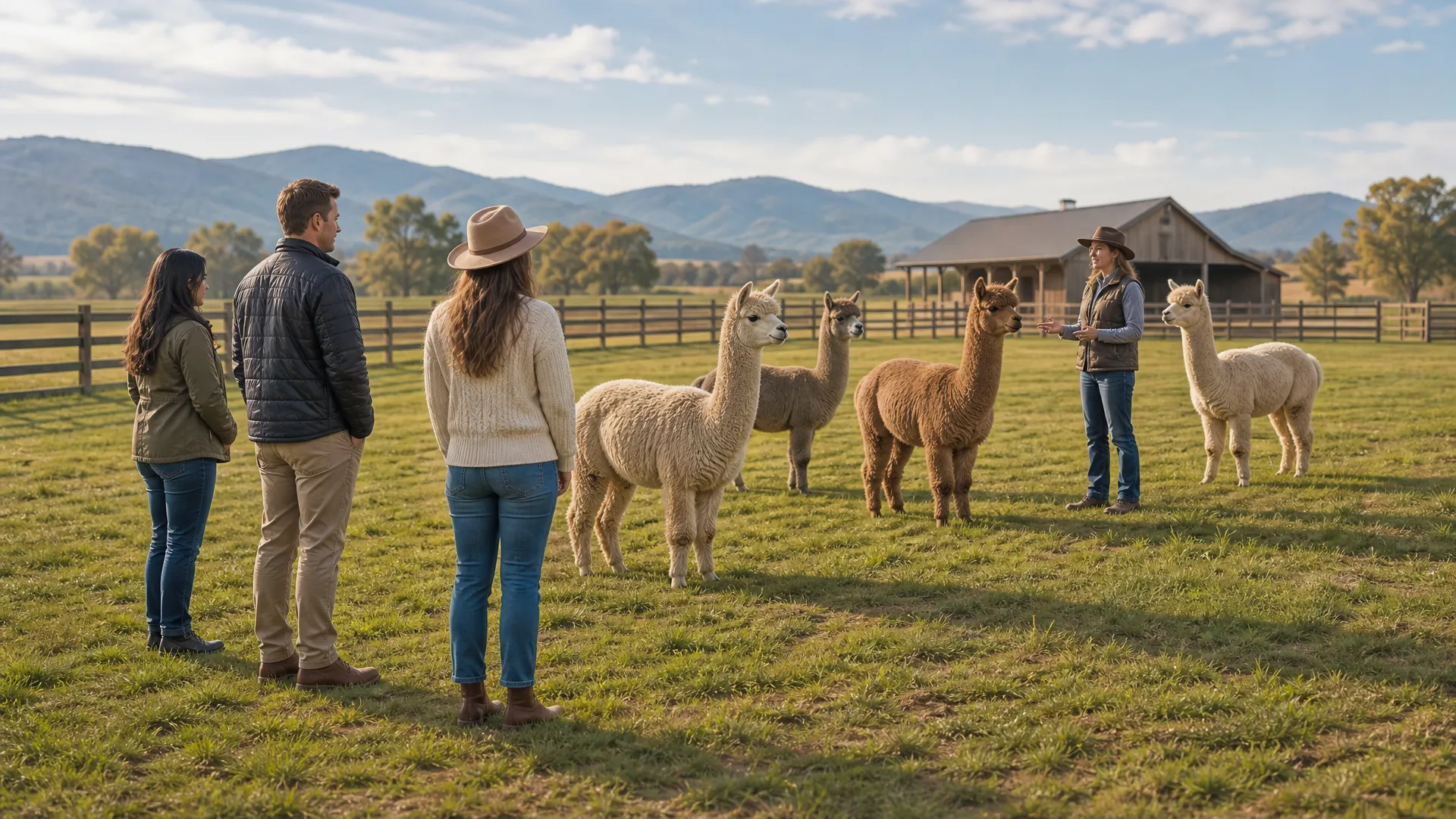
Alpacas are observant herd animals, not oversized stuffed animals. A good farm encounter gives them space to watch, approach, or step away while a guide explains what their posture and movement mean.
Depending on the farm, a visit may involve observing the herd, meeting a halter-trained alpaca, offering approved feed, or taking a scheduled walk. None of those activities should be assumed until the farm says they are included.
Find a place to visit
Use the complete directory to find farms around the country, then check each listing for tours, appointments, visitor policies, and current schedules.
What usually happens first
The first few minutes allow visitors to understand the space while the alpacas notice new people. That introduction is part of the experience, not a delay before the “real” encounter.
Learn which areas are public, what the booking includes, and which rules apply.
Notice where the alpacas stand, which animals seem curious, and which keep their distance.
Approach only as directed and allow the farm to choose the animal for closer interaction.
An alpaca that turns or walks away is communicating clearly and should not be followed.
Approaching the herd
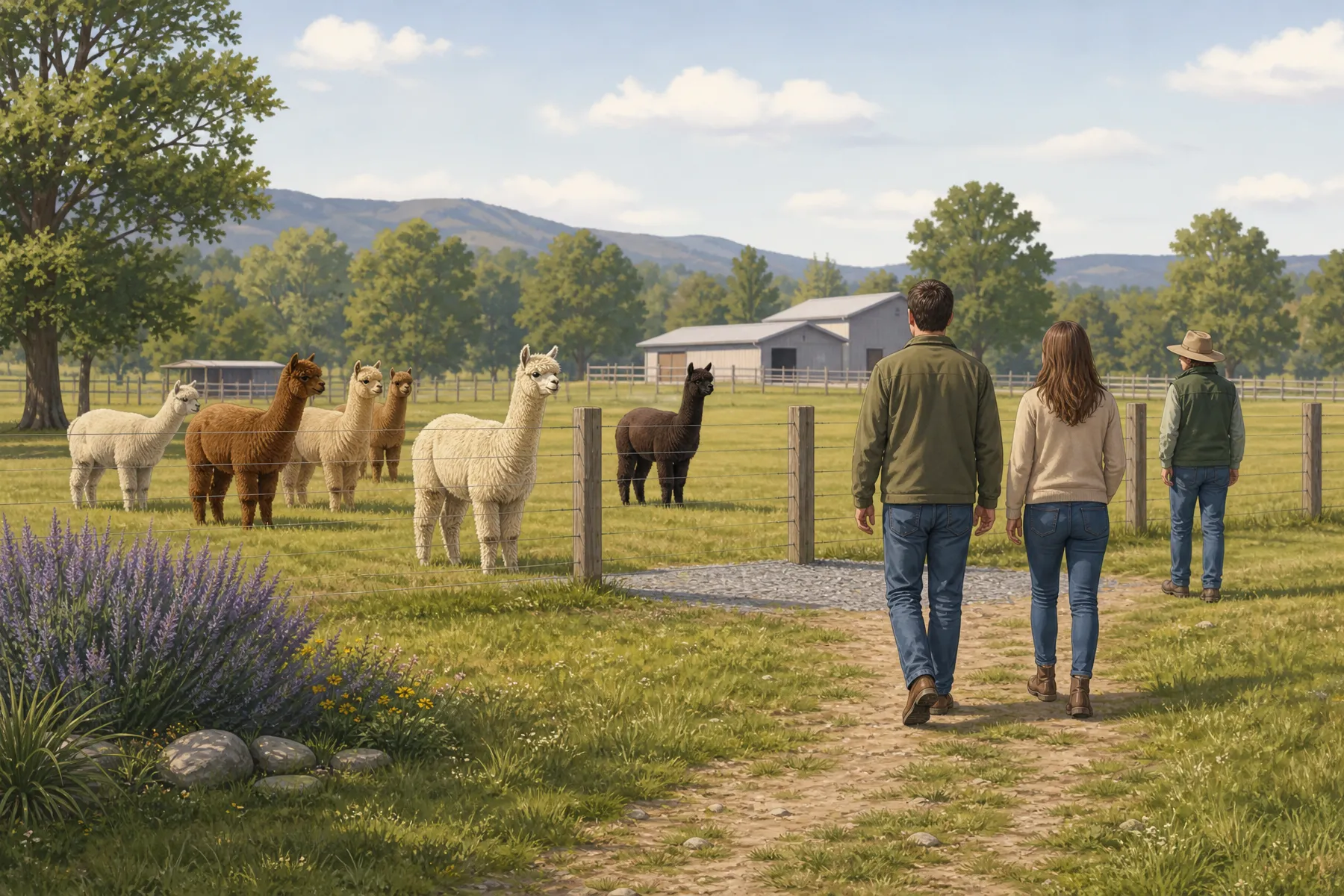
Alpacas pay close attention to movement and spacing. Walking directly at one animal, surrounding it, or reaching before it has settled can cause it to turn away. A quieter approach allows the animal to observe without feeling trapped between people, fences, or other alpacas.
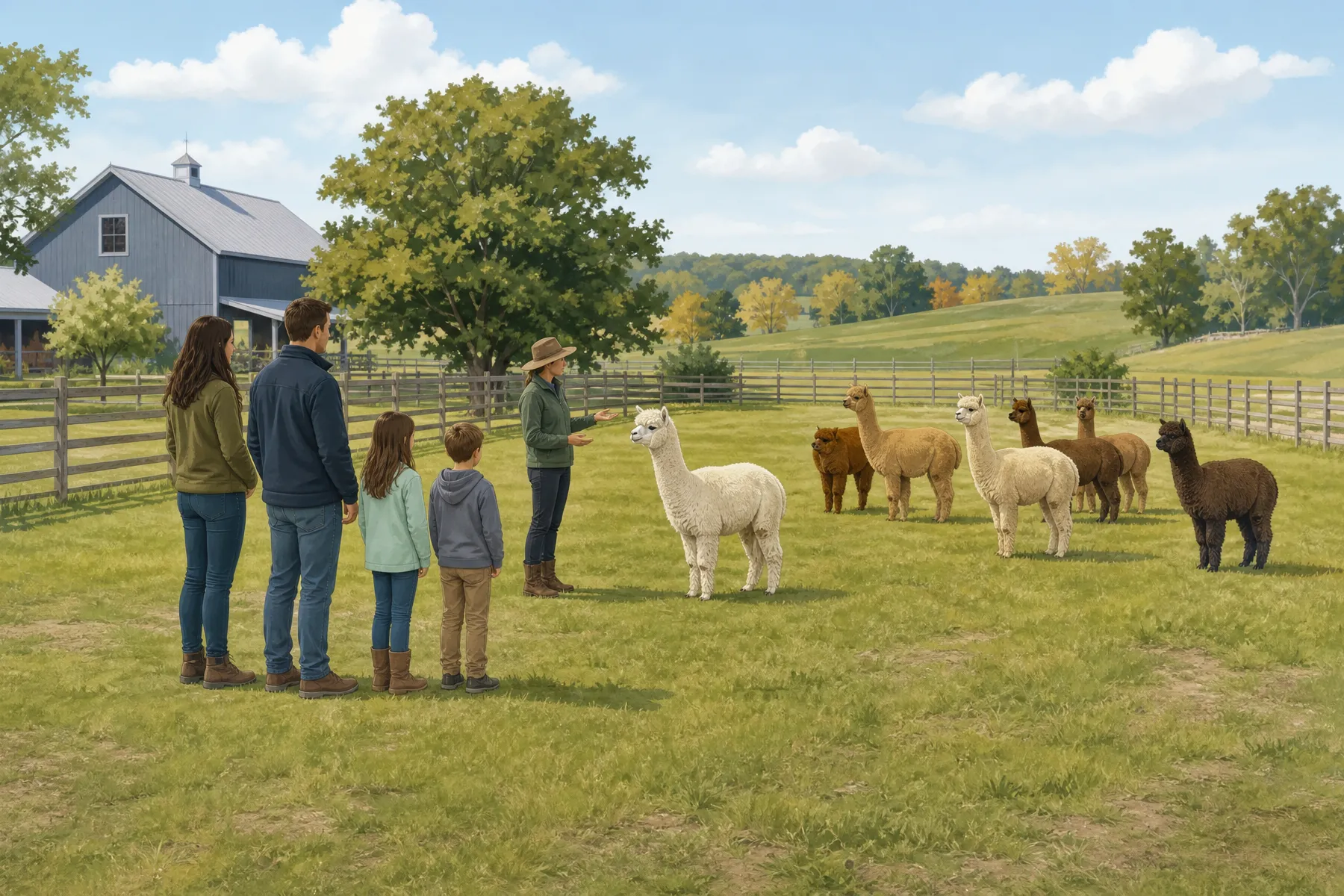
Visitors should stay with the guide rather than spreading through the pasture. This keeps the group predictable and allows the farm to manage gates, feed, and herd movement safely. It also reduces the chance that one person unintentionally separates an alpaca from its companions.
An alpaca that steps closer may be curious, expecting a routine, or responding to the guide. Curiosity does not automatically mean it wants to be hugged or touched on the face.
Can you pet an alpaca?
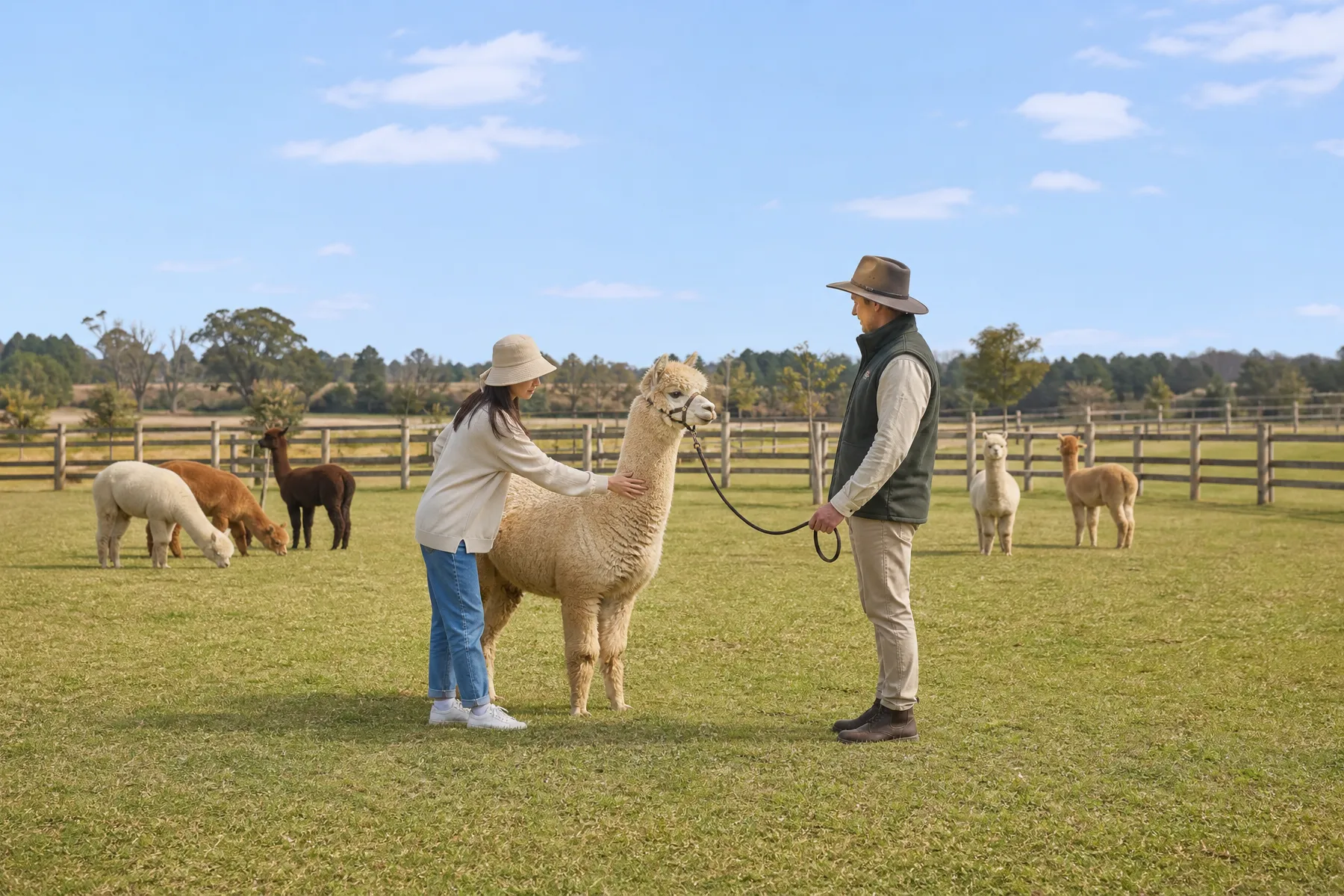
Many alpacas prefer more personal space than visitors expect. Farms that offer contact often select calm, halter-trained animals accustomed to a particular routine. The guide may suggest standing beside the alpaca and touching the neck or shoulder rather than reaching over the head.
Avoid wrapping arms around the neck, touching the eyes or muzzle, leaning across the animal, or trying to hold an alpaca in place. If it steps away, let it go. A successful encounter does not require prolonged petting.
Supervised feeding
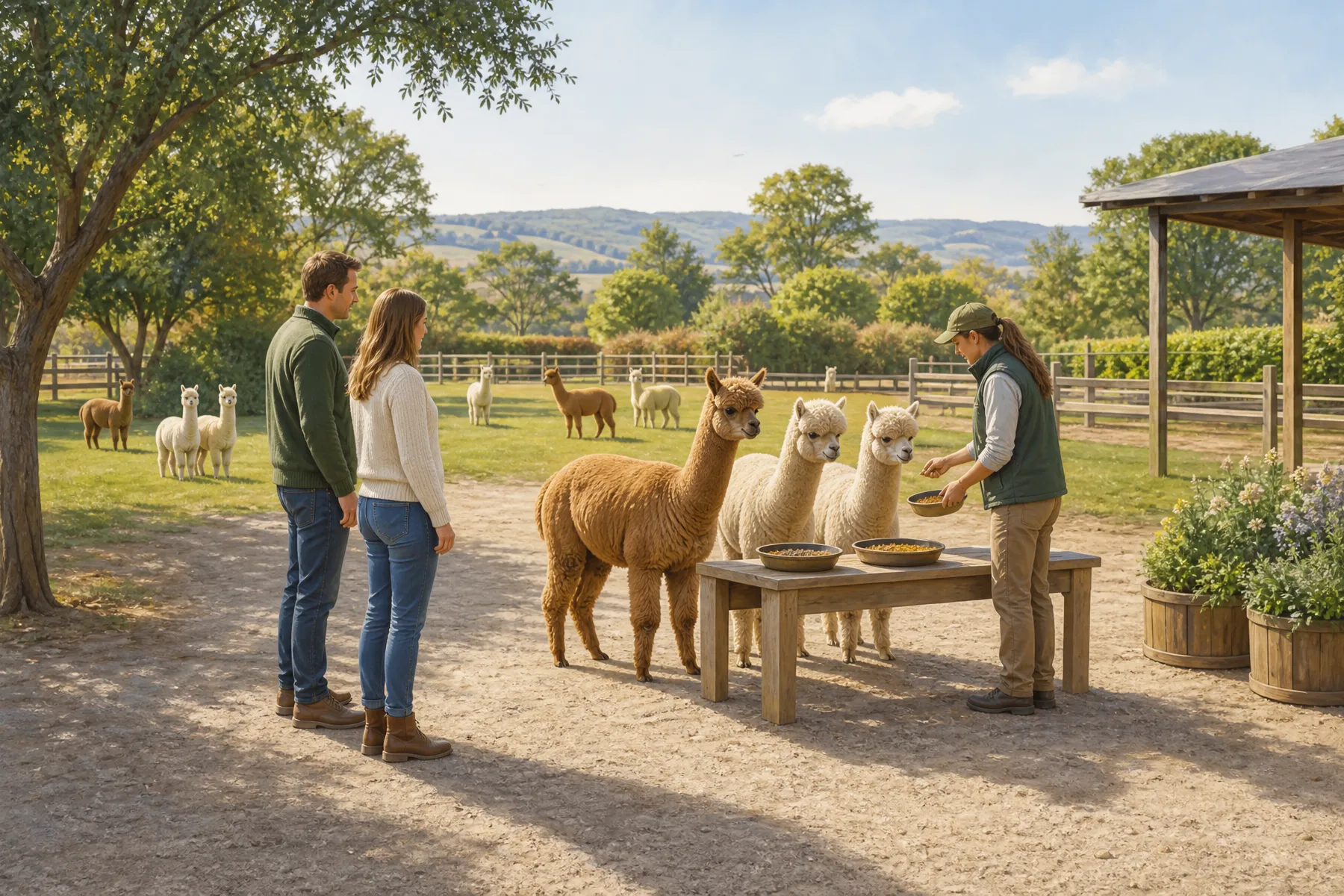
Feeding can bring alpacas closer together and change the mood of the herd. That is why farms control the food, portion, location, and method. Approved feed may be placed in a container or offered in a particular way under the guide's supervision.
Do not bring produce, snacks, lawn clippings, or treats from home. Even an ordinary food can be inappropriate in the wrong quantity or form. Follow the guide if feeding stops because animals begin crowding or disputing the space.
Anyone curious about ordinary forage and farm feeding can continue with the guide to what alpacas eat. Visitor feed is only a small, controlled part of a much larger diet.
Visiting with children
A family visit works best when children know that an alpaca may not want to be touched. Adults should keep children nearby, reinforce the guide's instructions, and prevent running, shouting, fence climbing, or following an animal that has moved away.
Farms may set minimum ages for walks or other structured activities. That does not necessarily make the farm unsuitable for younger children; it may offer a viewing area, shorter introduction, or educational program instead. Ask about the actual format rather than relying on photographs.
The broader guide to alpaca farm agritourism compares guided tours, school visits, fiber workshops, stores, events, and other farm experiences.
Before making the trip
Clear questions prevent most mismatched expectations. Farm schedules and activities change, so verify the current experience rather than relying on an old photograph or social post.
Two places to begin
Both directories contain a mixture of visitor-oriented and working farms. Individual listings determine whether tours, appointments, events, or other encounters are currently offered.
Regional farm outings
Destination experiences
Looking elsewhere? Use the complete state directory or return to the national alpaca farm directory.
The useful goal
Meeting an alpaca does not need to resemble meeting a pet. Quiet observation, a few steps of voluntary curiosity, and a short supervised interaction can reveal more about the animal than forcing close contact.
Learn how alpacas communicate, choose a farm whose visitor program matches your group, and follow its current instructions. That gives people a clearer experience while allowing the herd to retain the space and predictability it needs.