A season-by-season farm guide

When to visit an alpaca farm

There is no single month that works for every alpaca farm. The right time depends on regional weather, the setting where alpacas are farmed, the experience you want, and whether the farm offers regular hours, appointments, workshops, or seasonal events.

Spring can bring changing weather and young animals. Summer offers longer days but may shift activities away from afternoon heat. Fall often suits outdoor visits, while winter brings full fleece and more weather-related limitations. The broader guide to alpaca farms explains why visitor access differs among farm types.

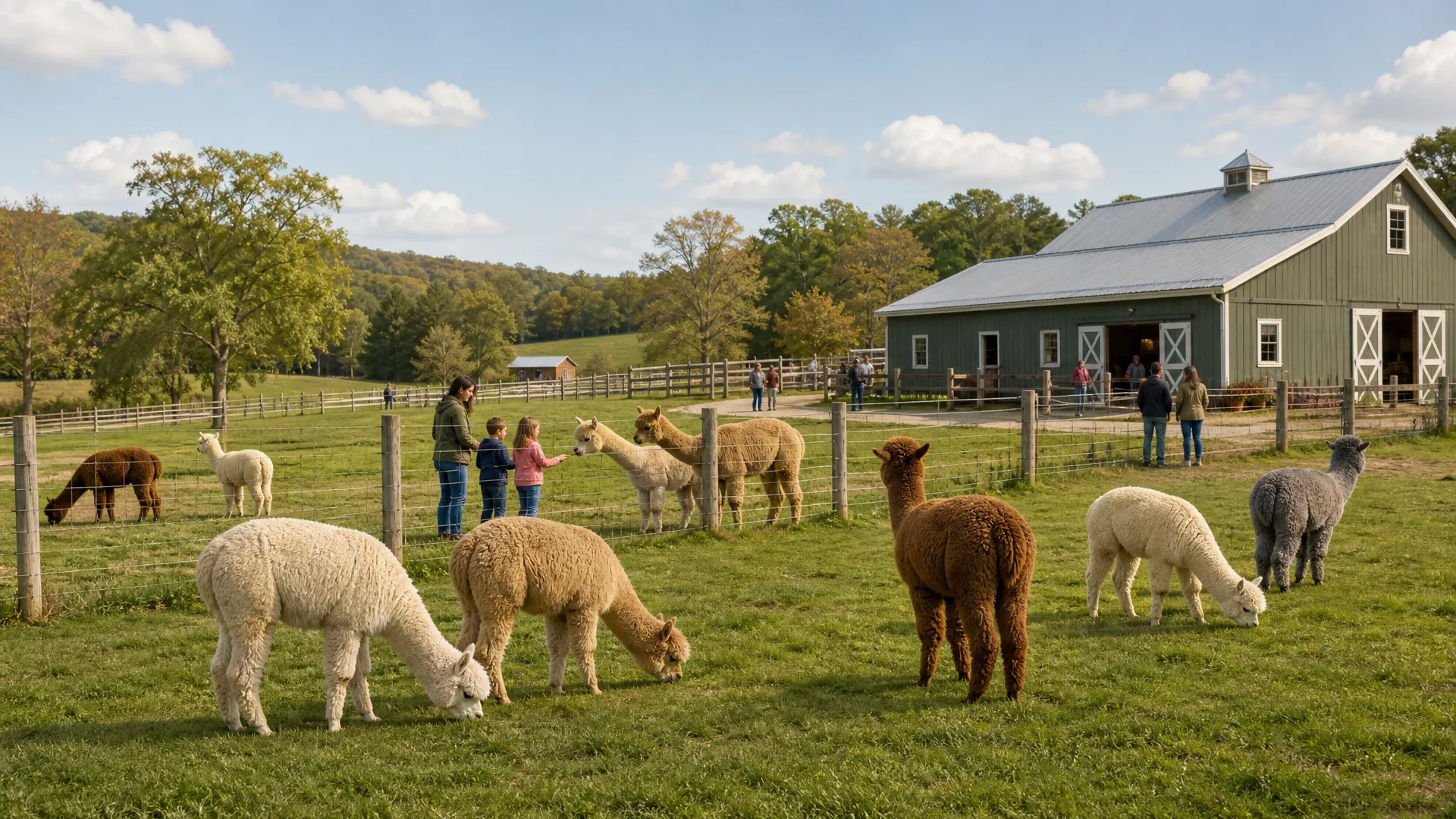
Visitors meeting alpacas during a comfortable farm season

Choose a destination

Find alpaca farms by state

Browse the complete directory, then confirm the individual farm's current opening dates, reservation requirements, and weather policies.

The short answer

Match the season to the experience

A comfortable-weather visit is different from a trip planned around young alpacas, full winter fleece, a fiber demonstration, or a seasonal event.

Spring
Good for seeing a farm become active after winter, with rain and mud possible.
Summer
Longer days and broad travel options, but hot afternoons may change activities.
Fall
Cooler conditions and seasonal events can make desirable dates busier.
Winter
Full fleece and quiet farm scenes, with weather and access more likely to intervene.
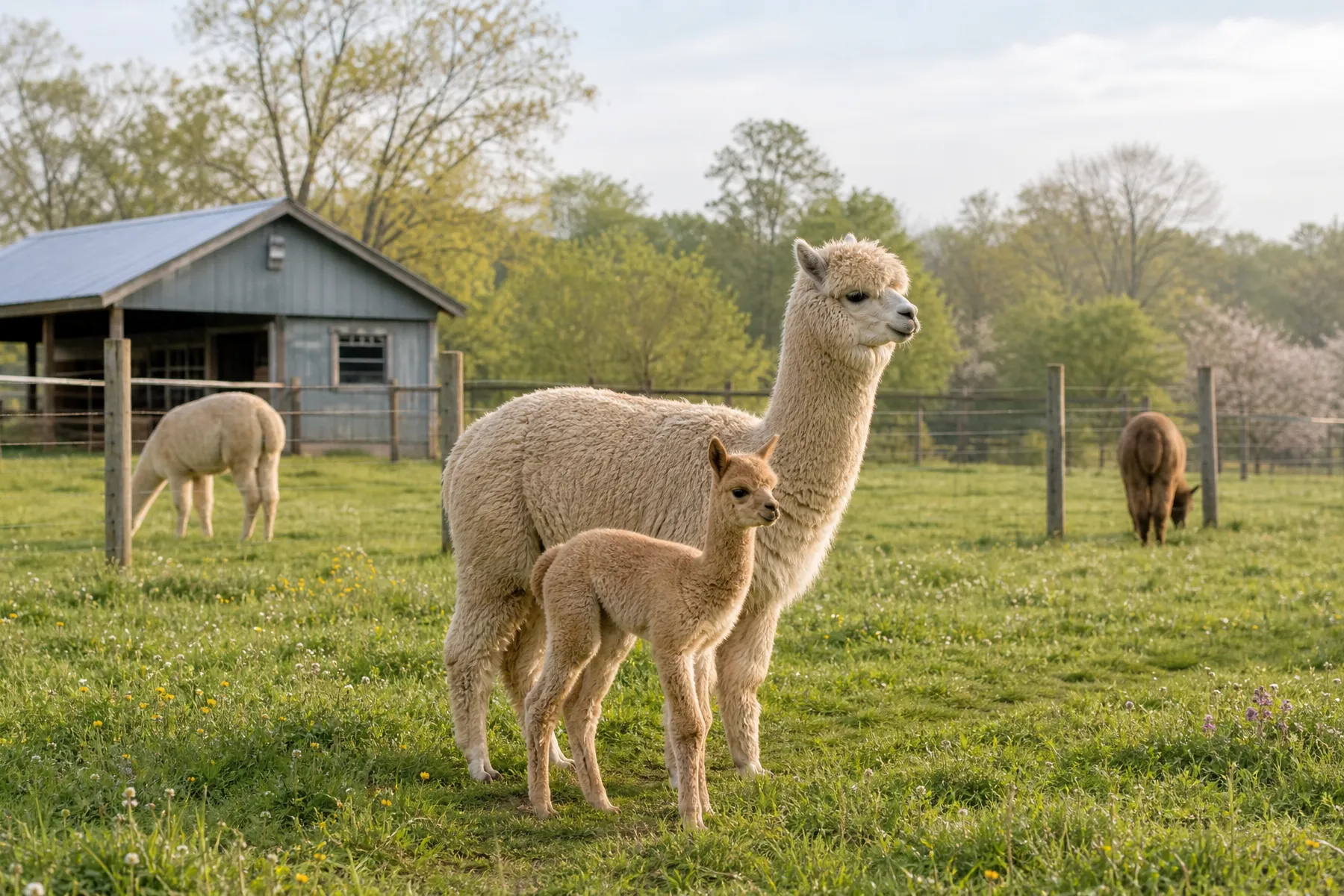
An alpaca farm visit during mild spring weather
Spring conditions can change quickly, even when the farm is open and active.

New growth and changing ground

Spring visits require flexible footwear and expectations

Spring can reveal how a farm moves from winter routines toward growing pasture and a busier outdoor season. It can also bring rain, thawing soil, muddy lanes, temperature swings, and sections of ground that remain closed even when a tour continues elsewhere on the property.

Young alpacas may be present at some farms, but breeding and birthing schedules differ. A visitor should not assume that a spring reservation includes seeing a newborn or entering an area used by mothers and young. Animal welfare and farm work take precedence over access.

For farms that can fit into a regional day trip, explore alpaca farms in New Jersey. Check each listing for reservations and current offerings rather than treating the state directory as a promise that every farm is open.

  • Expect variable ground and temperatures.
  • Ask whether the experience changes in rain.
  • Do not rely on the presence of young alpacas.
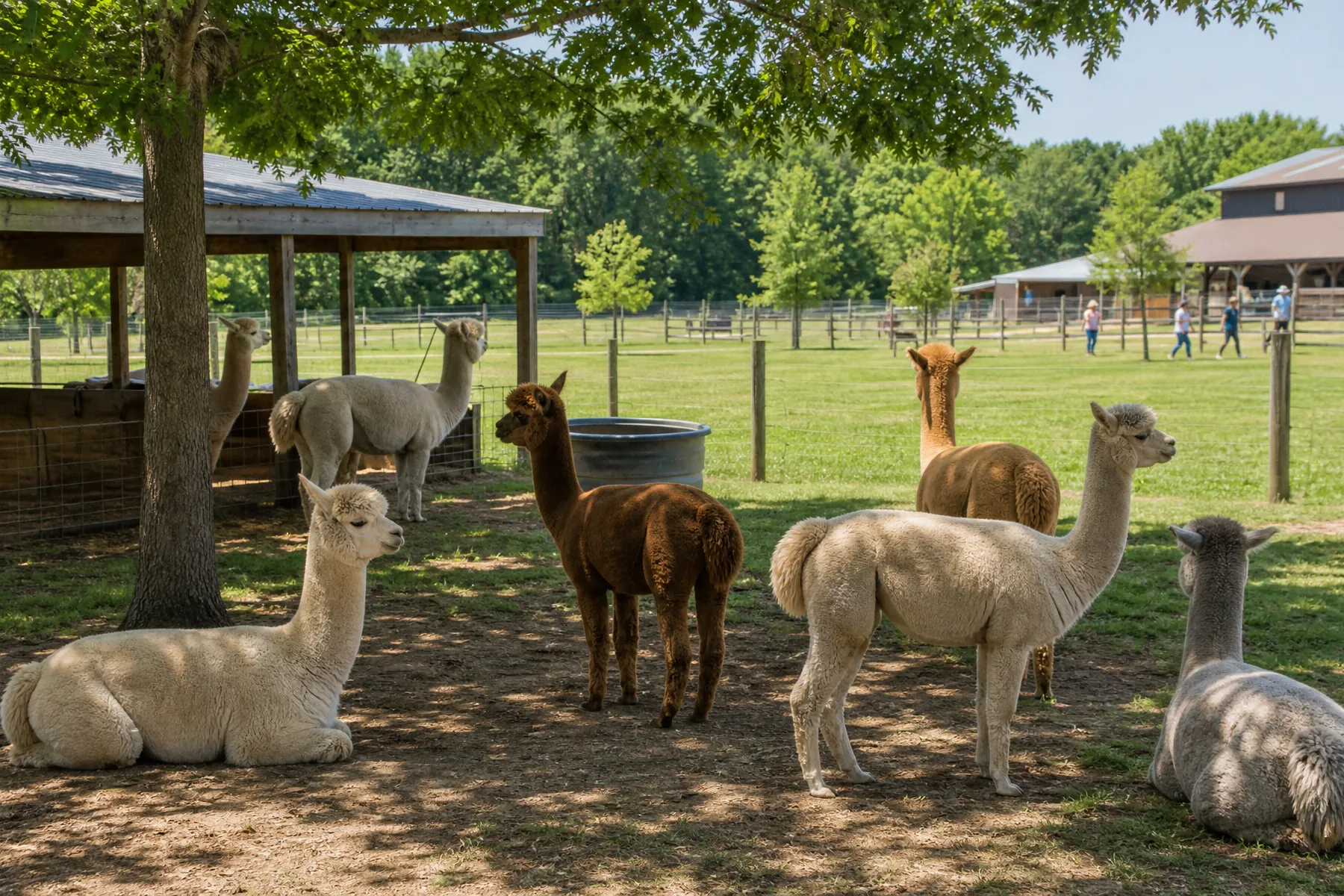
Visitors at an alpaca farm during a clear summer day
Morning schedules can keep outdoor experiences more comfortable during warm periods.

Long days and warmer conditions

Summer favors planning around the temperature

Summer can make rural travel easier and provide more daylight for tours, events, and farm-store visits. The tradeoff is heat. Farms may schedule tours earlier, shorten outdoor encounters, move demonstrations into shade, or alter activities when animals are resting during the warmest part of the day.

Alpacas may also look less fluffy than expected. Shearing commonly occurs before the hottest part of summer, though timing varies with location, weather, and the individual farm. Recently shorn animals and animals with growing fleece can therefore appear together across summer photographs.

The directory of alpaca farms in Maine can be used when planning a summer trip through rural and coastal parts of the state. Confirm hours because a farm store, scheduled tour, and private livestock operation may follow different calendars.

  • Consider morning rather than afternoon.
  • Bring sun protection and drinking water for yourself.
  • Check whether heat changes the booked activity.

The cooler half of the calendar

Fall and winter offer different reasons to visit

Cooler weather can make outdoor visits comfortable, but shorter days and changing conditions place more importance on reservations and current information.

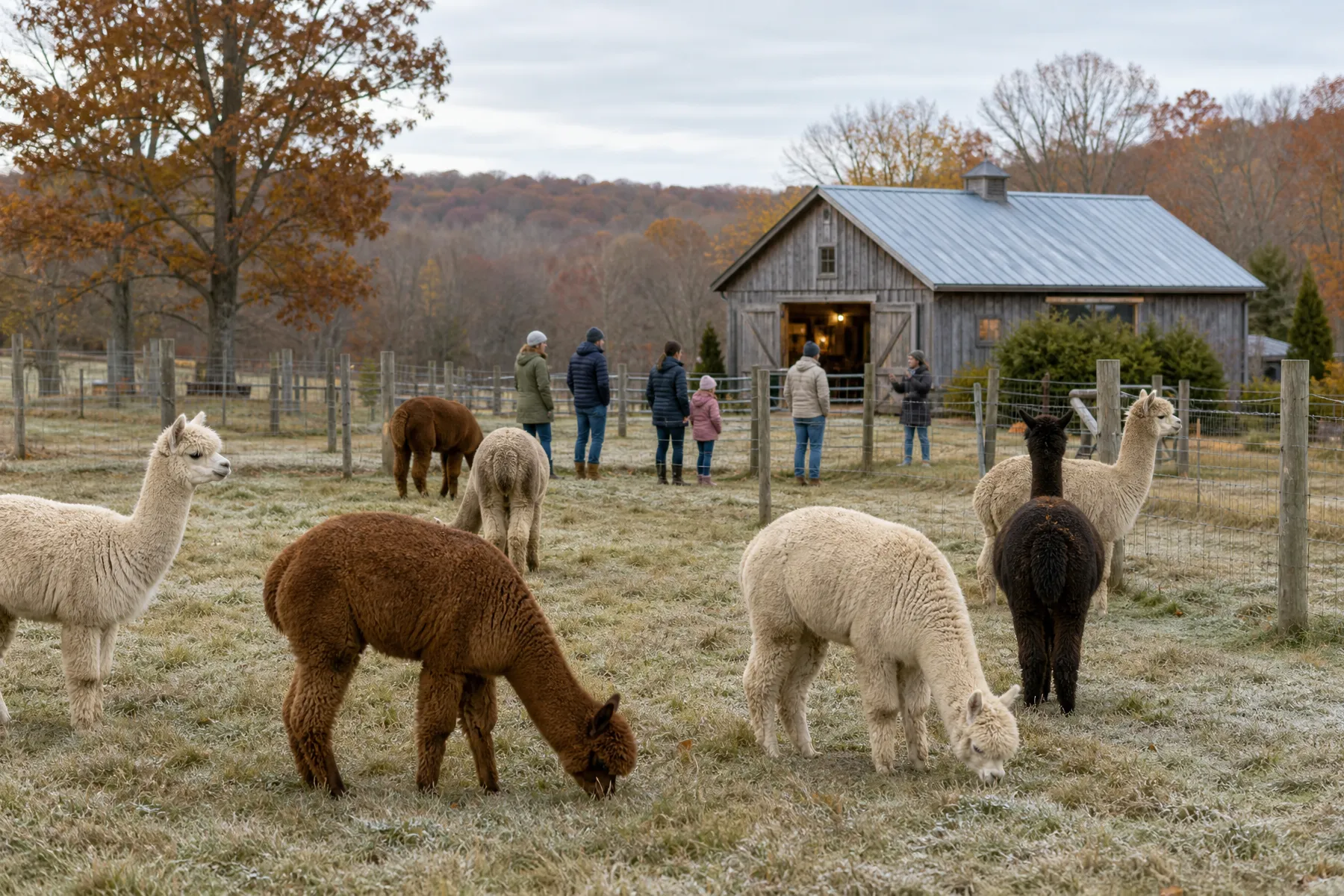
Alpacas and visitors at a farm during a cool-weather season

Fall

Comfortable weather can bring greater demand

Fall may combine moderate daytime temperatures, developing fleece, farm products, and seasonal rural travel. Desirable weekends can fill earlier, particularly when an alpaca visit is part of a larger regional outing.

Explore alpaca farms in Colorado for operations across plains, foothills, and mountain communities. At higher elevations, cold or snow can arrive while lower locations remain mild, so the individual farm's conditions matter.

  • Reserve desirable weekends in advance.
  • Prepare for cooler mornings and evenings.
  • Check for regional weather differences.

Winter

Full fleece does not guarantee easy access

Winter can show alpacas with substantial fleece and create memorable farm landscapes. It can also limit parking, paths, daylight, restroom access, outdoor programs, and travel. Some farms close to ordinary visitors while continuing scheduled stores, events, or appointments.

Snow is not the only concern. Ice, wind, saturated ground, and rapid weather changes can affect a visit. Recheck the farm's instructions before leaving, even if the reservation was made well in advance.

  • Confirm the visit on the day of travel.
  • Ask about parking and walking surfaces.
  • Expect shorter daylight and possible cancellations.

The day matters too

Morning or afternoon?

Farm schedules follow chores, animals, weather, staff, and booked activities. These broad patterns can help when more than one time is offered.

Earlier

Useful during warm weather

  • Cooler temperatures
  • Less intense sun
  • Potential overlap with morning routines

Midday

Conditions depend on season

  • Warmer during cool months
  • Hotter during summer
  • Common time for scheduled programs

Later

Check daylight and closing time

  • Possible relief after peak heat
  • Short daylight in winter
  • Farm chores may affect availability

Before setting out

Five things to verify

An old social post or photograph can show what a farm once offered. Use current visitor information for the day you intend to travel.

  1. Is the farm open to the public? A directory listing does not automatically mean drop-in visits are allowed.
  2. Is a reservation required? Appointment-only farms may not have staff available for unexpected arrivals.
  3. What does the booking include? Touring, feeding, walking, workshops, and animal encounters can be separate.
  4. Has weather changed the plan? Heat, rain, mud, snow, wind, or smoke can alter routes and schedules.
  5. What should you wear? Closed-toe shoes and seasonally appropriate layers suit many working farms.

Three seasonal starting points

Plan a visit by state

Use these directories as examples, then check the schedule of the individual farm.

Looking elsewhere? Browse the complete state directory or return to the national alpaca farm directory.

The practical answer

The right visit is the one the farm is prepared to offer

Seasonal expectations are useful, but farms differ in breeding schedules, shearing dates, climate, visitor programs, and business purpose. Learning about alpacas can add context without replacing the farm's current instructions.

Choose the experience first, use the season to refine your plans, and confirm the details shortly before traveling. That approach is more dependable than choosing a month and assuming every farm will look or operate the same way.