Northern New England
Weather, land, and farm routines
Alpaca farming climates and regions
Alpacas are raised in snowy northern states, wet coastal areas, dry interior regions, and places with hot summers. What changes from one alpaca farm to another is the way shelter, pasture, water, shade, and seasonal routines respond to local conditions.
Climate also changes the visitor experience. A farm that is easy to reach in October may have muddy paths in spring, restricted afternoon hours during summer heat, or limited access following winter storms.
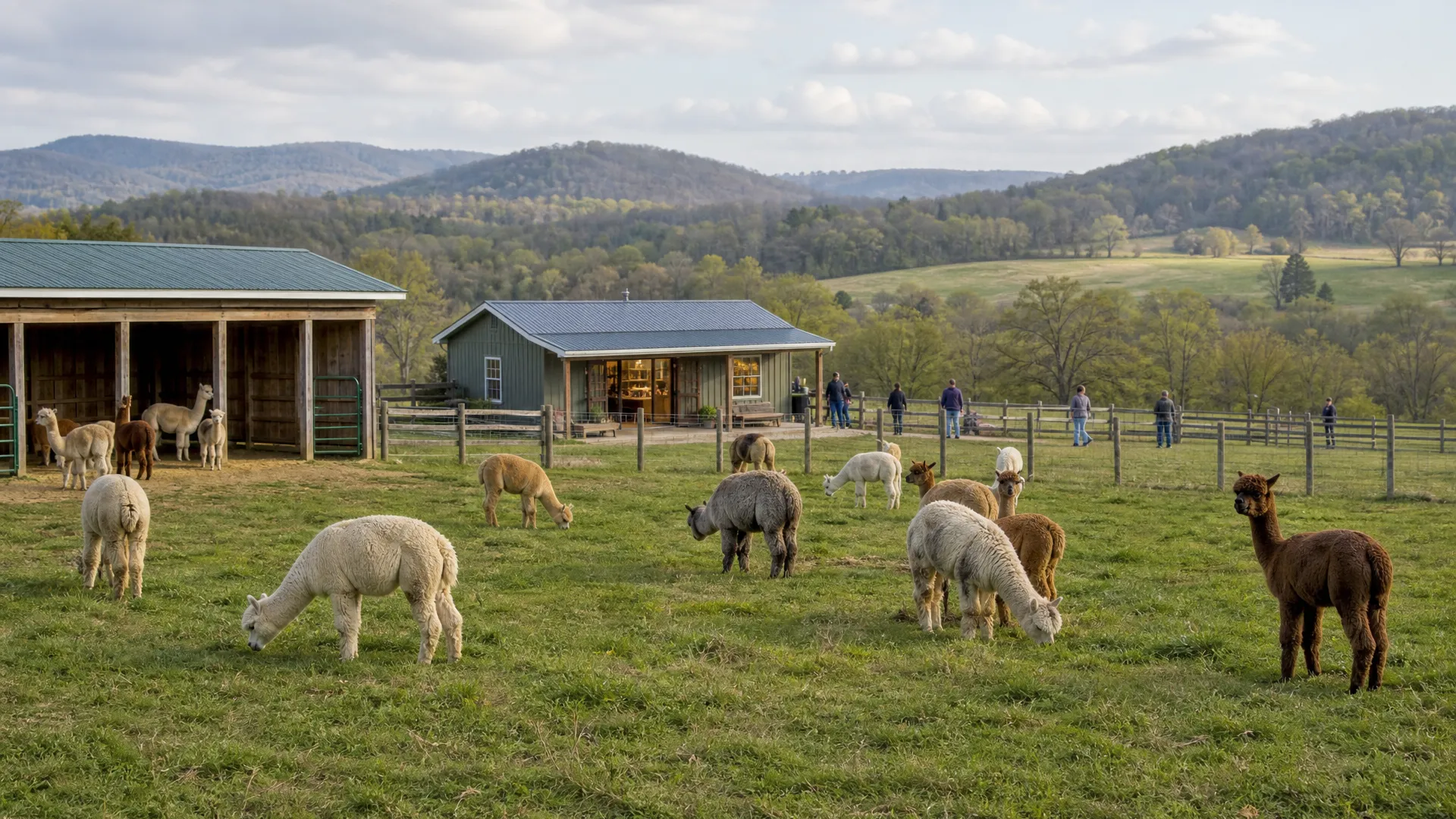
Climate sets the conditions.
Farm management determines how animals, land, and visitors are accommodated within them.
Compare farms around the country
Browse alpaca farms by state
Use the complete directory to explore farm listings in every state, or enter a state to go directly to its page.
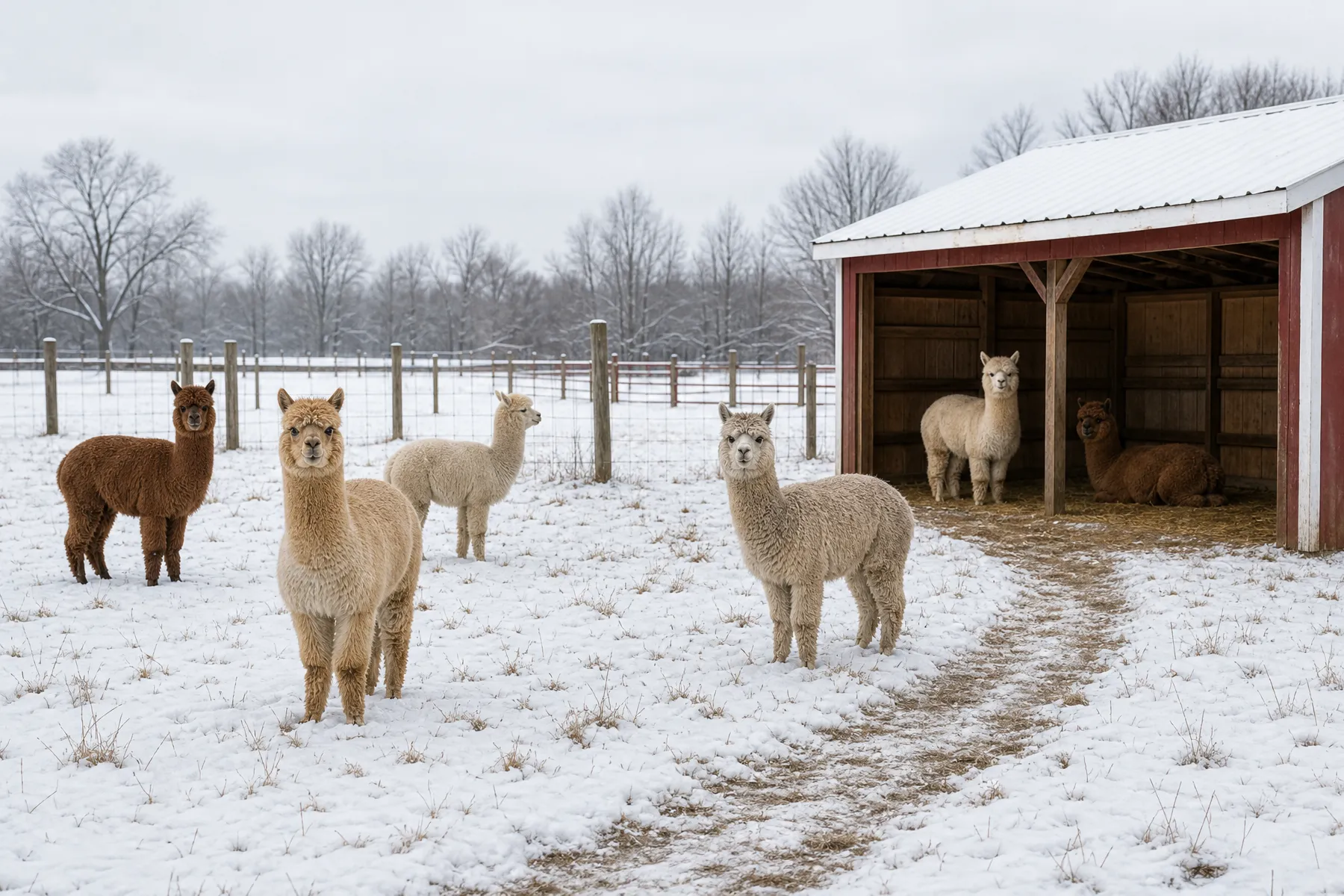
- Farm focus
- Dry shelter and dependable water
- Visitor variable
- Snow, ice, roads, and shorter daylight
Cold and snowy regions
Winter fleece is only part of the picture
An alpaca's fleece changes how the animal appears in winter, but a cold- weather farm still needs a way to limit exposure to severe wind and wet conditions. Managers also need to keep drinking water available, maintain usable feeding areas, and provide a dry place where animals can settle.
Snow itself may be less disruptive than repeated freezing and thawing. Ice can affect gates, lanes, and footing, while drifting snow can change which parts of a property are practical to use. Visitor hours may be reduced even while the animals' daily care continues normally.
The directory of alpaca farms in Maine offers examples from a state where winter weather and seasonal travel are important considerations. Individual farms still set their own schedules, so a listing should be checked shortly before a visit.
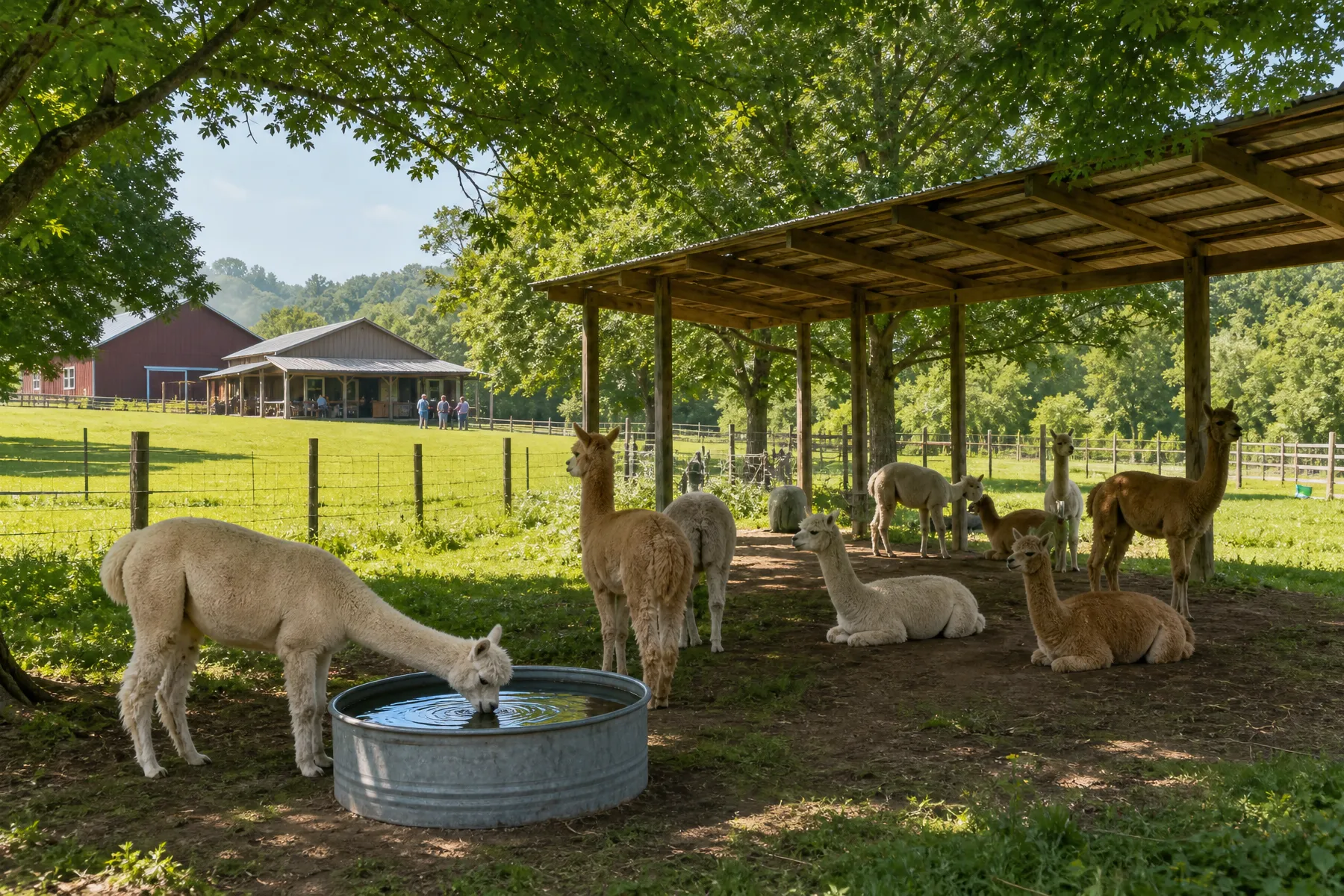
- Farm focus
- Shade, water, ventilation, and observation
- Visitor variable
- Earlier hours and shorter outdoor activities
Warm and humid periods
Hot weather can rearrange the farm day
During summer heat, shade and water become especially visible parts of the farm. Barn airflow, fans, sprinklers, or other cooling practices may also be used depending on the region and the facility. Recently shorn alpacas can look very different from the animals shown in winter farm photographs.
Heat often affects scheduling before it cancels an experience entirely. A farm may favor morning tours, move demonstrations indoors, shorten a walk, or keep guests away from areas where the herd is resting. These adjustments are practical responses to current conditions rather than signs that a farm is less visitor-friendly.
Anyone planning a summer outing should look beyond the general forecast. Sun exposure, humidity, wildfire smoke, and conditions on the individual property can all influence what the farm offers that day. The guide to when to visit an alpaca farm places those changes within the full seasonal calendar.
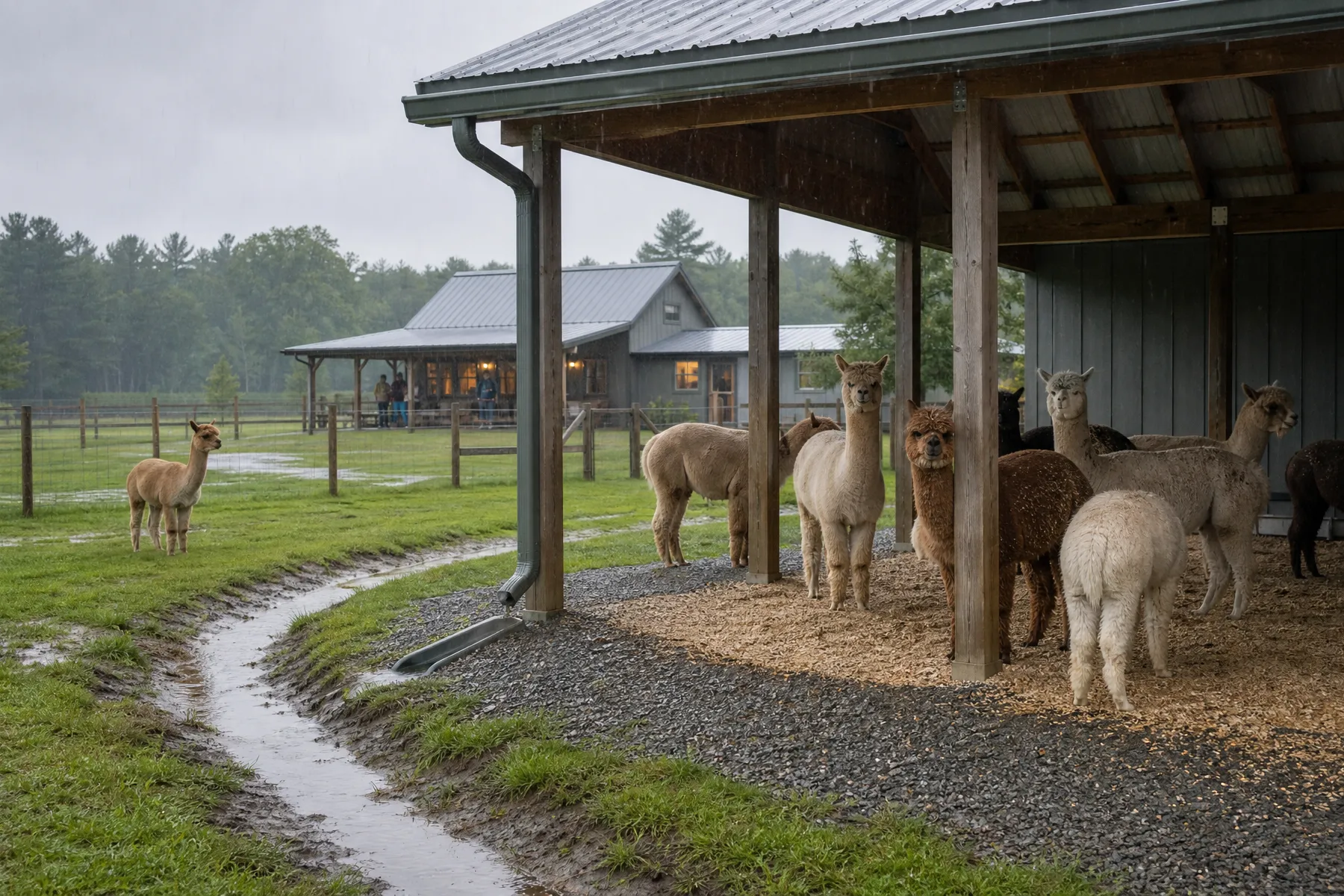
- Farm focus
- Drainage and protected high-traffic areas
- Visitor variable
- Mud, rain, and restricted walking routes
Wet and temperate regions
Green landscapes bring drainage questions
Regular rain may support pasture growth, but it also concentrates wear around gates, shelters, water sources, and feeding areas. Farms can use drainage, surfaced lanes, covered feeding locations, and pasture rotation to keep frequently used ground more manageable.
Wet conditions are easy for visitors to underestimate. A property may be open while one path or pasture remains unavailable. Appropriate footwear matters, and an experience described as accessible should still be checked for its current surface conditions after prolonged rain.
Explore alpaca farms in Oregon for farms operating in varied Pacific Northwest landscapes. Western Oregon's wetter settings and the drier areas farther inland also show why one state should not be reduced to a single climate description.
- Farm focus
- Water, shade, wind, and forage availability
- Visitor variable
- Sun exposure, dust, and temperature swings
Dry and high-elevation settings
Open skies do not make conditions simple
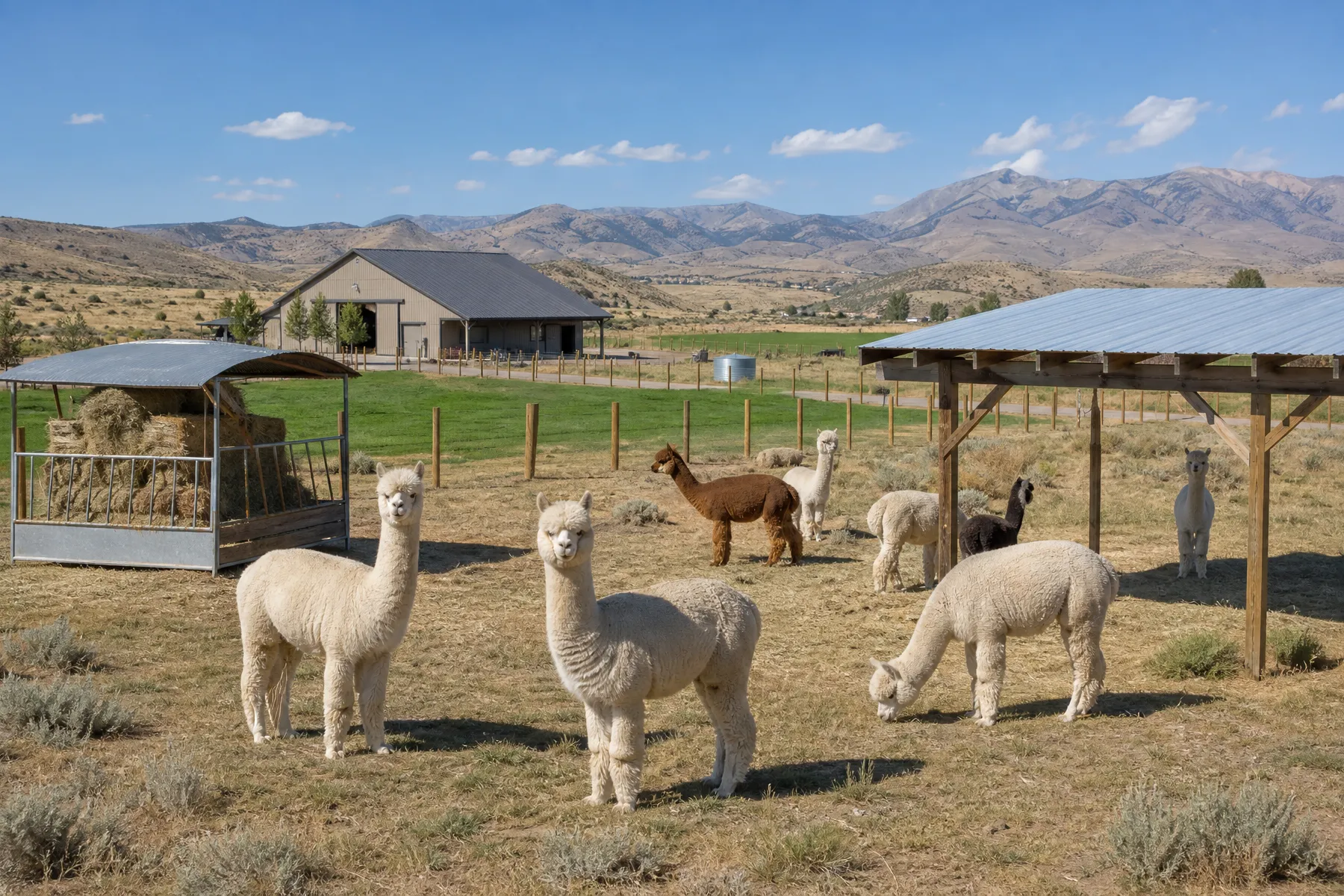
Dry farms may have firm ground and fewer mud problems, yet they face a different combination of constraints. Shade and dependable water remain important, forage may be seasonal or irrigated, and wind can increase exposure even when the air temperature appears moderate.
Elevation introduces another layer. Strong sun, rapid weather changes, and cool nights can occur within the same trip. Visitors should prepare for conditions at the farm itself rather than relying only on a forecast for the nearest city.
The listings for alpaca farms in Colorado include operations in different landscapes and at different elevations. They provide a useful starting point for comparing mountain, foothill, plains, and more developed settings without treating them as identical.
At a glance
How conditions can change a farm visit
These are common patterns rather than rules. Individual properties can differ substantially within the same state or climate zone.
| Setting | Visible farm concern | Possible visitor change | Useful question |
|---|---|---|---|
| Cold and snowy | Wind, frozen water, ice, and dry bedding | Road delays or reduced outdoor access | Are paths and parking open today? |
| Hot | Shade, airflow, water, and monitoring | Earlier hours or shorter activities | Has the tour time changed for heat? |
| Wet | Drainage, mud, and pasture wear | Different routes or closed ground | What footwear and access should I expect? |
| Dry or elevated | Sun, water, wind, and forage | Exposure or rapid temperature changes | How exposed is the visitor area? |
Three regional examples
Compare farms in contrasting settings
These directories offer useful geographic contrasts, but each contains farms with different land, purposes, schedules, and visitor policies.
Pacific Northwest
Oregon
Wet western areas, drier inland landscapes, and changing elevation. Explore Oregon farmsMountain West
Colorado
Strong sun, open plains, foothills, mountains, and daily temperature changes. Explore Colorado farmsFor every region, use the complete state directory or return to the national alpaca farm directory.
One animal, many farm settings
Geography does not tell the whole story
The same regional climate can produce very different farms. Acreage, drainage, shelter design, herd size, elevation, available feed, and the farm's primary purpose all influence what a visitor sees. Learning about alpacas provides context, but current information from the individual farm remains essential.
Climate is therefore most useful as a planning lens. It helps explain why a farm may change hours, limit access to a pasture, move an activity, or ask visitors to prepare for particular ground conditions. It should not be used to assume that every farm within a state operates the same way.