Breeding plus fiber
A breeding herd also produces annual fleece that may be sold raw, processed, or made into products.
One name, different purposes
“Alpaca farm” tells you which animal is raised, but not what the farm does. One operation may develop breeding stock, another may process fiber, and another may organize tours, events, a farm store, or lodging.
Understanding those differences makes it easier to choose a farm, interpret a listing, and know whether a public visit is likely.
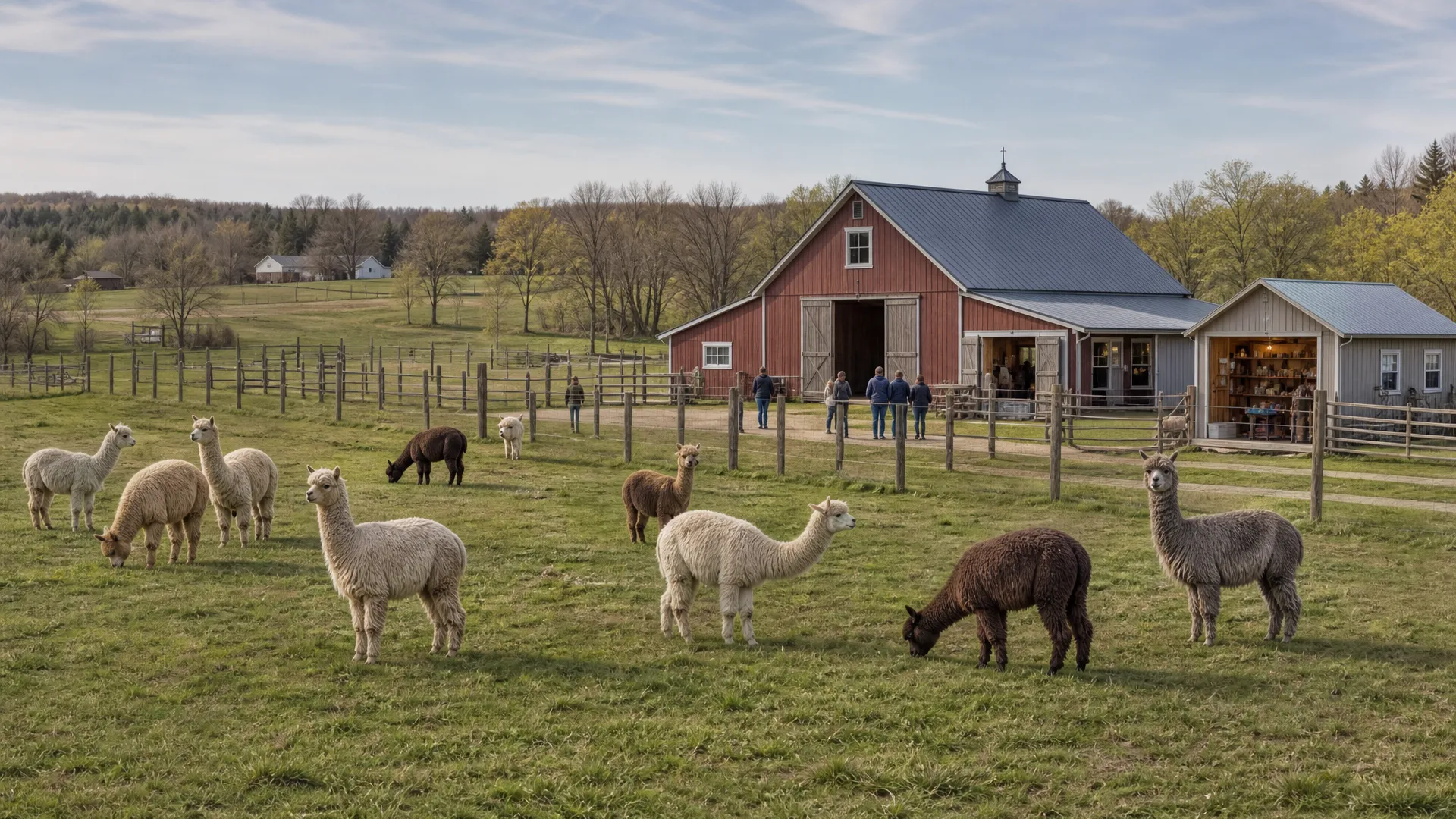
Find the right farm
Start with the complete directory, then check individual listings to see whether a farm focuses on breeding, fiber, visits, products, or a combination of activities.
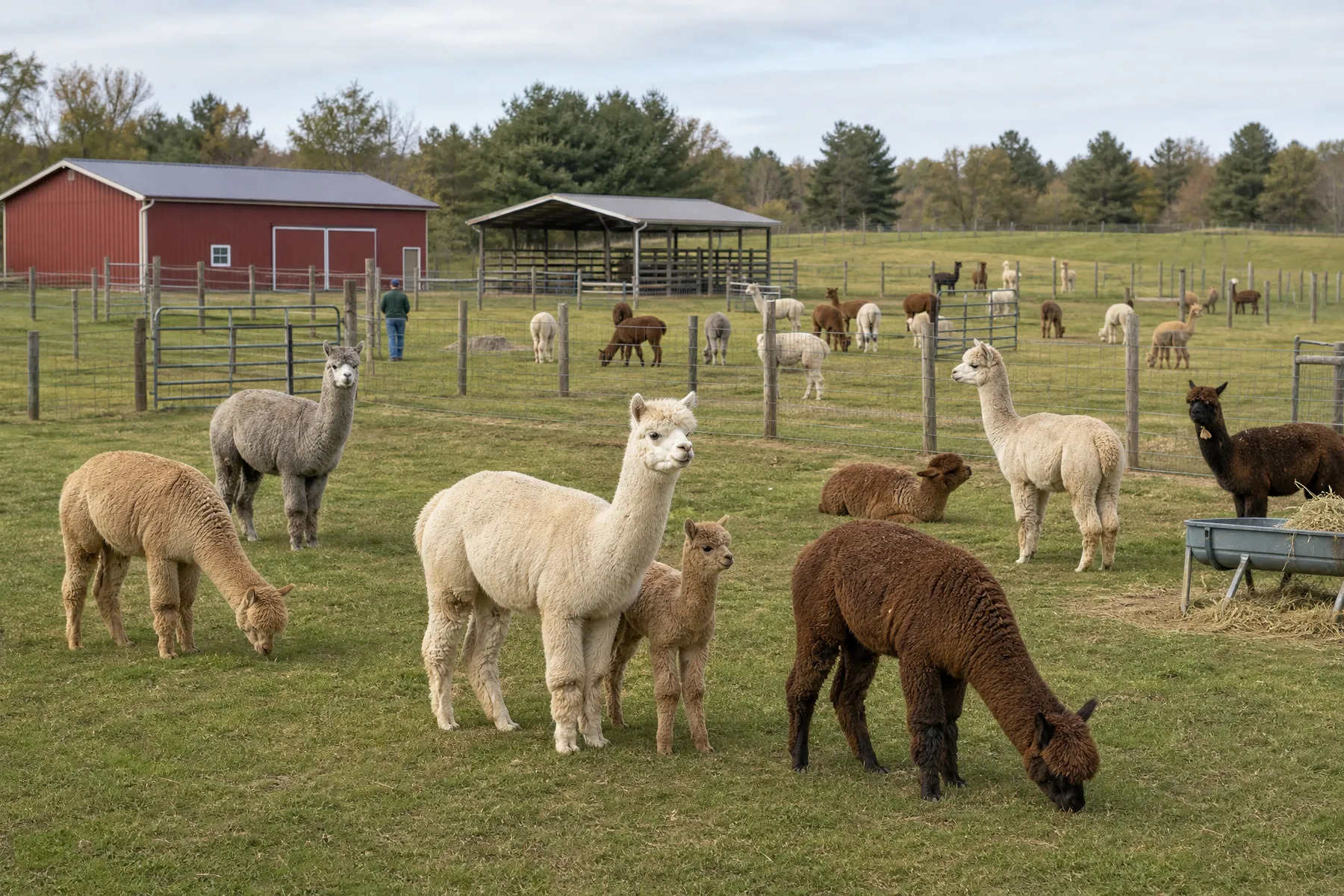
Breeding and livestock sales
A breeding farm concentrates on alpacas as livestock. Its work may include planned pairings, births, raising young animals, evaluating conformation and fleece, maintaining pedigrees, and selling alpacas to established or new owners. Some farms also exhibit animals at shows or make breeding males available to outside herds.
These farms can be rich sources of information, but they are not automatically visitor attractions. Appointments may be intended for buyers, owners arranging breeding, or people with a specific agricultural purpose. A public tour should be confirmed separately rather than inferred from photographs of the herd.
The directory of alpaca farms in Michigan includes several operations with breeding, sales, or fiber-related activity. Each profile identifies what is publicly described so readers can distinguish a livestock inquiry from a casual farm visit.
Fiber farms and processing mills
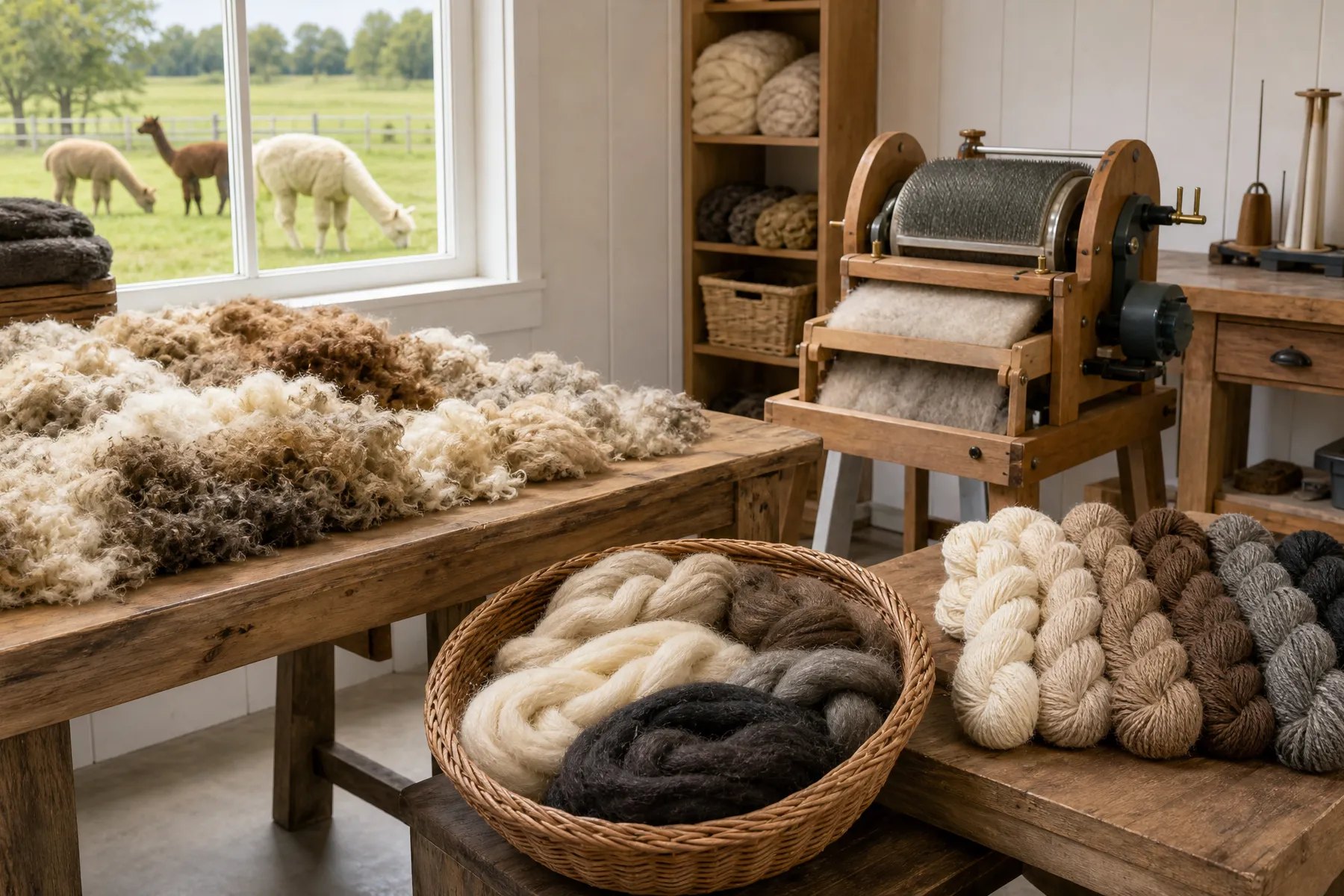
Every alpaca produces fleece, but fiber-centered farms make that material a more visible part of the operation. They may sort and sell raw fleece, prepare roving for handspinners, produce yarn, commission finished goods, or operate a farm store. Some manage processing equipment on the property; others send fiber to an independent mill.
A fiber mill can also serve customers beyond its own herd. Depending on the equipment and business, processing may include washing, picking, carding, drafting, spinning, plying, or felting. A farm that says it produces yarn does not necessarily perform every step on-site, so the wording of the individual profile matters.
Browse alpaca farms in Oregon to compare farms with breeding, fiber, retail, and visitor components. For background on the material itself, the main guide to alpaca fiber connects fleece quality, processing, natural colors, and finished uses.
Tours and visitor experiences
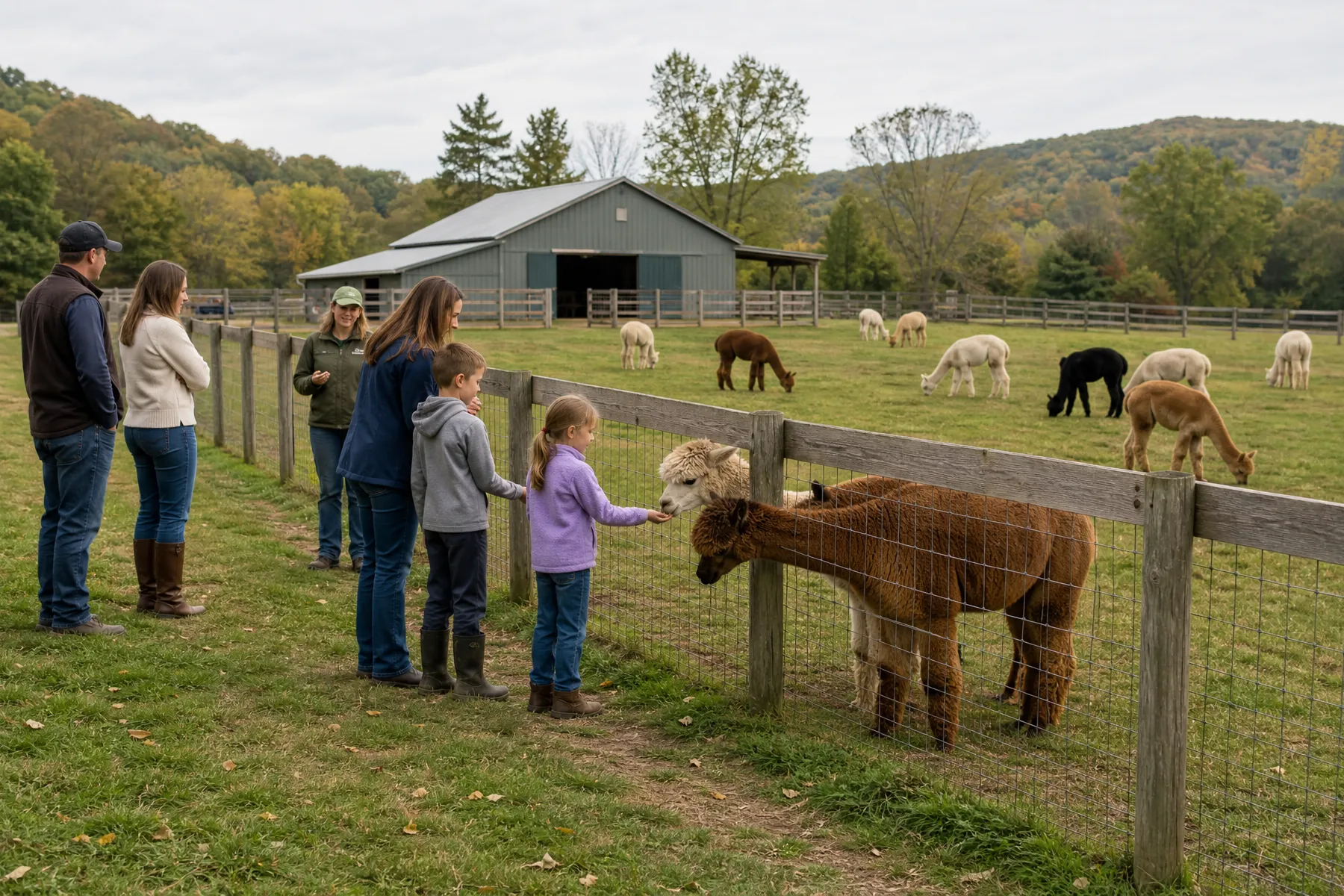
Visitor-oriented farms make public access a defined part of the business. They may offer guided tours, scheduled encounters, alpaca walks, school programs, seasonal events, photography sessions, or private gatherings. Clear booking instructions and stated visitor hours are often the strongest signs that a farm actively receives guests.
Public access still has limits. A ticket may cover only one activity, certain fields may remain private, and not every alpaca participates in encounters. Weather, animal health, births, and ordinary farm work can also alter what is available on a particular day.
The page about alpaca agritourism explains these experiences in more detail. You can also explore alpaca farms in New Jersey alongside other farm outings that can be combined into a regional day trip.
Farm stores, lodging, and mixed operations
Some farms connect with the public primarily through a store. They may sell yarn, garments, household textiles, gifts, or products made by other regional makers. Store hours can differ from barn access, and visiting a shop does not always include meeting the herd.
A smaller number of farms add lodging, private events, or other rural experiences. Accommodation may be located near the animals without providing unrestricted access to livestock areas. Guests should read the description carefully and use the farm's stated booking channel.
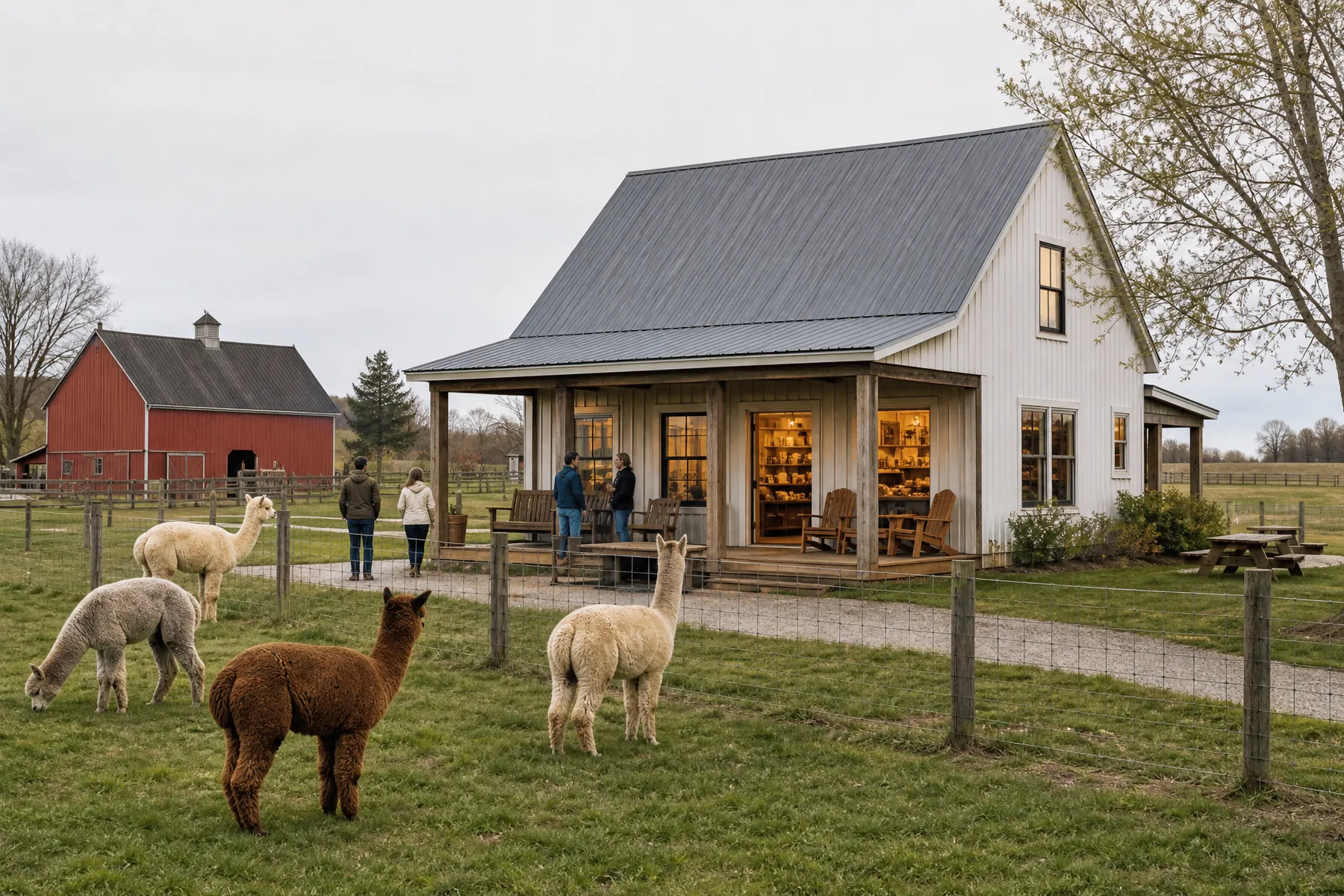
Mixed farms are common because one activity can support another. Breeding animals produce fleece; fleece supports products and workshops; visitors may shop after a tour; and an event can introduce new customers to the farm store. The mix can change with the season and over the life of the business.
The important qualification
These types are a way to interpret a farm, not permanent labels. Look for the current combination of activities instead of forcing every operation into one category.
A breeding herd also produces annual fleece that may be sold raw, processed, or made into products.
A fiber farm may add demonstrations or workshops that explain how its yarn and goods are produced.
A scheduled visit may finish at a store, while the store may remain open when tours are unavailable.
Guests may stay on the property while barns, pastures, and animal interaction remain managed spaces.
Read past the farm name
Words such as farm, ranch, estate, rescue, experience, or mill can offer clues, but they do not guarantee a particular service. The descriptive details are more useful than the name alone.
Three useful starting points
Each directory contains a mixture of operations rather than one uniform kind of farm.
Looking elsewhere? Use the complete state directory or return to the national alpaca farm directory.
Start with your purpose
Someone researching livestock needs a different farm from a family looking for a weekend outing. A fiber artist may care about fleece, processing, and yarn, while an overnight guest may be most interested in the relationship between lodging and the working property.
Once you know the farm type, learn about alpacas themselves and verify the current details directly with the operation. That combination provides a clearer expectation than the farm's name or category by itself.