Mid-Atlantic
New Jersey
Compare alpaca visits with other nearby farm outings and seasonal day-trip possibilities.
Explore New Jersey farmsFarm visits and rural experiences
Alpaca agritourism can mean a guided barn visit, a scheduled walk, an educational field trip, or an afternoon learning how fleece becomes yarn. The details vary because visitor experiences are only one part of running a working farm.
Some farms welcome visitors throughout the year. Others open only for appointments, events, or a few weekends each season.
Find a farm near you
Start with the complete state directory, or enter a state below to go directly to its listings.
More than one kind of outing
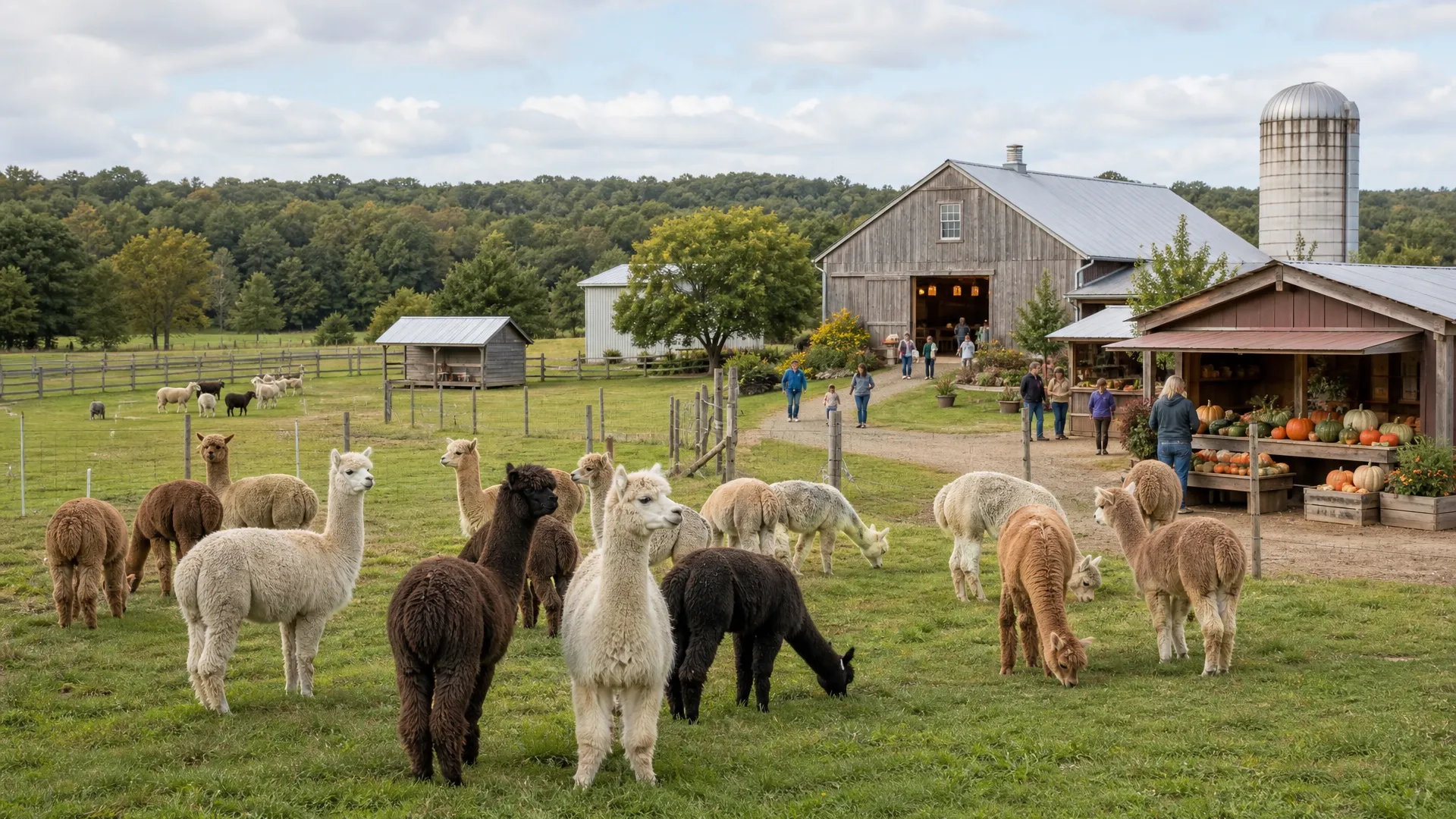
Agritourism brings visitors onto agricultural properties to learn, shop, or take part in a planned activity. At an alpaca farm, that may involve watching the herd from a visitor area, meeting a halter-trained alpaca, seeing fleece handled after shearing, or browsing products made from alpaca fiber.
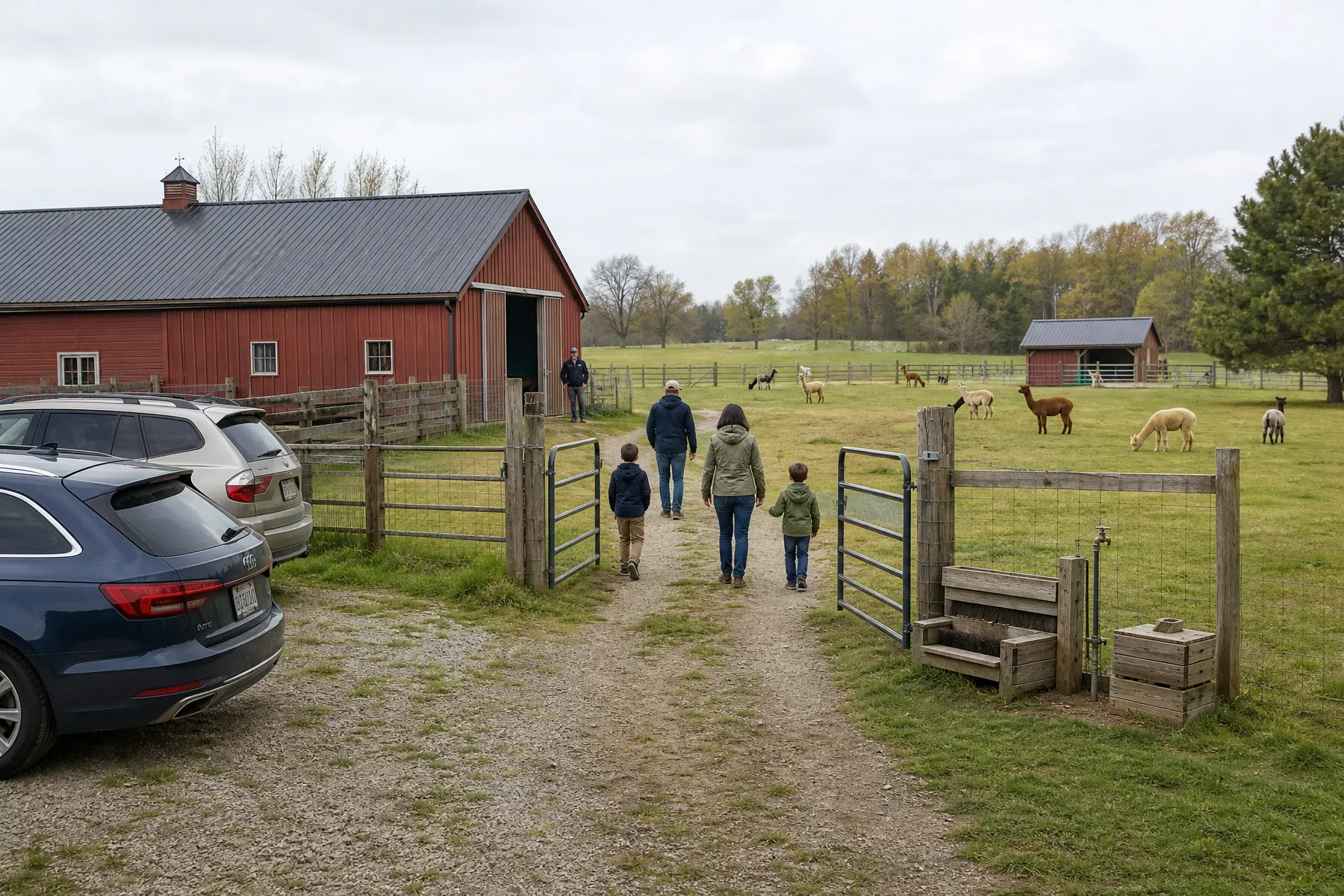
The word does not guarantee a petting experience. Alpacas are livestock, and farms differ in how closely guests can approach them. A useful farm description should say whether the visit is guided, whether animal contact is included, and whether advance reservations are required.
If you are still deciding what sort of operation you want to visit, the national alpaca farm directory can help you explore, while the main guide to alpaca farms explains how visitor-focused farms differ from breeding, fiber, and private herds.
Choose by experience
These are common offerings, but few farms provide every option. Always check the farm's current visitor information before traveling.
Walk through visitor areas while a host explains the herd, daily care, and the farm's purpose.
Observe, feed, or walk animals chosen by the farm for calm, supervised interaction.
Explore behavior, fleece, agriculture, and animal care through school or family programs.
Watch a demonstration, attend a workshop, or shop for yarn and finished farm products.
Look for scheduled festivals, private events, photography sessions, or occasional lodging.
The familiar starting point
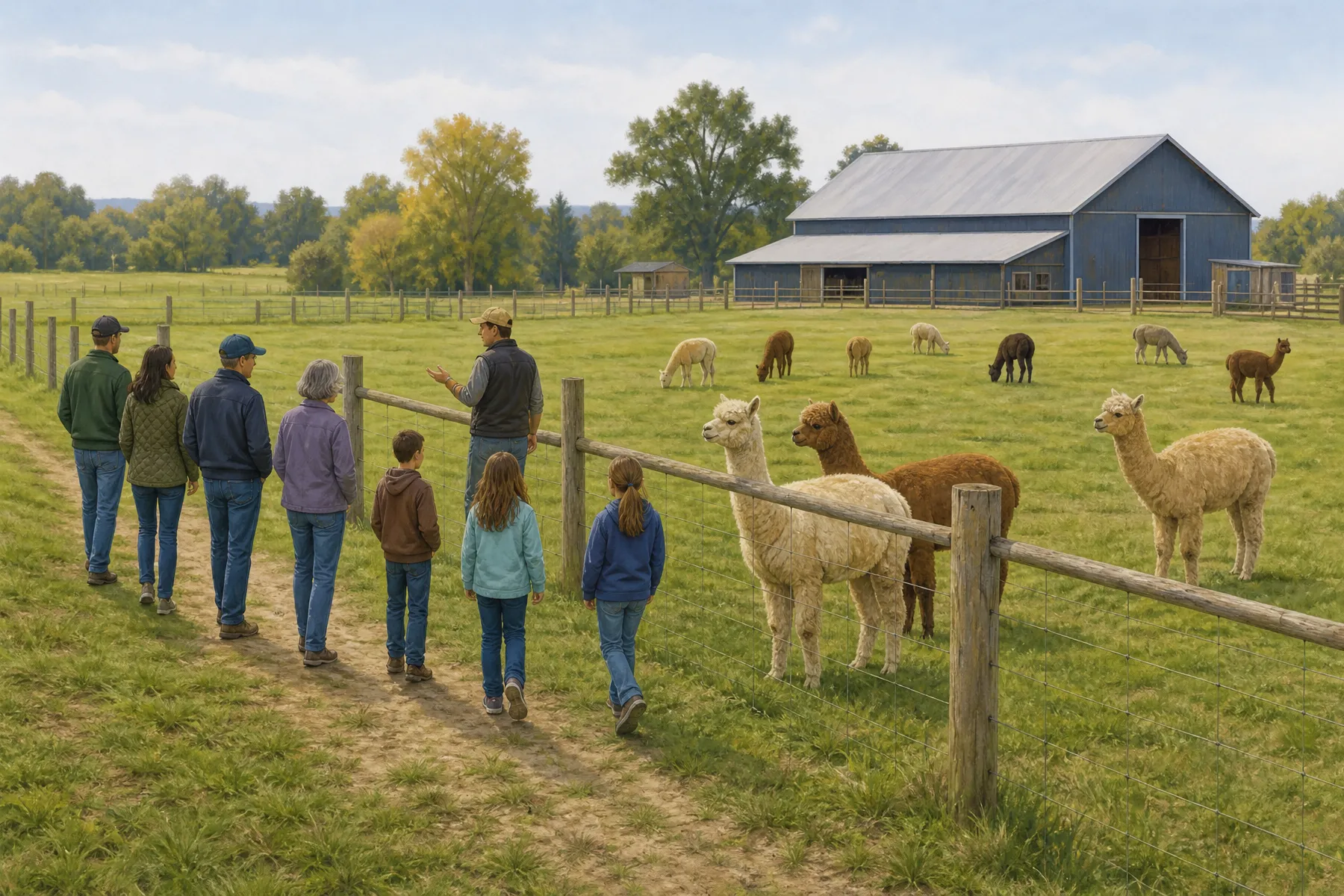
A guided tour is often the clearest introduction to an alpaca farm. Depending on the operation, a host may explain pasture layout, feeding, shelters, breeding, shearing, and how individual animals fit within the herd. A smaller encounter may focus on a few alpacas accustomed to halters and visitors.
Feeding and walking are separate activities, not automatic parts of a tour. Farms may limit them because of weather, animal temperament, age requirements, or the daily needs of the herd. Posted photographs can show what has happened in the past, but the current booking description is the more reliable guide.
For day-trip possibilities in a relatively compact state, explore alpaca farms in New Jersey. The directory includes working farms, scheduled experiences, and other farm outings, with the available details noted separately for each place.
Learning at the farm
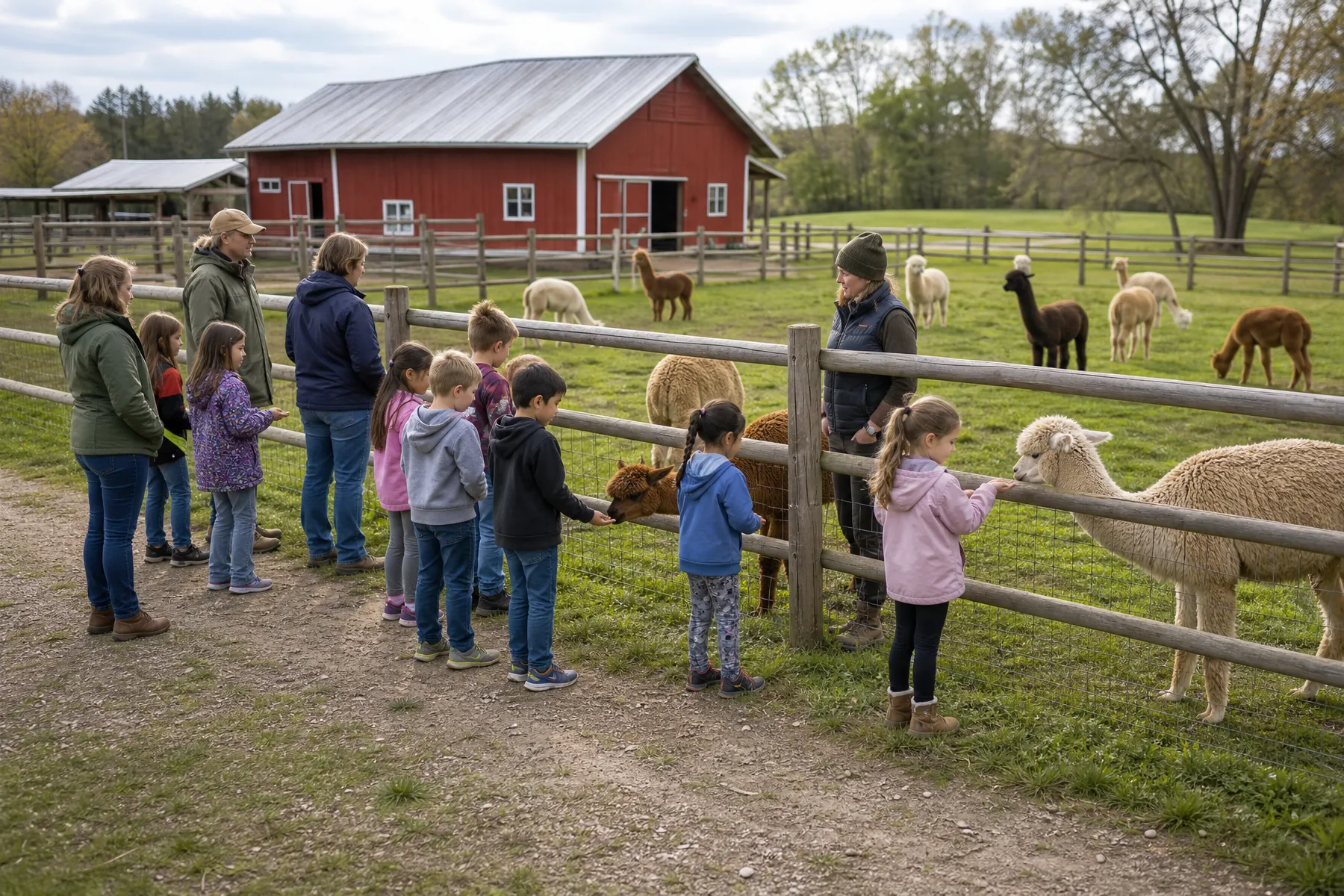
A farm visit can make several subjects concrete. Younger visitors may compare alpaca feed with their own food, observe herd behavior, or learn why fences and shelters are arranged in particular ways. Older students can follow fleece through sorting and processing or consider how a small agricultural business combines livestock, products, and visitors.
Group programs usually require more planning than ordinary tours. Farms may set limits on group size, adult supervision, parking, accessibility, and the amount of direct contact with animals. Teachers and group leaders should confirm these details rather than assuming a public tour can accommodate a class.
From fleece to useful material
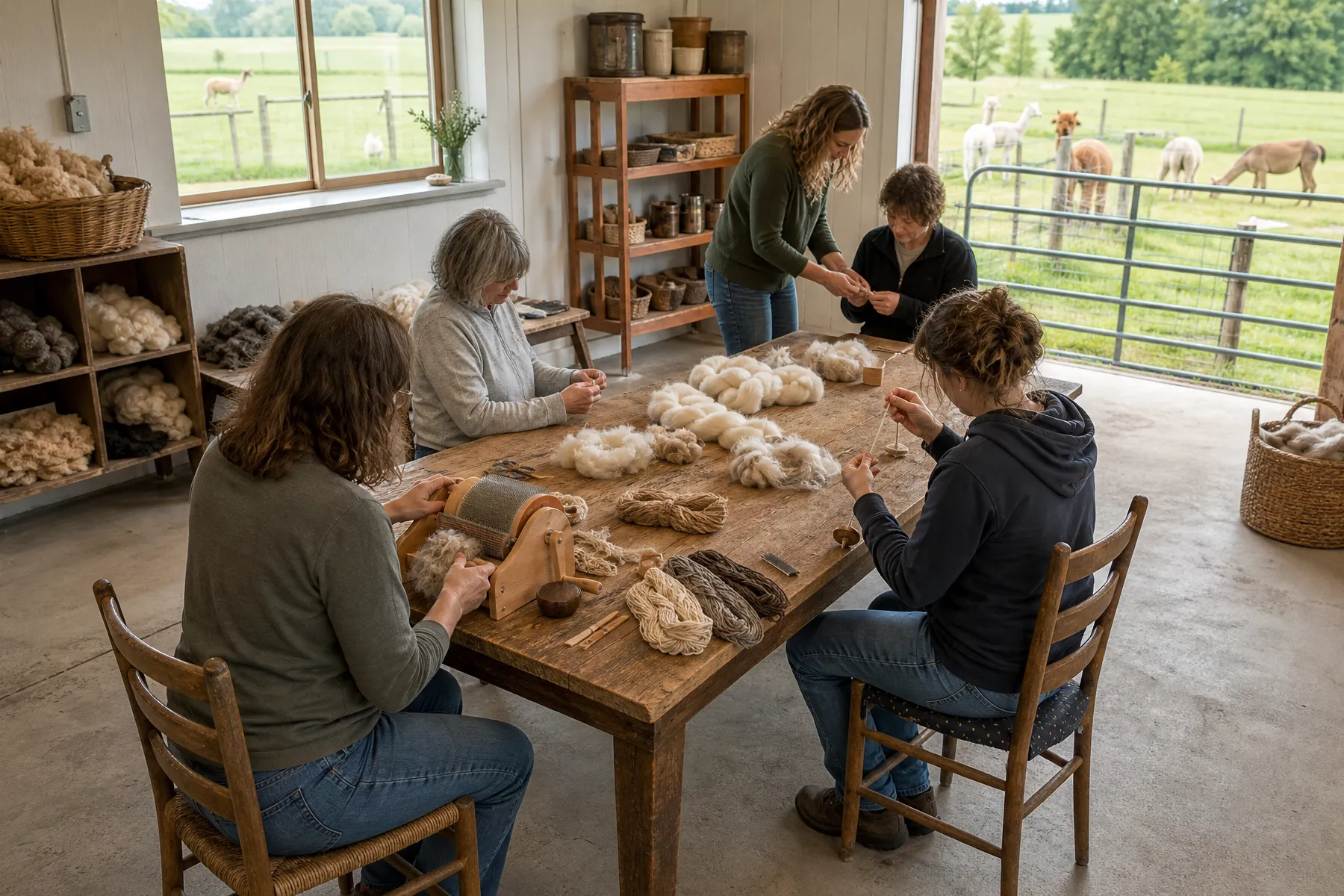
Fiber gives an alpaca visit a second story beyond meeting the animals. A farm may demonstrate skirting, carding, spinning, weaving, or felting; another may sell raw fleece, roving, yarn, socks, blankets, and locally made gifts without offering a formal workshop.
Workshops commonly have their own schedules and fees. Some are designed for beginners, while others expect experience with spinning, knitting, or another fiber craft. The farm store may also keep different hours from tours, particularly outside the main visitor season.
Maine's combination of rural travel and fiber-oriented farms makes its directory a useful place to compare offerings. Browse alpaca farms in Maine, or learn more about how alpaca fiber is made before attending a demonstration.
Before you leave home
Agritourism can make a farm more accessible, but livestock care still sets the rhythm of the day. Weather, births, veterinary needs, and other farm work can change what is available. A quick check before traveling helps protect both your plans and the farm's animals.
Two places to begin
State directories bring together farms with different purposes. Check each listing for current visitor policies and available experiences.
Mid-Atlantic
Compare alpaca visits with other nearby farm outings and seasonal day-trip possibilities.
Explore New Jersey farmsNew England
Find rural farm experiences, fiber-oriented operations, farm stores, and seasonal visits.
Explore Maine farmsLooking elsewhere? View the complete state directory.