All states 46 farms listed

Alpaca farms in Oregon

Explore breeding ranches, fiber farms, boutiques, reserved visits, picnics, lodging, and working farms from the Willamette Valley to Central and Southern Oregon.

Explore the Oregon farms
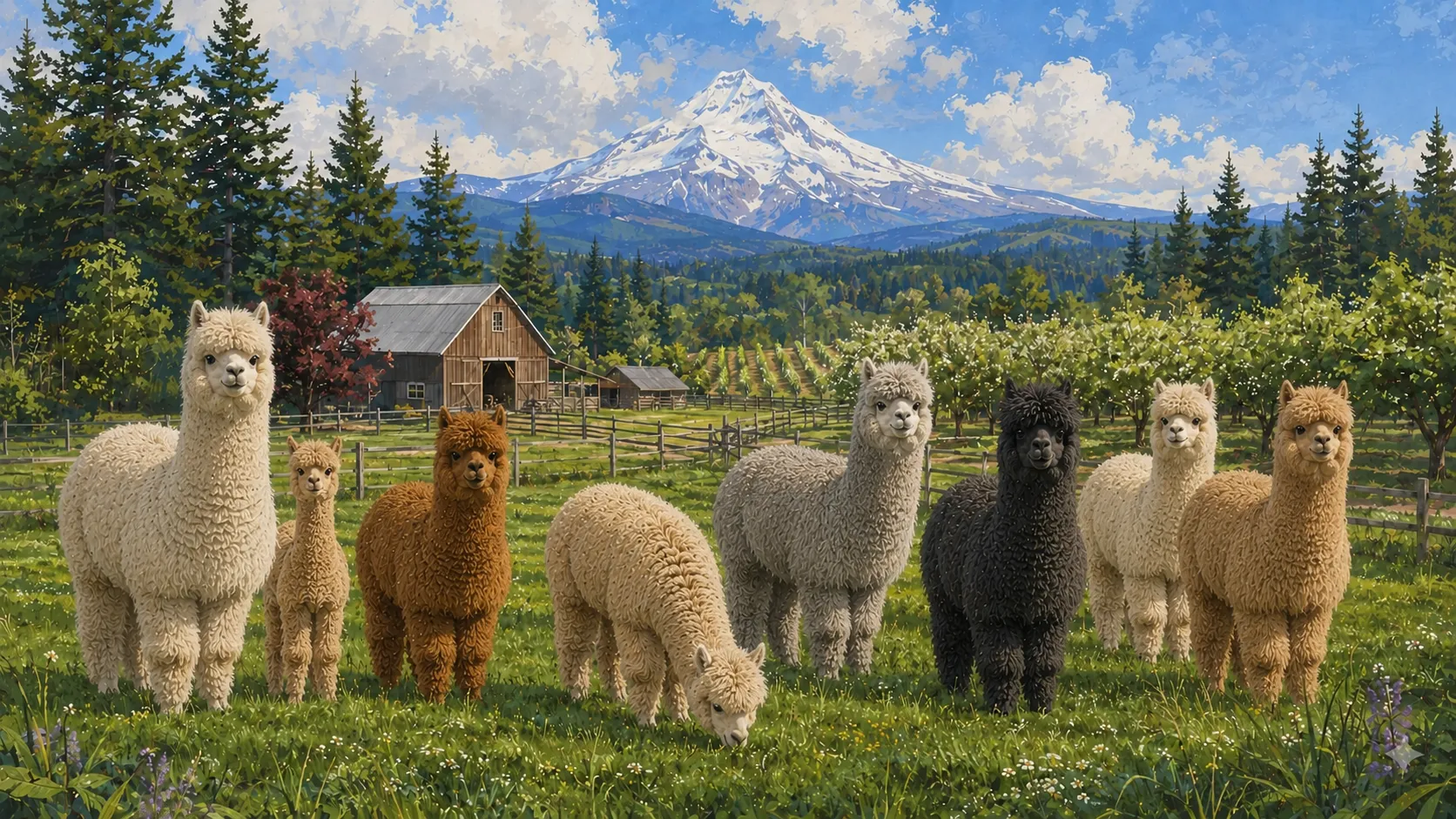
Illustrated alpacas in an Oregon landscape with Mount Hood
Oregon farm illustration

Farm by farm

Explore 46 Oregon alpaca farms

Open a listing for its focus, visiting policy, address, and official website. Nine farms also have expanded profiles with more detail about their animals, products, or experiences.

Across the state

Oregon alpaca farms occupy very different landscapes

The farms above are distributed across valleys, high-desert ranch country, foothills, and the agricultural communities of Southern Oregon. Those settings influence pasture, seasonal chores, travel distances, and the way a farm welcomes visitors.

Willamette Valley

Many farms sit within reach of the Portland and Salem areas, where livestock operations may combine breeding, fiber production, farm shops, workshops, or reserved experiences. Wet-season footing and pasture management are recurring parts of farm life.

Central Oregon and the high desert

Ranches around Bend, Terrebonne, Culver, and nearby communities operate in a drier landscape with wide temperature changes and prominent mountain views. This region includes established breeding programs as well as boutiques and scheduled visitor experiences.

Southern Oregon and the Rogue Valley

Farms around Medford, Jacksonville, Grants Pass, and neighboring rural areas range from private breeding properties to mixed farms, vineyards, stores, and appointment-based tours. Driving distances make current visit information especially important.

Foothills and smaller farm communities

Properties beyond the larger population centers often focus primarily on animals, fiber, or direct sales. Some welcome arranged visits, while others remain private working farms without regular public hours.

Different reasons to go

Not every alpaca farm offers the same kind of visit

Start with the activity you are looking for, then check the individual listing for reservations and current access.

Visit

Farm experiences

Public-facing properties may offer ranch visits, picnics, yoga, workshops, seasonal events, lodging, or another scheduled way to spend time around the herd.

Raise

Breeding and herd services

Breeding farms may concentrate on animal sales, herdsires, boarding, birthing, consulting, or support for new owners. A sales appointment is different from a casual public tour.

Make

Fiber and farm shops

Some farms sell yarn, roving, clothing, blankets, socks, or handmade goods. Shop access may follow regular hours, seasonal openings, appointments, or online ordering.

Planning an Oregon farm visit

Questions to answer before driving

Each property sets its own schedule and visitor policy. These broad answers help explain what to look for in the listings.

Are Oregon alpaca farms generally open to the public?

No single rule applies. Some ranches maintain shops or advertised visitor hours, some offer experiences by reservation, and many breeding farms receive guests only for scheduled business. A public website or roadside address does not necessarily mean that walk-in visits are available.

How does the farm setting change across Oregon?

Willamette Valley farms plan around long wet periods, while Central Oregon properties contend with a drier climate and greater temperature swings. Southern Oregon and foothill farms have their own combinations of pasture, hay, shade, water, mud, and seasonal access. Individual farms adapt their facilities and routines to local conditions.

When should I plan an alpaca farm trip?

Warmer months commonly bring more farm events and comfortable outdoor access, but many shops and appointment-based farms operate during other seasons. Shearing, births, animal care, fire conditions, snow, and mud can all affect schedules, so current information matters more than a general statewide season.

Can visitors purchase Oregon alpaca products?

Many listings mention yarn, fiber, socks, clothing, blankets, or handmade goods, but inventory and shop access vary. Some products may use fleece from the farm's own herd, while other merchandise may come from outside producers. Visitors interested in local fiber can ask how an item was sourced and made.

Is a breeding ranch also a visitor attraction?

Not automatically. A ranch may have an extensive website because it markets breeding animals, herdsires, or professional services, yet remain closed to casual visitors. Look for a clearly stated tour, shop, event, or appointment policy before treating a sales-focused operation as a day-trip destination.

What does a full farm profile add?

The expanded profiles provide more context for selected farms with distinctive breeding programs, products, services, or public experiences. The farm's own website remains the place to confirm changing details such as hours, reservations, animal availability, and event schedules.

Finding the right fit

From a short farm stop to a serious herd inquiry

Oregon demonstrates how many directions a farm built around alpacas can take. A family looking for an outing may be interested in a picnic, boutique, or reserved ranch visit, while another visitor may be comparing breeding stock, herd services, or a property that works directly with alpaca fiber.

Reading the visiting information before leaving helps separate public attractions from private working ranches and seasonal shops. Oregon is one part of a much wider network of alpaca farms across the United States, each shaped by its location, herd, and purpose.

Not what you were after?

Try another state