Quality and processing
Shearing is annual; sorting, storage, mill coordination, and product decisions continue afterward.
One animal, several farm purposes
Alpacas are livestock raised principally for their fleece and for the herds that produce it. On many U.S. farms, that foundation connects with breeding, yarn and finished goods, educational programs, or scheduled visitor experiences.
The combination differs from farm to farm. A breeding operation, fiber mill, small farm store, and public tour program may all involve alpacas, but they require different facilities, skills, schedules, and customers.
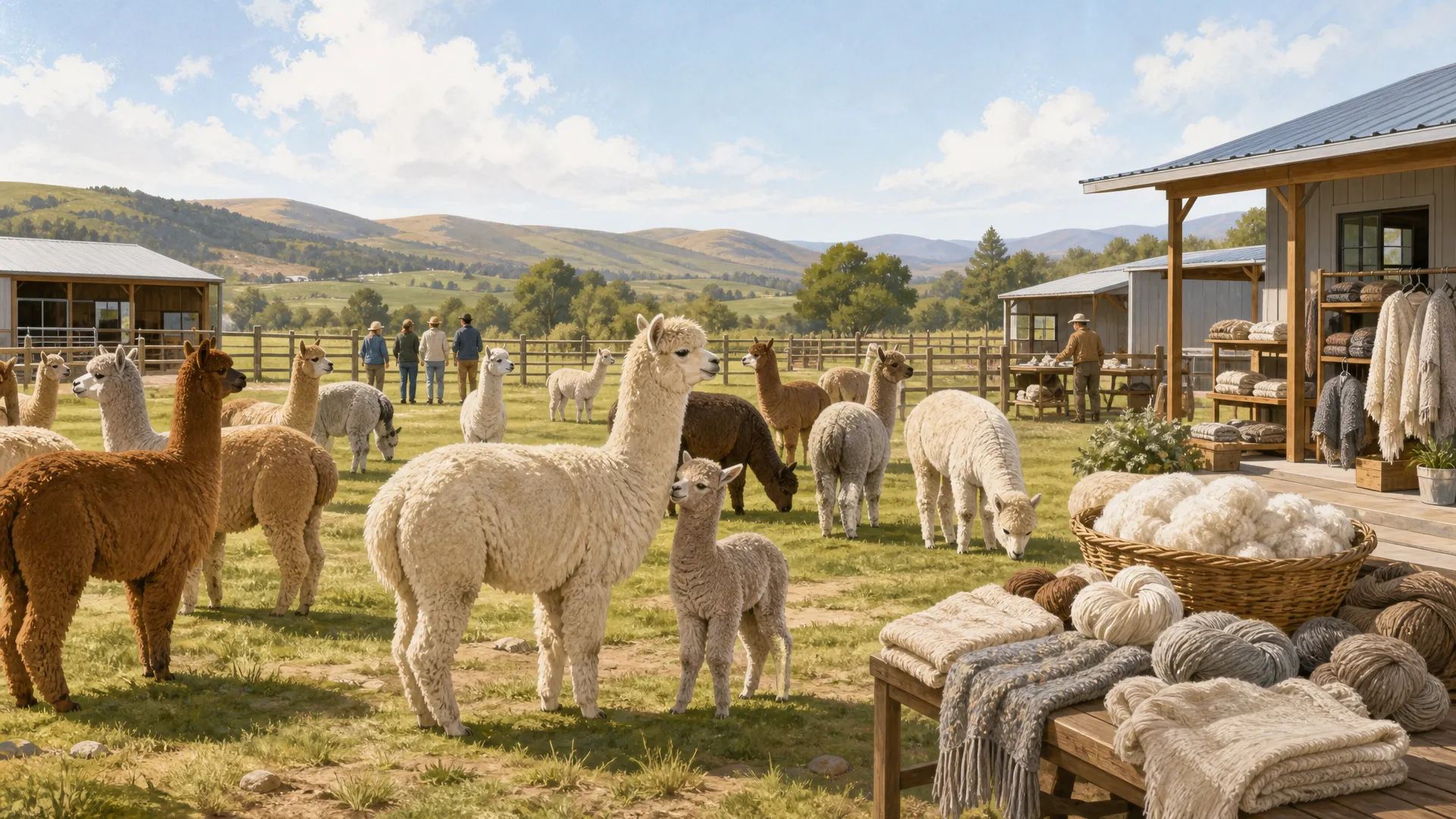
See what farms offer
Use the complete directory to find breeding farms, fiber businesses, farm stores, and visitor-oriented farms around the country. Each listing describes its own focus and current public access.
The short answer
An alpaca grows a new fleece crop between shearings. That renewable fiber is the species' clearest agricultural connection, yet converting fleece into a useful product takes sorting, cleaning, processing, design, and a route to the customer.
Farms organize the rest of their work around that reality. Some concentrate on breeding animals with desired fiber and conformation traits. Others add direct product sales, education, or agritourism. Many remain intentionally small and combine only the activities that fit their land and labor.
Fleece and fiber
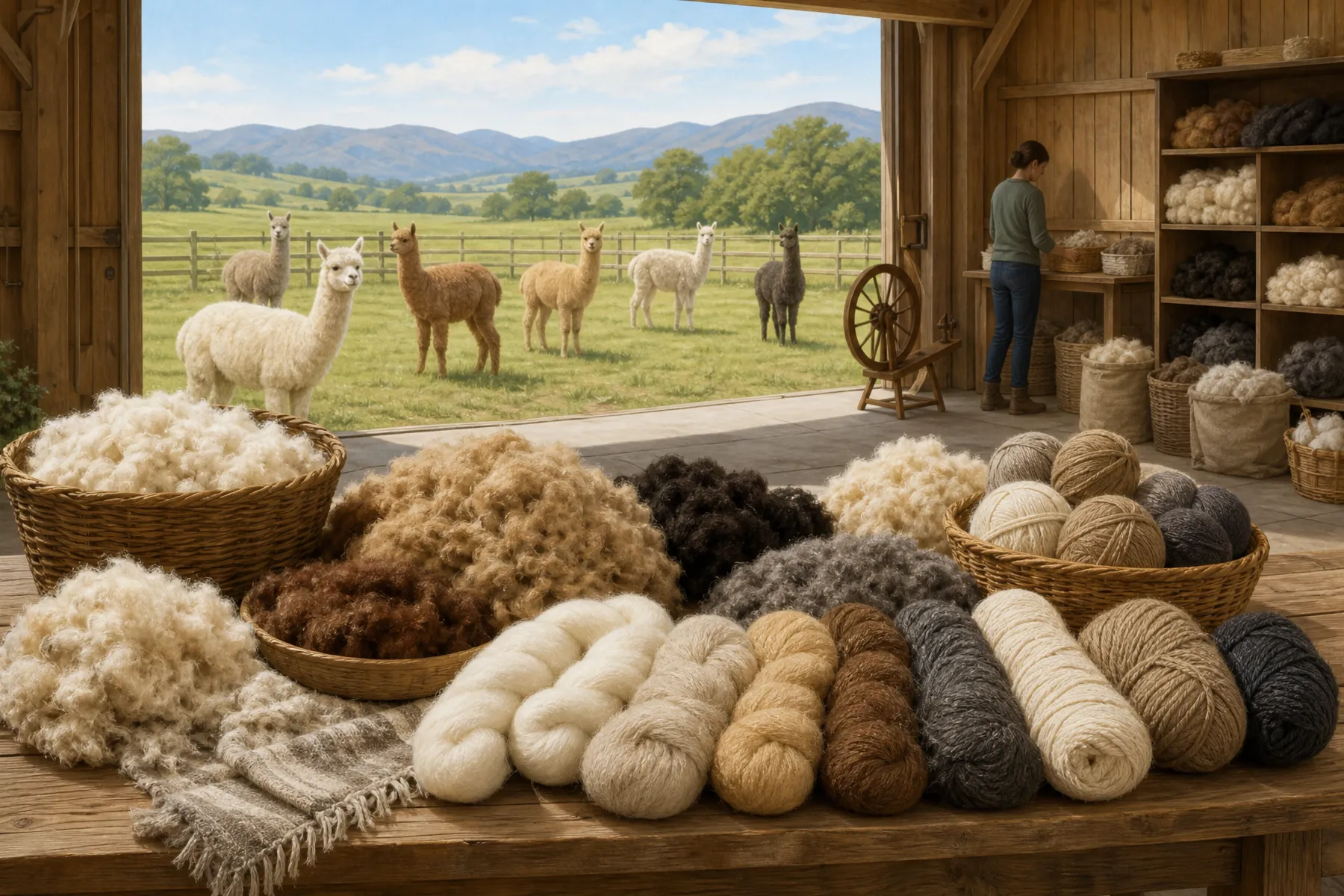
Alpaca fleece is shorn, evaluated, and sorted before it becomes roving, yarn, felt, or another textile material. The most suitable use depends on fineness, uniformity, staple length, color, cleanliness, and the part of the fleece from which the fiber came.
Farms may process fiber themselves, send it to a mill, sell raw or prepared fleece, work with outside makers, or use several of those routes. A farm displaying yarn does not necessarily complete every production stage on the property, and that distinction is ordinary within small-scale fiber work.
The alpaca fiber section follows fleece from the animal through grades, natural colors, processing, and finished uses.
Herd development
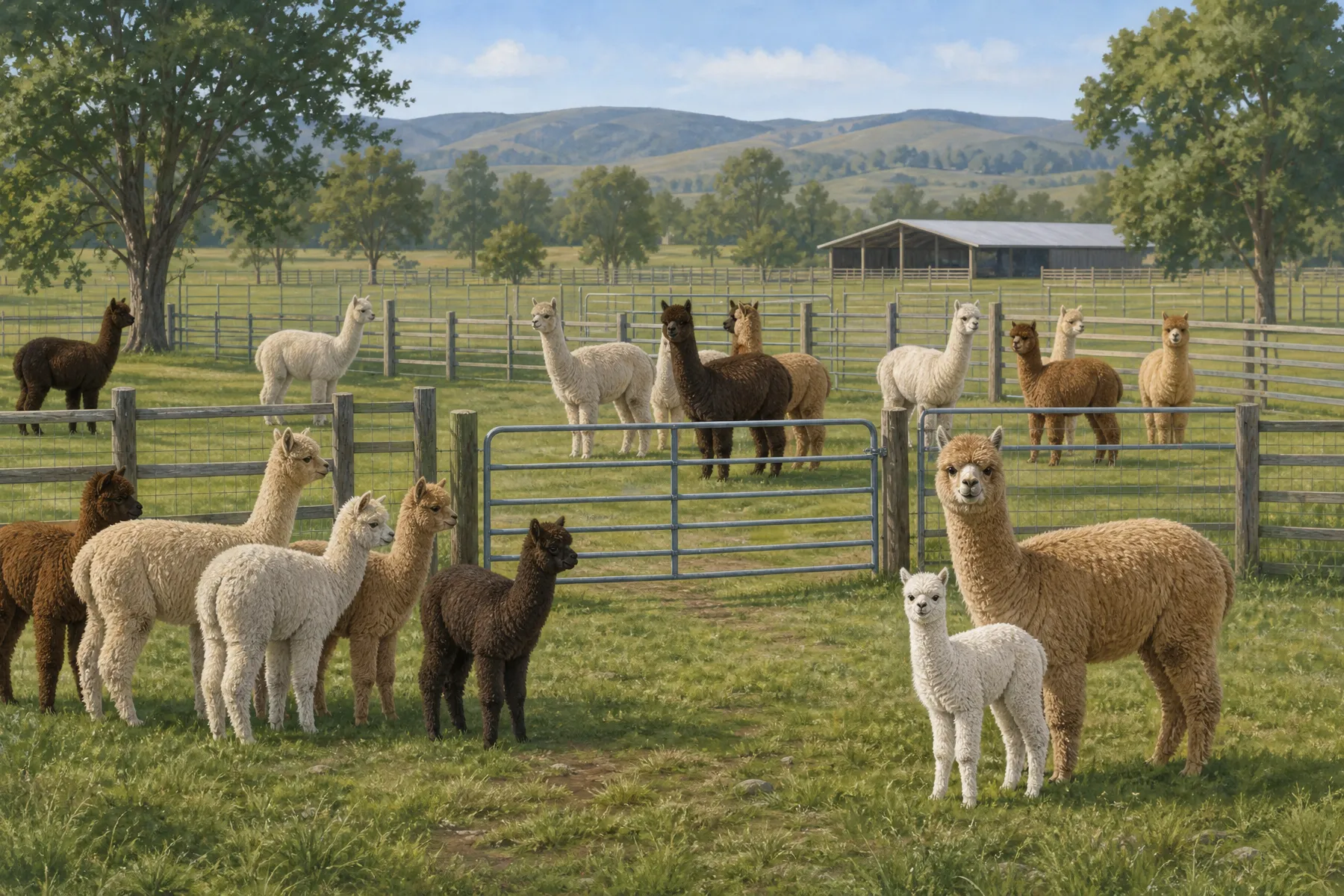
Breeding farms select pairings with goals related to fiber, conformation, health, temperament, color, or other herd priorities. Results are assessed through offspring and across generations, so careful records and realistic evaluation matter more than a single show result or pedigree name.
A breeding program also requires separate herd groups, birthing preparation, young-animal care, veterinary relationships, pasture and feed planning, and decisions about which animals remain or move to other homes.
Livestock sales may be part of the business, but an alpaca is not simply a product on a shelf. The suitability of the new property, herd companions, intended use, and buyer preparation all affect a responsible placement.
Related, not interchangeable
The animals remain at the center, but the surrounding activity determines what the farm must build, learn, schedule, and maintain.
Shearing is annual; sorting, storage, mill coordination, and product decisions continue afterward.
Herd goals unfold across pregnancies, births, growth, fleece evaluations, and adult development.
A store introduces sourcing, product descriptions, pricing, fulfillment, and seasonal demand.
Public programs require parking, boundaries, scheduling, communication, and animal-appropriate encounters.
Products and direct sales
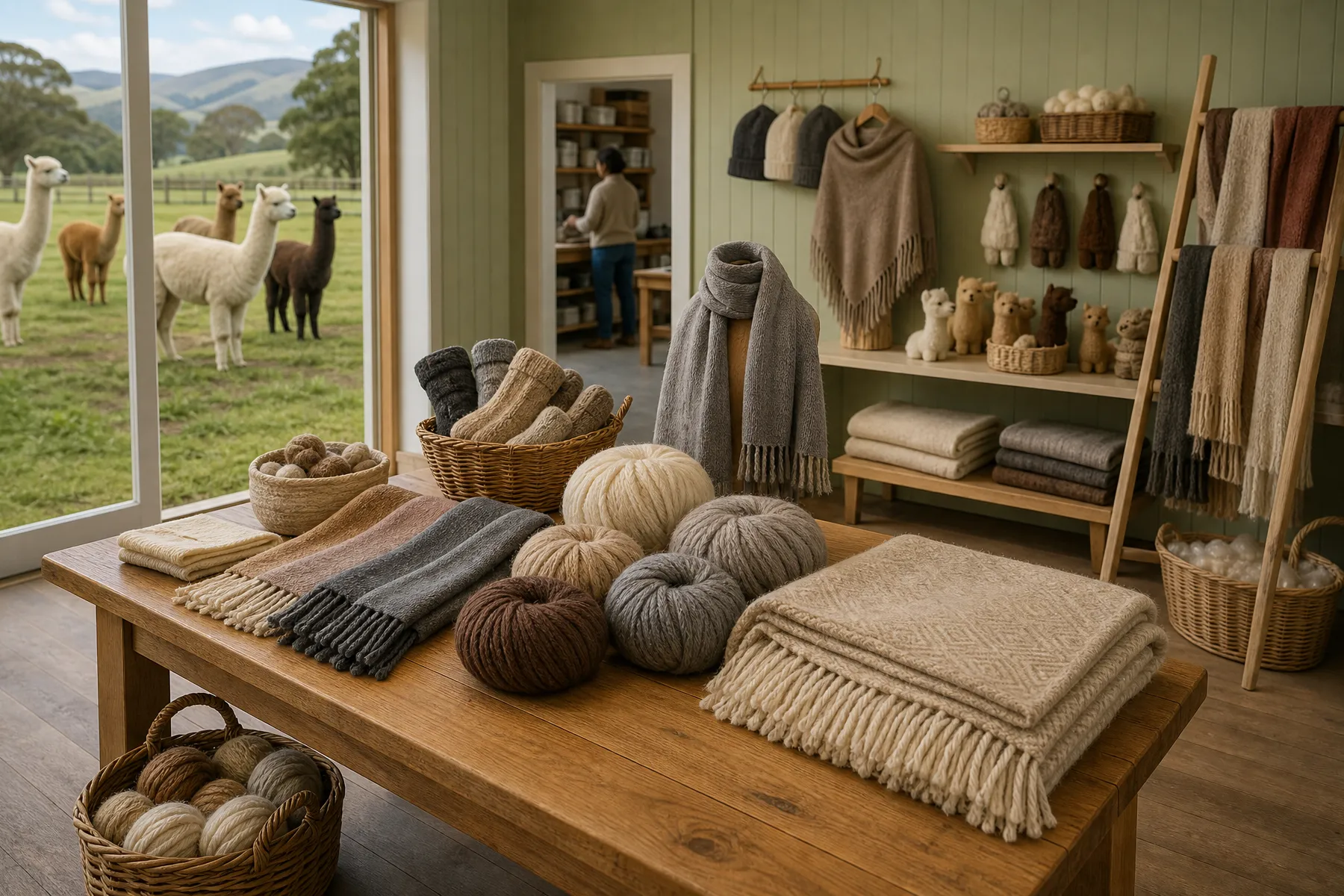
Most visitors do not need a raw fleece, but they can understand a skein of yarn, pair of socks, scarf, blanket, or felted item. Farm stores and online shops translate an agricultural material into something customers can use while giving farms a direct way to explain origin and processing.
The relationship between animal and product is not always one-to-one. A farm may sell goods made from its own fiber, fiber pooled with other farms, products made by outside mills, or carefully sourced alpaca items. Clear descriptions are more informative than assuming every item began with the animals visible outside the store.
Examples throughout the fiber uses section show how characteristics of the material influence what it may become.
Education and farm access
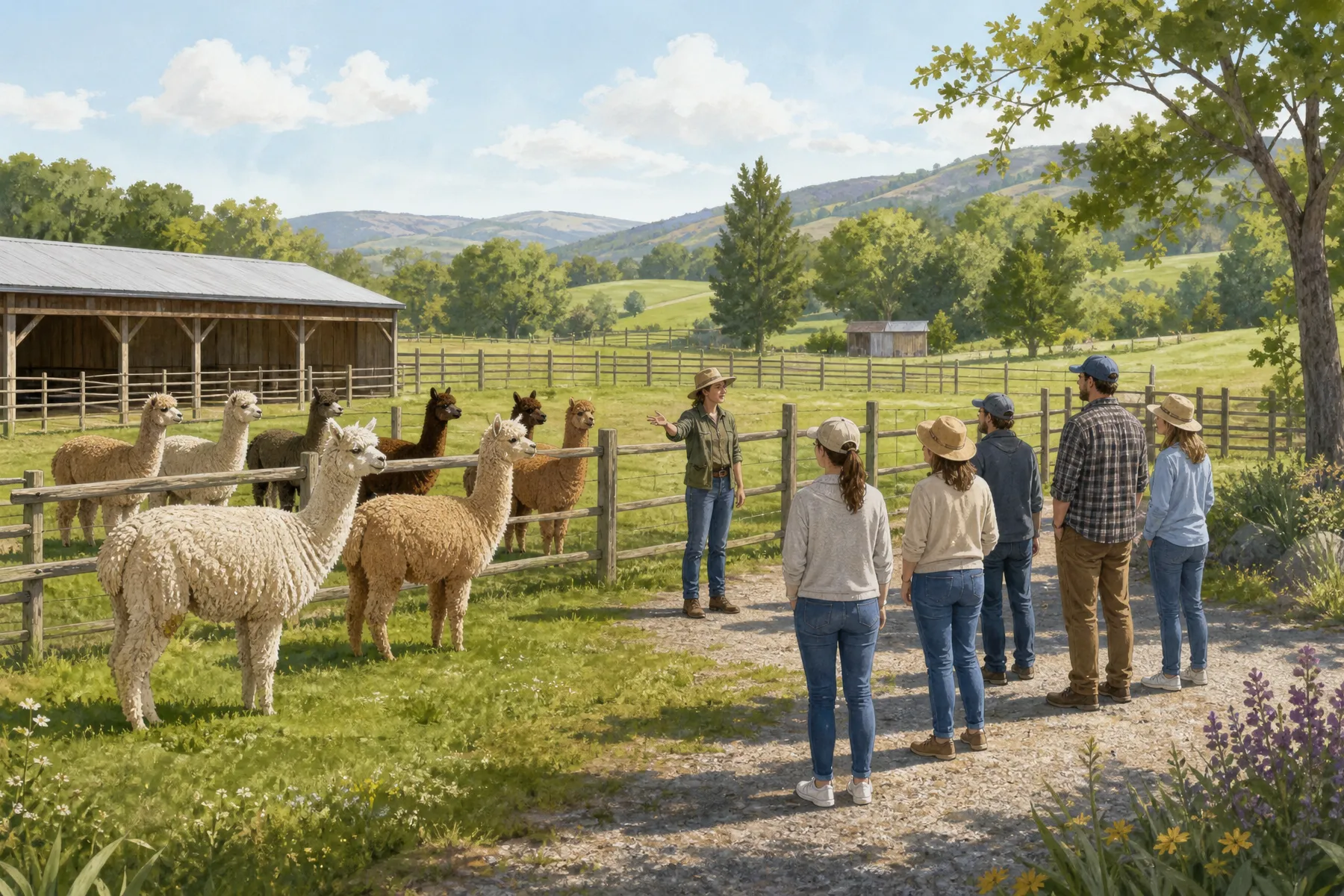
Guided visits, school programs, fiber demonstrations, workshops, open days, and private events can help people understand the connection between the herd and its products. They may also support direct sales and introduce the farm to customers who would not otherwise encounter fiber livestock.
Public access is a separate farm activity, not an automatic feature of keeping alpacas. Working farms may be appointment-only, open for limited events, or closed to casual visitors. A farm that breeds or sells alpacas may serve livestock customers without operating tours.
The guide to alpaca agritourism explains how tours, walks, workshops, stores, and educational visits differ.
What the appealing photographs leave out
Alpacas are social animals. Keeping one alone is not a substitute for appropriate alpaca companionship.
Fencing, shelter, manure, mud, pasture, hay, water, and predator concerns do not disappear because alpacas are smaller than some livestock.
Useful fleece requires shearing, sorting, processing, product planning, and a realistic market.
Visitor schedules must work around herd health, weather, births, maintenance, and the farm's capacity to supervise people.
See several farm purposes in one state
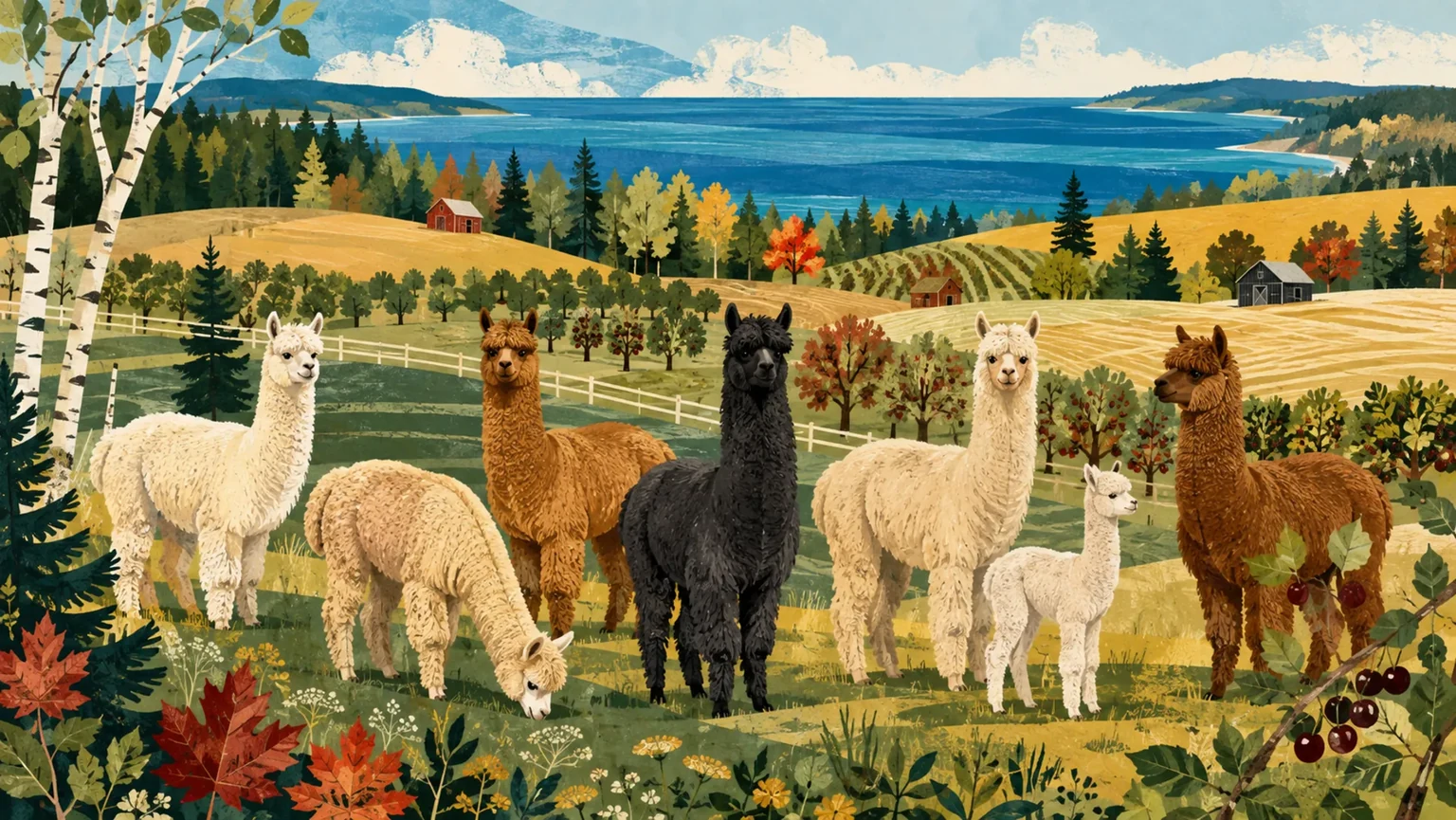
Michigan's directory includes breeding and sales operations, fiber-focused farms, a fiber mill, farm stores, and scheduled visitor experiences. It is a useful example of how farms working with the same animal can develop distinct identities and services.
Check each profile for its current focus, visitor policy, and website. The state page makes those differences easier to compare without assuming that every farm offers tours or the same products.
A connected farm system
Fiber gives alpacas their central agricultural role. Breeding shapes the future herd, while products, education, and visitor experiences can create additional connections between the farm and the public.
Looking at those purposes separately makes the larger picture clearer: alpacas are neither display animals nor a single-product business. Each farm decides which work it can support responsibly.