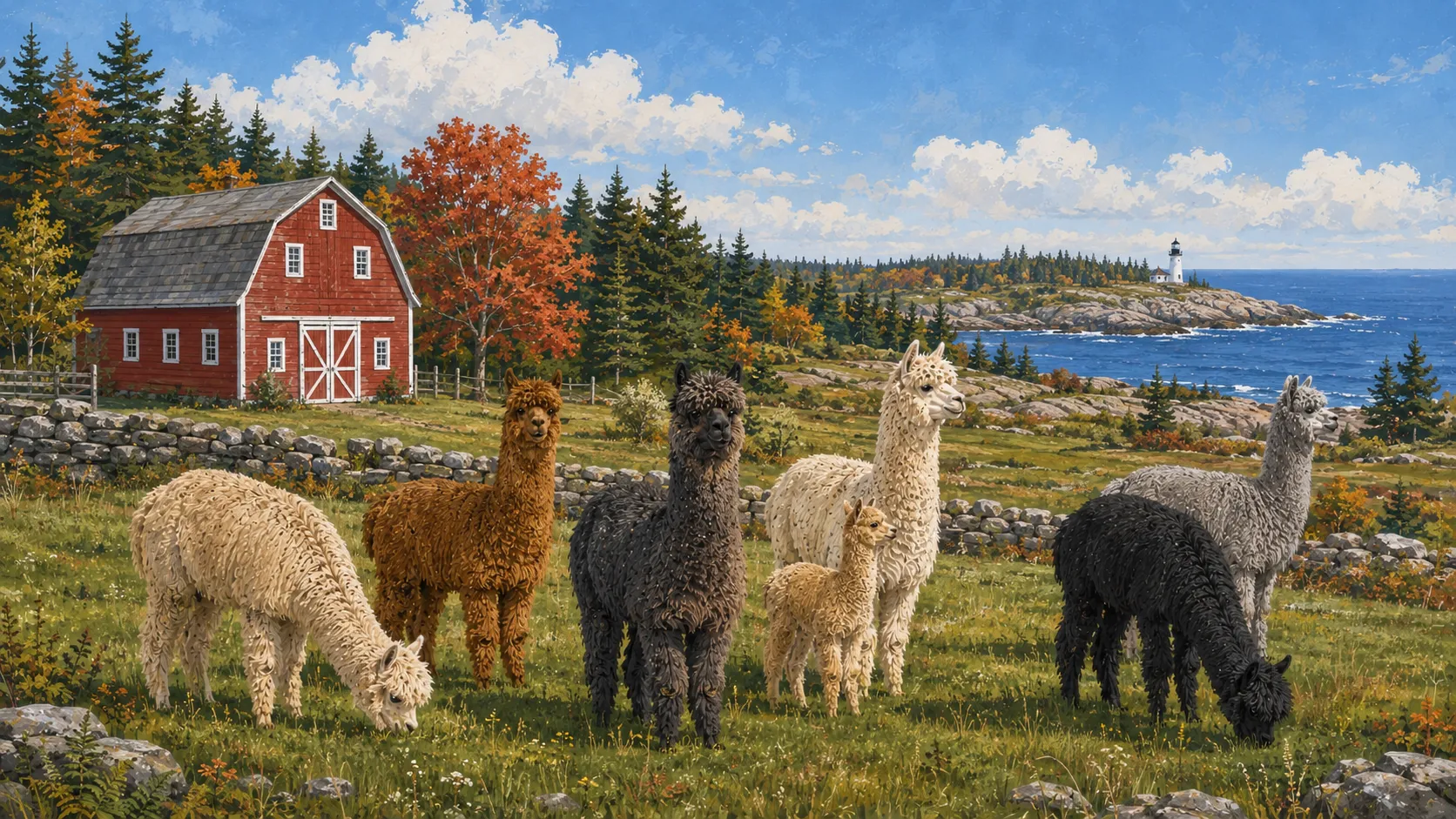
Northern seasonal rhythm
The herd stays; the work changes
An alpaca farm year is shaped by fleece growth, pasture, weather, pregnancies, births, hay, and the daily needs of the herd. Some jobs arrive in a recognizable season; others continue every day.
The exact calendar depends on region and farm goals. Shearing may happen earlier in a warm climate, birthing seasons are planned differently, and a rainy winter creates different work from a snowy one. What remains consistent is the need to prepare before conditions change.
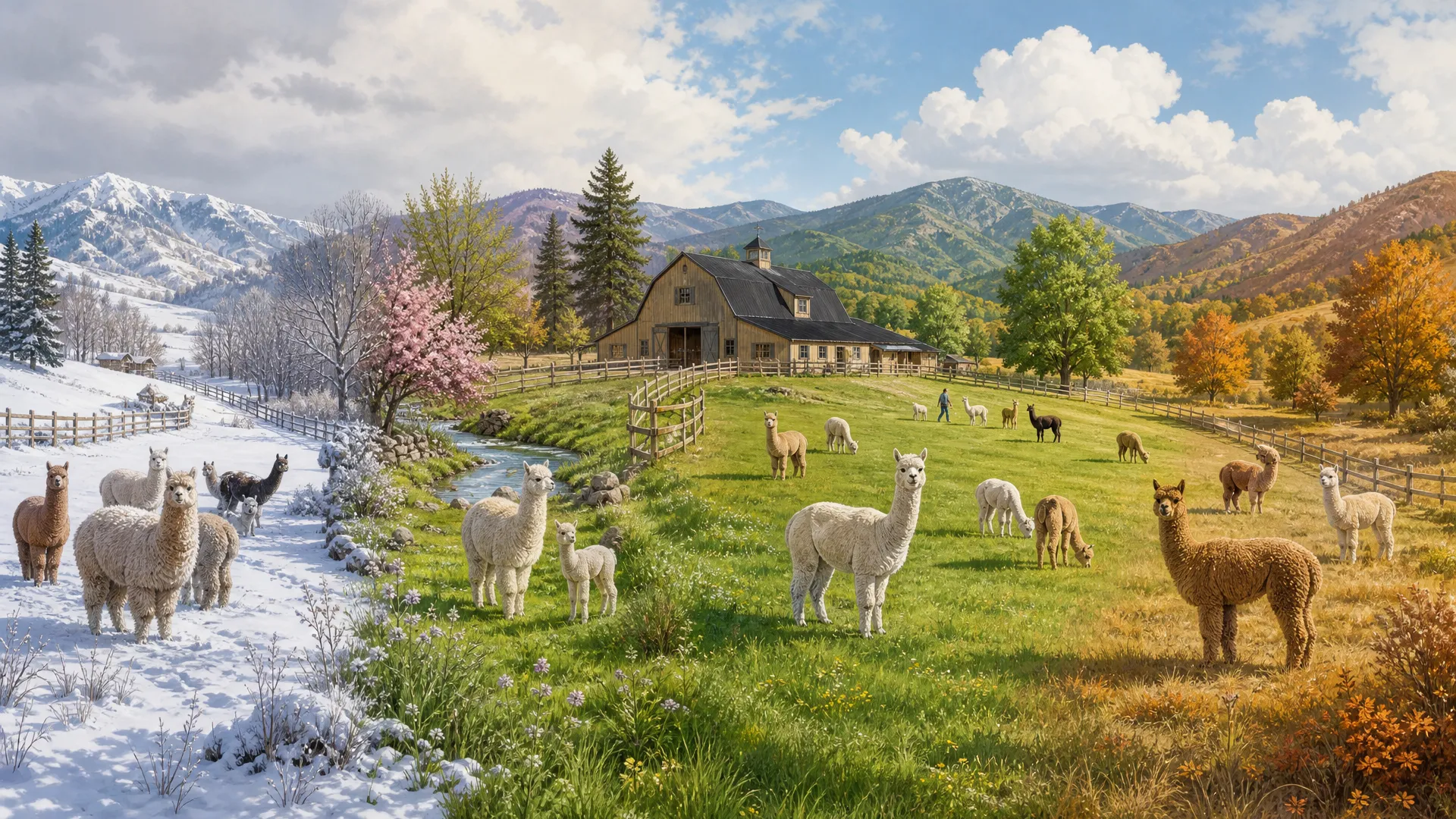
Find farms through every season
Use the complete directory to compare alpaca farms across the country. Individual listings explain whether a farm offers appointments, events, products, livestock, or seasonal visits.
A cycle, not four isolated chapters
Winter hay was purchased or stored earlier. Spring shearing depends on equipment, helpers, a dry work area, and a plan for the fleece. Summer pasture decisions affect autumn forage and winter feed needs. Farm work makes more sense when viewed as a connected cycle.
Animal timelines cross the seasonal one. Pregnancies and births, weaning, young-animal growth, veterinary care, and breeding decisions may involve several seasons before a result is visible.
Daily care in cold conditions
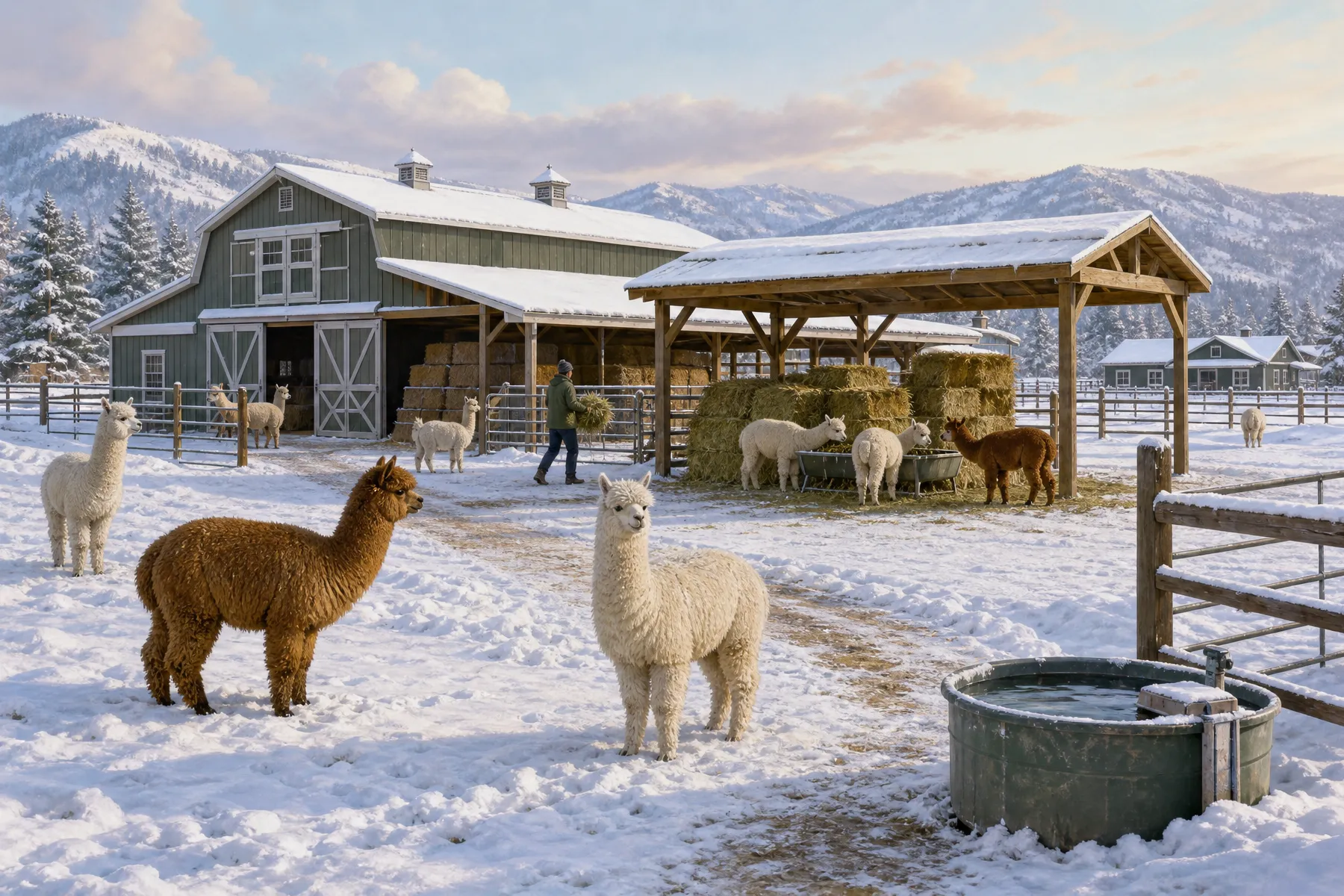
Pasture growth slows or disappears, so hay becomes more prominent. Farms monitor supplies, keep feeding areas usable, and ensure that water remains available. Snow, frozen ground, mud, and short daylight can make ordinary chores take longer even when the herd appears comfortable in full fleece.
Shelter and dry bedding give alpacas a place away from wind and precipitation. Farms also watch gates, paths, roof runoff, fencing, and ice in the places where animals and people repeatedly travel.
Winter is not an off-season for animal care. It may, however, create time for records, breeding plans, fiber work, equipment maintenance, and the preparation behind the next year's schedule.
Pasture and shearing
As grass resumes growth, farms manage turnout carefully rather than treating the first green pasture as unlimited feed. Wet ground, soft lanes, fencing, weeds, and uneven forage growth all influence when and how paddocks are used.
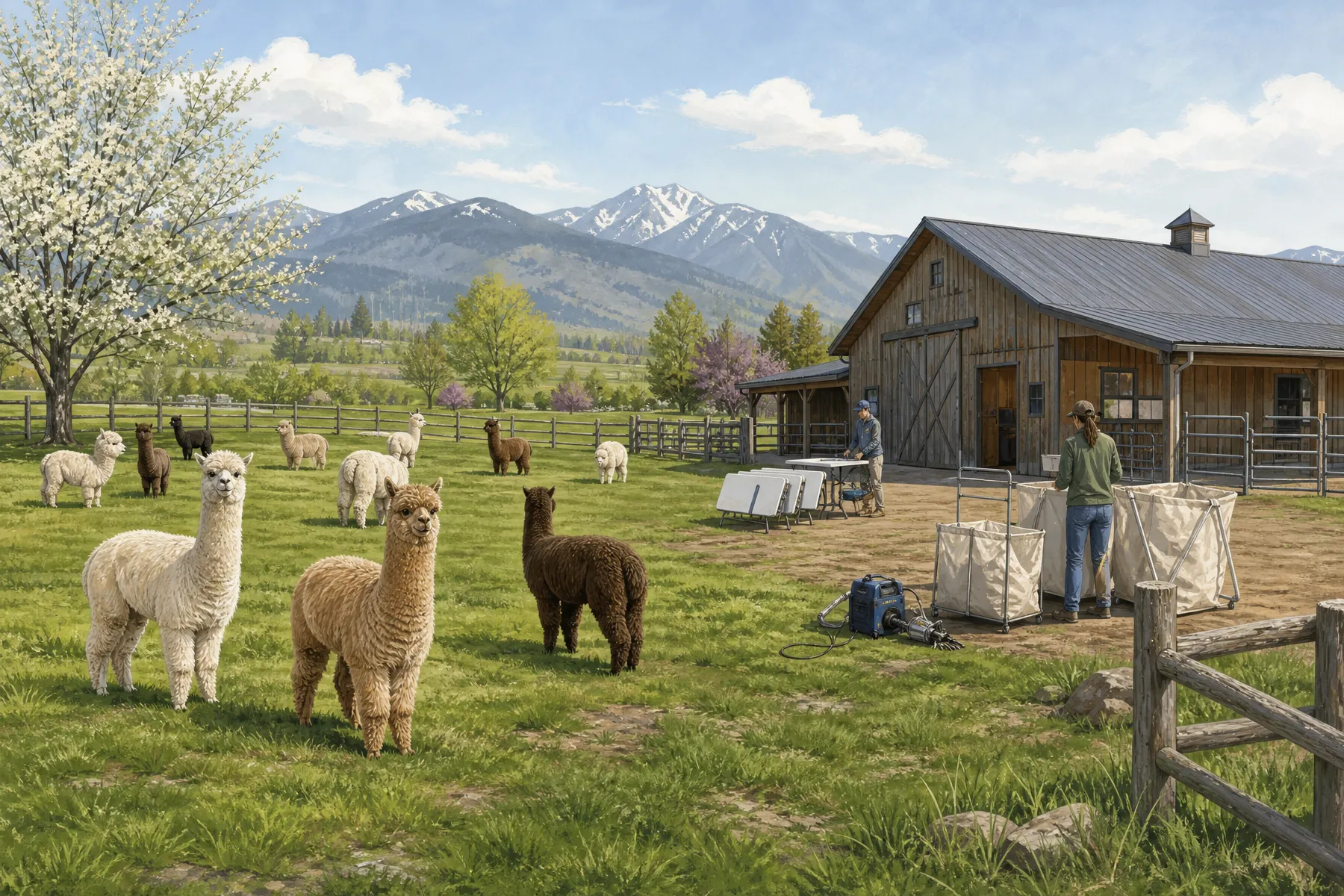
On many farms, spring is also shearing season. The job removes the previous year's fleece before summer heat and produces the new fiber crop. Scheduling a shearer is only part of the preparation: animals, work areas, helpers, bags, records, and sorting plans also need to be ready.
Immediately afterward, farms pay closer attention to cold rain and abrupt temperature changes because recently shorn animals no longer carry the same insulation they had the day before.
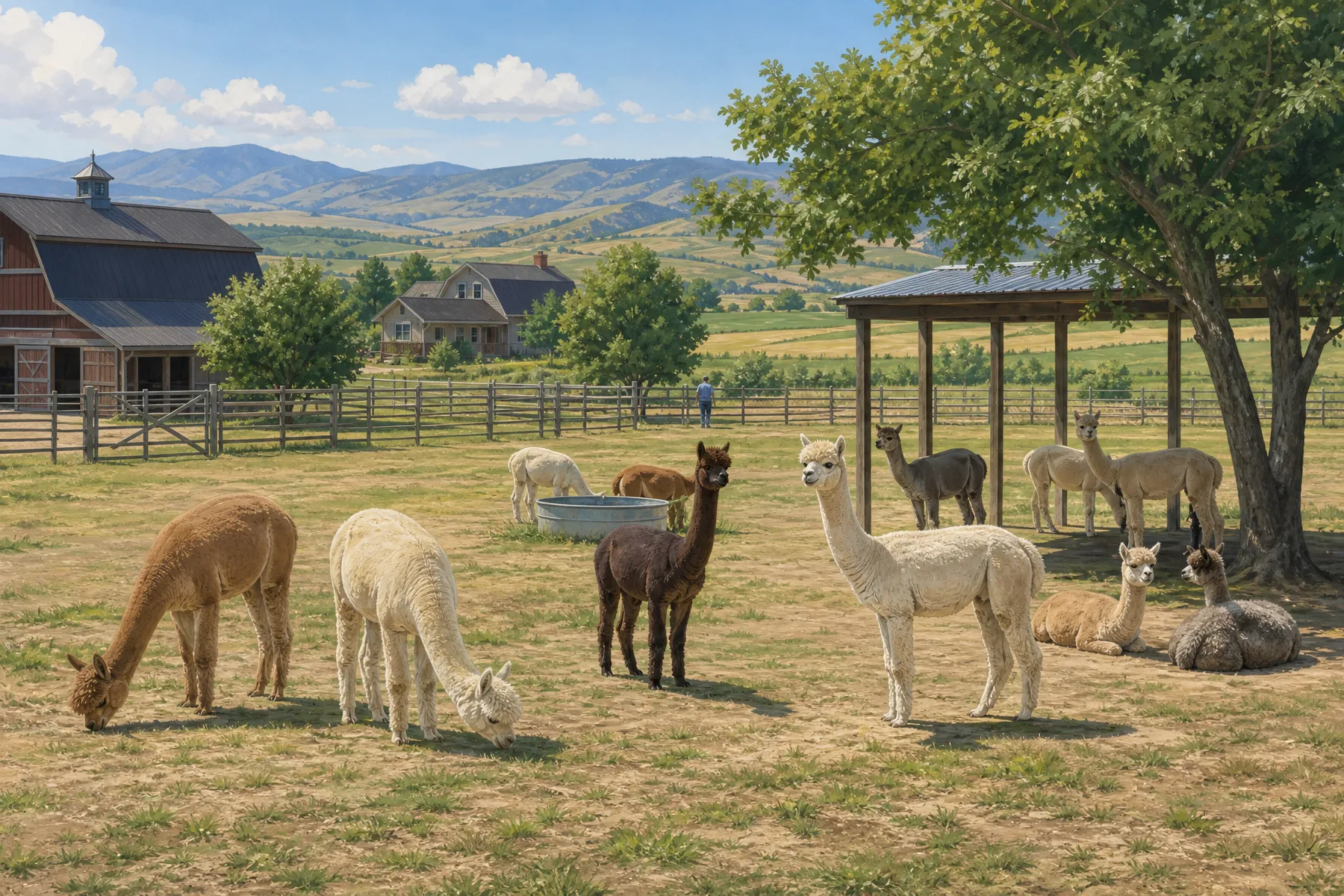
After shearing
Recently shorn alpacas look much slimmer, often retaining fleece on the head and lower legs. The coat begins growing again immediately, although the change is easier to recognize when comparing photographs taken weeks or months apart.
Summer work includes shade, water, ventilation, pasture rotation, fence checks, manure management, and watching how heat and humidity affect the herd. Routine handling or public activities may move to cooler parts of the day when conditions require it.
Young crias may be learning herd routines while older young animals continue developing. The alpaca lifecycle connects those overlapping stages from birth through adulthood and old age.
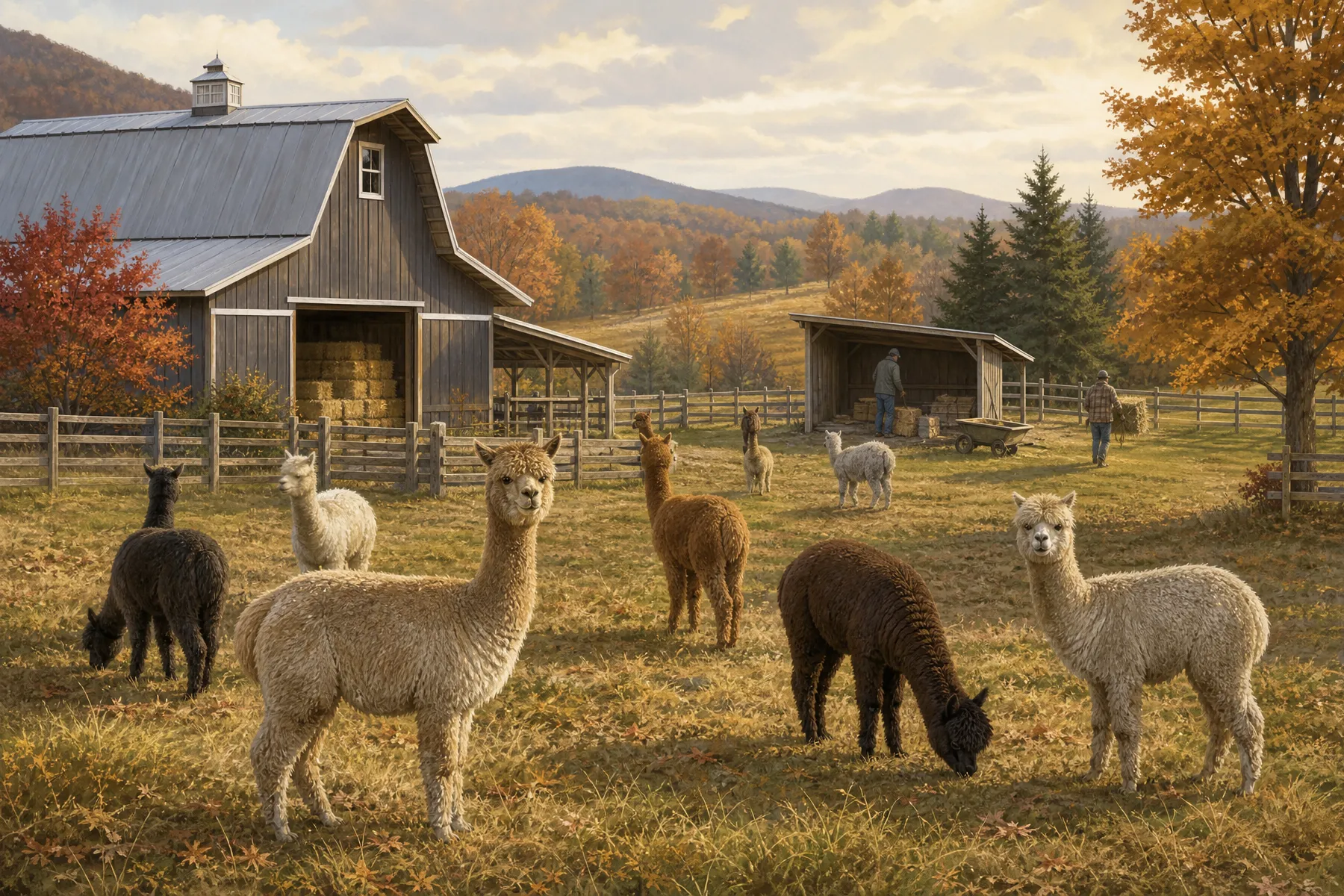
Preparing before cold arrives
Pasture growth slows as the new fleece becomes increasingly visible. Farms estimate hay needs, protect feed from moisture, inspect shelters, address fencing or drainage problems, and prepare water systems for colder conditions.
This is also a period for evaluating the year's young animals, reviewing fleece and breeding records, and making herd decisions. Work completed now reduces the number of problems that must be solved during poor weather.
Farm stores and fiber businesses may become busier as cooler weather increases interest in yarn and clothing. That retail calendar runs beside the herd calendar rather than replacing it.
Work without a season label
The amount and method change, but these parts of farm life continue while the more visible seasonal events come and go.
Four-season farm directories
These directories provide two ways to see how cold winters, green growing seasons, hay planning, fiber work, breeding, and visitor schedules fit into a complete farm year.
Northern seasonal rhythm
Herd and fiber businesses
To compare another region, open the complete state directory or return to the national alpaca farm directory.
The continuous thread
Shearing, births, pasture growth, and winter storms are memorable markers, but daily observation and ordinary chores connect them. The visible season changes while the responsibility for the herd continues.
Following the cycle also explains why alpacas look different from one visit to another—and why a working farm's activities, access, and priorities may change during the year.