Fleece under closer inspection
Alpaca vs. Llama Fiber
Both animals grow fiber that can become yarn and textiles. The meaningful differences are found in the structure of the coat, the amount of guard hair, how the fleece is prepared, and which part of it is used.
Alpacas were shaped especially strongly around fleece production. Llamas developed as multipurpose animals, but many also grow a fine, usable undercoat. This comparison follows both fibers from the animal to the finished material.
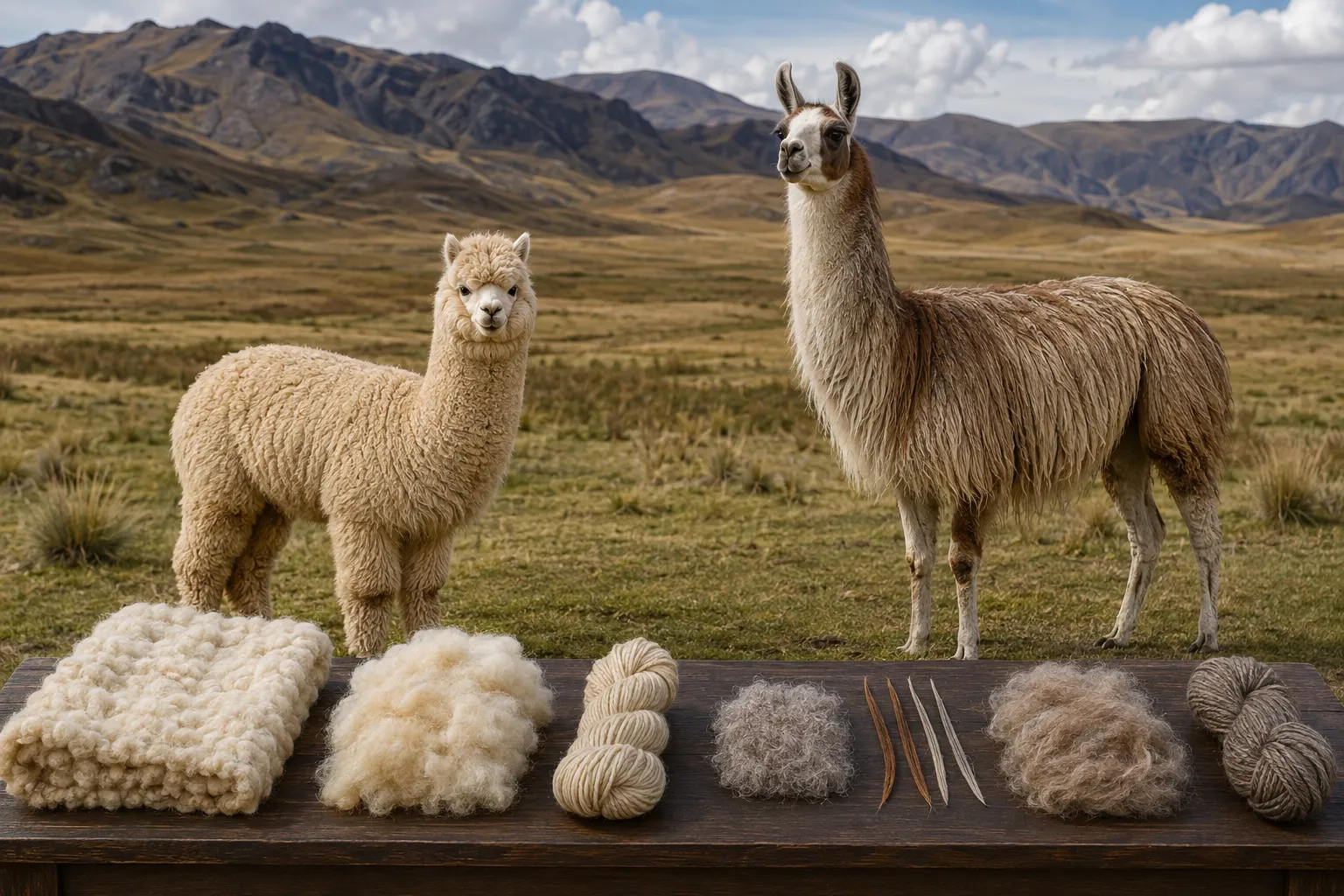
Begin with the living coat
Two animals, different fiber coats
The difference is not simply “soft alpaca” against “coarse llama.” Each animal carries more than one kind or grade of fiber, and llama coats can differ substantially from one another.
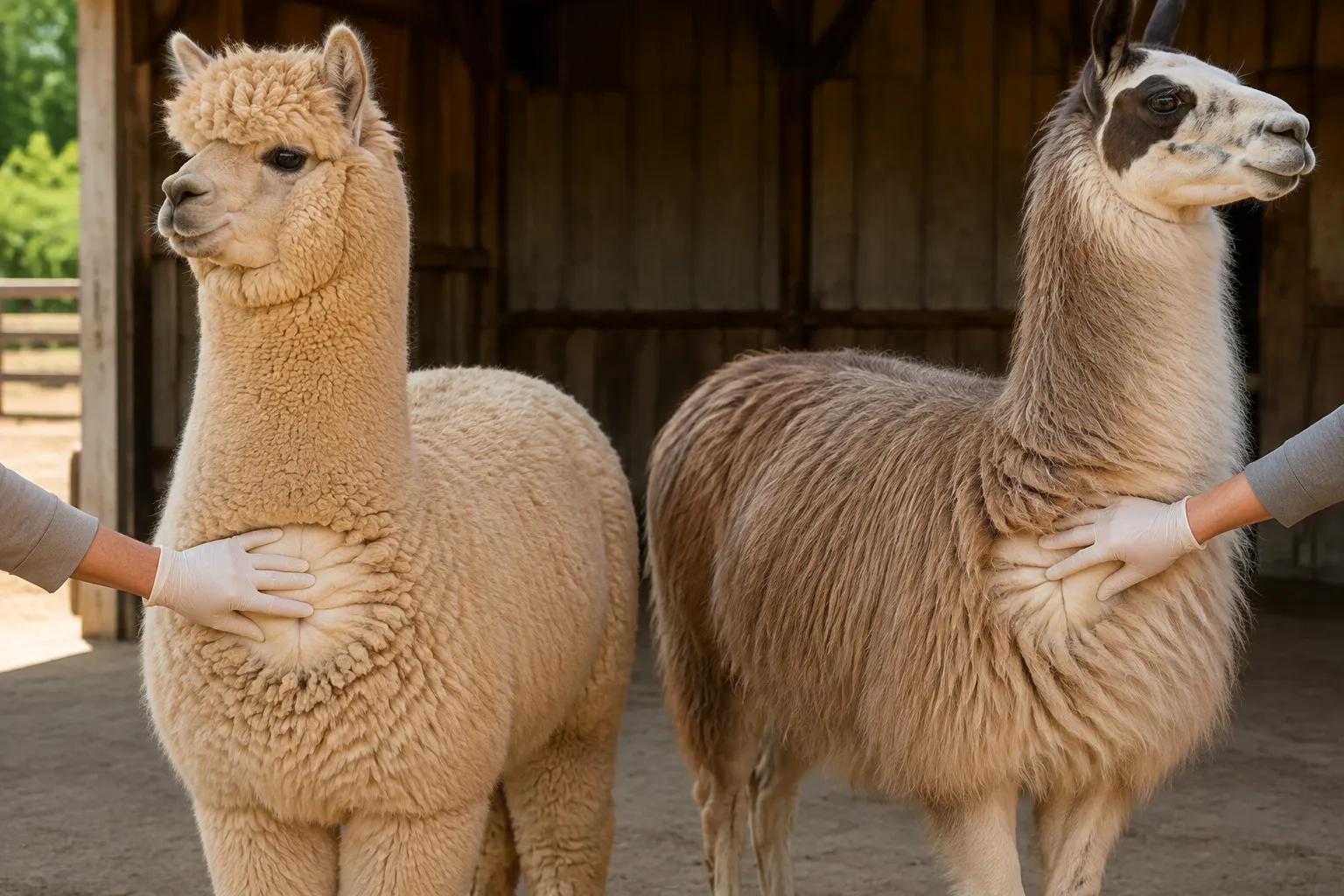 Coat on the animal
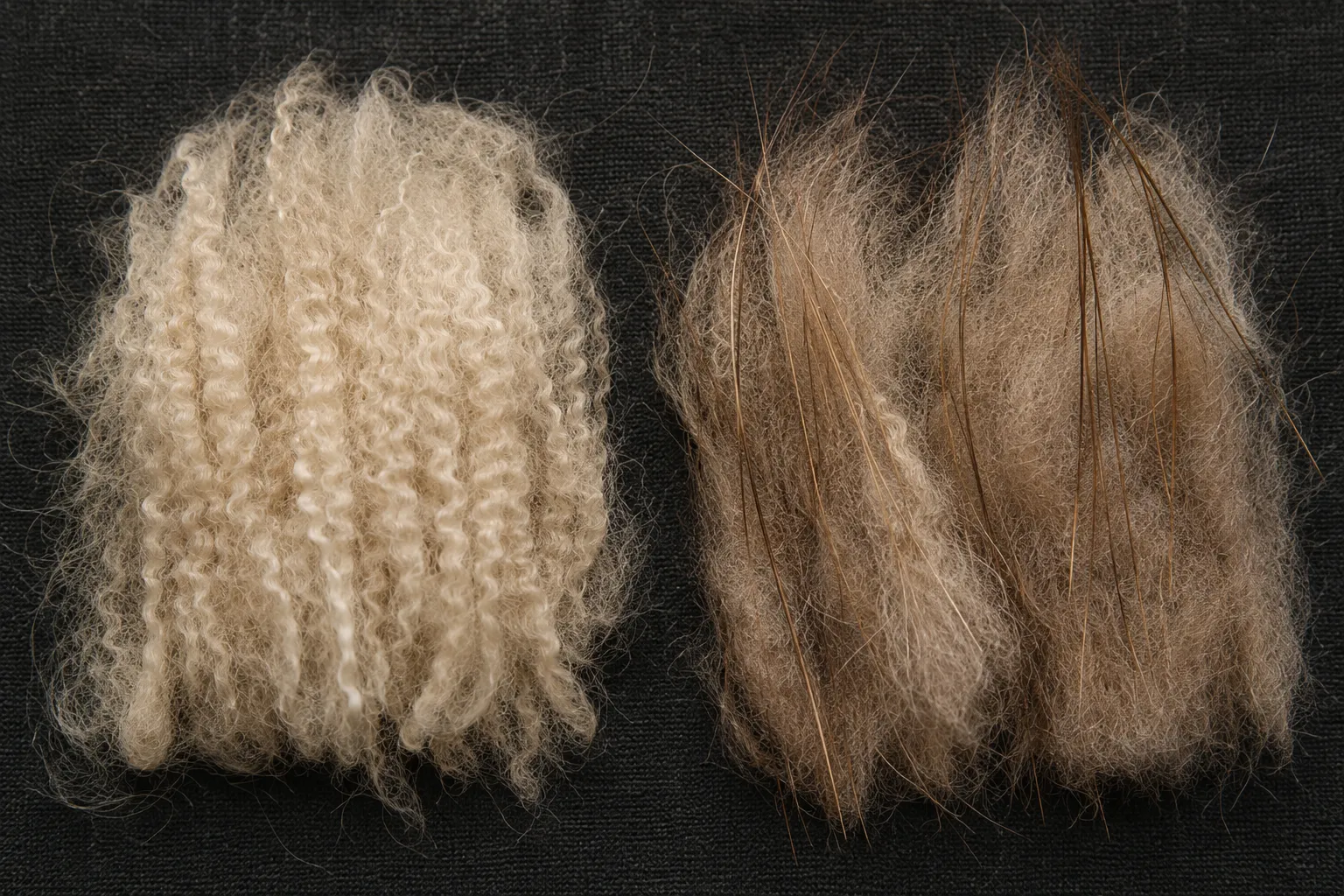 Separated fiber samples
Across the main body, an alpaca commonly carries a dense fleece blanket containing many closely packed fibers. Huacaya fleece usually forms crimped staples, while Suri fleece grows in longer locks. In either type, the goal of fiber breeding has generally been a fleece with good fineness and greater consistency between its primary and secondary fibers.
A llama may carry a more obvious double coat: a soft, downy undercoat protected by longer and straighter guard hairs. That description fits many llamas, but it is not universal. Classic, medium-wool, silky, and woolly llamas can look and process differently, and some modern llama fleeces have much less contrast between their fiber types.
The softer llama undercoat can be separated and spun into wearable yarn. Coarser outer fibers may be removed when the goal is a smooth next-to-skin textile, or directed toward sturdier uses. Alpaca fleece also needs sorting because fiber from the neck, legs, belly, and other areas may differ from the prime blanket.
What to notice
Alpaca
- Body fleece
- Dense blanket with a relatively consistent appearance
- Structure
- Crimped staples in Huacaya or hanging locks in Suri
- Variation
- Coarser or shorter fiber can occur outside the prime blanket
Llama
- Body fleece
- Greater variation among animals and coat types
- Structure
- Fine undercoat and longer guard hair are often visible together
- Preparation
- Dehairing may be needed before the fine fiber is spun
The useful distinction: the animal’s species gives you a starting point, but the individual fleece tells you how fine, uniform, and suitable for a particular textile it actually is.
Look beyond softness
What determines fiber quality?
Fiber quality is not a single ranking and it cannot be determined by species alone. Fineness matters, but so do consistency, structure, length, luster, and the presence of coarser fibers.
Fiber diameter is commonly measured in microns, with a smaller diameter indicating a finer fiber. That measurement is useful, but an average can conceal considerable variation. A fleece containing mostly fine fibers plus scattered coarse fibers may feel different from one whose fibers are more consistent.
The intended textile matters too. A soft scarf, a lofty hat, a lustrous woven piece, and a durable rug do not require exactly the same raw material. Use the specimen board below to examine the traits separately.
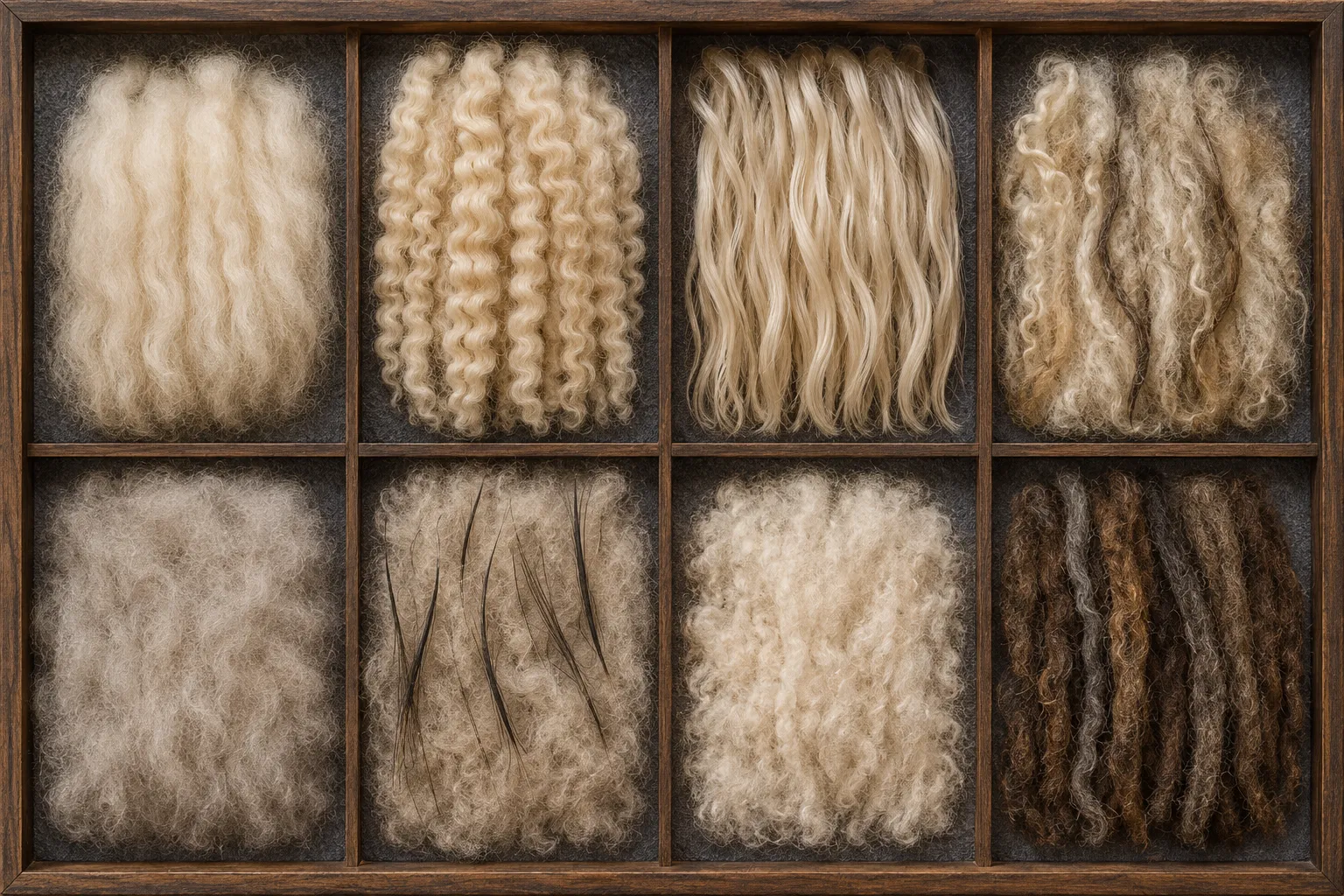
Choose a trait
Read the fleece
01 / 06
How thick is each fiber?
Finer fibers generally bend more readily and are more likely to suit clothing worn against the skin. Both alpacas and llamas can produce fine fiber, so the individual fleece matters more than a broad species label.
02 / 06
How similar are the fibers?
Consistency in diameter and length helps create a more even yarn. Coarse fibers mixed through an otherwise fine fleece may protrude from the yarn and affect how the finished textile feels.
03 / 06
Does it form crimp or locks?
Huacaya alpaca fleece is known for crimped staples, while Suri fleece forms organized locks with a straighter profile. Llama undercoat can also show crimp, although its structure differs among coat types and individuals.
04 / 06
How does the fiber reflect light?
Brightness and luster describe the way clean fiber reflects light. Luster is especially noticeable in good Suri locks, but shine does not automatically mean that a fiber is finer or more uniform.
05 / 06
Is there enough usable length?
Staple length influences how fiber can be prepared and spun. Very short pieces, including second cuts made during shearing, are harder to process, while greater length is useful only when the other traits suit the intended yarn.
06 / 06
Are coarse fibers mixed in?
Many llama fleeces require dehairing to separate fine undercoat from longer guard hairs. Alpaca fleece can also contain coarser primary fibers, particularly outside the main blanket, so careful sorting remains important.
Quality means suitable for the intended use
- Next-to-skin pieces
- Fineness, uniformity, and minimal coarse fiber become especially important.
- Lofty yarn
- Useful crimp, consistent length, and sound fiber help the yarn hold together.
- Lustrous textiles
- Lock structure, length, and reflected light can be central to the finished effect.
- Durable goods
- Coarser fibers that are unsuitable for soft clothing may still have a practical destination.
Harvesting the fleece
Are alpacas and llamas both shorn?
Yes, both animals can be shorn, but the amount removed and the method used are not always the same. Alpaca shearing is comparatively consistent; llama shearing depends much more heavily on coat type.
Both produce harvestable fiber.
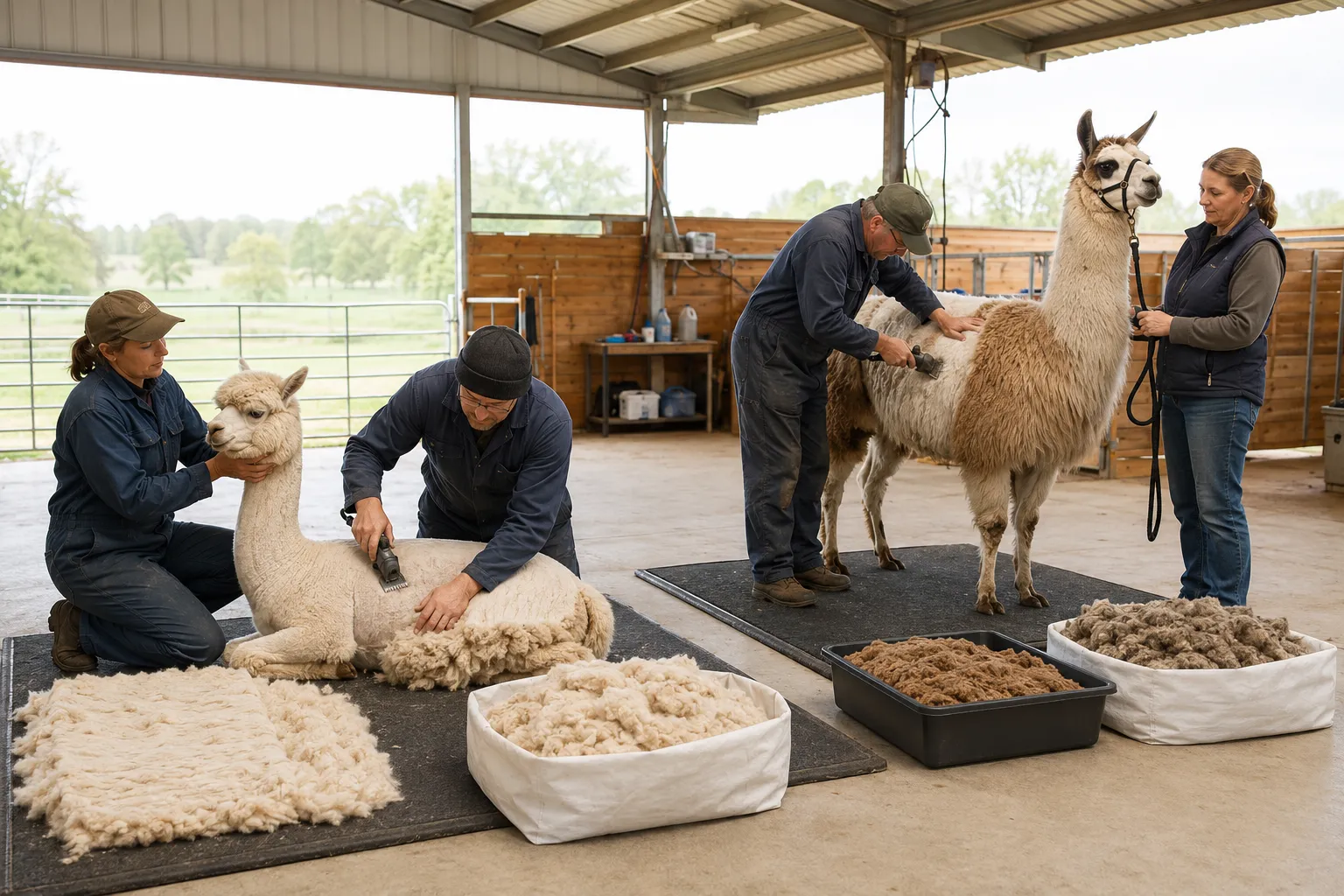
Alpacas are generally shorn once each year, often before the hottest part of the season. Many medium- and heavy-wool llamas are also shorn regularly. A classic or light-wool llama may instead receive a partial barrel clip or have loose undercoat combed out, depending on its coat, climate, health, and intended fiber use.
 Responsible fleece harvest
Follow the work
Four stages of shearing day
Stage 01
Assess the animal and coat
The team considers weather, fleece condition, body condition, handling needs, and the kind of coat being removed. Dry, reasonably clean fleece is easier to collect and keep organized.
For a llama, this is also when the shearer decides whether a full shear, barrel clip, or more limited removal makes sense.
Stage 02
Remove the usable body fleece
An alpaca’s main body blanket is commonly removed as one organized section before the neck, legs, and belly are handled separately. This helps preserve the most consistent fleece.
A woolly llama may be shorn more completely, while a lighter-coated llama may need only the fiber-bearing barrel area clipped.
Stage 03
Keep unlike fibers apart
Prime body fleece is collected separately from shorter, coarser, or less uniform fiber. Keeping the groups apart during shearing prevents lower-grade material from being mixed through the main blanket.
Llama fleece may later require dehairing to separate fine undercoat from longer guard hair.
Stage 04
Check the animal after shearing
The skin is checked, the animal is returned calmly to its group, and protection from cold rain, wind, or intense sun is provided when conditions require it.
Shearing removes insulation as well as fiber, so timing and shelter are part of responsible coat management.
Alpaca
A more predictable harvest
- Usually receives a full annual shearing
- The main body blanket is kept separate
- Neck, leg, and belly fiber may be graded differently
Both
The shared priorities
- Calm handling and appropriate restraint
- Clean cuts with as few short second cuts as possible
- Weather-aware timing and post-shearing care
Llama
A coat-dependent decision
- May receive a full shear, barrel clip, or combing
- Light- and heavy-wool coats are managed differently
- Fine undercoat may need to be separated from guard hair
The practical difference: alpaca owners usually plan on a complete yearly fleece harvest, while llama owners first have to read the individual coat and decide how much needs to come off.
After the fleece leaves the animal
From raw fleece to usable fiber
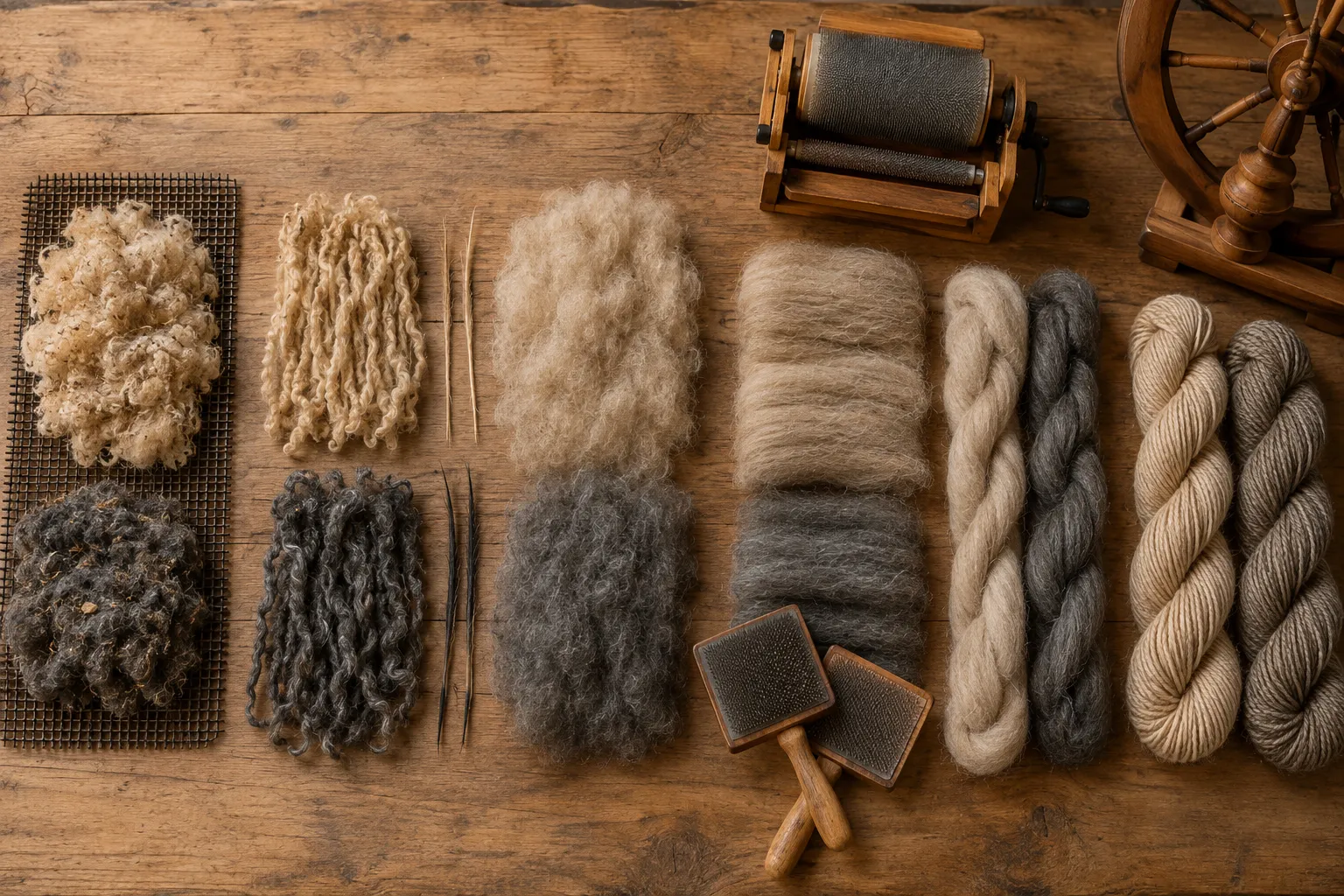
Shearing produces a fleece, not finished yarn. Alpaca and llama fiber travel through many of the same preparation stages, but sorting and dehairing can send the two materials down somewhat different paths.
Good processing preserves the qualities already present in the fleece. It cannot turn short, heavily mixed, or damaged fiber into a uniform fine yarn, which is why decisions made during shearing and sorting matter so much.
The exact equipment changes with the fiber and the desired yarn, but the basic progression remains recognizable: evaluate, clean, organize, prepare, and spin.
Start with an identifiable fleece
Keep the harvest organized
Fresh fleece is kept dry and identified by animal and body region. The prime body blanket or barrel fiber is separated from shorter or coarser material collected from the neck, legs, belly, and other areas.
Keeping these groups apart gives the processor a clearer picture of what the fiber can become.
Evaluate before washing
Skirt, sort, grade, and dehair
Loose debris, stained material, very short second cuts, and unsuitable edge fiber are removed. The remaining fleece can be grouped by fineness, length, color, and overall consistency.
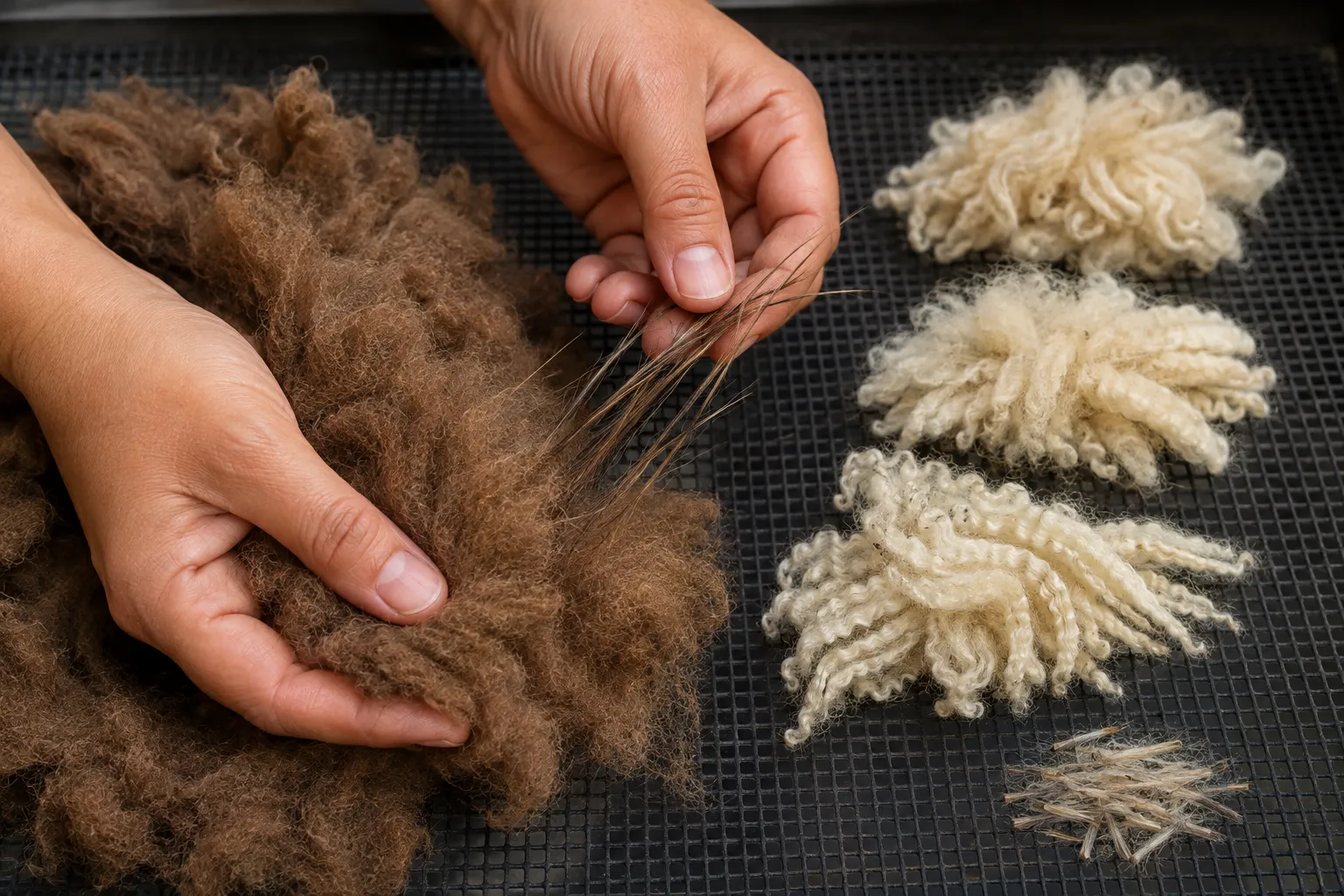
Many llama fleeces also need dehairing so that long guard hairs do not remain mixed through the fine undercoat. Alpaca fleece still requires sorting because coarser primary fibers can occur, especially outside the main blanket.
Clean without tangling
Wash and dry the fiber
Washing removes dust, sweat, and remaining surface contamination. The amount of cleaning depends on the fleece and the intended processing method.
Heat, moisture, and agitation must be controlled so the fibers do not mat together. The fiber is dried completely before it moves to mechanical preparation.
Open and arrange the fibers
Carding and combing create order
Carding opens the washed fiber and distributes it into a more even web or batt. Combing can align longer fibers more closely while removing some short fibers and remaining inconsistencies.
The choice depends on staple length, crimp or lock structure, and whether the planned yarn should be airy, smooth, blended, or highly aligned.
Make a continuous preparation
Form roving, sliver, or another spinnable preparation
Prepared fiber is drawn into a consistent continuous bundle that can feed smoothly into spinning. This is also a stage where alpaca or llama fiber may be blended with wool or another compatible fiber.
An even preparation makes it easier to control the thickness and twist of the yarn.
Turn prepared fiber into yarn
Spin, ply, and finish
Spinning adds twist so the fibers hold together as yarn. Two or more strands may then be plied to change the strength, balance, thickness, and appearance.
The completed yarn is washed or otherwise finished, dried, measured, and matched to a knitting, weaving, felting, or other textile project.
The important fork in the process
Sorting determines what stays together
Fiber that looks similar from several feet away can behave very differently when spun. Careful sorting prevents short, coarse, or inconsistent fibers from weakening or roughening a batch intended for softer yarn.
- Remove
- Debris, second cuts, stained fiber, and material too damaged to process well
- Separate
- Prime fleece, coarser grades, fine undercoat, and longer guard hair
- Match
- Each prepared group with clothing, blankets, felt, rugs, rope, or another suitable use
Alpaca emphasis
Grade the blanket carefully
Prime body fleece is separated from coarser regions. Huacaya crimp and Suri lock structure may also call for different preparation choices.
Shared path
Clean, organize, and align
Both fibers must be evaluated and prepared with the desired yarn and finished textile in mind.
Llama emphasis
Decide whether to dehair
The fine undercoat may need to be separated from visibly longer guard hairs before soft yarn is produced.
Match the fiber to the job
What is alpaca and llama fiber used for?
Finished products do not divide neatly into an alpaca column and a llama column. Fiber grade, preparation, yarn construction, and the demands of the product determine where each material works well.
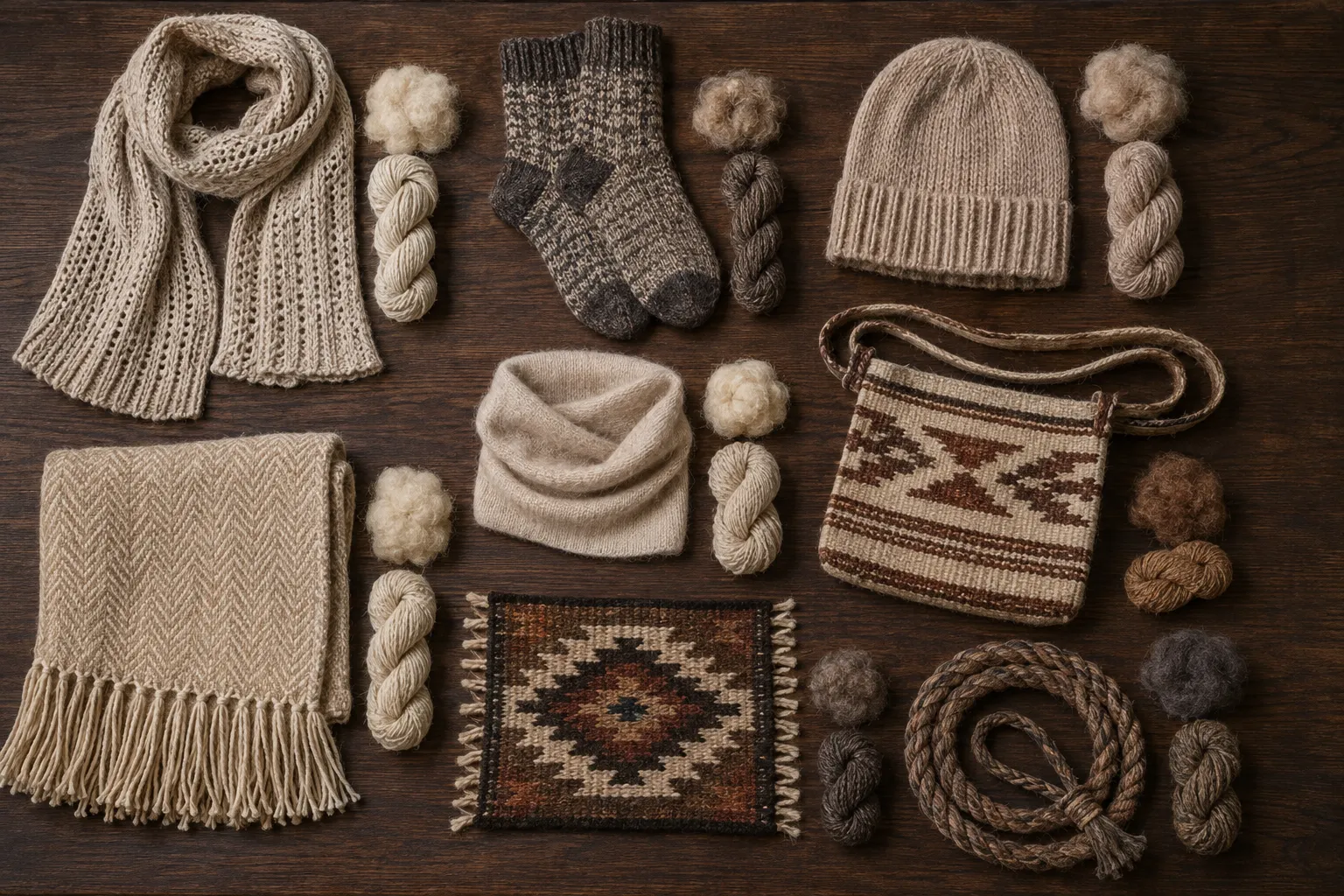
Fine, uniform fiber can be prepared for clothing worn close to the body. Longer, coarser, or less uniform fibers are often better suited to pieces where strength, structure, or abrasion resistance matters more than next-to-skin softness.
Use the matcher to begin with the intended product. It shows why fine alpacas and dehaired llama undercoat can sometimes serve similar roles, while coarser llama fiber has useful destinations of its own.
 Fine wearables
Warm layers
Throws and blankets
Structured goods
Fine wearables
Warm layers
Throws and blankets
Structured goods
Selected use · Next to skin
Fineness and consistency come first
Scarves, fine hats, dress socks, and other close-contact pieces need fiber that feels even against sensitive skin.
Well-sorted blanket fiber is a natural candidate when its diameter and uniformity suit the intended wearer.
Soft llama undercoat can produce refined yarn after coarse guard hairs and inconsistent fibers are removed.
Check first: micron range, coarse-fiber content, yarn structure, and the sensitivity of the wearer.
Selected use · Warm layers
Loft and warmth can matter more than extreme fineness
Sweaters, substantial hats, boot socks, mittens, and insulating outer layers can use a broader range of carefully prepared fibers.
These grades can provide warmth and drape, while blends may add elasticity or improve the way a garment holds its shape.
Dehaired undercoat can make warm yarn for clothing, especially when its length and fineness are reasonably consistent.
Check first: garment weight, recovery, abrasion points, and whether a supporting blend would improve performance.
Selected use · Blankets
A larger textile can accept a wider range of grades
Throws and blankets may use soft fleece for comfort or sturdier grades when the textile is designed for heavier service.
Prepared alpaca can make warm, draping throws; blending can add structure and help control weight or cost.
Fine fiber can produce a softer blanket, while carefully chosen stronger grades may suit a denser woven textile.
Check first: surface feel, finished weight, shedding, cleaning needs, and the amount of daily wear expected.
Selected use · Durable goods
Coarser fiber becomes an asset when strength is the priority
Rugs, sturdy bags, felted pieces, braided cords, and similar goods can make productive use of fiber that would be unsuitable for soft clothing.
Fiber from legs, neck, or other non-prime areas may be directed toward felt, dense textiles, or blended utility yarns.
Longer outer fiber can contribute structure and wear resistance to woven, braided, or otherwise sturdy products.
Check first: tensile demands, abrasion, stiffness, construction method, and whether the fiber should be blended.
The practical rule
Do not ask only which animal supplied the fiber. Ask which part of the coat it came from, how it was sorted and prepared, and what the finished textile must do.