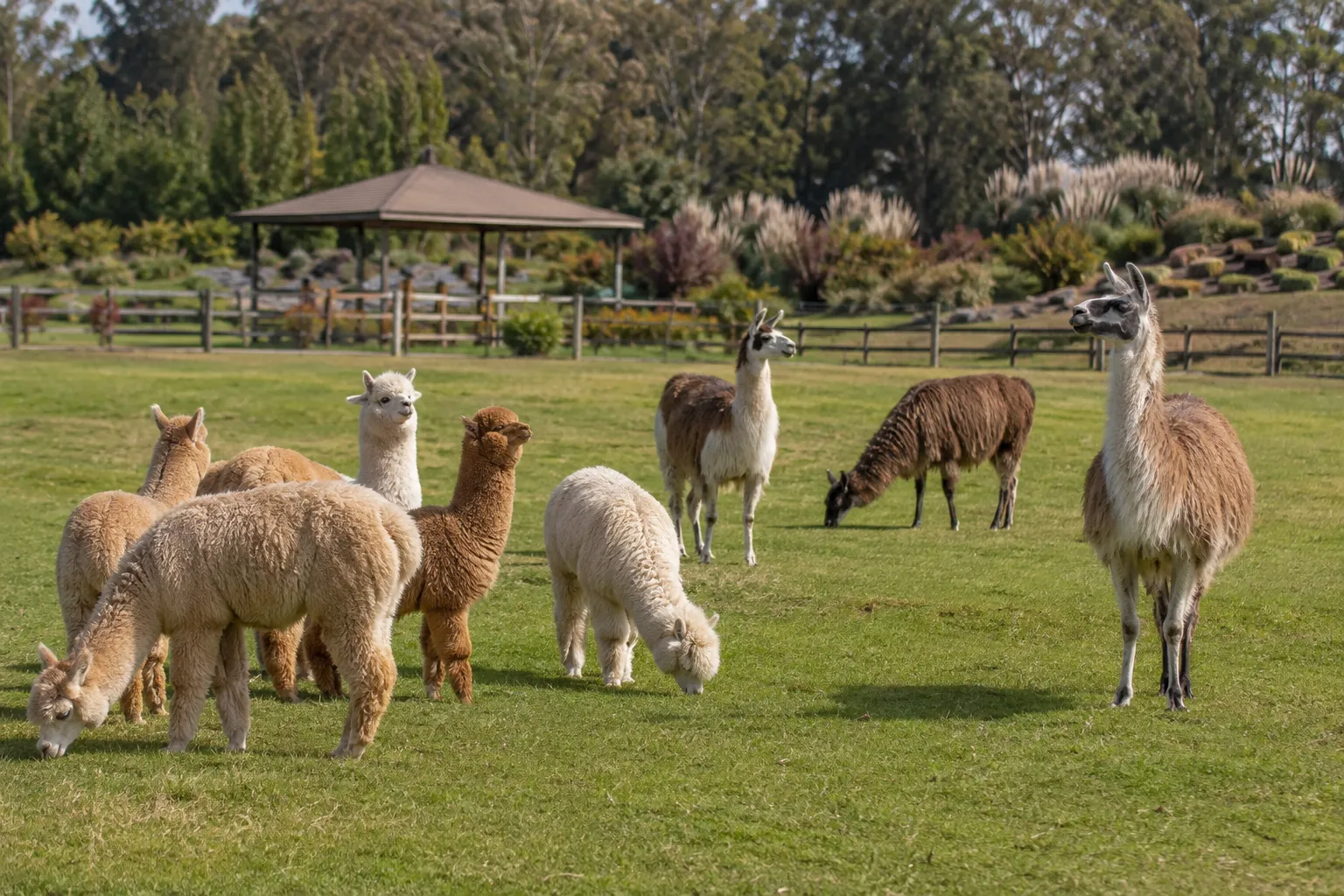
Alpacas and llamas, observed together
Behavior is more than temperament
Both are social South American camelids. The differences become clearer when you watch how they use the herd, respond to space, read other animals, and decide whether to follow, wait, move away, or investigate.
A species comparison can describe common tendencies, but it cannot predict every animal. Sex, age, training, herd composition, previous handling, and the immediate situation can change what an alpaca or llama does.
Social life and herd structure
The herd is part of the behavior
Alpacas and llamas both need social company, but they do not always occupy shared space in quite the same way. Watch the whole arrangement before deciding that one individual is timid, independent, dominant, or detached.
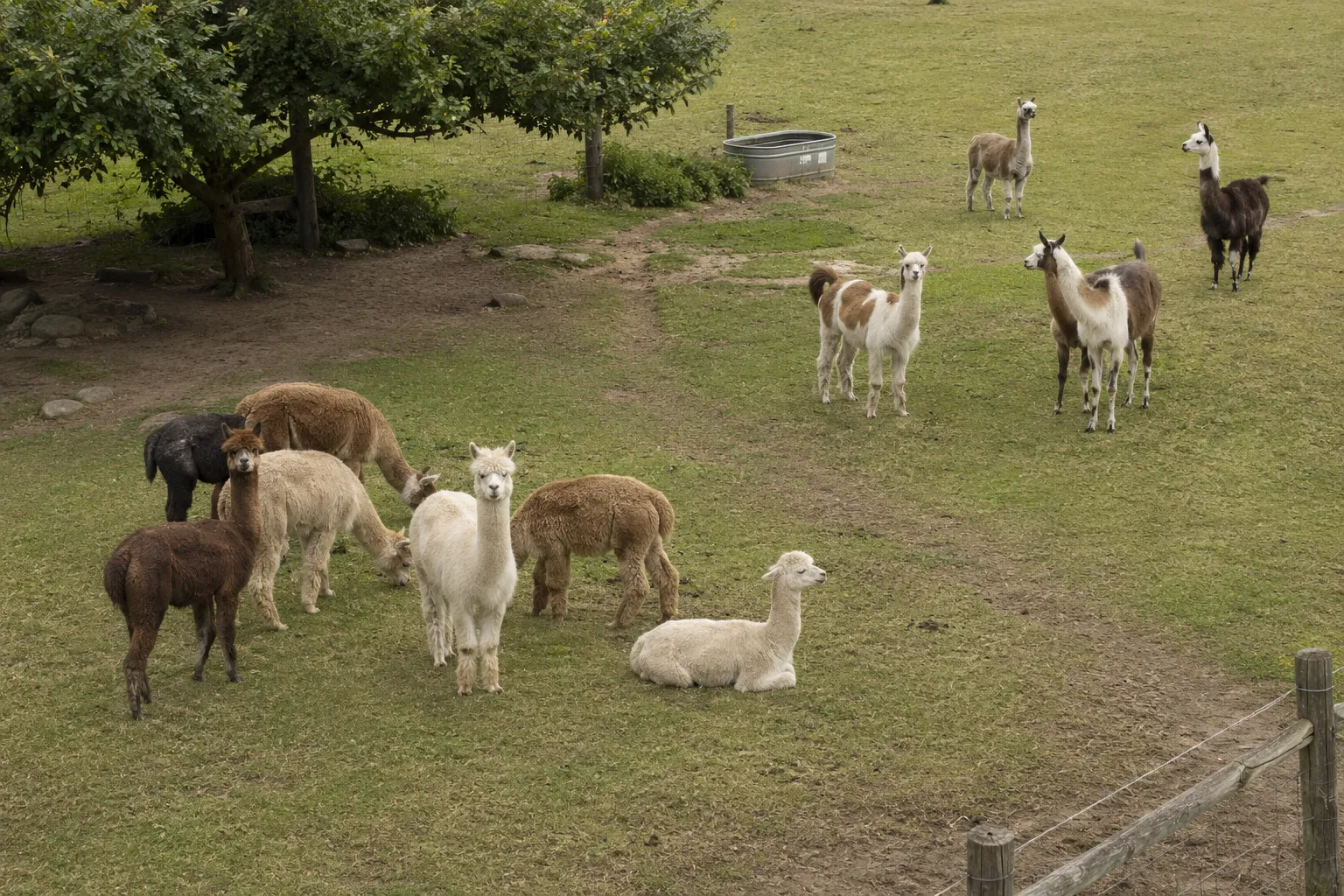
Shift your attention
Start with connection
Both species organize their day around other camelids.
Grazing, resting, moving to water, and reacting to a disturbance are social events. An animal standing apart may simply be using more space, but persistent isolation can also deserve attention.
The dots are a diagram of relative spacing, not a fixed rule for every herd.
Watching alpacas
Connection is often easy to see
Alpacas commonly graze, rest, and travel with visible awareness of nearby herd members. When uncertain, they may close the distance between animals or orient in the same direction.
That closeness should not be mistaken for a lack of individual relationships. Alpacas still negotiate access to food, preferred resting places, personal space, and breeding groups.
Watching llamas
Social does not always mean tightly grouped
Llamas also form relationships and should not be kept without compatible camelid company. They may, however, maintain a broader social radius or pause to assess something without immediately matching the rest of the group.
A llama using more distance is not necessarily aloof. Size, working history, sex, temperament, and the makeup of the herd can all influence its position.
A useful comparison describes tendencies, not promises. A confident alpaca may investigate before a cautious llama, and herd structure can change when animals, resources, or surroundings change.
Communication and body language
Read the whole animal, not one ear
An ear position can attract attention, but it is not a complete translation. Neck height, weight distribution, facial tension, direction of attention, distance from other animals, and the sequence of events all help determine what a signal means.
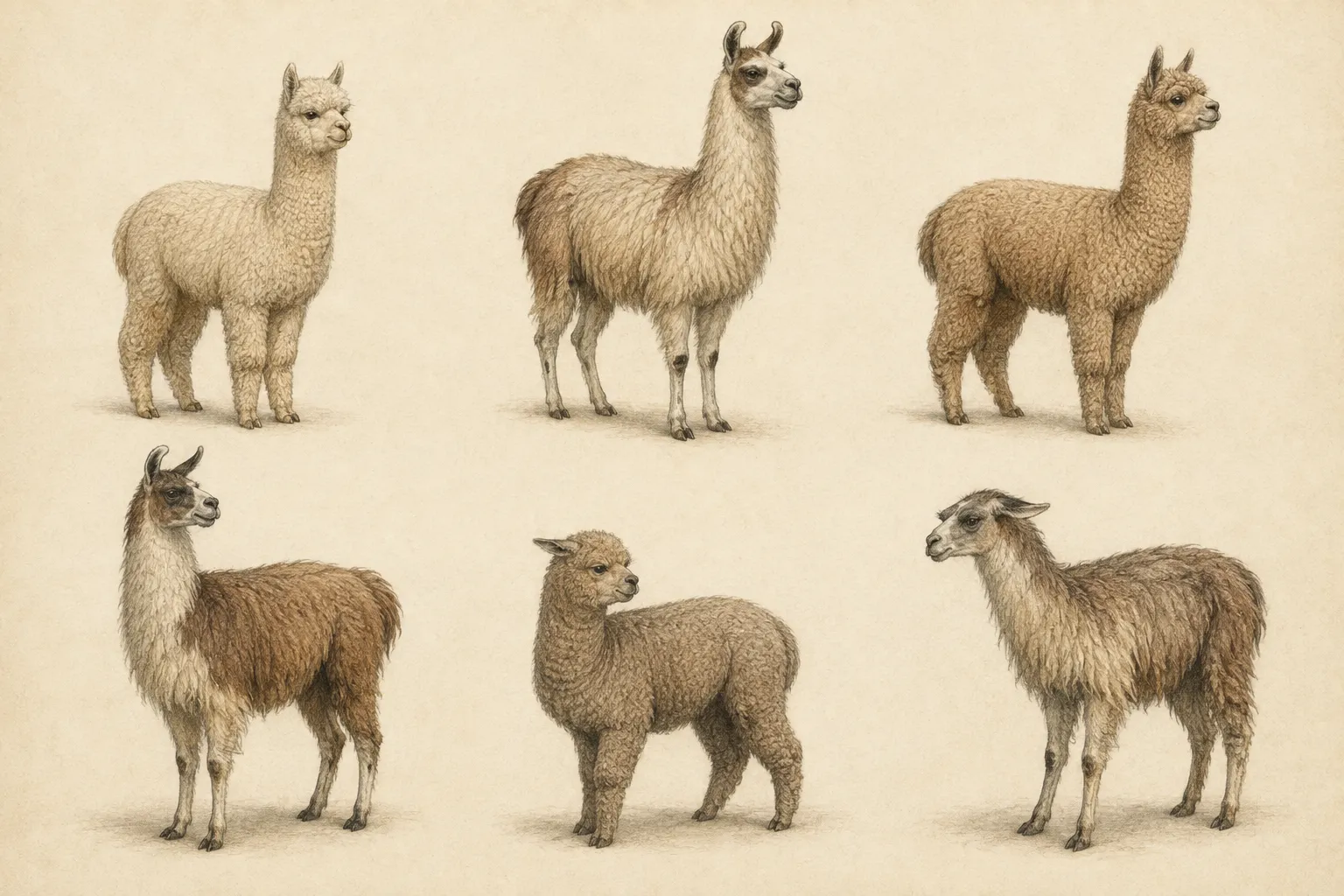
Relaxed alpaca
Quiet posture is usually read as a pattern.
- Ears and face
- Neutral or gently mobile ears, a soft mouth, and no fixed stare.
- Neck and stance
- Balanced weight, an ordinary neck height, and no effort to lean away or increase distance.
- How to read it
- Look for continuity. Calm grazing, chewing, resting, or moving normally supports the relaxed interpretation.
The marker identifies a useful place to begin looking. It does not diagnose the animal's mood.
The body starts the sentence
Sound adds context
Humming is not one word with one meaning. Alpacas and llamas may hum during contact, uncertainty, separation, frustration, or other socially important moments. The accompanying posture and situation matter.
An alarm call redirects the herd's attention. Raised heads, oriented ears, and a break in grazing help show whether the call is part of a broader response to something unusual.
Handling, training, and human contact
Familiarity is learned, not inherited
Neither species arrives knowing how to wear a halter, walk beside a person, stand for care, or remain comfortable when an unfamiliar object appears. What looks like temperament is often a mixture of species tendencies, individual history, and what the animal has learned will happen next.
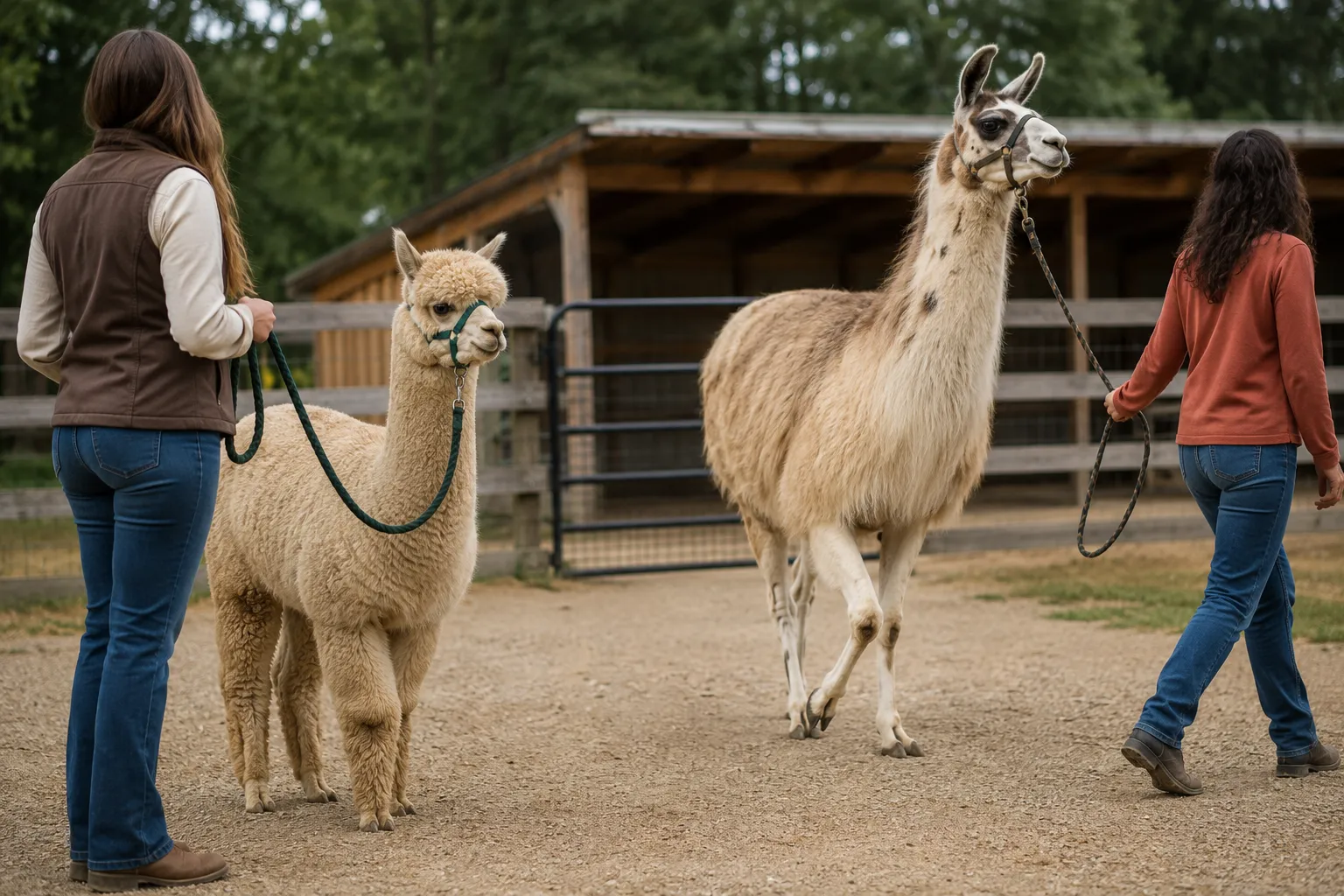
An important distinction
Tolerance is not the same as affection. An alpaca or llama can learn to stand calmly for necessary care without wanting prolonged touching, crowding, or restraint.
When , watch what happens before assigning a personality.
Alpaca response
The herd may influence the first move
An alpaca may pause, orient toward the person, increase distance, or move toward familiar herd members. A confident individual may investigate, but approach alone does not make every alpaca naturally people-seeking.
Llama response
Assessment may look more individual
A llama may remain in place and watch, approach, or step away on its own schedule. Its height and steady gaze can make ordinary assessment seem unusually bold or confrontational when it is neither.
Useful handler responseEnter without driving directly at either animal, notice the distance at which attention changes, and pause before that attention becomes avoidance.
What careful handling changes
The response should become quieter because the situation becomes clearer
- Position: approach at an angle and leave a visible path instead of trapping the animal between people or fences.
- Timing: reduce pressure when the animal offers a useful response, rather than continuing until it struggles.
- Repetition: short, predictable practice can make routine care easier without turning handling into constant restraint.
Species is only the opening clue. A frequently handled alpaca may be easier to lead than an untrained llama. An experienced llama may work calmly away from its companions while another becomes unsettled. Training history must remain part of the comparison.
Conflict, boundaries, and spitting
Spitting is usually not the first signal
Both alpacas and llamas use distance, body angle, ear position, neck posture, and facial tension before many disputes become obvious. Spitting is one possible escalation, not a complete description of either species.
The useful question is not simply whether they spit. It is what happened before the spit, who the message was directed toward, and whether the animals were able to separate afterward.
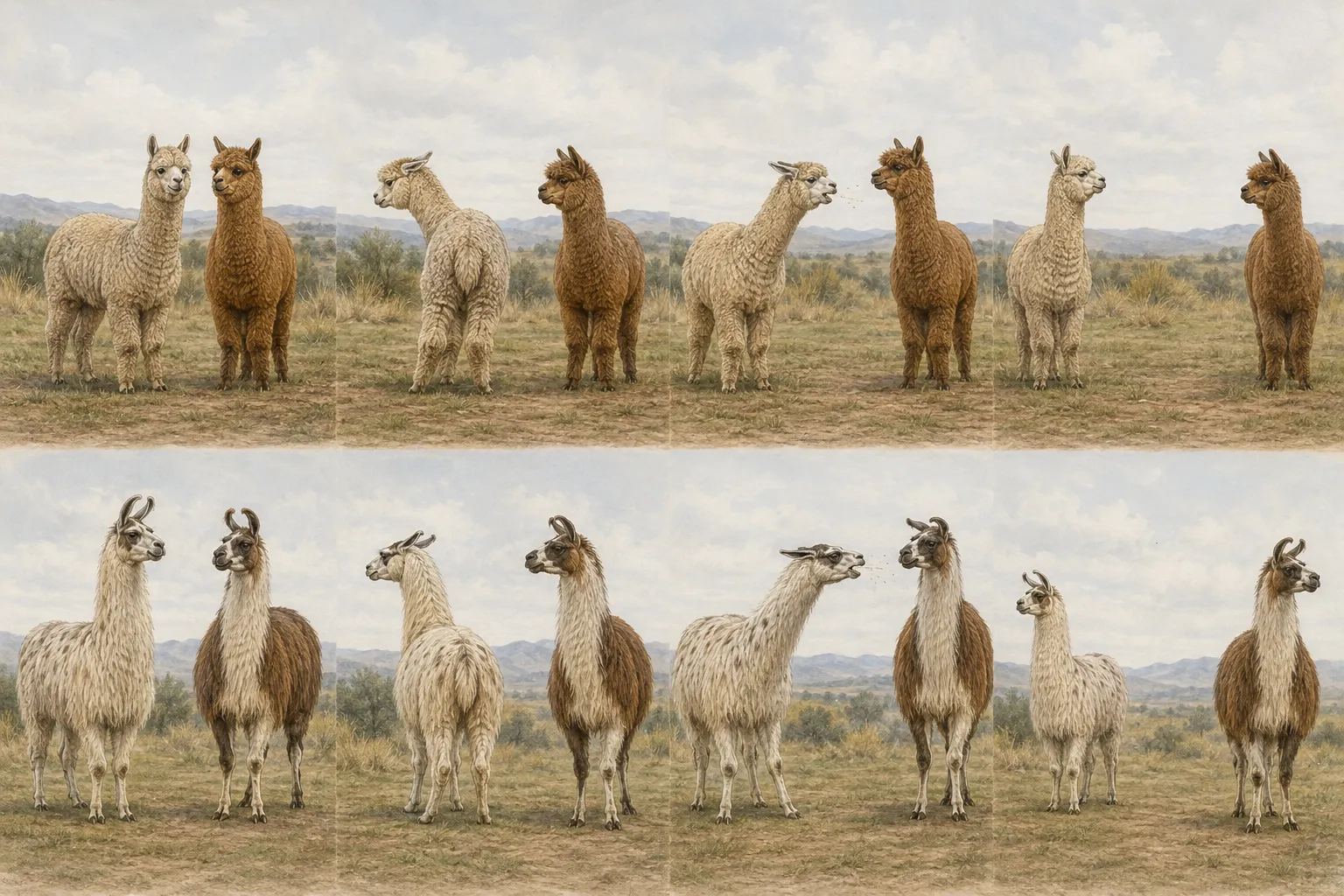
Comfortable contact
No conflict is underway
Watch the alpaca
Nearby animals can graze, rest, or pass one another without bracing, pinning their ears, blocking movement, or abruptly changing distance.
Watch the llama
A neutral stance, easy neck, mobile ears, and ordinary attention suggest that proximity is not currently producing a dispute.
What helpsLeave ordinary social contact alone. Constantly interrupting calm interactions can make the herd harder, not easier, to read.
Who is the message for?
Direction changes the interpretation
- Another camelid
- Food, breeding access, personal space, nursing, or herd relationships can produce warnings between animals. Most spitting belongs in this social context.
- A nearby person
- A person can be caught between disputing animals or can keep applying pressure after an animal asks for space. That is different from routinely seeking people out to spit at them.
- An ongoing pattern
- Frequent human-directed threats, crowding, or unsafe contact deserve closer attention to handling, socialization, housing, pain, and management.
Physical conflict can extend beyond spitting. Males may neck wrestle, chest against one another, push, or attempt to bite and kick. Size makes llama conflict especially important to manage with adequate room, compatible groups, and secure separation when necessary.
Vigilance and responses to danger
Alert does not automatically mean guardian
Alpacas and llamas can both notice unfamiliar movement, interrupt grazing, orient their ears and eyes, and alert nearby animals. What follows that first moment may reflect herd behavior, individual confidence, training, and the role the animal has been selected and managed to perform.
Alpacas commonly gain safety through the group and increased distance. Some carefully selected llamas are used to watch over smaller livestock, but guardian behavior is not guaranteed by species alone.
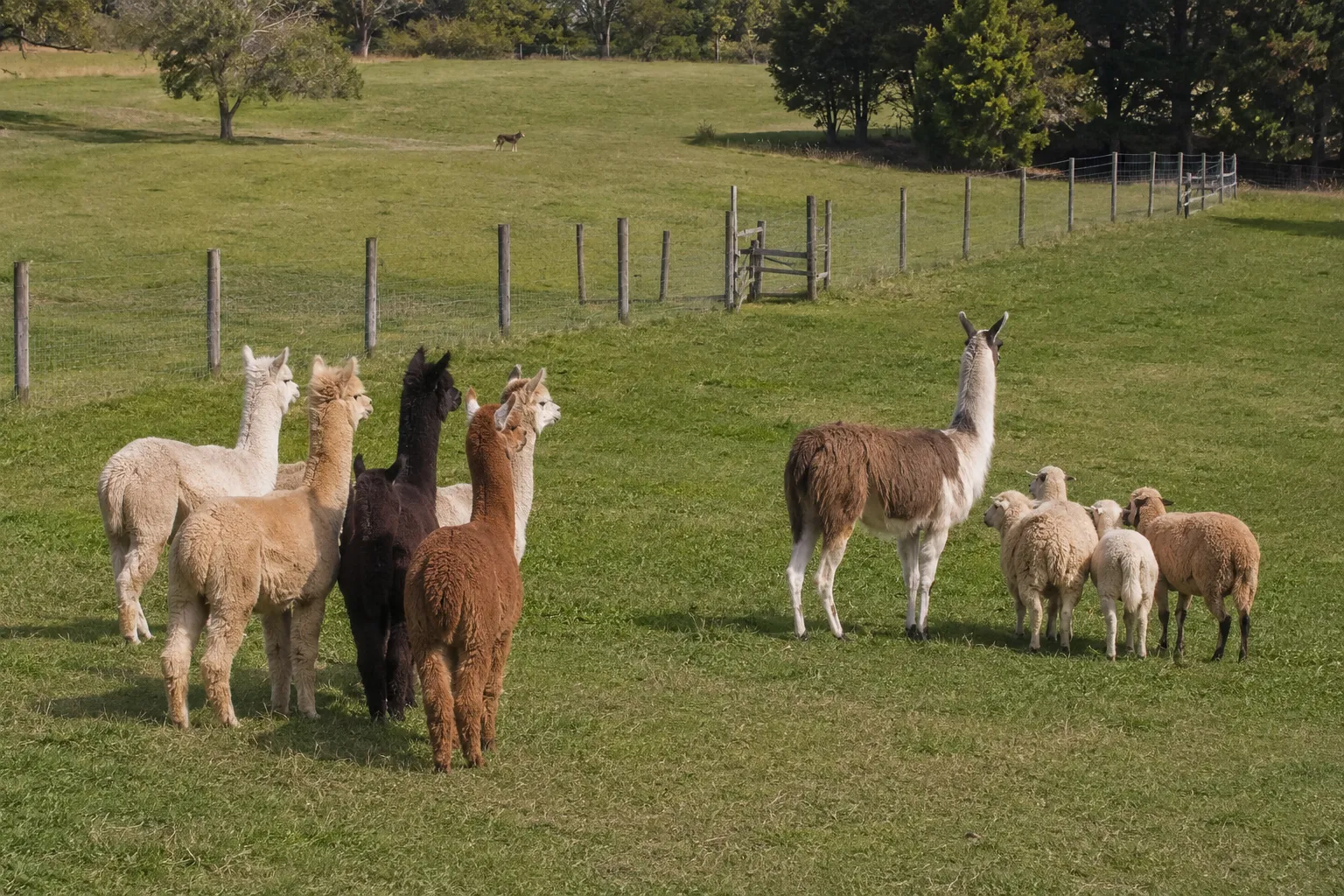
Follow the alpaca herd Safety usually comes from connection and distance Hide path
- Notice Heads rise, ears orient, grazing pauses, and attention fixes on the same part of the pasture.
- Share attention An alarm call or the movement of one animal can draw the rest of the herd into the response.
- Create safety The group may close ranks, move away, use fencing and shelter, or keep watching from a safer distance.
- Recover together Normal grazing and spacing begin to return as attention drops and the disturbance passes.
Follow a suitable guardian llama Position can become part of the response Hide path
- Notice The llama raises its head, directs its ears, and pauses to locate the unfamiliar animal or movement.
- Position An appropriate guardian may move toward the edge of the group or place its body between livestock and the concern.
- Assess The llama may watch, approach, vocalize, or discourage a small intruder while the protected animals remain behind it.
- Disengage When the concern leaves, the llama should be able to release its attention and return to ordinary herd activity.
Guardian reality check
A llama is not a substitute for fencing, observation, or sound management
Guardian suitability depends on the individual, sex, social history, species being protected, pasture arrangement, and the type and number of likely predators. Some llamas ignore threats, harass smaller animals, or are overwhelmed by multiple dogs or larger predators.
Secure fencing, appropriate shelter, nighttime planning, and direct response to local predator pressure remain essential. A guardian animal can be one part of that system, not the entire system.
The behavioral difference is not that alpacas notice danger and llamas do not. Both notice. The meaningful comparison is how they use the herd, distance, body position, and learned role after attention has shifted.